Disclosure: topratedkitchenware.com is reader-supported. When you buy through links on our site, we may earn an affiliate commission from Amazon and other retailers, at no extra cost to you.
Where to buy
The six models below are the verified picks for this guide to best open flamr grills — open-flame grills, in plain spelling: propane grills that cook food directly over the visible flame of their burners. Every pick here is a gas grill, because a gas burner is the most controllable open flame in outdoor cooking, and every name links to its Amazon listing, where you can check the latest price on Amazon, confirm the current configuration, and read the newest owner feedback before you decide.
- Charbroil Performance Series 4-Burner Gas Grill Cabinet with Side Burner
- Nexgrill 4-Burner Propane Gas Grill with Side Burner
- IdeaMaxx 3-Burner Propane Gas Grill with Cast Iron Grates
- Weber Spirit E-425 Gas Grill
- Nexgrill 4-Burner Gas Grill with Side Burner
- Monument Grills Mesa II 4-Burner Propane Gas Grill
Read the full guide ↓ for how each grill handles direct flame, where its sear power really comes from, and the flame-control technique that separates a beautifully crusted steak from a burnt offering.
Open-flame grilling is the oldest cooking method there is, refined. Food cooks over a live flame — not in an oven box, not on a flat plate, not by electricity — and the flame does three things at once: it heats the grates to branding temperature, it radiates directly onto the food, and it vaporises dripping juices into the smoke that makes grilled food taste grilled. A propane burner grill is the modern, governable version of that fire. The flame is visible, adjustable by the second, and extinguishable with a knob, which is why gas dominates this category: it offers open flame with an off switch.
This guide judges its six picks as flame instruments. Raw output matters, but it is not the whole story: grate material decides how much of the flame’s heat reaches the food as a sear, burner layout decides whether you can hold a fierce zone and a safe zone at the same time, and special sear and broil zones — two picks here have them named in their verified titles — concentrate flame where crust is built. Control matters as much as power, because open flame punishes inattention faster than any other cooking method. Every review below therefore covers both sides: what the flame gives, and how the grill helps you govern it.
A note on neighbours in this category. Charcoal is also open flame, in its rawest form, and cooks who want flame without gas will find that branch covered in guides such as Best Organic Charcoal Grills and Best Organic Grills. The broader family of lid-open, flame-forward designs is compared in Best Open Grills. This guide stays with propane, where flame is a dial rather than a bonfire — and where the six picks below show how differently that dial can be built.
Key Takeaways
- All six picks are propane grills that cook directly over burner flame — the most controllable form of open-flame grilling.
- Sear quality comes from flame plus grate: cast iron and porcelain-enameled cast-iron grates hold and deliver the flame’s heat best.
- The Weber Spirit E-425 and the Monument Mesa II name dedicated sear and broil zones in their verified titles — flame concentrated where crust forms.
- The Nexgrill with the larger stated output is the raw-power pick; the IdeaMaxx is the compact flame grill for small patios and camping.
- Open flame demands zone discipline: always keep a cooler or off zone ready as a refuge for food when drips flare.
- A flare-up is not the flame misbehaving; it is fat meeting flame. Trim, zone and lid discipline keep the two apart.
In this guide
Quick Picks
| Pick | Badge | Why it earns its place |
|---|---|---|
| Charbroil Performance Series 4-Burner Gas Grill Cabinet with Side Burner | Best Cabinet for Flame Cooking | Four burners and a side burner in a tidy cabinet cart for settled patios. |
| Nexgrill 4-Burner Propane Gas Grill with Side Burner | Best for Maximum Flame Power | The largest stated output and cooking area here, in a stainless double-door cabinet. |
| IdeaMaxx 3-Burner Propane Gas Grill with Cast Iron Grates | Best Compact Open-Flame Grill | Cast iron grates over three burners, with folding shelves for small patios and camping. |
| Weber Spirit E-425 Gas Grill | Best Sear Zone | A named Sear Zone with Boost Burners and porcelain-enameled cast-iron grates. |
| Nexgrill 4-Burner Gas Grill with Side Burner | Best for Family Cookouts | Four burners, a side burner and a matte cast iron grate across a family-size area. |
| Monument Grills Mesa II 4-Burner Propane Gas Grill | Best Fast, Fierce Preheat | An Advanced Broil Zone and a title-stated sprint to high heat in minutes. |
How These Picks Were Chosen
This is a research-led guide built from a verified pool. Every product’s identity was confirmed against its full listing title, and only details stated in those titles — burner counts, output figures, cooking areas, grate materials and named flame features — are used as specifications in this article. Where a title states no output or area figure, the review says so rather than estimating, and the comparison table marks the gap honestly.
The category filter was flame, applied literally. An open-flame grill cooks food over a live, exposed flame, and every pick in this slice is a propane burner grill that does exactly that; no electric, pellet or indirect-only design was admitted, and no pick needed prose-only treatment, because all six match the keyword’s core meaning. Within that filter, picks were assessed as flame instruments: stated output where given, grate material and its heat behaviour, the presence of a dedicated sear or broil zone, burner count as zone architecture, and the everyday controls — ignition, thermometers, side burners — that decide whether flame stays a tool or becomes a hazard. Badges follow that assessment and are used identically in Quick Picks and in the detailed reviews.
One honesty note: no hands-on testing is claimed. Searing and flame behaviour are assessed from verified specifications and established grilling practice — how cast iron holds heat, how a boost burner concentrates it, how zoning prevents flare-ups — and the how-to sections teach the technique that lets any of these grills perform at its specification. A modest grill in disciplined hands will out-sear a powerful one left to flare, and this guide is written to make you the disciplined hands.
The 6 Best Open Flamr Grills for Direct-Flame Cooking

Charbroil Performance Series 4-Burner Gas Grill Cabinet with Side Burner
Badge: Best Cabinet for Flame Cooking
Strengths
- Four burners give the zone architecture open-flame cooking depends on
- Cabinet cart keeps tank, hose and tools enclosed on a tidy patio
- Side burner extends the station to sauces and sides without leaving the flame
Trade-offs
- The verified title states no output figure or cooking area, so verify both on the listing
- No dedicated sear zone is named in the title; searing relies on full-burner preheat
- Cabinet storage needs dry discipline outdoors, like any enclosed cart
| Specification | Detail |
|---|---|
| Burners | 4-burner gas, plus side burner |
| Design | Cabinet cart, black |
| Model | 463253925 (as stated in the verified title) |
The Charbroil Performance opens the guide as the settled-patio flame grill: four burners under the lid for direct-flame cooking, a side burner for the rest of the meal, and a cabinet that closes over the working clutter. As an open-flame instrument its strength is architecture rather than a single headline figure. Four burners let a cook run the classic flame layout — two burners high for the sear zone, one medium for finishing, one low or off as the refuge — and that layout, more than raw heat, is what produces food that is crusted outside and calm inside.
Its honesty notes are the same ones this guide applies everywhere. The verified title states neither an output figure nor a cooking area, so this review claims neither, and shoppers who compare by numbers should confirm both on the listing before weighing it against the stated figures of the Nexgrill and Monument picks below. No dedicated sear or broil zone is named either; searing here is done the traditional way, with a full preheat and food placed over the hottest burners at the right moment. That is a perfectly respectable method — it is how most flame cooking has always been done — and for households that value a tidy cabinet and a complete station over a specialist sear feature, this is a balanced, capable pick.
Best for: settled patios and families who want four-burner flame cooking in a tidy cabinet / Not suited for: shoppers who need verified output and area figures up front, or sear-zone specialists

Nexgrill 4-Burner Propane Gas Grill with Side Burner
Badge: Best for Maximum Flame Power
Strengths
- The largest stated output and cooking area in this guide, across four burners and a side burner
- Stainless steel body and a double-door cabinet built for permanent outdoor duty
- Electronic ignition and a built-in thermometer support confident flame control
Trade-offs
- Maximum power is maximum responsibility: fatty foods over full flame flare fast
- The largest patio commitment in this guide
- No named sear zone in the title; its sear comes from sheer output and preheat
| Specification | Detail |
|---|---|
| Burners | 4-burner propane gas, plus side burner |
| Output | 60,000 BTU |
| Cooking area | 626 sq. in. |
| Body | Stainless steel, double-door cabinet |
| Extras | Built-in thermometer, electronic ignition |
If open-flame cooking is about commanding fire, this Nexgrill is the guide’s heavy artillery. Its verified title states the biggest numbers here — four propane burners, a side burner, 60,000 BTU of output and 626 square inches of cooking space — wrapped in a stainless body with a double-door cabinet. Spread across that area, the output buys the two things flame cooks actually need: a genuinely fierce zone for steaks and chops, and enough remaining space, at lower settings, to cook everything else without compromise. A full mixed grill — proteins searing, vegetables blistering, corn finishing — runs at once, each item over the flame intensity it deserves.
Power cuts both ways, and the review should say so. The same output that brands a steak will incinerate garlic bread in a blink and turn fatty chicken skin into a flare-up if the cook crowds it over full flame. This grill rewards the zone discipline taught later in this guide and punishes the set-and-forget habit. It also claims the most patio of any pick here and asks for a cover and cleaning in proportion to its size. For hosts who cook big, varied menus over flame and want the headroom to do it properly, it is the most capable instrument in the guide. For a couple cooking two burgers, it is a bonfire brought to a candle’s job.
Best for: hosts and large households that cook big, mixed menus over flame / Not suited for: small patios, small households, or inattentive cooking

IdeaMaxx 3-Burner Propane Gas Grill with Cast Iron Grates
Badge: Best Compact Open-Flame Grill
Strengths
- Cast iron grates hold burner heat and lay down serious sear marks
- Three burners still allow a hot zone and a refuge zone on a compact cart
- Foldable side shelves suit small patios, camping and tight storage
Trade-offs
- Cast iron grates need seasoning care and dry storage to stay rust-free
- Compact scale means family feasts cook in batches
- No side burner and no thermometer named in the verified title
| Specification | Detail |
|---|---|
| Burners | 3-burner propane gas |
| Output | 38,200 BTU |
| Grates | Cast iron |
| Extras | Foldable side shelves; portable outdoor design |
The IdeaMaxx makes the compact case for open-flame cooking, and its argument is cast iron. Three propane burners with a stated 38,200 BTU sit under cast iron grates — the material that stores flame heat and returns it to food as a deep, even sear rather than a fleeting scorch. On a small grill that matters doubly, because there is less grate mass and less recovery heat to spare; cast iron is the compact cook’s insurance. Add foldable side shelves and a design the title itself pitches at patio and camping use, and this is the flame grill for small spaces and mobile cooking.
Zone discipline still applies at this scale: run two burners for the sear and keep the third low as the refuge, and a three-burner grill cooks with more control than its footprint suggests. The trade-offs are cast iron’s and compactness’s own. The grates want a light oiling after cooks and dry storage between them, or they will remind you that iron rusts; the cooking area, unstated in the title, is plainly a small-household size that handles feasts in waves; and there is no side burner for the sauce pot. None of that diminishes the pick for its intended owner — a small household, a camper, a balcony cook where rules allow — who wants real flame and real sear marks without giving the patio to the grill.
Best for: small patios, camping cooks and small households that prioritise sear quality / Not suited for: large gatherings, or owners who will not maintain cast iron

Weber Spirit E-425 Gas Grill
Badge: Best Sear Zone
Strengths
- A Sear Zone with Boost Burners named in the title: flame concentrated exactly where crust forms
- Porcelain-enameled cast-iron grates combine cast iron’s sear with easier care
- Weber Works rails add a working system around the flame station
Trade-offs
- The verified title states no output figure or cooking area, so confirm both on the listing
- A premium-tier option in this company
- Boost heat is for searing moments, not whole cooks; it must be used with timing
| Specification | Detail |
|---|---|
| Burners | 4-burner propane gas |
| Sear feature | Sear Zone with Boost Burners |
| Grates | Porcelain-enameled cast-iron |
| Extras | Weber Works rails |
The Weber Spirit E-425 is the specialist this category exists for. Most gas grills spread their flame evenly and ask the cook to improvise a hot spot; this one’s verified title names a Sear Zone with Boost Burners — extra flame, deliberately concentrated — above porcelain-enameled cast-iron grates. That pairing is the complete searing equation in one product: boosted flame to drive heat in, cast iron mass to hold it, and a porcelain enamel surface that keeps the cast iron easier to clean and slower to rust than the bare material. Steaks, chops, burgers and skin-on chicken get the fierce, brief exposure that builds crust without drying the centre, and the remaining burners run the rest of the meal at civilised temperatures.
The discipline note matters here as much as the praise. A boost zone is a tool for moments — the first minute or two on each side — not a setting to cook through on, and the cook who treats it as a general heat level will produce charcoal exteriors and raw centres. Used properly, with the main zones managing the finish, it is the most precise flame control in this guide. The title states no overall output or cooking area, so confirm those figures on the listing if you are cross-shopping by numbers; the four-burner format and the Works rails describe a full-size family station regardless. For the cook whose open-flame priority is the crust itself, this is the guide’s headline pick.
Best for: sear-focused cooks who want a dedicated high-flame zone and cast-iron grates / Not suited for: buyers who shop strictly by stated output figures, or set-and-forget cooking
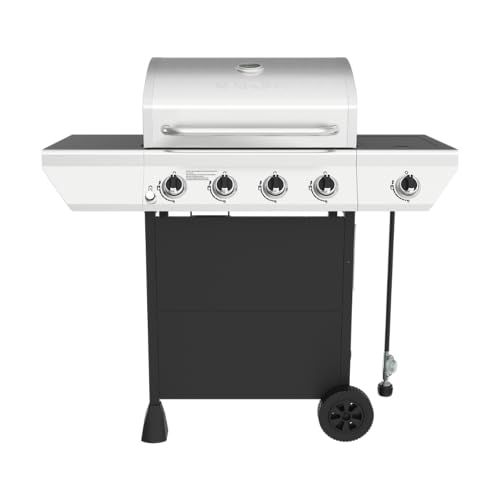
Nexgrill 4-Burner Gas Grill with Side Burner and Stainless Steel Lid
Badge: Best for Family Cookouts
Strengths
- Four burners and a side burner across a stated family-size cooking area
- Matte finish cast iron grate delivers flame heat with strong sear character
- Built-in thermometer and electronic ignition make flame cooking repeatable
Trade-offs
- Cast iron grate care applies: season lightly, store dry
- A full-size cart that needs a settled patio position
- No named sear or boost zone; searing uses the full-preheat method
| Specification | Detail |
|---|---|
| Burners | 4-burner propane gas, plus side burner |
| Output | 52,000 BTU |
| Cooking area | 526 sq. in. |
| Grates | Matte finish cast iron |
| Extras | Stainless steel lid, built-in thermometer, electronic ignition |
The second Nexgrill in this guide is the family all-rounder, and it earns the badge with balance rather than extremes. Its verified title states four burners, a side burner, 52,000 BTU and 526 square inches — a specification that maps directly onto a family cookout: enough flame and space for a mixed load, a cast iron grate to give that flame something to work through, a thermometer to cook by, and electronic ignition to start without ceremony. The stainless steel lid shrugs off weather and holds heat with the lid down, which is how thick family staples — bone-in chicken, roasts of vegetables, whole fish — cook evenly over flame without burning at the edges.
Against its bigger sibling above, this model trades maximum output for a slightly smaller, more manageable station, and most families will experience that as a pure gain: the grill preheats fast, zones cleanly, and does not demand a patio annex. The cast iron grate asks for the usual light seasoning care, and there is no named boost zone, so searing follows the classic method — full preheat, dry food surfaces, patience before the first turn. As a single grill for a household that cooks over flame several times a week, this is the most rounded specification in the guide, and the pick many readers should start from before deciding they need either more power or a specialist sear zone.
Best for: families who want one balanced, full-size flame grill for regular cookouts / Not suited for: sear-zone specialists, or patios that cannot hold a full-size cart

Monument Grills Mesa II 4-Burner Propane Gas Grill
Badge: Best Fast, Fierce Preheat
Strengths
- An Advanced Broil Zone named in the title for concentrated top-down flame intensity
- A title-stated sprint to high heat in minutes suits impatient, weeknight flame cooking
- Stainless steel build with foldable side shelves balances presence and practicality
Trade-offs
- The verified title states no overall output figure or cooking area in BTU and square inches, so confirm on the listing
- Fast, fierce heat shortens the margin for error on delicate foods
- Broil-zone cooking rewards attention; it is not a background setting
| Specification | Detail |
|---|---|
| Burners | 4-burner propane gas |
| Flame feature | Advanced Broil Zone |
| Heat-up | Reaches high heat in 5 minutes (as stated in the verified title) |
| Body | Stainless steel, foldable side shelves |
| Model | Mesa II 410FBZ (as stated in the verified title) |
The Monument Mesa II closes the guide with the other specialist flame feature: an Advanced Broil Zone, in a stainless four-burner grill whose title also promises a sprint to high heat in five minutes. Broiling is open-flame cooking at its most intense — concentrated heat driving hard at the food’s surface — and it is the right tool for the jobs home cooks most often underpower: a proper crust on a thick steak, blistered peppers, cheese finished over a skillet dish, kebabs charred at the edges and juicy in the middle. A grill that reaches working heat in minutes also changes weeknight behaviour; flame cooking stops being a project and becomes a default.
The counterweights are control and information. Intensity this fast demands the cook’s presence — delicate fish, thin asparagus and sugary marinades move from perfect to burnt in the time it takes to fetch a drink — and the verified title, while generous with features, states no overall output figure or cooking area, so number-led shoppers should confirm both on the listing. Assembly is described as fast in the title, and the foldable shelves help the grill live on a real patio rather than a showroom floor. For cooks who prize speed and surface intensity — the weeknight sear, the broiled finish — this is the most exciting flame instrument in the guide, used best by cooks who stay at their post.
Best for: weeknight flame cooks and anyone who loves a broiled, blistered finish / Not suited for: delicate-food-first cooks, or buyers who need stated output and area figures before deciding
Comparison Table
| Pick | Burners | Flame highlight | Grate | Check price |
|---|---|---|---|---|
| Charbroil Performance Cabinet | 4 + side burner | Zone layout; output not stated in verified title | Not stated in verified title | Check on Amazon |
| Nexgrill 4-Burner (626 sq. in.) | 4 + side burner | 60,000 BTU stated output | Not stated in verified title | Check on Amazon |
| IdeaMaxx 3-Burner | 3 | 38,200 BTU stated output | Cast iron | Check on Amazon |
| Weber Spirit E-425 | 4 | Sear Zone with Boost Burners | Porcelain-enameled cast-iron | Check on Amazon |
| Nexgrill 4-Burner (526 sq. in.) | 4 + side burner | 52,000 BTU stated output | Matte finish cast iron | Check on Amazon |
| Monument Mesa II | 4 | Advanced Broil Zone; high heat in 5 minutes as stated | Not stated in verified title | Check on Amazon |
How to Choose an Open-Flame Grill
Choose by flame architecture first. Every grill in this guide burns propane over exposed burners, but they distribute that flame differently: even grids for general cooking, a boosted sear zone for crust, a broil zone for surface intensity, and raw output for scale. Match the architecture to your menu. Steak-and-chop households should weight the sear and broil specialists; mixed-menu families should weight burner count and area; compact households should weight grate material, because cast iron lets a small grill punch at a big grill’s sear weight.
Grate material is the second decision, and it is a care commitment as much as a cooking one. Cast iron — bare, matte or porcelain-enameled — stores heat and sears deeply, and asks for seasoning awareness and dry storage in return, with the enameled version forgiving the most neglect. Where a verified title states no grate material, as with the Charbroil Performance and the larger Nexgrill in this guide, treat that as a question to answer on the listing rather than a gap to assume away, because the grate is the surface your food actually meets.
Everyday controls deserve a word, because flame you cannot start or read is flame you will not use well. Electronic ignition, named on both Nexgrill picks in this guide, removes the match-and-hope ritual and matters most to newer cooks and to anyone lighting a grill in wind or dusk. A built-in lid thermometer, named on three picks here, is not a precision instrument, but it is a useful governor: it tells you whether the box is in a gentle, roasting or fierce regime before food commits you to an answer. Side burners, fitted to three picks, extend the flame station to the rest of the meal. None of these controls changes what open flame is; all of them change how confidently a household will cook over it several times a week, and confidence, in this category, is a performance feature.
Finally, size the flame to the cook. Output figures only mean something spread across area and burners: the stated figures in this guide range from a compact three-burner output to the largest four-burner one, and each is appropriate at its scale. The failure mode to avoid is buying maximum flame for minimum cooking — a big, fierce grill owned by a small household gets preheated wastefully, cleaned reluctantly and mastered never. Households planning a permanent outdoor station should also weigh the built-in direction honestly; the freestanding carts here are the flexible route, while the fixed-kitchen route is explored in Best Optional Outdoor Kitchen Grills. And cooks who suspect their true love is charcoal’s rawer flame should test that suspicion against Best Oreo Charcoal Grills before committing to gas — flame loyalty is a real thing, and it is cheaper to honour it at purchase than after.
How to Cook Over Open Flame: Preheat, Zones and Flare Control
Every open-flame cook starts the same way: a full preheat with the lid down, burners high, until the grates are thoroughly heat-soaked. Ten unhurried minutes at this stage buy the non-stick release and the sear marks that no amount of later fiddling can retrofit. While the grill heats, set your zones — fierce over the sear or broil area or the highest burners, medium over the workhorse burners, and a low or off refuge — and dry the surface of anything you intend to crust, because wet food steams where dry food sears.
Cook in the flame’s order. Sear first over the fiercest zone, briefly and without pressing or constant turning, then move food to the medium zone to finish to temperature, and rest it in the refuge or off the grill entirely. Keep the lid down for thick cuts so the enclosed heat cooks the centre while the flame works the surface, and keep it up for thin, fast items you need to watch. Sugary marinades and sauces go on in the final minutes only; over open flame, sugar is a countdown to char.
Flare control is a technique, not a feature. Flare-ups happen when fat drips onto flame, so manage the fat: trim hard excess, let very fatty items start over the medium zone, and never crowd the fierce zone with dripping food. When a flare starts, move the food to the refuge zone and close the lid to starve the flame of air; do not spray water, which spreads grease and steam-burns. A grill cleaned of old grease flares rarely, which is why the care routine — brush warm grates, empty the grease cup, scrape the firebox seasonally, keep burner ports clear — is really a flame-quality routine. Open flame rewards the cook who treats it as an instrument: tuned, zoned and watched.
Troubleshooting
Problem: Steaks char outside and stay raw inside → what to do: your flame is fierce but your finish is missing; sear briefly over the highest zone, then move the steak to a medium burner with the lid down to cook through gently, and let it rest before slicing — crust and centre are two separate jobs done in two separate zones.
Problem: Constant flare-ups with chicken or burgers → what to do: start fatty foods over a medium zone instead of the fiercest flame, trim excess fat and skin overhang, and keep the refuge zone empty and ready; if flares persist across cooks, deep-clean the firebox and grease path, because old grease is flare fuel that no technique can outrun.
Problem: Weak, yellow, lazy flames on one burner → what to do: turn everything off and clear that burner’s ports gently with a soft brush, checking the tube for webs or debris; a burner that burns clean and blue on its neighbours’ settings but not its own is usually clogged, not broken, and a burner rusted through in flakes should be replaced.
Flame Versus Flare: Learning to Read Fire
The distinction at the heart of this category is worth a section of its own. Flame is the fire you set: blue, steady, sized by your knobs, heating grates and food in a controlled exchange. Flare is the fire food sets: orange, sudden, fed by dripping fat, heating nothing evenly and scorching whatever it touches. Beginners experience the two as one chaotic phenomenon and conclude that open-flame cooking is uncontrollable. Experienced cooks keep them separate almost without thinking — flame high where they want it, fat managed so flare rarely starts, and a refuge zone ready for the seconds when it does.
Hardware helps at the margins, which is what this guide’s picks are really selling. A boost or broil zone puts maximum flame in one known place instead of everywhere. Cast iron grates buffer the exchange, storing flame heat and smoothing its delivery. Multiple burners make the refuge zone a setting rather than a hope. None of it replaces the cook, and all of it rewards one. That is the honest promise of open-flame grilling: not convenience, but command — the oldest cooking relationship there is, with better knobs.
Matching Foods to Flame: A Short Field Guide
Steaks and chops are open flame’s home crowd. Give them the fiercest zone you have — the boost or broil area where fitted, the highest burners elsewhere — a dry, seasoned surface, and a short, confident exposure on each side before a gentler finish. Thick cuts benefit from the reverse order on busy grills: start them in the medium zone to approach temperature, then finish with a fierce sear, which produces an even interior and a fresh crust at the moment of serving. Either way, the resting period afterwards is part of the flame work, not a pause in it; juices redistribute while the crust stays crisp.
Chicken is the discipline test. Skin and fat over fierce flame is the flare recipe this guide keeps warning about, so chicken starts in the medium zone, skin rendered gradually, and visits the fierce zone only at the end, briefly, for colour. Bone-in pieces want the lid down and patience; boneless breasts want a watchful cook and an early move to the refuge, because their margin between juicy and dry is measured in moments over flame. Vegetables, by contrast, are flame’s easiest pleasure: peppers, onions, corn, courgettes and mushrooms blister happily over direct heat, needing only oil, salt and turning, and they forgive the beginner everything that chicken does not.
Fish and seafood sit at the far end of the care scale. Firm, thick fish — salmon, swordfish, tuna steaks — sears beautifully over a clean, hot, oiled grate in the medium-fierce range, while delicate fillets and small seafood are happier in a basket or on a plate accessory that keeps the flame’s flavour and removes the gamble. Burgers deserve one specific note: press them never, move them rarely, and let the flame and the grate do the work; a burger squeezed against the grate is donating its juices to the flare fund. Cooked in this order of respect — bold foods to fierce flame, fatty foods to managed flame, delicate foods to governed flame — a single grill handles an entire menu without a single burnt offering, which is the whole craft this category exists to teach.
Safety Around Open Flame
Respect scales with flame, so this guide ends its technique where every flame manual should: with the habits that keep fire a servant. Site the grill on a level, non-combustible surface with clear space above and behind it, away from siding, overhangs, dry planting and traffic. Leak-check gas connections with soapy water at the season’s start and after tank changes. Never leave a grill at full flame unattended, keep children and pets outside a generous boundary while it runs, and keep a lid within reach — closing it is the correct first response to almost any flame emergency on a gas grill, followed by turning the burners and then the tank off if the fire does not settle.
After cooking, let the grill burn clean for a few minutes, close the tank valve first and the burners second so no gas lingers in the lines, and cover the grill only once it is fully cool. Grease is the long-term hazard: a neglected grease cup or firebox turns next month’s cookout into this section’s cautionary tale, so clean on the schedule the how-to above sets out. Open flame is safe in the way knives are safe — completely, in disciplined hands, and not at all in careless ones.
Common Buying Mistakes
The first mistake is buying output without architecture: a huge stated figure spread over a layout with no refuge zone cooks worse than a modest grill that zones well. The second is ignoring grate material, the surface that decides whether flame becomes sear or scorch. The third is treating a sear or broil zone as a general cooking setting and burning dinners that a medium zone would have perfected. The fourth is neglecting grease until flare-ups convince you the grill is faulty. And the fifth is forgetting the spell-check of this whole category: shoppers who searched for flamr, flame or fire interchangeably should be clear about which fire they want — propane’s governed flame, as in this guide, or charcoal’s raw one — because the grills, the skills and the pleasures are genuinely different.
Final Recommendation
For most flame-focused cooks, the Weber Spirit E-425 Gas Grill is the first choice: a named Sear Zone with Boost Burners over porcelain-enameled cast-iron grates is the most complete searing specification in this guide, inside a four-burner station that handles the rest of the meal without fuss. It is the pick for anyone whose open-flame cooking is really about the crust.
Choose the Nexgrill 4-Burner Propane Gas Grill with Side Burner instead for maximum stated power and space at party scale, the Monument Grills Mesa II 4-Burner Propane Gas Grill for the fastest fierce heat and a broil-zone finish on weeknights, and the IdeaMaxx 3-Burner when the patio is small but the sear standards are not. The Charbroil Performance and the family Nexgrill remain the balanced cabinet and cookout choices. Any of the six, zoned and watched, will teach you more about fire in a season than a lifetime of oven cooking.
Frequently Asked Questions
What does “open flamr” mean in this search?
“Flamr” is a typing slip for “flame,” and this guide treats the search in its corrected sense: grills that cook food directly over a live, exposed flame. All six picks are propane burner grills, because a gas burner is the most adjustable open flame in outdoor cooking — visible, zoned by knobs, and extinguishable in a second. The original spelling is kept in the guide’s headings so the page matches the search that led here.
Is open-flame grilling the same as cooking over an open fire?
No. An open fire usually means a wood or charcoal fire, with flame, embers and smoke managed by hand. Open-flame grilling in this guide means burner flame on a gas grill: the same direct-flame principle, governed by valves instead of fire-building. The flavour is cleaner and the control far finer; the romance is a matter of taste, and charcoal guides cover the fire-building branch of the family.
What makes a grill good at searing?
Three things working together: enough flame in one place, a grate that stores that heat — cast iron in its various finishes is the classic answer — and food with a dry surface placed on a fully preheated grate. Dedicated sear and broil zones, like the ones named on two picks in this guide, package the first element; the cook supplies the rest.
How do I stop flare-ups ruining food over open flame?
Manage fat and keep a refuge. Trim hard excess fat, start fatty foods over a medium zone rather than the fiercest flame, and never crowd the hot zone with dripping items. When a flare starts, move the food to the low or off zone and close the lid to starve the flame of air. Persistent flaring across cooks usually means the firebox and grease path need cleaning, not that the grill is defective.
Do I need a side burner on an open-flame grill?
Only if you cook complete meals at the grill. A side burner is itself a small open flame, ideal for sauces, corn, beans and skillet sides, and hosts use it constantly. Protein-and-vegetables cooks who finish sides indoors can fairly skip it and choose a simpler or more compact station, as the IdeaMaxx pick in this guide demonstrates.
Are bigger BTU figures always better for flame cooking?
No. Output only matters in relation to the area and burners it serves, and in the zones it can create. A fierce, well-zoned grill of moderate stated output will out-cook a larger figure spread thin or arranged without a refuge zone. Judge the architecture — burners, zones, grate material — before the headline number, and remember that no verified figure is claimed in this guide for picks whose titles do not state one.
Can I cook delicate foods like fish over open flame?
Yes, with the flame governed rather than fierce. Use a medium zone, a thoroughly preheated and oiled grate, and minimal turning — fish releases when it is ready. A broil or boost zone is the wrong tool here; save it for the steak. Very delicate items also benefit from a grill basket or a flat plate accessory, which keeps the flame’s flavour while removing the sticking risk.


