Disclosure: topratedkitchenware.com is reader-supported. When you buy through links on our site, we may earn an affiliate commission from Amazon and other retailers, at no extra cost to you.
Where to buy
If you arrived here by typing best pricesgolf cart 12 volt battery prices into a search box, you are asking the right question in a category determined to answer it badly. This guide compares value the honest way — cost per usable kilowatt-hour, cost per year of service, and full system cost — without printing a single static price, because battery prices move too often for a quoted figure to stay true. Four true 12-volt blocks are linked; two impressive 24-volt batteries are reviewed prose-only, because the cheapest battery in the world is expensive if it is the wrong voltage for your bank.
- Dyness 24V 100Ah LiFePO4 Lithium Battery — prose-only, a 24-volt unit; a 12-volt bank cannot use it
- yeagulch 24V 314Ah LiFePO4 Lithium Battery — prose-only, a 24-volt unit; a 12-volt bank cannot use it
- SUPER EMPOWER 12V 100Ah LiFePO4 Battery, Group 24
- VEMDIA 12V 100Ah LiFePO4 Battery, Group 31
- VEMDIA 12V 100Ah LiFePO4 Lithium Battery, Group 31 with Smart BMS
- Renogy 12 Volt 100Ah Deep Cycle AGM Battery
Read the full guide ↓ for the detailed reviews and the value maths that separates a genuinely good price from a merely small number.
Let us deal with the obvious question first: a guide about the best pricesgolf cart 12 volt battery prices that refuses to print prices sounds like a contradiction, so here is the reasoning. Golf cart battery prices shift with promotions, seasons, and stock levels, sometimes week to week. A figure printed in a guide like this would be wrong for most readers most of the time, and a wrong price is worse than no price — it anchors decisions to a number that no longer exists. What does not change is the method: how to divide a price by usable energy, how to divide it again by realistic years of service, and how to spot the listings whose low number depends on you not reading the voltage line. That method is this guide’s actual product, and it will still be correct on the day you buy.
The second thing a price shopper must internalise is that a golf cart never buys a battery — it buys a bank. Three 12-volt blocks build a 36-volt bank, four build a 48-volt bank, and every block must match. So every price in this category should be mentally multiplied by three or four before it is compared with anything, and the true comparison is bank against bank, system against system, including the charger where chemistry demands a new one. Judged that way, the cheapest block sometimes builds the most expensive bank, and the premium block sometimes builds the cheapest decade.
The six products below are the same verified pool this category always draws from, judged here through the value lens. Two are 24-volt units reviewed in full without links — they matter to a price guide because they are the classic mis-purchase: enormous capacity at an tempting per-unit figure, bought by someone whose bank needed 12-volt blocks. Four are true 12-volt blocks, three lithium and one AGM, and their reviews weigh what each dollar of commitment actually buys: series support, cycle life, cold protection, or charger continuity.
Key Takeaways
- Compare banks, not batteries: multiply any block price by three (36V) or four (48V) before comparing anything.
- The fairest unit is cost per usable kilowatt-hour: lithium lets you use most of its rated energy; lead-acid should be planned at about half.
- Cost per year beats cost per purchase — cycle life and usable depth routinely reverse the shelf-price ranking.
- A lithium bank’s true price includes a lithium-profile charger; an AGM bank’s price is closer to the blocks alone.
- The two 24V picks are prose-only: no per-unit saving survives being the wrong voltage for a 12V bank.
- This guide prints no static prices on purpose; use the method here against live listings on the day you buy.
In this guide
Quick Picks
| Pick | Badge | Why it is here | Link |
|---|---|---|---|
| Dyness 24V 100Ah LiFePO4 | Best for 24V Systems | Strong value inside 24V systems — and a warning about voltage mismatch everywhere else. | Prose-only — 24 volts, not 12 |
| yeagulch 24V 314Ah LiFePO4 | Biggest Capacity per Unit | Huge energy per box at 24V; irrelevant to a 12V bank at any price. | Prose-only — 24 volts, not 12 |
| SUPER EMPOWER 12V 100Ah LiFePO4, Group 24 | Best Value Overall | Stated series support and cold protection make its bank price the easiest to justify. | Check on Amazon |
| VEMDIA 12V 100Ah LiFePO4, Group 31 | Best Long-Term Value | A very high stated cycle count spreads its bank cost across the most years. | Check on Amazon |
| VEMDIA 12V 100Ah LiFePO4, Group 31 Smart BMS | Best Cold-Climate Value | Low-temperature protection defends the investment where carts winter in freezing storage. | Check on Amazon |
| Renogy 12V 100Ah Deep Cycle AGM | Best Low-Commitment Value | The lowest system cost of entry: blocks only, your existing charger, no conversion extras. | Check on Amazon |
How These Picks Were Chosen
This is a research-led value assessment, built from the verified manufacturer data for each product — full title, stated voltage, capacity, management features, and expansion claims — and from a linking rule that does not bend for bargains: a pick is linked only if its own documentation confirms it is a true 12-volt block suitable for a golf cart series bank. A low price cannot promote a 24-volt battery into a 12-volt guide’s links, which is why the two 24V units below carry full reviews and no links.
The value framework itself has four tests. First, usable energy: divide the bank’s price by the energy you can actually use daily — most of the rating for lithium, about half for lead-acid if you want it to last — because that is the energy you are really buying. Second, service years: a bank cycled daily lives or dies by its cycle design, so stated deep-cycle ambition matters more here than in almost any other category; the same logic drives the Best Quality 12 Volt Deep Cycle Batteries category, where quality is the entire question. Third, system completeness: charger, cables, reducer, and gauge belong in the lithium column of the ledger. Fourth, fit and support: a bank that does not fit the tray, or whose series use is undocumented, is not cheap at any figure. No prices or fixed ratings are printed, by design and by policy; every judgement below is expressed in relative, durable terms you can apply to live listings.
The 6 Best Pricesgolf Cart 12 Volt Battery Prices Contenders, Reviewed for Value
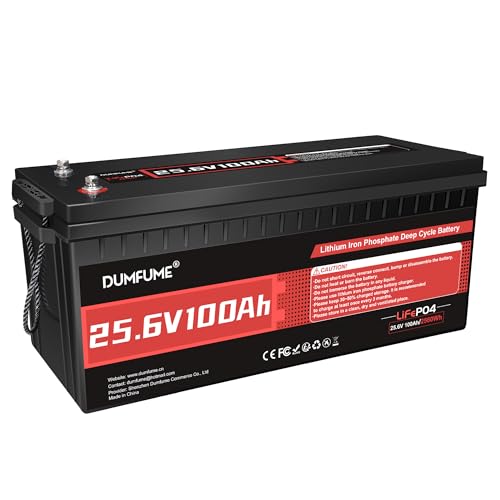
Dyness 24V 100Ah LiFePO4 Lithium Battery
Badge: Best for 24V Systems
Strengths
- Within 24V systems, one unit replaces a pair of 12V blocks — fewer connections, one BMS, tidy packaging.
- Stated 2560Wh, smart 100A BMS, and a 4P2S expansion path up to 20.48kWh.
- Marine, RV, and solar positioning gives it resale and second-life versatility.
Trade-offs
- For a 12V cart bank its value is zero at any price, because it cannot be used as a block.
- A two-unit 48V series rebuild is a system redesign with charger and controller costs attached.
- Its stated cycle figure is more modest than the strongest 12V lithium claims.
Key specs (from manufacturer title): Voltage: 24V; Capacity: 100Ah; Stated energy: 2560Wh; BMS: smart 100A; Stated deep cycles: 4000+; Connection: 4P2S up to 20.48kWh stated; Stated lifetime: 10-year.
Every price guide needs its cautionary tale, and this capable battery is ours. Judged inside its own category, the Dyness is a sensible buy: a single 24V deep-cycle unit with honest specifications and an expansion path, the sort of battery that simplifies a boat or cabin system. The trouble starts when a cart owner, sorting listings by capacity per unit or chasing a promotion, sees 100Ah and a lithium badge and stops reading one line too early. The voltage line is the listing. A 24V battery in a 12V bank is not a compromise or a downgrade; it is a non-fit, and the money spent on it is spent entirely, however small the number was.
That is why this review exists in a prices guide: the most expensive battery is the one you cannot use, and the second most expensive is the one you must replace early. If your project genuinely is a 24V system — or a deliberate two-unit 48V redesign undertaken with a matching charger and controller review — this pick deserves a place on your shortlist and its value case is respectable. If your project is a cart bank of 12V blocks, let its quality remind you to read every listing’s voltage line twice, and let its prose-only status here mark the boundary of the category.
Best for: 24V marine, RV, and solar systems, and deliberate 24V-based redesigns. / Not suited for: Golf cart banks built from 12V blocks, regardless of the deal attached.
yeagulch 24V 314Ah LiFePO4 Lithium Battery
Badge: Biggest Capacity per Unit
Strengths
- A stated 8038.4Wh per unit — capacity figures that make per-unit price comparisons look dramatic.
- 200A BMS, low-temperature protection, and stated certifications suit serious 24V work.
- Trolling, marine, solar, and backup roles are all named in its title.
Trade-offs
- Still 24 volts: in a 12V bank, its capacity per dollar is a mirage.
- Its size and commitment level dwarf any genuine cart requirement.
- Per-unit comparisons against 100Ah blocks flatter it; per-usable-kWh within the wrong system, it buys nothing.
Key specs (from manufacturer title): Voltage: 24V; Capacity: 314Ah; Stated energy: 8038.4Wh; BMS: 200A; Stated deep cycles: 15000+; Protection: low-temperature; Certifications stated: UL 1973, UN38.3.
This is the listing that breaks naive price comparison, which is precisely why a value guide should show it to you. Put its per-unit figure beside a 100Ah block’s and the arithmetic seems to shout — until you remember that the comparison crosses a voltage boundary, and energy you cannot wire into your system is not energy you bought. Within 24V systems, the honest version of its case is strong: one unit doing the work of a small wall of batteries, with a 200A management system and low-temperature protection, at a per-kilowatt-hour figure that big lithium units often make attractive.
For cart owners, its role in this guide is educational. Price-per-amp-hour charts that mix voltages are marketing, not analysis; price per usable kilowatt-hour within your own system voltage is analysis. If you take one habit from this entire guide, take that one — it will protect you in every battery category you ever shop, from carts to the Best Agm 12 Volt Solar Battery shelf, where the same cross-voltage listings lie in wait. This battery, in the right system, is a lot of stored energy. In a 12V cart bank, it is an expensive paperweight with excellent specifications.
Best for: Large 24V systems that can use eight kilowatt-hours in a single unit. / Not suited for: Any 12V bank, and any comparison chart that mixes voltages.

SUPER EMPOWER 12V 100Ah LiFePO4 Battery, Group 24
Badge: Best Value Overall
Strengths
- Stated 4P4S expansion support removes the most expensive uncertainty in bank building: whether the blocks belong in series.
- Low-temperature cutoff protects the investment in the exact storage conditions carts endure.
- Compact Group 24 format widens tray compatibility, reducing fit-related returns and rework.
Trade-offs
- The bank price must honestly include a lithium-profile charger to complete the system.
- 100Ah per block is standard capacity; heavy users may fund a parallel string sooner than planned.
- Value depends on keeping the bank matched — a future single-block replacement breaks the discipline.
Key specs (from manufacturer title): Voltage: 12V nominal; Capacity: 100Ah; Stated energy: 1280Wh; Group size: 24; BMS: 100A with low-temperature cutoff; Expansion: 4P4S, up to 20.48kWh stated.
Value, properly defined, is what you get per unit of risk as much as per unit of money, and this block minimises the risks that make banks expensive. Its title-stated 4P4S support means the series question — the one that can strand a whole bank purchase — is answered before you pay. Its low-temperature cutoff means the most common silent killer of stored lithium banks is defended automatically. Its compact case means the tray conversation is short. None of those virtues appears in a price-per-amp-hour chart, and all of them appear in your total cost of ownership within the first year.
The remaining ledger entries are the honest ones for the whole lithium class: add the charger, plan on using most of the 1280Wh per block daily, and expect the bank to outlast lead-acid equivalents by a wide enough margin that the per-year figure flatters it further with every season. For a price-focused shopper, this is the pick whose bank price is easiest to defend in full — not because the number is the smallest, but because the fewest unpleasant additions are hiding behind it. Shoppers who think in amp-hours first may also enjoy the framing in our Best Amp Hour 12 Volt Battery guide, where capacity claims get the same audit.
Best for: Most converters who want the defensible bank price, fully loaded with its real costs. / Not suited for: Shoppers whose budget cannot stretch to the lithium charger the system requires.

VEMDIA 12V 100Ah LiFePO4 Battery, Group 31
Badge: Best Long-Term Value
Strengths
- A stated deep-cycle count in the fifteen-thousand range is the strongest longevity claim among the linked picks.
- Group 31 full-size case and 100A BMS match the standard bank formula without exotic packaging.
- Multi-role positioning (solar, home, RV, marine) gives the bank second-life value beyond the cart.
Trade-offs
- No expansion configuration is stated in the title; series confirmation from the manufacturer is part of due diligence.
- Long-term value only materialises if you keep the cart and the bank for the long term.
- Headline cycle figures assume favourable conditions; real years depend on your depth and climate habits.
Key specs (from manufacturer title): Voltage: 12V nominal; Capacity: 100Ah; Group size: 31; BMS: built-in 100A; Stated deep cycles: 15000.
If value is price divided by years, this is the pick engineered to win the division. A bank’s cost per year collapses when the bank simply refuses to wear out, and a battery designed and specified around a very high deep-cycle count is aimed at exactly that outcome. The claim deserves the usual discount — laboratory cycles are gentler than hills in August — but design intent compounds: cells and management chosen for longevity tend to deliver it proportionally, and for a daily-driven cart the difference between a bank replaced twice and a bank replaced once is the entire value argument.
The conditions attached are about the buyer, not the battery. Long-term value requires a long term: if the cart will be sold in two seasons, the premium for longevity buys years someone else will enjoy. It also requires the series conversation this guide keeps recommending, since the title states no expansion configuration, and it requires Group 31 tray room. Meet those conditions and this is arguably the strongest pure-value play in the guide — the same reasoning that makes high-cycle blocks popular in the Best Agm 12 Volt 200 Ah Solar Battery comparisons, where storage batteries are also bought by the decade.
Best for: Owners keeping their cart for many seasons and cycling it daily. / Not suited for: Short ownership horizons, where longevity you will not use is not value.

VEMDIA 12V 100Ah LiFePO4 Lithium Battery, Group 31 with Smart BMS
Badge: Best Cold-Climate Value
Strengths
- Low-temperature protection defends the bank’s value against the most common cause of premature lithium death in stored carts.
- Stated 1280Wh and a fifteen-thousand-plus cycle ambition match its sibling’s long-term case.
- Smart BMS oversight suits carts charged unattended in barns and sheds.
Trade-offs
- In a heated garage or mild climate, you may pay for protection you never invoke.
- Series configuration is not stated in the title; confirmation remains part of the purchase.
- Its value case overlaps its sibling’s, so the choice hinges on your storage reality.
Key specs (from manufacturer title): Voltage: 12V nominal; Capacity: 100Ah; Stated energy: 1280Wh; Group size: 31; BMS: 100A smart with low-temperature protection; Stated deep cycles: 15000+.
Insurance is the correct frame for this pick’s value. A lithium bank represents a real investment sitting in an unheated building through winter, connected to a charger that will do its job faithfully — including on the night the temperature falls below freezing, when an unprotected lithium battery can be permanently damaged by an ordinary charge. Low-temperature protection converts that scenario from a bank-replacing loss into a non-event. Priced against the cost of the loss it prevents, the protection is among the cheapest value in this entire guide for northern owners, and among the most pointless for owners whose carts winter in warmth — which is why this guide assigns it a climate badge rather than a universal crown.
Everything else about the battery mirrors the strong class formula: 100Ah blocks, four to a 48V bank, deep usable capacity, and stated longevity ambitions. The value discipline it demands is the standard one — confirm series guidance, budget the lithium charger, buy the bank matched. Owners cross-shopping RV house banks will recognise the same insurance logic in the Best Agm Rv Battery 12 Volt category, where cold storage punishes the unprepared in a different chemistry. Value is contextual; this pick is the proof.
Best for: Northern owners and anyone whose cart is charged unattended through winter. / Not suited for: Warm-climate owners who would be insuring against a risk they do not face.

Renogy 12 Volt 100Ah Deep Cycle AGM Battery
Badge: Best Low-Commitment Value
Strengths
- The lowest total system outlay in the guide: blocks only, on the charger you already own.
- Sealed AGM removes watering and acid chores, so its maintenance cost is genuinely near zero.
- Stated 3 percent self-discharge suits seasonal carts that sit between uses.
Trade-offs
- Cost per usable kilowatt-hour is far less flattering than the block price suggests — plan on half the rating as working capacity.
- Cost per year rises with daily deep use, where its cycle life is consumed quickly.
- Weight is a permanent handling and performance cost that never appears on an invoice.
Key specs (from manufacturer title): Voltage: 12 volt; Capacity: 100Ah; Chemistry: deep-cycle AGM lead-acid; Self-discharge: 3 percent stated rate; Max discharge current: 1100A stated.
The Renogy AGM is the value pick for a specific, common, and perfectly rational buyer: the one whose cart is a pleasure, not a tool. For weekend and seasonal use, the full lithium system cost — blocks, charger, gauge — buys longevity that light use will take a decade to spend, while this AGM bank restores the cart completely for the price of the blocks alone. Its sealed construction means the ownership experience is modern even if the chemistry is classic: no watering, no acid, low self-discharge across the off-season, and a charger relationship that requires no thought at all.
The honesty this guide owes you is about the denominators. Divide its price by usable energy and the figure roughly doubles, because lead-acid longevity asks you to live in the top half of the rating. Divide by years under daily deep cycling and the figure climbs again. Neither division matters if your use is light — a bank that ages by the calendar rather than by the cycle count is a bank whose low entry price is the whole story. The mistake is not buying AGM; the mistake is buying AGM for a lithium workload, or lithium for an AGM workload. Price guides exist to prevent exactly that mismatch, and on the Best 75 Amp 12 Volt Battery shelf the same usable-capacity audit separates honest listings from flattering ones.
Best for: Light and seasonal carts, tight total budgets, and owners keeping a lead-acid charger. / Not suited for: Daily deep-discharge duty, where its per-year cost overtakes lithium’s.
Comparison Table
| Pick | Voltage | Capacity | Usable-energy planning | Value identity | Link |
|---|---|---|---|---|---|
| Dyness LiFePO4 | 24V | 100Ah | Most of rating — in 24V systems only | Prose-only for cart banks | Prose-only |
| yeagulch LiFePO4 | 24V | 314Ah | Most of rating — in 24V systems only | Prose-only for cart banks | Prose-only |
| SUPER EMPOWER Group 24 | 12V | 100Ah | Most of 1280Wh per block | Best documented bank value | Check on Amazon |
| VEMDIA Group 31 | 12V | 100Ah | Most of rating per block | Best cost-per-year candidate | Check on Amazon |
| VEMDIA Group 31 Smart BMS | 12V | 100Ah | Most of 1280Wh per block | Best cold-climate insurance value | Check on Amazon |
| Renogy AGM | 12V | 100Ah | About half of rating for longevity | Lowest system entry cost | Check on Amazon |
How to Judge Best Pricesgolf Cart 12 Volt Battery Prices Fairly
Take any listing you are considering and put it through four divisions. First, the bank division: multiply the block price by the number of blocks your cart needs — three for 36V, four for 48V — and add the system extras your chemistry requires. A lithium bank adds a lithium-profile charger and ideally a shunt gauge; an AGM bank usually adds nothing. Second, the energy division: divide that system total by the usable kilowatt-hours, using most of the rated energy for lithium and about half for lead-acid. Third, the time division: divide again by the years of service your usage pattern implies — daily deep use consumes lead-acid years quickly and lithium years slowly; light seasonal use reverses the pressure. Fourth, the risk division, which is judgement rather than arithmetic: documented series support, cold protection, fit certainty, and warranty seriousness all subtract future costs that never appear in today’s number.
Run the four linked picks through those divisions and a pattern emerges that shelf prices hide. The AGM wins division one and loses divisions two and three as usage intensifies. The cycle-life VEMDIA wins division three for committed owners. The smart-BMS VEMDIA wins division four anywhere winters freeze. The SUPER EMPOWER wins the balanced audit — never the cheapest in any single division, never carrying a hidden liability in another. That is what a value guide can honestly tell you without printing a figure: not which number is smallest today, but which number will still look wise in three years.
How to Buy a Bank Without Overpaying for the Wrong Things
Good buying in this category is mostly sequencing. Measure the tray and confirm the system voltage before opening a single listing, so your shortlist is born clean. Decide chemistry from your usage calendar, not from a promotion. Verify series documentation for the exact blocks you intend to bank. Price the whole system — blocks, charger if needed, cables, reducer, gauge — as one number. Only then compare live listings, using the per-usable-kilowatt-hour and per-year divisions from the section above. Practical habits that protect the purchase:
- Buy the whole bank in one order where possible, so blocks share a production batch and a birthday.
- Screenshot the title and specifications at purchase; documentation is your evidence if a claim is ever disputed.
- Treat bundled extras sceptically — a bundled charger is worth its standalone value only if its profile matches your chemistry and voltage.
- Check the return reality for heavy batteries before ordering; freight on a battery bank is not a trivial afterthought.
- Keep the old bank’s core or recycling arrangements in mind; disposal is part of the true cost of the swap.
Troubleshooting a disappointing purchase follows the same value logic. Problem: the new bank runs out faster than the maths promised → audit usable capacity honestly: depth habits, accessory loads, and one weak block are the usual explanations. Problem: a “bargain” lithium bank will not charge in winter → check for low-temperature protection in the specification; its absence was the hidden discount. Problem: one block fails early in a mixed-age bank → the mismatch was the price; replace as a matched set this time.
Seasonality, Promotions, and the Patience Premium
Battery pricing breathes with the calendar. Golf demand peaks in spring, marine demand with it, and storage-battery promotions cluster around the big retail events — which means the same bank can carry meaningfully different numbers across a year without anything about the battery changing. A price guide cannot chase that weather for you, but it can tell you how to stand in it: do the four divisions once, write down the system totals you consider fair, and then let promotions come to you. The buyer with a finished analysis can recognise a genuine promotion in seconds; the buyer still analysing will mistake every countdown timer for a fact. Patience is worth real money in this category, but only the prepared kind — patience with a shortlist, a tape measure, and a charger decision already made.
The Two Numbers Sellers Hope You Will Not Compute
Everything in this guide reduces to two computations that listings rarely volunteer. The first is usable energy: a battery’s rating is its laboratory capacity, but your cart lives on the portion you can spend daily without shortening the bank’s life — most of it for lithium, about half for lead-acid. Sellers quote the rating; owners should price the usable portion. The second is bank arithmetic: the block is never the purchase, the bank is, and the bank is three or four blocks plus its supporting system. Sellers quote the block; owners should price the bank. Compute those two numbers for any listing in this category and the marketing falls away, leaving the same shortlist this guide reached — which is the most reassuring thing a method can do.
Warranties: The Price Component Nobody Prices
A warranty is a price term wearing a legal costume, and in a bank purchase it deserves a line in the comparison. Four blocks multiply everything, including the probability that one unit in the string develops a fault across years of service. When that happens, the questions that matter are unglamorous: Is the claim handled domestically or across an ocean? Does the maker advance a replacement or wait for the faulty unit to travel? Is capacity loss covered by a measurable threshold, or only outright failure? And does the warranty expect the bank to have been charged and stored within stated conditions — conditions your charger choice and storage habits either meet or do not?
None of this can be reduced to a number in this guide, and sellers’ warranty headlines should be read with the same scepticism as their cycle counts. But the direction of value is clear: a slightly higher bank price from a maker whose support answers series questions promptly, publishes clear warranty terms, and has a track record of honouring them is frequently the cheaper bank over a decade. The cheapest version of a battery is the one you buy once. When you run the four divisions from the buying guide, let warranty seriousness sit inside the risk division where it belongs, and weight it more heavily the longer you intend to keep the cart.
Too-Good Listings, Mystery Brands, and the Capacity Illusion
Every battery category has a fringe of listings whose numbers only work if nobody checks them: capacities that would require cells denser than physics currently sells, cycle claims beyond any published test, and brand names that were invented the same season as the listing. The defence is not cynicism — several picks in this guide come from younger brands with honest, verifiable specifications — the defence is verification. A trustworthy listing’s claims cohere: the amp-hours, watt-hours, and voltage agree with each other under simple multiplication; the group size matches the case dimensions; the BMS current suits the capacity; and the stated expansion support matches the intended use. When those internal consistencies hold, as they do for every linked pick here, a younger brand is a reasonable value candidate. When a listing’s own numbers contradict each other, its price is not low — its honesty is. Walk away, and let the four divisions protect you in the next category you shop as reliably as they do in this one.
A Worked Example: One Cart, Two Banks, Five Years
Make the method concrete with a thought experiment — no prices, just the structure. Imagine a 48V cart used most days on a large property. Option one is an AGM bank: four blocks, existing charger, nothing else to buy. Its usable daily energy is about half the bank’s nominal rating, so on heavy days the owner either limits use or dips deeper and spends the bank’s life faster. Across five years of daily work, that bank is a strong candidate for replacement at least once, and its weight taxes tyres and suspension the whole time. Option two is a lithium bank of the linked picks: four blocks plus a profile charger and a gauge. Its usable daily energy is most of its nominal rating, its weight penalty vanishes, and five years of daily cycling sits comfortably inside its design ambitions, with years to spare.
Now notice what the example proves without a single price. If the cart were a weekend toy, the same structure crowns the AGM bank, because five years of light use spends neither bank’s life and the lithium system’s extra components buy nothing. The method, not the market, decides — and it decides differently for different owners, which is exactly what an honest price guide should teach. Bring your own calendar and your own terrain to the four divisions, and the answer you get will be yours in a way no printed price could ever be.
Reading Any Battery Listing Like an Auditor
Before any bank purchase, give the listing sixty seconds of audit. Line one, voltage: does it match your bank’s block voltage exactly — 12V-class for this category, with 12.8V understood as the same LiFePO4 class? Line two, energy coherence: multiply volts by amp-hours and check the watt-hour figure agrees; honest listings survive their own arithmetic. Line three, duty: does the title say deep cycle, and does the stated cycle ambition suit your calendar? Line four, banking: is a series or expansion configuration stated, and if not, have you asked the maker directly? Line five, protection: for lithium, is low-temperature charge protection present if your storage freezes, and is the BMS current credible for your controller’s demands?
Five lines, one minute, and the listing has told you whether its price is a fact or a story. Listings that pass the audit can still be compared on price with a clear conscience — that is what the four divisions are for. Listings that fail it should not be rescued by a discount, because the audit failures are precisely the costs that arrive later wearing different names: the bank that cannot be built, the winter charge that wounds the cells, the capacity that was never really there. Price is the last thing to read in a battery listing, not the first, and the discipline of reading it last is worth more than any single saving this category will ever offer you.
Common Buying Mistakes
- Comparing block prices instead of bank prices. Multiply by three or four, add the system, then compare.
- Mixing voltages in a comparison chart. A 24V unit’s capacity per dollar says nothing about a 12V bank.
- Pricing rated energy instead of usable energy. Lead-acid’s honest denominator is about half its rating.
- Ignoring the charger in the lithium column. The profile-matched charger is part of the price, every time.
- Buying longevity for a short ownership. Cycle-life premiums only pay out across years you actually keep the cart.
- Chasing a promotion before finishing the analysis. A discount on the wrong battery is a full-price mistake.
Final Recommendation
For the balanced best value, build the bank from the SUPER EMPOWER 12V 100Ah LiFePO4 Battery, Group 24 — its documented series support and cold protection mean its bank price carries the fewest hidden additions. If your horizon is long and your use is daily, the VEMDIA Group 31’s cycle-life case wins the per-year division; if your winters freeze, its smart-BMS sibling is the value pick; and if your cart is a light-use pleasure and your budget is the binding constraint, the Renogy AGM’s blocks-only system cost is honestly unbeatable. Leave the two 24V batteries to the 24V systems they serve. Do the four divisions on live prices the day you buy, and you will pay a fair price by construction rather than by luck. That, in the end, is the only honest answer a prices guide can give: not a number that expires, but a way of seeing numbers that never does — and a shortlist of verified 12-volt blocks on which the method has already been run for you.
Frequently Asked Questions
Why does this guide not list actual prices?
Because any figure printed here would be stale for most readers within weeks, and a stale price misleads more than it helps. Battery pricing moves with promotions, seasons, and stock. What stays true is the method — bank totals, usable energy, service years, and risk — and applying that method to live listings on your purchase day will always beat quoting a number from ours.
What is the cheapest way to replace a golf cart bank?
In total system outlay, a sealed AGM bank like the Renogy pick: the blocks are the whole purchase, your existing charger stays, and no conversion extras apply. Whether it is cheapest per year depends entirely on use — light seasonal duty keeps AGM ahead, while daily deep cycling spends its shorter life fast enough that lithium’s per-year figure usually wins.
How do I compare a lithium price against a lead-acid price fairly?
Convert both to cost per usable kilowatt-hour per year. For lithium, use most of the rated capacity and a long service horizon under daily use; for lead-acid, use about half the rated capacity and a shorter horizon. Add the lithium charger to the lithium side. The comparison that emerges is the honest one, and it frequently reverses the shelf order.
Is a bigger battery always better value?
No. Capacity you cannot wire in — the 24V units in a 12V guide — is worth nothing, and capacity far beyond your heaviest day is capital parked in the tray. Value lives at the match between your real usage and the bank’s usable energy, with enough headroom for hills and passengers. Buy the match, not the maximum.
Do promotions change which battery I should buy?
They change what you pay, not what you need. Finish the analysis first — voltage, fit, chemistry, series support, system extras — and then let a promotion improve the price of a battery already on your shortlist. A promotion that moves a battery onto your shortlist from outside it is not a saving; it is a substitution you did not choose.
Should I ever buy the cheapest listing in the results?
Only after it passes the same audit as every other candidate: correct voltage class, coherent energy figures, deep-cycle design, documented series support, and protection suited to your storage. If the cheapest listing passes all five lines, then yes — the four divisions exist precisely to let a genuinely low price win fairly. What you should never do is let the price perform the audit. In battery listings, the number is the claim most easily printed and the least easily verified, while the specifications either cohere or they do not. Audit first, divide second, and let price speak last — the order is the entire strategy, and it costs nothing to follow.
What hidden costs catch buyers most often?
The lithium-profile charger is the classic one, followed by a voltage reducer for accessories, fresh series cables, a state-of-charge gauge, and freight or disposal for the old bank. None is large alone; together they are the difference between the advertised conversion and the real one. The AGM route avoids most of the list, which is a genuine part of its value.