Disclosure: topratedkitchenware.com is reader-supported. When you buy through links on our site, we may earn an affiliate commission from Amazon and other retailers, at no extra cost to you.
Where to buy
Two picks in this guide are genuine 12 volt batteries and are linked; the other four are 24 volt products, documented in full as prose-only entries with no link and no image, because voltage is a core attribute and a 24 volt battery is not an answer to a 12 volt search. The two linked picks bookend the useful range for anyone researching the best amp hour 12 volt battery: a full-size 100Ah deep-cycle unit and a compact 20Ah unit for light loads. Between them, this guide teaches the amp-hour arithmetic that makes every future battery purchase easier.
- yeagulch 12.8V 100Ah LiFePO4 Lithium Battery, Group 31 — check the latest price on Amazon
- ABKPOWER 12V 20Ah LiFePO4 Battery — check the latest price on Amazon
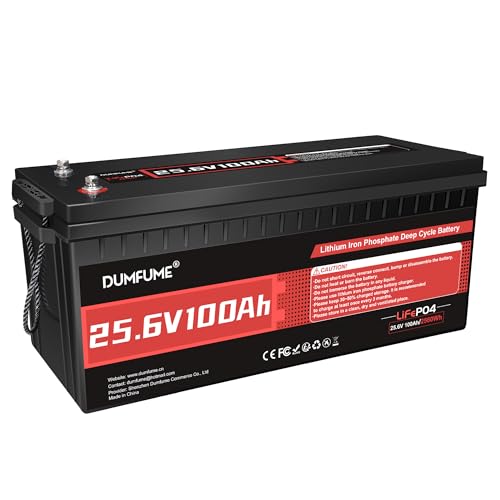
- dumfume 24V 100Ah LiFePO4 Lithium Battery — 24 volt, not 12; covered prose-only below
- Qwenoer 22.2V-24V 10Ah Lithium Battery Pack — 24 volt class, not 12; covered prose-only below
- Xeanerol 24V 5Ah Lithium Battery Pack — 24 volt, not 12; covered prose-only below
- yeagulch 24V 100Ah LiFePO4 Lithium Battery — 24 volt, not 12; covered prose-only below
Read the full guide ↓
Of all the searches in this category, “best amp hour 12 volt battery” is the one that reveals its author mid-education. The phrasing suggests a shopper who has learned that amp-hours are the number that matters — capacity, endurance, the size of the fuel tank — but has not yet settled which size their life actually needs. That is a good instinct with an unfinished calculation behind it, and this guide is built to finish the calculation. Amp-hours are indeed the headline capacity figure for a 12 volt battery, but the number means nothing until it meets a load: the same 100Ah battery is a weekend of freedom behind a trolling motor, a single night behind a hungry inverter load, and a month of service behind a fish finder. The two linked picks here were chosen to make that spread tangible — one full-size deep-cycle battery and one compact light-duty battery — while the four 24 volt entries stay in prose, where they serve as a standing lesson in the other half of every battery title: voltage first, capacity second, always.
The 24 volt products are not filler. Two of them are serious 100Ah LiFePO4 batteries that would headline a 24 volt guide, and their presence here is useful precisely because shoppers meet them in search results constantly, wearing their big amp-hour numbers where a hurried eye can grab them. A 24V 100Ah battery stores 2560Wh — twice the energy of the 12V 100Ah linked pick — but it cannot run a 12 volt system without conversion hardware, and wiring two 12 volt batteries in series to imitate it is a different purchase with different rules. Readers building toward a 24 volt system have their own guides; readers staying at 12 volts can use Best Batteries For 24 Volt to see exactly where that fork in the road leads, then come back here for the 12 volt arithmetic.
Key Takeaways
- Amp-hours measure capacity at a stated voltage: 100Ah at 12 volts is 1280Wh of energy, and the voltage half of the title matters as much as the amp-hour half.
- Only two picks here are true 12 volt batteries — the yeagulch 100Ah and the ABKPOWER 20Ah — and they are the only linked picks.
- The four 24 volt entries are prose-only: correct products, wrong voltage for this search.
- Usable amp-hours depend on chemistry: LiFePO4 delivers most of its nameplate; lead-acid should be planned at roughly half.
- Runtime is a division problem: usable amp-hours divided by the load’s amp draw equals hours, before real-world margins.
- Small batteries are not failed big batteries — the 20Ah pick is the right answer for electronics-class loads.
In this guide
Quick Picks
| Pick | Badge | Voltage | Capacity (from title) | Chemistry | Status |
|---|---|---|---|---|---|
| yeagulch Group 31 100Ah | Best Full-Size 12 Volt Pick | 12.8V | 100Ah / 1280Wh | LiFePO4 | Check on Amazon |
| ABKPOWER 20Ah | Best Compact Pick | 12V | 20Ah / 256Wh | LiFePO4 | Check on Amazon |
| dumfume 100Ah | Best 24 Volt Alternative | 24V | 100Ah / 2560Wh | LiFePO4 | Prose-only — 24 volt |
| Qwenoer 10Ah Pack | Best Project Pack | 22.2V-24V | 10Ah | Li-ion | Prose-only — 24 volt class |
| Xeanerol 5Ah Pack | Best Micro Project Pack | 24V | 5Ah | Li-ion | Prose-only — 24 volt |
| yeagulch 100Ah | Best 24 Volt Solar Pick | 24V | 100Ah / 2560Wh | LiFePO4 | Prose-only — 24 volt |
The table’s shape is the lesson: capacity figures repeat (100Ah appears three times) while the voltage column quietly decides which products a 12 volt buyer may even consider. Read any battery table voltage-first and the category becomes much harder to be fooled by.
How These Picks Were Chosen
This guide is research-led. Its pool was verified through the Amazon Creators API, and every specification quoted below is taken from the API-returned title of that exact product — capacities, energy figures, BMS ratings, and cycle classes are quoted only where the title states them, and flagged as not stated where it does not. No hands-on testing is claimed, and no figure has been borrowed from another roundup.
Eligibility used the group’s hard lines. Voltage is core: a pick links only if its title states 12V or the 12.8V nominal that defines four-cell LiFePO4 architecture — the same 12 volt class every charger and inverter in this ecosystem recognizes. Chemistry is not named by this keyword, so no pick was excluded on chemistry grounds; both linked picks happen to be LiFePO4, and the reviews state what that means for usable capacity. Capacity itself is the keyword’s subject rather than a threshold — the guide’s job is to explain amp-hours, so picks across the capacity range are legitimate teaching material, with the small and the 24 volt entries labeled for exactly what they are. Shoppers whose audit ends at a specific large size can move on to Best And Most Powerfull 12 Volt 100 Amp Dc Battery for the high-output shelf.
Detailed Reviews: The best amp hour 12 volt battery, From Full-Size to Compact
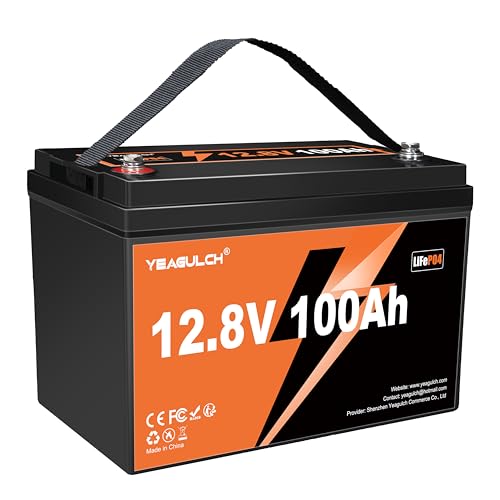
yeagulch 12.8V 100Ah LiFePO4 Lithium Battery, Group 31
Badge: Best Full-Size 12 Volt Pick
Strengths
- The reference capacity for this class: 100Ah and a stated 1280Wh, the numbers most 12 volt systems are designed around.
- Stated 15000+ deep-cycle class suits daily cycling in solar, RV, and off-grid service.
- Low-temperature protection is stated in the title, covering lithium’s main environmental weakness.
Trade-offs
- Group 31 case is the larger standard footprint; smaller trays need the compact class instead.
- Expansion configuration is not stated in the title, so bank builders should verify before planning around it.
- A 100A BMS ceiling applies — high-draw inverter systems must budget simultaneous loads against it.
Mini spec box
- Voltage: 12.8V (12 volt class)
- Capacity: 100Ah / 1280Wh (from title)
- Chemistry: LiFePO4 lithium
- Case: Group 31 (BIC Group 31 per title)
- BMS: 100A
- Protection: low temperature protection stated
- Cycle class stated: 15000+ deep cycles
- Stated uses: RV, marine, camping, off-grid, home energy storage
If the amp-hour question has a standard answer, this is it. One hundred amp-hours at 12 volt nominal is the size around which the modern deep-cycle ecosystem — chargers, solar kits, RV converters, trolling-motor advice — has quietly standardized, and the yeagulch states the full supporting specification in its title: 1280Wh of energy, a 100A BMS, low-temperature protection, and a deep-cycle class in the highest band this pool offers. In runtime terms, its usable capacity runs a 5-amp load through a long day, a 10-amp load through a working day, or a 2-amp electronics load across a weekend, and it recharges from a modest solar array or any lithium-profile charger. This is the battery against which the rest of the guide is measured.
Its limitations are the class’s limitations. The Group 31 footprint assumes a real battery compartment, and the BMS ceiling assumes loads are budgeted rather than improvised. Buyers who need neither the size nor the capacity should not haul it — that is what the next pick is for — but buyers whose audit lands anywhere from 40 to 90 amp-hours a day will find this the most defensible single purchase in the guide.
Best for: RV, marine, solar, and off-grid systems with a genuine daily load / Not suited for: portable electronics-class loads

ABKPOWER 12V 20Ah LiFePO4 Battery
Badge: Best Compact Pick
Strengths
- 20Ah and a stated 256Wh in a portable format — the right scale for fish finders, lighting, and small solar.
- Stated 6000+ cycle class is remarkable at this size and suits daily light-duty cycling.
- 20A BMS matches the battery’s honest load class without pretending to more.
Trade-offs
- One fifth the capacity of the full-size pick; fridge and inverter ambitions end here.
- Low-temperature protection is not stated in the title.
- Expansion support is not stated; treat it as a standalone battery.
Mini spec box
- Voltage: 12V
- Capacity: 20Ah / 256Wh (from title)
- Chemistry: LiFePO4 lithium deep cycle
- BMS: 20A
- Cycle class stated: 6000+ cycles
- Stated uses: fish finder, solar, RV, marine, home backup, lighting
The ABKPOWER is the guide’s counterweight — proof that the amp-hour question sometimes has a small right answer. Twenty amp-hours sounds modest next to the headline pick until the loads are named: a fish finder drawing an amp or two, an LED lighting circuit, a kayak’s electronics, a small solar-charged utility battery for a shed. For those jobs, 20Ah of lithium — with nearly all of it usable, and a stated cycle class that shrugs at daily use — is not a compromise but a correct fit, in a package one person carries with one hand and stores on a shelf. Its title’s application list reads like a census of exactly those jobs.
The discipline this pick teaches is matching. Buyers routinely overbuy capacity for electronics loads, paying in weight and bulk for amp-hours that will never be drawn, or underbuy for motor and fridge loads and learn about BMS cutoffs at the worst moment. The ABKPOWER’s honest 20A BMS ceiling is part of the lesson: this battery knows its class. If your audit totals under roughly 15 amp-hours a day, this is your pick; if it totals more, the yeagulch above is.
Best for: fish finders, lighting, kayak and small-boat electronics, light solar / Not suited for: fridges, inverters, or trolling motors as a sole battery
dumfume 24V 100Ah LiFePO4 Lithium Battery
Badge: Best 24 Volt Alternative
Strengths
- A serious specification: 100Ah at 24 volts for a stated 2560Wh, with a 15000-cycle class in the title.
- Stated IP65 waterproofing and UN38.3 / UL1973 certifications — the most credentialled title in this pool.
- Low-temperature cutoff protection is stated.
Trade-offs
- 24 volts: it cannot power a 12 volt system directly — prose-only in this guide, full stop.
- Its 100Ah headline equals the linked yeagulch’s while storing twice the energy, which is exactly the confusion this guide exists to prevent.
- Series/parallel behavior in a 12 volt context is irrelevant; it belongs to native 24 volt systems.
Mini spec box
- Voltage: 24V
- Capacity: 100Ah / 2560Wh (from title)
- Chemistry: LiFePO4
- BMS: built-in 100A
- Cycle class stated: 15000 deep cycles
- Stated: UN38.3 and UL1973 certified, IP65 waterproof, low-temp cutoff
- Stated uses: RV, marine, solar, off-grid
Meet the most instructive product in the guide. The dumfume is, by its title, an excellent battery: certified, waterproof, high-cycle, protected. It is also completely wrong for a 12 volt system, and the reason it appears in 12 volt shoppers’ search results is that its amp-hour figure matches the class leader’s. This is the category’s central trap in one product — amp-hours compared across voltages as if they were the same currency. They are not: energy is amp-hours multiplied by volts, so this battery holds twice the energy of the 12V 100Ah pick, and delivers it at a voltage your 12 volt fridge, lights, and motor cannot accept.
For readers genuinely building a 24 volt system — a larger solar bank, a 24 volt trolling setup — the dumfume’s credentials make it a legitimate starting point, and the 24 volt guides in this program treat it as a linked pick there. Here, it stays in prose as the standing example of why the voltage column gets read first.
Best for: native 24 volt RV, marine, and solar systems / Not suited for: any 12 volt system without conversion hardware
Qwenoer 22.2V-24V 10Ah Lithium Battery Pack
Badge: Best Project Pack
Strengths
- Sold with a charger (25.2V 2A per title) and bare leads — a complete project power source out of the box.
- Title names its real jobs honestly: ride-on cars, DIY projects, LED strips, CCTV, small solar panels.
- 10Ah at the 24 volt class is a sensible scale for those loads.
Trade-offs
- Li-ion chemistry, not LiFePO4 deep-cycle — different cycle life and behavior from every other pick here.
- 24 volt class and project-pack format: no standard case, no stated BMS figure, no deep-cycle rating in the title.
- Bare-leads wiring asks for DIY competence and care.
Mini spec box
- Voltage: 22.2V-24V
- Capacity: 10Ah
- Chemistry: Li-ion (rechargeable lithium, per title)
- Included: 25.2V 2A charger, bare leads wire, cable connector
- BMS: not stated in title
- Cycle class: not stated in title
The Qwenoer belongs to a different shelf of the battery world: the project pack. Its buyers are powering a child’s ride-on car, a CCTV camera, an LED strip installation, or a bench project, and for those buyers the bundled charger and bare leads are conveniences, not shortcomings. It appears in this guide’s pool because its voltage band brushes against the category, and its review exists to draw the boundary clearly: this is not a deep-cycle battery, its chemistry is the broader li-ion family rather than lithium iron phosphate, and neither its capacity nor its voltage speaks to the 12 volt amp-hour question. Project builders should buy it happily for project work. System builders should keep walking toward the two linked picks.
Best for: DIY projects, ride-on cars, CCTV and LED installations at 24 volts / Not suited for: 12 volt systems or deep-cycle service
Xeanerol 24V 5Ah Lithium Battery Pack
Badge: Best Micro Project Pack
Strengths
- The smallest, simplest package in the pool: battery, fast charger, and connector for light 24 volt projects.
- Title is honest about scale — RC cars, LED strips, CCTV — with no deep-cycle pretensions.
- A stated 2A fast charger is included, matching the pack’s modest capacity.
Trade-offs
- 5Ah is the smallest capacity in this guide by a wide margin.
- 24 volt li-ion project format: wrong voltage, wrong chemistry class, wrong product type for this keyword.
- No BMS or cycle figure is stated in the title.
Mini spec box
- Voltage: 24V
- Capacity: 5Ah
- Chemistry: Li-ion (rechargeable lithium, per title)
- Included: 2A fast charger, cable connector
- BMS: not stated in title
- Cycle class: not stated in title
If the Qwenoer is a project pack, the Xeanerol is a micro project pack — five amp-hours at 24 volts, bundled with its charger, aimed at RC cars, light strips, and cameras. Its inclusion in a guide about amp-hours is almost poetic: it is the lower bound of the concept, the battery you buy when the load is measured in milliamps and hours of standby rather than amp-hours of work. It is documented here, accurately and without mockery, because a complete pool deserves a complete review — and because its contrast with the 100Ah linked pick teaches the capacity scale better than any chart. Nobody should run a 12 volt system from it, and its title never claims otherwise.
Best for: small 24 volt DIY, RC, and camera projects / Not suited for: 12 volt systems, deep-cycle loads, or anything with a motor of consequence
yeagulch 24V 100Ah LiFePO4 Lithium Battery
Badge: Best 24 Volt Solar Pick
Strengths
- 100Ah at 24 volts with a stated 2560Wh and a 15000+ cycle class — a full-size solar bank unit.
- Title names trolling motors, off-grid solar, RV, and marine use directly.
- UN38.3 and UL1973 certifications are stated, as is low-temperature cutoff.
Trade-offs
- 24 volts — prose-only here, like the dumfume, despite the shared brand with the linked pick.
- Same 100Ah headline as the 12 volt class leader at twice the energy: the comparison trap again.
- Requires a 24 volt system architecture end to end — charger, controller, inverter.
Mini spec box
- Voltage: 24V
- Capacity: 100Ah / 2560Wh (from title)
- Chemistry: LiFePO4
- BMS: built-in 100A
- Cycle class stated: 15000+ deep cycles
- Stated: UN38.3, UL1973, low-temperature cutoff
- Stated uses: trolling motors, off-grid, solar, RV, marine
The second yeagulch in this guide is the first one’s bigger-voltage sibling, and the pairing is a gift to anyone learning the category: same brand, same amp-hours, same cycle language — and exactly double the stored energy, because the voltage doubled. A 24 volt architecture earns that energy honestly, with lower current for the same power, thinner cable losses, and efficient inverter behavior, which is why larger solar and trolling systems migrate to it. The migration is a system decision, though, not a battery decision: every component must agree on 24 volts. Buyers standing at that fork should read the comparison in Best Batteries For 24 Volt Grid Tie Battery Bank before committing a whole system to either side.
Best for: native 24 volt solar, RV, and trolling systems / Not suited for: 12 volt systems
Comparison Table
| Pick | Voltage | Capacity | Energy | Chemistry | Status | Link |
|---|---|---|---|---|---|---|
| yeagulch G31 100Ah | 12.8V | 100Ah | 1280Wh stated | LiFePO4 | Linked | Check on Amazon |
| ABKPOWER 20Ah | 12V | 20Ah | 256Wh stated | LiFePO4 | Linked | Check on Amazon |
| dumfume 100Ah | 24V | 100Ah | 2560Wh stated | LiFePO4 | Prose-only | — |
| Qwenoer 10Ah Pack | 22.2V-24V | 10Ah | Not stated in title | Li-ion | Prose-only | — |
| Xeanerol 5Ah Pack | 24V | 5Ah | Not stated in title | Li-ion | Prose-only | — |
| yeagulch 100Ah | 24V | 100Ah | 2560Wh stated | LiFePO4 | Prose-only | — |
How to Choose: The Amp-Hour Arithmetic, Done Properly
Everything in this category reduces to three multiplications and one division. First, energy: amp-hours times volts equals watt-hours. That is why the table above lists energy beside capacity — it is the only honest cross-voltage comparison, and it instantly explains why the two 100Ah batteries at different voltages are different products. Second, the load audit: each device’s amps multiplied by its daily hours, summed across devices, gives the amp-hours your system must supply each day. Third, the chemistry adjustment: lithium supplies most of its nameplate day after day, while lead-acid should be planned at roughly half, so the same audit produces different purchase sizes in different chemistries. Finally, the division: usable amp-hours divided by a load’s amp draw gives runtime in hours — the number that tells an angler whether the motor outlasts the morning.
Worked gently: a fish finder and lights drawing 2 amps from the ABKPOWER’s 20Ah have roughly a long day’s runtime with reserve; the same load is a rounding error to the yeagulch. A trolling motor drawing 20 amps at cruise consumes the small battery’s class entirely in an hour and belongs on the 100Ah pick, which serves it for hours. A fridge cycling at an average few amps sits between them, closer to the big battery once a full day and a safety margin are priced in. Notice that none of these judgments required any number beyond the titles and the load list — that is the point of learning the arithmetic instead of memorizing recommendations. Buyers applying it to vehicle-adjacent systems can cross-check with Best Batteries For 12 Volt Club Car, where the same math meets a golf cart’s duty cycle.
Two margins protect the arithmetic from reality. The first is a reserve margin: plan to use no more than about four fifths of a lithium battery’s usable capacity on a normal day, leaving the rest for the day that runs long. The second is a growth margin: systems acquire loads. The buyer whose audit lands at 80 amp-hours today and buys exactly 100Ah of lithium has planned well; the buyer whose audit lands at 95 and buys the same battery has planned to be disappointed by autumn.
How to Install, Charge, and Maintain a 12 Volt Battery
Installation at this scale is forgiving but not careless: secure the battery against movement, land clean and tight terminals, negative off first and on last, and confirm the charger or controller is set to a lithium profile before the first charge — both linked picks are LiFePO4 and will undercharge on a lead-acid profile. The compact ABKPOWER suits a fused, ventilated electronics bay; the Group 31 yeagulch wants a proper battery compartment with room for its cables to bend without strain. For solar pairing, size the panel to the audit: replacing 60 amp-hours on a short day takes substantially more array than replacing it in summer, a relationship explored for panel-specific systems in Best Batteries For 12 Volt Solar Panels.
Charging rules are short. Do not charge lithium below freezing unless the battery states protection or heating for it — the yeagulch states low-temperature protection; the ABKPOWER’s title does not, so its winter charging belongs indoors or in a warmed space. Store either battery partially charged, in a cool dry place, and check stored units on a schedule. Maintenance beyond that is inspection: terminals, cables, and any sign of case damage.
Problem: runtime is far shorter than the arithmetic promised → audit again with real duty cycles; a fridge in hot weather and a motor against current both draw more than their calm-day figures. Problem: the battery cuts out under a load it should handle → the load likely exceeds the BMS ceiling (20A on the compact pick, 100A on the full-size); split the loads or move up a class. Problem: a new battery never seems to fill → check the charger profile first; a lead-acid setting on a lithium battery is the most common cause in this entire category.
Why Watt-Hours Are the Honest Currency
Amp-hours survive as the headline figure because, within one voltage, they compare cleanly — and most buyers do shop within one voltage. The trouble starts at the border, where marketing happily lets a 24V 100Ah battery and a 12V 100Ah battery stand side by side as apparent equals. Watt-hours end the ambiguity, and the titles in this pool mostly cooperate: 1280Wh, 256Wh, and 2560Wh are stated outright for the three full-size LiFePO4 units. Make it a habit to convert whenever a title omits the figure: multiply the amp-hours by the nominal volts and write the result next to the capacity. Two minutes of that arithmetic, applied across a season of shopping, prevents the single most expensive misunderstanding in the category — buying the right number of amp-hours at the wrong voltage.
Series and Parallel: Growing a 12 Volt System
When one battery is not enough, wiring decides what grows. Parallel connections — positive to positive, negative to negative — keep the system at 12 volts and add amp-hours, which is how 12 volt banks scale; series connections add voltage and belong to the 24 volt world of the prose-only picks. The rules of parallel growth are sameness and symmetry: identical batteries of the same age, connected at the same state of charge, with matched cables and system leads taken from opposite ends of the bank. Neither linked pick’s title states a formal expansion rating, so conservative practice applies — keep parallel banks modest, matched, and monitored, or choose a battery whose title explicitly supports large configurations if a big bank is the plan from day one. Cabin systems built this way are walked through in Best Batteries 12 Volt For Small Hunting Cabins.
Worked Runtime Examples: From Audit to Answer
Abstract arithmetic persuades nobody; worked examples do. Take a jon boat first: a trolling motor cruising at 15 amps, a fish finder at 1 amp, and occasional light use. The audit totals about 16 amps while underway. On the ABKPOWER’s 20Ah, that is barely an hour of honest service — the compact battery is the wrong tool, and its 20A BMS ceiling sits uncomfortably close to the load besides. On the yeagulch’s 100Ah, the same boat runs five to six hours with reserve, which is a full morning’s fishing. Same loads, same voltage, two utterly different days — decided entirely by matching amp-hours to the audit.
Now a small cabin: LED lighting at 3 amps for five evening hours (15 amp-hours), device charging at 5 amp-hours across the day, a water pump’s short bursts adding 3, and a small fridge averaging 25 amp-hours daily in warm weather. The audit lands near 48 amp-hours. The compact pick is out of the conversation; the 100Ah lithium serves the cabin with a two-day cushion in summer and more in winter when the fridge relaxes. Scale the cabin up — a bigger fridge, a television, a fan through the night — and the audit crosses 80, at which point the correct purchase is no longer a bigger single battery but a matched parallel pair or a step into the capacities surveyed in Best Batteries For 12 Volt Solar Panel Array.
Finally, the electronics corner: a kayak with a fish finder and a small light, drawing under 2 amps total, used four hours at a time. The audit says 8 amp-hours a trip. Here the 100Ah battery is the mistake — weight in a hull that feels every pound — and the ABKPOWER’s 20Ah is the craftsmanlike answer, with its stated cycle class promising years of those small daily draws. Three audits, three different right answers, one method. That is the whole skill this keyword is really asking about.
Usable Amp-Hours: Why Chemistry Rewrites the Label
Both linked picks are lithium iron phosphate, and that fact silently upgrades their labels. A LiFePO4 battery can be drawn down through most of its nameplate capacity, cycle after cycle, with the BMS standing guard at the bottom — so 100Ah on the yeagulch’s title means something close to 100 amp-hours of working reservoir, and 20Ah on the ABKPOWER means nearly 20. Lead-acid plays by older rules: an AGM or flooded battery drawn below roughly half its capacity pays for the excursion in lifespan, so a 100Ah lead-acid battery is, for planning purposes, a 50 amp-hour battery with an emergency reserve. Buyers comparing a lithium 100Ah against a lead-acid 100Ah at the same shelf are not comparing equals; they are comparing a full reservoir against a half one wearing the same number.
This is also where cycle classes enter honestly. The titles here state 15000+ cycles for the full-size yeagulch and 6000+ for the compact ABKPOWER — figures that describe endurance under the manufacturer’s test conditions, not a promise carved into the case. What a buyer should take from them is comparative, not literal: both linked batteries are built for daily cycling in a way lead-acid is not, and the compact battery’s strong figure at its size is a genuine distinction. The discipline that protects those numbers in real life is unglamorous — avoid chronic full drains, charge with the right profile, keep the battery out of temperature extremes — and it is covered in the maintenance section above because it matters more than the gap between any two headline figures.
Temperature, Age, and the Shrinking Nameplate
A battery’s amp-hours are quoted young and warm. Cold reduces the capacity any chemistry can deliver — the energy returns as the battery warms, but a winter morning’s trolling session is powered by the cold figure, not the label. Heat accelerates the permanent side of aging. And age itself subtracts: a battery in its fifth year of daily service holds measurably less than it did new, whatever its chemistry. None of this is a scandal; it is physics with good PR. The planning response is the margin habit from the buying guide — buy for the audit plus reserve, so the system still works when the battery is older, the morning is colder, and the day runs longer than the plan. The linked yeagulch’s low-temperature protection addresses the charging half of the cold problem specifically, preventing the one cold mistake that causes permanent harm, while the ABKPOWER — whose title states no such protection — belongs in installations where winter charging happens in sheltered conditions.
Charging Time: The Forgotten Side of Capacity
Capacity decides how long a battery runs; it also decides how long it takes to refill, and buyers who skip that symmetry end up with systems that never catch up. Refilling 80 amp-hours through a small charger or a modest solar array is most of a day of good conditions. The same refill through a properly sized charger is an overnight formality. Neither linked pick states a charge-rate figure in its title, so this guide will not invent one — the planning principle is what matters: match the charging source to the capacity you buy, in the season you use it. A 100Ah battery paired with a token charger is a system designed to live at half charge, and a battery that lives at half charge delivers half its promise while aging at full speed. Solar users feel this first, because their charger is the weather; the panel-sizing discussion in Best Batteries For 12 Volt Solar Panels picks up exactly where this section ends.
There is a second, quieter asymmetry: discharge is instant and charging is patient. A trolling motor can spend in twenty minutes what a small solar panel needs hours to replace. Systems that work — the ones owners stop thinking about — are balanced on both sides of that ledger, which is why every worked example in this guide pairs a load audit with a refill plan rather than treating the battery as a standalone purchase.
How to Verify a Battery’s Real Capacity After Purchase
Buyers who want to confirm that a battery delivers its label have one honest tool: a counted discharge. Charge the battery fully with the correct profile, then discharge it through a known, steady load — a shunt-based monitor or a metered load — while counting amp-hours until the BMS or your chosen floor ends the test. Compare the count with the title’s figure, remembering the real-world trims: a test run cold, or at a punishing discharge rate, will read low for reasons that are physics rather than fraud. Run the same test the same way once a year and you own something more valuable than the original number — a trend line for your own battery, in your own system, which is the data that actually predicts the season a replacement conversation should start. Both linked picks reward this treatment: their stated cycle classes mean a well-kept unit’s trend line should stay boringly flat for a long time, and boring, in battery ownership, is the highest praise available. Keep the test gentle — a moderate, steady load rather than a maximum-rate punishment — and the result will be both kinder and more representative of the service the battery actually sees across a season of ordinary use.
Common Buying Mistakes
- Comparing amp-hours across voltages. 100Ah at 24 volts is twice the energy of 100Ah at 12 — and unusable by a 12 volt system without conversion.
- Skipping the load audit. Capacity chosen by vibes is wrong in one direction or the other; the audit takes twenty minutes.
- Planning to use every amp-hour. Reserve margins are what separate a system from a gamble.
- Mistaking a project pack for a deep-cycle battery. Bundled chargers and bare leads signal project duty, not system service.
- Charging lithium on a lead-acid profile. The battery underfills, the owner blames the battery, and the actual fault sits in a charger menu.
- Overbuying for electronics loads. A 100Ah battery serving a fish finder is weight and bulk purchased for nothing.
Final Recommendation
For most readers, the yeagulch 100Ah Group 31 is the answer: the class-standard capacity, the strongest stated cycle class in this guide’s linked set, low-temperature protection, and a title that names the RV, marine, and off-grid work this keyword serves. If your audit totals in the teens of amp-hours — electronics, lighting, a finder — the ABKPOWER 20Ah is the honest pick, and the money and weight saved are real. And if the prose-only 24 volt entries looked tempting, treat that as information: your system may be telling you it wants to be a 24 volt system, which is a fine decision made deliberately and a poor one made by accident at checkout. Whichever linked pick you choose, do the audit first and write it down; the twenty minutes with a pencil is the highest-value step in the entire purchase, and it is the difference between a battery that fits your life and one that merely fits your battery tray.
Frequently Asked Questions
How many amp-hours do I actually need?
As many as your audit says, plus margin. Add each load’s amps multiplied by its daily hours, then add roughly a fifth for reserve and growth. Most single-battery RV, boat, and small solar systems land between 50 and 100 amp-hours of daily demand, which is why the 100Ah class dominates — but electronics-only users often land under 20, where the compact pick wins.
Is a 12.8V battery the same as a 12V battery?
Yes, for system purposes. 12.8 volts is the nominal voltage of a four-cell lithium iron phosphate battery, and chargers, inverters, and solar controllers treat it as the 12 volt class — the linked yeagulch is a 12 volt battery in every practical sense. The figure to distrust is not 12.8 but 24: that is a genuinely different system voltage.
Can I run a 12 volt system from a 24 volt battery?
Not directly. A DC-DC converter can step 24 volts down to 12, and some dual-voltage systems do exactly that, but it is additional hardware with its own losses and current limits — a deliberate architecture, not a workaround for a mistaken purchase. If your loads are 12 volt, buy the 12 volt battery.
How long will 100Ah run a trolling motor?
Divide usable amp-hours by the motor’s draw at your usual speed. At a 20-amp cruise draw, a 100Ah lithium battery offers roughly four hours with a prudent reserve; at half that draw, roughly twice as long. Wind, current, and hull load move the real figure, which is why the reserve margin exists.
Do amp-hours tell me how powerful a battery is?
No — amp-hours describe endurance, not effort. Power and current capability live in the BMS rating for lithium batteries: 100A on the full-size linked pick, 20A on the compact. A battery can have generous amp-hours and a modest current ceiling, and high-draw loads care about the second figure first.
Why does my battery show fewer amp-hours than its label?
Usually because the measurement happened in the real world: cold temperatures trim deliverable capacity, age trims it further, and high discharge rates trim it again — an effect lead-acid feels severely and lithium only mildly. A shunt-based monitor that counts actual amp-hours in and out gives the honest figure for your conditions. If a young, warm battery at a moderate load still falls far short, check connections and charger profile before concluding the battery itself is at fault.
Is a higher amp-hour battery always better?
No. Beyond the audit’s needs, extra capacity is weight, bulk, and charging time purchased for nothing — the kayak example in this guide, where the 20Ah pick beats the 100Ah pick outright, is the standing proof. The best amp-hour figure is the one matched to a real load list with a sane margin, which is why this guide teaches the audit before recommending anything.
Can I mix a 20Ah and a 100Ah battery in parallel?
Do not. Parallel banks want identical batteries — same model, capacity, age, and state of charge — so they share work evenly. A mismatched pair ages at the weaker unit’s pace and can behave unpredictably under load. Grow a bank with twins, or run separate batteries for separate jobs.