Disclosure: topratedkitchenware.com is reader-supported. When you buy through links on our site, we may earn an affiliate commission from Amazon and other retailers, at no extra cost to you.
Where to buy
The best rinsing toilets are the ones whose bowls come out of every flush looking washed, not merely emptied — and that quality lives in specific, checkable engineering: how the rinse water enters the bowl, how it is distributed, and how slick the surface it washes is. All six models below are sold through Amazon, where you can confirm the flush system and configuration on the current listing:
- HOROW 17 Inch Comfort Height Toilet, Dual Flush — Check on Amazon
- Gerber Maxwell Crest Elongated Two-Piece Toilet
- Los Flexi 19 Inch High Toilet
- TOTO Drake Two-Piece Elongated 1.28 GPF Toilet, 10 Inch Rough-In
- HOROW 17 Inch High Elongated Toilet, Single Flush
- Garvee Two Piece Elongated Toilet, 15 Inch Comfort Height
Read the full guide ↓ for the anatomy of a bowl rinse, the design features that predict a clean bowl, and the maintenance habits that keep a good rinse good.
A toilet performs two different jobs in every flush, and they fail independently. The first is removal: carrying waste through the trapway and out of the bowl. The second is rinsing: washing the bowl’s interior surfaces so that what remains after the flush is clean porcelain and clear water, not streaks, residue, and a brush kept permanently on standby. Most buying guides grade only the first job, because it has a test — the MaP bulk-removal protocol — and rinsing has none. The result is a market full of toilets that clear powerfully and rinse indifferently. This guide exists for the second job: the best rinsing toilets, judged on the engineering that determines bowl wash — rinse-water delivery, jet placement, trapway and bowl glazing, and the flush architecture that ties them together.
That framing disciplines the shortlist. Every pick below was chosen because its verified listing states the mechanism by which it washes its bowl: a tornado rinse that spins water around the full circumference, siphonic systems whose jets scour as they start the siphon, dual-flush designs that let the rinse volume be chosen, and a fully glazed trapway that keeps the exit path as clean as the bowl. Where a listing states a bulk-removal figure, we report it — removal and rinsing are partners, and a toilet that strands waste rinses nothing — but the ranking lens throughout is the wash, and the reviews say plainly where each model’s rinse case is documented and where it rests on design alone.
One clarification of vocabulary before the picks, because the category’s marketing blurs it: “rinsing” in this guide means the bowl wash — the water that scrubs the porcelain — and not the flush’s bulk power, not the refill, and not any bidet function. A listing that advertises a powerful flush is making a removal claim; a listing that names a rinse system, a jet layout, or a glaze is making a rinsing claim. Keeping those apart is the difference between shopping the engineering and shopping the adjectives, and every judgment in the reviews below can be traced to which kind of claim the listing actually made.
The practical stakes are weekly, not theoretical. A toilet that rinses well needs less brushing, fewer chemicals, and less of the household’s patience; its bowl stays presentable for guests without a pre-visit scrub; and in hard-water homes, a good rinse slows the mineral tide marks that make a bathroom look tired. If your current toilet’s flaw is the streak and the stain rather than the clog, this is your guide.
Key Takeaways
- Rinsing and removal are separate jobs: a toilet can clear waste powerfully and still leave the bowl streaked, because bulk tests do not grade bowl wash.
- The TOTO Drake’s TORNADO FLUSH plus CEFIONTECT glaze is the most complete rinse system here — a swirling full-circumference wash over a residue-resistant surface.
- The HOROW dual flush pairs a stated MaP 1000-gram full flush with a 1.1-gallon light flush, so the everyday rinse spends less water without surrendering the full wash.
- A glazed trapway, the Gerber’s headline feature, keeps the exit path smooth — rinsing’s second half, where residue otherwise accumulates unseen.
- Siphonic designs (Los Flexi, and the jet-driven HOROW single flush) rinse by directing water where it works rather than merely releasing it.
- Maintenance decides whether a good rinse survives: mineral-clogged rim passages are the most common cause of a rinse that fades over the years.
In this guide
Quick Picks
| Pick | Badge | Rinse mechanism (stated) | Flush volume | Seat height |
|---|---|---|---|---|
| HOROW 17 Inch Comfort Height, Dual Flush | Best Overall Rinsing | Dual-flush wash, MaP 1000g full flush | 1.1/1.6 GPF | 17 inch |
| Gerber Maxwell Crest Elongated | Best Rinse Path | Efficient flush, fully glazed trapway | Not stated in listing | Elongated format |
| Los Flexi 19 Inch High | Best Siphonic Rinse | Siphonic flush, S-trap | 1.28 GPF | 19 inch |
| TOTO Drake 1.28 GPF, 10 Inch Rough-In | Best Rinse Design | TORNADO FLUSH with CEFIONTECT glaze | 1.28 GPF | Universal Height |
| HOROW 17 Inch High, Single Flush | Best Single-Flush Rinse | Single flush, MaP 1000g | 1.28 GPF | 17 inch |
| Garvee Two Piece Elongated, 15 Inch | Best Value Rinsing | Side push flush | 1.28 GPF | 15 inch |
The third column is this guide’s discipline: every badge traces to a rinse mechanism the listing actually states. Where the mechanism is a named system, the badge says so; where it is a conventional design, the review says that instead.
How These Picks Were Chosen
Models were verified against Amazon listing data on 2026-11-20, and the spec boxes use only stated attributes. Because rinsing has no standardized public test, the selection weighted stated rinse engineering in a deliberate order: named rinse systems first (the Drake’s TORNADO FLUSH), surface technology second (CEFIONTECT glaze; the Gerber’s glazed trapway), flush architecture third (siphonic and jet-driven designs whose water delivery is described), and documented bulk performance as a supporting credential, since a toilet that cannot clear cannot rinse what it strands. Listings that offered no statement about how their water moves — no system name, no jet, no glaze, no architecture — had no rinse case to make and were not shortlisted.
Two honesty notes belong here. The Gerber’s verified listing states no gallons-per-flush figure; its rinse case rests on its flush description and its glazed trapway, and the guide says so rather than estimating a volume. And this is a research-led comparison: rinse judgments are reasoned from documented design, the way an engineer would predict wash behavior from a water-delivery diagram, not from laboratory filming of these specific bowls. Households whose drain lines, rather than bowls, are the problem should note the distinction drawn later in this guide — a rinse cannot fix a line, and where roots invade an older sewer, the options in Best Root Killer For Toilets address the line itself.
The 6 Best Rinsing Toilets

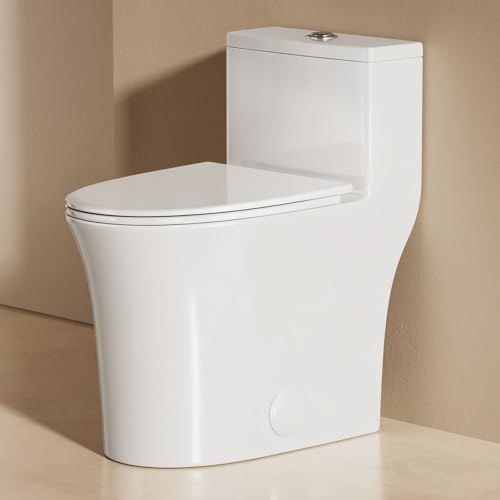
HOROW 17 Inch Comfort Height Toilet, Dual Flush
Badge: Best Overall Rinsing
Strengths
- Dual flush lets the rinse match the load: a 1.1-gallon wash for liquid waste, a full 1.6-gallon flush — with a stated MaP 1000-gram rating — when the bowl needs everything.
- Chair height and elongated bowl give the rinse a well-proportioned bowl to wash, with a soft-close seat included.
- Standard 12-inch rough-in and two-piece serviceability keep the ownership simple.
Trade-offs
- The listing names no proprietary rinse system or glaze, so its rinse case rests on its dual-flush architecture and documented clearing rather than a wash-specific technology.
- Dual buttons save water only when the household uses them as intended.
- Chair height is tall for shorter users and children.
Spec box
- Brand: HOROW
- Configuration: Two-piece, elongated bowl
- Flush: Dual flush 1.1/1.6 GPF, MaP 1000g rating stated in listing
- Seat height: 17 inch, ADA chair height
- Rough-in: 12 inch
- Seat: Soft-close included
- Positioned for: Seniors, elderly and tall adults
The HOROW leads a rinsing guide for a reason that takes a sentence to appreciate: most rinsing failures are actually proportion failures. A fixed-volume toilet rinses a liquid-only visit with the same water it uses for solids — wasteful — or, if it is a restricted design, under-rinses everything. A dual-flush toilet with a genuinely powerful full mode escapes the dilemma: the light flush is an honest rinse for the majority of visits, and the full flush brings the group’s strongest documented clearing to the visits that test the bowl. The result, across a household’s week, is a bowl that is washed appropriately far more often than a single-volume design manages.
Its rinse limitation is specificity. Unlike the Drake below, the listing names no wash technology and no glaze, so a buyer choosing purely on rinse engineering should weigh the TOTO’s documented system heavily. The HOROW’s claim is broader and, for most primary bathrooms, more useful: documented power, volume choice, chair-height comfort, and a standard fit. Choose it as the all-round rinsing pick; choose the Drake when the rinse system itself is the brief.
Best for: primary bathrooms wanting rinse-and-clear balance / Not suited for: buyers who want a named rinse technology

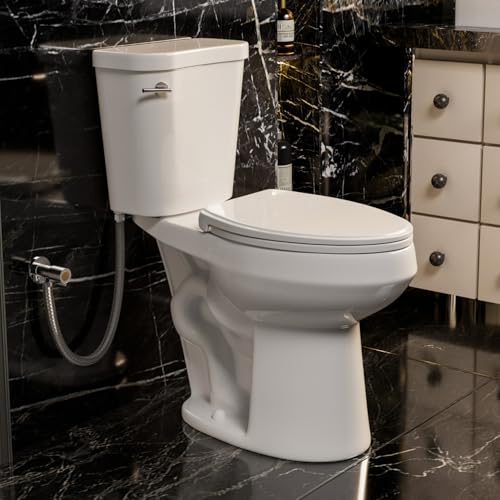
Gerber Maxwell Crest Elongated Two-Piece Toilet
Badge: Best Rinse Path
Strengths
- Fully glazed trapway: the rinse’s exit path is as smooth as the bowl, so washed waste leaves instead of snagging and re-soiling the passage.
- An efficient flush described in the listing as clearing the bowl with ease, in a plumber’s-brand design with a tool-free install kit and wax ring included.
- Soft-close seat included on a serviceable two-piece format.
Trade-offs
- No GPF or MaP figure stated in the verified listing — its rinse case is design-level, not document-level.
- No proprietary bowl glaze is named for the visible bowl surface.
- Elongated bowl only.
Spec box
- Brand: Gerber
- Configuration: Two-piece, elongated bowl
- Flush: Efficient flush; glazed trapway to resist clogs
- Seat: Soft-close included
- Install: Tool-free install kit with wax ring included
- Color: White
Every rinse has two halves: the water that washes the bowl, and the path that carries the wash away. The Gerber is this guide’s specialist in the second half. An unglazed trapway is rough at exactly the point where the flow is most burdened, and roughness does double damage — it slows the exit, weakening the siphon’s finish, and it gives residue a foothold in the one place a brush cannot reach, so the passage slowly narrows its own performance. Glazing seals that surface. In rinse terms, the Maxwell Crest is the pick for households whose complaint is the recurring almost-clog and the bowl that never quite empties clean — the failure that lives in the path, not on the porcelain.
Its honesty requirement is the standing one: the verified listing states no consumption figure and no test score, so the buyer is trusting a mechanism and a trade brand rather than a document. For older homes — where the trapway’s condition matters most and where the included install kit earns its keep — that trust is reasonably placed. Buyers who need the paperwork should take the HOROW or the Drake.
Best for: older homes, clog-prone passages, DIY installers / Not suited for: documentation-first buyers

Los Flexi 19 Inch High Toilet
Badge: Best Siphonic Rinse
Strengths
- Siphonic flush at 1.28 GPF: a jet-driven design that directs water into the bowl’s work instead of merely releasing it from the rim.
- S-trap layout in a two-piece elongated format at an extra-tall 19-inch height — the rinse serves the users who most need a fixture that asks nothing of them.
- Soft-close seat and a standard 12-inch rough-in.
Trade-offs
- No MaP figure and no named rinse system or glaze in the verified listing.
- 19-inch height is wrong for shorter users and children.
- Its rinse case is architectural — sound, but the least documented in this guide’s top half.
Spec box
- Brand: Los Flexi
- Configuration: Two-piece, elongated bowl
- Flush: Siphonic flush, 1.28 GPF, S-trap
- Seat height: 19 inch, ADA-positioned extra tall
- Rough-in: 12 inch
- Seat: Soft-close included
- Positioned for: Seniors and tall adults
The siphonic principle is rinsing’s oldest good idea: instead of letting tank water spill passively over the rim, a siphon jet fires a directed stream that both scours the bowl’s front and starts the siphon decisively, so the wash and the removal arrive as one event. The Los Flexi brings that principle to the constituency that benefits most from a self-sufficient fixture — tall adults and seniors at a 19-inch seat height, for whom a toilet that needs frequent brushing is not a minor inconvenience but a recurring physical chore. A bowl that washes itself clean is an accessibility feature in everything but name.
Judged strictly as a rinsing document, its file is thin: no test figure, no named system, no glaze claim. The guide includes it because architecture is evidence too, and because its brief — the extra-tall bathroom — is one the documented leaders do not serve. Buyers in that brief should take it confidently; buyers outside it should take the HOROW or the Drake and their paperwork.
Best for: tall and senior users who need a low-maintenance bowl / Not suited for: standard-height households or paperwork-first buyers

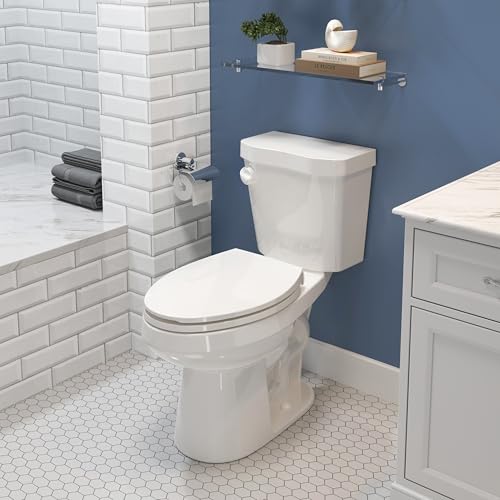
TOTO Drake Two-Piece Elongated 1.28 GPF Toilet, 10 Inch Rough-In
Badge: Best Rinse Design
Strengths
- TORNADO FLUSH delivers rinse water through large nozzles that set the bowl’s contents spinning — a full-circumference wash rather than a set of rim dribbles.
- CEFIONTECT glaze gives residue less purchase, so each rinse starts from a slicker bowl and the interval between deep cleans stretches.
- All of it at 1.28 GPF, with a SoftClose seat and WASHLET+ readiness — and built for the 10-inch rough-in older homes present.
Trade-offs
- The 10-inch rough-in is a specialist fit; on a 12-inch flange this model positions incorrectly.
- Premium-tier positioning in this group.
- Two-piece format with a tank seam to clean.
Spec box
- Brand: TOTO
- Configuration: Two-piece, elongated bowl
- Flush: TORNADO FLUSH, 1.28 GPF
- Height: Universal Height
- Rough-in: 10 inch
- Glaze: CEFIONTECT
- Seat: SoftClose included; WASHLET+ ready
- Color: Cotton White
- Model: MS776124CEFG.10#01
If this guide were ranked on rinse engineering alone, the Drake would stand first, and its badge — Best Rinse Design — records exactly that. The tornado system attacks the classic rinse failure, the dry arc: conventional rim holes distribute water unevenly, weaken as minerals narrow them, and leave the bowl’s rear and sides to whatever the siphon happens to drag past. A swirling rinse has no dry arc; the water sheet covers the circumference by design, and it arrives with rotational energy that scrubs rather than merely wets. The CEFIONTECT glaze then defends the result between flushes, denying residue the microscopic grip it needs. Wash plus surface is the complete rinse argument, and no other pick in this field makes both halves of it in its listing.
Why, then, is it not the overall pick? Because this variant of the Drake is built on a 10-inch rough-in — the older-home fit — and a rinsing guide’s overall pick must be installable in the standard bathroom. On a 12-inch rough-in, take the HOROW and its documented dual flush; on a 10-inch rough-in, the Drake is not merely the best rinsing choice but close to the only full-specification one. Measure first, as every guide in this cluster insists, and let the flange arbitrate between two excellent answers.
Best for: rinse-first buyers, 10-inch rough-ins, older homes / Not suited for: standard 12-inch installations


HOROW 17 Inch High Elongated Toilet, Single Flush
Badge: Best Single-Flush Rinse
Strengths
- A stated MaP 1000-gram rating at a flat 1.28 GPF — every flush is the full wash, with no mode for a guest to choose wrongly.
- 17-inch ADA chair height and an elongated bowl shaped for tall users and seniors.
- Single-action simplicity that suits guest bathrooms and rentals, where rinse consistency matters more than water finesse.
Trade-offs
- No light-flush mode, so liquid visits spend the full 1.28 gallons.
- No named rinse system or glaze in the verified listing.
- Chair height is tall for shorter users.
Spec box
- Brand: HOROW
- Configuration: Two-piece, elongated bowl
- Flush: Single flush, 1.28 GPF, MaP 1000g rating stated in listing
- Seat height: 17 inch, ADA chair height
- Positioned for: Tall people and seniors
The single-flush HOROW makes the consistency argument. A dual-flush toilet rinses at two levels depending on a button; this toilet rinses at its documented best on every visit, because there is only one flush and it carries the stated maximum bulk-removal figure at an efficient volume. In a guest bathroom — where the user does not know the buttons and the host discovers the result later — that uniformity is a rinsing feature in its own right, and in a rental it removes a whole category of tenant variation.
The cost is the mirror of the dual-flush model’s virtue: liquid waste gets the full 1.28-gallon wash whether it needs it or not, and the listing names no rinse technology to set against the Drake’s. Households optimizing water should take the dual-flush HOROW at the top of this guide; households optimizing for identical, documented behavior every time should take this one. Bowl-shape note for cross-shoppers: like most of this field it is elongated, and the round-front alternatives live in the cluster’s Best Round Front Toilets coverage.
Best for: guest bathrooms, rentals, consistency-first households / Not suited for: water minimizers

Garvee Two Piece Elongated Toilet, 15 Inch Comfort Height
Badge: Best Value Rinsing
Strengths
- A complete, cUPC-certified package at the value end: elongated ceramic bowl, locking soft-close seat, water-saving 1.28 GPF side-push flush.
- Conventional modern flush architecture — the baseline rinse, honestly delivered, at a standard 15-inch height and 12-inch rough-in.
- Side-push operation every user already understands.
Trade-offs
- No named rinse system, glaze, or MaP figure in the verified listing — the weakest rinse documentation in this guide.
- Standard height is low for tall users.
- Newer brand with a shorter parts history.
Spec box
- Brand: Garvee
- Configuration: Two-piece, elongated bowl
- Flush: Side push flush, 1.28 GPF water-saving
- Seat height: 15 inch comfort height
- Rough-in: 12 inch
- Seat: Locking PP soft-close seat
- Certification: cUPC certified
- Color: White
The Garvee closes the list as the honest baseline. Its listing claims no rinse technology, and this guide claims none for it: what it offers is a modern, certified, water-saving flush in a complete package at the accessible end of the market, which in practice rinses the way any competently designed contemporary toilet rinses — adequately, and far better than the vintage fixtures it typically replaces. In a rinsing guide, its role is calibration: it marks the floor of the current market, so that the premiums charged above it must justify themselves in named systems, glazes, and documents — as the picks above it do.
Buy it where its brief fits: rentals, secondary bathrooms, budget remodels, standard-height households. A buyer whose primary complaint is bowl streaking and who has the budget for the documented rinse systems should spend the difference on the Drake’s glaze or the HOROW’s dual-flush documentation instead, because rinsing is a feature with a real engineering ladder, and this model stands — honestly, usefully — on its first rung.
Best for: rentals, secondary bathrooms, budget remodels / Not suited for: rinse-performance-first buyers
Comparison Table
| Pick | Rinse mechanism | GPF | Height | Documented evidence | Link |
|---|---|---|---|---|---|
| HOROW Dual Flush | Dual-flush wash | 1.1/1.6 | 17 inch | MaP 1000g stated | Check on Amazon |
| Gerber Maxwell Crest | Glazed trapway path | Not stated in listing | Elongated format | Glaze stated; no figures | Check on Amazon |
| Los Flexi 19 Inch | Siphonic jet action | 1.28 | 19 inch | Architecture only | Check on Amazon |
| TOTO Drake 10 Inch | TORNADO FLUSH + CEFIONTECT | 1.28 | Universal Height | Named system and glaze | Check on Amazon |
| HOROW Single Flush | Single full wash | 1.28 | 17 inch | MaP 1000g stated | Check on Amazon |
| Garvee 15 Inch | Conventional modern flush | 1.28 | 15 inch | cUPC certified | Check on Amazon |
How to Choose a Toilet for Bowl Rinsing
Grade the rinse the way this guide selected: by the water’s itinerary. First, delivery — does the listing name how rinse water enters and moves: a tornado or swirling system, a siphon jet, a dual-volume choice? Named delivery is engineered delivery. Second, surface — is there a glaze story, on the bowl (CEFIONTECT) or in the trapway (the Gerber’s glazing)? A slick surface multiplies whatever the delivery achieves and defends it between flushes. Third, volume discipline — an efficient toilet that rinses well at 1.28 gallons beats a thirsty one that rinses no better, and a dual-flush design lets the rinse be proportioned to the visit. Fourth, the supporting document — a stated MaP figure does not measure rinsing, but it certifies that the flush’s energy budget is real, and a toilet that cannot clear cannot rinse what it leaves behind.
Then fit the choice to the household’s water. Hard water is rinsing’s slow enemy: it narrows rim passages and roughens glaze, so hard-water homes should weight glaze and system designs that tolerate mineral attention, and should adopt the maintenance rhythm in the next section as part of the purchase. Soft-water homes can buy on delivery design alone. And in every home, the honest check remains the rough-in — the Drake’s rinse crown in this guide sits on a 10-inch model, and no rinse, however engineered, excuses a flange mismatch.
How to Keep a Good Rinse Good: Maintenance and Troubleshooting
A rinse is a hydraulic system, and it degrades by inches. Keep it at specification with a short routine: hold the tank water at its marked line (a low tank is a weak rinse wearing a disguise), brush the bowl with a non-abrasive cleaner that respects the glaze, and every few months inspect the rinse’s delivery — rim passages or nozzles — for the mineral narrowing that hard water deposits. On jet-driven models, keep the siphon jet’s opening clear with a brush or a wooden pick; never ream porcelain with metal, which chips the glaze and gives residue a permanent foothold.
- Monthly: glance at the tank level and listen for phantom refills that signal a leaking flapper stealing rinse volume.
- Quarterly: check the rinse pattern — flush and watch whether the wash covers the bowl’s full circumference evenly, or whether one arc has gone dry.
- As needed: clear a dry arc’s rim passage with a small brush or a short length of wire used gently, and descale with a bowl-safe descaler in hard-water homes.
- Annually: inspect the supply connections and the base, and replace the flapper at the first sign of seepage rather than the hundredth.
The three problems this guide’s readers actually meet:
- Problem: the bowl rinses unevenly, with one side left dry → a mineral-narrowed rim passage on that side; clear it gently and check the tank level, which starves the far passages first.
- Problem: the bowl clears but streaks return within days → the glaze is compromised or the cleaner is abrasive; switch to a non-abrasive bowl cleaner and accept that a badly worn vintage glaze is a replacement argument, not a scrubbing one.
- Problem: the flush sounds strong but the bowl water barely moves → the siphon jet is obstructed or the tank level is low; clear the jet and reset the level before suspecting the fixture.
The Anatomy of a Rinse: Where the Water Actually Goes
Follow one flush. The tank releases its measured volume through two routes: the rim route, which distributes water around the bowl’s upper circumference to wash the walls, and — on jetted designs — the siphon-jet route, which fires a concentrated stream low in the bowl to drive the siphon and scour the front. The proportions between those routes are the manufacturer’s rinse signature. Rim-heavy designs wash broadly but can lack clearing conviction; jet-heavy designs clear decisively and depend on the rim’s share being sufficient to cover the walls. The tornado architecture collapses the distinction by making the rim delivery itself a rotating sheet — coverage and energy in the same water.
Two quieter variables complete the anatomy. The water spot — the depth and area of water resting in the bowl between flushes — decides how much soiling ever touches dry porcelain; a generous spot is a rinse that starts before the flush does. And the refill matters: after the siphon breaks, the bowl refills to its spot through the tank’s refill stream, and a toilet whose refill is pinched by a low tank level or a kinked tube will present a permanently shallow spot and a dirtier bowl, through no fault of its flush design. When a rinse disappoints, the anatomy tells you where to look: delivery, surface, spot, or refill — in that order.
Hard Water: The Rinse’s Long War
In hard-water regions, rinsing quality is a story told over years. Mineral deposits narrow rim passages asymmetrically — hence the dry arc — roughen glazes at the waterline, and crust the siphon jet that jetted designs depend on. The countermeasures are partly selection and partly habit. Selection: weight glaze technology and systems whose delivery does not depend on dozens of tiny rim holes; a tornado’s large nozzles mineralize more slowly and clear more easily than a field of pinholes. Habit: descale on the water’s schedule rather than the calendar’s, use bowl cleaners that dissolve mineral without abrasives, and treat a changing rinse pattern as an early-warning gauge — the toilet reports its mineral load in the geometry of its wash long before anything clogs.
Homes with water softeners should note the trade in the other direction: softened water preserves the rinse hardware beautifully and can make some tank seals age faster, which is an argument for the annual flapper check rather than against softening. Either way, the principle stands — a rinsing toilet is a system of water, surface, and time, and the buyers who understand that keep the rinse they paid for.
Rinsing in the Real World: Guests, Children, and the Morning Rush
Laboratory rinses happen one flush at a time, with recovery between them. Household rinses happen in volleys — three people through one bathroom before school and work, a guest bathroom at a party, a toddler’s enthusiastic repeat flushing. Two specification details decide how a toilet’s rinse survives volley conditions. The first is refill speed: the tank must recover its full level between flushes, because a rinse delivered from a half-filled tank is a half rinse, and the models here — all gravity designs on standard fill valves — recover at the pace the home’s water pressure allows. The household’s part is simply to keep the supply stop fully open, a detail worth checking on installation day and after any plumbing work.
The second is forgiveness. A rinse system that depends on the user choosing correctly will, in a house with guests and children, regularly be chosen incorrectly — which is why this guide keeps both philosophies in view: the dual-flush HOROW for households that will use the choice, and its single-flush sibling for households where identical behavior every time is worth more than the water difference. Neither is the rinsing answer in the abstract; each is the answer for a pattern of life. The mature way to read this whole category is as a match between a water-delivery design and a household’s actual rhythm, and the reviews above were written to make that match legible rather than to crown a universal winner.
The Other Rinse: Exterior Cleaning and the Skirted Question
This guide has treated rinsing as something water does inside the bowl, but owners use the word more loosely — a toilet that “stays clean” is one whose outside also resists the bathroom’s dust, drips, and humidity. On that second front, the field divides by format rather than by flush. Conventional two-piece designs, most of this list, expose the trapway’s outer curves and a tank seam: honest, serviceable surfaces that collect dust in their contours and ask a cloth to travel. Skirted designs — represented in the wider cluster rather than in this six — wrap those contours smooth. The distinction matters to rinsing only in the household’s total cleaning budget: a toilet whose bowl self-rinses beautifully but whose base demands weekly contortion has solved half the problem its owner actually has.
Within this shortlist, the practical exterior notes are simple. The glazed and easy-clean surfaces that help the bowl also help the rim and the outer bowl where splashes land. The soft-close seats fitted across the field remove the slam that loosens hinges and chips enamel at the seat’s contact points. And the two-piece formats here trade a seam for serviceability — a fair exchange in homes that keep fixtures for decades. Buyers for whom exterior cleaning is a first-rank concern should compare the skirted one-piece models in the sibling residential guides with this guide’s rinse rankings in hand, because the ideal fixture — documented rinse inside, skirted calm outside — is assembled from both lists.
What a Rinsing Toilet Cannot Do
Credibility requires the negative space. A great rinse does not straighten a sagging drain line, dissolve a root mass, or vent a stack that was never vented properly; bowls that gurgle, water levels that bounce when a neighbor fixture drains, and odors at the base are the plumbing system speaking, and the correct response is diagnosis of the line — the territory of the drain guidance linked earlier in this guide — not a more expensive toilet. A great rinse also does not repeal chemistry: some soils and some medications stain porcelain in ways no water pattern fully prevents, and the honest promise of the systems in this guide is a bowl that returns to clean with ordinary, occasional attention — not a bowl that never needs a brush in the house.
Finally, a rinse cannot survive its own neglect indefinitely. Every system here depends on a tank that fills to its line, passages that stay open, and a glaze that is not sanded by good intentions. The buyers who keep the rinse they purchased are the ones who treat those three dependencies as part of the product — which is why this guide’s maintenance section is not an appendix but a term of the purchase, printed in the same size type as the rankings.
Common Buying Mistakes
- Judging a toilet’s cleaning by its MaP score alone — bulk removal and bowl rinsing are different jobs, and only one of them has that test.
- Ignoring the glaze: delivery washes the bowl today, but surface decides how it looks in month six.
- Buying the Drake’s rinse crown without measuring the rough-in — this variant fits 10-inch flanges only.
- Letting tank water sit below its marked line and blaming the toilet for the weak rinse that follows.
- Scrubbing with abrasives or metal, permanently roughening the glaze the rinse depends on.
- Expecting a rinse to fix a drain line: slow lines and root intrusions are plumbing problems wearing a toilet’s clothes.
- Confusing a removal claim with a rinsing claim in a listing — “powerful flush” describes what leaves the bowl, not how clean the bowl is left — and buying the adjective instead of the mechanism.
Final Recommendation
For the standard bathroom, the rinsing pick is the HOROW 17-inch dual flush: it proportions the wash to the visit, documents its full-flush power at the top of the industry scale, and fits the standard rough-in at chair height. For the rinse purist — and for the older home whose flange sits at 10 inches — the answer is the TOTO Drake, whose tornado delivery and CEFIONTECT surface make the most complete rinse argument in this field. The Gerber serves the clog-prone passage, the Los Flexi the extra-tall bathroom, the single-flush HOROW the guest bath, and the Garvee the honest budget — each rinsing, in its own documented way, as well as its brief allows.
Frequently Asked Questions
What makes one toilet rinse better than another?
Water delivery and surface. A system that distributes rinse water around the full bowl circumference — a tornado design most completely, jetted and well-ported rims next — washes more evenly than one that dribbles, and a slick glaze such as CEFIONTECT keeps residue from re-establishing between flushes. Volume helps only when the delivery uses it; an engineered 1.28-gallon rinse routinely beats a plain 1.6-gallon spill.
Does a high MaP score mean a toilet rinses well?
Not directly. MaP measures bulk removal — how much test material a single flush clears — and says nothing about how clean the bowl’s walls are afterward. It matters to rinsing indirectly: a toilet that clears decisively does not strand material to be rinsed later. Use it as a supporting credential, and judge the rinse on delivery design and glaze.
Why does my toilet’s rinse get worse over the years?
Usually minerals and tank level. Hard water narrows the rim passages that distribute the wash, so one arc of the bowl goes dry; meanwhile a settling flapper or a drifting fill valve lowers the tank level and starves the whole system. Clear the passages gently, restore the level to its mark, and the original rinse usually returns — no new toilet required.
Is dual flush better for rinsing?
It is better for proportion. Most visits need only a light wash, and a dual-flush toilet spends 1.1 gallons (or 0.9 in some designs elsewhere in this cluster) on them while reserving a full-power flush — in the HOROW’s case, a documented maximum-strength one — for the visits that test the bowl. A single-flush toilet rinses identically every time, which guest bathrooms may honestly prefer.
What is a glazed trapway, and why does it matter to rinsing?
The trapway is the S-shaped passage carrying waste from bowl to flange. Glazing seals its interior smooth, so the washed load exits without snagging and residue cannot colonize the one surface no brush reaches. It is the rinse’s second half — the Gerber in this guide builds its case on it — and it matters most in older homes and clog-prone lines.
Can a bidet seat substitute for a good rinse?
No — they wash different things. A bidet seat washes the user; the toilet’s rinse washes the bowl. Households that add a bidet seat still live with the bowl’s cleanliness between uses, which is why rinse engineering remains worth buying even in a bidet-equipped bathroom. One pick in this guide, the Drake, is WASHLET+ ready for exactly that combination.
How can I test a rinse before buying?
You cannot flush a showroom toilet, but you can interrogate the design. Ask how the rinse water is delivered — a named system, a jet, a port layout you can inspect in the display bowl — and run a finger inside the rim of the display model: a smooth, generous waterway and a slick glaze are the physical signatures of the systems this guide rewards. Then check the two numbers that support any rinse: the stated consumption, and any documented clearing figure that proves the flush’s energy budget.
Does a soft-close seat have anything to do with rinsing?
Indirectly, yes. A seat that slams loosens its hinges and can chip the bowl’s enamel at the contact points over years, and damaged enamel at the rim is where residue gains its first permanent foothold. The soft-close seats fitted across this guide are therefore a small rinse-preservation device as well as a quietness feature — one more reason the complete specification, not the headline flush claim, is what a buyer should compare. The comfort dimension of seating is covered for round models in Best Round Bowl Comfort Toilets.
Round or elongated for rinsing?
Rinsing quality follows the flush system, not the outline — but the catalogues differ: the best-documented rinse systems in this field sit on elongated bowls, while round-front shoppers should look for the same named systems and stated figures in the round field surveyed in the cluster’s Best Round Toilets and Best Round Chair Height Toilets guides, rather than accepting an undocumented bowl in the right shape.