Disclosure: topratedkitchenware.com is reader-supported. When you buy through links on our site, we may earn an affiliate commission from Amazon and other retailers, at no extra cost to you.
Where to buy
This versus guide to the best toilets for travel trailers chemical vs compost starts with the six picks that make the argument: three composting toilets, one portable chemical-cassette toilet, and two dry-flush toilets that reject both camps. All six state their system in their verified titles and all six are linked so you can check the latest price on Amazon. Read the badges as positions in the debate, not just rankings.
- Nature’s Head Self-Contained Composting Toilet — Best Compost Overall. The established self-contained composting toilet, in its close-quarters spider-handle version. Check the latest price on Amazon.
- OGO Origin Compact Composting Toilet — Best Compact Compost. A composting toilet stating a 15-inch footprint, built for van, RV and boat. Check the latest price on Amazon.
- Separett Villa Urine-Separating Compost Toilet — Best High-Capacity Compost. A urine-separating compost toilet stating high capacity and no additives or mixing needed. Check the latest price on Amazon.
- Kohree Portable RV Toilet (5.8 Gallon) — Best Chemical Cassette Pick. A portable cassette toilet with a detachable 5.8-gallon waste tank and a level indicator. Check the latest price on Amazon.
- Laveo Dry Flush Toilet — Best Dry Flush. A waterless dry-flush toilet that seals each use away — no composting, no chemicals, no plumbing. Check the latest price on Amazon.
- MODIWELL LE-310 Compact Dry Flush Toilet — Best Foldable Dry Flush. A compact, rechargeable dry-flush toilet with a foldable design for van life and off-grid travel. Check the latest price on Amazon.
Read the full guide ↓ for badges, honest trade-offs, a comparison table and the measuring checks that decide whether a toilet actually fits your bathroom.
The search for the best toilets for travel trailers chemical vs compost is really a search for the right chore. A travel trailer has no sewer connection of its own, a small fresh-water tank, and a bathroom measured in inches, so every toilet system is a bargain struck among three currencies: water, space, and the kind of emptying routine you are willing to perform for years. Chemical and composting toilets are the two classic answers, and this guide argues them head to head — with a third contestant, dry flush, included because it wins the argument for a growing share of travellers.
The chemical pattern, represented here by a portable cassette toilet, keeps waste in a detachable tank that is carried to a dump point and emptied. It asks for no installation, no venting and no learning curve beyond the carry itself, and it spends a little flush water and a finite tank capacity — 5.8 gallons on the pick below — to buy that simplicity. The composting pattern separates liquids from solids and lets biology, air and time do the work: no dump stations, no flush water at all, and waste that leaves the trailer rarely and dry. Its price is a routine — medium, separation, venting, and in two of the three picks here, a crank.
Dry flush refuses the premises of both. It seals each use mechanically into its own containment: no liquid tank to carry, no compost to manage, no water drawn. Its price is a consumable — refill cartridges — and a per-use economy the other systems do not have. All three philosophies appear below with their stated evidence, because the right answer depends on your trip pattern: the full-timer, the weekender and the touring couple are buying three different toilets that happen to share a keyword. Stationary readers comparing the fixed-fixture world can cross-check the flush-volume reasoning in Best Toilets For Septic Systems.
One discipline governs the page: every system claim traces to a verified listing title. Where a title states a footprint, a capacity or a design — 15 inches, 5.8 gallons, foldable, urine-separating — the guide uses it. Where titles stay silent, most often on power and venting, the spec boxes record not stated in title and the review sends you to the listing, because in a trailer those two details decide installations.
Key Takeaways
- Chemical cassette: no installation, no vent, no routine to learn — but a finite tank (5.8 gallons stated) carried to a dump point on a short cycle.
- Composting: no dump stations and no flush water at all, in exchange for a real routine — medium, separation, venting, and sometimes a crank.
- Dry flush: each use sealed mechanically, no water, no compost management — paid for in refill cartridges, a per-use consumable.
- Trip pattern decides the winner: full-timers lean compost, weekenders lean cassette, touring travellers who store the toilet lean foldable dry flush.
- Stated evidence to plan around: OGO’s 15-inch footprint, Kohree’s 5.8-gallon tank and level indicator, Separett’s no-mixing urine separation, MODIWELL’s foldable rechargeable form.
- Power and venting are stated in almost no title here — confirm both on the listing before designing a trailer installation around any pick.
In this guide
Quick Picks
The System column is the comparison. Each pick states its waste path in its title; the routine column summarises what ownership actually asks of you.
| Pick | Badge | Key facts from the listing title |
|---|---|---|
| Nature’s Head Self-Contained Composting Toilet | Best Compost Overall | Self-contained composting toilet; Close Quarters Spider Handle design (stated in title). |
| OGO Origin Compact Composting Toilet | Best Compact Compost | Compact composting toilet; 15-inch footprint; for van, RV and boat (stated in title). |
| Separett Villa Urine-Separating Compost Toilet | Best High-Capacity Compost | Urine-separating compost toilet; no additives or mixing needed; high-capacity design; for homestead, skoolie and cottage use (stated in title). |
| Kohree Portable RV Toilet (5.8 Gallon) | Best Chemical Cassette Pick | Portable RV toilet; 5.8-gallon detachable waste tank; leak-proof; level indicator; for RV travel, boat, trips, indoor and outdoor use (stated in title). |
| Laveo Dry Flush Toilet | Best Dry Flush | Dry flush toilet; waterless, portable, self-contained; for tiny homes, vans, boats, camping, RVs and off-grid (stated in title); LDPE, white. |
| MODIWELL LE-310 Compact Dry Flush Toilet | Best Foldable Dry Flush | Compact dry flush toilet; self-contained, rechargeable; foldable design; no plumbing setup; for RVs, road trips, cabins and marine (stated in title); gray. |
How These Picks Were Chosen
Eligibility for this versus guide required the pick’s verified title to state its system — composting, cassette or dry flush — and a travel-relevant form. The slice was built as the debate itself: three composting designs that disagree with each other (cranked self-contained, compact cranked, urine-separating without mixing), the pool’s clearest chemical-cassette portable, and two dry-flush designs (full portable and foldable compact). No pick was admitted on a category label alone; each states its mechanism or its waste path in its title.
Ordering follows the keyword’s own framing — chemical vs compost — with compost given the first three places because the trailer case for it (no dump stations, no flush water) is the one most specific to this keyword, and the established Nature’s Head leads it. The cassette pick is placed fourth as the chemical side’s champion rather than its apology, and the dry-flush pair closes the six as the third philosophy, with its own badges and its own honest costs.
The method is title verification and lifestyle reasoning, not claimed hands-on testing. This guide describes each system’s pattern at the level a buyer needs — what empties, how often, what it consumes — and deliberately omits product-specific chemical handling instructions, which belong to each maker’s documentation. Where your trip pattern and this guide’s ordering disagree, trust your trip pattern; the reviews are written to be re-ranked.
The 6 Best Toilets for Travel Trailers Chemical vs Compost — Reviewed
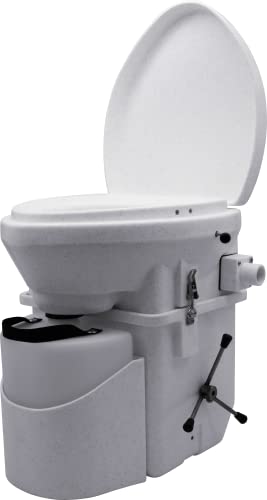
Nature’s Head Self-Contained Composting Toilet
Badge: Best Compost Overall
Strengths
- Self-contained composting: no black tank, no dump station routine, no flush water at all — the trailer’s fresh water stops being toilet water.
- The Close Quarters Spider Handle variant is the version shaped for tight trailer bathrooms, where crank clearance is a real constraint.
- A long-established name in composting toilets, with the owner community and parts trail that follow it.
Trade-offs
- Composting is a routine, not an appliance: medium management, crank turning and venting are part of ownership.
- Upfront tier is the highest in this group; the value case is made across seasons of travel, not weekends.
- Needs a vent path and a power draw for its fan in most installations — plan both before ordering.
Mini spec box
- Type: composting, self-contained (stated in title)
- Handle: Close Quarters Spider Handle (stated in title)
- Flush water: none (composting design)
- Dimensions/power: not stated in title
Every chemical-versus-compost decision in a travel trailer eventually becomes a conversation about this toilet, because the Nature’s Head is the composting design the category is measured against. It is fully self-contained: liquids and solids are separated at the bowl, solids go to a composting chamber with a hand crank, and nothing connects to a black tank because there is nothing to dump in the cassette sense. For a trailer, the consequences cascade pleasantly — no dump-station queue, no flush water drawn from a small fresh tank, and a bathroom that works the same boondocked as it does at a full-hookup site. It is the same independence that stationary off-grid homes chase with low-flush fixtures in Best Toilets For Well And Septic, achieved here by removing the flush entirely.
The variant in this pool is the one a trailer buyer should want: the Close Quarters Spider Handle, shaped for the tight bathrooms where a standard crank arc would argue with a wall. Composting ownership is a routine — managing the medium, turning the crank, emptying the liquids bottle and, on a longer cycle, the solids chamber — and this guide will not pretend otherwise. Owners who adopt the routine describe it as minutes a week; owners who wanted an appliance describe the same minutes as a chore. Know which owner you are before the purchase, because the toilet will not change.
Its limits are the composting limits: an upfront tier at the top of this group, a vent to route, a small fan draw to feed, and a learning curve the first trips teach. For full-timers and long-trip travellers, the arithmetic of skipped dump stations and saved fresh water usually wins that argument. For weekend campers, the cassette and dry-flush picks below exist precisely because this argument sometimes loses.
Best for: Full-time and long-trip trailer travellers who will adopt the composting routine and value dump-station independence. / Not suited for: Weekend campers wanting an appliance with no routine, or trailers with no vent path to offer.
Check on Amazon — confirm dimensions, venting and power requirements on the listing before ordering, since the title states none of them.
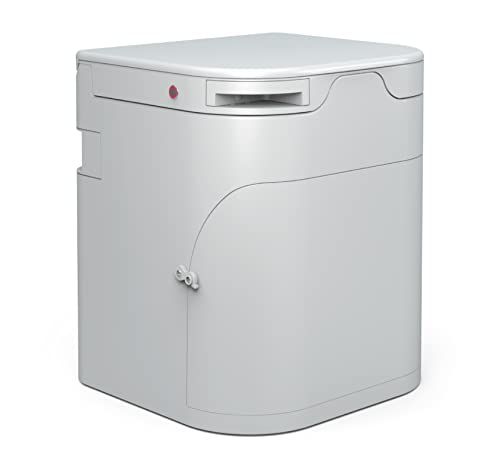
OGO Origin Compact Composting Toilet
Badge: Best Compact Compost
Strengths
- States a 15-inch footprint — the smallest stated claim in this group, aimed at the tightest trailer and van bathrooms.
- Composting system: no black tank, no flush water, dump-station independence like the larger composting picks.
- Named for van, RV and boat use in its title, so the trailer case is its home case, not an adaptation.
Trade-offs
- Compact composting still carries the full routine: medium, separation, venting and scheduled emptying.
- A smaller footprint means smaller chambers; high-traffic households empty more often.
- Power and venting requirements are not stated in title — confirm both on the listing.
Mini spec box
- Type: composting, compact (stated in title)
- Footprint: 15 inches (stated in title)
- Intended use: van, RV and boat (stated in title)
- Flush water: none (composting design)
- Power/venting: not stated in title
The OGO Origin answers the objection that composting toilets are furniture-sized. Its title states a 15-inch footprint and names van, RV and boat as its intended homes — the three tightest bathrooms in recreational travel. In a travel trailer’s wet bath or a converted corner, footprint is not a specification; it is the whole decision, and a composting option that states its small claim in print deserves the trailer shortlist’s attention.
The system is the composting system, with the same honest ledger as its larger sibling: no black tank to dump, no flush water drawn from the fresh supply, liquids separated, solids composted with medium and air. The routine is unchanged by the smaller body; the chambers are smaller, so a well-used trailer bathroom empties them more often. That trade — space for frequency — is the compact category’s eternal bargain, and the OGO at least states the space side of it in its title where you can plan around it.
Verify the unstated half before ordering: venting and power requirements live on the listing, and a trailer installation lives or dies on both. For the solo traveller, the couple in a small trailer, or the van conversion that shares this guide’s logic, the Origin is the composting argument at its most spatially honest.
Best for: Small trailers and van-style bathrooms that want composting independence inside a 15-inch footprint. / Not suited for: High-traffic family trailers that would empty compact chambers too often.
Check on Amazon — confirm power and venting requirements on the listing, since the title states neither.

Separett Villa Urine-Separating Compost Toilet
Badge: Best High-Capacity Compost
Strengths
- Urine separation at the bowl is the composting principle executed mechanically: liquids diverted, solids kept dry, odour managed by dryness rather than chemistry.
- States no additives or mixing needed — the simplest stated routine among the composting picks, with no crank in the description.
- High-capacity design stated in the title, suiting longer intervals between servicing.
Trade-offs
- Its stated homes are homestead, skoolie and cottage; a small travel trailer should verify dimensions carefully, as the title gives none.
- Urine separation requires its plumbing path — a diverted liquids line or container arrangement the installation must provide.
- Compost handling remains part of ownership, as with every pick on the compost side of this comparison.
Mini spec box
- Type: compost, urine-separating (stated in title)
- Routine: no additives or mixing needed (stated in title)
- Capacity: high-capacity design (stated in title)
- Intended use: homestead, skoolie, cottage (stated in title)
- Dimensions: not stated in title
The Separett Villa takes the composting idea apart and keeps only its engine: separation. Its title states the design plainly — urine-separating, no additives or mixing needed, high-capacity — and each phrase is a decision. Separating urine at the bowl keeps the solids dry, and dry is what makes a composting toilet odour-manageable without any chemistry. No mixing means no crank routine. High capacity means the servicing interval stretches, which is the quality full-time travellers feel most.
Its stated homes deserve an honest reading in a trailer guide: homestead, skoolie and cottage. A skoolie is a trailer’s close cousin, and larger travel trailers and fifth wheels with a dedicated bathroom space can host this design well. A small trailer should treat the absence of stated dimensions as a task, not a detail — measure the listing’s footprint against your bathroom before the composting philosophy seduces you past the geometry.
The installation’s other half is the urine path: separated liquids need somewhere designed to go, whether a container or a plumbed route, and that arrangement is part of the purchase decision. For the traveller who wants composting’s independence with the least daily ritual in this group — no crank, no additives, longer intervals — the Villa is the compost side’s most architectural answer.
Best for: Larger trailers, fifth wheels and skoolie-style conversions wanting high-capacity composting with minimal routine. / Not suited for: Small trailers that cannot verify the footprint, or owners unwilling to arrange a urine path.
Check on Amazon — confirm dimensions and the urine-handling arrangement on the listing before ordering.
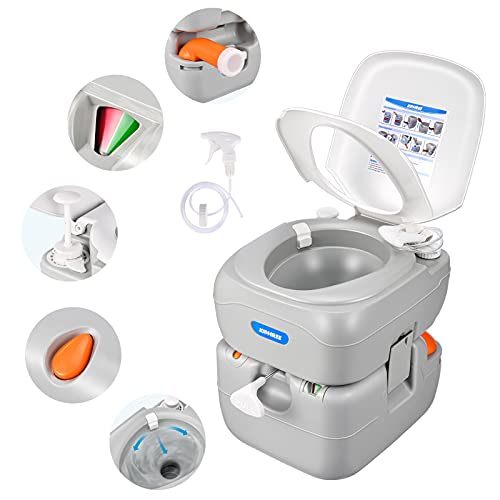
Kohree Portable RV Toilet (5.8 Gallon)
Badge: Best Chemical Cassette Pick
Strengths
- The chemical-cassette pattern in its purest portable form: a detachable waste tank you carry to a dump point, with a stated 5.8-gallon capacity.
- Level indicator stated in the title — the small feature that turns emptying from a guess into a schedule.
- Leak-proof claim and full portability: no installation, no vent, no power; it works in any trailer, tent or cabin corner.
Trade-offs
- Cassette life is a carrying life: a full 5.8-gallon tank is a heavy, deliberate trip to the dump point.
- Capacity is the ceiling — busy family use fills it on a short cycle compared with fixed black tanks.
- It is a portable unit, not a fixture: seating and stability are portable-class, not residential-class.
Mini spec box
- Type: portable cassette (chemical-style) toilet (stated in title)
- Waste tank: 5.8 gallons, detachable (stated in title)
- Indicator: level indicator (stated in title)
- Sealing: leak-proof (stated in title)
- Installation: none — portable
This Kohree is the chemical side of the comparison wearing its working clothes. The pattern is the cassette pattern: a self-contained portable toilet whose waste lives in a detachable tank — here a stated 5.8 gallons — that you carry to a dump station or suitable disposal point, empty, rinse, and return. No installation, no venting, no power, no black tank plumbing. For trailers without a bathroom plumbed for a fixed toilet, and for travellers who want the toilet to be luggage rather than architecture, this is the chemical philosophy at its most flexible.
Two stated details elevate it within its class. The level indicator turns the cassette’s central anxiety — how full is it, really — into a glance, and the leak-proof claim addresses the portable category’s founding fear. Neither changes the pattern’s arithmetic: 5.8 gallons is a finite budget that a family spends faster than a couple, and a full tank is a heavy carry that somebody in the party must own as a job.
Judge it against the composting picks on lifestyle, not on dignity. The cassette asks for a short, frequent, slightly heavy routine at disposal points that already exist everywhere trailers travel. Composting asks for a slower, drier routine and no disposal points at all. The Kohree is the chemical side’s honest champion: cheap to adopt, impossible to install wrong, and sized for travellers whose trips are measured in days between dump points they were passing anyway.
Best for: Weekend and short-trip trailer travellers wanting a portable cassette toilet with no installation at all. / Not suited for: Full-timers who would empty a 5.8-gallon tank too often, or anyone unwilling to carry the full tank.
Check on Amazon — confirm overall dimensions and seat height on the listing if the bathroom corner is tight.

Laveo Dry Flush Toilet
Badge: Best Dry Flush
Strengths
- Dry flush is the third philosophy: each use is sealed away by the flush mechanism itself — no compost routine, no cassette of liquid waste, no water.
- Waterless and self-contained with no plumbing setup, suiting trailers whose fresh water is precious and whose bathrooms are unplumbed.
- States a wide intended range — tiny homes, vans, boats, camping, RVs, off-grid — with the trailer case squarely inside it.
Trade-offs
- Dry flush runs on refill cartridges: an ongoing consumable cost and a supply to carry, unlike compost medium or a cassette’s rinse.
- Sealed waste still needs disposal on schedule; the system changes the form of the chore, not its existence.
- Power requirements are not stated in title; confirm on the listing for off-grid power budgeting.
Mini spec box
- Type: dry flush (stated in title)
- Water: waterless (stated in title)
- Form: portable, self-contained (stated in title)
- Intended use: tiny homes, vans, boats, camping, RVs, off-grid (stated in title)
- Material: LDPE (stated in title)
- Power: not stated in title
The dry flush exists because the chemical-versus-compost argument has a third answer, and the Laveo states it in its title: waterless, portable, self-contained, and easier to use than composting or incinerating designs. The mechanism seals each use into its own lined containment at the press of the flush, so the waste the user meets later is a sealed bag, not a tank of liquid and not a compost chamber. For trailer travellers whose objection to cassettes is the sloshing carry and whose objection to composting is the routine, that sealed middle path is a genuine resolution.
The trailer arithmetic is attractive: no flush water drawn from a small fresh tank, no black tank, no dump-station choreography, no vent-and-crank ritual. The cost side is equally plain — the system runs on refill cartridges, an ongoing consumable that must be budgeted, stocked and carried, and the sealed waste still leaves the trailer on a schedule, into ordinary waste disposal where permitted. Dry flush does not abolish the chore; it converts it into its cleanest, most packaged form, and charges a per-use price for the conversion.
Confirm the power picture on the listing before building an off-grid budget around it, since the title does not state it. For travellers who prize a residential-feeling, no-routine toilet and accept cartridge economics — especially in vans, small trailers and boats where the alternatives fit worst — the Laveo is the comparison’s most modern answer.
Best for: Trailer and van travellers wanting a waterless, no-routine toilet and accepting cartridge running costs. / Not suited for: Budget-first travellers for whom a per-use consumable is the wrong economy.
Check on Amazon — confirm power requirements and cartridge details on the listing before ordering.

MODIWELL LE-310 Compact Dry Flush Toilet
Badge: Best Foldable Dry Flush
Strengths
- Foldable design stated in the title — the only pick here that stores away, serving trailers where the bathroom is also something else.
- Rechargeable and self-contained with no plumbing setup: charge it, place it, use it.
- Dry-flush sealing gives the no-water, no-compost-routine experience in the group’s most portable form.
Trade-offs
- Foldable and compact means a smaller, lower unit than fixed toilets; comfort expectations should be portable-class.
- Dry-flush cartridges are its running cost, as with the Laveo; capacity per cartridge cycle suits shorter trips.
- Rechargeable means a battery to manage — one more charge state on the trip checklist.
Mini spec box
- Type: dry flush, compact (stated in title)
- Power: rechargeable, self-contained (stated in title)
- Design: foldable, easy storage (stated in title)
- Plumbing: none required (stated in title)
- Intended use: RVs, road trips, cabins, marine (stated in title)
- Color: gray
The MODIWELL LE-310 pushes the dry-flush idea to its most trailer-native conclusion: a compact unit, rechargeable and self-contained, that folds for storage and asks for no plumbing at all. Its title names RVs, road trips, cabins and marine use, and the foldable claim is the one that matters most in a travel trailer, where the bathroom corner is often a shower stall, a storage bay or a hallway by day. A toilet that stores away is a different product from a toilet that merely fits.
The experience follows the dry-flush pattern — each use sealed by the mechanism, no water drawn, no compost managed, no cassette carried sloshing to a dump point — delivered in the group’s most portable hardware. The rechargeable design removes any wiring question and adds a battery to the trip’s charge list, alongside the phones and the lantern. Cartridges remain the running cost, as with any dry-flush system, and the compact, foldable form sets portable-class expectations for seat size and capacity.
This is the pick for the trailer that tours: shorter trips, moving days, a bathroom that must earn its floor space hourly. Full-timers in a fixed bathroom will outgrow its compact cycle quickly and should look up the page to the composting and full-size dry-flush picks. Travellers whose trailer life is motion will recognise the LE-310 as the only entry designed around the storing, not just the sitting.
Best for: Touring trailer travellers and van users needing a foldable, rechargeable dry-flush toilet that stores away. / Not suited for: Full-time residents wanting a fixed, full-size fixture with long service intervals.
Check on Amazon — confirm dimensions, both folded and in use, and cartridge details on the listing before ordering.
Comparison Table
Capacities and footprints appear only where titles state them. The emptying column is the lifestyle column — choose the routine you will still be content performing in year three.
| Pick | System | Waste path | Flush water | Ownership routine | Listing |
|---|---|---|---|---|---|
| Nature’s Head Self-Contained Composting Toilet | Composting | Self-contained | None | Crank + medium routine | Check on Amazon |
| OGO Origin Compact Composting Toilet | Composting | Self-contained | None | Crank + medium routine | Check on Amazon |
| Separett Villa Urine-Separating Compost Toilet | Composting (urine-separating) | Self-contained | None | Separation, no mixing | Check on Amazon |
| Kohree Portable RV Toilet (5.8 Gallon) | Chemical cassette (portable) | Detachable 5.8 gal tank | Carry to dump point | Empty + rinse routine | Check on Amazon |
| Laveo Dry Flush Toilet | Dry flush | Self-contained, sealed | None (waterless) | Cartridge refills | Check on Amazon |
| MODIWELL LE-310 Compact Dry Flush Toilet | Dry flush | Self-contained, sealed | None | Cartridge refills + charging | Check on Amazon |
How to Choose Between Chemical, Compost and Dry Flush for a Travel Trailer
Start with your trip pattern, because it outranks every specification. Full-time and long-trip travellers amortise composting’s learning curve across hundreds of nights and feel its dump-station independence weekly; the routine becomes minutes of housekeeping. Weekend and short-trip travellers never amortise anything — for them, a cassette that empties at the dump point they pass on the way home, or a dry-flush unit that seals and stores, matches the rhythm of their travel. Touring travellers who move daily and store the toilet between stops are the foldable dry-flush pick’s exact audience.
Budget the water next. A trailer’s fresh tank is a hard ceiling shared by drinking, cooking, washing and flushing. Composting and dry-flush systems draw no flush water at all, which quietly extends every boondocking stay; a cassette spends a little per flush and returns it as carrying weight later. If your travel style is hookup-to-hookup, water is a minor axis. If it is desert, forest road and five dry days, water is the first axis and the chemical side starts the race a lap down.
Then budget the space, in the trailer’s real geometry. Measure the bathroom corner’s footprint and the door or curtain clearance, and compare stated numbers where titles give them — the OGO’s 15-inch footprint is the group’s only stated one, which is itself information about how the others expect you to check. A foldable unit changes the question entirely: its stored size, not its used size, is what the trailer lives with most hours. Verify unstated dimensions on listings before falling for any philosophy.
Price the routine honestly, in your own temperament. Composting asks for small, regular, dry tasks and rewards them with freedom from dump infrastructure. The cassette asks for an infrequent, heavier, wetter task at infrastructure that exists everywhere. Dry flush asks for almost no task at all and sends the bill as cartridges. None of these is the low-effort option in absolute terms; each moves the effort to a different day and a different sense. Choose the effort you dislike least, because you will perform it for the life of the toilet.
Finally, plan the installation the title does not describe. Composting picks generally need a vent path and a small power draw; the dry-flush MODIWELL is rechargeable and the Laveo’s power picture needs confirming; the cassette needs nothing but a corner. Confirm power and venting on the listing, walk the vent route in your actual trailer, and only then let the philosophy contest declare its winner. Fixed-home readers weighing the other end of the spectrum can compare residential bidet fixtures in Best Toilets For Cleaning Bottom — a different world from everything on this page, and a useful reminder of what trailer systems are trading away and gaining.
How to Set Up and Live With a Trailer Toilet System
Choosing the corner: fit before philosophy
Measure the intended corner’s footprint, the height above it, and the access around it — a cassette must slide out for carrying, a composting unit must open for its routine, a foldable must have somewhere to be folded to. Check the door, curtain or hatch swing against the seated user, not just the unit. In trailers, the seated human is the largest dimension in the bathroom, and the one most often forgotten in the measuring.
Setting up each system, in outline
Cassette: place it, secure it against travel movement, and learn the level indicator’s reading before the first trip rather than during it. Composting: mount the unit, route the vent to outside air following the maker’s instructions, connect the small power draw the fan requires, and prepare the composting medium as the manual directs — the first setup is the system’s longest task and its most important one. Dry flush: place or unfold the unit, load its cartridge system per the manual, and confirm its power or charge state before departure.
Whichever system you chose, run one full cycle at home — use, routine, emptying or disposal, reset — before the first trip. Every system in this guide is simple at home and educational at a campsite; buy the education at home, where the lighting is good and the audience is kind.
Living with it on the road
Build the routine into the travel rhythm rather than treating it as an interruption: cassette carriers empty when passing dump points, not when the indicator insists; composting owners give the system its small regular attentions on travel mornings; dry-flush users track cartridge count the way they track propane. Motion matters too — secure portable units for transit, and re-check mounts and connections after rough roads, because a trailer bathroom lives a more violent life than a house bathroom ever will.
Keep the maker’s manual in the trailer, not at home. The middle of a trip is when a seal, a fuse or a cartridge question will arise, and the manual’s answer beats a forum’s guess at every latitude. Record your system’s consumables — medium, cartridges, seals — on the trailer’s packing list so restocking is a shopping item, not a discovery.
Troubleshooting: three common problems
Problem: odour in the trailer → check the obvious in order: cassette seals and venting of the storage corner, composting moisture balance and vent fan operation, dry-flush cartridge seating. Each system manages odour by its own mechanism, and the fault is almost always that mechanism interrupted, not the philosophy failing.
Problem: the cassette feels full sooner than expected → count users and days against the stated 5.8 gallons honestly; capacity surprises are usually arithmetic surprises, and the fix is a shorter emptying rhythm or a system change, not hope.
Problem: a composting unit’s routine keeps slipping → shrink the interval rather than abandoning the system; composting rewards small, regular attention and punishes catch-up sessions, which is a scheduling fact, not a character flaw.
The Dump Station Question: Infrastructure vs Independence
Underneath the product comparison sits an infrastructure comparison. The chemical cassette plugs the trailer into an existing network — dump stations at campgrounds, parks and travel plazas — and asks the traveller to plan around that network’s locations and queues. Composting and dry flush step off the network: the trailer becomes self-sufficient in the toilet department, free to stay longer in the places with no infrastructure at all. Travellers whose routes are campground-shaped feel no constraint from the network; travellers whose routes are map-shaped feel it on every itinerary.
Neither relationship to infrastructure is more virtuous; they suit different maps. The stationary version of the same question — how a household handles waste without a sewer — is the world of Best Toilets For Septic Tanks, where the fixture’s job shrinks to volume and completeness because the infrastructure is buried in the yard instead of towed behind the rig. The honest way to choose is to look at your last three trips and count how many nights a dump station was a plan, a detour, or a non-event — then notice which system would have made those same nights simplest. Your history is a better reviewer than any guide, including this one.
Weight, the Trailer’s Silent Specification
Trailers live under weight budgets that houses ignore, and toilet systems spend weight in different currencies. A cassette spends it in carried water — a full 5.8-gallon tank is a serious lift and a real payload line. Composting spends it in the unit and its medium, steadily, whether used or not. Dry flush spends it in cartridges carried as spares. None of the titles here state weights, so this guide invents none; the point is structural — when you verify dimensions on the listings, verify weight in the same visit, and add the consumables and the full-tank state to the number before comparing it with your trailer’s payload sticker.
Weight also argues for honesty about trip length. A system whose full state you cannot comfortably carry is a system with a shorter practical cycle than its capacity suggests. The best trailer toilet is the one whose heaviest day you can handle at the end of your longest planned stay — a specification no title can state for you.
Common Buying Mistakes
- Choosing a philosophy from ideology — compost is virtuous, chemical is easy — instead of from your trip pattern and your temperament.
- Measuring the unit but not the seated user, the slide-out path, or the folded storage space.
- Ignoring power and venting because the title did not mention them; the listing and the manual are where installations are decided.
- Learning the emptying routine at a campsite instead of running one full cycle at home first.
- Counting a cassette’s capacity in days from someone else’s trip; users and days are your arithmetic, and the stated figure here is 5.8 gallons.
- Forgetting consumables — medium, cartridges, seals — on the packing and budget lists until the road teaches the lesson.
- Leaving a portable unit unsecured for transit; a trailer bathroom lives a violent life at highway speed.
The quietest mistake is buying for the trailer you plan to own next. Systems are matched to bathrooms, and bathrooms differ between trailers more than brochures suggest. Buy for this trailer’s corner, this trailer’s payload and this year’s trips; the next trailer gets its own decision, with this one’s lessons banked.
Final Recommendation
For most full-time and long-trip trailer travellers, start with the Nature’s Head composting toilet: the established self-contained design, in its close-quarters form, with dump-station independence as its daily dividend. If the bathroom is genuinely small, the OGO Origin makes the same argument inside a stated 15-inch footprint. If you want composting without a crank or additives, the Separett Villa separates its way to the quietest routine here.
The chemical side’s answer is the Kohree cassette: no installation, a stated 5.8-gallon tank, a level indicator, and a routine measured in carries rather than habits — the right toilet for weekend rhythms. And the dry-flush pair, the Laveo and the foldable MODIWELL, serve travellers who want the sealed, waterless, no-routine experience and accept cartridge economics. Chemical vs compost turns out to have three answers, and the correct one is written in your trip pattern, your water budget and your honest relationship with chores. Choose the routine you will still like in year three, and the toilet will take care of the rest.
Frequently Asked Questions
Which is better for a travel trailer: chemical or composting?
Neither, in the abstract. Chemical cassette toilets win on adoption: no installation, no venting, no routine to learn, with a finite tank carried to dump points. Composting toilets win on independence: no dump stations, no flush water, at the price of a real ownership routine. Trip pattern decides — full-timers usually lean compost, weekenders usually lean cassette — and dry flush now offers a third answer for travellers who dislike both routines.
Does a composting toilet smell in a small trailer?
A correctly set up and routinely kept composting toilet manages odour by separation and dryness — that is the design principle the Separett states outright and the cranked models pursue with medium and airflow. Odour problems in practice trace to the mechanism being interrupted: a vent fan off, moisture balance wrong, or the routine skipped. The system rewards the small regular attentions described in the how-to section.
How often does the cassette toilet need emptying?
Its stated capacity is 5.8 gallons, and the honest conversion into days is your party size times your usage — which is why the level indicator in its title matters. Couples on weekend trips typically empty per trip; families on longer stays empty mid-trip. The guide’s advice is procedural: empty when passing a dump point rather than when the indicator insists, and the chore stays small.
What does dry flush cost to run?
Its running cost is refill cartridges — a per-use consumable neither composting (medium) nor cassette systems charge in the same way. The titles here do not state cartridge capacities or prices, and this guide prints no figures it cannot verify; check the listing for the cartridge format and do your per-trip arithmetic there. Travellers who choose dry flush are buying the sealed, no-routine experience, and judge the cartridge cost against that.
Do composting toilets need power and venting in a trailer?
Generally yes — a vent path to outside air and a small draw for a fan are the usual installation requirements — but almost no title in this group states them, which is why every composting review here sends you to the listing before designing the installation. The cassette needs neither; the MODIWELL dry flush is rechargeable; the Laveo’s power picture should likewise be confirmed on its listing.
Can I use a portable cassette toilet in a trailer with no bathroom?
Yes — that is its founding case. The Kohree is fully portable and self-contained, needing only a corner, a level floor and securing for transit. The same is true of the foldable MODIWELL, which additionally stores away. Fixed-space trailers with a dedicated bathroom can host any pick here; the portables simply refuse to require one.
Which system is best for boondocking?
The waterless ones. Composting and dry-flush systems draw no flush water, extending a small fresh tank, and composting additionally frees you from dump-station planning entirely. Between them, composting suits long stays (no consumable to exhaust) and dry flush suits shorter, moving trips (no routine, cartridges permitting). The cassette remains workable boondocked, but its tank capacity becomes the trip’s clock.


