Disclosure: topratedkitchenware.com is reader-supported. When you buy through links on our site, we may earn an affiliate commission from Amazon and other retailers, at no extra cost to you.
Where to buy
These are the documented picks for best small coffee makers consumer reports. Linked picks can be checked on Amazon, where the listing confirms the current specification and availability of the exact model. Any pick covered prose-only is listed without a link, and its review explains why honestly. Read the full guide ↓
- SZHETEFU 12 oz French Press Coffee Maker, Full Stainless Steel — Best Manual Small Pick. Check the current listing on Amazon.
- Keurig K-Express Single Serve K-Cup Maker, Black — Best Test-Friendly All-Rounder in Black. Check the current listing on Amazon.
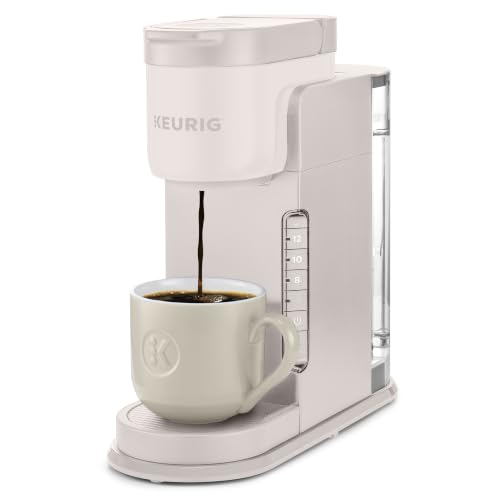
- Keurig K-Express Single Serve K-Cup Maker, Warm Stone — Best Test-Friendly All-Rounder in Warm Stone. Check the current listing on Amazon.
- Elite Gourmet 14 oz Single-Serve Coffee Maker EHC111A — Best Low-Fuss Small Pick. Check the current listing on Amazon.
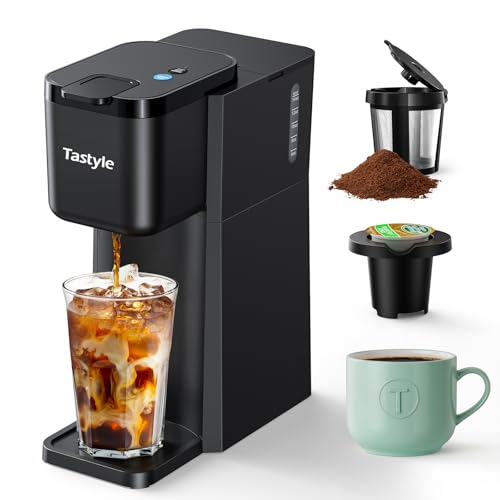
- Tastyle Mini Single Serve Hot and Iced Coffee Maker K310IC — Best for Pods and Grounds in Mini Form. Check the current listing on Amazon.
- Keurig K-Express Single Serve K-Cup Maker, Evergreen — Best Reservoir Pick in Evergreen. Check the current listing on Amazon.
People who search for the best small coffee makers consumer reports are usually asking for something specific: not a manufacturer’s claims, but the kind of judgement an independent testing organisation would reach — machines measured against consistent criteria, with the weaknesses printed next to the strengths. This guide is written in that spirit. It is not a republication of any organisation’s rankings, and it invents no test results; instead it applies the criteria a rigorous tester would apply — consistency, temperature stability, ease of use, cleaning burden, footprint and running cost — to six verified small coffee makers, and shows its working for each one.
That discipline changes what a guide looks like. Marketing-led lists rank by novelty; criteria-led lists rank by how a machine behaves on the hundredth morning, not the first. Does it brew the same cup in January as in June? Can a half-awake person operate it? Do its removable parts survive the dishwasher and its water path survive hard water? The six machines below — a stainless French press, three finishes of Keurig’s reservoir design, the one-touch Elite Gourmet and the mini Tastyle — were each read against those questions.
One more honesty note before the reviews: independent testers buy their units and answer to readers, and this guide’s pool was verified against Amazon’s catalogue data in the same buyer’s-advocate spirit — specifications are only what the listings document, and where a listing is silent, the review says so. Readers who want the newsroom-style comparison can continue to Best Small Coffee Makers New York Times, and those who want the small-office angle will find it at Best Single Serve Coffee Makers For Small Office.
Key Takeaways
- This guide applies independent-testing criteria — consistency, usability, cleaning, footprint, running cost — rather than republishing any organisation’s rankings.
- The SZHETEFU French press scores on simplicity and durability: no power, no pods, nothing electronic to fail.
- The K-Express models are the benchmark pod design here: 42 oz reservoir, three sizes, Strong Brew.
- The Elite Gourmet wins on fuss-free operation; the Tastyle wins on format flexibility per inch of counter.
- Running cost is a criterion, not an afterthought: pods cost more per cup than grounds, every day, for years.
In this guide
Quick Picks
| Pick | Badge | Format | Standout point |
|---|---|---|---|
| SZHETEFU 12 oz French Press Coffee Maker, Full Stainless Steel | Best Manual Small Pick | 12 oz / 350 ml | Full stainless build shrugs off the drops that crack glass presses |
| Keurig K-Express Single Serve K-Cup Maker, Black | Best Test-Friendly All-Rounder in Black | 3 sizes | 42 oz removable reservoir covers several cups between refills |
| Keurig K-Express Single Serve K-Cup Maker, Warm Stone | Best Test-Friendly All-Rounder in Warm Stone | 3 sizes | 42 oz removable reservoir covers several cups between refills |
| Elite Gourmet 14 oz Single-Serve Coffee Maker EHC111A | Best Low-Fuss Small Pick | 14 oz single serving | Reusable filter means coffee from any grounds you already own |
| Tastyle Mini Single Serve Hot and Iced Coffee Maker K310IC | Best for Pods and Grounds in Mini Form | 6 to 14 oz | Takes both K-Cup pods and grounds, so no coffee is off-limits |
| Keurig K-Express Single Serve K-Cup Maker, Evergreen | Best Reservoir Pick in Evergreen | 3 sizes | 42 oz removable reservoir covers several cups between refills |
How These Picks Were Chosen
The pool was verified against Amazon’s catalogue data before writing, and every specification in this guide traces to a listing. That matters doubly for a testing-criteria article: a criterion applied to an invented specification is theatre, so the spec boxes contain documented facts only, and judgements are labelled as reasoning rather than dressed as measurements.
The criteria themselves deserve stating, since they are the method. Consistency: does the design control its variables — dose, water volume, temperature path — tightly enough to repeat a cup? Usability: can the machine be run correctly by a tired person, and are its controls self-explanatory? Cleaning: how many parts, how often, and what happens if you skip a week? Footprint: honest dimensions including lid swing and reservoir access. Running cost: the per-cup economics of its format over years, not the shelf price of the machine. Durability signals: materials and the absence of fragile complexity.
No laboratory work is claimed. Where this guide says a design ‘should’ behave a certain way, that is engineering reasoning from documented specifications — the same reasoning a reader can apply to any machine, including those in Best Thermal Coffee Makers Consumer Reports and Best Single Cup Coffee Makers Consumer Reports.
Detailed Reviews: best small coffee makers consumer reports

SZHETEFU 12 oz French Press Coffee Maker, Full Stainless Steel
Badge: Best Manual Small Pick
The SZHETEFU is a 12 oz French press in full stainless steel, sized for one to two cups and pitched at kitchen, travel and camping use. At 350 ml it is a personal press rather than a table press, and the all-metal construction trades the visibility of glass for durability that survives a camp bag or a clumsy sink.
Read through a tester’s lens, the SZHETEFU 12 oz French Press Coffee Maker, Full Stainless Steel is interesting for what its design controls and what it leaves to chance, in a format defined by 12 oz / 350 ml. A rigorous evaluation always separates the two. Controlled variables — a fixed pod dose, a metered brew size, a one-touch cycle — produce consistency almost for free, which is why simple machines often outscore clever ones in long-term testing. Uncontrolled variables — your kettle’s temperature on a manual press, the water age in a reservoir — are where cups drift. The honest limitation of any criteria-led guide, this one included, is that it can reason about a design’s likely consistency but cannot publish a measured variance; treat the reasoning as a map of where to pay attention during your first month with the machine, because that is what it is.
The testerly question for the SZHETEFU 12 oz French Press Coffee Maker, Full Stainless Steel from SZHETEFU is what happens at month six. Seals, needles, pumps and hinges all age; reservoirs grow film if they are only topped up; a press’s mesh filter frays at the edges and starts letting sediment through. None of that is a reason to avoid the machine — it is a reason to note, at purchase, which of its parts are removable, washable and replaceable, because long-term scores in real testing are usually decided by exactly those unglamorous details rather than by first-week performance.
Strengths
- Full stainless build shrugs off the drops that crack glass presses
- 12 oz size is honestly matched to one or two cups
- No power, no pods, no filters to buy — coffee and hot water only
Trade-offs
- Manual brewing: you boil the water and time the steep yourself
- French press coffee carries more sediment than filtered methods
- 12 oz is a hard ceiling for serving guests
| Specification | Detail |
|---|---|
| Capacity | 12 oz / 350 ml |
| Material | full stainless steel |
| Servings | 1-2 cups per listing |
| Use cases per listing | kitchen, travel, camping |
| Format | French press / coffee press |
Best for: drinkers who want the simplest possible small brewer with nothing to break / Not suited for: anyone who wants coffee without boiling a kettle themselves

Keurig K-Express Single Serve K-Cup Maker, Black
Badge: Best Test-Friendly All-Rounder in Black
The black K-Express is the neutral-finish version of Keurig’s 42 oz reservoir design: three brew sizes, a Strong Brew button, travel-mug clearance and compatibility with the full K-Cup catalogue. Black is the finish that disappears into an office kitchenette or a dark counter scheme, which is precisely why it anchors so many shared-space setups.
Read through a tester’s lens, the Keurig K-Express Single Serve K-Cup Maker, Black is interesting for what its design controls and what it leaves to chance, in a format defined by 3 sizes. A rigorous evaluation always separates the two. Controlled variables — a fixed pod dose, a metered brew size, a one-touch cycle — produce consistency almost for free, which is why simple machines often outscore clever ones in long-term testing. Uncontrolled variables — your kettle’s temperature on a manual press, the water age in a reservoir — are where cups drift. The honest limitation of any criteria-led guide, this one included, is that it can reason about a design’s likely consistency but cannot publish a measured variance; treat the reasoning as a map of where to pay attention during your first month with the machine, because that is what it is.
The testerly question for the Keurig K-Express Single Serve K-Cup Maker, Black from Keurig is what happens at month six. Seals, needles, pumps and hinges all age; reservoirs grow film if they are only topped up; a press’s mesh filter frays at the edges and starts letting sediment through. None of that is a reason to avoid the machine — it is a reason to note, at purchase, which of its parts are removable, washable and replaceable, because long-term scores in real testing are usually decided by exactly those unglamorous details rather than by first-week performance.
Strengths
- 42 oz removable reservoir covers several cups between refills
- Strong Brew button gives a bolder cup from the same pod
- Black finish hides splashes and suits most kitchens and offices
Trade-offs
- Pod-only brewing unless you add a reusable filter accessory
- Reservoir footprint is larger than the mini machines
- One of several near-identical K-Express finishes to choose between
| Specification | Detail |
|---|---|
| Brew sizes | 3 sizes |
| Reservoir | 42 oz, removable |
| Feature | Strong Brew button |
| Compatibility | works with all K-Cup pods |
| Cups | travel mug friendly |
| Colour | black |
Best for: households that want the standard small-machine feature set in black / Not suited for: very tight counters
Keurig K-Express Single Serve K-Cup Maker, Warm Stone
Badge: Best Test-Friendly All-Rounder in Warm Stone
Warm stone is the soft neutral finish of the K-Express line: the same 42 oz removable reservoir, three brew sizes, Strong Brew button and all-K-Cup compatibility as its siblings, in a colour chosen for pale worktops and warm-toned kitchens where black reads harsh and bright colours read loud.
Read through a tester’s lens, the Keurig K-Express Single Serve K-Cup Maker, Warm Stone is interesting for what its design controls and what it leaves to chance, in a format defined by 3 sizes. A rigorous evaluation always separates the two. Controlled variables — a fixed pod dose, a metered brew size, a one-touch cycle — produce consistency almost for free, which is why simple machines often outscore clever ones in long-term testing. Uncontrolled variables — your kettle’s temperature on a manual press, the water age in a reservoir — are where cups drift. The honest limitation of any criteria-led guide, this one included, is that it can reason about a design’s likely consistency but cannot publish a measured variance; treat the reasoning as a map of where to pay attention during your first month with the machine, because that is what it is.
The testerly question for the Keurig K-Express Single Serve K-Cup Maker, Warm Stone from Keurig is what happens at month six. Seals, needles, pumps and hinges all age; reservoirs grow film if they are only topped up; a press’s mesh filter frays at the edges and starts letting sediment through. None of that is a reason to avoid the machine — it is a reason to note, at purchase, which of its parts are removable, washable and replaceable, because long-term scores in real testing are usually decided by exactly those unglamorous details rather than by first-week performance.
Strengths
- 42 oz removable reservoir covers several cups between refills
- Strong Brew button gives a bolder cup from the same pod
- Warm stone finish suits light, warm-toned kitchens
Trade-offs
- Functionally identical to the other K-Express finishes in this guide
- Pod-only brewing unless you add a reusable filter accessory
- Reservoir footprint is larger than the mini machines
| Specification | Detail |
|---|---|
| Brew sizes | 3 sizes |
| Reservoir | 42 oz, removable |
| Feature | Strong Brew button |
| Compatibility | works with all K-Cup pods |
| Cups | travel mug friendly |
| Colour | warm stone |
Best for: households that want the standard small-machine feature set in warm stone / Not suited for: very tight counters

Elite Gourmet 14 oz Single-Serve Coffee Maker EHC111A
Badge: Best Low-Fuss Small Pick
The Elite Gourmet EHC111A is a 600W one-touch single-serve machine built around a reusable filter for ground coffee and loose-leaf tea. It brews up to 14 oz into a mug or travel cup, shuts itself off afterwards, and its removable parts are dishwasher-safe, which makes it one of the lowest-friction designs in this entire pool.
Read through a tester’s lens, the Elite Gourmet 14 oz Single-Serve Coffee Maker EHC111A is interesting for what its design controls and what it leaves to chance, in a format defined by 14 oz single serving. A rigorous evaluation always separates the two. Controlled variables — a fixed pod dose, a metered brew size, a one-touch cycle — produce consistency almost for free, which is why simple machines often outscore clever ones in long-term testing. Uncontrolled variables — your kettle’s temperature on a manual press, the water age in a reservoir — are where cups drift. The honest limitation of any criteria-led guide, this one included, is that it can reason about a design’s likely consistency but cannot publish a measured variance; treat the reasoning as a map of where to pay attention during your first month with the machine, because that is what it is.
The testerly question for the Elite Gourmet 14 oz Single-Serve Coffee Maker EHC111A from Elite Gourmet is what happens at month six. Seals, needles, pumps and hinges all age; reservoirs grow film if they are only topped up; a press’s mesh filter frays at the edges and starts letting sediment through. None of that is a reason to avoid the machine — it is a reason to note, at purchase, which of its parts are removable, washable and replaceable, because long-term scores in real testing are usually decided by exactly those unglamorous details rather than by first-week performance.
Strengths
- Reusable filter means coffee from any grounds you already own
- One-touch operation is as simple as this category gets
- Auto shut-off suits forgetful mornings and shared spaces
Trade-offs
- Brews grounds rather than sealed pods, so there is a filter to rinse
- 14 oz ceiling is one generous mug, never two
- 600W class is a gentle brewer, not a speed machine
| Specification | Detail |
|---|---|
| Capacity | 14 oz single serving |
| Power | 600W |
| Operation | one-touch |
| Filter | reusable, for grounds and loose-leaf tea |
| Features | auto shut-off, dishwasher-safe parts |
| Format | compact, travel-mug friendly |
Best for: one-person households that want one touch and auto shut-off / Not suited for: drinkers who want pods or a reservoir
Tastyle Mini Single Serve Hot and Iced Coffee Maker K310IC
Badge: Best for Pods and Grounds in Mini Form
The Tastyle K310IC is a mini single-serve machine that accepts both K-Cup pods and ground coffee, brews from 6 to 14 oz, and makes hot and iced coffee from the same compact 120V body. It ships with a recipe book and is pitched at homes, travel, RVs, offices and dorms — a flexibility-first design rather than a single-format specialist.
Read through a tester’s lens, the Tastyle Mini Single Serve Hot and Iced Coffee Maker K310IC is interesting for what its design controls and what it leaves to chance, in a format defined by 6 to 14 oz. A rigorous evaluation always separates the two. Controlled variables — a fixed pod dose, a metered brew size, a one-touch cycle — produce consistency almost for free, which is why simple machines often outscore clever ones in long-term testing. Uncontrolled variables — your kettle’s temperature on a manual press, the water age in a reservoir — are where cups drift. The honest limitation of any criteria-led guide, this one included, is that it can reason about a design’s likely consistency but cannot publish a measured variance; treat the reasoning as a map of where to pay attention during your first month with the machine, because that is what it is.
The testerly question for the Tastyle Mini Single Serve Hot and Iced Coffee Maker K310IC from Tastyle is what happens at month six. Seals, needles, pumps and hinges all age; reservoirs grow film if they are only topped up; a press’s mesh filter frays at the edges and starts letting sediment through. None of that is a reason to avoid the machine — it is a reason to note, at purchase, which of its parts are removable, washable and replaceable, because long-term scores in real testing are usually decided by exactly those unglamorous details rather than by first-week performance.
Strengths
- Takes both K-Cup pods and grounds, so no coffee is off-limits
- Brews iced coffee as well as hot, unusual at this size
- 6 to 14 oz range covers small cups and travel mugs
Trade-offs
- Mini format means modest water capacity between refills
- Iced drinks still need you to supply the ice and a suitable cup
- A smaller brand means a thinner accessory ecosystem than Keurig
| Specification | Detail |
|---|---|
| Brew sizes | 6 to 14 oz |
| Formats | K-Cup pods and ground coffee |
| Drinks | hot and iced coffee |
| Power supply | 120V |
| Extras per listing | recipe book included |
| Version | K310IC, 2.0, classic black |
Best for: small spaces that still want pods, grounds, hot and iced / Not suited for: households wanting a big tank

Keurig K-Express Single Serve K-Cup Maker, Evergreen
Badge: Best Reservoir Pick in Evergreen
The K-Express in evergreen pairs a 42 oz removable reservoir with three brew sizes and a Strong Brew button, and it works with all K-Cup pods. Removing the drip tray accommodates travel mugs. It is the reservoir-equipped step up from the fill-per-cup minis: same pod simplicity, far fewer trips to the tap across a morning.
Read through a tester’s lens, the Keurig K-Express Single Serve K-Cup Maker, Evergreen is interesting for what its design controls and what it leaves to chance, in a format defined by 3 sizes. A rigorous evaluation always separates the two. Controlled variables — a fixed pod dose, a metered brew size, a one-touch cycle — produce consistency almost for free, which is why simple machines often outscore clever ones in long-term testing. Uncontrolled variables — your kettle’s temperature on a manual press, the water age in a reservoir — are where cups drift. The honest limitation of any criteria-led guide, this one included, is that it can reason about a design’s likely consistency but cannot publish a measured variance; treat the reasoning as a map of where to pay attention during your first month with the machine, because that is what it is.
The testerly question for the Keurig K-Express Single Serve K-Cup Maker, Evergreen from Keurig is what happens at month six. Seals, needles, pumps and hinges all age; reservoirs grow film if they are only topped up; a press’s mesh filter frays at the edges and starts letting sediment through. None of that is a reason to avoid the machine — it is a reason to note, at purchase, which of its parts are removable, washable and replaceable, because long-term scores in real testing are usually decided by exactly those unglamorous details rather than by first-week performance.
Strengths
- 42 oz removable reservoir covers several cups between refills
- Strong Brew button gives a bolder cup from the same pod
- Three brew sizes span small cups to travel mugs
Trade-offs
- Colour is the only difference from the other K-Express finishes here
- Pod-only brewing unless you add a reusable filter accessory
- Reservoir size makes it larger than fill-per-cup minis
| Specification | Detail |
|---|---|
| Brew sizes | 3 sizes |
| Reservoir | 42 oz, removable |
| Feature | Strong Brew button |
| Compatibility | works with all K-Cup pods |
| Cups | travel mug friendly |
| Colour | evergreen |
Best for: households brewing several small cups a morning / Not suited for: dorm desks where every inch counts
Comparison Table
| Model | Badge | Key specification | Second strength | Link |
|---|---|---|---|---|
| SZHETEFU 12 oz French Press Coffee Maker, Full Stainless Steel | Best Manual Small Pick | Material: full stainless steel | 12 oz size is honestly matched to one or two cups | Check on Amazon |
| Keurig K-Express Single Serve K-Cup Maker, Black | Best Test-Friendly All-Rounder in Black | Reservoir: 42 oz, removable | Strong Brew button gives a bolder cup from the same pod | Check on Amazon |
| Keurig K-Express Single Serve K-Cup Maker, Warm Stone | Best Test-Friendly All-Rounder in Warm Stone | Reservoir: 42 oz, removable | Strong Brew button gives a bolder cup from the same pod | Check on Amazon |
| Elite Gourmet 14 oz Single-Serve Coffee Maker EHC111A | Best Low-Fuss Small Pick | Power: 600W | One-touch operation is as simple as this category gets | Check on Amazon |
| Tastyle Mini Single Serve Hot and Iced Coffee Maker K310IC | Best for Pods and Grounds in Mini Form | Formats: K-Cup pods and ground coffee | Brews iced coffee as well as hot, unusual at this size | Check on Amazon |
| Keurig K-Express Single Serve K-Cup Maker, Evergreen | Best Reservoir Pick in Evergreen | Reservoir: 42 oz, removable | Strong Brew button gives a bolder cup from the same pod | Check on Amazon |
How to Choose: a Small Coffee Maker the Way a Tester Would
Adopt the tester’s first habit: define your test before you look at machines. Write down your household’s actual requirements — cups per day, mug sizes, who operates it, where it will live, what coffee you buy — and score candidates against that sheet rather than against a generic ideal. A machine that wins a stranger’s test can lose yours, because criteria weightings are personal: a solo drinker should weight footprint and per-cup cost heavily and reservoir size barely at all.
Apply the consistency criterion with your eyes open. Fixed-dose formats — pods, and the one-touch Elite Gourmet’s measured single serving — remove the biggest source of cup-to-cup drift, which is the human measuring at 6 a.m. Manual formats like the French press hand every variable to you: marvellous in skilled, unhurried hands, variable in anyone’s Monday hands. Neither is ‘better’; they are answers to different questions about who you are before coffee.
Cost the format, not just the machine. Over a three-year life, a daily pod habit costs meaningfully more than the same habit in grounds, and a tester would print that arithmetic next to the purchase recommendation. The Tastyle and any grounds-capable design soften the number by letting you choose per cup. If the arithmetic surprises you, let it change the shortlist before purchase, not the mood after it.
Finally, interrogate cleaning with the listing in front of you. Count the removable parts, check which are dishwasher-safe (the Elite Gourmet documents dishwasher-safe parts explicitly), and ask how the water path is descaled. Then be honest about your household’s cleaning temperament, because the best-scoring machine in any test is the one whose maintenance actually happens. Readers applying the same criteria to the smallest machines should cross-check Best Small Coffee 4 Cup Makers and Best Small Cup Coffee Makers.
How to Run Your Own Fair Test at Home
You cannot replicate a testing laboratory, but you can replicate its fairness. When a new machine arrives, brew your usual coffee the same way for a week before judging it: same water, same mug, same setting, tasted at the same point in your morning. First impressions of coffee machines are notoriously contaminated by novelty and by the coffee you happened to open that week; a week of sameness washes most of that out.
Then change one variable at a time, the way a tester would. Brew size first — most people discover their preferred cup is one size down and the strong setting on. Water second, if your tap is suspect: one week on filtered water tells you whether the machine or the supply was the problem. Keep brief notes; coffee memory is short and confident, which is a poor combination, and three lines on the fridge door outperform it entirely.
- Week one: brew your usual coffee identically every day — same water, size, setting and mug.
- Note the cup each day in a line or two: strength, temperature satisfaction, any fuss.
- Week two: change one variable only — brew size, strength setting, or water source.
- Test the cleaning routine honestly: time it, and note which parts resist or invite it.
- Test the worst case: a rushed morning, a guest, the largest mug you own.
- Decide by your notes, not by your memory of the best cup.
Problem: cups vary from day to day on the same setting → what to do: an uncontrolled variable is drifting — usually water age in the reservoir or a grounds dose measured by eye; fix the variable before blaming the machine
Problem: the coffee is never quite hot enough → what to do: warm the mug with a water-only cycle first, and check whether scale is insulating the heater — descale before concluding the machine underperforms
Problem: cleaning keeps being skipped → what to do: the routine is too long for your household, not your household too lazy for the routine; simplify it to the parts that touch coffee, daily, and schedule the deep clean monthly
What Independent Testing Actually Measures — and What It Cannot
Serious testing organisations earn their authority with method: units bought at retail, identical protocols, measured temperatures and times, and panels tasting blind. What that method captures superbly is comparability — machine against machine under one roof. What it cannot capture is your kitchen: your water, your mugs, your household’s patience, your counter. That is why the wisest use of any test verdict, including the reasoning in this guide, is as a filter rather than a verdict — it removes the machines with real weaknesses and leaves you to choose among the sound ones by fit.
It is also why this guide refuses to fabricate the trappings of testing. There are no invented scores, timings or rankings here, and no claim about what any named organisation concluded. The criteria are real and applied in the open; the conclusions are reasoning you can audit line by line, which is the most any honest guide without a laboratory can offer.
The Small-Machine Criteria That Matter Most
Of all the criteria, three dominate small machines specifically. Footprint honesty: small machines are bought for tight spaces, and a design that needs its reservoir pulled sideways or its lid swung into a cabinet fails its brief no matter how it brews. Format economics: small households drink fewer cups, so per-cup cost differences compound more slowly — but pod waste per cup is identical, which environmentally minded readers weight heavily. And single-point-of-failure thinking: a press has none, a one-touch machine has few, a reservoir pod machine has a pump and a needle — each step up in convenience is a step up in the number of things that can eventually need attention.
None of this argues for the simplest machine by default. It argues for knowing which criterion you are spending on. The reader who buys the K-Express for its reservoir and Strong Brew button, knowing the pump exists and the pods cost more, has made a tester’s decision. The reader who buys it because the box was shiny has made a shopper’s. This guide’s whole purpose is to move you from the second group to the first; the companion criteria for grinder-equipped small machines are at Best Small Coffee Makers With Grinder.
Reading Any Review — Including This One — Like a Tester
Three questions strip most reviews to their evidence. What was actually measured, and what is reasoning wearing measurement’s clothes? Are the specifications traceable to the manufacturer or listing, or borrowed from other reviews? And are weaknesses printed with the same prominence as strengths — a review with no trade-offs is an advertisement that has learned to write paragraphs.
Apply those questions here and the answers are on the page: nothing was measured, by declaration; every specification traces to a verified listing; and every pick carries three stated trade-offs, including the awkward ones — the press that makes you boil the kettle, the pod machines whose format costs more per cup forever. A guide that survives its own test is the only kind worth following.
How to Use This Guide Alongside a Testing Organisation’s Verdicts
Readers who also consult a testing organisation’s published work — as they should — will get the most from both sources by using them in the right order. Use measured verdicts first, to eliminate machines with documented weaknesses under laboratory conditions. Use a criteria guide like this one second, to reason about fit: your water, your mugs, your household’s cleaning temperament, your counter. Laboratory loser’s brackets and kitchen winners overlap heavily but not completely, and the difference is almost always fit rather than quality.
And when the two disagree — when a laboratory favourite would plainly fail your footprint audit, or a laboratory also-ran matches your household’s every criterion — trust the disagreement in favour of your own kitchen. Testing tells you what a machine is; only fit tells you what it will be to own. The most expensive coffee maker is the excellent one that does not suit the household that bought it.
A Word on Scores, Stars and Other People’s Numbers
Criteria-led buying has one more discipline worth naming: suspicion of other people’s numbers. Scores compress a weighting of criteria into a single figure, and the weighting is the opinion — a machine can top a chart whose criteria your household would rank backwards. When you meet any score, in any publication, the useful question is never ‘how high?’ but ‘weighted how, measured how, and for whom?’ A guide that cannot answer those three questions about its own verdicts is asking for faith, and faith is not a buying criterion.
This guide has therefore kept its verdicts verbal and its criteria visible, at the cost of looking less decisive than a numbered chart. That is a deliberate trade. A reader who finishes this article able to score any small coffee maker against consistency, usability, cleaning, footprint and running cost owns something more durable than a ranking: a method that survives this product cycle, the next pool of machines, and every future version of the same search.
The Maintenance Schedule a Tester Would Print
Daily: remove spent pods or grounds, rinse the parts that touched coffee while they are still wet, and leave the brew area open to dry. Weekly: wash the reservoir rather than topping it up, wash removable parts in warm soapy water or the dishwasher where the listing allows, and wipe the exterior — small machines live on display. Monthly or by water hardness: descale the water path, the single intervention that most extends any heated machine’s life.
For the French press, the schedule collapses to almost nothing — rinse, wash, and inspect the mesh filter monthly for fraying edges that let sediment through; a replacement mesh restores it fully. That asymmetry is the press’s deepest testing advantage and worth stating in a criteria-led guide: the most reliable machine is usually the one with the fewest systems, and its owner pays for that reliability in manual effort rather than in maintenance. Choose which currency your household prefers to spend.
Common Buying Mistakes
- Treating any guide’s ranking — including a famous organisation’s — as a verdict instead of a filter for your own criteria.
- Comparing machines on shelf appeal while ignoring the per-cup cost of their format over years.
- Assuming a small machine needs no descaling because it is small.
- Judging a machine on its first three cups instead of a controlled week.
- Ignoring cleaning burden until the first time a reservoir smells — then blaming the machine.
- Buying for features a listing never documented; if it is not in the specification, it is not in the machine.
Final Recommendation
By the criteria that govern this guide, the K-Express in black is the safest small-machine recommendation for most households: a controlled, repeatable brew, a reservoir sized for real mornings, a strength control for the picky, and a format whose costs are known and manageable. The warm stone and evergreen finishes are the same judgement in different clothes, so choose by kitchen without a moment’s guilt.
The criteria crown different winners for different households, and a tester’s guide should say so. The SZHETEFU press is the durability and simplicity champion — nothing to descale, nothing to plug in, coffee for one or two anywhere. The Elite Gourmet is the low-fuss champion. The Tastyle is the flexibility-per-inch champion. Pick the criterion your household actually lives by, and the right machine in this list is the one that wins it.
And keep the receipt of your reasoning, not just the machine’s: the notes from your first controlled week are the baseline every future cup is judged against, and if the machine ever disappoints, they will tell you whether it changed — or whether your coffee, water or habits did. That is the tester’s mindset, and it outlasts any single purchase.
Start with the SZHETEFU 12 oz French Press Coffee Maker, Full Stainless Steel if you want the shortest route to a good decision, and check its current Amazon listing to confirm the exact configuration. A second look at the same listing page is also the fastest way to compare what is included in the box before you commit.
Frequently Asked Questions
Does this guide reproduce Consumer Reports’ rankings?
No. It applies the kind of criteria an independent testing organisation uses — consistency, usability, cleaning, footprint, running cost — to a verified pool of small coffee makers, and shows its reasoning. It makes no claim about any organisation’s actual verdicts or scores.
What criteria matter most for a small coffee maker?
Footprint honesty, including lid swing and reservoir access; consistency of the brew; cleaning burden; and the per-cup cost of the machine’s format. Small machines live in tight spaces and are used daily, so those four decide long-term satisfaction more than extra features do.
Is a French press really a coffee maker in this comparison?
Yes — it is the manual end of the category, and including it disciplines the comparison: it has no power, pods or pump, costs almost nothing to run, and puts every variable in the user’s hands. Testers include such baselines precisely because they expose what the powered machines’ convenience is worth.
How much more do pods cost than grounds over time?
Per cup, pods consistently cost more than the equivalent ground coffee — that is the price of portioning and convenience. The exact gap depends on brands and buying habits, which is why this guide states the direction and lets you price your own brands rather than printing figures that would date.
What is the most common reason small machines disappoint?
A mismatch between the machine’s maintenance needs and the household’s habits — usually scale build-up and stale reservoir water — followed by footprint surprises. Both are knowable before purchase, which is the point of a criteria-led guide.
Should I pay more for a premium finish on a small machine?
Only after the criteria pass. A finish changes nothing about the brew; it changes how the machine looks on a counter it will occupy for years. In a small kitchen where everything is visible, that can be a legitimate deciding factor — as the last factor, not the first.


