Disclosure: topratedkitchenware.com is reader-supported. When you buy through links on our site, we may earn an affiliate commission from Amazon and other retailers, at no extra cost to you.
Where to buy
Every product below was shortlisted specifically for this guide to the best residential dutch ovens, using only verified listings.
A residential dutch oven is a home generalist: it braises on weeknights, bakes on weekends, and lives within arm’s reach between jobs. The six verified picks below were shortlisted for exactly that mixed household workload. If your home search is really a sizing question for bread, Best Size Dutch Ovens For Bread narrows it; if it is a budget question, Best Prices On Cast Iron Dutch Ovens covers the price tiers.
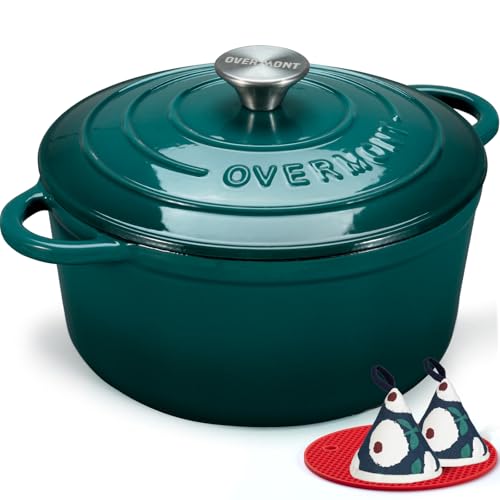
- Overmont Enameled Cast Iron Dutch Oven, 7QT — Check on Amazon
- Amazon Basics Enameled Cast Iron Dutch Oven, 6-Quart (Blue) — Check on Amazon
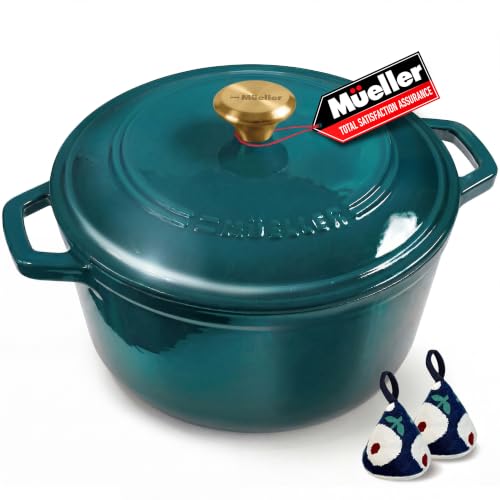
- Mueller DuraCast Enameled Cast Iron Dutch Oven, 6 Quart (Emerald) — Check on Amazon
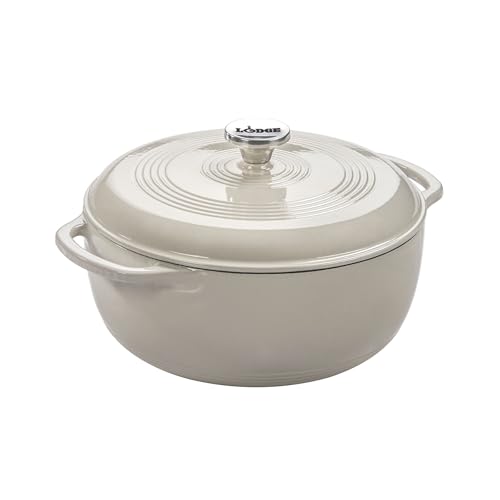
- Lodge Essential Enamel Cast Iron Dutch Oven, 6 Quart (Island Spice Red) — Check on Amazon
- Le Creuset Enameled Cast Iron Round Dutch Oven, 5.5 qt. (Cerise) — Check on Amazon
- Umite Chef Enameled Cast Iron Dutch Oven, 7QT (Emerald) — Check on Amazon
Read the full guide ↓
Choosing the best residential dutch ovens means choosing for a home’s actual rhythm: weeknight soups and stews, weekend braises and bread, occasional big batches for guests or the freezer, all from one heavy pot that lives where it can be reached. This guide compares six verified enameled cast iron dutch ovens sized and shaped for that household workload, from a plain 6-quart everyday pot to the premium benchmark and two 7QT batch-cooking options.
The word residential does real work in this keyword. It excludes the restaurant logic of specialized vessels and the camping logic of bare cast iron for coals, and it points at the enameled, oven-and-stovetop generalist that has become the default home pot. Every pick here is enameled cast iron for that reason: it sears, braises, bakes and serves without seasoning rituals, and it tolerates the acidic tomato and wine braises that home cooking loves and bare iron dislikes.
It also means judging by household criteria: capacity in servings rather than covers, compatibility with the mixed stovetops real homes have, storage and lifting that real kitchens and real wrists can manage, and finishes that survive family use gracefully. Those criteria structure the reviews below, and they explain why two pots of identical capacity can rank very differently for a home. Homes still deciding their size should read the sizing guidance in Best Size Dutch Ovens For Bread Baking alongside this list.
Key Takeaways
- Residential means generalist: enameled cast iron that sears, braises, bakes and serves in one pot.
- Size by servings: 5.5 qt. for smaller households, 6 qt. as the family standard, 7QT for batch cooking.
- The Amazon Basics and Lodge 6-quart pots are the everyday center of this list.
- Stated cooktop compatibility matters at home, where stovetops vary from induction to coil.
- The Le Creuset 5.5 qt. is the premium benchmark; the two 7QT pots serve big households.
- Buy one right-sized pot that lives within reach; a fleet of heavy pots serves no home well.
In this guide
Quick Picks
Six household generalists, ranked by how homes actually use them. The badges name each pot’s household role; detailed reviews follow, and Best Stainless Steel Dutch Ovens covers the stainless alternative for readers comparing materials.
| Pick | Badge | Best for | Link |
|---|---|---|---|
| Overmont Enameled Cast Iron Dutch Oven, 7QT | Best for Large Families | Large families and whole-chicken, double-batch cooking | Linked pick — see Where to Buy |
| Amazon Basics Enameled Cast Iron Dutch Oven, 6-Quart (Blue) | Best Everyday Household Pot | Most homes wanting one standard pot for the week’s cooking | Linked pick — see Where to Buy |
| Mueller DuraCast Enameled Cast Iron Dutch Oven, 6 Quart (Emerald) | Most Versatile | Homes with induction or mixed cooktops | Linked pick — see Where to Buy |
| Lodge Essential Enamel Cast Iron Dutch Oven, 6 Quart (Island Spice Red) | Best Established Name | Households wanting a proven name and a moisture-sealing lid | Linked pick — see Where to Buy |
| Le Creuset Enameled Cast Iron Round Dutch Oven, 5.5 qt. (Cerise) | Best Premium | Buy-once home cooks who want the category benchmark | Linked pick — see Where to Buy |
| Umite Chef Enameled Cast Iron Dutch Oven, 7QT (Emerald) | Best for Batch Cooking | Batch cooks feeding six or more or stocking a freezer | Linked pick — see Where to Buy |
How These Picks Were Chosen
This shortlist was built from verified product listings, selecting enameled cast iron dutch ovens whose sizes and formats suit home kitchens: family capacities, oven-and-stovetop versatility, and lids and handles designed for unattended braising and everyday handling. Products were only linked when the verified listing confirmed the product, brand and capacity; every specification quoted below comes from the listing itself.
A note on method and honesty: this is a research-led guide, not a hands-on test report. We compared manufacturer specifications, stated ratings and inclusions against the documented pattern of residential use, mixed dishes, mixed cooks, mixed stovetops, rather than against professional benchmarks. Where a listing is spare, the review says so; where a pot’s strength is household-specific, such as a stain-hiding finish, the review explains why that matters at home.
Two patterns emerged during research. First, the useful residential range is narrow and consistent, 5.5 to 7 quarts, because household servings and home oven cavities bracket it from both sides. Second, inclusions aimed at home cooks, potholders and cookbooks, cluster on the newer brands, while the heritage names compete on the pot alone; neither strategy is wrong, and the reviews price the difference honestly.
The 6 Best Options for Best residential dutch ovens

Overmont Enameled Cast Iron Dutch Oven, 7QT
Badge: Best for Large Families
Strengths
- 7QT handles double loaves, whole chickens and party-size braises the smaller pots cannot
- Enclosed lid-knob design is a thoughtful detail for oven handling
- Cookbook included helps new owners use the extra capacity well
Trade-offs
- At 7QT this is a large, heavy pot that needs a big oven and real storage space
- Too much pot for a single small loaf, which can spread rather than rise in an oversized vessel
- Not a small dutch oven by any definition, whatever the search that brought you here
Key specs from the listing: Capacity: 7QT; Enameled cast iron; Lid and cookbook included; Cotton potholders included; Enclosed lid-knob design; Listing names sourdough baking, braising, stews and roasting.
The Overmont 7QT heads this residential list because home cooking at family scale is exactly its brief: whole chickens, double batches of chili, and the kind of Sunday braise that produces Monday’s leftovers. The included cookbook and potholders suit a household pot that will be handled by more than one cook. Residential use has a specific rhythm that professional kitchens never see: the pot comes out for a Tuesday soup, a weekend braise, a loaf of bread, then washes up and lives on the stove or a low shelf until the next job. That rhythm rewards versatility and punishes specialization. Every pick in this guide is a generalist on purpose, sized and shaped for the mixed workload of a home rather than the single repeated task of a restaurant line.
Care in a home is a family affair. A residential pot gets used by whoever is cooking, including teenagers, guests and the household’s least careful member, so enamel that forgives a soak, lids that seat without technique, and finishes that hide honest wear are worth more at home than in any professional setting. The reviews below weigh that household reality alongside the specifications.
Home stovetops vary in ways commercial ones do not: induction in one house, an aging coil burner in another, a glass top in a third. A residential dutch oven has to be honest about compatibility, which is why stated cooktop claims appear in these reviews wherever a listing makes them, and why heavy cast iron’s one universal caution, lift rather than drag it across glass, is repeated without embarrassment. In daily use, the details that decide whether a product like this earns its place are unglamorous: how it behaves when your hands are wet or floury, how it feels after a long soak in the sink, and whether it still makes sense on a tired weeknight rather than a leisurely weekend. The Overmont Enameled Cast Iron Dutch Oven, 7QT handles that everyday test in line with what its listing promises, and nothing in its specification suggests a hidden catch for the jobs described in this guide.
The honest limitation to weigh is in the trade-offs above. No single product wins on capacity, control and simplicity at once, and this model leans toward household versatility across the week’s cooking rather than covering every style of cooking equally well. Buyers who cook this way most weeks will feel that trade as a benefit; buyers who only occasionally make the dish in question should weigh the simpler or smaller options in this list first.
Ownership, week to week, is mostly lifting and washing. Enameled cast iron asks for a soak rather than a scrub, rewards it by releasing braises and bread crusts cleanly, and punishes only real abuse: metal utensils dragged hard across the enamel, cold water into a screaming-hot pot, or a drop onto a tile floor. Measure the oven cavity and the shelf this pot will live on before it arrives, because a dutch oven that must be fetched from a high cupboard is a dutch oven that gets used monthly instead of weekly.
Best for: Large families and whole-chicken, double-batch cooking / Not suited for: Small households cooking for one or two

Amazon Basics Enameled Cast Iron Dutch Oven, 6-Quart (Blue)
Badge: Best Everyday Household Pot
Strengths
- Straightforward 6-quart format from a widely available house line
- Dual handles and a round profile fit standard ovens and stovetops
- Blue finish is forgiving about everyday cooking stains
Trade-offs
- House-brand support and documentation are thinner than the heritage brands
- No included extras such as potholders or a cookbook
- Enamel quality is the long-term question with any value-tier cast iron
Key specs from the listing: Capacity: 6-Quart; Enameled cast iron; Round shape with dual handles; Oven safe per the listing; Listing names stews, roasting and baking.
The Amazon Basics 6-Quart is the everyperson residential pot: the standard size, the standard format, dual handles, and no ceremony. For a home kitchen that wants one dutch oven to live on the stove and handle the week’s stews, roasts and bakes, this is the plainest honest answer in the guide. Size in a home is about people, not covers. A residential pot feeds a household and its occasional guests, which in practice means four to eight servings and the leftovers that make weeknight cooking economical. The 5.5 to 7 quart range in this guide brackets that reality: the bottom end for smaller households that cook fresh, the top end for families and batch cooks who regard the freezer as a second pantry.
Residential use has a specific rhythm that professional kitchens never see: the pot comes out for a Tuesday soup, a weekend braise, a loaf of bread, then washes up and lives on the stove or a low shelf until the next job. That rhythm rewards versatility and punishes specialization. Every pick in this guide is a generalist on purpose, sized and shaped for the mixed workload of a home rather than the single repeated task of a restaurant line.
Storage is the residential constraint nobody advertises. These pots are heavy and wide, and most home kitchens have exactly one sensible place for one. That is an argument for choosing a single, right-sized generalist rather than a fleet, and for being honest about the shelf and the lift before ordering a 7QT pot that will live, in practice, wherever it was last washed. In daily use, the details that decide whether a product like this earns its place are unglamorous: how it behaves when your hands are wet or floury, how it feels after a long soak in the sink, and whether it still makes sense on a tired weeknight rather than a leisurely weekend. The Amazon Basics Enameled Cast Iron Dutch Oven, 6-Quart (Blue) handles that everyday test in line with what its listing promises, and nothing in its specification suggests a hidden catch for the jobs described in this guide.
The honest limitation to weigh is in the trade-offs above. No single product wins on capacity, control and simplicity at once, and this model leans toward household versatility across the week’s cooking rather than covering every style of cooking equally well. Buyers who cook this way most weeks will feel that trade as a benefit; buyers who only occasionally make the dish in question should weigh the simpler or smaller options in this list first.
Think, too, about the second winter rather than the first stew. The pots that stay loved are the ones whose size matches the household’s real cooking: the loaf you actually bake, the braise you actually make, the number of people actually at the table. A pot sized to your week will feel indispensable; a pot sized to an imaginary dinner party will feel like a gym membership, impressive, expensive-feeling, and quietly avoided.
Best for: Most homes wanting one standard pot for the week’s cooking / Not suited for: Buyers wanting bundled extras

Mueller DuraCast Enameled Cast Iron Dutch Oven, 6 Quart (Emerald)
Badge: Most Versatile
Strengths
- A stated 500°F oven rating gives clear headroom for hot bread bakes
- Induction compatibility is named explicitly, which not every enameled pot claims
- Emerald finish is distinctive and hides light staining well
Trade-offs
- Brand track record is shorter than Lodge or Le Creuset
- 6 Quart is mid-to-large; small households may find it more pot than they need
- As with all enamel, avoid thermal shock from cold water on a hot pot
Key specs from the listing: Capacity: 6 Quart; Enameled cast iron; Oven safe to 500°F per the listing; PFOA-free positioning; Listing names all cooktops including induction, sourdough baking, braising and slow cooking.
The Mueller DuraCast 6 Quart earns its place on stated versatility: a 500°F oven rating and explicit compatibility with all cooktops including induction, which matters in homes whose stovetop is not gas. Its emerald finish also survives being left out on the stove, where residential pots actually live. Home stovetops vary in ways commercial ones do not: induction in one house, an aging coil burner in another, a glass top in a third. A residential dutch oven has to be honest about compatibility, which is why stated cooktop claims appear in these reviews wherever a listing makes them, and why heavy cast iron’s one universal caution, lift rather than drag it across glass, is repeated without embarrassment.
Size in a home is about people, not covers. A residential pot feeds a household and its occasional guests, which in practice means four to eight servings and the leftovers that make weeknight cooking economical. The 5.5 to 7 quart range in this guide brackets that reality: the bottom end for smaller households that cook fresh, the top end for families and batch cooks who regard the freezer as a second pantry.
Care in a home is a family affair. A residential pot gets used by whoever is cooking, including teenagers, guests and the household’s least careful member, so enamel that forgives a soak, lids that seat without technique, and finishes that hide honest wear are worth more at home than in any professional setting. The reviews below weigh that household reality alongside the specifications. In daily use, the details that decide whether a product like this earns its place are unglamorous: how it behaves when your hands are wet or floury, how it feels after a long soak in the sink, and whether it still makes sense on a tired weeknight rather than a leisurely weekend. The Mueller DuraCast Enameled Cast Iron Dutch Oven, 6 Quart (Emerald) handles that everyday test in line with what its listing promises, and nothing in its specification suggests a hidden catch for the jobs described in this guide.
The honest limitation to weigh is in the trade-offs above. No single product wins on capacity, control and simplicity at once, and this model leans toward household versatility across the week’s cooking rather than covering every style of cooking equally well. Buyers who cook this way most weeks will feel that trade as a benefit; buyers who only occasionally make the dish in question should weigh the simpler or smaller options in this list first.
The lid is half the tool and deserves a thought at purchase time. A well-fitting lid traps the moisture that makes dutch oven cooking what it is, whether that is a self-basting braise or a steamy bread chamber. Check how the lid seats and how its knob handles oven heat and gloved hands, because you will interact with that lid, hot and heavy, every single time you use the pot.
Best for: Homes with induction or mixed cooktops / Not suited for: Anyone indifferent to stated ratings

Lodge Essential Enamel Cast Iron Dutch Oven, 6 Quart (Island Spice Red)
Badge: Best Established Name
Strengths
- Same proven Lodge 6 Quart platform as the Oyster White version
- The deep red finish hides cooking stains better than pale enamel
- Moisture-sealing lid supports the low-and-slow braises this size is bought for
Trade-offs
- A color variant rather than a different design, so there is no performance reason to own both
- Heavy when loaded; not the pot for anyone with wrist or grip limitations
- Enamel chips if metal utensils are used aggressively inside
Key specs from the listing: Capacity: 6 Quart; Enameled cast iron; Moisture-sealing lid; Dual handles; Listing names bread baking, braising, marinating and slow cooking.
This Lodge Essential 6 Quart in Island Spice Red is the established-name household standard. The moisture-sealing lid is a residential feature in the truest sense: it protects the long, unattended braises home cooking runs on, and the deep red finish forgives the stains a working home pot collects. Storage is the residential constraint nobody advertises. These pots are heavy and wide, and most home kitchens have exactly one sensible place for one. That is an argument for choosing a single, right-sized generalist rather than a fleet, and for being honest about the shelf and the lift before ordering a 7QT pot that will live, in practice, wherever it was last washed.
Home stovetops vary in ways commercial ones do not: induction in one house, an aging coil burner in another, a glass top in a third. A residential dutch oven has to be honest about compatibility, which is why stated cooktop claims appear in these reviews wherever a listing makes them, and why heavy cast iron’s one universal caution, lift rather than drag it across glass, is repeated without embarrassment.
Residential use has a specific rhythm that professional kitchens never see: the pot comes out for a Tuesday soup, a weekend braise, a loaf of bread, then washes up and lives on the stove or a low shelf until the next job. That rhythm rewards versatility and punishes specialization. Every pick in this guide is a generalist on purpose, sized and shaped for the mixed workload of a home rather than the single repeated task of a restaurant line. In daily use, the details that decide whether a product like this earns its place are unglamorous: how it behaves when your hands are wet or floury, how it feels after a long soak in the sink, and whether it still makes sense on a tired weeknight rather than a leisurely weekend. The Lodge Essential Enamel Cast Iron Dutch Oven, 6 Quart (Island Spice Red) handles that everyday test in line with what its listing promises, and nothing in its specification suggests a hidden catch for the jobs described in this guide.
The honest limitation to weigh is in the trade-offs above. No single product wins on capacity, control and simplicity at once, and this model leans toward household versatility across the week’s cooking rather than covering every style of cooking equally well. Buyers who cook this way most weeks will feel that trade as a benefit; buyers who only occasionally make the dish in question should weigh the simpler or smaller options in this list first.
There is also a learning curve, and it is shorter than the weight suggests. Two or three cooks teach you a pot’s real personality: how its base behaves on your burner, how long your oven actually takes to bring it to temperature, how much liquid your usual braise loses. Judge any dutch oven after that calibration, not after the first attempt, and keep brief notes; in a category built on repeat cooking, notes compound into reliability faster than any upgrade does.
Best for: Households wanting a proven name and a moisture-sealing lid / Not suited for: Homes needing the largest capacity

Le Creuset Enameled Cast Iron Round Dutch Oven, 5.5 qt. (Cerise)
Badge: Best Premium
Strengths
- The heritage benchmark for enameled cast iron, with decades of production behind the design
- 5.5 qt. is the classic size for both bread and family braises
- Enamel and casting quality are the reasons this name anchors comparison lists
Trade-offs
- Premium-tier positioning, the highest in this guide
- The listing is comparatively spare, so confirm current lid and handle details before ordering
- Heavy, as all quality cast iron is; not a pot for limited grip strength
Key specs from the listing: Capacity: 5.5 qt.; Enameled cast iron; Round dutch oven format; Cerise finish.
The Le Creuset 5.5 qt. in Cerise is the premium residential benchmark, the pot home cooks measure others against. Its size is the classic household size, its enamel is the category’s reference standard, and for a home where one pot will be used for decades, it is the buy-once answer. Care in a home is a family affair. A residential pot gets used by whoever is cooking, including teenagers, guests and the household’s least careful member, so enamel that forgives a soak, lids that seat without technique, and finishes that hide honest wear are worth more at home than in any professional setting. The reviews below weigh that household reality alongside the specifications.
Storage is the residential constraint nobody advertises. These pots are heavy and wide, and most home kitchens have exactly one sensible place for one. That is an argument for choosing a single, right-sized generalist rather than a fleet, and for being honest about the shelf and the lift before ordering a 7QT pot that will live, in practice, wherever it was last washed.
Size in a home is about people, not covers. A residential pot feeds a household and its occasional guests, which in practice means four to eight servings and the leftovers that make weeknight cooking economical. The 5.5 to 7 quart range in this guide brackets that reality: the bottom end for smaller households that cook fresh, the top end for families and batch cooks who regard the freezer as a second pantry. In daily use, the details that decide whether a product like this earns its place are unglamorous: how it behaves when your hands are wet or floury, how it feels after a long soak in the sink, and whether it still makes sense on a tired weeknight rather than a leisurely weekend. The Le Creuset Enameled Cast Iron Round Dutch Oven, 5.5 qt. (Cerise) handles that everyday test in line with what its listing promises, and nothing in its specification suggests a hidden catch for the jobs described in this guide.
The honest limitation to weigh is in the trade-offs above. No single product wins on capacity, control and simplicity at once, and this model leans toward household versatility across the week’s cooking rather than covering every style of cooking equally well. Buyers who cook this way most weeks will feel that trade as a benefit; buyers who only occasionally make the dish in question should weigh the simpler or smaller options in this list first.
Enamel care is simple but not optional. Let the pot cool before washing, soak rather than scour, and reach for a paste cleaner when tomato or turmeric leaves its mark. Pale interiors will slowly take on a patina of use no matter what you do, and experienced owners treat that as a badge rather than damage; if a pristine interior matters to you, choose a darker finish and lower your expectations slightly anyway.
Best for: Buy-once home cooks who want the category benchmark / Not suited for: Budget-first buyers

Umite Chef Enameled Cast Iron Dutch Oven, 7QT (Emerald)
Badge: Best for Batch Cooking
Strengths
- Full 7QT capacity for large households, batch braising and double loaves
- Potholders included, which matters more as the pot gets heavier
- Emerald finish stands out and hides light oven marks
Trade-offs
- The heaviest class of pot in this guide when full
- Oversized for everyday two-person cooking
- Needs a large oven cavity and a sturdy shelf
Key specs from the listing: Capacity: 7QT; Enameled cast iron; Lid and cotton potholders included; Listing names bread baking, braising, stews and marinating.
The Umite Chef 7QT in emerald is the big-household alternative to the Overmont: same generous capacity class, potholders included, and a finish that hides the marks of frequent use. Homes feeding six or more, or batch-cooking for the freezer, are its natural constituency. Residential use has a specific rhythm that professional kitchens never see: the pot comes out for a Tuesday soup, a weekend braise, a loaf of bread, then washes up and lives on the stove or a low shelf until the next job. That rhythm rewards versatility and punishes specialization. Every pick in this guide is a generalist on purpose, sized and shaped for the mixed workload of a home rather than the single repeated task of a restaurant line.
Care in a home is a family affair. A residential pot gets used by whoever is cooking, including teenagers, guests and the household’s least careful member, so enamel that forgives a soak, lids that seat without technique, and finishes that hide honest wear are worth more at home than in any professional setting. The reviews below weigh that household reality alongside the specifications.
Home stovetops vary in ways commercial ones do not: induction in one house, an aging coil burner in another, a glass top in a third. A residential dutch oven has to be honest about compatibility, which is why stated cooktop claims appear in these reviews wherever a listing makes them, and why heavy cast iron’s one universal caution, lift rather than drag it across glass, is repeated without embarrassment. In daily use, the details that decide whether a product like this earns its place are unglamorous: how it behaves when your hands are wet or floury, how it feels after a long soak in the sink, and whether it still makes sense on a tired weeknight rather than a leisurely weekend. The Umite Chef Enameled Cast Iron Dutch Oven, 7QT (Emerald) handles that everyday test in line with what its listing promises, and nothing in its specification suggests a hidden catch for the jobs described in this guide.
The honest limitation to weigh is in the trade-offs above. No single product wins on capacity, control and simplicity at once, and this model leans toward household versatility across the week’s cooking rather than covering every style of cooking equally well. Buyers who cook this way most weeks will feel that trade as a benefit; buyers who only occasionally make the dish in question should weigh the simpler or smaller options in this list first.
Finally, consider who else cooks. A pot that only one person in the household can lift safely is a single-operator pot, and single-operator pots quietly stop being used for weeknight cooking. The dutch ovens that survive in family kitchens are the ones a second cook can move from stove to oven to sink with confidence, and that social test is worth applying, honestly, before you buy.
Best for: Batch cooks feeding six or more or stocking a freezer / Not suited for: Small kitchens and small ovens
Comparison Table
| Pick | Badge | Key attribute | Format | Link |
|---|---|---|---|---|
| Overmont Enameled Cast Iron Dutch Oven, 7QT | Best for Large Families | Capacity: 7QT | Enameled cast iron, 7QT | Check on Amazon |
| Amazon Basics Enameled Cast Iron Dutch Oven, 6-Quart (Blue) | Best Everyday Household Pot | Capacity: 6-Quart | Enameled cast iron, 6-Quart | Check on Amazon |
| Mueller DuraCast Enameled Cast Iron Dutch Oven, 6 Quart (Emerald) | Most Versatile | Capacity: 6 Quart | Enameled cast iron, 6 Quart | Check on Amazon |
| Lodge Essential Enamel Cast Iron Dutch Oven, 6 Quart (Island Spice Red) | Best Established Name | Capacity: 6 Quart | Enameled cast iron, 6 Quart | Check on Amazon |
| Le Creuset Enameled Cast Iron Round Dutch Oven, 5.5 qt. (Cerise) | Best Premium | Capacity: 5.5 qt. | Enameled cast iron, 5.5 qt. | Check on Amazon |
| Umite Chef Enameled Cast Iron Dutch Oven, 7QT (Emerald) | Best for Batch Cooking | Capacity: 7QT | Enameled cast iron, 7QT | Check on Amazon |
Read capacity as servings: roughly, 5.5 qt. serves a smaller household generously, 6 qt. is the family standard, and 7QT is batch territory. The format column keeps finishes visible because, in a home where the pot lives on the stove, finish is a practical choice about stains, not just a color.
How to Choose Best residential dutch ovens
Start with servings, and be honest about your table. Count the people you feed most weeks, add the leftovers you actually eat, and size from that: most two-to-four-person households land on 5.5 to 6 quarts, while families of five-plus and committed batch cooks use every inch of 7QT. Oversizing is the common residential error, because a too-large pot is heavier to wash, slower to heat and worse at small braises, and it will be quietly avoided on weeknights.
Match the pot to your stovetop second. Enameled cast iron works on gas and coil everywhere, but induction compatibility should be confirmed in the listing if your home has induction, one pick here states it explicitly, and glass-top owners should adopt the lift-don’t-drag habit from day one. Oven fit is the other measurement: check your cavity against the pot’s width including handles, especially at 7QT, before the pot arrives rather than after.
Third, weigh lid and finish for family reality. A moisture-sealing lid protects the unattended braise, the defining residential cook. Finishes divide practically: dark and saturated colors hide the patina of weekly use, pale colors show it and reward cooks who enjoy the wiped-clean look. Neither is better; they suit different households, and choosing honestly here prevents the low-grade dissatisfaction that makes good pots gather dust.
Finally, plan the pot’s home before it arrives. One reachable shelf or a permanent stove-top place, a trivet where it will land hot, and potholders that live beside it: that small infrastructure decides whether a heavy pot becomes a daily tool. Several picks bundle potholders for exactly this reason. Readers comparing against stainless for the same household role can cross-check with Best Stainless Steel Dutch Ovens.
How to Run a Dutch Oven as a Household Workhorse
A residential dutch oven earns its shelf by covering a week of different jobs. The routine below is the pattern experienced home cooks settle into.
- Keep the pot where it will be used, on the stove or the nearest low shelf, with its lid and potholders; accessibility is the first technique.
- For weeknight stews and soups, build flavor in the pot itself: soften aromatics in the base, add the main ingredients and liquid, and let the heavy lid hold a bare simmer.
- For braises, sear in batches without crowding, return everything with modest liquid, and finish low in the oven where the heat is even and unattended.
- For bread, preheat the pot with the oven, lower the dough in on parchment, and bake covered then uncovered for the crust; the sizing detail lives in Best Size Dutch Ovens For Bread Baking.
- Serve from the pot at the table on a trivet; enameled cast iron holds heat through a family meal and saves a serving dish of washing.
- After cooling, soak, wash warm, dry on a warm burner for a moment, and put it back in its place while it is in your hands.
Problem: A braise dries out during a long oven cook → what to do: the lid is not seating or the oven runs hot; check the lid fit, add a modest amount of liquid, and drop the temperature, since a sealed pot should lose very little.
Problem: Food sticks and scorches on the base during stovetop searing → what to do: the pot was crowded or the heat too high for too long; sear in smaller batches and let the fond release with a splash of liquid rather than scraping.
Problem: The pot is getting used less and less → what to do: it is stored too far away or is the wrong size for weeknight quantities; move it to the stove or a low shelf, and cook smaller dishes in it deliberately until the habit returns.
One Pot, Five Household Jobs
The residential case for a dutch oven is a list of ordinary jobs done well. It is the soup pot that holds a gentle simmer without watching. It is the braiser that turns a tough cut into Sunday dinner while the oven does the work. It is the bread chamber that gives a home loaf its crust. It is the chili and curry pot whose leftovers improve overnight, and it is the serving vessel that keeps all of it hot at the table. A pot that does five jobs weekly does not need to be the best at any one of them.
That breadth is also the buying guidance. Households should weight the jobs they actually do: bread bakers should read the sizing sections of this guide closely, braise-heavy homes should weight lid fit, and soup-and-stew homes should weight capacity and the walk from stove to sink with a full pot. The picks above are all generalists, but their emphases differ, and the reviews name those emphases plainly.
Enameled Cast Iron in a Family Kitchen
Enamel is what makes cast iron residential. It removes the seasoning maintenance that keeps bare iron a hobbyist’s material, it tolerates tomatoes, wine and vinegar without reacting, and it washes with soap and a soak like any modern pot. For a household where several people cook and nobody wants a maintenance ritual attached to dinner, those are decisive advantages, and they are why every pick in this guide is enameled.
The trade-offs are equally household-shaped. Enamel can chip if the pot is dropped or banged, it dislikes thermal shock, and pale colors record the evidence of every paprika braise. Family kitchens manage all three with habits rather than anxiety: wooden and silicone utensils, a cool-down before washing, and a finish chosen with open eyes. Managed that way, an enameled pot is among the longest-lived objects in a home kitchen.
Common Buying Mistakes
- Oversizing: buying 7QT for a two-person household and then avoiding the heavy pot on weeknights.
- Ignoring oven fit, including handle width, until the pot arrives.
- Dragging cast iron across a glass cooktop instead of lifting it.
- Judging finishes only by looks, without considering how they show a working pot’s stains.
- Storing the pot somewhere inaccessible, which quietly ends its working life.
- Expecting one pot to also be the pasta boiler and the stock maker for a crowd; residential generalists have edges.
Final Recommendation
For most homes, the Lodge Essential 6 Quart and the Amazon Basics 6-Quart define the sensible center: the family-standard size in a format that covers the week’s cooking, one with the established name and moisture-sealing lid, the other in the plainest form. Induction households should look first at the Mueller DuraCast and its stated compatibility, large families and batch cooks at the two 7QT pots, and buy-once households at the Le Creuset 5.5 qt., the benchmark this category is measured against. Choose the size your table actually needs, give it a reachable home, and it will repay you weekly for years.
Shortlist again: Overmont Enameled Cast Iron Dutch Oven, 7QT; Amazon Basics Enameled Cast Iron Dutch Oven, 6-Quart (Blue); Mueller DuraCast Enameled Cast Iron Dutch Oven, 6 Quart (Emerald).
Frequently Asked Questions
What size dutch oven does a household need?
For most homes, 5.5 to 6 quarts: enough for family braises, soups and a standard loaf, without unmanageable weight. Households of five or more, or cooks who batch for the freezer, use 7QT fully. Smaller households cooking mostly for two often find 5.5 qt. the most-used size of all.
Why are all the picks enameled cast iron?
Because enamel is what makes cast iron suit residential use: no seasoning, no reaction with acidic foods, and ordinary washing. Bare cast iron has its place outdoors and with enthusiasts, but the enameled generalist is the format home kitchens have standardized on.
Can a dutch oven replace a slow cooker at home?
For most dishes, yes: a low oven gives the same gentle, unattended result with better browning first. What it does not offer is a timer or a keep-warm that runs all day while you are out, which is the slow cooker’s one real household advantage.
Is a dutch oven safe on an induction or glass cooktop?
Enameled cast iron is widely used on both; one pick here states induction compatibility explicitly, and you should confirm it in the listing for your model. On glass, the rule is to lift rather than drag the pot, since the heavy base can mark the surface.
How long should a residential dutch oven last?
Measured in decades if the enamel is not chipped by drops or thermal shock. The pot has no coatings to wear out and no parts beyond a lid and knob, which is why the buy-once logic in this category is real rather than a sales line.
What is the one accessory worth adding?
Good potholders or oven gloves rated for real heat, because a full cast iron pot is the heaviest lift in most kitchens; several picks here bundle them. A trivet for the table is the second addition. Everything else can wait until a specific recipe asks for it.