Disclosure: topratedkitchenware.com is reader-supported. When you buy through links on our site, we may earn an affiliate commission from Amazon and other retailers, at no extra cost to you.
Where to buy
Every product below was shortlisted specifically for this guide to the best size dutch ovens for bread, using only verified listings.
For bread, the right dutch oven size is a match between dough weight and chamber volume: 5.5QT for the standard boule, 6 quarts for large loaves, 7QT for doubles. The six verified picks below cover that range, and each review states plainly which loaf it suits. The companion guide Best Size Dutch Ovens For Bread Baking works through the same sizing for baking in general terms.
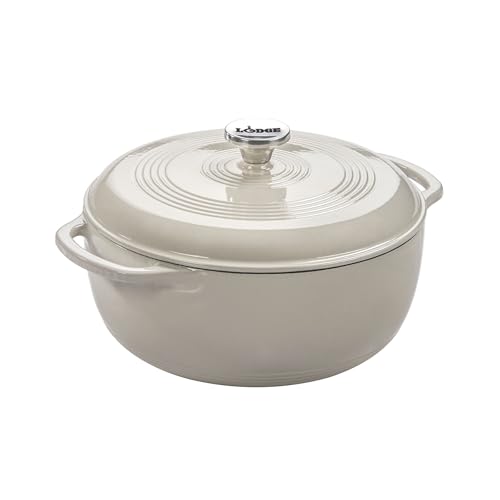
- Lodge Essential Enamel Cast Iron Dutch Oven, 6 Quart (Oyster White) — Check on Amazon
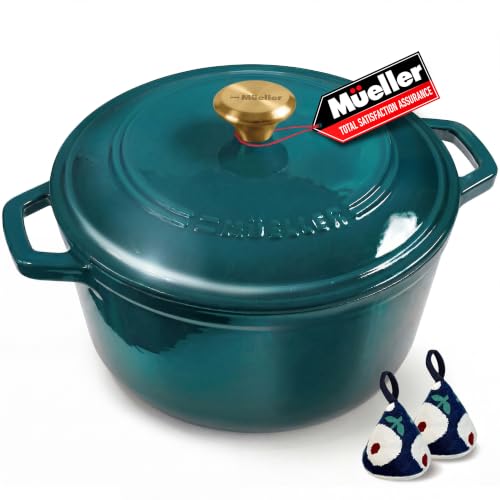
- Mueller DuraCast Enameled Cast Iron Dutch Oven, 6 Quart (Emerald) — Check on Amazon
- Lodge Essential Enamel Cast Iron Dutch Oven, 6 Quart (Island Spice Red) — Check on Amazon
- Umite Chef Enameled Cast Iron Dutch Oven, 7QT (Emerald) — Check on Amazon
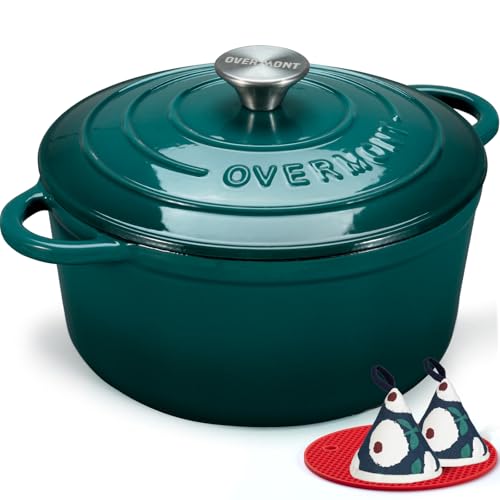
- Overmont Enameled Cast Iron Dutch Oven, 5.5QT (White) — Check on Amazon
- Overmont Enameled Cast Iron Dutch Oven, 7QT — Check on Amazon
Read the full guide ↓
Asking for the best size dutch ovens for bread is asking a precise question with a satisfyingly precise answer: the pot should fit your usual dough weight closely enough to hold steam around the loaf and give it room to spring, and no bigger. This guide compares six verified enameled cast iron dutch ovens from 5.5QT to 7QT, maps each size to the loaves it bakes best, and explains the steam, heat and lid factors that make size the deciding variable in bread baking.
The dutch oven transformed home bread because it recreates a professional steam oven in miniature. The dough goes into a preheated, lidded pot; its own moisture becomes the steam that keeps the crust flexible during oven spring; the lid comes off and the crust finishes crisp and colored. Every part of that mechanism depends on the chamber being proportioned to the loaf, which is why experienced bakers talk about dutch ovens in sizes the way other cooks talk about them in brands.
This guide therefore leads with the mapping between dough weight and pot size, and treats brand as the second question. The pool is entirely round enameled pots, the bread default, in the three sizes that cover home baking. If your interest is dutch ovens for the whole household rather than for bread specifically, Best Residential Dutch Ovens is the broader shortlist; if it is value, Best Size Dutch Ovens For Bread Baking covers the price tiers.
Key Takeaways
- Match pot to dough weight: 5.5QT for a 500-750g boule, 6 qt. for a large loaf near 1kg, 7QT for doubles.
- Too big is a real failure mode: small loaves spread and steam disperses in an oversized chamber.
- The Overmont 5.5QT is the standard-boule sweet spot; the two 7QT pots are for scaling up.
- A stated oven rating matters for bread; the Mueller lists 500°F explicitly.
- Round pots suit round boules; no oval appears in this pool, so batard bakers should note that.
- Lid and knob design matter at bread temperatures, where the lid is handled mid-bake at full heat.
In this guide
Quick Picks
Six round enameled pots in the three bread sizes. The badges name each pot’s loaf; the detailed reviews give the dough weights behind them. Readers comparing the same pots for general home use will find the household view in Best Residential Dutch Ovens.
| Pick | Badge | Best for | Link |
|---|---|---|---|
| Lodge Essential Enamel Cast Iron Dutch Oven, 6 Quart (Oyster White) | Best for Large Loaves | Bakers making large, roughly kilogram loaves | Linked pick — see Where to Buy |
| Mueller DuraCast Enameled Cast Iron Dutch Oven, 6 Quart (Emerald) | Best Stated Oven Rating | Sourdough bakers who want a stated 500°F rating | Linked pick — see Where to Buy |
| Lodge Essential Enamel Cast Iron Dutch Oven, 6 Quart (Island Spice Red) | Best Finish for Bakers | Frequent bakers who want a forgiving finish | Linked pick — see Where to Buy |
| Umite Chef Enameled Cast Iron Dutch Oven, 7QT (Emerald) | Best for Double Loaves | Households baking double or family-size loaves | Linked pick — see Where to Buy |
| Overmont Enameled Cast Iron Dutch Oven, 5.5QT (White) | Best Standard Boule Size | The standard 500-750g boule most home bakers make | Linked pick — see Where to Buy |
| Overmont Enameled Cast Iron Dutch Oven, 7QT | Best for Scaling Up | Bakers moving up to bigger and enriched loaves | Linked pick — see Where to Buy |
How These Picks Were Chosen
This shortlist was built from verified product listings, selecting round enameled cast iron dutch ovens across the size range home bread baking uses, 5.5QT to 7QT, and noting every listing detail relevant to baking: stated oven ratings, explicit sourdough or bread mentions, and lid design claims. Products were only linked when the verified listing confirmed the product, brand and capacity; every specification quoted below comes from the listing itself.
A note on method and honesty: this is a research-led guide, not a hands-on test report, and it does not claim identical loaves were baked in all six pots. The sizing guidance rests on the well-documented relationship between dough weight, chamber volume and steam retention, applied to each listing’s stated capacity. Where a listing states no oven rating, the review does not invent one; it tells you to verify before the first bake.
Two patterns emerged during research. First, listings increasingly name sourdough and bread baking directly, four of the six here do, which reflects how central bread has become to this category. Second, the size spread is honest: there is no token small pot and no absurdly large one, because home bread itself lives between a half-kilo boule and a double batch, and the pool maps onto it cleanly.
The 6 Best Options for Best size dutch ovens for bread

Lodge Essential Enamel Cast Iron Dutch Oven, 6 Quart (Oyster White)
Badge: Best for Large Loaves
Strengths
- Lodge is the most established name in this list, with a long track record in cast iron
- Moisture-sealing lid is designed to keep braising liquid where it belongs
- 6 Quart is the classic all-purpose size for family braises and big loaves
Trade-offs
- Oyster white enamel shows staining from paprika, turmeric and oven heat
- 6 Quart full of stew is a two-handed, plan-ahead lift
- Enamel is not the finish to use over the highest direct stovetop heat for searing marathons
Key specs from the listing: Capacity: 6 Quart; Enameled cast iron; Moisture-sealing lid; Dual handles; Listing names bread baking, braising, marinating and slow cooking.
This Lodge Essential 6 Quart in Oyster White is the roomy option for bread: six quarts gives a large boule or a batard-shaped bake the space to expand without the dough pressing the lid, and the moisture-sealing lid holds the steam that the first twenty minutes of a bake depend on. Size is the whole question in this keyword, and it is a physics question before it is a shopping one. A dutch oven bakes bread by trapping the dough’s own steam around the loaf for the first part of the bake, which keeps the crust supple while the loaf expands, its oven spring, and then by finishing uncovered so the crust sets and colors. The chamber has to be big enough for the loaf at full expansion and small enough that the steam stays concentrated around it. That is the sizing tension every pick below is judged against.
The lid earns unusual attention in bread baking, because it comes off mid-bake, at full temperature, usually with one gloved hand while the other steadies the pot. Knob design, lid weight and how the lid seats all stop being abstractions. Two picks here make specific lid claims, a moisture-sealing design and an enclosed knob design, and the reviews treat those claims as bread-relevant facts, not decoration.
Shape matters alongside volume, and the round pots in this guide are the bread default for a reason. A round chamber suits a round boule, which is the shape most home doughs are proofed in, in a banneton or a bowl. Oval pots suit batards, but no oval appears in this verified pool, so bakers set on long loaves should note that honestly rather than forcing a round pot to be something it is not. In daily use, the details that decide whether a product like this earns its place are unglamorous: how it behaves when your hands are wet or floury, how it feels after a long soak in the sink, and whether it still makes sense on a tired weeknight rather than a leisurely weekend. The Lodge Essential Enamel Cast Iron Dutch Oven, 6 Quart (Oyster White) handles that everyday test in line with what its listing promises, and nothing in its specification suggests a hidden catch for the jobs described in this guide.
The honest limitation to weigh is in the trade-offs above. No single product wins on capacity, control and simplicity at once, and this model leans toward chamber size matched to loaf size rather than covering every style of cooking equally well. Buyers who cook this way most weeks will feel that trade as a benefit; buyers who only occasionally make the dish in question should weigh the simpler or smaller options in this list first.
Ownership, week to week, is mostly lifting and washing. Enameled cast iron asks for a soak rather than a scrub, rewards it by releasing braises and bread crusts cleanly, and punishes only real abuse: metal utensils dragged hard across the enamel, cold water into a screaming-hot pot, or a drop onto a tile floor. Measure the oven cavity and the shelf this pot will live on before it arrives, because a dutch oven that must be fetched from a high cupboard is a dutch oven that gets used monthly instead of weekly.
Best for: Bakers making large, roughly kilogram loaves / Not suited for: Small solo loaves, which will spread in six quarts

Mueller DuraCast Enameled Cast Iron Dutch Oven, 6 Quart (Emerald)
Badge: Best Stated Oven Rating
Strengths
- A stated 500°F oven rating gives clear headroom for hot bread bakes
- Induction compatibility is named explicitly, which not every enameled pot claims
- Emerald finish is distinctive and hides light staining well
Trade-offs
- Brand track record is shorter than Lodge or Le Creuset
- 6 Quart is mid-to-large; small households may find it more pot than they need
- As with all enamel, avoid thermal shock from cold water on a hot pot
Key specs from the listing: Capacity: 6 Quart; Enameled cast iron; Oven safe to 500°F per the listing; PFOA-free positioning; Listing names all cooktops including induction, sourdough baking, braising and slow cooking.
The Mueller DuraCast 6 Quart brings a stated 500°F oven rating to the bread question, which matters because bread is the hottest job a dutch oven does. Its listing names sourdough baking explicitly, and the stated rating removes the guesswork bakers otherwise do about enamel at bread temperatures. The working rule bakers converge on is simple: match the pot to the dough weight you bake most. A standard home boule of roughly 500 to 750 grams of dough belongs in a 5 to 5.5 quart pot. A large loaf around a kilogram wants 6 quarts. Double loaves, big family loaves and enriched doughs that rise tall justify 7 quarts. Baking a small loaf in a large pot is the common error: the dough spreads sideways instead of rising, and the steam disperses into a chamber too big to stay saturated.
Size is the whole question in this keyword, and it is a physics question before it is a shopping one. A dutch oven bakes bread by trapping the dough’s own steam around the loaf for the first part of the bake, which keeps the crust supple while the loaf expands, its oven spring, and then by finishing uncovered so the crust sets and colors. The chamber has to be big enough for the loaf at full expansion and small enough that the steam stays concentrated around it. That is the sizing tension every pick below is judged against.
Heat is the second sizing-adjacent variable. Bread asks more of enamel than any braise: preheating an empty pot, then baking at the top of most home ovens’ comfortable range. A stated oven rating on the listing, like the 500°F one pick here carries, is therefore worth real weight in a bread-focused comparison, and its absence means the baker should verify the maker’s guidance before the first bake rather than during it. In daily use, the details that decide whether a product like this earns its place are unglamorous: how it behaves when your hands are wet or floury, how it feels after a long soak in the sink, and whether it still makes sense on a tired weeknight rather than a leisurely weekend. The Mueller DuraCast Enameled Cast Iron Dutch Oven, 6 Quart (Emerald) handles that everyday test in line with what its listing promises, and nothing in its specification suggests a hidden catch for the jobs described in this guide.
The honest limitation to weigh is in the trade-offs above. No single product wins on capacity, control and simplicity at once, and this model leans toward chamber size matched to loaf size rather than covering every style of cooking equally well. Buyers who cook this way most weeks will feel that trade as a benefit; buyers who only occasionally make the dish in question should weigh the simpler or smaller options in this list first.
Think, too, about the second winter rather than the first stew. The pots that stay loved are the ones whose size matches the household’s real cooking: the loaf you actually bake, the braise you actually make, the number of people actually at the table. A pot sized to your week will feel indispensable; a pot sized to an imaginary dinner party will feel like a gym membership, impressive, expensive-feeling, and quietly avoided.
Best for: Sourdough bakers who want a stated 500°F rating / Not suited for: Bakers indifferent to stated ratings

Lodge Essential Enamel Cast Iron Dutch Oven, 6 Quart (Island Spice Red)
Badge: Best Finish for Bakers
Strengths
- Same proven Lodge 6 Quart platform as the Oyster White version
- The deep red finish hides cooking stains better than pale enamel
- Moisture-sealing lid supports the low-and-slow braises this size is bought for
Trade-offs
- A color variant rather than a different design, so there is no performance reason to own both
- Heavy when loaded; not the pot for anyone with wrist or grip limitations
- Enamel chips if metal utensils are used aggressively inside
Key specs from the listing: Capacity: 6 Quart; Enameled cast iron; Moisture-sealing lid; Dual handles; Listing names bread baking, braising, marinating and slow cooking.
This Lodge in Island Spice Red is the same proven 6 Quart platform in the finish that hides flour dust and oven marks better. For bread specifically, the color is a practical choice: a bread pot lives a floury, high-heat life, and red records it more gracefully than white. Shape matters alongside volume, and the round pots in this guide are the bread default for a reason. A round chamber suits a round boule, which is the shape most home doughs are proofed in, in a banneton or a bowl. Oval pots suit batards, but no oval appears in this verified pool, so bakers set on long loaves should note that honestly rather than forcing a round pot to be something it is not.
The working rule bakers converge on is simple: match the pot to the dough weight you bake most. A standard home boule of roughly 500 to 750 grams of dough belongs in a 5 to 5.5 quart pot. A large loaf around a kilogram wants 6 quarts. Double loaves, big family loaves and enriched doughs that rise tall justify 7 quarts. Baking a small loaf in a large pot is the common error: the dough spreads sideways instead of rising, and the steam disperses into a chamber too big to stay saturated.
The lid earns unusual attention in bread baking, because it comes off mid-bake, at full temperature, usually with one gloved hand while the other steadies the pot. Knob design, lid weight and how the lid seats all stop being abstractions. Two picks here make specific lid claims, a moisture-sealing design and an enclosed knob design, and the reviews treat those claims as bread-relevant facts, not decoration. In daily use, the details that decide whether a product like this earns its place are unglamorous: how it behaves when your hands are wet or floury, how it feels after a long soak in the sink, and whether it still makes sense on a tired weeknight rather than a leisurely weekend. The Lodge Essential Enamel Cast Iron Dutch Oven, 6 Quart (Island Spice Red) handles that everyday test in line with what its listing promises, and nothing in its specification suggests a hidden catch for the jobs described in this guide.
The honest limitation to weigh is in the trade-offs above. No single product wins on capacity, control and simplicity at once, and this model leans toward chamber size matched to loaf size rather than covering every style of cooking equally well. Buyers who cook this way most weeks will feel that trade as a benefit; buyers who only occasionally make the dish in question should weigh the simpler or smaller options in this list first.
The lid is half the tool and deserves a thought at purchase time. A well-fitting lid traps the moisture that makes dutch oven cooking what it is, whether that is a self-basting braise or a steamy bread chamber. Check how the lid seats and how its knob handles oven heat and gloved hands, because you will interact with that lid, hot and heavy, every single time you use the pot.
Best for: Frequent bakers who want a forgiving finish / Not suited for: Anyone wanting the pale, showroom look

Umite Chef Enameled Cast Iron Dutch Oven, 7QT (Emerald)
Badge: Best for Double Loaves
Strengths
- Full 7QT capacity for large households, batch braising and double loaves
- Potholders included, which matters more as the pot gets heavier
- Emerald finish stands out and hides light oven marks
Trade-offs
- The heaviest class of pot in this guide when full
- Oversized for everyday two-person cooking
- Needs a large oven cavity and a sturdy shelf
Key specs from the listing: Capacity: 7QT; Enameled cast iron; Lid and cotton potholders included; Listing names bread baking, braising, stews and marinating.
The Umite Chef 7QT is the double-loaf and big-loaf option. Seven quarts swallows a large family boule or a pair of smaller loaves baked together, and for bakers whose household eats bread as a staple rather than an event, that headroom is the entire point. Heat is the second sizing-adjacent variable. Bread asks more of enamel than any braise: preheating an empty pot, then baking at the top of most home ovens’ comfortable range. A stated oven rating on the listing, like the 500°F one pick here carries, is therefore worth real weight in a bread-focused comparison, and its absence means the baker should verify the maker’s guidance before the first bake rather than during it.
Shape matters alongside volume, and the round pots in this guide are the bread default for a reason. A round chamber suits a round boule, which is the shape most home doughs are proofed in, in a banneton or a bowl. Oval pots suit batards, but no oval appears in this verified pool, so bakers set on long loaves should note that honestly rather than forcing a round pot to be something it is not.
Size is the whole question in this keyword, and it is a physics question before it is a shopping one. A dutch oven bakes bread by trapping the dough’s own steam around the loaf for the first part of the bake, which keeps the crust supple while the loaf expands, its oven spring, and then by finishing uncovered so the crust sets and colors. The chamber has to be big enough for the loaf at full expansion and small enough that the steam stays concentrated around it. That is the sizing tension every pick below is judged against. In daily use, the details that decide whether a product like this earns its place are unglamorous: how it behaves when your hands are wet or floury, how it feels after a long soak in the sink, and whether it still makes sense on a tired weeknight rather than a leisurely weekend. The Umite Chef Enameled Cast Iron Dutch Oven, 7QT (Emerald) handles that everyday test in line with what its listing promises, and nothing in its specification suggests a hidden catch for the jobs described in this guide.
The honest limitation to weigh is in the trade-offs above. No single product wins on capacity, control and simplicity at once, and this model leans toward chamber size matched to loaf size rather than covering every style of cooking equally well. Buyers who cook this way most weeks will feel that trade as a benefit; buyers who only occasionally make the dish in question should weigh the simpler or smaller options in this list first.
There is also a learning curve, and it is shorter than the weight suggests. Two or three cooks teach you a pot’s real personality: how its base behaves on your burner, how long your oven actually takes to bring it to temperature, how much liquid your usual braise loses. Judge any dutch oven after that calibration, not after the first attempt, and keep brief notes; in a category built on repeat cooking, notes compound into reliability faster than any upgrade does.
Best for: Households baking double or family-size loaves / Not suited for: Bakers of standard single loaves only

Overmont Enameled Cast Iron Dutch Oven, 5.5QT (White)
Badge: Best Standard Boule Size
Strengths
- 5.5QT is the sweet spot many bread bakers settle on for a standard boule
- Cookbook and potholders included, useful for a first-time dutch oven owner
- Listing explicitly names sourdough baking among its uses
Trade-offs
- White finish shows oven marks quickly
- Included extras do not change the core performance versus plainer listings
- Cast iron weight applies here as everywhere in this guide
Key specs from the listing: Capacity: 5.5QT; Enameled cast iron; Lid, cookbook and cotton potholders included; Listing names braising, stews, roasting and sourdough baking.
The Overmont 5.5QT is the size most dedicated bread bakers settle on for a standard boule, and its listing names sourdough baking among its uses. A 500 to 750 gram loaf in a 5.5QT pot gets a snug steam chamber and good oven spring without spreading. The lid earns unusual attention in bread baking, because it comes off mid-bake, at full temperature, usually with one gloved hand while the other steadies the pot. Knob design, lid weight and how the lid seats all stop being abstractions. Two picks here make specific lid claims, a moisture-sealing design and an enclosed knob design, and the reviews treat those claims as bread-relevant facts, not decoration.
Heat is the second sizing-adjacent variable. Bread asks more of enamel than any braise: preheating an empty pot, then baking at the top of most home ovens’ comfortable range. A stated oven rating on the listing, like the 500°F one pick here carries, is therefore worth real weight in a bread-focused comparison, and its absence means the baker should verify the maker’s guidance before the first bake rather than during it.
The working rule bakers converge on is simple: match the pot to the dough weight you bake most. A standard home boule of roughly 500 to 750 grams of dough belongs in a 5 to 5.5 quart pot. A large loaf around a kilogram wants 6 quarts. Double loaves, big family loaves and enriched doughs that rise tall justify 7 quarts. Baking a small loaf in a large pot is the common error: the dough spreads sideways instead of rising, and the steam disperses into a chamber too big to stay saturated. In daily use, the details that decide whether a product like this earns its place are unglamorous: how it behaves when your hands are wet or floury, how it feels after a long soak in the sink, and whether it still makes sense on a tired weeknight rather than a leisurely weekend. The Overmont Enameled Cast Iron Dutch Oven, 5.5QT (White) handles that everyday test in line with what its listing promises, and nothing in its specification suggests a hidden catch for the jobs described in this guide.
The honest limitation to weigh is in the trade-offs above. No single product wins on capacity, control and simplicity at once, and this model leans toward chamber size matched to loaf size rather than covering every style of cooking equally well. Buyers who cook this way most weeks will feel that trade as a benefit; buyers who only occasionally make the dish in question should weigh the simpler or smaller options in this list first.
Enamel care is simple but not optional. Let the pot cool before washing, soak rather than scour, and reach for a paste cleaner when tomato or turmeric leaves its mark. Pale interiors will slowly take on a patina of use no matter what you do, and experienced owners treat that as a badge rather than damage; if a pristine interior matters to you, choose a darker finish and lower your expectations slightly anyway.
Best for: The standard 500-750g boule most home bakers make / Not suited for: Very large or double loaves

Overmont Enameled Cast Iron Dutch Oven, 7QT
Badge: Best for Scaling Up
Strengths
- 7QT handles double loaves, whole chickens and party-size braises the smaller pots cannot
- Enclosed lid-knob design is a thoughtful detail for oven handling
- Cookbook included helps new owners use the extra capacity well
Trade-offs
- At 7QT this is a large, heavy pot that needs a big oven and real storage space
- Too much pot for a single small loaf, which can spread rather than rise in an oversized vessel
- Not a small dutch oven by any definition, whatever the search that brought you here
Key specs from the listing: Capacity: 7QT; Enameled cast iron; Lid and cookbook included; Cotton potholders included; Enclosed lid-knob design; Listing names sourdough baking, braising, stews and roasting.
The Overmont 7QT, with its enclosed lid-knob design and included cookbook, suits the baker scaling up: bigger loaves, double batches, and enriched doughs that rise higher. The lid detail matters at bread temperatures, where the knob is the part your gloved hand meets most. Size is the whole question in this keyword, and it is a physics question before it is a shopping one. A dutch oven bakes bread by trapping the dough’s own steam around the loaf for the first part of the bake, which keeps the crust supple while the loaf expands, its oven spring, and then by finishing uncovered so the crust sets and colors. The chamber has to be big enough for the loaf at full expansion and small enough that the steam stays concentrated around it. That is the sizing tension every pick below is judged against.
The lid earns unusual attention in bread baking, because it comes off mid-bake, at full temperature, usually with one gloved hand while the other steadies the pot. Knob design, lid weight and how the lid seats all stop being abstractions. Two picks here make specific lid claims, a moisture-sealing design and an enclosed knob design, and the reviews treat those claims as bread-relevant facts, not decoration.
Shape matters alongside volume, and the round pots in this guide are the bread default for a reason. A round chamber suits a round boule, which is the shape most home doughs are proofed in, in a banneton or a bowl. Oval pots suit batards, but no oval appears in this verified pool, so bakers set on long loaves should note that honestly rather than forcing a round pot to be something it is not. In daily use, the details that decide whether a product like this earns its place are unglamorous: how it behaves when your hands are wet or floury, how it feels after a long soak in the sink, and whether it still makes sense on a tired weeknight rather than a leisurely weekend. The Overmont Enameled Cast Iron Dutch Oven, 7QT handles that everyday test in line with what its listing promises, and nothing in its specification suggests a hidden catch for the jobs described in this guide.
The honest limitation to weigh is in the trade-offs above. No single product wins on capacity, control and simplicity at once, and this model leans toward chamber size matched to loaf size rather than covering every style of cooking equally well. Buyers who cook this way most weeks will feel that trade as a benefit; buyers who only occasionally make the dish in question should weigh the simpler or smaller options in this list first.
Finally, consider who else cooks. A pot that only one person in the household can lift safely is a single-operator pot, and single-operator pots quietly stop being used for weeknight cooking. The dutch ovens that survive in family kitchens are the ones a second cook can move from stove to oven to sink with confidence, and that social test is worth applying, honestly, before you buy.
Best for: Bakers moving up to bigger and enriched loaves / Not suited for: Small ovens that cannot take a 7QT pot with handles
Comparison Table
| Pick | Badge | Key attribute | Format | Link |
|---|---|---|---|---|
| Lodge Essential Enamel Cast Iron Dutch Oven, 6 Quart (Oyster White) | Best for Large Loaves | Capacity: 6 Quart | Enameled cast iron, 6 Quart | Check on Amazon |
| Mueller DuraCast Enameled Cast Iron Dutch Oven, 6 Quart (Emerald) | Best Stated Oven Rating | Capacity: 6 Quart | Enameled cast iron, 6 Quart | Check on Amazon |
| Lodge Essential Enamel Cast Iron Dutch Oven, 6 Quart (Island Spice Red) | Best Finish for Bakers | Capacity: 6 Quart | Enameled cast iron, 6 Quart | Check on Amazon |
| Umite Chef Enameled Cast Iron Dutch Oven, 7QT (Emerald) | Best for Double Loaves | Capacity: 7QT | Enameled cast iron, 7QT | Check on Amazon |
| Overmont Enameled Cast Iron Dutch Oven, 5.5QT (White) | Best Standard Boule Size | Capacity: 5.5QT | Enameled cast iron, 5.5QT | Check on Amazon |
| Overmont Enameled Cast Iron Dutch Oven, 7QT | Best for Scaling Up | Capacity: 7QT | Enameled cast iron, 7QT | Check on Amazon |
Read capacity as dough weight: the Key attribute column is the pot’s size, and the Format column’s size is the loaf class it suits. If you bake one dough weight ninety percent of the time, choose from that row’s size class and ignore the rest of the table.
How to Choose Best size dutch ovens for bread
Start with your dough weight, weighed honestly. Most home sourdough and yeasted boules are mixed at 500 to 750 grams total dough weight, and they belong in 5 to 5.5 quarts, where the chamber hugs the loaf. Bakers whose standard loaf runs 900 grams to a kilogram, sandwich-style bakers making big weekly loaves, and anyone baking enriched doughs that rise high should step to 6 quarts. Seven quarts is for doubles and genuinely large loaves, and it is the wrong size for a standard boule, however good the pot.
Work the arithmetic once and write it on the recipe. Dough roughly doubles from its proofed size during oven spring, and the loaf needs clearance from the lid at full expansion, ideally an inch or more, so the crust does not weld to the lid and tear. If your loaf has ever come out with a pale, flattened top, it was probably touching the lid, which is a size problem, not a recipe problem, and the fix is the next size up or a slightly smaller dough.
Check the heat credentials third. Bread preheats the pot empty and bakes hot, so a stated oven rating is the specification that matters most after size; one pick here states 500°F, and for any pot without a stated rating, verify the maker’s number before the first bake. Knobs deserve the same check, since not every knob material loves bread temperatures, and a knob is replaceable on many designs if it is the only weak point.
Finally, be honest about shape and second jobs. All six picks are round, suiting boules; a committed batard baker should treat that as a pool limitation rather than a recommendation. And because few homes buy a pot for bread alone, check the size you choose against your braising life too, using the household view in Best Residential Dutch Ovens; a 5.5 or 6 quart pot that wins at bread also happens to be the family braise size, which is why those sizes dominate this guide.
How to Bake Bread in a Dutch Oven, Step by Step
The method below is the standard covered-then-uncovered bake, sized for the pots in this guide.
- Proof your shaped loaf in a floured banneton or bowl while the oven and the empty, lidded dutch oven preheat together for at least 30 to 45 minutes.
- Turn the loaf onto a sheet of parchment, score the top with a lame or sharp knife, and use the parchment as a sling to lower it into the hot pot without deflating it or burning your hands.
- Cover and bake for the first portion of the bake, typically around 20 minutes, while the trapped steam lets the loaf spring and the crust stays supple.
- Remove the lid, with a proper glove and somewhere heatproof to set it, and continue baking until the crust is deeply colored to your liking.
- Tip the loaf out onto a rack and let it cool fully before slicing; the crumb is still setting, and cutting early makes it gummy.
- Let the pot cool gradually on the stove before washing; never run cold water into a bread-hot pot.
Problem: The loaf spreads flat instead of rising → what to do: the pot is too big for the dough weight, or the dough was under-proofed; move down a size class or reduce the pot’s effective volume by baking in the lid’s shallower profile where the design allows, and check your proof.
Problem: The top of the loaf is pale and stuck-looking → what to do: the loaf expanded into the lid; use a slightly smaller dough or the next pot size up, and make sure the parchment sling is not bunching under the loaf.
Problem: The bottom crust burns before the top colors → what to do: the pot sits too close to a bottom element or the preheat ran long; bake on a higher rack, and slip a baking sheet on the rack below as a heat shield.
The Dough-Weight Table Bakers Actually Use
Strip away the branding and bread sizing is a short table. Up to about 500 grams of dough: a small pot in the 3.5 to 4.5 quart class, not represented in this pool, which is why small-loaf bakers should read this guide’s limits honestly. From 500 to 750 grams: 5 to 5.5 quarts, this guide’s sweet spot. From 750 grams to a kilogram: 6 quarts. Above a kilogram, or two loaves at once: 7 quarts. Every pick above was placed on that table before it was reviewed.
Two adjustments refine the table. High-hydration doughs spread more and behave as if one size larger, so their bakers often choose the snugger pot to force height. Enriched doughs, brioche-style and milk breads, rise higher and need the lid clearance of the next size up. Knowing which side of the table your usual dough falls on is the entire skill of buying a bread pot, and it is a skill this guide can hand you in one paragraph.
Steam, Spring and Why the Lid Matters
Oven spring is the loaf’s final expansion in the first minutes of baking, driven by gas and steam inside the dough. It only happens fully if the crust stays soft long enough, and in a home oven the dutch oven’s trapped steam is what keeps it soft. A lid that seats well, the moisture-sealing design one pick here is sold on, keeps that steam in the chamber instead of leaking it into the oven, and the difference shows up as height and as the crisp, blistered crust bakers chase.
The second half of the bake reverses the requirement: steam must go, so the crust can dry, set and color. That is why the lid comes off, and why a lid that is easy to handle at full temperature, with a knob a gloved hand can grip securely, is a baking feature and not a detail. Judge the lids in this guide the way you would judge an oven glove: by whether you would trust them at the hottest moment of your week’s cooking.
Common Buying Mistakes
- Buying the biggest pot for a standard boule, then wondering why loaves spread instead of rising.
- Ignoring lid clearance, so a well-risen loaf welds its top to the lid.
- Never checking the pot’s stated oven rating before a bread-temperature preheat.
- Forcing long batard doughs into round pots and blaming the recipe for the shape.
- Quenching a bread-hot pot under cold water and shocking the enamel.
- Slicing the loaf hot, collapsing a crumb that needed cooling time to set.
Final Recommendation
For the standard home boule, the Overmont 5.5QT is the first choice: the snug chamber size most bakers settle on, with sourdough named in its listing and a cookbook in the box. Bakers of large loaves should take the 6-quart route, the Lodge for its moisture-sealing lid and track record, or the Mueller for its stated 500°F rating. Double-loaf and family-loaf bakers should go straight to the 7QT pots. Size to your dough weight, and every one of these pots will bake better bread than a bigger or smaller guess would.
Shortlist again: Lodge Essential Enamel Cast Iron Dutch Oven, 6 Quart (Oyster White); Mueller DuraCast Enameled Cast Iron Dutch Oven, 6 Quart (Emerald); Lodge Essential Enamel Cast Iron Dutch Oven, 6 Quart (Island Spice Red).
Frequently Asked Questions
What size dutch oven is best for a standard sourdough boule?
For the common 500 to 750 gram boule, 5 to 5.5 quarts is the size experienced bakers converge on: snug enough to hold steam around the loaf and support its sides, with clearance for oven spring. That is why the 5.5QT pick leads this guide’s recommendations.
Can a dutch oven be too big for bread?
Yes, and it is the most common sizing mistake. In an oversized chamber a standard loaf spreads sideways instead of rising, and the steam disperses instead of bathing the crust. The loaf still bakes, but it comes out flatter and paler than the same dough in a matched pot.
How hot does a dutch oven need to be rated for bread?
Bread preheats and bakes at the top of the home oven’s usual range, so a clearly stated rating gives real peace of mind; one pick here states 500°F. For pots without a stated rating in the listing, verify the maker’s specification before the first bake rather than assuming.
Round or oval for bread?
Round for boules, oval for batards; match the pot to the loaf shape you proof. This guide’s verified pool is entirely round, which suits the majority of home bakers, and batard specialists should treat that as a genuine limitation of this shortlist.
Why bake covered and then uncovered?
The covered phase traps the dough’s steam, keeping the crust supple while the loaf springs. The uncovered phase lets the crust dry, set and color. Skipping the first gives a squat loaf; skipping the second gives a pale, soft crust. The two phases are the whole technique.
Can I bake two loaves in a 7QT pot?
Yes, if the loaves are sized to share the chamber without merging, typically two smaller boules rather than two full-size ones. Keep parchment between and under them, and expect to rotate your baking schedule: many bakers prefer two successive bakes in a 5.5QT for crust quality, using the 7QT for one large loaf instead.