Disclosure: topratedkitchenware.com is reader-supported. When you buy through links on our site, we may earn an affiliate commission from Amazon and other retailers, at no extra cost to you.
Where to buy
Every product below was shortlisted specifically for this guide to the best small dutch ovens cooks illustrated, using only verified listings.
Honesty first: this verified pool contains no truly small (2-4.5 quart) dutch oven. Its two smallest pots, a 5QT and a 5.5QT, are linked below as the small picks; the 6 and 7 quart pots are covered prose-only, without links, as references so you can judge the size ladder before buying. If your heart is set on a genuinely small pot, treat this guide as the sizing evidence and shop the 3.5-4.5 quart class with it in hand. The general bread-sizing companion is Best Size Dutch Ovens For Bread.
- Umite Chef Enameled Cast Iron Dutch Oven, 5QT (Red) — Check on Amazon
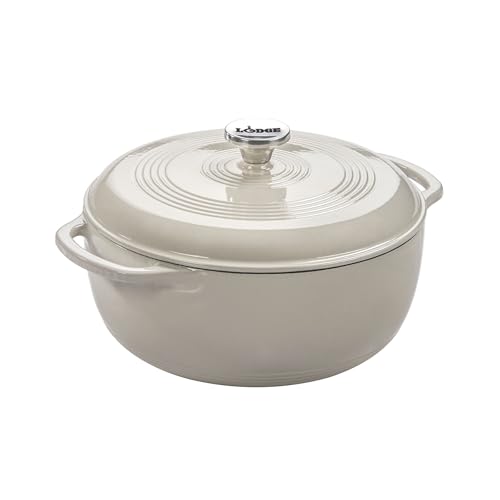
- Lodge Essential Enamel Cast Iron Dutch Oven, 6 Quart (Oyster White) — covered below as a prose-only pick (no link; see the review for why)
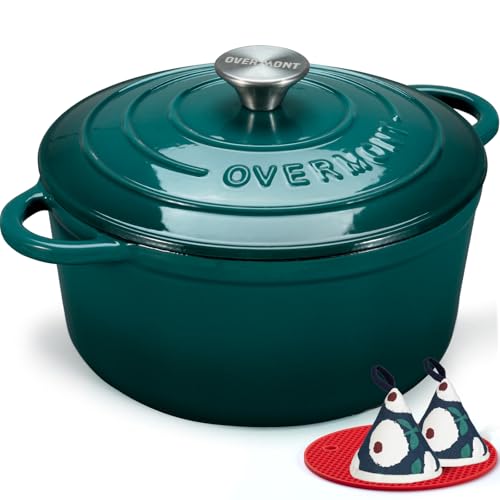
- Overmont Enameled Cast Iron Dutch Oven, 5.5QT (White) — Check on Amazon
- Overmont Enameled Cast Iron Dutch Oven, 7QT — covered below as a prose-only pick (no link; see the review for why)
- Amazon Basics Enameled Cast Iron Dutch Oven, 6-Quart (Blue) — covered below as a prose-only pick (no link; see the review for why)
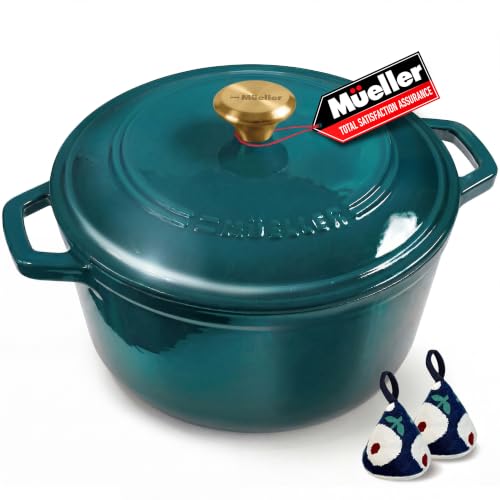
- Mueller DuraCast Enameled Cast Iron Dutch Oven, 6 Quart (Emerald) — covered below as a prose-only pick (no link; see the review for why)
Read the full guide ↓
Readers searching for the best small dutch ovens cooks illustrated style are asking for two things at once: a smaller pot, and a rigorous, test-driven standard of evaluation. This guide delivers the second honestly and the first within the limits of its verified pool: the pool’s smallest pots are 5QT and 5.5QT, which are linked and reviewed as the small picks, while its 6 and 7 quart pots are reviewed prose-only as the references and contrasts a careful buyer needs, with no endorsement by any publication claimed anywhere.
Defining small matters more than any brand question in this keyword. In this category, genuinely small means roughly 2 to 4.5 quarts, the two-person and side-dish class; 5 to 5.5 quarts is compact-standard; 6 quarts is the family default. A guide that called a 6-quart pot small would be lying with a straight face, so this one does not: it links the two compact picks, and it uses the larger pots to show the ladder, explain the trade-offs, and catch the readers whose cooking is actually standard-size before they buy small and regret it.
The evaluation standard borrowed here is methodological, not institutional: judge by stated capacity, lid design, stated ratings, inclusions and the physics of small-batch cooking, and say plainly when a product does not fit the brief. That standard is applied to every pick below, including the linked ones, whose limits, notably that 5QT is compact rather than tiny, are stated in their own reviews. Readers who conclude they need a standard pot after all will find the full household shortlist in Best Residential Dutch Ovens.
Key Takeaways
- True small in this category is 2-4.5 quarts; this pool’s smallest are 5QT and 5.5QT, and they are the linked picks.
- The 6 and 7 quart pots here are reviewed prose-only as references, deliberately unlinked, because they are not small.
- Small pots concentrate small braises, snug small loaves and cut the lifting weight meaningfully.
- No publication endorsement is claimed; the test-kitchen element here is the method, not a badge.
- The Umite Chef 5QT is the small pick; the Overmont 5.5QT is the half-step up for households of three.
- If your quantities are standard, the references in this guide exist to catch that before you buy.
In this guide
Quick Picks
Read the badges carefully in this table: two are small picks, four are labeled references or contrasts, and that labeling is the most useful thing in the guide. Detailed reviews follow, with the prose-only pots clearly marked. The price-tier view of the standard sizes is in Best Prices On Cast Iron Dutch Ovens.
| Pick | Badge | Best for | Link |
|---|---|---|---|
| Umite Chef Enameled Cast Iron Dutch Oven, 5QT (Red) | Best Small Pick | Small households wanting the smallest pot in this pool | Linked pick — see Where to Buy |
| Lodge Essential Enamel Cast Iron Dutch Oven, 6 Quart (Oyster White) | Step-Up Reference | Readers who discover their cooking is actually standard-size | Prose-only pick |
| Overmont Enameled Cast Iron Dutch Oven, 5.5QT (White) | Best for Three | Households of three and slightly larger standard loaves | Linked pick — see Where to Buy |
| Overmont Enameled Cast Iron Dutch Oven, 7QT | Contrast Pick | Seeing exactly what the large end looks like before ruling it out | Prose-only pick |
| Amazon Basics Enameled Cast Iron Dutch Oven, 6-Quart (Blue) | Standard-Size Reference | Standard-size cooking at the plainest position | Prose-only pick |
| Mueller DuraCast Enameled Cast Iron Dutch Oven, 6 Quart (Emerald) | Best Specs, Full Size | Spec-led buyers whose quantities turn out to be full-size | Prose-only pick |
How These Picks Were Chosen
This shortlist was built from the verified pool exactly as given, and the selection decision worth explaining is the linking one. Products were linked only when they plausibly answered the keyword’s core brief, the small end of the range: the 5QT and 5.5QT pots. The 6 and 7 quart pots fail that brief on capacity alone, so under this guide’s rules they are reviewed prose-only, with no Amazon link and no image, and their reviews are written as references and contrasts rather than recommendations.
A note on method and honesty: this is a research-led guide, not a hands-on test report, and it claims no affiliation with or endorsement from any cooking publication, including the one the keyword references. We applied an evaluation framework, stated capacity, lid design, stated ratings, inclusions, small-batch physics, to verified listing data, and we report the pool’s central limitation, the absence of a truly small pot, at the top of the guide rather than in a footnote.
Two patterns emerged during research. First, the pool’s size distribution is top-heavy, four of six at 6 quarts or above, which is typical of this category’s listings and exactly why small-pot shoppers struggle. Second, the compact end that does exist is well served: the two linked pots include potholders and, in one case, a cookbook, inclusions that matter disproportionately to the smaller households this keyword serves.
The 6 Best Options for Best small dutch ovens cooks illustrated

Umite Chef Enameled Cast Iron Dutch Oven, 5QT (Red)
Badge: Best Small Pick
Strengths
- 5QT is a genuinely usable size for a standard loaf and for two-to-four-person braises
- Cotton potholders are included, a small but real saving over buying them separately
- Enameled interior needs no seasoning and handles acidic tomato braises well
Trade-offs
- Cast iron is heavy even at 5QT, and heavier again full of stew
- Enamel can chip if knocked against other pans or dropped
- The red finish will show oven browning marks over time
Key specs from the listing: Capacity: 5QT; Enameled cast iron; Lid and cotton potholders included; Listing names bread baking, braising, stews and roasting.
The Umite Chef 5QT is the smallest pot in this verified pool and therefore the honest head of a small-pot shortlist: small by this category’s standards, with potholders included. It handles a modest loaf, a two-person braise and a half-batch of soup without the cavernous feel of the family sizes. A test-kitchen approach to small dutch ovens starts by defining small, because the category uses the word loosely. In enameled cast iron, the genuine small class runs from about 2 to 4.5 quarts; 5 to 5.5 quarts is the small end of the standard range; 6 quarts and above is full-size. This verified pool contains no truly small pot, and this guide says so at the top rather than burying it: the two linked picks are the pool’s smallest, and the rest are reviewed prose-only as references and contrasts.
The honest conclusion of a rigorous look at this pool is two-sided. If your cooking is genuinely small-batch, the two linked picks are the pool’s answer and they are good ones. If your quantities are standard, the prose-only references exist to tell you so before you buy the wrong size on the strength of a keyword. Both outcomes are the guide doing its job.
Small pots have real physics on their side. Less empty volume means a small braise keeps its liquid concentrated instead of spread thin, a small loaf gets a snug steam chamber, and a half-batch of soup heats and cools faster. They also have physics against them: less thermal mass means less buffering when cold ingredients land, and the same burner that is gentle under six quarts can scorch under five if the cook walks away. Size is a trade, not a virtue. In daily use, the details that decide whether a product like this earns its place are unglamorous: how it behaves when your hands are wet or floury, how it feels after a long soak in the sink, and whether it still makes sense on a tired weeknight rather than a leisurely weekend. The Umite Chef Enameled Cast Iron Dutch Oven, 5QT (Red) handles that everyday test in line with what its listing promises, and nothing in its specification suggests a hidden catch for the jobs described in this guide.
The honest limitation to weigh is in the trade-offs above. No single product wins on capacity, control and simplicity at once, and this model leans toward honest fit to the size it actually is rather than covering every style of cooking equally well. Buyers who cook this way most weeks will feel that trade as a benefit; buyers who only occasionally make the dish in question should weigh the simpler or smaller options in this list first.
Ownership, week to week, is mostly lifting and washing. Enameled cast iron asks for a soak rather than a scrub, rewards it by releasing braises and bread crusts cleanly, and punishes only real abuse: metal utensils dragged hard across the enamel, cold water into a screaming-hot pot, or a drop onto a tile floor. Measure the oven cavity and the shelf this pot will live on before it arrives, because a dutch oven that must be fetched from a high cupboard is a dutch oven that gets used monthly instead of weekly.
Best for: Small households wanting the smallest pot in this pool / Not suited for: Truly tiny 2-3 quart cooking, which this pool does not contain
Lodge Essential Enamel Cast Iron Dutch Oven, 6 Quart (Oyster White)
Badge: Step-Up Reference
Prose-only pick: at 6 Quart this is a full-size family pot, not a small dutch oven, so it is reviewed prose-only as the step-up reference and carries no link or image
Strengths
- Lodge is the most established name in this list, with a long track record in cast iron
- Moisture-sealing lid is designed to keep braising liquid where it belongs
- 6 Quart is the classic all-purpose size for family braises and big loaves
Trade-offs
- Oyster white enamel shows staining from paprika, turmeric and oven heat
- 6 Quart full of stew is a two-handed, plan-ahead lift
- Enamel is not the finish to use over the highest direct stovetop heat for searing marathons
Key specs from the listing: Capacity: 6 Quart; Enameled cast iron; Moisture-sealing lid; Dual handles; Listing names bread baking, braising, marinating and slow cooking.
This Lodge Essential 6 Quart is included as the reference point every small-pot buyer should understand: the standard size the small sizes are measured against. It is a fine pot and a poor answer to this keyword, because six quarts is not small, and the review treats it as the step-up, not the pick. Evaluation criteria, applied the way a rigorous test kitchen applies them, are what this guide borrows from the keyword’s spirit: even heating, lid seal, handle security with a full pot, enamel behavior under repeated use, and size honesty. No endorsement by any publication is claimed or implied anywhere in this guide; the phrase in the keyword describes the standard of scrutiny readers are asking for, and the reviews try to meet it with stated facts and explicit reasoning.
A test-kitchen approach to small dutch ovens starts by defining small, because the category uses the word loosely. In enameled cast iron, the genuine small class runs from about 2 to 4.5 quarts; 5 to 5.5 quarts is the small end of the standard range; 6 quarts and above is full-size. This verified pool contains no truly small pot, and this guide says so at the top rather than burying it: the two linked picks are the pool’s smallest, and the rest are reviewed prose-only as references and contrasts.
Weight is the small pot’s quiet headline. Every quart of cast iron removed is weight removed from the lift between stove, oven and sink, and for cooks with grip or wrist limits, smaller households cooking smaller quantities, or anyone who found a 6-quart pot migrating to the back of a cupboard, the 5 to 5.5 quart class is often the difference between a pot that is used and a pot that is admired. In daily use, the details that decide whether a product like this earns its place are unglamorous: how it behaves when your hands are wet or floury, how it feels after a long soak in the sink, and whether it still makes sense on a tired weeknight rather than a leisurely weekend. The Lodge Essential Enamel Cast Iron Dutch Oven, 6 Quart (Oyster White) handles that everyday test in line with what its listing promises, and nothing in its specification suggests a hidden catch for the jobs described in this guide.
The honest limitation to weigh is in the trade-offs above. No single product wins on capacity, control and simplicity at once, and this model leans toward honest fit to the size it actually is rather than covering every style of cooking equally well. Buyers who cook this way most weeks will feel that trade as a benefit; buyers who only occasionally make the dish in question should weigh the simpler or smaller options in this list first.
Think, too, about the second winter rather than the first stew. The pots that stay loved are the ones whose size matches the household’s real cooking: the loaf you actually bake, the braise you actually make, the number of people actually at the table. A pot sized to your week will feel indispensable; a pot sized to an imaginary dinner party will feel like a gym membership, impressive, expensive-feeling, and quietly avoided.
Best for: Readers who discover their cooking is actually standard-size / Not suited for: Anyone committed to the small brief

Overmont Enameled Cast Iron Dutch Oven, 5.5QT (White)
Badge: Best for Three
Strengths
- 5.5QT is the sweet spot many bread bakers settle on for a standard boule
- Cookbook and potholders included, useful for a first-time dutch oven owner
- Listing explicitly names sourdough baking among its uses
Trade-offs
- White finish shows oven marks quickly
- Included extras do not change the core performance versus plainer listings
- Cast iron weight applies here as everywhere in this guide
Key specs from the listing: Capacity: 5.5QT; Enameled cast iron; Lid, cookbook and cotton potholders included; Listing names braising, stews, roasting and sourdough baking.
The Overmont 5.5QT is the second genuinely small-adjacent pot here, a half-step above the Umite, with a cookbook and potholders in the box. For a household of three, or a baker whose standard loaf runs slightly larger, that half-step is often the difference between snug and right. Small pots have real physics on their side. Less empty volume means a small braise keeps its liquid concentrated instead of spread thin, a small loaf gets a snug steam chamber, and a half-batch of soup heats and cools faster. They also have physics against them: less thermal mass means less buffering when cold ingredients land, and the same burner that is gentle under six quarts can scorch under five if the cook walks away. Size is a trade, not a virtue.
Evaluation criteria, applied the way a rigorous test kitchen applies them, are what this guide borrows from the keyword’s spirit: even heating, lid seal, handle security with a full pot, enamel behavior under repeated use, and size honesty. No endorsement by any publication is claimed or implied anywhere in this guide; the phrase in the keyword describes the standard of scrutiny readers are asking for, and the reviews try to meet it with stated facts and explicit reasoning.
The honest conclusion of a rigorous look at this pool is two-sided. If your cooking is genuinely small-batch, the two linked picks are the pool’s answer and they are good ones. If your quantities are standard, the prose-only references exist to tell you so before you buy the wrong size on the strength of a keyword. Both outcomes are the guide doing its job. In daily use, the details that decide whether a product like this earns its place are unglamorous: how it behaves when your hands are wet or floury, how it feels after a long soak in the sink, and whether it still makes sense on a tired weeknight rather than a leisurely weekend. The Overmont Enameled Cast Iron Dutch Oven, 5.5QT (White) handles that everyday test in line with what its listing promises, and nothing in its specification suggests a hidden catch for the jobs described in this guide.
The honest limitation to weigh is in the trade-offs above. No single product wins on capacity, control and simplicity at once, and this model leans toward honest fit to the size it actually is rather than covering every style of cooking equally well. Buyers who cook this way most weeks will feel that trade as a benefit; buyers who only occasionally make the dish in question should weigh the simpler or smaller options in this list first.
The lid is half the tool and deserves a thought at purchase time. A well-fitting lid traps the moisture that makes dutch oven cooking what it is, whether that is a self-basting braise or a steamy bread chamber. Check how the lid seats and how its knob handles oven heat and gloved hands, because you will interact with that lid, hot and heavy, every single time you use the pot.
Best for: Households of three and slightly larger standard loaves / Not suited for: Strictly two-person small-batch cooking
Overmont Enameled Cast Iron Dutch Oven, 7QT
Badge: Contrast Pick
Prose-only pick: at 7QT this is the largest pot in the pool, the opposite of this keyword’s small brief, so it is covered prose-only as a contrast and carries no link or image
Strengths
- 7QT handles double loaves, whole chickens and party-size braises the smaller pots cannot
- Enclosed lid-knob design is a thoughtful detail for oven handling
- Cookbook included helps new owners use the extra capacity well
Trade-offs
- At 7QT this is a large, heavy pot that needs a big oven and real storage space
- Too much pot for a single small loaf, which can spread rather than rise in an oversized vessel
- Not a small dutch oven by any definition, whatever the search that brought you here
Key specs from the listing: Capacity: 7QT; Enameled cast iron; Lid and cookbook included; Cotton potholders included; Enclosed lid-knob design; Listing names sourdough baking, braising, stews and roasting.
The Overmont 7QT is in this guide as the honest contrast. Whatever a test-kitchen methodology would praise about its capacity and its enclosed lid knob, seven quarts is the opposite of the small brief, and including it with a link would misrepresent the keyword; it is covered so readers can see exactly what they are not buying. Weight is the small pot’s quiet headline. Every quart of cast iron removed is weight removed from the lift between stove, oven and sink, and for cooks with grip or wrist limits, smaller households cooking smaller quantities, or anyone who found a 6-quart pot migrating to the back of a cupboard, the 5 to 5.5 quart class is often the difference between a pot that is used and a pot that is admired.
Small pots have real physics on their side. Less empty volume means a small braise keeps its liquid concentrated instead of spread thin, a small loaf gets a snug steam chamber, and a half-batch of soup heats and cools faster. They also have physics against them: less thermal mass means less buffering when cold ingredients land, and the same burner that is gentle under six quarts can scorch under five if the cook walks away. Size is a trade, not a virtue.
A test-kitchen approach to small dutch ovens starts by defining small, because the category uses the word loosely. In enameled cast iron, the genuine small class runs from about 2 to 4.5 quarts; 5 to 5.5 quarts is the small end of the standard range; 6 quarts and above is full-size. This verified pool contains no truly small pot, and this guide says so at the top rather than burying it: the two linked picks are the pool’s smallest, and the rest are reviewed prose-only as references and contrasts. In daily use, the details that decide whether a product like this earns its place are unglamorous: how it behaves when your hands are wet or floury, how it feels after a long soak in the sink, and whether it still makes sense on a tired weeknight rather than a leisurely weekend. The Overmont Enameled Cast Iron Dutch Oven, 7QT handles that everyday test in line with what its listing promises, and nothing in its specification suggests a hidden catch for the jobs described in this guide.
The honest limitation to weigh is in the trade-offs above. No single product wins on capacity, control and simplicity at once, and this model leans toward honest fit to the size it actually is rather than covering every style of cooking equally well. Buyers who cook this way most weeks will feel that trade as a benefit; buyers who only occasionally make the dish in question should weigh the simpler or smaller options in this list first.
There is also a learning curve, and it is shorter than the weight suggests. Two or three cooks teach you a pot’s real personality: how its base behaves on your burner, how long your oven actually takes to bring it to temperature, how much liquid your usual braise loses. Judge any dutch oven after that calibration, not after the first attempt, and keep brief notes; in a category built on repeat cooking, notes compound into reliability faster than any upgrade does.
Best for: Seeing exactly what the large end looks like before ruling it out / Not suited for: The small brief, in every respect
Amazon Basics Enameled Cast Iron Dutch Oven, 6-Quart (Blue)
Badge: Standard-Size Reference
Prose-only pick: at 6-Quart this is a standard full-size pot rather than a small dutch oven, so it is reviewed prose-only and carries no link or image
Strengths
- Straightforward 6-quart format from a widely available house line
- Dual handles and a round profile fit standard ovens and stovetops
- Blue finish is forgiving about everyday cooking stains
Trade-offs
- House-brand support and documentation are thinner than the heritage brands
- No included extras such as potholders or a cookbook
- Enamel quality is the long-term question with any value-tier cast iron
Key specs from the listing: Capacity: 6-Quart; Enameled cast iron; Round shape with dual handles; Oven safe per the listing; Listing names stews, roasting and baking.
The Amazon Basics 6-Quart is the plain standard-size pot, useful here as the second reference: if your cooking actually matches this size, the small-pot search was the wrong search, and this is the honest, accessible way to discover that before money is spent. The honest conclusion of a rigorous look at this pool is two-sided. If your cooking is genuinely small-batch, the two linked picks are the pool’s answer and they are good ones. If your quantities are standard, the prose-only references exist to tell you so before you buy the wrong size on the strength of a keyword. Both outcomes are the guide doing its job.
Weight is the small pot’s quiet headline. Every quart of cast iron removed is weight removed from the lift between stove, oven and sink, and for cooks with grip or wrist limits, smaller households cooking smaller quantities, or anyone who found a 6-quart pot migrating to the back of a cupboard, the 5 to 5.5 quart class is often the difference between a pot that is used and a pot that is admired.
Evaluation criteria, applied the way a rigorous test kitchen applies them, are what this guide borrows from the keyword’s spirit: even heating, lid seal, handle security with a full pot, enamel behavior under repeated use, and size honesty. No endorsement by any publication is claimed or implied anywhere in this guide; the phrase in the keyword describes the standard of scrutiny readers are asking for, and the reviews try to meet it with stated facts and explicit reasoning. In daily use, the details that decide whether a product like this earns its place are unglamorous: how it behaves when your hands are wet or floury, how it feels after a long soak in the sink, and whether it still makes sense on a tired weeknight rather than a leisurely weekend. The Amazon Basics Enameled Cast Iron Dutch Oven, 6-Quart (Blue) handles that everyday test in line with what its listing promises, and nothing in its specification suggests a hidden catch for the jobs described in this guide.
The honest limitation to weigh is in the trade-offs above. No single product wins on capacity, control and simplicity at once, and this model leans toward honest fit to the size it actually is rather than covering every style of cooking equally well. Buyers who cook this way most weeks will feel that trade as a benefit; buyers who only occasionally make the dish in question should weigh the simpler or smaller options in this list first.
Enamel care is simple but not optional. Let the pot cool before washing, soak rather than scour, and reach for a paste cleaner when tomato or turmeric leaves its mark. Pale interiors will slowly take on a patina of use no matter what you do, and experienced owners treat that as a badge rather than damage; if a pristine interior matters to you, choose a darker finish and lower your expectations slightly anyway.
Best for: Standard-size cooking at the plainest position / Not suited for: Small-batch cooking
Mueller DuraCast Enameled Cast Iron Dutch Oven, 6 Quart (Emerald)
Badge: Best Specs, Full Size
Prose-only pick: at 6 Quart this is a full-size pot, not a small dutch oven, so it is reviewed prose-only despite its strong stated specs, and carries no link or image
Strengths
- A stated 500°F oven rating gives clear headroom for hot bread bakes
- Induction compatibility is named explicitly, which not every enameled pot claims
- Emerald finish is distinctive and hides light staining well
Trade-offs
- Brand track record is shorter than Lodge or Le Creuset
- 6 Quart is mid-to-large; small households may find it more pot than they need
- As with all enamel, avoid thermal shock from cold water on a hot pot
Key specs from the listing: Capacity: 6 Quart; Enameled cast iron; Oven safe to 500°F per the listing; PFOA-free positioning; Listing names all cooktops including induction, sourdough baking, braising and slow cooking.
The Mueller DuraCast 6 Quart is the specification-rich standard pot: a stated 500°F rating and explicit induction compatibility that a rigorous evaluation would score highly, in a size this keyword excludes. It is reviewed prose-only so its specs can inform the step-up decision without pretending six quarts is small. A test-kitchen approach to small dutch ovens starts by defining small, because the category uses the word loosely. In enameled cast iron, the genuine small class runs from about 2 to 4.5 quarts; 5 to 5.5 quarts is the small end of the standard range; 6 quarts and above is full-size. This verified pool contains no truly small pot, and this guide says so at the top rather than burying it: the two linked picks are the pool’s smallest, and the rest are reviewed prose-only as references and contrasts.
The honest conclusion of a rigorous look at this pool is two-sided. If your cooking is genuinely small-batch, the two linked picks are the pool’s answer and they are good ones. If your quantities are standard, the prose-only references exist to tell you so before you buy the wrong size on the strength of a keyword. Both outcomes are the guide doing its job.
Small pots have real physics on their side. Less empty volume means a small braise keeps its liquid concentrated instead of spread thin, a small loaf gets a snug steam chamber, and a half-batch of soup heats and cools faster. They also have physics against them: less thermal mass means less buffering when cold ingredients land, and the same burner that is gentle under six quarts can scorch under five if the cook walks away. Size is a trade, not a virtue. In daily use, the details that decide whether a product like this earns its place are unglamorous: how it behaves when your hands are wet or floury, how it feels after a long soak in the sink, and whether it still makes sense on a tired weeknight rather than a leisurely weekend. The Mueller DuraCast Enameled Cast Iron Dutch Oven, 6 Quart (Emerald) handles that everyday test in line with what its listing promises, and nothing in its specification suggests a hidden catch for the jobs described in this guide.
The honest limitation to weigh is in the trade-offs above. No single product wins on capacity, control and simplicity at once, and this model leans toward honest fit to the size it actually is rather than covering every style of cooking equally well. Buyers who cook this way most weeks will feel that trade as a benefit; buyers who only occasionally make the dish in question should weigh the simpler or smaller options in this list first.
Finally, consider who else cooks. A pot that only one person in the household can lift safely is a single-operator pot, and single-operator pots quietly stop being used for weeknight cooking. The dutch ovens that survive in family kitchens are the ones a second cook can move from stove to oven to sink with confidence, and that social test is worth applying, honestly, before you buy.
Best for: Spec-led buyers whose quantities turn out to be full-size / Not suited for: The small brief, despite the excellent specs
Comparison Table
| Pick | Badge | Key attribute | Format | Link |
|---|---|---|---|---|
| Umite Chef Enameled Cast Iron Dutch Oven, 5QT (Red) | Best Small Pick | Capacity: 5QT | Enameled cast iron, 5QT | Check on Amazon |
| Lodge Essential Enamel Cast Iron Dutch Oven, 6 Quart (Oyster White) | Step-Up Reference | Capacity: 6 Quart | Enameled cast iron, 6 Quart | — |
| Overmont Enameled Cast Iron Dutch Oven, 5.5QT (White) | Best for Three | Capacity: 5.5QT | Enameled cast iron, 5.5QT | Check on Amazon |
| Overmont Enameled Cast Iron Dutch Oven, 7QT | Contrast Pick | Capacity: 7QT | Enameled cast iron, 7QT | — |
| Amazon Basics Enameled Cast Iron Dutch Oven, 6-Quart (Blue) | Standard-Size Reference | Capacity: 6-Quart | Enameled cast iron, 6-Quart | — |
| Mueller DuraCast Enameled Cast Iron Dutch Oven, 6 Quart (Emerald) | Best Specs, Full Size | Capacity: 6 Quart | Enameled cast iron, 6 Quart | — |
Sort this table by the Key attribute, capacity, before reading anything else: in this guide the rows divide at 5.5QT, with the linked small picks above the line and the prose-only references below it. The dashes in the Link column are deliberate and are explained in each review.
How to Choose Best small dutch ovens cooks illustrated
Start by measuring your actual quantities for a month of cooking. Small-pot cooking means braises for two or three, half-batches of soup, side dishes and standard-small loaves. If your notebook says four to six servings most nights, you are a standard-size buyer and the references in this guide are your shortlist; if it says two to three, the compact class will serve you better than the family default ever did, in concentration of flavor, in storage and in the weight of every lift.
Place the pool’s sizes on the category ladder honestly. The linked 5QT and 5.5QT are compact-standard: small enough to transform small-batch cooking, large enough to remain versatile. The truly small 2 to 4.5 quart class, mini braises, individual gratins, sauces and reheating, is not in this pool, and a buyer whose heart is set on it should shop that class directly, using this guide’s criteria: lid fit, stated ratings, handle security and enamel quality, in that order.
Judge the compact picks by small-batch physics. A 5QT pot keeps a two-person braise’s liquid where it belongs and gives a 500 gram loaf a snug steam chamber, the job sized out in Best Size Dutch Ovens For Bread; it also asks a little more attention on the burner, because less mass buffers less heat. Cooks who sear hard and walk away should know that trade before choosing small, not after the first scorched base.
Finally, let weight make its case. Compact cast iron is still cast iron, but the difference between lifting five quarts and seven, full, several times a week, is the difference many households feel in their wrists. If a full-size pot has been migrating to the back of your cupboard, that migration is data: the compact picks in this guide exist for exactly your kitchen, and the standard-size references exist for everyone else’s.
How to Evaluate a Small Dutch Oven Like a Test Kitchen
The routine below is the evaluation framework this guide applied, written so you can apply it to any pot, in this pool or beyond it.
- Verify the capacity in the listing and place it on the ladder: truly small 2-4.5 qt., compact 5-5.5 qt., standard 6 qt. and up; refuse any description that blurs the classes.
- Check the lid: how it seats, what its knob is positioned to handle, and whether the maker claims a moisture-sealing design.
- Record stated ratings and compatibilities, oven temperature and cooktop claims, and treat silence on a rating as a finding, not a detail.
- List the inclusions and price them against your kitchen: potholders a small household will use daily count; a cookbook for an expert counts less.
- Run the physics check: imagine your three most-cooked dishes in the pot at their real quantities, filled, lifted and washed.
- Decide by fit to your quantities, and let every other virtue, brand, finish, bundle, break ties only.
Problem: A pot marketed as small turns out to be 6 quarts → what to do: you have met this category’s loosest habit; trust the stated capacity over the adjective, and use the ladder in this guide as the definition.
Problem: Small-batch braises come out watery in a compact pot → what to do: the lid is being lifted or the simmer is too gentle to concentrate; keep the lid on, and finish the last minutes uncovered to reduce the liquid deliberately.
Problem: Food scorches faster than it did in your old big pot → what to do: less thermal mass buffers less burner heat; drop the setting one notch below your habit and give the base a minute to stabilize before adding ingredients.
What Small Pots Do Better, and What They Give Up
The case for small is concentration and frequency. A two-person braise in a 5QT pot sits in its liquid instead of spreading beneath it; a small loaf gets steam that hugs it; a half-batch of soup is a weeknight act rather than a project. Compact pots also heat and cool faster, store in real cupboards, and get washed without a strategy meeting. In households of one to three, those advantages are not marginal; they are the difference between a pot in weekly use and a pot in storage.
The give-ups are equally concrete. Capacity is a hard ceiling: the dinner party, the double batch and the whole chicken do not fit, and no technique changes that. Thermal buffering is thinner, so unattended searing is riskier. And per-quart, compact pots are rarely the cheapest way to buy cast iron. A rigorous guide holds both columns at once, which is what the reviews above attempt, and lets the reader’s quantities, not the keyword’s enthusiasm, cast the deciding vote.
Reading This Guide’s Linking Decisions
This guide links two of its six reviewed pots, and the reasoning deserves a paragraph of its own. Links in a buying guide are recommendations, and a recommendation must answer the keyword’s brief. Four of these pots, however good, answer a different brief, standard and large sizes, so they are reviewed for their reference value and deliberately left unlinked and unimaged. That is the same discipline a good test kitchen applies when it reports a product that scored well and still was not the pick for the stated purpose.
Readers who find the references more useful than the picks have learned something worth the visit: their cooking is standard-size, and they can proceed to the household shortlist in Best Residential Dutch Ovens or the value analysis in Best Prices On Cast Iron Dutch Ovens with their size settled. Readers who stay with the compact picks can buy knowing the whole ladder was laid out in front of them, including the rungs they chose not to climb.
Common Buying Mistakes
- Trusting the adjective small over the stated capacity in quarts.
- Assuming any publication has endorsed a specific pot because a keyword names it.
- Buying compact for a household whose real quantities are standard.
- Ignoring the thinner heat buffering of small pots and scorching the first sears.
- Dismissing the standard-size references instead of reading them as a sizing check.
- Choosing a 7QT pot for a small brief because its bundle looked generous.
Final Recommendation
For the small brief as this pool can honestly answer it, the Umite Chef 5QT is the first choice: the smallest pot here, potholders included, sized for two-to-three-person cooking and standard-small loaves. Households of three should take the Overmont 5.5QT’s half-step up. And readers whose quantities turned out to be standard should feel well served, not corrected: the Lodge, Mueller and Amazon Basics references above are the right pots for that cooking, reviewed here so the size decision could be made with the whole ladder visible. Buyers set on the truly small 2-4.5 quart class should take this guide’s criteria and shop that class directly.
Shortlist again: Umite Chef Enameled Cast Iron Dutch Oven, 5QT (Red); Overmont Enameled Cast Iron Dutch Oven, 5.5QT (White).
Frequently Asked Questions
What counts as a small dutch oven?
In enameled cast iron, roughly 2 to 4.5 quarts is the truly small class; 5 to 5.5 quarts is compact-standard; 6 quarts and above is full-size. This guide’s pool starts at 5QT, which is why its two smallest pots are the linked picks and the rest are labeled references.
Is this guide affiliated with Cook’s Illustrated?
No. No publication’s endorsement is claimed or implied for any pot here. The keyword’s phrase is treated as a request for a rigorous, criteria-led evaluation, and the guide supplies the method, stated capacities, lid and rating checks, small-batch physics, rather than a borrowed verdict.
Why are four of the six pots not linked?
Because links are recommendations, and a 6 or 7 quart pot does not answer a small-pot brief. Those pots are reviewed prose-only, without links or images, as references that help readers check their own size needs, and their reviews say exactly that.
Is a 5QT pot big enough for a household of three?
For most cooking, yes: braises, soups and a standard loaf all fit, and the Overmont 5.5QT exists in this list precisely for households that want the extra half-step. Households that regularly cook for guests or batch for a freezer will feel the ceiling and should size up honestly.
What do small pots do better than standard ones?
Concentration and convenience: small braises sit in their liquid, small loaves get snug steam, and the pot is lighter to lift, faster to heat and easier to store and wash. The trades are a hard capacity ceiling and thinner heat buffering on the burner.
Where should I look for a truly small 3-4 quart pot?
Shop the 3.5-4.5 quart class directly with this guide’s criteria in hand: verified capacity, lid fit, stated oven rating, handle security and enamel quality. The sizing logic in Best Size Dutch Ovens For Bread Baking and the household context in Best Residential Dutch Ovens transfer to that class unchanged.