Disclosure: topratedkitchenware.com is reader-supported. When you buy through links on our site, we may earn an affiliate commission from Amazon and other retailers, at no extra cost to you.
Where to buy
The search for the best traditional toilets alternative deserves a list that admits what each option really is. Every pick in this guide is sold through Amazon, where you can confirm the exact configuration and read recent owner feedback before you commit. Unlike a traditional-toilet guide, this one links all six verified picks — because the keyword asks for alternatives to the traditional toilet, and every product in this pool genuinely is one. They split into three families: four macerating upflush systems that put a toilet where no gravity drain exists, one portable toilet that needs no plumbing whatsoever, and one smart toilet that keeps the drain but replaces every traditional interaction with an automated one. The reviews below treat each family on its own terms.
- Simple Project 750W PRO Macerating Toilet System — Check on Amazon
- SUPERFLO 750W Macerating Toilet System
- Simple Project Upgrade Macerating Toilet System with 600W Pump
- Simple Project 600W Macerating Toilet System with Pump
- Ann Katy Upgrade XL Portable Toilet for Adults
- TDH Luxury Smart Toilet with Bidet Built In
Read the full guide ↓ for which kind of alternative your situation actually calls for — different plumbing, no plumbing, or a smarter toilet on the plumbing you have.
The search for the best traditional toilets alternative starts from a frustration with the traditional toilet itself, and it is worth naming which frustration is yours, because the alternatives split sharply by problem. Perhaps the traditional toilet cannot go where you need it: the bathroom is planned for a basement below the sewer line, and gravity — the traditional toilet’s entire operating principle — runs the wrong way. Perhaps there is no plumbing at all: a cabin, a boat, a renovation. Or perhaps the plumbing is fine and the frustration is the fixture: a century-old interaction of levers and cold porcelain that a smart toilet promises to replace.
This pool, unusually, contains honest answers to all three frustrations, so all six picks are linked and reviewed as the alternatives they are. Four are macerating upflush systems from Simple Project and SUPERFLO, in 750W and 600W classes, that grind and pump waste to a distant drain. One is the Ann Katy portable, the no-plumbing extreme. One is the TDH smart toilet, the high-technology extreme. Readers who want to see what these are alternatives *to* will find the benchmark in Best Traditional Toilets, and this guide assumes that comparison throughout.
The buying sections after the reviews are organised by situation rather than by product, because with alternatives the situation is the specification. Get the situation right — drain problem, no-drain problem, or experience problem — and the right pick is usually obvious. Get it wrong and you can buy an excellent product that solves nothing.
Key Takeaways
- Alternatives split three ways: macerating systems for missing drains, a portable for missing plumbing, and a smart toilet for a missing modern experience — identify your problem first.
- All six pool picks are genuine alternatives, so all six are linked; the flagship is the Simple Project 750W PRO macerating system.
- Macerating systems can serve a basin and shower as well as the toilet — they create whole bathrooms, not just WCs.
- Every alternative trades away the traditional toilet’s great virtue, service-free simplicity: pumps wear, electronics age, portables need emptying.
- If you have a working floor drain and no special needs, the honest alternative recommendation is often: don’t — a traditional toilet is simpler.
In this guide
Quick Picks
| Pick | Badge | Why it stands out | Listing |
|---|---|---|---|
| Simple Project 750W PRO Macerating Toilet System | Best Overall Alternative | The strongest pumped alternative here: a 750W macerator with four inlets and dual flush that puts a full bathroom where no drain exists | Check on Amazon |
| SUPERFLO 750W Macerating Toilet System | Best for Basements and Garages | A 750W upflush system with four inlets, aimed squarely at basements and garages | Check on Amazon |
| Simple Project Upgrade Macerating Toilet System with 600W Pump | Best Mid-Size Upflush | A 600W macerating system with three inlets — the balanced alternative for a small basement bathroom | Check on Amazon |
| Simple Project 600W Macerating Toilet System with Pump | Best Rear-Outlet Alternative | A one-piece rear-outlet macerating system that can also serve a sink and shower — the tidy-wall option | Check on Amazon |
| Ann Katy Upgrade XL Portable Toilet for Adults | Best No-Plumbing Alternative | The radical alternative: no drain, no pump, no plumbing at all — a lightweight lidded portable that works anywhere | Check on Amazon |
| TDH Luxury Smart Toilet with Bidet Built In | Best High-Tech Alternative | The alternative that keeps the drain and replaces everything else: auto flush, foot sensor, warm-water bidet and dryer in one piece | Check on Amazon |
How These Picks Were Chosen
The six picks come from the verified pool assigned to this keyword, checked against Amazon’s catalogue data on 2026-11-20. Specifications quoted in the reviews — pump wattages, inlet counts, formats — are drawn from those verified listings, and anything a listing does not state is treated as unknown rather than assumed. No prices and no star ratings are printed anywhere in the guide; both change too fast to be useful in print, and alternative systems in particular should be compared on capability and installation fit, not on a launch discount.
Ranking alternatives required a different method from ranking toilets. There is no single scale on which a macerator, a portable and a smart toilet can be scored, so the guide ranked within families first — strongest pumped system, best portable, the smart option — and then ordered the families by how completely they solve the commonest alternative problem, which is drainage. The flagship position went to the 750W PRO system because basement and conversion bathrooms are the most frequent reason shoppers seek an alternative at all. Owner experience is especially valuable for pumped systems, whose long-term behaviour matters; Best Toilets Reddit is a useful place to sample it.
This is research-led guidance, not a test report: no claim is made that these systems were installed and run side by side. The comparisons rest on verified specifications and the well-understood mechanics of macerating pumps, portable sanitation and smart toilets.
The 6 Best Traditional Toilets Alternative Options, by Situation
Read the badges as situation labels. The first four picks solve drainage, the fifth solves absence of plumbing, and the sixth solves the experience. Your situation picks your shortlist; the reviews then pick within it.
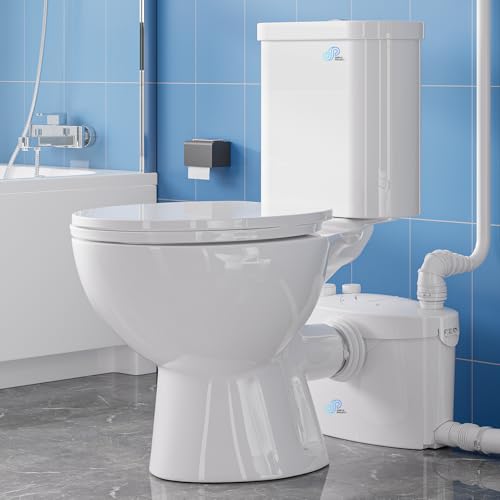
Simple Project 750W PRO Macerating Toilet System
Badge: Best Overall Alternative
Every alternative in this guide exists to solve the traditional toilet’s one hard limit: it can only go where gravity drainage already is. The Simple Project 750W PRO is the pool’s most complete answer to that limit. Its macerator pump grinds waste and pushes it up or across to the existing drain, so a toilet can be installed in a basement below the sewer line or in an attic conversion far from any soil stack. Four water inlets mean the same unit can serve a basin and a shower as well, and a dual flush keeps water use civilised while it does so. This is not a toilet with a gimmick; it is a small plumbing plant that happens to include a toilet.
As the flagship alternative, it deserves the flagship scrutiny. The pump is the strongest class in this pool, and the listing describes the operation as powerful and quiet — both claims matter, because a macerator you can hear through the floor will be resented daily. The space-saving positioning suits the small bathrooms these systems usually serve. Against that, set the alternative’s eternal trade: a motor with a service life, electrics in a wet room, and an installation that involves discharge pipework and venting rather than two bolts and a wax ring.
Choose it when the traditional route is genuinely closed — when the alternative to this alternative is breaking concrete or abandoning the bathroom plan. In that situation it is not a compromise at all; it is the enabling technology, and the strongest version of it in this pool is the sensible place to start.
Strengths
- The most capable alternative in the pool: strongest pump class and the most connections
- Four inlets let a toilet, basin and shower share one unit — a complete bathroom from one system
- Dual flush trims water use on a system that already rewrites the plumbing rules
Trade-offs
- A pump is a wear item; this alternative trades porcelain permanence for motor maintenance
- Needs power at the installation point
- Installation is a project, not a swap — venting and discharge routing must be planned
Key specifications (from the listing)
- Brand: Simple Project
- System: macerating toilet system, 750W PRO pump
- Use: upflush installation for basements and attics
- Connections: 4 water inlets
- Flush: dual flush
- Operation: described as powerful and quiet, space-saving
Best for: basement and attic bathrooms where a traditional toilet physically cannot be installed / Not suited for: a normal bathroom with a working floor drain — there, traditional is simpler and better

SUPERFLO 750W Macerating Toilet System
Badge: Best for Basements and Garages
The SUPERFLO approaches the same problem as the flagship with a slightly more utilitarian brief: a 750W macerating system for basements and garages, with four water inlets and an operation its listing describes as powerful and quiet. If your alternative-toilet project is the classic one — a bathroom under the house or in the garage conversion — this is the pool member that names your project in its own description.
The four inlets are the detail to dwell on. A lone toilet in a basement corner is a compromise; a toilet, basin and shower sharing one pumped unit is a bathroom. The SUPERFLO’s connections support the second outcome, which is what makes an alternative installation feel like a real room rather than an apology. Its pump class matches the strongest in the pool, so the capability argument is settled; the choice between this and the PRO above comes down to the dual flush and the finer points of layout.
The standing cautions for every pumped alternative apply in full: the motor is a service item, the room needs power and venting, and the system should be installed by someone who has fitted macerators before. Respect those, and this is a strong, honest route to a bathroom that tradition said you could not have.
Strengths
- Same strong 750W pump class as the flagship, with four inlets for a full small bathroom
- Explicitly aimed at basements and garages — the two commonest alternative-toilet locations
- Avoids excavation and concrete work to reach a drain
Trade-offs
- Pump maintenance and eventual pump replacement are part of ownership
- The listing states no dual flush, so water behaviour is less flexible than the PRO above
- Power and venting must be planned into the room
Key specifications (from the listing)
- Brand: SUPERFLO
- System: macerating toilet system, 750W
- Use: upflush toilet for basements and garages
- Connections: 4 water inlets for basins and garage additions
- Operation: described as powerful and quiet
Best for: a basement or garage bathroom project that wants maximum inlet flexibility / Not suited for: standard bathroom replacements, where a gravity toilet wins on simplicity

Simple Project Upgrade Macerating Toilet System with 600W Pump
Badge: Best Mid-Size Upflush
Not every alternative project needs the biggest pump in the pool. This upgraded Simple Project system pairs a 600W macerator with three water inlets and an AC vent connection, aimed at basement bathrooms where the drain is reachable without heroics. It keeps the essential alternative promise — a real bathroom where no floor drain exists — in a slightly smaller, simpler package than the 750W flagships.
The three-inlet layout still supports the combination that matters: toilet, basin and shower on one unit. For the commonest version of this project — an en-suite carved out of a basement corner, a WC and shower for a workshop or granny annexe — that is the whole requirement, and paying for pump capacity you will never use buys nothing. The listing’s emphasis on quiet operation is well placed, too: basement bathrooms sit under living rooms, and a pump that announces itself is a pump that gets regretted.
Where the discharge run is long or the lift is high, step up to the 750W class above; pump sizing is not the place for optimism. Otherwise this is the pool’s balanced alternative — capable, compact in ambition, and honest about what it is.
Strengths
- Three inlets still cover the toilet-plus-basin-plus-shower formula for a small bathroom
- A step down in pump size suits shorter discharge runs and smaller projects
- Described as quiet in operation — essential in a basement beneath living space
Trade-offs
- Less pump headroom than the 750W systems for long or high discharge runs
- Same pump-maintenance reality as every macerating alternative
- No dual flush stated in the listing
Key specifications (from the listing)
- Brand: Simple Project
- System: macerating toilet system, 600W macerator pump
- Use: upflush toilet for basements
- Connections: 3 water inlets and AC vent
- Operation: described as powerful and quiet
Best for: small basement bathrooms with modest discharge distances / Not suited for: long, high lifts to a distant drain — take the 750W class instead

Simple Project 600W Macerating Toilet System with Pump
Badge: Best Rear-Outlet Alternative
This system is the rear-outlet expression of the 600W alternative: a one-piece bowl discharging backwards into its macerating pump, with three water inlets, an AC vent connection and explicit provision for a sink and a shower. In the small rooms these systems usually serve, the rear-outlet format is more than a plumbing detail — it keeps the unit hugging the wall and the floor area clear, which is how a small alternative bathroom avoids feeling like a cupboard with ambitions.
Compared with its upright sibling above, the choice is architectural. If your discharge pipework runs through the wall, this format is the natural fit; if it runs up from below, the sibling may suit better. The pump class, inlet count and quiet-operation positioning are shared, so neither choice sacrifices the alternative’s core capability: a complete small bathroom with no floor drain and no concrete broken.
Plan the installation with servicing in mind — a macerator that cannot be reached cannot be maintained — and confirm the rear-outlet geometry against your wall and pipe positions before ordering. Do that, and this is the neatest of the pool’s pumped alternatives.
Strengths
- Rear-outlet one-piece format keeps the installation compact and tidy against the wall
- Sink and shower connections make it a full-bathroom foundation, not just a WC
- One-piece body is easier to clean around than a separate tank arrangement
Trade-offs
- Rear-outlet layout must match your planned pipework — it is a format decision, not a detail
- 600W pump class, so the same discharge-distance limits as its sibling
- Pump servicing access should be planned at installation, not discovered later
Key specifications (from the listing)
- Brand: Simple Project
- System: macerating toilet system with 600W pump
- Format: one-piece, rear outlet bowl
- Connections: 3 water inlets and AC vent
- Intended additions: sink and shower
Best for: compact alternative bathrooms where a rear-outlet layout fits the room best / Not suited for: projects needing maximum pump power or a conventional floor-outlet look

Ann Katy Upgrade XL Portable Toilet for Adults
Badge: Best No-Plumbing Alternative
At the far end of the alternative spectrum sits the option that abandons plumbing altogether. The Ann Katy is an extra-large portable toilet — lightweight, compact, lidded — that can be used anywhere a person can sit: a cabin with no services, a boat, an RV, a building site, or a house whose only bathroom is mid-renovation. As an alternative to a traditional toilet it is total: not a different way of flushing, but a refusal to flush at all, in exchange for absolute placement freedom.
Within its stated world, the design choices are sensible. XL sizing acknowledges that adults are its users, not just children at a campsite. The lid keeps the unit civilised between uses. The light weight makes the unavoidable chore — emptying it by hand — as manageable as that chore gets. None of this makes it a bathroom, and the review badge does not pretend otherwise: it is the best no-plumbing alternative, which is a real category with real needs.
Choose it for the uses its listing names and it will serve well. Choose it instead of plumbing a bathroom and the daily emptying will teach the household, quickly, why the other five picks in this guide exist.
Strengths
- The only alternative here that needs literally nothing installed — no drain, no power, no water supply
- Lightweight and compact enough to store in a cupboard and deploy in minutes
- XL sizing makes it more usable for adults than basic camping potties
Trade-offs
- No flush and no drain: it is emptied by hand, which is the price of total freedom from plumbing
- No stability aids, height specification or hygiene features
- A temporary or outdoor solution — not a substitute for a bathroom at home
Key specifications (from the listing)
- Brand: Ann Katy
- Format: portable toilet, extra large
- Build: lightweight and compact, with lid
- Stated uses: adults and kids; camping, hiking, beach, boat and emergency RV use
Best for: cabins, boats, RVs, worksites and emergency backup during bathroom renovations / Not suited for: a permanent home bathroom — every other pick here exists to avoid that outcome

TDH Luxury Smart Toilet with Bidet Built In
Badge: Best High-Tech Alternative
The last alternative in the pool redefines the word differently from the other five. The pumped systems alternative is about place — a toilet where no drain is. The portable’s alternative is about infrastructure — a toilet with no plumbing at all. The TDH’s alternative is about experience: it installs on an ordinary drain like any traditional toilet, then replaces every traditional interaction with an assisted one. The bidet washes with instant warm water, the dryer finishes, the toilet flushes itself when you leave the seat or when your foot passes its sensor, and a night light handles the dark. The tradition is not relocated; it is retired.
For many renovators, this is the alternative they actually meant. Their bathroom has a perfectly good drain; what they are tired of is the 20th-century fixture sitting on it. Against that brief the TDH is the pool’s only candidate, and its one-piece format gives the room the clean, tankless silhouette that signals a modern renovation more strongly than any tile choice.
The costs of the future are the usual ones: power at the toilet, electronics with a service life, and a purchase tier far above porcelain-and-gravity. Households that accept those terms get the most complete alternative experience in this pool. Households that do not still have five other kinds of alternative above — which is rather the point of this guide.
Strengths
- Replaces the traditional experience at every touchpoint: washing, drying and flushing are all automated or assisted
- One-piece tankless look transforms a traditional bathroom’s focal point
- Night light and multiple cleaning modes add daily-life polish no traditional toilet offers
Trade-offs
- Needs power at the toilet — the traditional format’s great freedom, surrendered
- Electronics will need servicing in a way porcelain never does
- The listing states no seat height, so ergonomics need a separate check
Key specifications (from the listing)
- Brand: TDH
- Format: one-piece smart toilet, bidet built in
- Wash: instant warm water
- Drying: warm air dryer
- Flush triggers: leave-seat auto flushing and foot sensor
- Extras: larger LED display, night light, multiple cleaning modes
Best for: renovators who want the alternative to traditional to mean smarter, not just differently plumbed / Not suited for: off-grid or power-free installations, and purists who want twenty silent years from a fixture
Comparison Table
| Pick | Badge | Format | Standout trait | Listing |
|---|---|---|---|---|
| Simple Project 750W PRO Macerating Toilet System | Best Overall Alternative | Macerating upflush system | 750W PRO pump, four inlets, dual flush | Check on Amazon |
| SUPERFLO 750W Macerating Toilet System | Best for Basements and Garages | Macerating upflush system | 750W pump with four water inlets | Check on Amazon |
| Simple Project Upgrade Macerating Toilet System with 600W Pump | Best Mid-Size Upflush | Macerating upflush system | 600W pump, three water inlets, AC vent | Check on Amazon |
| Simple Project 600W Macerating Toilet System with Pump | Best Rear-Outlet Alternative | One-piece macerating system, rear outlet | Rear-outlet bowl with sink and shower connections | Check on Amazon |
| Ann Katy Upgrade XL Portable Toilet for Adults | Best No-Plumbing Alternative | Portable toilet, XL | Lightweight and compact with a lid | Check on Amazon |
| TDH Luxury Smart Toilet with Bidet Built In | Best High-Tech Alternative | One-piece smart toilet with built-in bidet | Leave-seat auto flush and foot sensor | Check on Amazon |
The comparison table’s format column is the map of this guide: four pumped systems, one portable, one smart toilet. Notice what is absent — a conventional gravity toilet — because that absence is the keyword. If, reading the table, you realise your bathroom has a working drain and ordinary needs, the most useful row here may be none of them; Best Toilets Ranked will take you back to the mainstream field with this guide’s blessing.
How to Choose the Right Alternative to a Traditional Toilet
Start by diagnosing the problem in one sentence. “The bathroom is below the drain” points to a macerating system. “There is no plumbing” points to the portable. “The bathroom works but the fixture feels primitive” points to the smart toilet. If you cannot complete the sentence with one of those three, pause: most alternative purchases that disappoint were solutions shopping for a problem, bought by households whose traditional toilet was actually fine.
For the drainage problem, size the pump to the job, not the brochure. The relevant facts are the lift (how high the waste must be pumped), the run (how far horizontally), and how many fixtures will share the unit. The 750W systems in this pool are the choice for ambitious lifts and full bathrooms; the 600W systems suit shorter, simpler runs. Every inlet you connect — basin, shower — is a fixture the pump must serve for years, so count them honestly, and plan venting at the same time, since macerating systems need their AC vent connection thought through before the walls close. If you want the reference point this guide keeps returning to, it is the Simple Project 750W PRO Macerating Toilet System.
For the no-plumbing problem, be brutally honest about duration. A portable toilet is an excellent answer for a season, a voyage or a renovation, and a miserable answer for a decade, because its cost is paid in daily emptying labour. If the need is permanent and the site can ever be plumbed or pumped, the macerating route usually wins on a two-year horizon even though it loses on day one.
For the experience problem, the smart alternative, audit your infrastructure and your temperament. The TDH needs power at the toilet and a household at peace with electronics in the bathroom. In return it replaces the traditional interaction entirely — washing, drying, flushing — which for users with mobility limits is not luxury but assistance. Households should also check how published assessments treat the wider alternative field; Best Toilets Ratings explains how to read those ratings without being steered by them.
Whatever family you choose, plan the exit. Pumps are replaced, electronics are serviced, portables are retired. An alternative installed with access panels, reachable connections and a known service route is a solution; the same product entombed behind finished walls is a future renovation. Traditional toilets never raise this question, which is exactly why choosing their alternative deserves the extra thought.
How to Plan an Alternative Toilet Installation
Alternative installations fail on planning more often than on product quality. The sequence below is the planning pass that applies across all three families in this guide, with the family-specific branches noted as they arise.
- Write the problem sentence first: below-drain, no-plumbing, or experience upgrade. Every later decision hangs off it.
- For a macerating system, map the discharge route before buying: lift height, horizontal run, and where the pipe joins the existing drain — then size the pump class to that map.
- Count the fixtures the unit will serve (toilet, basin, shower) and confirm the inlet count covers them with the vent connection planned.
- Arrange power: pumped and smart alternatives both need a suitable outlet at the installation point, protected appropriately for a bathroom.
- Plan service access as part of the build — a macerator you cannot reach is a macerator you cannot maintain, so access panels are not optional extras.
- For a portable, plan the unglamorous logistics instead: where it lives, who empties it, where waste is disposed of, and how supplies are stored.
- For a smart toilet, run the standard toilet checks too — rough-in and floor condition — because beneath the electronics it still sits on an ordinary flange.
- Commission deliberately: first flushes watched, pump cycles listened to, settings adjusted with the main user present, and the manual or backup procedures understood by the whole household.
After installation, alternatives reward a simple maintenance rhythm: listen to a pump’s sound so changes register early, keep smart-toilet sensors clean, and never let a portable’s supplies run out mid-need. None of this is heavy work, but unlike a traditional toilet — which can be ignored for years — an alternative stays reliable in proportion to the attention it gets.
Troubleshooting
- Problem: the macerator runs longer or louder than it used to → something is working harder than it should; check for partial blockages and non-flushable items before assuming pump failure.
- Problem: the smart toilet’s features stop but flushing continues → check power and the backup flush method first; electronic features and basic flushing are separate systems in most designs.
- Problem: the portable smells despite the lid → it is a servicing problem, not a design verdict: empty, rinse and restock it properly, and shorten the service interval.
Macerating Systems, Explained Without the Brochure
A macerating toilet looks like a normal toilet with a secret: behind or beneath the bowl sits a unit containing a pump and rotating blades. Waste and water enter it, are reduced to a slurry, and are pumped through a narrow discharge pipe to the real drain — uphill if necessary. That narrow pipe is the technology’s gift: it can run through walls and under floors where a full-size soil pipe never could, which is why a basement bathroom that would traditionally require breaking the slab and installing a sewage ejector pit can instead be a weekend-scale project.
The trade-offs are equally concrete. The pump is a motor, with a motor’s lifespan and a motor’s intolerance for objects that should never be flushed — the list of forbidden items is longer and more serious than for a gravity toilet, and households must actually respect it. The unit makes a sound when it cycles; good ones are brief and muffled, but silence is not on offer. And the whole system depends on power. Weighed against the alternative — no bathroom at all — most owners find the ledger obviously favourable, which is why four of this pool’s six picks are variations on this single idea.
The Smart Toilet as Alternative: What Actually Changes
It is easy to list the TDH’s features and miss the structural point: a smart toilet is the only alternative in this guide that changes what using a toilet *is*. The pumped systems change where a toilet can be; the portable changes whether plumbing is needed; the smart toilet changes the act itself — washing replaces wiping, drying replaces paper, flushing happens by itself, and the seat can assist users whose bodies struggle with every one of those traditional steps.
That is why the smart alternative is best judged as assistive technology that happens to be stylish, rather than as a gadget. For an elderly user, a post-surgical patient or anyone with limited reach, the difference between a traditional toilet and this one is the difference between managing alone and asking for help. Households weighing that difference against the costs — power, complexity, price tier — will find it is not a close call in either direction: the need decides. Shoppers still comparing the mainstream shapes these alternatives depart from can browse Best Toilets Round for the round-bowl corner of the traditional market.
What an Alternative Installation Really Costs in Effort
Brochures for alternative systems emphasise that no floor needs breaking, which is true and incomplete. The honest effort ledger for a macerating installation includes routing a discharge pipe that a gravity toilet never needs, providing and protecting a power supply, planning a vent connection, and — the item most often skipped — building service access into the finished room. None of this is heavy construction, but all of it is thought, and the installations that disappoint are almost always the ones where the thinking was skipped because the marketing said “easy”.
The smart alternative has its own smaller ledger: an outlet to add, settings to configure, and a household to teach. The portable’s ledger is paid in minutes per day rather than hours per project. Lay the three ledgers side by side and the pattern of this whole guide appears again: alternatives do not eliminate the traditional toilet’s costs, they move them — from the drain layer, where tradition pays once in porcelain and plumbing, to the mechanical and daily layers, where alternatives pay continuously in maintenance and attention.
None of that argues against choosing an alternative when the situation demands one; a basement bathroom that exists is worth every hour of its pump’s maintenance. It argues for choosing with the ledger open, because the households that resent their alternative systems are reliably the ones who were told there was no ledger at all.
Alternatives for Landlords, Annexes and Garden Rooms
A large share of alternative-toilet demand comes from buildings that are not quite houses: the rental annexe, the garden office that wants a WC, the garage conversion, the short-let studio carved from a larger property. These projects share a profile — the bathroom is small, the drain is inconvenient, the budget is real, and the plumbing must not disturb the main house. That profile is precisely the macerating systems’ home ground, and it is why four of this pool’s six picks compete there.
For landlords, two alternative-specific cautions deserve emphasis. First, tenants must be taught the macerator’s rules — the list of things that must never be flushed is longer and stricter than for a gravity toilet, and a pump killed by a wet wipe is a landlord’s bill. Put the rules in writing, on the wall if necessary. Second, service access and a known local engineer are worth more than a marginally stronger pump: rental downtime is measured in rent, and the system that can be fixed tomorrow beats the system that is five percent better and fixed next month.
Garden rooms and annexes add one more consideration — frost and intermittent use. A system that sits unused in an unheated outbuilding needs the same winter thought as any plumbing, and a portable, for the very occasional garden-room need, sometimes beats every plumbed alternative on simple arithmetic: no installation, no frost risk, no maintenance, and a cupboard for a home. The alternative family is wide because buildings are various; match the system to the building’s actual life, not its imagined one.
A Word on Resale, Rentals and the Next Owner
Alternative installations follow the property, so a thought for the next occupant is part of choosing well. A macerating system that is documented — pump model, installation date, service route — is an asset a buyer or tenant can understand. The same system undocumented reads as a mystery with a motor, and mysteries discount prices. Keep the manuals, label the access panel, and leave the forbidden-items list where a stranger will find it before their first flush, not after their first blockage.
The smart alternative ages differently: its value to the next owner depends on the seat and electronics still being supported, which is one more reason the category rewards established ecosystems. The portable, alone among the alternatives, leaves with you — the one alternative that is purely the owner’s, owing nothing to the building and taking nothing from it.
Common Buying Mistakes
Mistake one: buying an alternative before diagnosing the problem. A smart toilet does not fix a drainage problem and a macerator does not improve anyone’s hygiene experience; match the family to the frustration.
Mistake two: undersizing the pump. Lift and run distances are physics, not marketing; choose the pump class for your actual discharge map, with headroom.
Mistake three: walling in a macerator with no access. The first service visit then requires demolition, converting a modest maintenance job into a building project.
Mistake four: treating a portable as a permanent home solution. Its cost is paid daily, in labour, by whoever empties it — a fine arrangement for a season and a poor one for a decade.
Final Recommendation
For the commonest alternative problem — a bathroom where no drain exists — start with the Simple Project 750W PRO: the strongest pump class in the pool, four inlets for a complete bathroom, and dual flush to keep water use sane. The SUPERFLO is its near-equal for basement and garage briefs; the two 600W systems serve smaller runs, with the rear-outlet model winning where wall-hugging layout matters. Start with the Simple Project 750W PRO Macerating Toilet System if you want the clearest expression of what this guide is recommending.
If your problem is absent plumbing for a season or a site, the Ann Katy portable is the honest, sufficient answer. If your problem is the traditional experience itself, the TDH smart toilet is the pool’s only candidate and a complete one. And if, after all this, your bathroom has a working drain and ordinary needs, accept this guide’s final piece of alternative advice: the best alternative to a traditional toilet is sometimes a better traditional toilet. Every pick above is linked so the choice — whichever direction it falls — is yours to make with the full picture in front of you.
Frequently Asked Questions
What is the main alternative to a traditional toilet?
It depends on the problem. For a bathroom without gravity drainage, a macerating upflush system. For a site with no plumbing, a portable toilet. For a normal bathroom where the fixture itself feels outdated, a smart toilet with a built-in bidet.
How does a macerating toilet work?
Waste enters a unit containing blades and a pump, is ground into a slurry, and is pumped through a narrow pipe to the existing drain — uphill if needed. That is what allows a toilet to be installed below or far from the main drain line.
Can a macerating system serve a whole bathroom?
Yes — the systems in this guide offer three or four water inlets, allowing a basin and a shower to share the unit with the toilet, so a complete small bathroom can be built around one pump.
What are the downsides of alternatives to traditional toilets?
Each family trades away simplicity: pumps wear and need power, smart toilets add electronics and servicing, and portables must be emptied by hand. A traditional gravity toilet needs none of that, which is why alternatives should solve a specific problem.
Is a smart toilet a good alternative for an elderly user?
Often the best one: warm-water washing, drying and automatic flushing reduce the physical demands of toileting substantially. It needs power at the toilet and a suitable seat height should be verified, since the listing here does not state one.
Do I need a plumber for a macerating toilet?
It is strongly recommended, at least for the discharge and vent connections. The work is well within a competent installer’s range, but pump sizing, pipe routing and service access are decisions that are expensive to revise later.


