Disclosure: topratedkitchenware.com is reader-supported. When you buy through links on our site, we may earn an affiliate commission from Amazon and other retailers, at no extra cost to you.
Where to buy
Short on time? The picks below are the verified listings behind this guide to the best performing cooktops. Linked picks carry a direct route to check the latest price on Amazon; any pick marked prose-only is reviewed for contrast and carries no link and no image, and the reason is stated in its review. Read the full guide ↓ for badges, honest trade-offs, a comparison table and the buying advice that matters more than any single specification.
- OneSetNuf 1800W Portable Induction Cooker, Stainless Steel — Best Overall.
- ChangBERT Induction Cooktop, Commercial Grade — Best for Heavy Daily Use.
- Nuwave Double Pro Induction Cooktop, Double Burner — Best for Two-Pan Cooking.
- Duxtop 1800W Portable Induction Cooktop 9100MC — Best First Induction Burner.
- Duxtop Portable Induction Cooktop 9610LS with LCD Sensor Touch — Best Touch Controls.
- Nuwave Pro Chef Induction Cooktop — Best Temperature Precision.
Finding the best performing cooktops should be a simple job, yet most shoppers end up comparing burners that look identical in photographs and behave very differently on the counter. This guide cuts through that. It ranks a verified pool of six listings, states plainly which ones genuinely fit the keyword and which are included only as contrasts, and judges every pick on the work it will actually do in your kitchen — boiling, simmering, searing and the quiet weekday meals in between. If you are also weighing neighbouring options, our guide to Best Induction Cooktops Under $200 makes a useful companion read.
Performance, for a cooktop, is not one number. It is how fast water reaches a rolling boil on a weeknight, how gently the burner can hold a sauce without scorching it while you answer the door, how evenly a large skillet heats from centre to edge, and how honestly the controls let you repeat all of that tomorrow. Shoppers comparing the best performing cooktops quickly discover that wattage headlines are the least interesting part of the story: every serious pick in this guide is an 1800W-class induction burner, yet they behave differently because coil size, power electronics and temperature control separate them. This guide ranks the pool on that fuller definition of performance, and explains the trade-offs plainly, so the burner you choose performs at the jobs you actually cook.
Key Takeaways
- Every linked pick in this guide is an 1800W-class induction burner, so the real differences are coil size, control quality, timer range and build — not headline wattage.
- The top-ranked pick is the OneSetNuf 1800W Portable Induction Cooker, Stainless Steel, chosen for the best balance of performance and everyday usability in this pool.
- Match the coil to the base of the pans you already own; a magnet test tonight prevents the commonest disappointment in this category.
- Controls you can work with wet hands and timers that match your recipes matter more than preset counts.
- Prose-only picks carry no link and no image by design: they are contrasts that protect you from a wrong-fuel or wrong-format purchase.
In this guide
Quick Picks
| Pick | Badge | Best for | Check |
|---|---|---|---|
| OneSetNuf 1800W Portable Induction Cooker, Stainless Steel | Best Overall | Everyday first choice | Check on Amazon |
| ChangBERT Induction Cooktop, Commercial Grade | Best for Heavy Daily Use | Regular heavy use | Check on Amazon |
| Nuwave Double Pro Induction Cooktop, Double Burner | Best for Two-Pan Cooking | Households needing more capacity | Check on Amazon |
| Duxtop 1800W Portable Induction Cooktop 9100MC | Best First Induction Burner | Simple, proven daily cooking | Check on Amazon |
| Duxtop Portable Induction Cooktop 9610LS with LCD Sensor Touch | Best Touch Controls | Cooks who value control style | Check on Amazon |
| Nuwave Pro Chef Induction Cooktop | Best Temperature Precision | The specific strength named in its review | Check on Amazon |
Badges are assigned on the evidence in each listing — format, controls, capacity and build — and the same badge follows each pick into its detailed review below, so you can track a recommendation from this table to its full reasoning without losing the thread. Readers comparing across this cluster may also find our guide to Best Induction Electric Cooktops useful, since the same pool logic applies there.
How These Picks Were Chosen
This guide is research-led. We compared the verified listings supplied for this keyword — their titles, stated specifications, formats and intended uses — against the specific promise inside the phrase best performing cooktops, and we ranked on fit for that promise first and general merit second. That ordering matters: a fine product that answers a different question ranks below a plainer product that answers yours, and a listing that fails the keyword’s core test is not quietly linked but moved to a prose-only contrast with the reason stated.
Three honesty rules governed the work. First, no specification appears in this guide unless the listing itself states it; where a title is silent — on a timer, a grate material, a dimension — the review says nothing rather than guessing. Second, no prices and no fixed ratings are printed, because both change constantly and a guide should still be true next season; linked picks invite you to check the latest price on Amazon at the moment you shop. Third, this is not a hands-on test report and it does not pretend to be one: the judgements are structured comparisons of verified listing evidence, established product design and the known behaviour of the product type, written so you can see exactly why each pick sits where it sits.
Within those rules, the ranking weighed the factors owners feel weekly. For cooktops that meant coil-to-pan matching, low-end temperature behaviour, control usability and build. For grills it meant fuel truth, grate material, usable capacity and the cleaning and care burden. Features that photograph well but change little — extra presets nobody opens, decorative finishes — were deliberately weighted last.
The 6 Best Performing Cooktops Options, Reviewed in Detail

OneSetNuf 1800W Portable Induction Cooker, Stainless Steel
Badge: Best Overall
Strengths
- Push-button controls stay usable with wet or greasy hands, unlike slick touch panels
- A 10-hour timer window suits long, low supervised cooks better than short countdown timers
- Stainless housing shrugs off splashes and wipes down without babying a glass-only body
Trade-offs
- Single burner, so it cannot run a main and a side at the same time
- Push buttons feel less sleek than a seamless touch panel
- Commercial styling is functional rather than decorative in a home kitchen
Key specs from the listing: Power: 1800W (from listing title); Heating coil: 8-inch; Controls: push-button, dual IGBT power control; Temperature settings: 18; Timer: up to 10 hours; Body: stainless steel.
The OneSetNuf leans into durability over looks. Dual IGBT power control is the detail that matters in daily use: it is the electronics layout makers use when a burner has to hold a steady low output instead of pulsing hard on and off, which is exactly what sauces, braises and slow simmers punish. The push-button panel is unfashionable and that is its strength — you can work it with damp fingers, with a spoon in your hand, or with light kitchen gloves on, and the 8-inch coil matches the base of most everyday skillets and saucepans rather than only small pots.
In the context of best performing cooktops, judge this pick by your ordinary week. Think about the meals that repeat — the pasta water on a Tuesday, the eggs on a Saturday, the sauce that must hold without scorching while life happens around it — and whether its coil, controls and timer make those meals easier or merely more technical. A burner that serves the ordinary week gracefully will serve the ambitious weekend adequately; the reverse is rarely true.
Its honest limitation is the one named in its trade-offs above, and it is worth sitting with that for a moment before ordering, because limitations in this category are rarely defects — they are the shadow of the design’s chosen strength. A pick optimised for portability gives up parallel cooking; a pick optimised for precision asks more of the cook; a pick optimised for capacity asks more of the counter or the patio. Choose the limitation you mind least and you will like the product most.
Living with the OneSetNuf 1800W Portable Induction Cooker, Stainless Steel over a season teaches things no listing can. You learn its simmer personality, the setting your soup actually wants, how its surface forgives a boiled-over pot on a tired evening, and how naturally it comes out of storage when the main stove is busy. Those learned details are why owners so often defend a burner that looks ordinary on paper: by month three it has stopped being a specification and become a routine, and routines are what weeknight cooking actually runs on. Judge this pick, finally, by whether you can picture that routine happily — the setup, the cook, the one-minute wipe-down — because that picture is the most reliable review either of us can write.
Best for: everyday first choice and shoppers who value this pick’s stated strengths. / Not suited for: shoppers whose needs collide with the trade-offs listed above.

ChangBERT Induction Cooktop, Commercial Grade
Badge: Best for Heavy Daily Use
Strengths
- NSF certification is a serious signal for anyone cooking for the public or a large household
- Large 8-inch coil spreads heat across standard pan bases more evenly
- Stainless countertop body is built for daily, heavy rotation rather than occasional use
Trade-offs
- Commercial footprint and styling will dominate a small home counter
- Single burner only, despite the professional positioning
- Features skew toward endurance, not toward preset convenience for beginners
Key specs from the listing: Power: 1800W (from listing title); Heating coil: large 8-inch; Body: premium stainless steel countertop housing; Certification noted in title: NSF certified; Timer: 10 hours.
ChangBERT sells this burner as a professional hot plate, and the NSF certification in its title is the line to take seriously: that mark is about cleanability and construction standards, which is why this style of unit shows up in food-service settings. The large 8-inch coil and stainless body point the same way — this is a burner bought to be used hard, wiped down fast, and used again tomorrow. Home cooks who batch-cook, cater small events, or run a busy household kitchen get the most from that brief.
In the context of best performing cooktops, judge this pick by your ordinary week. Think about the meals that repeat — the pasta water on a Tuesday, the eggs on a Saturday, the sauce that must hold without scorching while life happens around it — and whether its coil, controls and timer make those meals easier or merely more technical. A burner that serves the ordinary week gracefully will serve the ambitious weekend adequately; the reverse is rarely true.
Its honest limitation is the one named in its trade-offs above, and it is worth sitting with that for a moment before ordering, because limitations in this category are rarely defects — they are the shadow of the design’s chosen strength. A pick optimised for portability gives up parallel cooking; a pick optimised for precision asks more of the cook; a pick optimised for capacity asks more of the counter or the patio. Choose the limitation you mind least and you will like the product most.
Living with the ChangBERT Induction Cooktop, Commercial Grade over a season teaches things no listing can. You learn its simmer personality, the setting your soup actually wants, how its surface forgives a boiled-over pot on a tired evening, and how naturally it comes out of storage when the main stove is busy. Those learned details are why owners so often defend a burner that looks ordinary on paper: by month three it has stopped being a specification and become a routine, and routines are what weeknight cooking actually runs on. Judge this pick, finally, by whether you can picture that routine happily — the setup, the cook, the one-minute wipe-down — because that picture is the most reliable review either of us can write.
Best for: regular heavy use and shoppers who value this pick’s stated strengths. / Not suited for: shoppers whose needs collide with the trade-offs listed above.

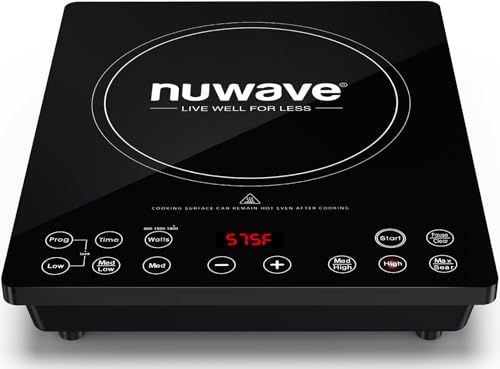
Nuwave Double Pro Induction Cooktop, Double Burner
Badge: Best for Two-Pan Cooking
Strengths
- Two burners solve the single-burner bottleneck that limits every other pick here
- A low end of 50°F holds delicate work that most burners cannot go near
- Dynamic Watt Technology is designed for circuits shared with other appliances
Trade-offs
- Double format needs more counter width and storage room than a single burner
- Two zones share the unit’s power envelope, so both cannot always run flat out together
- Touch panel demands dry fingers for reliable input
Key specs from the listing: Format: double portable induction burner; Temperature range: 50°F–575°F (from listing title); Wattage settings: 900 / 1500 / 1800W with Dynamic Watt Technology; Heating coil: 8-inch; Surface: shatter-proof ceramic glass; Controls: seamless IMD touch panel.
The Double Pro is the structural answer to the portable induction dilemma: one burner is a helper, two burners are a cooktop. Its temperature span is the widest in this pool, starting low enough for holding and proofing-style tasks and running to a genuine searing ceiling, and the selectable wattage settings matter in older homes, dorms and RVs where the circuit is shared. The seamless touch panel leaves no crevices for spills to creep into, and the shatter-proof ceramic glass is reassurance when heavy pans move on and off all evening.
In the context of best performing cooktops, judge this pick by your ordinary week. Think about the meals that repeat — the pasta water on a Tuesday, the eggs on a Saturday, the sauce that must hold without scorching while life happens around it — and whether its coil, controls and timer make those meals easier or merely more technical. A burner that serves the ordinary week gracefully will serve the ambitious weekend adequately; the reverse is rarely true.
Its honest limitation is the one named in its trade-offs above, and it is worth sitting with that for a moment before ordering, because limitations in this category are rarely defects — they are the shadow of the design’s chosen strength. A pick optimised for portability gives up parallel cooking; a pick optimised for precision asks more of the cook; a pick optimised for capacity asks more of the counter or the patio. Choose the limitation you mind least and you will like the product most.
Living with the Nuwave Double Pro Induction Cooktop, Double Burner over a season teaches things no listing can. You learn its simmer personality, the setting your soup actually wants, how its surface forgives a boiled-over pot on a tired evening, and how naturally it comes out of storage when the main stove is busy. Those learned details are why owners so often defend a burner that looks ordinary on paper: by month three it has stopped being a specification and become a routine, and routines are what weeknight cooking actually runs on. Judge this pick, finally, by whether you can picture that routine happily — the setup, the cook, the one-minute wipe-down — because that picture is the most reliable review either of us can write.
Best for: households needing more capacity and shoppers who value this pick’s stated strengths. / Not suited for: shoppers whose needs collide with the trade-offs listed above.
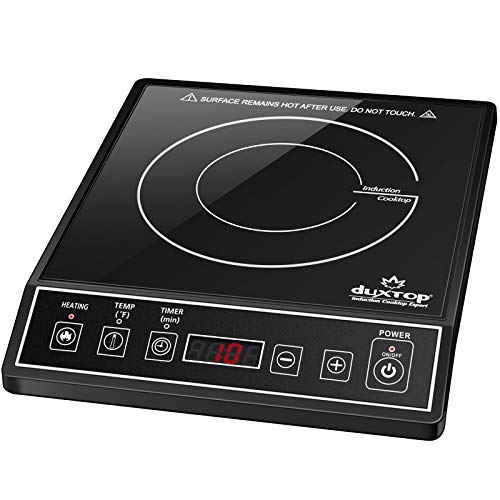
Duxtop 1800W Portable Induction Cooktop 9100MC
Badge: Best First Induction Burner
Strengths
- A long-running, widely owned model line, so advice and accessories are easy to find
- Full 1800W output boils and sears at genuine stovetop pace
- Simple single-burner format stores in a drawer or shallow cupboard
Trade-offs
- Single burner limits parallel cooking
- Black glass shows dust and dried splashes readily
- Button-and-display layout is plainer than newer touch designs
Key specs from the listing: Power: 1800W (from listing title); Model: 9100MC / BT-M20B; Colour: black; Format: single portable countertop burner.
The Duxtop 9100MC is the establishment pick: a black, single-burner 1800W unit from a line that has been the default recommendation in this category for years. That maturity is a real feature. The controls are conventional, the behaviour is predictable, and if you ever need a replacement part, a compatible pan recommendation or a troubleshooting answer, an enormous owner base has already asked the question. For a first induction burner, predictability beats novelty almost every time.
In the context of best performing cooktops, judge this pick by your ordinary week. Think about the meals that repeat — the pasta water on a Tuesday, the eggs on a Saturday, the sauce that must hold without scorching while life happens around it — and whether its coil, controls and timer make those meals easier or merely more technical. A burner that serves the ordinary week gracefully will serve the ambitious weekend adequately; the reverse is rarely true.
Its honest limitation is the one named in its trade-offs above, and it is worth sitting with that for a moment before ordering, because limitations in this category are rarely defects — they are the shadow of the design’s chosen strength. A pick optimised for portability gives up parallel cooking; a pick optimised for precision asks more of the cook; a pick optimised for capacity asks more of the counter or the patio. Choose the limitation you mind least and you will like the product most.
Living with the Duxtop 1800W Portable Induction Cooktop 9100MC over a season teaches things no listing can. You learn its simmer personality, the setting your soup actually wants, how its surface forgives a boiled-over pot on a tired evening, and how naturally it comes out of storage when the main stove is busy. Those learned details are why owners so often defend a burner that looks ordinary on paper: by month three it has stopped being a specification and become a routine, and routines are what weeknight cooking actually runs on. Judge this pick, finally, by whether you can picture that routine happily — the setup, the cook, the one-minute wipe-down — because that picture is the most reliable review either of us can write.
Best for: simple, proven daily cooking and shoppers who value this pick’s stated strengths. / Not suited for: shoppers whose needs collide with the trade-offs listed above.
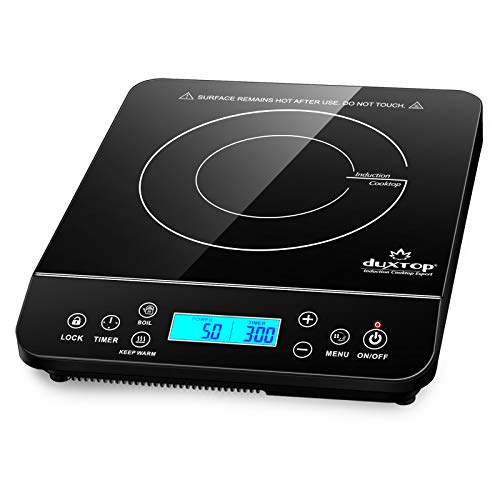
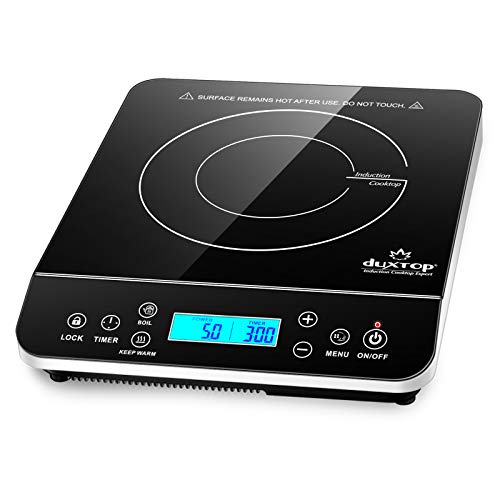
Duxtop Portable Induction Cooktop 9610LS with LCD Sensor Touch
Badge: Best Touch Controls
Strengths
- Sensor-touch panel wipes completely clean with no buttons to trap grease
- LCD readout makes power and temperature settings easy to confirm at a glance
- Same proven 1800W Duxtop platform, in a sleeker control format
Trade-offs
- Touch controls can miss inputs from wet or floured fingers
- Single burner only
- Gloss black finish needs regular wiping to look its best
Key specs from the listing: Power: 1800W (from listing title); Model: 9610LS / BT-200DZ; Controls: LCD sensor touch panel; Colour: black; Format: single portable countertop burner.
Think of the 9610LS as the 9100MC’s tidier sibling: the same 1800W Duxtop foundation, but with an LCD sensor-touch surface instead of physical controls. In a small kitchen that difference is daily, not cosmetic — a flat panel takes one pass of a cloth, never traps sauce around a knob stem, and reads clearly across the room. The trade is tactile certainty: touch panels ask for reasonably dry fingers, so bakers working with flour-dusted hands should weigh that honestly.
In the context of best performing cooktops, judge this pick by your ordinary week. Think about the meals that repeat — the pasta water on a Tuesday, the eggs on a Saturday, the sauce that must hold without scorching while life happens around it — and whether its coil, controls and timer make those meals easier or merely more technical. A burner that serves the ordinary week gracefully will serve the ambitious weekend adequately; the reverse is rarely true.
Its honest limitation is the one named in its trade-offs above, and it is worth sitting with that for a moment before ordering, because limitations in this category are rarely defects — they are the shadow of the design’s chosen strength. A pick optimised for portability gives up parallel cooking; a pick optimised for precision asks more of the cook; a pick optimised for capacity asks more of the counter or the patio. Choose the limitation you mind least and you will like the product most.
Living with the Duxtop Portable Induction Cooktop 9610LS with LCD Sensor Touch over a season teaches things no listing can. You learn its simmer personality, the setting your soup actually wants, how its surface forgives a boiled-over pot on a tired evening, and how naturally it comes out of storage when the main stove is busy. Those learned details are why owners so often defend a burner that looks ordinary on paper: by month three it has stopped being a specification and become a routine, and routines are what weeknight cooking actually runs on. Judge this pick, finally, by whether you can picture that routine happily — the setup, the cook, the one-minute wipe-down — because that picture is the most reliable review either of us can write.
Best for: cooks who value control style and shoppers who value this pick’s stated strengths. / Not suited for: shoppers whose needs collide with the trade-offs listed above.

Nuwave Pro Chef Induction Cooktop
Badge: Best Temperature Precision
Strengths
- 94 temperature settings in 5°F steps give the finest control in this pool
- Wide 100°F–575°F range covers holding, candy work, frying and searing in one unit
- Shatter-proof ceramic glass suits heavy pans and busy counters
Trade-offs
- Fine-grained settings are more than a casual cook will ever scroll through
- Single burner format
- Precise temperature cooking rewards a thermometer habit many beginners do not yet have
Key specs from the listing: Power: 1800W (from listing title); Heating coil: large 8-inch; Temperature settings: 94, from 100°F to 575°F in 5°F steps; Surface: shatter-proof ceramic glass; Positioning: commercial-grade portable burner.
The Pro Chef is built around one idea: temperature as a number, not a guess. Ninety-four settings in small steps mean you can hold a custard below curdling, keep frying oil where it belongs instead of chasing it with a dial, and repeat a result next week by writing the setting down. That repeatability is what separates temperature-mode induction from every other portable burner, and it is why this model suits cooks who follow recipes closely, make candy or chocolate, or fry often enough that oil temperature drift has burned them before.
In the context of best performing cooktops, judge this pick by your ordinary week. Think about the meals that repeat — the pasta water on a Tuesday, the eggs on a Saturday, the sauce that must hold without scorching while life happens around it — and whether its coil, controls and timer make those meals easier or merely more technical. A burner that serves the ordinary week gracefully will serve the ambitious weekend adequately; the reverse is rarely true.
Its honest limitation is the one named in its trade-offs above, and it is worth sitting with that for a moment before ordering, because limitations in this category are rarely defects — they are the shadow of the design’s chosen strength. A pick optimised for portability gives up parallel cooking; a pick optimised for precision asks more of the cook; a pick optimised for capacity asks more of the counter or the patio. Choose the limitation you mind least and you will like the product most.
Living with the Nuwave Pro Chef Induction Cooktop over a season teaches things no listing can. You learn its simmer personality, the setting your soup actually wants, how its surface forgives a boiled-over pot on a tired evening, and how naturally it comes out of storage when the main stove is busy. Those learned details are why owners so often defend a burner that looks ordinary on paper: by month three it has stopped being a specification and become a routine, and routines are what weeknight cooking actually runs on. Judge this pick, finally, by whether you can picture that routine happily — the setup, the cook, the one-minute wipe-down — because that picture is the most reliable review either of us can write.
Best for: the specific strength named in its review and shoppers who value this pick’s stated strengths. / Not suited for: shoppers whose needs collide with the trade-offs listed above.
Comparison Table
| Pick | Badge | Headline facts from the listing | Check |
|---|---|---|---|
| OneSetNuf 1800W Portable Induction Cooker, Stainless Steel | Best Overall | Power: 1800W (from listing title); Heating coil: 8-inch; Controls: push-button, dual IGBT power control | Check on Amazon |
| ChangBERT Induction Cooktop, Commercial Grade | Best for Heavy Daily Use | Power: 1800W (from listing title); Heating coil: large 8-inch; Body: premium stainless steel countertop housing | Check on Amazon |
| Nuwave Double Pro Induction Cooktop, Double Burner | Best for Two-Pan Cooking | Format: double portable induction burner; Temperature range: 50°F–575°F (from listing title); Wattage settings: 900 / 1500 / 1800W with Dynamic Watt Technology | Check on Amazon |
| Duxtop 1800W Portable Induction Cooktop 9100MC | Best First Induction Burner | Power: 1800W (from listing title); Model: 9100MC / BT-M20B; Colour: black | Check on Amazon |
| Duxtop Portable Induction Cooktop 9610LS with LCD Sensor Touch | Best Touch Controls | Power: 1800W (from listing title); Model: 9610LS / BT-200DZ; Controls: LCD sensor touch panel | Check on Amazon |
| Nuwave Pro Chef Induction Cooktop | Best Temperature Precision | Power: 1800W (from listing title); Heating coil: large 8-inch; Temperature settings: 94, from 100°F to 575°F in 5°F steps | Check on Amazon |
Read the table as a filter, not a verdict: eliminate on the facts that are non-negotiable for you — format, fuel, grate or coil facts — then read the full reviews of the survivors. Our companion guide to Best Inductive Cooktops applies the same method to its own pool and makes a good cross-check.
How to Choose the best performing cooktops for Your Home
Start with format, because format is forever. A single portable burner is a helper and a starter; a double burner is a genuine cooktop replacement for small households. Decide by your busiest regular meal, not your most ambitious one. Then match the coil to your pans: measure the flat base of your most-used skillet and saucepan, and prefer the burner whose coil size meets them, because even, efficient heating lives in that match.
Next, choose your control philosophy. Power-level cooking suits fast, instinctive work; true temperature settings suit frying, candy, chocolate and delicate sauces, where holding a number is the whole job. Consider your hands and your kitchen honestly — touch panels are sleek and wipe clean, physical buttons and push controls forgive wet fingers. Weigh the timer against your recipes rather than its headline length, and weigh build against frequency: a burner used daily earns stainless, commercial-leaning construction, while a weekly helper does not need it.
For performance-first shoppers, rank coil match above wattage bragging: list the three pans you use most, measure their bases, and choose the burner whose coil and controls serve those pans. Then decide whether your cooking is single-pan focused — where a precise single burner wins — or meal-parallel, where the double burner changes everything.
How to Use, Clean and Care for a Portable Induction Cooktop
Setup. Place the burner on a flat, stable, heat-safe surface with the vents unobstructed, plug it into a circuit that is not already serving other hungry appliances, and run the magnet test on the pans you plan to use. The first cook should be a simple one — boiling water, then eggs — while you learn how its settings translate into heat.
Everyday use. Preheat pans gradually rather than blasting them empty at maximum, centre the pan on the coil marking, and adjust in small steps: induction responds in seconds, so overshooting is a choice, not an accident. Use temperature mode, where fitted, for frying and delicate work, and power mode for boiling and searing. Lift pans to move them; sliding is how surfaces age.
Cleaning and care. Let the surface cool, wipe with a soft cloth and mild cleaner, and keep the fan vents free of crumbs and grease film so the electronics breathe. Avoid abrasive pads on glass, dry pan bases before they meet the surface, and store the burner where its cord is not crushed.
Troubleshooting.
Problem: the burner will not start or shows an error with a pan on it → check the magnet test and pan size; non-magnetic or very small pans are not detected, and detection is a safety feature, not a fault.
Problem: food scorches at a setting that used to simmer → clean the surface and pan base, step the setting down, and remember that heavy pans hold heat — reduce power earlier than instinct suggests.
Problem: a buzzing or clicking sound during cooking → light or multi-layer pans can vibrate at some power levels; a heavier pan, a small setting change, or a silicone mat approved for the model usually settles it.
Shoppers who want a second perspective on daily use will find our guide to Best Industion Cooktops a helpful companion, since the same care principles run across this whole cluster.
What Performance Actually Means on an Induction Burner
Start with response. Induction heats the pan itself, so changes are close to instant: turn it down and a boiling-over pot settles in seconds, turn it up and a sear recovers fast after cold food lands. That responsiveness is the first performance divide between induction and the radiant or coil burners many shoppers are replacing. The second divide is low-end control. Plenty of burners can blast; far fewer can hold a bare simmer without cycling between boiling and stillness, which is why the dual-IGBT and fine-step temperature models in this pool earn their places. The third divide is coil-to-pan matching. An 8-inch coil under an 8-inch pan base is efficient and even; the same coil under a much larger pan leaves a cool ring at the edge no wattage figure can fix. Finally, judge the controls under real conditions — wet hands, steam, a timer running — because a burner you cannot adjust confidently mid-recipe performs worse than its specification sheet, whatever the sheet says.
Performance Tests You Can Do in Your First Week
You do not need laboratory equipment to learn a new burner; you need three honest kitchen tests. First, the boil test: the same pot, the same measured cold water, the same lid, timed — it gives you a personal baseline for pasta nights and lets you feel how aggressive the boost behaviour is. Second, the simmer test: a tomato sauce or custard held for twenty minutes tells you more about low-end control than any marketing line, because scorching and surging show up fast. Third, the sear test: a thick piece of protein in your heaviest pan shows whether the coil size matches your cookware and whether the burner sustains heat or fades after the first minute. Write the settings down. Induction rewards cooks who keep notes, because a setting that worked once will work again — that repeatability is the quiet performance advantage owners come to value most.
One more angle is worth naming before the mistakes section: expectations. The shoppers who love products in this category are rarely the ones who bought the most features; they are the ones whose purchase matched a clear-eyed picture of their own habits. As you read the final sections, keep translating every claim back into your kitchen or your backyard — that translation, more than any ranking, is what this guide exists to help with. Our guide to Best Invection Cooktops can extend the same thinking to a neighbouring shortlist.
Long-Term Ownership: What Changes After Month Three
The first week with any induction burner is theatre: water boils theatrically fast, everyone gathers to watch, and the magnet test becomes a party trick. Month three is the truth. By then you know whether the controls still please you with wet hands, whether the surface has collected the fine scratches of real life, whether the fan’s voice has faded into the kitchen’s background, and whether the burner comes out for ordinary jobs or only for performances. None of those questions appear on a specification sheet, yet they decide whether a burner is still loved in year three.
Ownership also changes what you cook. A burner that sets up in a minute gets used for small, honest jobs — reheating soup properly, holding a sauce while the roast rests, making eggs without waking the whole stove — and that frequency is where a portable quietly repays its cost, meal after unglamorous meal. A burner that demands ceremony gets saved for occasions and slowly becomes cupboard weight. When you choose between the picks above, you are really choosing between those two futures, and the honest predictor is friction: count the steps between deciding to cook and a pan on the coil, and between the last bite and a clean, stored burner. Fewer steps win, every season, every year.
Specifications That Matter, and Ones That Rarely Do
Three specifications earn their keep. Coil size, matched to your pans, decides how evenly dinner cooks. Low-end control — the fineness of the lowest settings and how steadily they hold — decides whether sauces, chocolate and custards are pleasures or gambles. And the timer range decides which recipes the burner can supervise without you standing over it. A fourth factor, build, decides how many years the other three will be around to matter.
By contrast, preset counts impress more than they inform, because most owners settle on two or three programmes and cook everything else manually. Maximum wattage, shared across this whole pool, separates nothing. And finish — gold, silver, gloss black — matters exactly as long as the first splash of sauce. Spend your attention, and then your money, in the order this section lists, and the specification sheet becomes a tool instead of a performance. Readers still torn between two finalists will find the same priorities applied, pick by pick, in our guide to Best Magnetic Induction Cooktops.
Common Buying Mistakes
- Buying before the magnet test, then blaming the burner for pans it was never going to detect.
- Chasing headline wattage when every serious pick shares the same class, while ignoring coil size, controls and low-end behaviour.
- Dragging cast iron across the glass and seasoning the surface with scratches in the first week.
- Sharing a strained circuit with other hungry appliances and mistaking a tripped breaker for a faulty burner.
- Choosing presets or finishes over the timer, build and control style your actual recipes need.
Every mistake on that list is cheap to avoid and expensive to reverse, which is the whole argument for reading a guide before the box arrives. If a neighbouring shortlist is still open, Best Luxury Induction Cooktops is worth the same five careful minutes.
Final Recommendation
If performance is the whole point, start with the Nuwave Pro Chef for precision or the OneSetNuf for hard daily use, and step up to the Nuwave Double Pro the moment two-pan meals are your norm rather than your exception.
OneSetNuf 1800W Portable Induction Cooker, Stainless Steel ChangBERT Induction Cooktop, Commercial Grade Nuwave Double Pro Induction Cooktop, Double Burner are the three linked picks to start from: read their full reviews above, match them against your pans, space and habits, and check the latest price on Amazon for the one that fits before you decide.
Whichever pick you choose, choose it for the life you actually live — the ordinary Tuesday, not the imaginary banquet — and it will still be pleasing you when guides like this one have long been updated.
Frequently Asked Questions
What makes one induction cooktop perform better than another at the same wattage?
Coil size relative to your pans, the quality of the power electronics, and how finely the burner can step and hold temperature. Two 1800W burners can behave very differently at a simmer or under a large skillet.
Is a double burner faster than a single burner?
Not for a single pot — its advantage is parallelism. Two pans progress at once, which shortens whole meals even though each zone shares the unit’s overall power envelope.
Do I need special pans for these cooktops?
You need pans a magnet sticks to firmly: cast iron, enamelled cast iron and most stainless steel with a magnetic base. Pure aluminium, copper and glass will not work unless they carry an induction-ready base.
Why does my burner pulse at low settings?
Many induction burners deliver low heat by cycling full power on and off. Models with finer temperature steps or dual power control cycle less noticeably, which is why low-end behaviour features so heavily in this guide.
Can a portable burner replace a full cooktop?
A double burner can cover most daily cooking for small households. Large households, stockpot users and multi-pan cooks will still want a full-size hob for capacity.
How do I keep performance consistent over time?
Keep the surface and fan vents clean, use flat-bottomed pans that match the coil, and avoid dragging heavy pans across the glass, which scratches the surface and looks worse over time.