Disclosure: topratedkitchenware.com is reader-supported. When you buy through links on our site, we may earn an affiliate commission from Amazon and other retailers, at no extra cost to you.
Where to buy
The six grills below are the verified picks for this guide to the best portable grills for rv george foreman. 5 of them earn Amazon links as genuine matches for compact RV living; the rest are reviewed in full as prose-only comparison points, clearly labelled, with no link and no image, because honesty about what is not portable matters as much as praise for what is. For each linked pick, the name takes you to its Amazon listing, where you can check the latest price on Amazon and confirm the current configuration before you decide.
- George Foreman 4-Serving Indoor Grill — Best Overall. Check on Amazon for the current listing details.
- YOHAWJAN 2-in-1 Electric Indoor Grill, 1500W — Best for Tabletop Variety. Check on Amazon for the current listing details.
- IdeaMaxx 3-Burner Propane Gas Grill — Best Outdoor Gas Option. Check on Amazon for the current listing details.
- Nexgrill 4-Burner Propane Gas Grill — Best for Rally Groups. Check on Amazon for the current listing details.
- Monument Grills 4-Burner Propane Gas Grill (Mesa II) (prose-only — full-size 4-burner cart grill; folding shelves do not make it a portable, so it is reviewed prose-only as a comparison point)
- Cuisinart 14-Inch Portable Charcoal Grill — Best Charcoal Flavour. Check on Amazon for the current listing details.
Read the full guide ↓ for the detailed verdict on every pick, the criteria behind the badges, and the checks that separate a true portable from a grill with wheels.
The search for the best portable grills for rv george foreman tells a very specific story: an RVer who wants the George Foreman formula, sloped plates that drain grease, fast heat, and cleanup that fits a tiny sink, in a grill that stores in an RV locker. The good news is that this verified pool contains an actual George Foreman grill, the 4-serving indoor model with removable plates, and it anchors this guide as the clear first choice for the keyword’s core job.
Around that anchor sit four more linked picks that cover the situations a Foreman cannot: a versatile electric tabletop grill with swappable grill and griddle plates, two propane grills for outdoor cooking at the pitch, and a compact charcoal kettle for the nights when only real fire will do. One full-size patio grill, the Monument Mesa II, is reviewed prose-only as a comparison point, because no folding shelf makes a four-burner cart grill into RV equipment.
The honest frame for the whole guide is power and place. Indoor electrics need a hookup or a serious inverter and repay you with weatherproof, rule-proof cooking. Propane cooks anywhere outdoors and lights instantly. Charcoal brings flavour and ash in equal measure. Read the picks through that lens and the right combination for your rig becomes obvious: most RVers end up with the Foreman inside and one outdoor option in the bay.
Shoppers comparing options in this corner of the grill market often work through neighbouring questions too, from Best Portable Gas Grills For Rv to Best Portable Gas Grills For Rv Camping, and the same criteria used here, packability, fuel, capacity, and cleanup, will serve you well on all of them.
Key Takeaways
- The George Foreman 4-Serving Indoor Grill is the only true brand match in the pool and the clear first choice for this keyword.
- Its removable nonstick plates are the easiest cleanup here, a decisive advantage at a small RV sink.
- The YOHAWJAN electric adds a griddle plate and raclette pans for tabletop variety beyond the Foreman’s four servings.
- IdeaMaxx and Nexgrill propane grills cover outdoor and group cooking; the Cuisinart kettle covers charcoal flavour in a locking, carryable format.
- The Monument Mesa II is prose-only: a fine patio grill that does not belong in a touring RV.
In this guide
Quick Picks
Six verified grills, six honest roles. Badges match the detailed reviews below, and only the linked picks carry Amazon links, here and everywhere else in this guide.
| Pick | Badge | Fuel | Why it stands out | Listing |
|---|---|---|---|---|
| George Foreman 4-Serving Indoor Grill | Best Overall | Electric | The only genuine George Foreman in this pool, and the brand’s sloped, grease-reducing design is what the keyword asks about | Check on Amazon |
| YOHAWJAN 2-in-1 Electric Indoor Grill, 1500W | Best for Tabletop Variety | Electric | Electric heat works anywhere there is a suitable outlet, including indoors when weather or fire rules stop outdoor grilling | Check on Amazon |
| IdeaMaxx 3-Burner Propane Gas Grill | Best Outdoor Gas Option | Propane | Three burners bring real heat-zone flexibility that one-burner portables cannot offer | Check on Amazon |
| Nexgrill 4-Burner Propane Gas Grill | Best for Rally Groups | Propane | The largest linked cooking capacity here: 526 sq. in. plus a side burner for sauces and sides | Check on Amazon |
| Monument Grills 4-Burner Propane Gas Grill (Mesa II) | Best Patio Power (Prose-Only) | Propane | Advanced Broil Zone gives it the strongest dedicated searing feature among the full-size picks | Prose-only |
| Cuisinart 14-Inch Portable Charcoal Grill | Best Charcoal Flavour | Charcoal | Three lid locks and one-handed carrying make it one of the few grills here that is portable by design, not by marketing | Check on Amazon |
How These Picks Were Chosen
This guide is research-led. We started from a verified product pool in which every grill’s brand, model, and key specifications were confirmed against Amazon listing data through the Creators API on 2026-11-20, and we only ever link to products from that verified pool. No ASIN in this guide comes from memory, guesswork, or another website’s roundup, and no pick carries a price or a star rating here, because both change too often to print honestly.
Each pool grill was then graded against the specific demands of RV travel with a George Foreman brief: packed size and weight, lid and grease containment for transport, fuel practicality at real destinations, capacity for realistic group sizes, and cleanup effort in small spaces. Picks that matched the brief earned links and images. Picks that failed the core test, however good they are at other jobs, were kept in the guide as prose-only comparison points with the reason stated, because buyers cross-shop them and deserve the full picture rather than a silent omission.
We are equally plain about limits: this is structured research and comparison, not hands-on testing, and we make no claim to have cooked on these grills. Where a specification appears below, it comes from the verified listing data. Where judgement appears, it is labelled as judgement, in the strengths, trade-offs, and verdict lines, so you can weigh it against your own experience of compact RV living.
The 6 best portable grills for rv george foreman picks, reviewed in detail
Badges here match Quick Picks exactly. Linked picks carry an official product image and a Check on Amazon link; prose-only picks carry neither, by design, and say so.
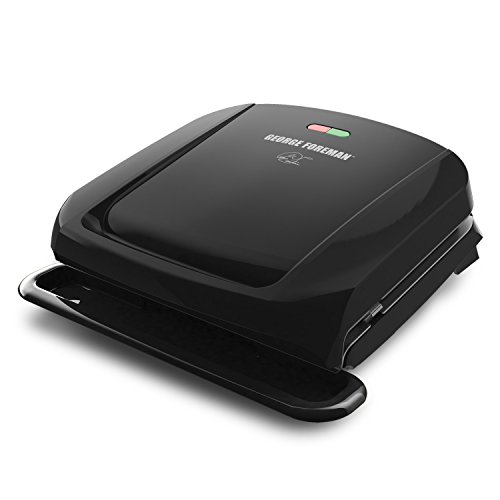
George Foreman 4-Serving Indoor Grill
Badge: Best Overall
Strengths
- The only genuine George Foreman in this pool, and the brand’s sloped, grease-reducing design is what the keyword asks about
- Removable nonstick plates go straight to the sink or dishwasher, the easiest cleanup here
- Compact 4-serving format stores in a small cabinet or locker
Trade-offs
- Electric only: it needs a suitable power supply and cannot grill outdoors over flame
- Four servings is a real ceiling for group cooking
- Sloped plates suit burgers, chops, and sandwiches better than delicate or very thick items
Key specifications (from the verified listing)
- 4-serving indoor grill format
- Removable nonstick plates
- Fast heat-up (from listing title)
- Grease-reducing sloped design (from listing title)
Start with the obvious: this is the one pick that actually is a George Foreman grill. The 4-serving indoor model uses the brand’s signature sloped cooking surface, which channels grease away from the food as it cooks, and removable nonstick plates that lift out for washing instead of forcing you to wipe down a fixed grill at a small sink. Fast heat-up is part of the listing too, and it matters in a compact kitchen where the grill comes out, cooks, and goes away again.
Living with it is simple. Burgers, chicken breasts, chops, panini, and vegetables all suit the format, and the hinged plates cook both sides at once, which shortens cooking time. The limits are equally clear: four servings at a time, electric power required, and no flame flavour or outdoor use. As a compact indoor grill that stores in a locker and cleans in minutes, though, it is precisely the product this keyword is hunting for, and nothing else in the pool can say that.
For this RV and George Foreman brief it is the bullseye: compact, electric, quick to heat, and the plates lift out for washing at a small RV sink.
Best for: travellers with reliable access to mains power who value convenience and easy cleanup, in the context of RV travel with a George Foreman brief. / Not suited for: anyone whose trips or sites rule out its fuel, size, or format, as detailed in the trade-offs above.

YOHAWJAN 2-in-1 Electric Indoor Grill, 1500W
Badge: Best for Tabletop Variety
Strengths
- Electric heat works anywhere there is a suitable outlet, including indoors when weather or fire rules stop outdoor grilling
- Removable non-stick grill and griddle plates make cleanup genuinely easy
- Temperature control is steadier and simpler than managing coals or flame for beginners
Trade-offs
- Needs mains power or a capable inverter/generator setup, so it is not an off-grid grill
- Electric elements cannot match the searing punch of a hot gas burner or charcoal
- Indoor-style format has no lid-driven roasting ability for large items
Key specifications (from the verified listing)
- 1500W electric power
- 2-in-1 grill and griddle plates, non-stick and removable
- 3 raclette cheese pans included
- Temperature control
- Listing describes it as portable and smokeless for indoor use
The YOHAWJAN takes the opposite route to portability: instead of shrinking a fire, it removes the fire entirely. This 1500W electric grill swaps between non-stick grill and griddle plates, adds temperature control, and even includes three raclette pans for melting cheese at the table. Its listing describes it as a portable, smokeless indoor grill, which makes it the one pick here that keeps working when the weather turns, when a site bans open flame, or when cooking moves inside altogether.
The compromises are electrical and thermal. It needs a proper power source, so it suits powered pitches, cabins, and indoor use rather than wild camping. And while the plates get hot enough for burgers, skewers, pancakes, and Korean-style barbecue sliced thin, an electric element will not reproduce the hard sear of charcoal or a big gas burner. Treat it as the weatherproof, rule-proof backup that doubles as a breakfast griddle, and it earns its place in almost any travel kit.
In an RV it plays the versatile understudy: a tabletop electric that adds a griddle and raclette pans when the Foreman’s four servings are not enough.
Best for: travellers with reliable access to mains power who value convenience and easy cleanup, in the context of RV travel with a George Foreman brief. / Not suited for: anyone whose trips or sites rule out its fuel, size, or format, as detailed in the trade-offs above.

IdeaMaxx 3-Burner Propane Gas Grill
Badge: Best Outdoor Gas Option
Strengths
- Three burners bring real heat-zone flexibility that one-burner portables cannot offer
- Cast iron grates hold heat and lay down strong sear marks
- Foldable side shelves shrink the packed footprint and restore prep space on site
Trade-offs
- A 3-burner grill is portable in the vehicle sense, not the carry-it-to-the-picnic-table sense
- Cast iron grates are heavy and need seasoning care
- Assembly and packing take longer than with a tabletop unit
Key specifications (from the verified listing)
- 3 burners, 38,200 BTU total output
- Cast iron cooking grates
- Foldable side shelves
- Listing describes it as portable for outdoor patio and camping use
The IdeaMaxx sits at the ambitious end of portable: a full three-burner propane grill with cast iron grates and foldable side shelves, described in its own listing as portable for patio and camping use. The folding shelves are the key travel feature, trimming the footprint for loading while giving back genuine prep space once you are set up. Three burners at a combined 38,200 BTU mean you can sear on one side and hold vegetables on low at the other, a flexibility no single-burner travel grill can match.
The trade is weight and effort. Cast iron grates are excellent cooking surfaces and poor travel companions: they add kilos, and they want a wipe of oil after use to stay ahead of rust. This grill travels in a truck bed, a large SUV, or a generous storage bay, ideally with two people lifting. In return you get the closest thing to home-grill cooking on the road in this pool. For campers who cook for a group and refuse to downgrade the menu, that exchange is often worth it.
For RV use it is the outdoor step-up, the grill that comes out at spacious pitches when the menu outgrows indoor electrics.
Best for: cooks who want instant, controllable heat with the least daily fuss, in the context of RV travel with a George Foreman brief. / Not suited for: anyone whose trips or sites rule out its fuel, size, or format, as detailed in the trade-offs above.
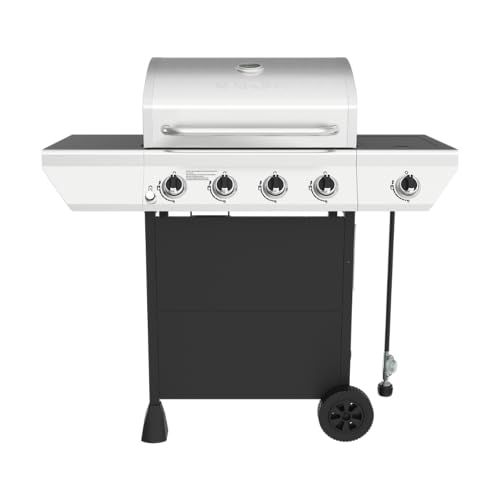
Nexgrill 4-Burner Propane Gas Grill
Badge: Best for Rally Groups
Strengths
- The largest linked cooking capacity here: 526 sq. in. plus a side burner for sauces and sides
- Four burners allow proper multi-zone cooking for a crowd
- Built-in thermometer and electronic ignition make it easy to run consistently
Trade-offs
- Portable only in the wheeled-cart sense; it needs vehicle space and a two-person lift
- More burners and parts mean more assembly and more cleaning
- Oversized for solo travellers and small campsites
Key specifications (from the verified listing)
- 4 burners plus side burner, 52,000 BTU total
- 526 sq. in. cooking space
- Stainless steel lid
- Matte finish cast iron grates
- Built-in thermometer and electronic ignition
- Listing describes the grill as portable
The Nexgrill is the capacity pick, and its listing does describe it as portable, but read that word in the wheeled-cart sense: this is a four-burner grill with a side burner, 526 square inches of cooking space, a stainless steel lid, matte cast iron grates, a built-in thermometer, and electronic ignition. It travels the way a base-camp kitchen travels, in a truck or trailer with room to spare, and then it cooks like a home grill when it arrives.
For group cooking that distinction hardly matters. Four burners give you a sear zone, a gentle zone, and space to hold finished food warm, while the side burner handles beans, sauces, or a kettle without stealing grate space. The honest cost is logistics: assembly is a real job, cleaning four burners and cast iron grates takes time, and nobody is carrying this to a picnic table. Choose it when the destination matters more than the journey and the guest list is long.
For RV groups and rallies it is the outdoor kitchen, carried by larger rigs that have the bay space to spare.
Best for: cooks who want instant, controllable heat with the least daily fuss, in the context of RV travel with a George Foreman brief. / Not suited for: anyone whose trips or sites rule out its fuel, size, or format, as detailed in the trade-offs above.
Monument Grills 4-Burner Propane Gas Grill (Mesa II)
Badge: Best Patio Power (Prose-Only)
Strengths
- Advanced Broil Zone gives it the strongest dedicated searing feature among the full-size picks
- Stainless steel body and foldable shelves suit a semi-permanent patio or base-camp role
- Fast stated heat-up gets a big grill cooking quickly
Trade-offs
- A full-size 4-burner cart grill: it is not a true portable, whatever the trip
- Broil-zone performance is wasted if most cooking is gentle or small-batch
- Stainless needs regular wiping to keep its appearance in outdoor storage
Key specifications (from the verified listing)
- 4 burners with Advanced Broil Zone
- Stainless steel construction
- Foldable side shelves
- Listing notes fast heat: 500°F in 5 minutes
- Mesa II 410FBZ model
The Monument Mesa II is a serious backyard grill that keeps appearing in portable searches because its side shelves fold. Folding shelves help storage, but they do not make a stainless four-burner cart grill with an Advanced Broil Zone into a travel grill, so we review it here as a prose-only comparison point with no link and no image. What it genuinely offers is power and searing: the broil zone is built for steakhouse-style crusts, and the listing’s fast heat claim underlines that this is a performance patio machine.
As a comparison point it is still useful, because it defines the top of the size and power range in this pool. If your honest plan is to grill mostly in one place, with occasional moves between patio and garage, its capacity and sear zone are attractive. If the plan involves regular loading into a vehicle, campsite tables, or storage bays, its weight and footprint will punish you every single trip. We include it so the contrast is explicit rather than discovered after purchase.
For RV travel it stays a comparison point only: superb searing at a parked, patio-style site, impractical for touring.
Best for: cooks who want instant, controllable heat with the least daily fuss, in the context of RV travel with a George Foreman brief. / Not suited for: anyone whose trips or sites rule out its fuel, size, or format, as detailed in the trade-offs above.

Cuisinart 14-Inch Portable Charcoal Grill
Badge: Best Charcoal Flavour
Strengths
- Three lid locks and one-handed carrying make it one of the few grills here that is portable by design, not by marketing
- Dual air vents give real temperature control for a grill this small
- 196 sq. in. is an honest, usable surface for two to four people
Trade-offs
- Charcoal means lighting time, ash disposal, and compliance with campground fire rules
- No side tables or prep space of any kind
- Chrome-plated grate needs oiling and care to stay rust-free
Key specifications (from the verified listing)
- 14-inch portable charcoal grill (CCG-190RB)
- 196 sq. in. cooking surface
- Dual air vent system
- 3 lid locks for one-handed carrying
- Chrome-plated cooking grate
The Cuisinart is the charcoal purist’s travel answer: a 14-inch kettle-style bowl with a chrome-plated grate, dual vents for airflow control, and three lid locks that clamp everything shut so it can be carried one-handed without shedding ash through a car or storage bay. That locking lid is the detail that separates a portable grill from a small grill, and it is verified right in the listing.
Cooking on it is classic small-kettle work. The dual vents let you run it hot for burgers and steaks or choke it down for sausages and vegetables that need gentler heat. The 196 square inches hold a sensible meal for two to four people, cooked in one or two batches. The honest limitations are charcoal’s own: you wait for coals, you manage ash, and some sites restrict charcoal during dry periods. If smoky flavour matters more to you than push-button convenience, this is the most convincing true portable in the pool.
For RV campers who miss real fire, it is the compact charcoal escape hatch for sites that allow it.
Best for: campers and travellers who put smoke flavour first and can give charcoal its time, in the context of RV travel with a George Foreman brief. / Not suited for: anyone whose trips or sites rule out its fuel, size, or format, as detailed in the trade-offs above.

Comparison Table
The whole pool at a glance. Notice how the table itself tells the portability story: the linked picks are the ones whose formats belong to compact RV living.
| Pick | Fuel | Headline specification | Badge | Listing |
|---|---|---|---|---|
| George Foreman 4-Serving Indoor Grill | Electric | 4-serving indoor grill format | Best Overall | Check on Amazon |
| YOHAWJAN 2-in-1 Electric Indoor Grill, 1500W | Electric | 1500W electric power | Best for Tabletop Variety | Check on Amazon |
| IdeaMaxx 3-Burner Propane Gas Grill | Propane | 3 burners, 38,200 BTU total output | Best Outdoor Gas Option | Check on Amazon |
| Nexgrill 4-Burner Propane Gas Grill | Propane | 4 burners plus side burner, 52,000 BTU total | Best for Rally Groups | Check on Amazon |
| Monument Grills 4-Burner Propane Gas Grill (Mesa II) | Propane | 4 burners with Advanced Broil Zone | Best Patio Power (Prose-Only) | Prose-only |
| Cuisinart 14-Inch Portable Charcoal Grill | Charcoal | 14-inch portable charcoal grill (CCG-190RB) | Best Charcoal Flavour | Check on Amazon |
How to Choose the Right Grill for RV travel with a George Foreman brief
Work through these five decisions in order and the right grill usually names itself. Readers who want the wider market view will also find Best Portable Grills For Rv and Best Portable Grills For Rv Camping useful companions to this section.
Top pick
1. Start with packed size, not cooking size
Measure the space the grill must live in, a storage bay, a car boot, a trailer pass-through, a balcony cupboard, and write the dimensions down before shopping. Then compare packed grills, not cooking surfaces. In compact RV living, the grill that fits gets used and the grill that almost fits gets sold. Cooking area matters second, and batching covers most of the difference.
2. Choose fuel by destination rules
List where you will actually cook and what each place allows. Charcoal is the most restricted fuel and the most flavourful. Propane is accepted almost everywhere raised grilling is allowed and lights instantly. Electric ignores flame rules and depends entirely on power access. The correct fuel is the one your five most common destinations all permit, not the one your single favourite destination prefers.
3. Size capacity to your usual group
Count the people you feed on an ordinary trip, not the annual gathering. Roughly, a burger needs about twenty-five square inches of grate, so a 196-square-inch kettle cooks a sensible round for four, and bigger groups simply mean a second round. Buying for the usual group keeps the grill light, cheap to run, and easy to pack; buying for the exception makes every ordinary trip carry the exception’s weight.
4. Audit the travel details
Lid locks, contained grease, removable plates or grates, folding shelves, and few loose parts decide whether a grill travels happily. Check each candidate for them explicitly, the way the detailed reviews above do. A grill missing two or more will annoy you in proportion to how often you move, which in compact RV living can be very often indeed.
5. Judge tiers qualitatively
Without printing prices that would date instantly, tiers in this market divide by materials and mechanism: basic steel and simple burners at the lower-cost end, cast iron grates, stainless bodies, extra burners, and dedicated sear features as you move up. Pay for the tier whose features you will use weekly. Sear zones and side burners are wonderful when used and pure weight when they are not, a trade this guide’s prose-only picks illustrate perfectly. When you are ready, check the latest price on Amazon for your shortlist rather than trusting any figure printed anywhere, including in older guides.
How to Grill with a Contact Grill in an RV, Step by Step
Contact grills reward a slightly different technique from open-flame grilling. This routine gets the best from the Foreman-style format in a small RV kitchen.
- Ventilate first: open a roof vent or window and run the extractor if your rig has one, before the grill heats, not after the interior fills with cooking vapour.
- Preheat with the lid closed until the grill signals ready. Contact grills cook from both sides, so a proper preheat is what gives you browning instead of steaming.
- Pat food dry and season it before it goes on. Surface moisture is the enemy of browning on any grill, and doubly so on nonstick plates.
- Cook in a single layer without pressing or sliding items around. The sloped plates drain grease as designed; rearranging food just spreads it.
- Rest cooked items on a warm plate while the next batch cooks. Four-serving capacity means batching for groups, and rested first batches taste better than rushed everything.
- Unplug, let the plates cool to warm, then remove and wash them straight away. Grease washed warm takes a minute; grease washed tomorrow takes a soak.
Troubleshooting: three problems travellers actually meet
Problem: food steams instead of browning → the plates were not fully preheated or the food went on wet; preheat longer with the lid shut and dry the surface of meat and vegetables with a towel before cooking.
Problem: the drip tray overflows or grease escapes the slope → the grill is not level; RV floors and tables slope more than you think, so level the appliance or rotate it so the slope drains toward the tray as designed.
Problem: nonstick plates are getting harder to clean → cooked-on residue is building up; wash plates after every use while warm, avoid metal tools and abrasive pads, and give them a longer soak rather than a harder scrub.
6. Plan for cleanup before you buy
Cleanup is the hidden specification. Removable plates that wash at a sink, grates that scrape clean while hot, drip trays that empty without gymnastics, and surfaces that tolerate a wipe rather than a ritual all decide whether a grill gets used on a tired evening. In compact RV living, where sinks are small and time is holiday time, rank cleanup alongside cooking power. The detailed reviews above score it for every pick, and the prose-only barrel smokers show the far end of the scale: wonderful cooking, and a pack-down that must be planned like an event.
Care, Storage, and Making a Portable Grill Last
A portable grill lives a harder life than a patio grill: vibration, damp storage, temperature swings, and long stretches of neglect between trips. The care routine that protects it is short. Clean it hot after cooking, while residue still releases easily. Let it cool and dry fully before it is closed up, because a grill stored damp is a grill rusting quietly in the dark. Then store it in the same position, on its mat, with its kit, so every trip starts from a known state.
Fuel-specific care matters too. Charcoal grills need ash removed once it is stone cold, vents left clear, and grates lightly oiled if they are chrome or cast iron, because ash holds moisture against metal. Gas grills need their grease path checked, burner ports kept clear, and connections inspected whenever hoses are made and broken, which in compact RV living is constantly. Electric grills need their plates washed and dried, cords inspected, and storage kept dry, since their enemy is not rust on a grate but moisture in a connection.
Once a season, give the grill the ten-minute inspection travel never allows: tighten what vibration has loosened, check lid locks and hinges, look for rust starting at scratches and edges, and replace anything whose failure would ruin a meal rather than merely annoy. Portable grills rarely die dramatically; they fade through small neglects. The owners who are still grilling happily in year five are not the ones who bought the most expensive grill, but the ones whose five-minute habits never slipped.
Storage position deserves one more thought, because it decides whether the grill is used at all. A grill buried under luggage is a grill that stays home in practice even when it travels. Last-in, first-out is the rule: the grill and its kit load last and unload first, at the spot where cooking will happen. Pair that with a single kit container, tongs, brush, foil, fuel spares, and a thermometer if you use one, and setup becomes a two-minute unpack rather than a search through every bag you own. Small systems like this, not headline specifications, are what separate the grills people love from the grills people list for sale.
Why the George Foreman Design Suits RV Kitchens So Well
The George Foreman concept was almost designed for RV life before RV life asked. The sloped cooking surface drains grease into a tray instead of letting it pool and smoke, which matters in a small interior where every cooking smell lingers. The hinged floating plates cook both sides of a burger or chop at once, cutting cooking time and the energy drawn from your hookup. And the whole appliance is built to be wiped, unplugged, and put away in a cabinet, which is precisely the duty cycle of an RV galley.
Removable plates are the feature that separates this model from cheaper contact grills. At home, scrubbing a fixed grill is annoying; at an RV sink the size of a washing-up bowl, it is a genuine obstacle that quietly stops people grilling. Plates that lift out and wash like a frying pan remove that obstacle. If you take one lesson from this section, it is that in small-space cooking, cleanup design matters as much as cooking design.
The limits deserve equal honesty. Four servings is four servings: a rally crowd will outgrow it in one evening. It is electric, so off-grid it depends on your power system. And the sloped plates that drain a burger so well are less kind to delicate fish or anything that wants to sit in its juices. That is why this guide pairs it with outdoor options instead of crowning it for every job.
Indoor Electric vs Outdoor Gas in an RV: Dividing the Work
Most experienced RVers stop asking which single grill is best and start dividing the work. Indoor electrics, the Foreman and the YOHAWJAN, own breakfast, bad weather, late arrivals, and every site with a flame ban. They are quiet, quick, and legal almost everywhere, and they keep cooking smells and grease manageable when the awning is down and the windows are shut.
Outdoor gas owns the classic grill night: steaks with real sear, a row of burgers for neighbours, vegetables over direct flame. The IdeaMaxx brings three-burner flexibility in a foldable-shelf format; the Nexgrill brings rally-scale capacity for rigs that can carry it. Charcoal, via the little Cuisinart kettle, owns the occasional flavour night at sites that allow it, when nobody is in a hurry and the ash can cool overnight.
Dividing the work also divides the storage problem. The electrics live in a galley cabinet. One outdoor grill lives in the bay. Trying to carry a grill for every scenario is how storage bays fill with regret, so choose the outdoor half based on your real pattern: three burners for flexible family cooking, four plus a side burner only if group cooking is genuinely your thing.
Related angles worth your time while you decide: Best Prices On George Foreman Grills and Best Portable Barbecue Grills apply the same verified-pool approach to neighbouring questions in this cluster.
Common Buying Mistakes
Believing the word portable on the box
Wheels, handles, and folding shelves are not portability. In compact RV living the test is lifting, locking, packing, and cleaning, and this guide’s prose-only picks show how respectable grills fail it.
Buying for the biggest group you can imagine
The annual crowd is one meal; your usual group is fifty. Oversized grills punish every ordinary trip with weight, space, and cleanup, and batching handles crowds better than bulk does.
Ignoring destination fuel rules
Charcoal bans, flame restrictions, and power limits are facts of travel life. A grill that is illegal or unusable at your common destinations is not a bargain at any tier.
Skipping the packed measurement
Cooking area is advertised; packed size is discovered. Measure your bay, boot, or cupboard first and let geometry eliminate candidates before desire gets a vote.
Packing the grill away dirty
One dirty pack-down perfumes a vehicle or storage bay for days and starts corrosion on grates. Clean hot, cool fully, contain ash and grease: the five-minute habit that protects everything else you carry.
Chasing printed prices and ratings
Both change constantly, which is why this guide prints neither. Judge specifications, materials, and fit for your trips, then check the current listing for the figure that is true today.
Final Recommendation
Start where this guide starts: the George Foreman 4-Serving Indoor Grill, badged Best Overall, is the first pick to consider for RV travel with a George Foreman brief, because it matches the brief’s core demands with the fewest compromises. You can Check on Amazon to confirm the current listing before deciding.
Choose the YOHAWJAN 2-in-1 Electric Indoor Grill, 1500W (Best for Tabletop Variety) instead if its particular strength, electric heat works anywhere there is a suitable outlet, including indoors when weather or fire rules stop outdoor grilling, matches your trips better. Check on Amazon for its current listing details.
Choose the IdeaMaxx 3-Burner Propane Gas Grill (Best Outdoor Gas Option) instead if its particular strength, three burners bring real heat-zone flexibility that one-burner portables cannot offer, matches your trips better. Check on Amazon for its current listing details.
Choose the Nexgrill 4-Burner Propane Gas Grill (Best for Rally Groups) instead if its particular strength, the largest linked cooking capacity here: 526 sq. in. plus a side burner for sauces and sides, matches your trips better.
Choose the Cuisinart 14-Inch Portable Charcoal Grill (Best Charcoal Flavour) instead if its particular strength, three lid locks and one-handed carrying make it one of the few grills here that is portable by design, not by marketing, matches your trips better.
And keep the prose-only picks, Monument Grills 4-Burner Propane Gas Grill (Mesa II), in perspective: good grills, wrong brief. If your life changes toward fixed sites and big gatherings, revisit them then. For compact RV living as it is actually lived, the linked picks above are the honest shortlist, and the best of them is the one whose fuel, size, and cleanup fit the trips already in your calendar.
Frequently Asked Questions
Is the George Foreman grill in this guide a genuine George Foreman?
Yes. The first pick, ASIN B00KDVJLJW, is the George Foreman 4-Serving Indoor Grill with removable plates, verified in the pool with the brand’s grease-reducing sloped design in its listing. That matters because the keyword names the brand: several other picks are fine grills, but only this one is the product the search describes, which is why it leads the guide and carries the Best Overall badge.
Can I run a George Foreman grill on RV power?
On a hookup pitch, easily: it is a standard indoor appliance load. Off-grid, it depends on your inverter and battery capacity, and a contact grill draws real power for the minutes it runs. Many RVers use electrics like this on hookup nights and switch to propane outdoors when boondocking. Check your own system’s ratings and treat the grill like any other appliance in your energy budget rather than assuming it is free.
What can the YOHAWJAN do that the Foreman cannot?
Capacity for variety, mainly. The YOHAWJAN swaps between grill and griddle plates, so pancakes, eggs, and flatbreads join the menu, and its three raclette pans turn dinner into a tabletop event. It is also a step up when four servings are not enough. What it does not have is the Foreman’s sloped grease-draining plate design or the brand’s two-sided contact cooking, so the two electrics complement rather than replace each other.
Why include propane grills in a George Foreman guide?
Because the keyword is about RV grilling, and no indoor electric covers the outdoor half of RV life. The IdeaMaxx and Nexgrill handle steaks, crowds, and flame cooking at the pitch, and the Cuisinart kettle covers charcoal. A guide that only answered the brand half of the question would leave RVers without the outdoor options most of them also need. The Foreman still leads, because it is the keyword’s core; the others are supporting cast, clearly badged as such.
How many people does the 4-serving Foreman really feed?
Four servings means roughly four burgers, chops, or sandwiches per batch, which feeds two hungry adults generously or a small family in one batch, and larger groups in two quick batches. Contact grills cook fast because both sides cook at once, so batching is less painful than it sounds. If your normal pattern is six or more people at once, plan on the outdoor propane picks doing the heavy lifting and the Foreman handling sides and overflow.
How do I store an indoor grill in an RV without damage?
Cool it fully, wash and dry the removable plates, and store it flat in a cabinet or locker where it cannot slide during travel. Many RVers keep the plates wrapped in a cloth to protect the nonstick surface from rattling damage, and store the drip tray with the grill so the set stays together. Avoid stacking heavy items on top; the hinge and plates are sturdy but not designed as a shelf base.
Still comparing? The neighbouring guides on Best Portable Barbecue Grills Target and Best Portable Bbq Grills extend this cluster with the same verified picks and the same no-printed-prices rule.


