Disclosure: topratedkitchenware.com is reader-supported. When you buy through links on our site, we may earn an affiliate commission from Amazon and other retailers, at no extra cost to you.
Where to buy
Each grill in this guide to the best propane grills that don t flare up was verified against Amazon’s catalog data and is sold on Amazon, so you can check the exact configuration — burner count, grate material, cooking area — on the listing before you buy. Flare-up behavior depends on details like those, so verify them rather than trusting a headline. Start with the six picks, then read the full guide ↓ for the design and technique factors that actually keep flames under food instead of around it.
- Charbroil Classic 3-Burner Propane Gas Grill, 30,000 BTU, 360 Sq. In. Cooking Area
- Electactic Stainless Steel 4-Burner Gas Grill with Side Burner, 42,000 BTU
- Nexgrill Propane 4-Burner Gas Grill with Side Burner, 60,000 BTU, 626 Sq. In.
- IdeaMaxx 3-Burner Propane Gas Grill with Cast Iron Grates, 38,200 BTU
- Weber Spirit E-425 Gas Grill, 4 Burners, Sear Zone with Boost Burners
- Nexgrill Propane 4-Burner Gas Grill with Side Burner, 52,000 BTU, 526 Sq. In.
Anyone searching for the best propane grills that don t flare up has usually lived the alternative: a tray of burgers doing fine until, in the space of ten seconds, the grill is a wall of flame, the edges are scorched, and dinner tastes like a campfire’s apology. Flare-ups are not random, and they are not entirely the grill’s fault either. They happen when fat renders, drips past the grates, and ignites on a hot surface below — which means they are governed by three things you can control: how much fat reaches the burners (grill design and grease management), how much heat is sitting under fatty food (zone control), and how you cook (trimming, placement, and patience). No honest guide can promise a grill that never flares; fat plus fire is physics. What a good grill does is give you the tools to keep flare-ups rare, small, and boring: burners shielded from direct drips, a grease path that actually drains, enough zones to move food out of trouble, and grates that hold food steady instead of letting it slump and squeeze out fat. The six verified grills below were chosen with those tools in mind, from a manageable three-burner for everyday cooks to a 626-square-inch cabinet grill that lets a host spread a fatty cook out instead of crowding it. If your wider research is taking you through Best Outdoor Bbq Grills Propane or Best Outdoor Propane Gas Grills, bring the same checklist with you — it matters more than any single specification.
Key Takeaways
- Flare-ups are ignited dripping fat; the fix is a system — drip shielding, grease drainage, zone control, and technique — not a single magic feature.
- Multiple burners are flare-up insurance: a cooler zone is a safe harbor you can move food to in two seconds.
- The Weber Spirit E-425 leads this group for control, with four burners and a dedicated sear zone that keeps high heat in one place instead of everywhere.
- A clean grease tray and clean burner covers prevent more flare-ups than any purchase; neglected grease is stored fuel.
- Cast iron grates (IdeaMaxx) help by holding food flat and steady; porcelain-coated grates (Charbroil Classic) help by being easy to keep clean.
- Technique closes the deal: trim hard fat, avoid pressing burgers, and never spray water on a grease flare.
In this guide
Quick Picks
| Pick | Badge | Best for | Link |
|---|---|---|---|
| Charbroil Classic 3-Burner | Best for Controlled Everyday Cooking | Families who want simple zones and easy-clean grates | Check on Amazon |
| Electactic 4-Burner with Side Burner | Best for Lid-Down Cooks | Cooks who roast and bake on the grill with the lid closed | Check on Amazon |
| Nexgrill 4-Burner, 626 Sq. In. | Best for Crowds Without the Chaos | Hosts who need room to spread fatty foods out | Check on Amazon |
| IdeaMaxx 3-Burner with Cast Iron Grates | Best Cast-Iron Control | Sear cooks on smaller patios who keep grates seasoned | Check on Amazon |
| Weber Spirit E-425 | Best Overall for Flare-Up Control | Buyers who want the strongest zone discipline in the group | Check on Amazon |
| Nexgrill 4-Burner, 526 Sq. In. | Best Mid-Size All-Rounder | Households between family dinners and small parties | Check on Amazon |
How These Picks Were Chosen
This is a research-led guide: we verified every grill against Amazon’s Creators API catalog data, so each model, brand, and specification here refers to a real current listing, and we assessed flare-up resistance from the factors that actually govern it. Those factors, in order of importance, are: burner and zone count, because moving food is the fastest flare-up response; cooking area, because crowding fatty food concentrates drips and heat; grate material, because it affects both food stability and how easily the cooking surface is kept clean; and the general grease-management design of mainstream propane grills — shielded burners and a draining grease path — which all six of these models follow as conventional cart and cabinet grills. We are honest about the limit of that method: no specification sheet can certify a grill flare-proof, and we do not claim hands-on testing we did not do. Flare-up behavior emerges from the grill plus the cook, which is why this guide pairs every pick with the technique sections that follow. A buyer who reads only the product reviews and skips the how-to layer will get half the benefit. We also deliberately spanned the size range — three-burner compacts through a 626-square-inch host’s grill — because the right anti-flare strategy differs by household: a couple cooking two steaks needs zone discipline in a small box; a host cooking thirty burgers needs physical room to spread out and a cool corner to retreat to. Where the verified listing does not state a specification, we leave it out rather than invent one.
The 6 Best Propane Grills That Don t Flare Up (When You Cook Smart)

Charbroil Classic 3-Burner Propane Gas Grill
Badge: Best for Controlled Everyday Cooking
Strengths
- Three burners create a genuine cool zone — the single most useful flare-up escape — in a compact grill.
- Porcelain-coated grates are easy to keep clean, and a clean cooking surface is a calmer cooking surface.
- 360 square inches suits family portions without the crowding that concentrates drips.
Trade-offs
- Coated grates sear more gently than cast iron, so the temptation to press food down — a flare-up cause — must be resisted by habit.
- No side burner; fatty mains and sides share the same grate space.
- At party volumes you will cook in batches, and batch transitions are when drips accumulate.
Mini spec box
- Burners: 3
- Output: 30,000 BTU
- Cooking area: 360 sq. in.
- Grates: porcelain-coated
- Shelves: side shelves
The Classic earns its place in a flare-up guide through manageability. Three burners across 360 square inches is the smallest format here that still gives you a true two-zone fire: two burners working, one side low or off. That cool side is where flare-up management actually happens — when chicken thighs start rendering hard, you slide them over, close the lid, and let the flare die on an empty stretch of grate instead of under your dinner. The porcelain-coated grates contribute in a quieter way: they clean up easily, and because carbonized buildup is itself flammable debris, a grill that is easy to keep clean is a grill that flares less over a season, not just on day one. The 30,000 BTU output is moderate, which suits this brief; a compact grill does not need scorching peak heat, it needs controllable heat, and moderate burners are easier to keep in the zone where food browns without dripping fat onto an inferno. The honest limitation is throughput: when you cook for a crowd in batches, grease accumulates between rounds, so build a thirty-second tray-and-grate check into your batch rhythm. For a family whose flare-up history is mostly weeknight chicken and burgers, this is the calm, sufficient answer — and the easiest of these six to keep calm, because nothing about it is fiddly.
Best for: families wanting simple zone control and easy cleanup / Not suited for: high-volume hosts or committed cast-iron sear cooks

Electactic Stainless Steel 4-Burner Gas Grill with Side Burner
Badge: Best for Lid-Down Cooks
Strengths
- Four burners give finer zone gradations — sear, roast, hold, and off — across one cook.
- Lid-down cooking, which this grill’s size encourages, starves flare-ups of the oxygen bursts that open-lid fanning creates.
- The side burner moves sauces and sides off the grate, reducing the crowding that causes drip pile-ups.
Trade-offs
- The listing does not state total cooking area, so confirm dimensions if spreading food out is your main strategy.
- A newer brand means a thinner long-term record for parts like burners and igniters.
- Four burners invite using all four; flare discipline means deliberately leaving one zone cool.
Mini spec box
- Burners: 4 main plus side burner
- Output: 42,000 BTU
- Body: stainless steel
- Extras: built-in thermometer
The Electactic’s anti-flare case is about cooking style. The cooks who suffer least from flare-ups are lid-down cooks: they roast, bake, and finish with the lid closed, opening it briefly to move food rather than standing over an open fire poking at it. A four-burner grill with a lid thermometer is built for exactly that rhythm — you set zones, close the lid, and monitor, instead of chasing flames. Four burners also give you a gradient rather than a binary: a hot zone for searing, a medium zone for cooking through, a low zone for holding, and a genuinely off zone as the emergency lane. Fatty food spends most of its time in the middle zones, rendering gently, and visits the hot zone briefly at the start or end. The side burner helps more than it might appear: every saucepan of sauce or skillet of onions that lives on the side burner is one less item crowding the grate and one less reason to lift the lid. Our cautions are the standing ones for this brand — a newer name with a developing parts record — plus a discipline note: the grill gives you zones, but you have to use them. Light all four burners on high under a load of burgers and this grill will flare like any other; the hardware provides the option of calm, and the cook provides the calm.
Best for: lid-down roasters and full-meal outdoor cooks / Not suited for: open-lid, high-heat-everywhere cooking styles

Nexgrill Propane 4-Burner Gas Grill with Side Burner, 626 Sq. In.
Badge: Best for Crowds Without the Chaos
Strengths
- 626 square inches lets you spread fatty food with air between pieces — the physical opposite of a flare-up.
- Four burners plus generous area mean a permanent cool corner exists even during a full party cook.
- 60,000 BTU across the set recovers heat quickly after lid lifts, shortening the open-lid time that feeds flames.
Trade-offs
- Size cuts both ways: a big grease system needs the same cleaning discipline, just at larger scale.
- For small weeknight cooks you will heat a lot of empty grate unless you zone deliberately.
- The cabinet format is a substantial assembly project before the first calm cook happens.
Mini spec box
- Burners: 4 main plus side burner
- Output: 60,000 BTU
- Cooking area: 626 sq. in.
- Body: stainless steel with double-door cabinet
- Ignition: electronic; built-in thermometer
Crowd cooking is where flare-ups turn from nuisance to show-stopper, because the classic trigger — a full grate of fatty burgers rendering at once, edge to edge, with nowhere to move anything — is exactly what a party cook looks like on a small grill. The big Nexgrill attacks that trigger with space. On 626 square inches, thirty burgers do not have to touch; chicken can render over a moderate zone while burgers sear in shifts; and there is always an empty, cooler stretch of grate to receive anything that starts to flame. Space also changes your margins: a flare under one corner of a spread-out cook is a local event you manage with tongs, not a general emergency. The supporting numbers fit the role — 60,000 BTU across the burner set for fast recovery, electronic ignition, a thermometer, and a side burner to keep the sauce pot out of the traffic. The discipline this grill demands is maintenance at scale: more grate to brush, a grease path that serves a bigger firebox, and a cover habit that protects a larger investment. Hosts comparing across the category, including the Best Outdoor Propane Grills Atwoods listings, will find this is the size class where crowd flare-ups stop being inevitable. If your flare-up stories all start with “we had everyone over,” this is your pick.
Best for: regular hosts cooking fatty crowd food in a single layer / Not suited for: small households that rarely fill half the grate

IdeaMaxx 3-Burner Propane Gas Grill with Cast Iron Grates
Badge: Best Cast-Iron Control
Strengths
- Heavy cast iron grates hold food flat and steady, so pieces cook in place instead of slumping and squeezing out fat.
- 38,200 BTU across three burners reaches searing heat fast, shortening the time fatty food spends rendering over high heat.
- Foldable shelves keep the footprint small, and small grills get cleaned more faithfully — a real anti-flare factor.
Trade-offs
- Cast iron demands seasoning and dry storage; neglected grates rust, and rusted grates cook unevenly.
- Three burners mean your cool zone is a third of the grate — plan placement before the food goes on.
- A newer brand with a developing long-term track record.
Mini spec box
- Burners: 3
- Output: 38,200 BTU
- Grates: cast iron
- Shelves: foldable side shelves
- Finish: black
Cast iron’s contribution to flare control is underrated because it works through food behavior rather than fire behavior. A heavy, flat, hot cast iron grate keeps a burger patty or a chicken thigh in full contact and perfectly still; the crust forms quickly, the piece firms up, and it stops weeping fat early. On thin or widely-spaced grates, food slumps between bars, flexes when you move it, and keeps squeezing rendered fat down onto the burners for the whole cook. The IdeaMaxx pairs those grates with strong output for the class — 38,200 BTU over three burners — so the sear happens fast and the food graduates quickly to the cooler third of the grate to finish. That hot-fast-then-gentle pattern is the professional answer to flare-ups: minimize the time fatty food spends over maximum heat. The maintenance bargain is the same one cast iron always offers: season the grates, brush them warm, keep them dry, and they will serve for years; neglect them and rust will make the surface grabby and the cooking uneven. For the flare-up brief specifically, there is one more habit to adopt with this grill: because the cool zone is only a third of the cooking surface, stage your cook — sear in small batches and hold finished pieces in the cool zone — rather than loading the whole grate at once. Cooks who work that way will find this the most controlled small grill in the group.
Best for: steak-and-burger cooks on small patios who stage their cooks / Not suited for: owners who will not maintain cast iron

Weber Spirit E-425 Gas Grill
Badge: Best Overall for Flare-Up Control
Strengths
- Four burners with a dedicated Sear Zone and Boost Burners concentrate maximum heat in one defined area — and keep the rest of the grate calmer.
- Porcelain-enameled cast-iron grates combine cast iron’s food stability with an enamel surface that is easier to keep clean.
- Weber’s long parts and support record matters for the wear items — burners, igniters, grates — that decide a grill’s fifth year.
Trade-offs
- It is the premium-positioned pick in this group; buyers pay for refinement, not raw area.
- The sear zone’s extra heat is a tool that must be used deliberately — parking fatty food over boosted burners invites the very flares you bought control to avoid.
- Weber Works rails and the accessory ecosystem are appealing extras, but they are optional spending beyond the grill itself.
Mini spec box
- Burners: 4, with Sear Zone and Boost Burners
- Grates: porcelain-enameled cast iron
- Extras: Weber Works rails
- Finish: black
The Spirit E-425 leads this guide because its design philosophy matches the flare-up problem: segregation. Most flare disasters happen when maximum heat and maximum fat occupy the same square inches for too long. The E-425’s layout pushes against that — a defined sear zone with boost burners does the violent work in one neighborhood of the grate, while the remaining burners run the gentler zones where fatty food can render without drama. You sear in the hot zone briefly, finish in the calm zone slowly, and the two never blur. The porcelain-enameled cast-iron grates are the other half of the story: cast iron’s weight and stability under food, with an enameled surface that resists the buildup cycle better than bare metal and brushes clean without a seasoning ritual. Clean grates, calm zones, controlled heat — that is the entire anti-flare program in one product. Add Weber’s support depth for the parts that eventually wear, and this is the grill for the buyer who has decided to solve flare-ups properly rather than cope with them. The premium positioning is the honest cost: you are paying for design discipline and longevity rather than square inches, and the Nexgrill above will always win a pure area comparison. But for the specific job named in this guide’s title, control beats capacity — and no grill here controls more.
Best for: buyers who want the most disciplined heat management in the group / Not suited for: shoppers maximizing cooking area above all else
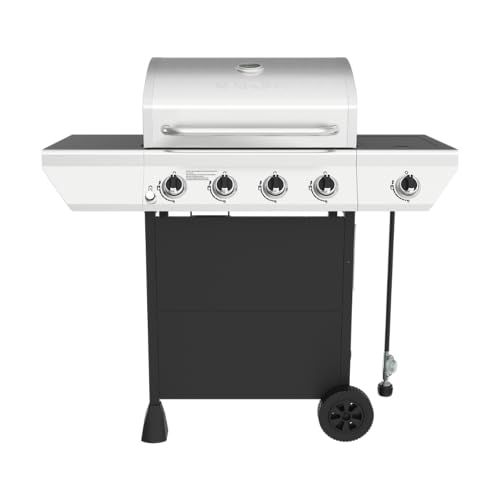
Nexgrill Propane 4-Burner Gas Grill with Side Burner, 526 Sq. In.
Badge: Best Mid-Size All-Rounder
Strengths
- 526 square inches is the middle path: room to spread food out and keep a cool zone, without the big cabinet grill’s footprint.
- Matte-finish cast iron grates give food the stability that helps it sear and settle instead of slumping and dripping.
- 52,000 BTU, electronic ignition, a lid thermometer, and a side burner complete a well-rounded control package.
Trade-offs
- Cast iron grate care applies here too — keep them dry and lightly oiled.
- Hosts at the Nexgrill 626’s party scale will still find this the smaller stage.
- As a four-burner, it asks the same zone discipline as the others: an unused cool burner is a choice you must make on purpose.
Mini spec box
- Burners: 4 main plus side burner
- Output: 52,000 BTU
- Cooking area: 526 sq. in.
- Grates: matte-finish cast iron
- Lid: stainless steel; built-in thermometer; electronic ignition
The second Nexgrill in this guide is the compromise candidate, in the complimentary sense: it keeps most of what makes the 626 calm under crowd conditions — four burners, real area, cast iron under the food — in a 526-square-inch format that suits households between family dinners and small gatherings. The matte-finish cast iron grates deserve the same comment as the IdeaMaxx’s: food sits still, crusts form early, dripping declines. Four burners across this area give you a workable map — a hot pair for searing, one burner low for finishing, one off as the refuge — and 52,000 BTU means the map holds its temperatures when the lid opens for a full load of food. The side burner again earns its keep by keeping saucepans out of the grate traffic. Where does it lose to its bigger sibling? Only in ceiling: the day you cook for fifteen, you will batch, and batching is when grease management needs your scheduled attention. Where does it lose to the Weber? In design specialization — the E-425’s sear-zone segregation is a more deliberate anti-flare architecture. But as an all-round answer for a household whose flare-up problem is ordinary family cooking at slightly larger scale, this Nexgrill is balanced, capable, and easy to recommend. Readers scanning Best Outdoor Grills Propane for alternatives in this size class will find few with a more complete control package.
Best for: households between family scale and party scale / Not suited for: the largest gatherings or buyers wanting a dedicated sear zone
Comparison Table
| Pick | Burners | Output | Cooking area | Badge | Link |
|---|---|---|---|---|---|
| Charbroil Classic 3-Burner | 3 | 30,000 BTU | 360 sq. in. | Best for Controlled Everyday Cooking | Check on Amazon |
| Electactic 4-Burner | 4 + side burner | 42,000 BTU | See listing | Best for Lid-Down Cooks | Check on Amazon |
| Nexgrill 4-Burner 626 | 4 + side burner | 60,000 BTU | 626 sq. in. | Best for Crowds Without the Chaos | Check on Amazon |
| IdeaMaxx 3-Burner | 3 | 38,200 BTU | See listing | Best Cast-Iron Control | Check on Amazon |
| Weber Spirit E-425 | 4 + sear zone | See listing | See listing | Best Overall for Flare-Up Control | Check on Amazon |
| Nexgrill 4-Burner 526 | 4 + side burner | 52,000 BTU | 526 sq. in. | Best Mid-Size All-Rounder | Check on Amazon |
For this keyword, read the table by control variables: burner count is your zone count, cooking area is your spreading room, and grate material is your food-stability and cleaning profile. The Weber wins on architecture, the Nexgrill 626 on space, the IdeaMaxx on grate behavior in a small box — three different theories of calm, all legitimate.
How to Choose a Propane Grill That Keeps Flames Down
Shop for flare control in this order. First, zones: count burners, because each burner is an independently controllable strip of fire, and your anti-flare strategy is mostly the ability to make one strip cool while others work. Two burners is the workable minimum; three is comfortable; four is luxurious. Second, area relative to your crowd: flare-ups love crowding, so the right question is not “how much area can I get” but “can my largest regular cook sit in one layer with gaps.” The table above spans 360 to 626 square inches for exactly that reason. Third, grates: cast iron (bare or enameled) holds food steady and sears fast, shortening the high-drip window; porcelain-coated steel is lighter and easier to keep clean, and cleanliness is its own flare defense. Choose by your maintenance honesty. Fourth, the grease path: mainstream propane grills shield their burners and channel drippings to a tray — what separates calm grills from dramatic ones in year two is whether the owner empties that tray and wipes the shields, so favor designs you will actually service. Fifth, ignore raw BTU as a virtue in this category. Excess peak heat under fatty food is the problem, not the solution; every figure in this guide is adequate for its format, and controllability at the low and middle settings matters more than the top number. Shoppers whose flare-up interest extends to other fuel formats can compare approaches in Best Natural Gas Grills That Use Lava Rocks, where rock beds diffuse drips by a completely different mechanism.
How to Cook Without Flare-Ups: Setup, Technique, and Maintenance
Before the food goes on. Trim hard, thick exterior fat from steaks and chops — thin marbling renders gently, but thick fat caps melt into streams. Pat food dry; surface moisture delays crusting and prolongs the drip window. Preheat fully so the first contact sears rather than simmers, and set your zones before the food lands: hot where you will sear, gentle where you will finish, one lane cool or off as the refuge.
During the cook. Do not press burgers with the spatula — pressing is squeezing fat directly onto the burners, and it dries the burger as a bonus injury. Move food with tongs rather than flipping repeatedly; every unnecessary move breaks crust and releases juice and fat. Keep the lid closed as much as the recipe allows, because a closed lid limits the oxygen supply that turns a drip ignition into a bonfire. If a flare starts, do not panic and do not spray water: move the food to the cool zone, close the lid, and give the flare thirty seconds to starve. It will.
Maintenance that prevents flares. Brush the grate warm after every cook. Empty the grease tray on a schedule, not when it overflows — a full tray is a pan of fuel waiting under your food. A few times a season, lift the grates and clean the burner shields and firebox floor of carbonized debris; that debris is yesterday’s drippings in solid form, and it ignites exactly like the liquid version.
Troubleshooting.
- Problem: flares erupt the moment fatty food goes on → the grate is likely running too hot across its whole surface; kill one burner to establish a refuge zone and let the firebox settle before continuing.
- Problem: flares happen even with lean food → suspect accumulated grease; shut down, let the grill cool fully, and deep-clean the tray, shields, and firebox before the next cook.
- Problem: one burner flares while others behave → check that burner’s shield and ports for a drip channel or blockage; a localized problem usually has a localized cause.
The Anatomy of a Flare-Up: What Is Actually Happening
Understanding the mechanism makes every tip in this guide obvious rather than arbitrary. Fat in meat begins to render well below cooking temperature and keeps rendering throughout the cook. On the grate, most of it either stays in the food, evaporates, or drips. The drips fall through the grate and land on whatever is below — ideally a shield angled to channel them away from the flame, into a cooler drip path, and down to a tray. A flare-up is what happens when the drip instead lands on a surface hot enough to vaporize and ignite it instantly, or pools where flame can reach it. Three variables decide the outcome: how much fat arrives (food choice, trimming, pressing, crowding), how hot the landing zone is (burner setting under that exact spot), and how much oxygen the fire can draw (lid position, wind, how often you peek). Every recommendation in this article maps to one of those variables. Zone control lowers the landing temperature. Spreading food out lowers the arrival rate per square inch. Trimming lowers the total supply. A closed lid throttles the oxygen. A clean grease system removes the reservoir. This is also why no manufacturer can honestly sell you a flare-proof grill, and why the listings in this guide do not claim one: the grill controls some variables, the cook controls the rest, and calm grilling is what happens when both sides do their jobs. It is also why the same grill can be a flamethrower in one household and a placid tool in another — the reviews of Best Natural Gas Grills That Use Rocks show the same split, because the physics does not care about the fuel brand.
Fatty Foods, Ranked by Flare Risk — and How to Cook Each
Highest risk: burgers and sausages. Ground meat renders continuously and from every surface. Cook burgers over medium-high rather than maximum heat, resist pressing, and give sausages a gentle-zone start so their casings set before they meet real heat — a burst casing is a fat fountain. High risk: chicken thighs and wings, skin-on. Skin is a fat layer with a handle. Start skin-side up over the gentle zone so fat renders and drains without flame contact, then finish skin-side down briefly in the hot zone for crispness. Moderate risk: pork chops and steaks with fat caps. Trim the cap to a thin edge, and render the edge deliberately by holding it fat-side down with tongs for a short, attended moment rather than letting it drip unattended for twenty minutes. Lower risk: lean steaks, chicken breast, fish, vegetables. These flare mainly when marinades and oils are excessive — shake off the excess before the food meets the grate, and oil the food lightly instead of flooding the grates. Run this ranking against your own menu: a household whose grilling life is burgers and thighs needs zone discipline most; a household cooking lean proteins can prioritize other features and treat flare control as a bonus. Either way, the six grills above give you the zones to execute the plan.
Wind, Weather, and the Outdoor Variables Nobody Mentions
One flare-up factor hides outside both the grill and the recipe: the environment. Wind is the big one. A gusty day does two unhelpful things at once — it feeds oxygen to any drip ignition, turning a flicker into a flame with an audience, and it strips heat unevenly from the firebox, tempting you to crank burners higher and widen the hot zone exactly when you should be narrowing it. On windy days, position the grill so the lid hinge faces the wind where possible, cook with the lid down even more faithfully than usual, and accept lower, slower settings; the food will take a little longer and scorch a lot less. Rain matters differently: a wet grate and wet food surfaces prolong the steaming phase before searing, which extends the drip window, so pat food dry twice on wet days and preheat longer. Cold weather stretches preheat times and makes every lid lift more expensive in lost heat, which argues for cooking in a calmer sequence — fewer, larger moves rather than constant tending. None of this requires new equipment; it requires recognizing that the grill you bought behaves like a system in weather, not a stove in a kitchen. Owners who grill year-round in exposed patios should weight the cabinet and lid construction of the larger picks here more heavily, because a grill that holds its internal climate steady is a grill whose flare behavior stays predictable when the weather is not cooperating. Predictability, more than any single feature, is what this entire guide is selling.
Keeping a Flare-Up Log: The Two-Week Habit That Fixes Your Cooking
If flare-ups are your recurring problem, run one small experiment before you blame any equipment: for two weeks of cooks, note three things each time — what you cooked, where it sat on the grate, and when the flares came. Patterns surface almost immediately. Most households discover their flares cluster on one food (usually skin-on chicken or a particular burger blend), at one moment (usually the third minute, when rendering peaks, or the moment of the first flip), and in one place (usually directly over the hardest-running burner). Each cluster has a targeted fix that costs nothing: start that food in the gentle zone and finish it hot; let the crust set before the first move; rotate the grate map so the rendering phase happens over a cooler burner. Cooks who run this log usually cut their flare-ups dramatically on the same grill they were ready to replace — which is precisely why this guide treats hardware and habit as equal partners. The hardware above gives you more and better options: more zones to retreat to, more area to spread into, better grates to stabilize the food. The log tells you which of those options your actual cooking needs. Do the two weeks first if you are still deciding; the notes you take will read like a personalized version of this guide’s comparison table, and the grill you choose afterward will be chosen for your flares, not someone else’s.
Common Buying Mistakes
- Believing a grill can be flare-proof. Any listing or salesperson promising zero flare-ups is promising to repeal physics; buy control, not immunity.
- Chasing maximum BTU. Peak heat under fatty food is the flare-up recipe, not the cure. Controllable mid-range heat wins this category.
- Buying one or two burners to save money. Without a cool zone you have no refuge, and every flare becomes a standoff instead of a two-second relocation.
- Crowding a small grate. If your regular cook does not fit in one layer with gaps, the grill is too small for you — whatever its other virtues.
- Neglecting the grease tray. The most common cause of “my grill suddenly flares all the time” is a season of accumulated grease, not a defective grill.
- Pressing burgers and spraying water. The two classic home techniques that manufacture flare-ups and then make them worse.
Final Recommendation
For the strongest flare-up control in this group, choose the Weber Spirit E-425: its sear-zone segregation and porcelain-enameled cast-iron grates are the most deliberate anti-flare architecture here, backed by the deepest parts support. Hosts whose flares happen at party scale should take the Nexgrill 4-Burner with 626 square inches and solve the problem with space, while households between scales will find the Nexgrill 526 the balanced answer. Small-patio sear cooks belong with the IdeaMaxx, lid-down roasters with the Electactic, and families wanting calm simplicity with the Charbroil Classic. Then do the unglamorous half of the solution: trim hard fat, set a refuge zone before the food lands, keep the lid down, and clean the grease path on schedule. The grill provides control; the routine provides the calm. Buy the control and keep the routine, and flare-ups become what they should be — a rare, brief event you handle with tongs and a closed lid, not the main character of your cookout.
Frequently Asked Questions
Can any propane grill completely prevent flare-ups?
No. Flare-ups are ignited fat, and cooking fatty food over fire will always produce some drips. What a well-chosen grill provides is control: shielded burners, a draining grease path, multiple zones including a cool refuge, and grates that keep food stable. Combined with basic technique — trimming, not pressing, lid discipline — flare-ups become rare and small rather than frequent and dramatic. Be skeptical of any product that promises total prevention.
What should I do when a flare-up starts?
Move the food to a cooler zone with tongs, close the lid, and wait. Starved of oxygen and fuel, a flare dies in seconds. Never spray water on it — water on burning grease spreads the fire and creates a steam burst. If a flare is large and sustained, turn the burners off, keep the lid closed, and let it burn out; if flames threaten anything beyond the grill, treat it as a fire, not a cooking problem, and use an extinguisher rather than the lid.
Do more burners really help with flare-ups?
Yes, because burners are zones. With three or four burners you can keep one strip of the grill cool while others cook, giving you an instant refuge to move food into. With one burner, the whole grate is one temperature and your only tools are timing and lid position — workable for lean food, limiting for fatty food. This is the main reason the one-burner formats were not chosen for this particular guide.
Which grate material is best for avoiding flare-ups?
Cast iron and porcelain-enameled cast iron have a slight edge because their weight holds food flat and sears quickly, shortening the time food spends dripping over high heat. Porcelain-coated steel grates are close behind and easier to keep clean — and a clean grate system flares less than a dirty one regardless of material. The worst choice is any grate you will not maintain; material matters less than the cleaning routine it lives under.
Why did my grill start flaring up more after a year?
Almost always accumulated grease: the tray, the burner shields, and the firebox floor collect carbonized drippings that ignite readily. A deep clean — tray emptied, shields scraped, firebox cleared, burner ports checked — restores the grill’s original behavior in most cases. If flares remain localized to one burner afterward, inspect that burner’s shield and ports for damage or blockage.
Does a closed lid make flare-ups worse or better?
Better, on balance. A closed lid limits oxygen, which caps how large a flare can grow, and it keeps heat even so food cooks without constant repositioning. The flare you get under a closed lid is typically a brief internal event that dies when its fuel drip is consumed. The exception is a grill with a heavy grease load, where a closed lid concentrates heat over stored fuel — another reason the cleaning routine is not optional.
Are leaner cooking habits a substitute for the right grill?
They help, but they are not a substitute. Trimming, zone cooking, and lid discipline will calm any grill, yet a one-zone grill still gives you nowhere to move food, and a crowded grate still concentrates drips. The reliable formula is both halves: a grill with zones, space, and stable grates, plus the habits described in this guide. Either half alone leaves you managing avoidable drama.


