Disclosure: topratedkitchenware.com is reader-supported. When you buy through links on our site, we may earn an affiliate commission from Amazon and other retailers, at no extra cost to you.
Where to buy
Short on time? These are our verified picks for best mixers with jagermeister.
Jägermeister rewards drinkers who look past the shot glass. The verified pool for the best mixers with jagermeister contains no energy drinks or colas, and this guide will not pretend otherwise; instead it builds on the liqueur’s European herbal character with citrus mixes for sour-style serves, a strawberry mix for softened serves, and a real-quinine tonic for a bitter highball. That is the same flavour logic European aperitivo culture has used with herbal liqueurs for generations. Every name links to its Amazon listing, where you can check the latest price on Amazon.
- Agalima Organic Margarita Mix
- Daily’s Margarita Mix
- Zing Zang Original Margarita Mix
- Zing Zang Strawberry Margarita-Daiquiri Mix
- Master of Mixes Margarita Mix
- Fever-Tree Tonic Water Cans
Read the full guide ↓ for how each pick behaves in the glass, the honest limits of every bottle, and the ratios that make these serves work.
The best mixers with jagermeister begin with a more respectful question than the shot ritual asks: what is actually in this liqueur, and what would let you taste it? Jägermeister is a German Kräuterlikör, a herbal liqueur macerated from a large blend of herbs, spices, roots, fruits and citrus peel, then rested in oak. That recipe produces depth, bitterness, gentle sweetness and a long spiced finish, qualities that a frozen shot deliberately numbs into a single cold blast.
Mixed with intention, those qualities become assets. Citrus acidity gives the botanical crowd a structure to stand in, turning the liqueur toward the sour family where intense European liqueurs have always been at home. Tonic bitterness extends its herbal register into a long aperitivo-style drink. Fruit, particularly strawberry, rounds its edges for drinkers who want the warmth without the full medicinal handshake. None of these serves hides Jägermeister; each one frames a different facet of it. Readers comparing across spirits may also find our guide to Best Mixers For Svedka Vodka useful.
The six verified picks below are the same families any serious home bartender would reach for, in verified form: an organic lime mix for the purist sour, a large sweet format for groups, a real-juice mix for body, a strawberry mix for the softened serve, a classic liter for the house standard, and tonic cans for the highball. Read the reviews by the drinker you are serving, including when that drinker is yourself on different evenings.
Key Takeaways
- Jägermeister is a European herbal liqueur with real depth; mixing it well means framing, not hiding, the botanicals.
- Citrus sours and tonic highballs are its two classic long forms, borrowed from aperitivo tradition.
- Cold is structural: chill the liqueur, the mixer and the glass for every serve in this guide.
- Strawberry softens without erasing; it is the route for drinkers new to herbal liqueurs.
- Ratios run shorter than vodka drinks: start at one part liqueur to two parts citrus mix.
Everything in this guide follows from those points: six verified bottles, each chosen for a distinct job, reviewed for how it actually behaves in the glass, and compared without invented prices or ratings, because neither decides whether a drink tastes right in your kitchen on a Friday night.
In this guide
Quick Picks
| Pick | Badge | Why it is here |
|---|---|---|
| Agalima Organic Margarita Mix | Best Organic Pick | Organic, all-natural recipe appeals to ingredient-conscious drinkers |
| Daily’s Margarita Mix | Best for Big Batches | Largest single bottle in this guide, built for batches and big groups |
| Zing Zang Original Margarita Mix | Best Citrus Serve | Real fruit juice gives a fuller, less artificial lime character |
| Zing Zang Strawberry Margarita-Daiquiri Mix | Best for Berry Serves | Strawberry fruit flavor is one of the strongest alcohol-masking profiles in this guide |
| Master of Mixes Margarita Mix | Best All-Rounder | Straightforward classic margarita flavor in a practical liter format |
| Fever-Tree Tonic Water Cans | Best Bitter Partner | Real quinine gives genuine tonic bitterness that stands up to strong spirits |
How These Picks Were Chosen
All six picks were verified against the Creators API data held for this programme, with brand, format and listing-stated ingredients confirmed before selection and the check date recorded in this article’s sources file. Only verified products carry Amazon links and images in this guide.
The selection deliberately spans the liqueur’s temperament range rather than repeating one serve six times: a clean organic sour base, a sweet batch format, a full-bodied real-juice sour, a softening fruit mix, a classic standard liter, and a bitter tonic. Each occupies a distinct position on the axes that matter for herbal liqueurs, acidity, sweetness, body and bitterness, so a reader can navigate by taste instead of by guesswork. If your bar also stocks other bottles, see our guide to Best Mixers For Tennessee Honey for the matching serves.
This is a research-led guide and claims no hands-on testing. Judgements rest on verified product information and on the long European practice of serving herbal liqueurs in sours and bitter highballs, applied consistently across all six reviews.
The Shortlist: best mixers with jagermeister

Agalima Organic Margarita Mix
Badge: Best Organic Pick
Strengths
- Organic, all-natural recipe appeals to ingredient-conscious drinkers
- Glass bottle presents well on a bar cart and is easy to gift
- Individually boxed, so it arrives protected and stores neatly
Trade-offs
- Premium organic positioning means it sits in a higher tier than big-format mixes
- Single classic flavor, so variety seekers need other bottles alongside
- Glass needs more care in transit and at crowded parties than plastic
Key details
- Format: 1 liter glass bottle (18 fl oz stated on listing), individually boxed
- Organic, all-natural positioning
- Glass bottle
Agalima is the purist’s base. Its organic, all-natural lime gives the cleanest possible frame for the liqueur’s botanicals, producing a sour where individual impressions, citrus peel, warm spice, gentle bitterness, arrive in sequence instead of all at once. Shake it hard, serve it over fresh ice with an orange twist, and this becomes the reference Jägermeister serve against which the rest of this guide is fairly judged as variations in body, sweetness and softness.
Store this bottle refrigerated once opened and protect its brightness. The entire case for the purist serve rests on vivid lime, and a faded base makes the liqueur taste heavier and less defined, which is the opposite of the effect you bought it for.
Serving notes for the jagermeister context: pour this one according to its format, 1 liter glass bottle (18 fl oz stated on listing), individually boxed, and let the format dictate the occasion rather than forcing the bottle into every role. Its defining strength in this line-up, organic, all-natural recipe appeals to ingredient-conscious drinkers, shows best when the drink is built cold and tasted before any adjustment. Start from the ratio given above, hold it for the first glass, and only then personalise it; most drinkers find their setting within two rounds and keep it for the life of the bottle.
Best for: drinkers who want the best organic pick option in this line-up / Not suited for: anyone looking for a mixer outside this verified pool’s flavour families.

Daily’s Margarita Mix
Badge: Best for Big Batches
Strengths
- Largest single bottle in this guide, built for batches and big groups
- Simple, familiar margarita flavor that most casual drinkers recognize
- One bottle covers a full evening without mid-party restocking
Trade-offs
- Once opened, a 64 oz bottle needs fridge space and timely use
- Classic sweet profile gives less room to fine-tune tartness
- Too much bottle for a quiet two-drink evening at home
Key details
- Format: 64 oz bottle
- Classic margarita mix profile
The 64 oz Daily’s bottle serves the social reality of this liqueur: it is bought for gatherings. Its sweeter, familiar margarita profile batches into a crowd-calibrated Jägermeister cooler where the herbal edge is rounded enough for casual drinkers to enjoy a full glass. For a party, no other pick here competes on practicality, and the honest advice is to batch it cold, taste it before guests arrive, and let lime wedges handle individual sharpening.
A large opened bottle needs a plan. Schedule the batch for the gathering, then a round of citrus coolers in the following days, and the format’s only real weakness, freshness management, disappears entirely.
In day-to-day use with jagermeister, this bottle earns its keep through consistency. The detail that matters most is simple, familiar margarita flavor that most casual drinkers recognize; protect that quality with cold storage, fresh ice and honest measuring. If a serve disappoints, change one variable at a time, ratio, dilution or garnish, so you learn which lever your palate actually responds to. That small discipline turns a good bottle into a reliable house option instead of a one-evening experiment.
Best for: drinkers who want the best for big batches option in this line-up / Not suited for: anyone looking for a mixer outside this verified pool’s flavour families.

Zing Zang Original Margarita Mix
Badge: Best Citrus Serve
Strengths
- Real fruit juice gives a fuller, less artificial lime character
- No high fructose corn syrup, which many label-readers actively look for
- Mid-size bottle suits regular home use without the bulk of a 64 oz format
Trade-offs
- Real-juice profile tastes different from the sweet mixes some drinkers expect
- Plastic bottle is functional rather than decorative
- Margarita-led flavor still needs adapting for non-margarita serves
Key details
- Format: 32 fl oz plastic bottle
- Made with real fruit juice
- No high fructose corn syrup; made in USA
Zing Zang’s real-juice base is the substantial sour: fuller body, a savoury undertow, and enough presence to meet the liqueur as an equal. It suits outdoor drinking and food, where lighter serves can feel thin, and its no-high-fructose-corn-syrup formulation suits the ingredient-conscious. If the Agalima serve is the liqueur in a tailored suit, this one is the same liqueur in work clothes, and plenty of drinkers will prefer it.
Lengthen this serve in a taller glass when drinking outdoors. Heat and rich food both amplify herbal intensity, and extra ice and volume keep the drink balanced across a long barbecue afternoon.
Treat this pick as the best citrus serve choice it is badged as, and judge it on that job rather than against every other bottle here. With jagermeister it performs best when its character is allowed to lead the glass: mid-size bottle suits regular home use without the bulk of a 64 oz format. Serve it to the drinker whose taste it matches instead of pouring it universally, and keep the opened bottle moving, because freshness is the quiet ingredient that separates a memorable serve from an ordinary one in this whole category.
Best for: drinkers who want the best citrus serve option in this line-up / Not suited for: anyone looking for a mixer outside this verified pool’s flavour families.

Zing Zang Strawberry Margarita-Daiquiri Mix
Badge: Best for Berry Serves
Strengths
- Strawberry fruit flavor is one of the strongest alcohol-masking profiles in this guide
- Works across margarita and daiquiri styles, so one bottle covers two drink families
- Real fruit juices keep the berry flavor grounded rather than candy-like
Trade-offs
- Berry sweetness will dominate delicate spirits if poured heavy
- Strawberry is a love-it-or-leave-it flavor for mixed groups
- Single-flavor bottle, so it complements rather than replaces a classic lime mix
Key details
- Format: 32 fl oz, pack of 1
- Made with real fruit juices
- Non-alcoholic cocktail mixer; made in USA
Strawberry changes the liqueur’s audience. The berry’s natural affinity with warm spice turns Jägermeister into the supporting warmth inside a daiquiri-style drink, which is precisely what hesitant drinkers need: the character present, the challenge removed. It is also the most refreshing serve here served very cold or briefly blended with ice. Keep it in the house if your Jägermeister bottle is usually poured for groups with mixed confidence.
A fresh strawberry garnish is worth the small effort here. Aroma leads perception, and leading with berry tells the palate to read the herbs as spice, which is the friendliest possible interpretation of this liqueur.
A practical routine for this bottle: chill it before the first pour, measure the first round precisely, and write your preferred jagermeister ratio on a note kept with the bar tools. Its 32 fl oz, pack of 1 format makes that routine easy to repeat, and repetition is what turns the guidance in this review into your own settled taste. When the bottle is finished, replace it like for like if the serves pleased you; consistency compounds.
Best for: drinkers who want the best for berry serves option in this line-up / Not suited for: anyone looking for a mixer outside this verified pool’s flavour families.
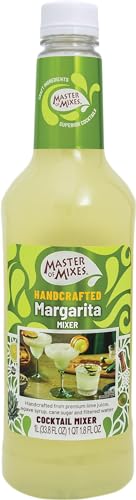
Master of Mixes Margarita Mix
Badge: Best All-Rounder
Strengths
- Straightforward classic margarita flavor in a practical liter format
- Pour-ready, so drinks come together with no extra prep
- Liter size balances party capacity against fridge space
Trade-offs
- Classic profile is sweeter than the craft-style mixes here
- Single flavor only, unlike the same brand’s variety pack
- Plastic liter format is a workhorse, not a showpiece bottle
Key details
- Format: 1 liter bottle
- Classic margarita mix profile
The classic Master of Mixes liter is the standard-bearer: the Jägermeister sour exactly as most drinkers imagine it, consistent from bottle to bottle and easy to reproduce at a personal ratio. It will not win a nuance contest against the organic pick, but home bartending runs on reproducibility, and this is the bottle that turns a discovered ratio into a reliable house drink. A sensible centre for any Jäger shelf.
Use this bottle to find your number. Most Jägermeister drinkers settle between one-to-two and one-to-three against citrus; once found, write it on the bottle’s neck tag and every future serve starts from knowledge instead of guesswork.
Serving notes for the jagermeister context: pour this one according to its format, 1 liter bottle, and let the format dictate the occasion rather than forcing the bottle into every role. Its defining strength in this line-up, straightforward classic margarita flavor in a practical liter format, shows best when the drink is built cold and tasted before any adjustment. Start from the ratio given above, hold it for the first glass, and only then personalise it; most drinkers find their setting within two rounds and keep it for the life of the bottle.
Best for: drinkers who want the best all-rounder option in this line-up / Not suited for: anyone looking for a mixer outside this verified pool’s flavour families.

Fever-Tree Tonic Water Cans
Badge: Best Bitter Partner
Strengths
- Real quinine gives genuine tonic bitterness that stands up to strong spirits
- Single-serve cans stay fizzy to the last drink, unlike an opened large bottle
- Citrus and fruit notes add complexity without added sweetness weight
Trade-offs
- Quinine bitterness is an acquired taste for drinkers who prefer sweet mixers
- Cans chill fast but a 24 pack needs storage space
- Tonic is a highball mixer, so it will not hide a spirit the way a fruit mix can
Key details
- Format: 24 pack of 5.1 fl oz cans
- Made with real quinine
- Subtle citrus and fruit notes balanced by quinine bitterness
The tonic cans make the aperitivo argument in full. Real quinine meets the liqueur’s bitterness as an equal, carbonation lifts its weight, and the long drink that results lets the botanical blend unfold slowly, sip by sip, in the manner of the Italian bitters it resembles more than its shot reputation suggests. Pour one to three over ice with orange, serve before food, and offer it to the most experienced palate in the room first.
Resist adjusting this drink for guests who find it bitter. Bitterness is its identity and its food-friendliness. Pour those guests the strawberry serve instead and keep both drinks honest.
In day-to-day use with jagermeister, this bottle earns its keep through consistency. The detail that matters most is single-serve cans stay fizzy to the last drink, unlike an opened large bottle; protect that quality with cold storage, fresh ice and honest measuring. If a serve disappoints, change one variable at a time, ratio, dilution or garnish, so you learn which lever your palate actually responds to. That small discipline turns a good bottle into a reliable house option instead of a one-evening experiment.
Best for: drinkers who want the best bitter partner option in this line-up / Not suited for: anyone looking for a mixer outside this verified pool’s flavour families.
Comparison Table
| Pick | Format | Character | Amazon |
|---|---|---|---|
| Agalima Organic Margarita Mix | 1 liter glass bottle (18 fl oz stated on listing), individually boxed | Best Organic Pick | Check on Amazon |
| Daily’s Margarita Mix | 64 oz bottle | Best for Big Batches | Check on Amazon |
| Zing Zang Original Margarita Mix | 32 fl oz plastic bottle | Best Citrus Serve | Check on Amazon |
| Zing Zang Strawberry Margarita-Daiquiri Mix | 32 fl oz, pack of 1 | Best for Berry Serves | Check on Amazon |
| Master of Mixes Margarita Mix | 1 liter bottle | Best All-Rounder | Check on Amazon |
| Fever-Tree Tonic Water Cans | 24 pack of 5.1 fl oz cans | Best Bitter Partner | Check on Amazon |
Read the table by columns rather than by rows. The format column tells you how a bottle fits your household logistics, the character column tells you the job it was chosen to do, and the two together predict satisfaction better than any single ranking can. A bottle that wins on character but fails on format, a giant container for a two-drink household, a delicate premium pour bought for a party tray, will disappoint despite its quality. Matching both columns to your real life is the quiet skill behind every good purchase in this category, and it is why this guide gives badges for jobs rather than a single crowned winner.
How to Choose the Right Mixer for This Job
Navigate by temperament. The first question is not which bottle is best but which relationship with the liqueur you want: showcased, softened, or socialised. Showcasing leads to Agalima and the tonic. Softening leads to strawberry. Socialising leads to the batch format and the classic liter. Every disappointment in this category comes from buying for one relationship and serving another. The same balancing logic applies elsewhere on the bar, as our guide to Best Mixers For Titos Vodka shows.
The second consideration is sweetness discipline. Herbal liqueurs carry their own sugar, and their bitterness needs acidity or quinine to stay articulate. Bottles that add heavy sweetness without structure blur the liqueur’s definition, which is why this guide ranks cleaner profiles above larger ones for solo drinkers, while still recommending the sweet batch bottle where its softness is the actual requirement.
Third, think in occasions. Aperitivo drinking, party drinking and exploratory tasting are different sports with different equipment. A well-planned Jägermeister shelf is small: one showcase bottle, one social bottle, and the liqueur kept cold. The six picks here let you assemble exactly that shelf at whatever tier suits your household.
How to Serve Jägermeister Like a European Herbal Liqueur
Presentation changes perception with this bottle. The method below borrows aperitivo service: very cold, properly diluted, garnished with orange, and poured at a civilised length.
- Keep the liqueur cold, ideally in the freezer or the coldest part of the fridge. Every serve in this guide assumes a cold spirit.
- Choose the form by the drinker: sour for the curious, tonic for the bitter lover, strawberry for the hesitant.
- For the sour, shake one part liqueur with two parts citrus mix over abundant ice for a full twelve to fifteen seconds.
- For the highball, build over ice in a tall glass at one part liqueur to three parts tonic, poured gently to protect the bubbles.
- Garnish with orange in every form. Its oils echo the liqueur’s citrus peel and unify the serve.
- Serve immediately and in moderate sizes. These are drinks to be tasted, and their balance peaks in the first minutes.
Troubleshooting
Problem: the serve tastes like medicine — it is warm or under-diluted. Chill the liqueur itself, shake or build with more ice, and add acidity. The medicinal impression is a serving fault far more often than a recipe fault.
Problem: the botanicals taste muddled — the base is too sweet or too flavoured. Move to the cleanest citrus pick, shorten the ratio slightly, and let salt’s pinch sharpen the definition.
Problem: guests are split between loving and hating it — that is this liqueur’s nature, not your failure. Serve the two-camp solution: tonic or purist sour for lovers, strawberry for everyone else, from the same bottle.
Kräuterlikör: The Tradition Behind the Bottle
Germany’s herbal liqueur tradition long predates Jägermeister’s fame. Kräuterliköre were built as digestifs, concentrated botanical blends meant to close a meal and settle the stomach, and their flavour architecture, bitter herbs, warm spices, citrus peel, gentle sweetness, reflects that medicinal-culinary origin. Jägermeister is the tradition’s most famous export, and its recipe’s oak resting gives it a smoothness many of its cousins lack. For another spirit handled with the same method, read our guide to Best Mixers For Tropical Drinks.
Knowing the tradition reframes the mixing question. Nobody in that culture would consider a herbal liqueur finished by being frozen and swallowed without tasting; the shot ritual is a modern export habit. Serving it in sours and highballs is not a novelty treatment but a return to the way intense botanical liqueurs have always been enjoyed when flavour, rather than effect, was the point.
Jägermeister Before Dinner: The Aperitivo Case
Bitter flavours stimulate appetite, which is why bitter liqueurs anchor the aperitivo hour across Europe. A Jägermeister tonic, long, cold and orange-garnished, performs that role with real competence: quinine and botanicals wake the palate, carbonation refreshes it, and the moderate length keeps the drink sociable rather than soporific. It pairs naturally with salty, fatty starters, olives, cured meats, hard cheeses, where its bitterness cuts richness cleanly.
If you host dinners, this is the serve that justifies the bottle’s shelf space year-round, long after the party shots have lost their novelty. It also introduces the liqueur to serious drinkers on terms they already respect, which quietly rehabilitates a bottle many households underestimate.
Ratios, Glassware and Ice: The Details That Decide These Drinks
Ratios in this guide are starting points, not commandments, and understanding why they work lets you adjust them intelligently for jagermeister. A ratio is really a statement about which flavour leads: shorten the mixer and the base ingredient speaks first; lengthen it and the mixer frames the experience. Keep a simple record as you experiment, because palates forget, and the difference between a good home bartender and a frustrated one is usually a notebook rather than a talent.
Glassware steers the same drink in different directions. A rocks glass concentrates aroma and suits short, considered serves, while a tall glass with generous ice stretches a drink into refreshment and slows its warming. For jagermeister serves, choose the glass by the occasion: concentration for tasting and small evening drinks, length for gatherings, gardens and long afternoons. Neither is more correct; they are different promises, and keeping the promise you made when you chose the glass is most of serving well.
Ice deserves the same respect as the bottles. Fresh, hard, cold ice chills with controlled dilution; old, soft, freezer-flavoured ice chills poorly and seasons the drink with everything it has absorbed. Use more ice than habit suggests, fill glasses properly, and replace ice rather than reusing it between rounds. In jagermeister drinks, where balance is the whole craft, ice quality is not a garnish-level detail. It is one of the main ingredients, and it is the cheapest one to get right.
Stocking and Storage: Keeping a jagermeister Shelf in Good Order
Unopened mixers and sodas keep best in a cool, dark cupboard, away from the heat cycles of ovens and sunny windowsills. Once opened, citrus mixes belong in the fridge and on a clock: their brightness is perishable, and the honest way to manage that is to buy formats matched to your drinking pace and to plan a second use, a batch serve, a round of alcohol-free coolers, within the following week or two. A sticky note with the opening date on the cap is a tiny system that prevents most waste in this category.
Carbonated bottles and cans should be chilled before serving rather than stored in the fridge door long-term, where temperature swings and vibration work against them. Rotate stock so the oldest sealed items are used first, keep glass bottles upright and out of direct light, and resist heroic bulk buying unless your household genuinely drinks at that pace. A small, fresh, well-chosen shelf will outperform a large, tired one in every jagermeister serve in this guide, every single time.
Common Buying Mistakes
Judging the liqueur only as a shot. The shot suppresses the flavour the recipe exists to deliver. Any verdict on Jägermeister formed without a cold, lengthened serve is a verdict on a ritual, not a liqueur.
Mixing it warm. Warm herbal liqueur emphasises every medicinal note. Cold storage of the spirit itself is the cheapest quality upgrade in this entire guide.
Sweetening bitter serves into balance. Bitter drinks are balanced by acidity, salt and dilution, not sugar. Sweetening a tonic serve produces the worst of both families.
Buying one bottle for every audience. Purists and sceptics need different serves. A two-bottle shelf, one clean citrus and one strawberry, covers a whole social circle.
Overlooking the alcohol-free round. Every citrus and fruit mix here makes a respectable cooler without the liqueur. At Jägermeister gatherings, that parallel serve is a mark of a thoughtful host.
Three Evenings, Three Pours: Matching the Bottle to the Moment
Picture a quiet evening for two, where the drink is part of the conversation rather than background to it. This is the moment for the most considered bottle on your shelf and the most careful build in this guide: full measures, fresh ice, the right garnish, and no shortcuts, because with only two glasses to make, attention is the ingredient you can most afford. Drinkers consistently report that a jagermeister serve made this way tastes like a different, better drink than the same bottles poured casually, and the difference is entirely in the care, not the shopping.
Now picture the opposite: a house full of people, music on, and a host who also wants to be a guest. This is the batch moment, where the big formats and variety choices in this guide earn their place. Build the base in advance, chill it thoroughly, taste it cold, and set it out with ice, glasses and garnishes so guests can serve themselves. The jagermeister drinks will be slightly less precise than the two-person versions and considerably more joyful, which is the correct trade for the occasion, and nobody at a good party has ever mourned the absence of a shaker.
Finally, picture the exploratory evening: one bottle of the base ingredient, two or three mixers from this guide, small glasses and a deliberate tasting. Pour the same measure against each mixer, taste in sequence, and note what changes. This is how households find their house serve, and it converts buying guides, including this one, from instructions into starting points. An hour of structured tasting teaches a palate more than a month of random pouring, and the notes you keep become the most useful pages in your home bar.
What unites the three evenings is that none of them requires more bottles, only better matching. The skill this guide is really teaching is not purchasing; it is the habit of asking what an occasion needs before reaching for a bottle. Hosts who build that habit find their shelves getting smaller and their drinks getting better at the same time, which is the surest sign the habit has taken hold.
Final Recommendation
Begin with the Agalima Organic Margarita Mix and the cold shaken sour. It presents Jägermeister at its most articulate and gives you the reference point for every other choice in this guide. Check the latest price on Amazon via the review link, keep the liqueur cold, and serve the first round with an orange twist and no apologies for the bottle’s reputation.
Then stock by audience: the tonic cans for aperitivo drinkers, the strawberry mix for the hesitant, Daily’s for the party tray, Zing Zang for substantial outdoor serves, and the classic liter as the house standard. Jägermeister is a serious herbal liqueur wearing a party costume; mix it according to what it is, and it will surprise everyone at the table. You can compare this approach with our guide to Best Mixers For Tullamore Dew when you are ready to branch out.
Quick links to three finalists on Amazon: Agalima Organic Margarita Mix, Zing Zang Original Margarita Mix, Master of Mixes Margarita Mix.
Frequently Asked Questions
What is the best way to drink Jägermeister besides shots?
In cold, lengthened serves that frame its botanicals: a shaken citrus sour, where lime acidity organises the herbs, or a tonic highball, where quinine bitterness extends them in aperitivo style. Both are covered in this guide with verified mixes, and both reveal a depth the frozen shot is designed to skip.
Why does Jägermeister taste medicinal to some people?
Its blend includes roots, herbs and spices with genuinely medicinal histories, and warm, sweet, concentrated serves emphasise those notes. Cold, dilution and acidity reorganise the same flavours into a spiced, bitter, citrus-led profile. Serving method, more than the recipe, decides which impression a drinker gets.
What garnish suits Jägermeister drinks?
Orange, in twist or slice form, suits every serve in this guide because the liqueur’s own recipe includes citrus peel. Orange aroma bridges the botanicals and the citrus bases, and it signals the drink’s European character far better than the lime wedges that belong to tequila serves.
Can Jägermeister work before a meal?
Yes, in its tonic highball form it functions as a genuine aperitivo: bitter, cold and refreshing, with carbonation to wake the palate. Serve it with salty starters and keep the pour moderate. This is the use that most surprises drinkers who know the bottle only from late-night rituals.
How strong should a Jägermeister sour be?
Start at one part liqueur to two parts citrus mix, shaken hard. The liqueur is flavour-dense rather than exceptionally strong, so the ratio is about flavour balance, not potency management. Adjust in small steps toward your setting and note it; consistency is what turns an experiment into a house drink.
Does the strawberry serve still taste like Jägermeister?
It tastes like Jägermeister in a supporting role: berry first, warm herbal spice in the finish. Drinkers who dislike the liqueur’s intensity usually accept and enjoy it, while loyalists can still identify their bottle. That balance is exactly why the pick is in the guide.
How many bottles from this guide should I buy first?
Start with two: the pick that matches your main serve and one contrasting bottle, so you can taste the difference the guide describes rather than taking it on faith. Two bottles teach more than six bought at once, because comparison is how palates learn. Add a third only when a specific occasion, a party, a tasting, a new jagermeister serve you want to try, actually calls for it.
Are these mixers suitable for alcohol-free serves as well?
Yes. Every pick in this guide is a non-alcoholic mixer, so the same bottles build alcohol-free versions of the serves described, with the same garnishes, glassware and care. That dual use is a practical reason to favour quality here: a bottle that serves drinkers and non-drinkers alike earns its shelf space twice, and at gatherings built around jagermeister, nobody has to feel like an afterthought.
One More Round: Extra Serving Notes
A digestif variation for after dinner: a short Agalima sour served straight up in a small chilled glass, half the usual size. The format honours the liqueur’s original digestif purpose while the citrus keeps it from sitting heavily after a meal.
If the bottle lives in your freezer for shots, move a small amount to a separate small bottle in the fridge door for mixing. Cold-but-pourable liqueur integrates better in shakers, and your mixing supply stays ready without disturbing the shot ritual supply.
A note on tasting order when you compare bottles at home: begin with the driest serve and move toward the sweetest, rinsing the glass and resetting your palate with water and a plain cracker between rounds. Sweetness lingers and distorts judgement, so tasting sweet-to-dry makes everything after the first glass seem sharper than it is. The order costs nothing and quietly improves every comparison you will ever run in a home bar.
Temperature deserves one more mention because it is the variable home drinkers control worst. A drink served two degrees warmer than intended tastes noticeably sweeter and less defined, and carbonated serves lose their sparkle twice as fast. Chill bottles longer than feels necessary, keep glasses out of warm dishwashers until the moment of use, and treat the freezer as part of the bar rather than as storage that happens to be cold.
If you entertain often, standardise one thing: the house pour. Decide the measure for your most common serve, write it down, and let anyone helping you follow it exactly. Consistency is what guests actually remember as quality, far more than exotic ingredients, and a host who can reproduce a good drink on demand will always outperform a host with a bigger shelf and no system.
Leftovers are a planning problem, not a character flaw. When a bottle is opened for an occasion, decide its second use before the occasion ends: tomorrow’s cooler, the weekend’s batch, a neighbour’s tasting. Mixers reward households that think one step ahead, and the small habit of planning the second use eliminates nearly all the waste this category is known for.
Garnish supplies are the highest-value small purchase in home bartending. Fresh citrus, kept in the house as a matter of routine, improves every serve in this guide more reliably than upgrading any single bottle, because aroma is the first thing a drinker perceives and the last thing they forget. Budget for the fruit before you budget for a second premium bottle.
Finally, trust your own palate over any guide, including this one. Guides organise options and explain trade-offs; they cannot taste your drinks. When your experience disagrees with a review here, your experience is the data that matters for your next purchase, and noting where it disagreed is exactly how a household’s small shelf becomes precisely tuned to the people who drink from it.
Seasonality is worth planning around in this category. Citrus-led serves peak in warm months when cold, bright drinks are what people crave, while spiced and richer serves come into their own in autumn and winter. A household that rotates its emphasis with the seasons gets more pleasure from the same shelf than one that drinks identically all year, and the bottles in this guide were chosen partly because they cover both halves of the calendar.
Water is the invisible ingredient in every serve here. It arrives as dilution from ice, as the splash that lengthens a drink, and as the glass served alongside for pacing. Good water, clean ice and deliberate dilution are not refinements for perfectionists; they are the medium the flavours travel in, and neglecting them undermines bottles far more expensive than the water itself.
When a serve fails, diagnose it in a fixed order: temperature first, then dilution, then ratio, then ingredients. Most failed home drinks are temperature or dilution failures wearing an ingredient costume, and replacing bottles before checking the first two variables is how households accumulate shelves of perfectly good mixers they have wrongly blamed.
Presentation is the final lever, and it is not vanity. A drink served in the right glass, at the right temperature, with an intentional garnish signals care before the first sip, and drinkers genuinely perceive cared-for drinks as tasting better. The effect is robust enough that hosts should treat it as part of the recipe rather than as decoration applied afterwards.
Keep the bar small enough to know it completely. A household that can describe every bottle it owns, its best serve, its ideal ratio and its honest weakness, will out-mix a household with three times the stock and a vague memory of why any of it was bought. Depth of knowledge beats breadth of inventory in every category in this programme, and this one is no exception.
One last habit separates improving home bartenders from static ones: change a single thing per evening. A new garnish, a shorter ratio, a different glass, a colder serve. Single changes teach; wholesale reinventions merely confuse. Over a season of evenings, that patient method builds a repertoire that no single purchase, however well chosen, could have given you.


