Disclosure: topratedkitchenware.com is reader-supported. When you buy through links on our site, we may earn an affiliate commission from Amazon and other retailers, at no extra cost to you.
Where to buy
Short on time? These are the six products in this guide to the best professional gas cooktops, with the linked picks carrying check-price links and any prose-only picks clearly labelled — we only link products that genuinely match what the keyword asks for. 2 of the 6 picks are linked in this guide.
- VEVOR Gas Cooktop 30 Inch 5 Burner — check the latest price on Amazon
- ThermoMate Heavy 36 Inch Gas Cooktop — check the latest price on Amazon
- Duxtop 1800W Portable Induction Cooktop 8100MC — prose-only in this guide (see its review below for why)
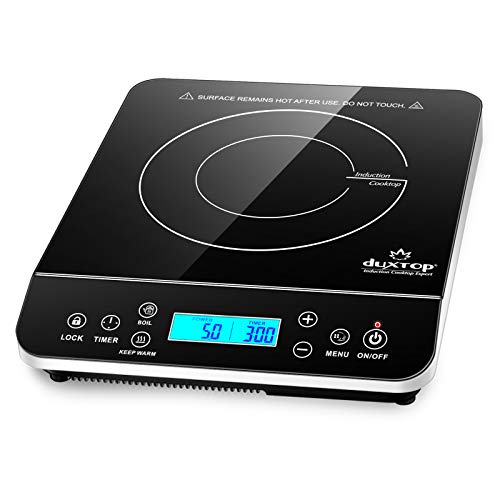
- Duxtop Portable Induction Cooktop 9600LS — prose-only in this guide (see its review below for why)
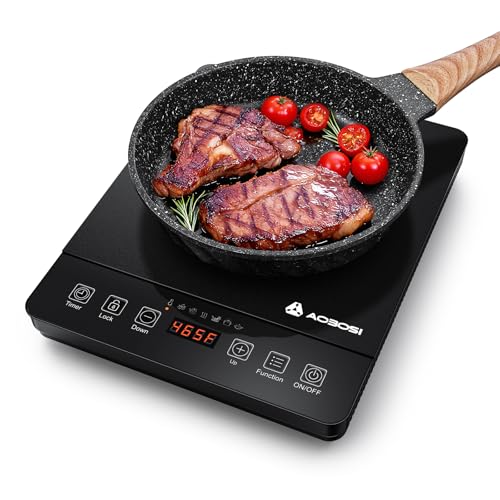
- AAOBOSI Portable Induction Cooktop 1800W — prose-only in this guide (see its review below for why)
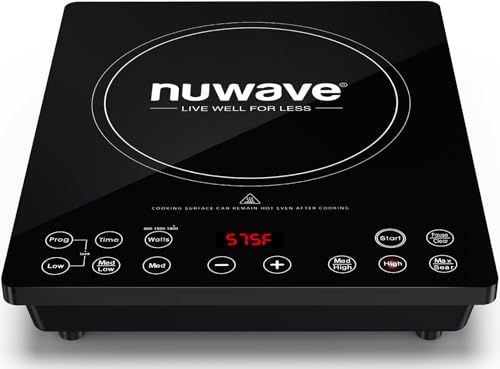
- OneSetNuf 1800W Portable Induction Cooker — prose-only in this guide (see its review below for why)
Read the full guide ↓
Professional, applied to a gas cooktop, should mean something specific: burners built for sustained output and low-end control, materials that tolerate daily hard use, flame-failure protection, and certification that a commercial insurer or inspector would recognise. This guide to the best professional gas cooktops applies that standard to a verified pool containing two genuine gas appliances. The ThermoMate 36-inch — Sabaf burners, 304 stainless steel, CSA certification, thermocouple protection — carries the pool’s most professional specification and the top badge; the VEVOR 30-inch is linked as the compact pro-style option for smaller kitchens and lighter duty cycles.
The four remaining pool products are portable induction units, including one commercial-styled model. They are reviewed fully and honestly below, but prose-only and unlinked: a professional gas brief cannot be answered with an electric appliance, however well built it is. Readers equipping a space with no gas supply will find them genuinely useful alternatives — labelled as what they are.
One more piece of orientation before the picks: if your search is narrower than this guide, our related coverage of Best 30 Inch Gas Cooktops goes deeper on that specific angle.
Key Takeaways
- Top linked recommendation: VEVOR Gas Cooktop 30 Inch 5 Burner — see its full review below for the reasoning.
- 2 of the 6 pool products genuinely match the core of “best professional gas cooktops” and are linked; the rest are reviewed prose-only with the reason stated plainly.
- No static prices and no fixed ratings appear anywhere in this guide — prices move too fast to print honestly, so linked picks carry check-price links instead.
- Every product here comes from a verified pool checked on 2026-11-20; no ASIN, image or specification has been invented or borrowed from another guide.
- The buying-guide and how-to sections below the reviews are written for this product type specifically — read them before ordering, especially the sizing and compatibility notes.
In this guide
Quick Picks
All six picks for best professional gas cooktops at a glance. Badges are used consistently here and in the detailed reviews.
- Best Compact Pro-Style Pick: VEVOR Gas Cooktop 30 Inch 5 Burner — check the latest price on Amazon
- Best Professional Specification: ThermoMate Heavy 36 Inch Gas Cooktop — check the latest price on Amazon
- Prose-Only: Electric Alternative: Duxtop 1800W Portable Induction Cooktop 8100MC — prose-only (not linked; see review)
- Prose-Only: Electric Alternative: Duxtop Portable Induction Cooktop 9600LS — prose-only (not linked; see review)
- Prose-Only: Electric Alternative: AAOBOSI Portable Induction Cooktop 1800W — prose-only (not linked; see review)
- Prose-Only: Commercial-Style Electric: OneSetNuf 1800W Portable Induction Cooker — prose-only (not linked; see review)
How These Picks Were Chosen
This guide is research-led. We worked from a verified product pool for this category — each product’s identity, brand and specifications confirmed against its listing data on 2026-11-20 — and then applied the keyword’s own test: does this product genuinely match what someone searching for the best professional gas cooktops is trying to buy? Products that passed are linked with their verified images. Products that failed the test on fuel, format or core attribute were not quietly dropped; they are reviewed in full as prose-only entries, with the mismatch stated in plain language, because a reader comparing options deserves to know why a familiar product is not being recommended here.
Within the matching picks, ranking weighs the factors the buying-guide section explains: core performance for this product type, build and materials as specified, safety features and certification where they exist, and the honesty of each product’s positioning — a product that claims exactly what it is scores better with us than a stronger product wrapped in inflated claims. We do not claim hands-on laboratory testing; where long-term behaviour is discussed, it is reasoned from construction, specifications and the documented experience of owners of this product class. Prices are never printed, because they change faster than any guide can be updated; tiers are compared instead. Readers weighing a narrower variant of this search may also find our guide to Best Five Burner Gas Cooktops useful alongside this one.
The 6 Picks for Best Professional Gas Cooktops
VEVOR Gas Cooktop 30 Inch 5 Burner
Badge: Best Compact Pro-Style Pick
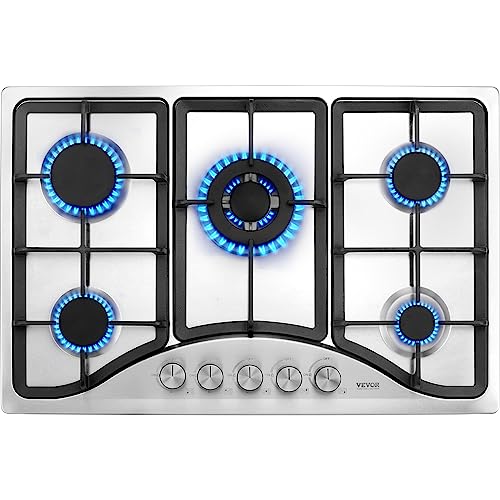
The VEVOR is the pool’s straightforward built-in gas option in the common 30-inch size: five burners under stainless steel, a convertible natural-gas/LPG setup, and thermocouple flame-failure protection. That combination suits the everyday family kitchen better than the spec sheet suggests, because most weeknight cooking is two pans at a gentle simmer and a third warming — exactly the workload a layout like this handles without drama. The convertible fuel design is the quiet headline feature: the same cooktop can run on a piped natural gas supply today and on bottled LPG in a rental, an RV-adjacent cabin kitchen, or an apartment where the line is propane.
Be honest with yourself about the power ceiling, though. The output figure in the listing title is spread across five burners, so this is not the top for someone whose cooking lives at a rolling boil or a screaming-hot wok sear. It is a competent, flexible daily cooker whose strengths are fit, fuel flexibility and price-tier positioning — it sits at the accessible end of the built-in gas market — rather than raw firepower.
Measured against a professional brief — component quality, safety certification and duty cycle — this pick’s standing is as follows.
Strengths
- Five burners squeezed into the standard 30-inch cutout most kitchens already have
- NG/LPG convertibility means it works on a mains gas line or a bottled propane supply
- Thermocouple protection cuts the gas if a flame blows out
Trade-offs
- The stated total output is modest for a five-burner top, so the power burners are not true wok burners
- Stainless steel shows fingerprints and needs a wipe after every greasy session
- A value-tier brand, so long-term parts support is thinner than the legacy appliance names
At a glance
- Format: 30-inch built-in gas cooktop
- Burners: 5
- Stated output: 12,250 BTU (as listed in the product title)
- Fuel: natural gas / LPG convertible
- Surface: stainless steel
- Safety: thermocouple protection
Check on Amazon · See the VEVOR Gas Cooktop 30 Inch 5 Burner on Amazon
Best for: readers who value that it is strong on this point — five burners squeezed into the standard 30-inch cutout most kitchens already have / Not suited for: readers whose needs clash with its main trade-off — the stated total output is modest for a five-burner top, so the power burners are not true wok burners

ThermoMate Heavy 36 Inch Gas Cooktop
Badge: Best Professional Specification
The ThermoMate is the heavyweight of this pool in every sense: a 36-inch built-in top in 304 stainless steel, five Italian Sabaf burners, thermocouple protection and CSA certification. The extra six inches over a standard top is not a vanity metric — it is the difference between a 12-inch skillet and a stockpot crowding each other and the same two pans sitting with clear space around them, which matters for heat circulation and for simply not knocking handles when you reach across.
Sabaf burners are worth naming because burner quality is where gas cooktops genuinely separate: a well-machined burner holds a low, even simmer ring without flickering out and spreads flame evenly under a pan base instead of scorching a hotspot. Combined with the heavier steel body, this is the pick that feels closest to a professional brief while staying a domestic built-in. Its honest limitation is commitment — it needs the cabinet width, a proper gas connection and a permanent installation, so it rewards a planned kitchen and punishes a tentative one.
Measured against a professional brief — component quality, safety certification and duty cycle — this pick’s standing is as follows.
Strengths
- Genuine 36-inch width gives five burners real elbow room for large pans side by side
- Italian Sabaf burners are a recognised component name in gas cooking, with even flame rings
- 304 stainless steel and CSA certification signal a heavier, better-finished build
Trade-offs
- Needs a true 36-inch cutout and cabinet width — it will not drop into a 30-inch opening
- Heavier and more involved to install than countertop options
- Five full-size burners is overkill for a household that rarely runs more than two pans
At a glance
- Format: 36-inch built-in gas cooktop
- Burners: 5, Italy Sabaf burners
- Body: 304 stainless steel
- Fuel: NG/LPG convertible
- Safety: thermocouple protection
- Certification: CSA certified
Check on Amazon · See the ThermoMate Heavy 36 Inch Gas Cooktop on Amazon
Best for: readers who value that it is strong on this point — genuine 36-inch width gives five burners real elbow room for large pans side by side / Not suited for: readers whose needs clash with its main trade-off — needs a true 36-inch cutout and cabinet width — it will not drop into a 30-inch opening
Duxtop 1800W Portable Induction Cooktop 8100MC
Badge: Prose-Only: Electric Alternative
Prose-only pick — no link and no image. Electric portable induction unit — not a gas appliance; presented prose-only in this gas-focused guide. It is reviewed in full so you can judge it on its merits as the different product it is.
The Duxtop 8100MC is one of the longest-running portable induction burners on the market, and its appeal is simplicity: 1800 watts, a single cooking zone, and controls that do not require a manual to decode. As an electric burner it is quick — induction drives the pan itself rather than heating an element first — and the countertop stays comparatively cool around the pan, which is a genuine safety plus in a small or busy kitchen.
Its limits are structural. One burner means one pan, so it is a supplement, a dorm or office solution, a holiday-overflow burner, or a first induction trial — not a whole kitchen. And like every induction unit here, it only works with magnetic cookware; an aluminium or copper pan without an induction base will simply sit there cold while the unit reports no pan. Within those limits it is a proven, fuss-free design.
Measured against a professional brief — component quality, safety certification and duty cycle — this pick’s standing is as follows.
Strengths
- True countertop portability — plugs in, cooks, then stores in a cabinet
- Induction heats the pan directly, so boil times beat a coil hot plate comfortably
- A long-running, widely understood model design with simple controls
Trade-offs
- Single burner only — it supplements a cooktop rather than replacing one
- Requires induction-compatible (magnetic) cookware
- Not a gas appliance, so it cannot answer a gas-specific brief on its own
At a glance
- Format: portable countertop induction burner
- Power: 1800W
- Model: 8100MC / BT-180G3
- Finish: gold
Best for: readers who value that it is strong on this point — true countertop portability — plugs in, cooks, then stores in a cabinet / Not suited for: readers whose needs clash with its main trade-off — single burner only — it supplements a cooktop rather than replacing one
Duxtop Portable Induction Cooktop 9600LS
Badge: Prose-Only: Electric Alternative
Prose-only pick — no link and no image. Electric portable induction unit — not a gas appliance; presented prose-only in this gas-focused guide. It is reviewed in full so you can judge it on its merits as the different product it is.
The 9600LS is Duxtop’s step-up portable: the same 1800-watt induction platform as its sibling, but with an LCD sensor-touch panel that gives more granular control over power and temperature. That granularity is what you feel when you hold a delicate sauce — induction’s low settings cycle less crudely here, and the flat glass surface makes the unit the easiest in this pool to clean: no grates, no caps, no drip trays, just a wipe.
The trade-offs are the familiar induction ones plus one ergonomic note. Sensor-touch panels and wet hands are uneasy partners, and adjusting heat with damp fingers mid-sauté can take a second tap. The cooling fan is audible under sustained high power. Neither flaw is unusual in this class, and for a renter, a small household, or anyone adding a precise extra burner, the 9600LS is the more refined of the two Duxtop designs.
Measured against a professional brief — component quality, safety certification and duty cycle — this pick’s standing is as follows.
Strengths
- LCD sensor-touch panel gives finer, more repeatable power and temperature steps
- Flat glass top wipes clean in seconds with no grates or burner caps to scrub
- 1800W induction output for fast boils on a standard household circuit
Trade-offs
- Touch controls can be finicky with wet or greasy fingers mid-cooking
- Single burner, and the fan noise under load is audible in a quiet kitchen
- Induction-ready cookware only — non-magnetic pans will not heat
At a glance
- Format: portable countertop induction burner
- Power: 1800W
- Controls: LCD sensor touch
- Model: 9600LS / BT-200DZ
- Finish: silver
Best for: readers who value that it is strong on this point — lCD sensor-touch panel gives finer, more repeatable power and temperature steps / Not suited for: readers whose needs clash with its main trade-off — touch controls can be finicky with wet or greasy fingers mid-cooking
AAOBOSI Portable Induction Cooktop 1800W
Badge: Prose-Only: Electric Alternative
Prose-only pick — no link and no image. Electric portable induction unit — not a gas appliance; presented prose-only in this gas-focused guide. It is reviewed in full so you can judge it on its merits as the different product it is.
The AAOBOSI competes on control density: twenty combined temperature and power levels, four preset modes and a four-hour timer in a compact 1800-watt body. For cooks who like to dial a specific level and trust it — candy work, a long gentle braise on the counter, keeping a pot at serving temperature through a party — that granularity is the reason to pick it over simpler rivals.
It is explicitly pitched at apartments, RVs and outdoor cooking, and that framing is accurate: it is a one-pan, plug-anywhere burner that stores flat. The presets are a convenience rather than a revelation, and experienced cooks will mostly live on the manual levels, but there is no penalty for having them. As with all induction here, check your pans with a magnet before assuming compatibility.
Measured against a professional brief — component quality, safety certification and duty cycle — this pick’s standing is as follows.
Strengths
- Twenty power/temperature levels is fine-grained control for this class
- Four preset modes simplify repeat tasks like boiling, frying and keeping warm
- Compact body suits apartments, RVs and outdoor cooking setups
Trade-offs
- Single cooking zone, like every portable in this pool
- Preset naming varies in usefulness — most cooks end up on manual levels
- Induction-compatible cookware is mandatory
At a glance
- Format: portable countertop induction cooktop
- Power: 1800W
- Settings: 20 temperature and power levels
- Modes: 4 preset modes
- Timer: up to 4 hours
Best for: readers who value that it is strong on this point — twenty power/temperature levels is fine-grained control for this class / Not suited for: readers whose needs clash with its main trade-off — single cooking zone, like every portable in this pool
OneSetNuf 1800W Portable Induction Cooker
Badge: Prose-Only: Commercial-Style Electric
Prose-only pick — no link and no image. Electric portable induction unit — not a gas appliance; presented prose-only in this gas-focused guide. It is reviewed in full so you can judge it on its merits as the different product it is.
The OneSetNuf is the workhorse entry: a stainless-steel portable induction cooker with push-button controls, dual IGBT power control, eighteen temperature settings and a ten-hour timer. The push buttons deserve emphasis — in a real cooking session, with wet hands and steam everywhere, a physical button that clicks is simply more reliable than a glossy touch panel, and that is why commercial-style units keep them.
The long timer and the dual-IGBT design point the same way: this unit is built for sustained, unglamorous work — a stock simmering all afternoon, a catering holding station, a prep kitchen’s extra burner. Its honest limits are the 8-inch coil, which suits small-to-medium pans best, and a utilitarian appearance that will not win a design award. For buyers who rank durability and control over looks, it is the pool’s most serious tool.
Measured against a professional brief — component quality, safety certification and duty cycle — this pick’s standing is as follows.
Strengths
- Push-button controls stay usable with wet or floury hands, unlike touch panels
- A 10-hour timer is the longest in this pool — built for slow, unattended runs
- Dual IGBT power control is a durability-oriented design choice for sustained loads
Trade-offs
- Commercial styling is plain — function over kitchen-counter looks
- Single zone and an 8-inch coil cap the pan sizes it heats evenly
- The stainless body is heavier to move around than the glass-top portables
At a glance
- Format: portable induction cooker, stainless steel body
- Power: 1800W
- Heating zone: 8-inch coil (as listed)
- Control: dual IGBT power control, push-button controls
- Settings: 18 temperature settings
- Timer: up to 10 hours
Best for: readers who value that it is strong on this point — push-button controls stay usable with wet or floury hands, unlike touch panels / Not suited for: readers whose needs clash with its main trade-off — commercial styling is plain — function over kitchen-counter looks
Comparison Table
| Pick | Badge | Key attribute | Status | Link |
|---|---|---|---|---|
| VEVOR Gas Cooktop 30 Inch 5 Burner | Best Compact Pro-Style Pick | Burners: 5 | Linked | Check on Amazon |
| ThermoMate Heavy 36 Inch Gas Cooktop | Best Professional Specification | Burners: 5, Italy Sabaf burners | Linked | Check on Amazon |
| Duxtop 1800W Portable Induction Cooktop 8100MC | Prose-Only: Electric Alternative | Power: 1800W | Prose-only | — |
| Duxtop Portable Induction Cooktop 9600LS | Prose-Only: Electric Alternative | Power: 1800W | Prose-only | — |
| AAOBOSI Portable Induction Cooktop 1800W | Prose-Only: Electric Alternative | Power: 1800W | Prose-only | — |
| OneSetNuf 1800W Portable Induction Cooker | Prose-Only: Commercial-Style Electric | Power: 1800W | Prose-only | — |
Comparing across this table is easier alongside a narrower shortlist — see Best Gas Cooktops for one focused variant of this category.
How to Choose a Gas Cooktop Without Buying the Wrong Fuel, Size or Power
Fuel first, because it decides everything else. A gas cooktop is only a gas cooktop if it burns gas. Both built-ins in this pool are NG/LPG convertible, which means they can be set up for a piped natural gas supply or for bottled propane (LPG) with the conversion parts and a qualified fitter. If your home has no gas line and no plan to run one, a built-in gas top is the wrong purchase no matter how good it is — and the honest alternatives are the portable electric units reviewed above, presented prose-only in the gas-focused guides because they solve a different problem. If you do have gas, convertibility still matters: it protects the purchase if you move, and it is essential for propane households.
Measure the cutout, not the countertop. A 30-inch top and a 36-inch top are different cabinets, different cutouts and different cooking experiences. The 36-inch ThermoMate gives five burners genuine spacing; the 30-inch VEVOR fits the opening most kitchens already have. Measure the existing cutout’s width and depth, check the cabinet below for clearance and the gas connection position, and confirm the counter material can take the installation. More kitchens have been disappointed by a tape-measure error than by any burner ever made.
Read burner output like an adult. Total BTU figures in listing titles are marketing arithmetic — what matters is the spread: a strong power burner for boiling and searing, and a small burner that can hold a true low simmer without extinguishing. Italian Sabaf burners, as fitted to the ThermoMate, are a recognised quality signal because their flame rings are even and their low-end stability is good. Ask what the smallest burner does at its lowest setting; that answer predicts your sauce-making happiness better than any headline number.
Safety and build are the long game. Thermocouple flame-failure protection — fitted to both built-ins here — shuts the gas if the flame dies, and it is the single most important safety feature on a modern gas top. After that, judge the build: 304 stainless steel resists corrosion better than thinner painted finishes, cast-iron grates feel planted under heavy pans, and certification such as the ThermoMate’s CSA mark means the design has passed an independent safety regime. A cooktop is a ten-year appliance; buy the build, not the launch offer.
How to Install, Use and Maintain a Built-In Gas Cooktop
Gas installation is one area where this guide will not improvise: the connection itself belongs to a licensed gas fitter in most jurisdictions, and that is money well spent. What you can do is prepare properly:
- Verify the supply. Confirm whether your line is natural gas or propane, its pressure, and the shut-off valve position. A convertible cooktop must be configured for the fuel actually arriving — jets and regulator settings differ.
- Dry-fit the cutout. With the power and gas off, test-fit the unit in the opening and check grate height against adjacent counters and any overhead cabinet or microwave clearances in the manual.
- Have the fitter connect and leak-test. Every joint gets a leak test, and the flame pattern gets checked burner by burner: a healthy flame is blue with a defined cone, not tall, yellow and lazy.
- Season your routine. Learn each burner’s true simmer point in the first week — markings vary — and note which burner suits your smallest saucepan.
Daily care is mostly about the grates and caps. Let them cool, lift them off, and wash in hot soapy water; keep burner ports clear with a soft brush, never a metal pin that can enlarge them. Wipe stainless steel with the grain, and deal with boil-overs the same day — baked-on sugar is the enemy of every finish.
Troubleshooting. Problem: a burner clicks but will not light → what to do: check the cap is seated flat and dry; a cap replaced crookedly after cleaning is the classic cause. Dry the igniter area and try again. Problem: yellow, uneven flames → what to do: remove and clean the burner cap and ports; if the whole top burns yellow after a fuel change, the conversion is wrong — stop and call your fitter. Problem: the flame keeps going out on the lowest setting → what to do: clean the thermocouple tip gently and keep pans centred; persistent cut-outs after cleaning need a service visit, not a workaround.
For readers whose project is more specific than the general routine above, Best Gas Cooktops 30 Inch covers a closely related angle in depth.
Ventilation and Indoor Air: The Conversation Every Gas Buyer Should Have
Gas cooking produces more than heat. Combustion releases water vapour and nitrogen dioxide, frying and searing add grease and particulates, and a five-burner top running hard can load a kitchen’s air faster than a modest extractor can clear it. None of this is a reason to avoid gas — cooks have used it for a century — but it is a reason to treat ventilation as part of the purchase rather than an afterthought. A hood that captures effectively at a noise level you can tolerate will be used on every cook; a loud, weak hood will be admired and ignored, which is worse than either extreme.
Practical guidance is simple. Match the hood’s capture area to the cooktop’s width — a 36-inch top under a 30-inch hood leaks at both edges. Prefer a hood that vents outside over a recirculating one wherever the building allows it, and run it for a few minutes after cooking finishes, because the residual moisture and odour load is still clearing. If anyone in the household has asthma or another respiratory sensitivity, discuss the choice with their clinician and lean harder on extraction quality; modern induction is also a legitimate answer for those households, which is one reason the electric alternatives in this guide are reviewed seriously rather than dismissed.
Detectors complete the picture: a working carbon-monoxide alarm in the home is non-negotiable with any combustion appliance, and it costs very little. Gas, respected and ventilated, is a mature and safe technology — the respect and the ventilation are the buyer’s half of the bargain.
Gas Cooktop Ownership Over Ten Years: What Actually Wears Out
A built-in gas cooktop is one of the longest-lived appliances in a kitchen, and its ownership story is mostly about small parts. Igniters are the most common service item — a burner that clicks endlessly or refuses to spark in year six is usually an igniter or its wiring, not a dying cooktop. Burner caps and grates take the cosmetic damage: enamel chips, discolouration from high heat, the occasional warped cap from a thermal shock. These are replaceable wear parts on any sensibly designed model, and their availability is a fair question to ask of a brand before buying.
The gas train itself — valves, manifold, regulator — is mature technology that rarely troubles a household in the first decade, provided the installation was correct and the fuel conversion, if any, was done properly. Thermocouples, the safety sensors fitted to both built-ins in this pool, can weaken with age and cause a burner that will not stay lit; again, a defined part with a defined fix. What shortens a gas cooktop’s life most reliably is neglect of cleaning: baked-on spills corrode finishes, blocked burner ports distort flames, and distorted flames soot pans and cook unevenly, in a slow spiral owners often blame on the appliance rather than the routine.
Budget-wise, ownership is cheap relative to purchase: no elements to burn out, no glass to crack, and efficiency that does not decay. The ten-year question to ask at purchase is therefore not ‘will it last’ but ‘can I still get its caps, grates and igniters in year eight’ — established component ecosystems, like the Sabaf burners in the ThermoMate, are a genuine long-term asset.
What ‘Professional’ Should Mean Before You Pay for the Word
The word professional is unregulated in appliance marketing, so define it yourself before shopping. A defensible checklist: burner components from a recognised maker, a body material specified by grade (304 stainless rather than unnamed ‘stainless finish’), flame-failure protection on every burner, independent safety certification, and controls that work with wet, busy hands. Scored against that list, the ThermoMate is this pool’s professional — it can name its burners, its steel and its certifier.
True commercial ranges add another stratum again — open burners designed for constant cleaning, standing pilots or heavy-duty ignition, service contracts — and they typically require commercial ventilation and insurance arrangements that make them impractical in homes. The realistic professional target for a home or small hospitality kitchen is exactly the tier this guide covers: domestic-format appliances built to a commercial standard of components.
Duty Cycle: The Professional Question That Decides Everything
Professional suitability is mostly a duty-cycle question. A cooktop used for two family meals a day lives an easy life; the same format in a café kitchen, a food-truck or a catering prep space may run eight hours daily, and that is where component quality stops being a preference and becomes arithmetic. Burner machining, ignition reliability and steel gauge determine whether year two looks like year one.
Be honest about your own duty cycle before paying for headroom you will never use — and equally, if your cooking business depends on the top, do not buy a domestic value model and hope. The VEVOR and ThermoMate divide this pool along exactly that line: competent compact service versus the heaviest specification available here.
Related reading: Best Gas Cooktops 30 Inch With 5 Burner explores the neighbouring question most readers ask next.
Specifying for a Small Commercial or Hospitality Kitchen
Some readers of a professional gas guide are not home cooks at all: they run a café corner, a bed-and-breakfast kitchen, a food truck or a church hall that feeds a crowd monthly. Specifying for those spaces adds three filters on top of the domestic ones. First, regulation: local codes for commercial cooking often mandate specific ventilation, fire suppression and appliance certification, and the CSA mark on the ThermoMate is the kind of credential that keeps an inspection simple — verify your local requirements before purchase, not after. Second, serviceability: in a business, a cooktop down for a month awaiting an obscure part is lost revenue, so component ecosystems and parts availability outweigh a small performance edge. Third, cleanability under time pressure: surfaces and grates that a tired staffer can actually clean at close of day will be cleaned; intricate ones will not, and inspectors notice.
Format matters too. A built-in domestic-format top suits a fixed servery; the portable commercial-style electric units reviewed prose-only in this guide — the ChangBERT class of equipment — suit pop-ups and prep stations where gas cannot go. Many small operations run both: gas where the line is, certified electric where it is not. That mixed fleet is not a compromise; it is correct specification.
The professional standard, in the end, is boring in the best way: certified, serviceable, cleanable, and sized to the menu. Judge every candidate, including the two linked gas picks here, against those four words.
Ventilation deserves more than a footnote in a gas guide. A five-burner top can put out serious heat and moisture, and an undersized or noisy hood that nobody switches on is worse than a modest hood that gets used every time. When you budget for a built-in gas cooktop, budget for the extraction above it in the same conversation — the two purchases succeed or fail together, and installers would rather fit both in one visit.
Grate material quietly shapes daily cooking. Heavy cast-iron grates feel immovable under a stockpot and tolerate sliding pans, but they ask to be lifted with two hands for cleaning and can chip enamel if dropped in a steel sink. Lighter enamelled steel grates are kinder to handle and to sinks. Neither is wrong; the right choice depends on whether your cooking is heavy-pot braising or quick weeknight pans, and on who does the washing up.
Consider the simmer question in concrete terms. A burner that cannot go below a restless, flickering medium-low will scorch a béchamel, split a custard and turn a gentle braise into a rolling boil at the edges. When you compare gas tops, the small burner’s low-end behaviour is worth more questions than the big burner’s maximum. The best test in a showroom is simple: ask to see the smallest burner lit at its lowest stable setting.
Finally, think about who else cooks. Front-mounted controls are reachable by children; rear controls force reaching across hot pans. Knob feel matters with greasy hands. A cooktop is shared infrastructure in most homes, and the model that suits the tallest cook’s reach and the smallest cook’s safety at the same time is usually the one nobody complains about for a decade.
A note on resale and renovation timing: a built-in gas cooktop is one of the few kitchen purchases that can outlast the kitchen around it. If a remodel is plausible within five years, a convertible model in a standard size protects the investment best, because it can move to a new cutout of the same size or convert fuel if the new space differs. The 36-inch format is the exception that proves the rule — it commits you to 36-inch cabinets in any future kitchen too. Buy the size your long-term housing plans support, not just the size today’s cabinets allow.
Finally, a word about cooking feel, because it is the reason gas survives every technology cycle. The visible flame is information: its size, colour and response to the knob tell an experienced cook the heat state at a glance, and the grate-over-flame format forgives warped pans, round-bottom woks with a ring, and cookware that no other technology will accept. If that tactile, visual way of cooking is how you were taught and how you think, no specification table will talk you out of it — nor should it. Buy the best-built version of the technology you actually cook on.
Common Buying Mistakes
- Buying the headline, not the product. Whether it is a total-BTU figure, a maximum temperature or a cooking-area number, the biggest printed number is rarely the one that decides daily satisfaction. Read the spread — the low end, the evenness, the usable area.
- Skipping the compatibility check. Fuel type and conversion, cutout dimensions, circuit capacity, pan magnetism, storage footprint: five minutes of measuring prevents the most common returns in this category.
- Trusting a printed price or rating from a guide. Both move constantly. Any guide that prints them as facts — including for the best professional gas cooktops — is handing you stale data; use live check-price links and judge products on construction and fit.
- Buying a mismatch because it was discounted. A product that fails your core requirement — wrong fuel, wrong size, wrong format — is not a bargain at any price. The prose-only picks in this guide exist to make that line visible.
- Ignoring the cleanup and ownership story. The product you clean easily is the product you keep using. Read the care requirements before the feature list.
Final Recommendation
Start with the VEVOR Gas Cooktop 30 Inch 5 Burner. It is the first linked pick in this guide because it passes the keyword’s core test cleanly and backs it with the strongest overall specification in the matching set — and for most readers searching for the best professional gas cooktops, it is the purchase that needs no further justification. From there, choose by your constraint: work down the linked picks in order, and let the badges steer you — each one names the household or cooking style that pick serves best.
Treat the prose-only entries as what they are: good products answering different questions, included so your comparison is complete and honest. If one of them actually matches your real requirement better than the keyword you typed, follow the requirement, not the keyword — and our guide to Best Gas Cooktops 36 Inch may be the better starting point for that search.
Frequently Asked Questions
Can these gas cooktops run on propane as well as natural gas?
Both built-in picks in this pool are listed as NG/LPG convertible, meaning they can be configured for bottled propane or a natural gas line. The conversion must be done correctly for the fuel in use — jets and pressure differ — and a licensed fitter is the right person for it.
What does thermocouple protection actually do?
A thermocouple senses the burner’s flame. If the flame blows out while the valve is open, the sensor cools and the gas supply is shut automatically. It is the key safeguard against unburned gas filling a kitchen, and both built-in picks here include it.
Is a 36-inch cooktop worth it over a 30-inch?
If your cabinet can take it, the extra width is the most usable upgrade in the category: five burners with real spacing for large pans. If the cabinet cannot take it, the question answers itself — a 30-inch top in the existing cutout is the right buy.
Why are some picks in a gas guide not linked?
Because they are electric induction portables, not gas appliances. They are reviewed honestly as prose-only alternatives for readers without a gas supply, but linking them as gas recommendations would misrepresent what they are.
How long does a built-in gas cooktop last?
A well-built stainless unit with quality burners is a ten-to-fifteen-year appliance in typical home use. Grates, caps and igniters are the wear items; burner quality and parts availability are what separate a long life from a short one.
Do I need a range hood with a gas cooktop?
Effective ventilation is strongly recommended with any gas cooking: combustion produces moisture and nitrogen dioxide alongside the usual grease and steam. Size the hood to the cooktop and use it every time, on a setting you can tolerate.