Disclosure: topratedkitchenware.com is reader-supported. When you buy through links on our site, we may earn an affiliate commission from Amazon and other retailers, at no extra cost to you.
Where to buy
Start with the short list. Picks with a link genuinely match what best one serve coffee makers asks for; picks covered in prose are included so you can see the closest alternatives honestly, with the mismatch stated rather than hidden. Read the full guide ↓
- Keurig K-Express Single Serve Coffee Maker, Black — 3 brew sizes. Check on Amazon for the current listing.
- Keurig K-Express Single Serve Coffee Maker, Warm Stone — 3 brew sizes. Check on Amazon for the current listing.
- Elite Gourmet 14 oz Single-Serve Coffee Maker — 14 oz single-serve capacity. Check on Amazon for the current listing.
- Keurig K-Mini Mate Single Serve Coffee Maker — Brews up to a 12 oz cup. Check on Amazon for the current listing.
- Tastyle Mini Single Serve Hot and Iced Coffee Maker — 6 to 14 oz brew sizes. Check on Amazon for the current listing.
- Keurig K-Express Single Serve Coffee Maker, Evergreen — 3 brew sizes. Check on Amazon for the current listing.
The best one serve coffee makers share one promise: a single fresh cup, brewed on demand, with no pot to waste and no queue to manage. All six picks in this guide keep that promise and all six carry links — three finishes of the reservoir-equipped Keurig K-Express, a grounds-based Elite Gourmet, the tiny K-Mini Mate, and a Tastyle mini that adds iced coffee to the format. The real decision is not whether to go single serve but which single-serve routine fits your kitchen: reservoir convenience or refill-each-time simplicity, pods or grounds, hot only or hot and iced.
One serve also means one serving size decision at a time, and that flexibility is the format’s hidden strength. The same machine brews a small strong cup at dawn and a large mild one in the afternoon, which no drip pot can do without waste. Judge the six below on the cup-by-cup life you actually lead. Shoppers weighing nearby formats often compare Best Healthy Coffee Makers To Use At Home before deciding.
Key Takeaways
- All six picks are genuine single-serve machines and all six are linked.
- Reservoir models (42 oz) suit multi-cup days; minis suit one-cup certainty.
- The Elite Gourmet is the grounds-based option — no pods required.
- The Tastyle adds iced brewing to the single-serve format.
- Strong Brew on the K-Express line is the strength lever pod drinkers need.
In this guide
Quick Picks: best one serve coffee makers
| Badge | Pick | Headline spec | Listing |
|---|---|---|---|
| Best Overall | Keurig K-Express Single Serve Coffee Maker, Black | 3 brew sizes; 42 oz removable reservoir | Check on Amazon |
| Best Light Finish | Keurig K-Express Single Serve Coffee Maker, Warm Stone | 3 brew sizes; 42oz removable reservoir | Check on Amazon |
| Best for Grounds | Elite Gourmet 14 oz Single-Serve Coffee Maker | 14 oz single-serve capacity; 600W | Check on Amazon |
| Best for Small Spaces | Keurig K-Mini Mate Single Serve Coffee Maker | Brews up to a 12 oz cup; Compact, portable design | Check on Amazon |
| Best for Iced Coffee | Tastyle Mini Single Serve Hot and Iced Coffee Maker | 6 to 14 oz brew sizes; Brews hot and iced coffee | Check on Amazon |
| Best Color Choice | Keurig K-Express Single Serve Coffee Maker, Evergreen | 3 brew sizes; 42oz removable reservoir | Check on Amazon |
Three of these picks are one machine in three finishes — that is deliberate. The K-Express earns its repetition, and the finish choice is a real kitchen decision; the guide treats each finish as its own pick so your comparison stays honest.
How These Picks Were Chosen
Screening for this keyword was simple to state and strict in practice: the machine must brew exactly one serving per cycle, from a verified listing, with a routine a single-serve household would recognize. All six pool picks passed, so the guide’s work is ranking routines — reservoir against mini, pods against grounds, hot against hot-and-iced — rather than filtering out impostors.
Every pick here comes from the verified pool for this category: the ASIN, title, brand, and image were confirmed against listing data on 2026-11-20, and only picks that genuinely match the keyword earn a purchase link and a photo. Picks that fall short of the keyword are kept in prose — named, reviewed, and honestly flagged — because shoppers will meet them in the same search results and deserve to know why they are not the answer. No prices or ratings are printed anywhere in this guide: both change constantly, and a guide that prints them is a guide that quietly goes wrong. Check the current listing for the number that applies today. Shoppers weighing nearby formats often compare Best High End Drip Coffee Makers before deciding.
The 6 Best Options for one serve coffee makers

Keurig K-Express Single Serve Coffee Maker, Black
Badge: Best Overall
The Keurig K-Express Single Serve Coffee Maker, Black is built for pod drinkers who want reservoir convenience and a strength lever without a large machine. In the context of best one serve coffee makers, every machine here brews exactly one serving, so the contest is entirely about which single-cup routine fits your counter and your coffee habit. Its confirmed headline specification — 3 brew sizes — is the fact to judge it by, because that single number decides more mornings than any styling detail. Read the strengths and trade-offs below as a fit test: if your routine matches the strengths and shrugs at the trade-offs, this is a serious candidate; if a trade-off lands on your daily habit, keep moving down the list.
Strengths Shoppers weighing nearby formats often compare Best High End Home Coffee Makers before deciding.
- 42 oz removable reservoir ends the refill-every-cup routine
- Strong Brew button gives a real strength lever
- Three brew sizes and travel mug clearance cover most mugs
Trade-offs
- Pod-only brewing as listed
- Bigger footprint than the mini machines
- Reservoir needs regular washing to stay fresh-tasting
Key specs (from verified listing data)
- 3 brew sizes
- 42 oz removable reservoir
- Strong Brew button
- Travel mug friendly
- Works with all K-Cup pods
- Black finish
Day to day, ownership is mostly rhythm: the small habits of filling, brewing or blending, rinsing, and resetting for tomorrow. The honest limitation is that pod-only brewing in this design, so grounds drinkers need a reusable pod solution. None of that makes the machine a bad buy — it makes it a specific buy, for the household described in the verdict line. Shoppers who try to force a specific machine into a general role are the ones who end up disappointed and leave the angry reviews; shoppers who match machine to routine almost never do. Shoppers weighing nearby formats often compare Best High End Single Cup Coffee Makers before deciding.
Best for: pod drinkers who want reservoir convenience and a strength lever without a large machine / Not suited for: grounds-first drinkers who refuse pods
Keurig K-Express Single Serve Coffee Maker, Warm Stone
Badge: Best Light Finish Shoppers weighing nearby formats often compare Best High Street Coffee Makers before deciding.
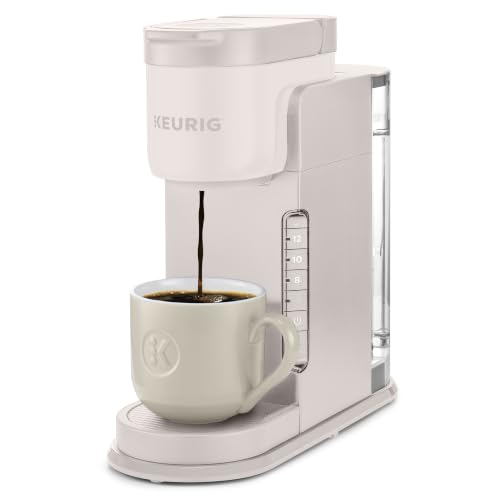
The Keurig K-Express Single Serve Coffee Maker, Warm Stone is built for the same reservoir-and-Strong-Brew routine as the black K-Express, in a lighter finish. In the context of best one serve coffee makers, every machine here brews exactly one serving, so the contest is entirely about which single-cup routine fits your counter and your coffee habit. Its confirmed headline specification — 3 brew sizes — is the fact to judge it by, because that single number decides more mornings than any styling detail. Read the strengths and trade-offs below as a fit test: if your routine matches the strengths and shrugs at the trade-offs, this is a serious candidate; if a trade-off lands on your daily habit, keep moving down the list.
Strengths
- Same 42 oz reservoir and Strong Brew as the black K-Express
- Warm Stone finish hides kitchen splashes gracefully
- Three sizes plus travel mug friendliness
Trade-offs Shoppers weighing nearby formats often compare Best Home Brew Coffee Makers Comparison before deciding.
- A finish variant — no functional gain over black
- Pod-only as listed
- Reservoir care is on you
Key specs (from verified listing data)
- 3 brew sizes
- 42oz removable reservoir
- Strong Brew button
- Travel mug friendly
- Works with all K-Cup pods
- Warm Stone finish
Day to day, ownership is mostly rhythm: the small habits of filling, brewing or blending, rinsing, and resetting for tomorrow. The honest limitation is that functionally a finish variant, so it adds no brewing capability over the black version. None of that makes the machine a bad buy — it makes it a specific buy, for the household described in the verdict line. Shoppers who try to force a specific machine into a general role are the ones who end up disappointed and leave the angry reviews; shoppers who match machine to routine almost never do.
Best for: the same reservoir-and-Strong-Brew routine as the black K-Express, in a lighter finish / Not suited for: shoppers expecting extra features for the finish Shoppers weighing nearby formats often compare Best Home Brew Coffee Makers Comparison Chart before deciding.

Elite Gourmet 14 oz Single-Serve Coffee Maker
Badge: Best for Grounds
The Elite Gourmet 14 oz Single-Serve Coffee Maker is built for solo drinkers who brew with grounds and want the smallest possible routine. In the context of best one serve coffee makers, every machine here brews exactly one serving, so the contest is entirely about which single-cup routine fits your counter and your coffee habit. Its confirmed headline specification — 14 oz single-serve capacity — is the fact to judge it by, because that single number decides more mornings than any styling detail. Read the strengths and trade-offs below as a fit test: if your routine matches the strengths and shrugs at the trade-offs, this is a serious candidate; if a trade-off lands on your daily habit, keep moving down the list. Shoppers weighing nearby formats often compare How To Choose The Best Thermal Carafe Coffee Makers 2026 Guide before deciding.
Strengths
- Reusable filter means grounds and loose-leaf tea with no pod cost per cup
- One-touch, 600W brewing is about as simple as single serve gets
- Auto shut-off and dishwasher-safe parts keep upkeep light
Trade-offs
- One 14 oz serving at a time
- No pod convenience unless you add your own routine
- Small format means refilling water for every cup
Key specs (from verified listing data)
- 14 oz single-serve capacity
- 600W
- One-touch operation
- Reusable filter for grounds and loose-leaf tea
- Auto shut-off
- Dishwasher-safe parts
- Includes travel mug positioning
Day to day, ownership is mostly rhythm: the small habits of filling, brewing or blending, rinsing, and resetting for tomorrow. The honest limitation is that a single 14 oz serving per cycle, so back-to-back drinks for guests mean back-to-back brewing. None of that makes the machine a bad buy — it makes it a specific buy, for the household described in the verdict line. Shoppers who try to force a specific machine into a general role are the ones who end up disappointed and leave the angry reviews; shoppers who match machine to routine almost never do.
Best for: solo drinkers who brew with grounds and want the smallest possible routine / Not suited for: households brewing for several people at once
Keurig K-Mini Mate Single Serve Coffee Maker
Badge: Best for Small Spaces
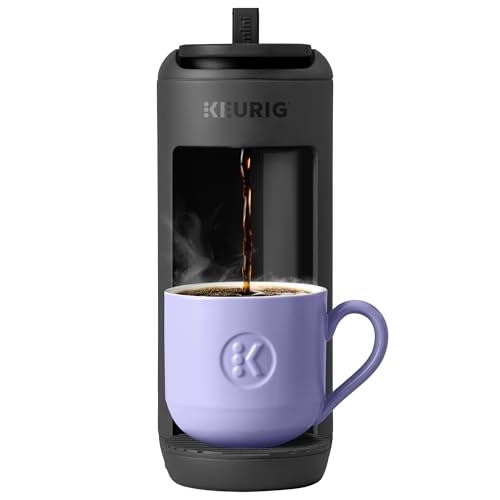
The Keurig K-Mini Mate Single Serve Coffee Maker is built for one-person households, dorm rooms, and desks where counter space is the binding constraint. In the context of best one serve coffee makers, every machine here brews exactly one serving, so the contest is entirely about which single-cup routine fits your counter and your coffee habit. Its confirmed headline specification — brews up to a 12 oz cup — is the fact to judge it by, because that single number decides more mornings than any styling detail. Read the strengths and trade-offs below as a fit test: if your routine matches the strengths and shrugs at the trade-offs, this is a serious candidate; if a trade-off lands on your daily habit, keep moving down the list.
Strengths
- Among the smallest footprints in this pool — genuinely desk and dorm sized
- Brews up to 12 oz, enough for a real mug or travel cup
- Simple add-water-per-cup routine with nothing to program
Trade-offs
- No reservoir, so every cup starts with a refill
- Pod-only format
- Basic feature set with no strength control
Key specs (from verified listing data)
- Brews up to a 12 oz cup
- Compact, portable design
- K-Cup pod brewing
- Black finish
- Positioned for dorms and offices
Day to day, ownership is mostly rhythm: the small habits of filling, brewing or blending, rinsing, and resetting for tomorrow. The honest limitation is that you add water for each cup, so there is no reservoir convenience for a second drinker. None of that makes the machine a bad buy — it makes it a specific buy, for the household described in the verdict line. Shoppers who try to force a specific machine into a general role are the ones who end up disappointed and leave the angry reviews; shoppers who match machine to routine almost never do.
Best for: one-person households, dorm rooms, and desks where counter space is the binding constraint / Not suited for: anyone who wants a reservoir or strength settings
Tastyle Mini Single Serve Hot and Iced Coffee Maker
Badge: Best for Iced Coffee
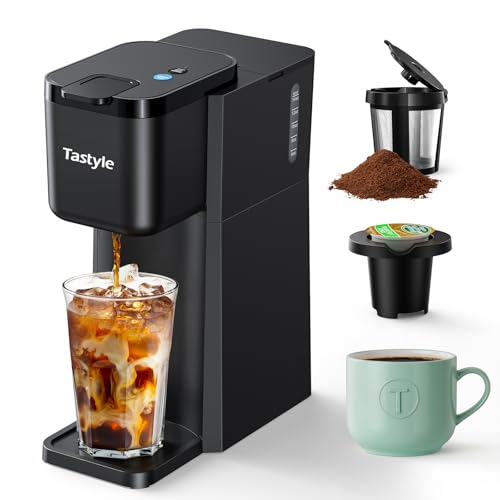
The Tastyle Mini Single Serve Hot and Iced Coffee Maker is built for single drinkers who split their week between hot morning cups and iced afternoon cups. In the context of best one serve coffee makers, every machine here brews exactly one serving, so the contest is entirely about which single-cup routine fits your counter and your coffee habit. Its confirmed headline specification — 6 to 14 oz brew sizes — is the fact to judge it by, because that single number decides more mornings than any styling detail. Read the strengths and trade-offs below as a fit test: if your routine matches the strengths and shrugs at the trade-offs, this is a serious candidate; if a trade-off lands on your daily habit, keep moving down the list.
Strengths
- Hot and iced brewing in one mini machine
- Takes both K-Cup pods and grounds
- 6 to 14 oz size range plus a recipe book for iced drinks
Trade-offs
- Mini capacity means one drink per cycle
- Iced results depend on ice and recipe, not the machine alone
- Lesser-known brand support compared with Keurig
Key specs (from verified listing data)
- 6 to 14 oz brew sizes
- Brews hot and iced coffee
- Works with K-Cup pods and grounds
- Includes a recipe book
- 120V, K310IC 2.0 version, Classic Black
Day to day, ownership is mostly rhythm: the small habits of filling, brewing or blending, rinsing, and resetting for tomorrow. The honest limitation is that a mini format, so serving a table of guests one cup at a time is slow work. None of that makes the machine a bad buy — it makes it a specific buy, for the household described in the verdict line. Shoppers who try to force a specific machine into a general role are the ones who end up disappointed and leave the angry reviews; shoppers who match machine to routine almost never do.
Best for: single drinkers who split their week between hot morning cups and iced afternoon cups / Not suited for: groups who need several drinks quickly

Keurig K-Express Single Serve Coffee Maker, Evergreen
Badge: Best Color Choice
The Keurig K-Express Single Serve Coffee Maker, Evergreen is built for K-Express shoppers who want the deep green finish to anchor a kitchen color scheme. In the context of best one serve coffee makers, every machine here brews exactly one serving, so the contest is entirely about which single-cup routine fits your counter and your coffee habit. Its confirmed headline specification — 3 brew sizes — is the fact to judge it by, because that single number decides more mornings than any styling detail. Read the strengths and trade-offs below as a fit test: if your routine matches the strengths and shrugs at the trade-offs, this is a serious candidate; if a trade-off lands on your daily habit, keep moving down the list.
Strengths
- Full K-Express function: reservoir, Strong Brew, three sizes
- Evergreen finish makes the machine a deliberate color choice
- Works with all K-Cup pods
Trade-offs
- Purely a color decision versus its siblings
- Pod-only as listed
- Dark finishes show dust more readily
Key specs (from verified listing data)
- 3 brew sizes
- 42oz removable reservoir
- Strong Brew button
- Travel mug friendly
- Works with all K-Cup pods
- Evergreen finish
Day to day, ownership is mostly rhythm: the small habits of filling, brewing or blending, rinsing, and resetting for tomorrow. The honest limitation is that again a finish variant of the same brewer, so the choice is aesthetic rather than functional. None of that makes the machine a bad buy — it makes it a specific buy, for the household described in the verdict line. Shoppers who try to force a specific machine into a general role are the ones who end up disappointed and leave the angry reviews; shoppers who match machine to routine almost never do.
Best for: K-Express shoppers who want the deep green finish to anchor a kitchen color scheme / Not suited for: anyone indifferent to color — pick a sibling instead
Comparison Table
| Pick | Badge | Capacity / format | Second spec | Listing |
|---|---|---|---|---|
| Keurig K-Express Single Serve Coffee Maker, Black | Best Overall | 3 brew sizes | 42 oz removable reservoir | Check on Amazon |
| Keurig K-Express Single Serve Coffee Maker, Warm Stone | Best Light Finish | 3 brew sizes | 42oz removable reservoir | Check on Amazon |
| Elite Gourmet 14 oz Single-Serve Coffee Maker | Best for Grounds | 14 oz single-serve capacity | 600W | Check on Amazon |
| Keurig K-Mini Mate Single Serve Coffee Maker | Best for Small Spaces | Brews up to a 12 oz cup | Compact, portable design | Check on Amazon |
| Tastyle Mini Single Serve Hot and Iced Coffee Maker | Best for Iced Coffee | 6 to 14 oz brew sizes | Brews hot and iced coffee | Check on Amazon |
| Keurig K-Express Single Serve Coffee Maker, Evergreen | Best Color Choice | 3 brew sizes | 42oz removable reservoir | Check on Amazon |
How to Choose the Right Coffee Maker for Your Routine
Single-serve buying turns on two axes. The first is water handling: a 42 ounce removable reservoir means filling every few days and is worth its counter space in any household brewing two or more cups daily, while add-water-per-cup minis trade that convenience for a footprint that fits anywhere. The second is input loyalty: pod machines are a commitment to the pod library and its running cost, while the grounds-based pick here trades a scoop of effort for freedom and thrift.
Start with batch reality. Count the cups your household actually drinks on a normal weekday morning, not the holiday brunch maximum. Machines are happiest sized to the daily case: a single-serve brewer serving a four-coffee household one cup at a time becomes a queue, and a 12-cup drip machine brewing for one person wastes coffee and counter space in equal measure. The right size is the one that matches Tuesday, with a plan — a guest pot, a café run — for the exceptional Saturday.
Next, decide your input. Pod systems trade a higher per-cup cost and packaging waste for speed, consistency, and zero measuring. Grounds systems trade a minute of measuring and a filter routine for lower running cost, fresher coffee, and any bean you like. Hybrid machines try to split the difference and genuinely suit mixed households, but they ask you to learn and clean two systems. There is no morally correct answer here; there is only the answer your half-awake self will actually use at 6:40 in the morning.
Reservoir size is the quiet convenience spec. A removable reservoir in the 40 to 60 ounce range means filling every few days instead of every cup, and removable matters because a tank you can carry to the sink gets washed, while a fixed tank gets neglected. Strength controls — a Strong Brew button on pod machines, brew strength settings on drip machines — are the second quality lever after the coffee itself, and worth more than most cosmetic features. Thermal carafes keep coffee hot without the cooked flavor a warming plate builds over an hour; glass carafes on plates are fine for drink-it-now households.
Finally, measure your counter honestly, including the space above it. Machines need clearance to open lids, remove reservoirs, and lift carafes, and the cabinet above the counter is where good purchases go to feel cramped. Depth matters too: a machine that must be pulled forward every morning will be, and that daily shuffle is the kind of friction that quietly kills routines. Choose the machine that fits the counter you have, not the kitchen you are planning.
How to Use, Clean, and Troubleshoot Your Coffee Maker
Single-serve machines are the easiest coffee makers to keep happy, and the steps below assume the pod-and-mini formats in this guide. The descale warning matters doubly here: narrow water paths in compact machines clog faster than drip machines do.
- Start with water. Fill with fresh, filtered water. Water is nearly all of what lands in the cup, and stale or heavily chlorinated water will flatten good coffee no matter what machine brews it.
- Match the dose to the machine. For pods, seat the pod firmly and close the handle fully. For grounds, use the maker’s scoop guidance and a level, even bed — channels in the grounds brew unevenly.
- Preheat the mug for small cups. A quick hot-water rinse of the mug keeps a small serving hot noticeably longer, because a cold ceramic mug is a heat sink.
- Brew, then taste before adjusting. Change one variable at a time — size, strength setting, or coffee — so you know what fixed what.
- Reset immediately. Eject the pod or dump the grounds, rinse what rinses easily, and leave the machine ready for tomorrow. Two minutes now beats a deep clean later.
Cleaning rhythm decides how long any of these machines tastes good. Wipe the brew area weekly, wash removable reservoirs and carafes with warm soapy water rather than letting coffee oils bake on, and descale on the rhythm your water hardness demands — monthly for hard water, quarterly for soft. Oils go rancid and scale insulates heating elements; most “my machine makes bad coffee now” stories are one of those two, not a broken brewer.
Problem: coffee tastes weak → what to do. Brew a smaller size or engage the strength setting before blaming the coffee; the same coffee at a smaller water volume is a bolder cup. Problem: coffee tastes bitter or stale → what to do. Clean first — old oils are the usual culprit — then check that your coffee itself is fresh and stored away from heat. Problem: brewing slows or sputters → what to do. Descale; mineral buildup narrows water paths and drops temperature, and it is the most fixable fault in home coffee.
The Pod Library Is the Real Product
Buying a K-Cup machine is buying into a library: hundreds of coffees, teas, and cocoas in identical capsules, available everywhere, at a per-cup cost that adds up quietly. The library’s breadth is the format’s genius — decaf for the evening, a strong roast for dawn, hot chocolate for a guest — with zero measuring and near-zero cleanup. Its cost is equally real: money per cup, packaging per cup, and a ceiling on freshness that no pod fully escapes. The Elite Gourmet in this guide is the counter-argument in machine form, and households genuinely torn between the two should weigh a month of honest pod spending before deciding.
Single Serve at the Office and the Desk
A large share of one-serve machines live at work, where their virtues sharpen: no shared pot politics, no burnt afternoon carafe, a cup brewed exactly when wanted. Desk duty adds two checks to the buying list — auto shut-off, because office machines get forgotten, and a footprint that respects a desk’s real estate, which is where the K-Mini Mate earns its badge. Reservoir machines suit shared office corners; minis suit personal desks. Either way, the descale schedule belongs on a calendar, because office water is rarely kind.
Final Recommendation
Start with the black K-Express for most households: the reservoir, three sizes, and Strong Brew button are the complete single-serve package in this pool.
The shortlist, in order: the Keurig K-Express Single Serve Coffee Maker, Black (best overall), the Elite Gourmet 14 oz Single-Serve Coffee Maker (best for grounds), the Keurig K-Express Single Serve Coffee Maker, Evergreen (best color choice). Start at the top of that list unless your space, batch size, or routine clearly points elsewhere in the six.
Pick the Elite Gourmet if pods are the thing you are avoiding, the K-Mini Mate if the machine must fit a desk or dorm, and the Tastyle if iced coffee is a daily rather than occasional drink. The two other K-Express finishes are the same recommendation wearing colors — choose them with your kitchen, not against it.
Common Buying Mistakes
The most common mistake is buying for the household you host twice a year instead of the one that drinks coffee every day, which is how single drinkers end up with 12-cup machines and families end up queuing at a mini brewer. The second is ignoring running cost and routine cost: pods are a subscription you drink, and grounds are a small daily ritual — pick the one you will not resent in month six. The single-serve-specific mistake is forgetting the mug test: a machine whose spout clearance rejects your favorite travel mug will annoy you every single day, long after its brew quality is forgiven.
Third, shoppers chase feature lists and skip the fit checks: reservoir removability, mug clearance, lid-opening height under cabinets, and whether the carafe pours without dribbling down its own side. Fourth, they never descale, then blame the machine for coffee that tastes like the inside of a kettle. Fifth, they judge a machine on its first cup with unfamiliar coffee — dial in size and strength over a week before concluding anything. Every pick in this guide can make a good cup inside its format; the mistakes above are how good machines end up in the donation box.
Frequently Asked Questions
Are single-serve machines more expensive to run?
Pod machines are, per cup; the grounds-based Elite Gourmet is not. The machine price is the small number in this category — the year’s coffee is the large one.
Can one-serve machines make tea or cocoa?
Pod machines can, through their pod libraries and a hot-water routine. The Elite Gourmet explicitly handles loose-leaf tea through its reusable filter.
How fast is a single cup?
About a minute for pod machines once heated, a few minutes for the grounds-based mini. Reservoir models remove the refill step, which is where their daily time saving lives.
Do I need the Strong Brew button?
If you brew large sizes or like a bolder cup, yes — it is the main defense against the watery large pod cup. Small-size brewers can live without it.
What size reservoir is enough?
At two cups a day, 42 ounces is roughly three days of freedom. At one cup a day, a mini’s refill-per-cup costs seconds and saves real counter space.
Can these machines brew iced coffee?
The Tastyle pick is built for it. Other single-serve machines can brew hot over ice, but a designed iced mode manages dilution better.
Counter Space Is a Feature
Measure three numbers before any single-serve purchase: the footprint, the height with the lid fully open, and the clearance your tallest travel mug needs under the spout. Manufacturers quote closed heights; mornings happen with lids open and reservoirs lifted out. A machine that fits closed but not open will be dragged forward daily, and that small daily annoyance compounds into the kind of resentment that ends with a perfectly good brewer in a cupboard. The mini machines in this pool exist because this measurement fails so often in dorms, offices, and small apartments — if your numbers are tight, believe them and buy small on purpose.
The Second-Drinker Problem
Single-serve machines are honest about serving one cup at a time, and households discover their real pattern only after purchase: the weekday solo cup is easy, but the weekend second and third cups turn the machine into a small queue. If two people drink on the same schedule, reservoir models shorten the queue by removing the refill step; if a household regularly serves four or more, a drip pot is simply the right tool and no single-serve machine will charm its way around the arithmetic. Buying for the queue you actually have — not the one you imagine — is the whole secret of this category.
Travel Mugs, Clearance, and Other Morning Physics
Travel mug friendliness is a clearance measurement, not a vibe. Tall mugs need the drip tray removed on many machines, which is fine until the day a short mug goes under the spout without the tray and splashes. Check your actual mug against the listed design: tray in, tray out, and the honest height between spout and counter. The same physics applies to iced coffee: a glass full of ice is taller and narrower than a mug, and the Tastyle-style mini format in this pool earns its place partly by treating the tall iced glass as a first-class citizen.
Pods, Grounds, and the Cost You Actually Feel
The running-cost difference between pods and grounds is real but smaller than the routine difference. Pods charge you for certainty: every cup identical, no measuring, no stale half-bag of beans. Grounds charge you in attention: a scoop, a rinse, a filter routine. Over a year, a two-cup-a-day household feels the pod premium in the grocery bill and feels the grounds routine in the morning minutes. Neither is a trap; the trap is choosing against your own temperament and then resenting the machine for a decision you made. If you are genuinely unsure, the hybrid and reusable-filter routes in this guide exist precisely to let a household live in both worlds while it finds out which one it is.
Water, Scale, and the Taste You Cannot Name
Most mysterious declines in coffee quality are water stories. Hard water lays scale on heating elements, which lowers brew temperature, which makes coffee taste sour and thin — and the drinker blames the beans. Soft, heavily chlorinated water flattens delicate flavors from the other direction. The fix hierarchy is cheap to expensive: use fresh filtered water, descale on schedule, and only then shop for different coffee or a different machine. Keep a simple log for two weeks — water source, coffee, size, strength setting — and patterns appear that no amount of guessing would have found. Machines in this guide are consistent; water is the variable nobody tracks.
Counter Space Is a Feature
Measure three numbers before any single-serve purchase: the footprint, the height with the lid fully open, and the clearance your tallest travel mug needs under the spout. Manufacturers quote closed heights; mornings happen with lids open and reservoirs lifted out. A machine that fits closed but not open will be dragged forward daily, and that small daily annoyance compounds into the kind of resentment that ends with a perfectly good brewer in a cupboard. The mini machines in this pool exist because this measurement fails so often in dorms, offices, and small apartments — if your numbers are tight, believe them and buy small on purpose.
The Second-Drinker Problem
Single-serve machines are honest about serving one cup at a time, and households discover their real pattern only after purchase: the weekday solo cup is easy, but the weekend second and third cups turn the machine into a small queue. If two people drink on the same schedule, reservoir models shorten the queue by removing the refill step; if a household regularly serves four or more, a drip pot is simply the right tool and no single-serve machine will charm its way around the arithmetic. Buying for the queue you actually have — not the one you imagine — is the whole secret of this category.
Reading Any Listing Like an Editor
Every product listing mixes three kinds of sentence: verifiable specifications, comparative claims, and atmosphere. Specifications — capacities, wattage, dimensions, what is in the box — can be checked and should decide purchases. Comparative claims — quieter, faster, smoother — mean little without a stated comparison point, and this guide treats them as tier hints at most. Atmosphere is everything else. Shoppers who sort a listing into those three piles before reading reviews make calmer decisions, because the spec pile is short, checkable, and identical for every reader, while the other two piles are written to be felt rather than verified. When a pick in this guide states a number, it comes from the verified spec pile; when it offers a judgment, the judgment is labeled with its reasoning and its limits.
The Two-Year Test
Appliances are bought in a day and judged across years, so run the two-year test before choosing: picture this machine in its second year, seals slightly worn, novelty gone, routine established. What will you still value? Almost never the feature that closed the sale in the store. It will be the rinse that takes ten seconds, the cup that is always the right size, the control you can work half-asleep, the footprint that never started an argument with the counter. The picks in this guide were ranked with that picture in mind, which is why cleanup, capacity fit, and routine friction are weighted as heavily as headline performance throughout.
Accessories, Spares, and the Hidden Second Purchase
Small appliances live inside an ecosystem of seals, lids, cups, filters, and blades, and the second purchase — the replacement part in year two — is where ownership costs quietly live. Before committing, consider which parts of your chosen machine are wear items, whether they are standard enough to find easily, and whether your routine needs spares from day one: a second cup, an extra filter, a spare seal. Buying the spare with the machine, while the model is current and the part is findable, is one of the cheapest forms of insurance in the small-appliance world, and it converts a future breakdown from a crisis into a drawer opening.
Storage Is Part of the Specification
A machine’s working footprint is only half its spatial cost; the other half is where its cups, lids, carafes, and accessories sleep. Multi-part sets earn their convenience and bill it to a cupboard. Before choosing the generous set, walk the storage honestly: measure the shelf, count the parts, and decide which existing resident gets evicted. Kitchens forgive a large machine that stores compactly and resent a small one whose parts colonize a drawer. The right purchase is the one whose whole ecosystem — machine plus parts plus spares — fits the kitchen as it is, not as a weekend of organizing might make it.


