Disclosure: topratedkitchenware.com is reader-supported. When you buy through links on our site, we may earn an affiliate commission from Amazon and other retailers, at no extra cost to you.
Where to buy
If you are shopping for the best self cleaner for toilets, start with the shortlist below. Three of the six products below are genuine toilet cleaners you apply and let work in the bowl — those carry purchase links. The other three are drain and main-line treatments that solve different problems in different pipes; they are covered honestly as prose-only comparisons, with no purchase link, so you can see exactly why they do not belong in a toilet-bowl routine.
- Green Gobbler Toilet Clog Defense — check the latest price on Amazon.
- method Antibacterial Toilet Bowl Cleaner, Spearmint — check the latest price on Amazon.
- Better Life Toilet Bowl Cleaner, Tea Tree & Peppermint — check the latest price on Amazon.
- Roebic K-97 Main Line Cleaner — covered below as a prose-only comparison point (no purchase link, for the reason explained in its review).
- Green Gobbler Enzyme Drain Cleaner, 1 Gallon — covered below as a prose-only comparison point (no purchase link, for the reason explained in its review).
- Drano FlowGuard Build-Up Remover — covered below as a prose-only comparison point (no purchase link, for the reason explained in its review).
Read the full guide ↓
Searching for the best self cleaner for toilets usually means one thing: you want a product that does the cleaning work for you — something you apply, let sit, and flush, without a Saturday spent scrubbing. This guide takes that wish seriously and sorts the six products in the verified pool into what they actually are. Three are true toilet bowl cleaners or bowl treatments, and they are the linked picks: a preventive coating treatment from Green Gobbler, an antibacterial bowl cleaner from method, and a plant-based gel from Better Life. The other three are drain-line and main-line products that were filed near this category; they are reviewed prose-only, with a plain explanation of what they do instead, because putting them in your bowl would waste money and solve nothing.
The honest framing matters because ‘self cleaning’ covers three different jobs that shoppers constantly blur together: cleaning the bowl’s surfaces, preventing clogs in the trap and line, and maintaining the drain system beyond the toilet. No single bottle does all three. The right purchase depends on which problem is actually in front of you — visible grime and germs, a toilet that clogs too easily, or a whole house line that is slowing down.
Each linked pick below links to its live listing — check the latest price on Amazon there, since this guide prints no prices. If your interest in low-effort bathrooms extends to the fixture itself, the self-flushing hardware covered in Best Toilets With A Bidet is the natural next read after the chemistry is sorted.
Key Takeaways
- Only three of the six pooled products are true toilet-bowl products; the other three treat drain and main lines and are covered prose-only.
- Green Gobbler Toilet Clog Defense is a preventive: it coats pipes to help stop clogs forming and to improve flush performance — it is not a scrub substitute for a dirty bowl.
- method’s antibacterial cleaner is the disinfecting pick, stated to kill 99.9% of household germs while cleaning bowl, seat, and under the rim.
- Better Life is the plant-based route for stain and odor work, sold as a two-pack of 24-ounce bottles.
- Septic safety is a stated feature of the preventive pick — always confirm a product’s septic and plumbing claims on its label before use.
- Match the product to the problem: bowl grime, clog prevention, and line maintenance are three different purchases.
In this guide
Quick Picks
| Pick | Badge | Standout trait | Link |
|---|---|---|---|
| Green Gobbler Toilet Clog Defense | Best for Clog Prevention | Coats pipes to help prevent clogs and improve flush performance; septic-safe per listing | Check on Amazon |
| method Antibacterial Toilet Bowl Cleaner, Spearmint | Best Antibacterial Cleaner | Disinfecting bowl cleaner, spearmint, 24 fl oz | Check on Amazon |
| Better Life Toilet Bowl Cleaner, Tea Tree & Peppermint | Best Plant-Based Cleaner | Non-toxic stain and odor gel, two 24-ounce bottles | Check on Amazon |
| Roebic K-97 Main Line Cleaner | Prose-Only: Main-Line Treatment | Bacteria and enzyme cleaner for the main sewer line — not a bowl product | Prose-only (see review) |
| Green Gobbler Enzyme Drain Cleaner, 1 Gallon | Prose-Only: Drain and Septic Treatment | Gallon enzyme drain cleaner for grease traps and septic tanks | Prose-only (see review) |
| Drano FlowGuard Build-Up Remover | Prose-Only: Build-Up Remover | Enzyme build-up remover for drains and pipes; explicitly not for existing blockages | Prose-only (see review) |
How These Picks Were Chosen
The pool for this keyword mixed two product families, so the first act of research was separation. Products were classed as linked picks only if their stated purpose is the toilet bowl itself — cleaning it, disinfecting it, or treating the toilet’s own trapway to prevent clogs. Products whose stated purpose is the drain line or main sewer line were kept in the guide as prose-only comparisons, because shoppers meet them on the same shelf and deserve a clear account of the difference rather than silence.
This is a research-led guide built on each product’s verified listing description, not on laboratory testing. No germ-kill or clog-prevention claim here goes beyond what the maker states, and application advice follows the general pattern of each product type — when you use any of them, the label on your bottle is the authority. If a product’s honest role differs from the keyword, the review says so in its first lines.
Detailed Reviews: best self cleaner for toilets, Pick by Pick

Green Gobbler Toilet Clog Defense
Badge: Best for Clog Prevention
Strengths
- Preventive approach: treats the trap and pipe walls so clogs are less likely to form
- Stated safe for septic systems and aimed at old plumbing and low, slow-flow toilets
- Five treatments in the bottle makes it a routine, not a one-off
Trade-offs
- It prevents rather than cleans — a visibly dirty bowl still needs a bowl cleaner
- Not a solution for a clog that already exists
- Works on a schedule; skipping months erases the benefit
| Purpose | Toilet clog prevention and flush performance |
|---|---|
| Method | Coats pipes (per listing title) |
| System safety | Safe for septic (per listing title) |
| Treatments | 5 treatments |
| Size | 60 oz |
Green Gobbler’s Toilet Clog Defense is the closest thing in this pool to a ‘self-cleaning’ toilet product in the preventive sense: instead of scrubbing what is already there, it coats the inside of the trap and pipes so waste is less likely to catch, build, and become the clog you meet with a plunger at midnight. The listing aims it squarely at the toilets that need help most — older plumbing, and the low-flow and slow-flow models whose weaker flushes leave material behind — and states that it improves flush performance as part of the same treatment.
Used well, this is a calendar product. You apply a treatment, let the coating do its quiet work over the following weeks, and repeat on the rhythm the label sets out; five treatments per bottle means one purchase covers a long stretch of prevention. It is also stated to be safe for septic systems, which matters enormously in homes where the wrong chemical can upset the tank’s biology — but as with every product in this guide, confirm the claim on the physical label before the first use, because formulations and instructions are the maker’s to change.
Be clear about what it is not. It will not remove the rust ring, the hard-water scale, or the grime under your rim — that is the job of the two cleaners reviewed next — and it is not an unclogger for a blockage that already exists. Its honest role is to make clogs rarer and flushes cleaner in a toilet that is prone to both problems. For the right household, that is the most valuable ‘self-cleaning’ of all: the kind where nothing ever goes wrong.
Best for: Homes with clog-prone, low-flow, or older toilets, and septic-system owners wanting prevention / Not suited for: Anyone whose actual problem is a dirty bowl or an existing blockage
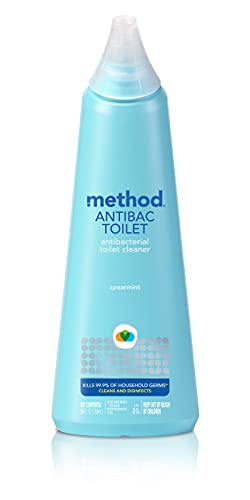
method Antibacterial Toilet Bowl Cleaner, Spearmint
Badge: Best Antibacterial Cleaner
Strengths
- Stated to kill 99.9% of household germs while it cleans
- Works on bowl, seat, and under the rim — the full contact zone
- Spearmint scent is fresher and less chemical than classic bowl cleaners
Trade-offs
- A cleaner, not a preventive — it does nothing for clog tendency
- Antibacterial formulas deserve care around septic systems; check the label for your setup
- 24 fl oz is a modest bottle for multi-bathroom homes
| Purpose | Antibacterial toilet bowl cleaner |
|---|---|
| Claim | Kills 99.9% of household germs (per listing title) |
| Scent | Spearmint |
| Size | 24 fl oz |
| Use areas | Toilet bowls, seats, and under rim (per listing title) |
method’s antibacterial cleaner is the pick for the shopper whose ‘self cleaner’ search really means ‘I want the toilet genuinely sanitized without a harsh chemical smell.’ The listing states that it kills 99.9% of household germs and is tough on grime, cleaning and sanitizing in one step, and it is formulated for the whole contact zone — bowl, seat, and under the rim, which is where odor and bacteria actually live. The spearmint scent is a deliberate part of the appeal: the bathroom smells like a garden herb rather than a swimming pool after you clean.
The routine is the familiar one for this product type: apply under the rim and around the bowl, let it dwell for the time the label specifies — dwell time is what separates disinfecting from merely wiping — scrub lightly with a brush, and flush. Because it is a true cleaner, it handles the visible work the Green Gobbler preventive does not: the waterline ring, the splash zone, the gradual dulling that makes a bathroom feel uncared for even when it is technically clean.
Two honest cautions. First, antibacterial strength and septic systems need a label check: many homes on septic prefer to limit antibacterial products, and the maker’s guidance governs. Second, this is a 24 fl oz bottle; a household cleaning three bathrooms weekly will walk through it at a pace worth knowing before you commit to it as the house standard. Within those limits, it is the most complete bowl cleaner in this pool.
Best for: Households prioritizing disinfection and a pleasant scent in a single bowl cleaner / Not suited for: Clog prevention, or septic owners whose label check says no
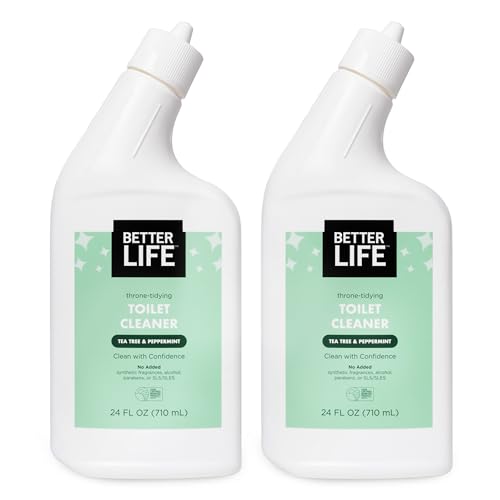
Better Life Toilet Bowl Cleaner, Tea Tree & Peppermint
Badge: Best Plant-Based Cleaner
Strengths
- Plant-based, non-toxic positioning for homes avoiding harsh chemicals
- Targets stains and odor together, in a clinging gel format
- Sold as a pack of two 24-ounce bottles — a sensible household quantity
Trade-offs
- No antibacterial kill claim — it cleans and deodorizes rather than disinfecting
- Plant-based gels can need longer dwell or a second pass on old scale
- Tea tree and peppermint scent is distinctive; not everyone loves it
| Purpose | Toilet bowl stain and odor removal |
|---|---|
| Formula | Plant-based, non toxic (per listing title) |
| Format | Cleaning gel |
| Pack | 2 x 24 ounce |
| Scent | Tea Tree & Peppermint |
Better Life’s cleaner is the pick for the household that reads ingredient panels. Its listing describes a plant-based, non-toxic stain and odor remover in a gel format, scented with tea tree and peppermint, and sold as a two-pack of 24-ounce bottles. The gel format matters more than it might seem: gels cling to the bowl’s vertical surfaces and under the rim instead of sheeting straight into the water, and cling time is cleaning time for a product you want working while you do something else — the practical heart of any ‘self cleaner’ search.
Set expectations by category. This is a cleaner and deodorizer, not a disinfectant with a germ-kill claim, and not a clog preventive. Its work is the visible and smellable kind: lifting stains, clearing the waterline, and leaving the bowl fresher. On fresh and moderate buildup, plant-based gels of this type perform admirably; on years of hard-water scale, expect a longer dwell and possibly a second application, which is a fair trade for a formula a parent can use without airing out the house.
The two-bottle pack suits real households — one bottle lives in each bathroom, or the second is the reserve that prevents the mid-clean empty-bottle discovery. For homes on septic, plant-based positioning is generally the friendlier direction, though the label remains the authority. If your priority order is ingredients first, disinfection second, this is your pick of the three linked products; if disinfection first, the method cleaner above reverses that order.
Best for: Ingredient-conscious homes wanting a plant-based stain and odor cleaner in a useful two-pack / Not suited for: Anyone needing a stated germ-kill claim or clog prevention
Roebic K-97 Main Line Cleaner
Badge: Prose-Only: Main-Line Treatment
Why this pick is prose-only: Main-line/sewer treatment, not a toilet bowl cleaner or toilet-specific preventive; it acts far downstream of the toilet and does not clean or treat the bowl or trap.
Strengths
- Bacteria and enzyme formula breaks down organic buildup in the main line
- Aimed at preventing sewer and septic line clogs at the system level
- 32 fl oz treatment format suits periodic whole-house maintenance
Trade-offs
- It treats the main line, not the toilet bowl — it will not clean a bowl or prevent a toilet trap clog the way a bowl product does
- Works gradually on buildup; useless as a quick fix
- Sold and dosed as a line treatment, so per-use thinking differs from cleaners
| Purpose | Main line cleaner (per listing title) |
|---|---|
| Formula | Bacteria + enzymes |
| Size | 32 fl oz |
| Targets | Organic buildup in sewer and septic lines |
Roebic K-97 is a good product filed under the wrong keyword, and this review exists to keep you from buying it for the wrong job. It is a main line cleaner: a bacteria-and-enzyme formula that breaks down organic buildup inside the main sewer or septic line and helps prevent clogs at that level of the system. That is valuable maintenance for a house whose line is aging — and it has almost nothing to do with cleaning a toilet bowl or keeping a toilet’s own trap clear.
The difference is plumbing geography. A toilet clogs in its trapway or the first bend of its branch line, a few feet from the bowl. The main line is many feet and several junctions away, carrying the whole house. An enzyme treatment dosed for the main line passes the toilet’s problem zone quickly and dilutely; it is simply not aimed there. Conversely, the bowl cleaners above cannot do K-97’s job either. Each product is competent inside its own territory and a waste of money outside it.
So when is K-97 the right purchase? When a plumber or your own experience says the main line is the slow point — multiple fixtures draining sluggishly, gurgling across the house, a history of line backups. In that situation it is a sensible, septic-friendly maintenance choice, and the broader context in Best Toilets That Do Not Clog explains how fixture-level and line-level prevention fit together. It is presented here prose-only, with no purchase link, because it does not match this keyword’s core job: cleaning or treating the toilet itself.
Best for: Whole-house line maintenance when the main sewer or septic line is the known weak point / Not suited for: Cleaning a toilet bowl or preventing toilet trap clogs — the job of the linked picks above
Green Gobbler Enzyme Drain Cleaner, 1 Gallon
Badge: Prose-Only: Drain and Septic Treatment
Why this pick is prose-only: Drain, grease-trap, and septic treatment; not a toilet bowl product and not aimed at the toilet trap, so it does not match the keyword’s core.
Strengths
- Enzyme formula breaks down oils and fats — the grease-trap and septic use case
- Gallon size with up to 8 treatments suits big maintenance jobs
- Anti-glug bottle is a thoughtful touch for a gallon of anything
Trade-offs
- A drain and grease-trap product, not a toilet bowl cleaner
- Gallon quantity is oversized for a household that only wanted a bowl product
- Enzyme action is gradual — maintenance, not rescue
| Purpose | Enzyme drain cleaner for grease traps and septic tanks (per listing title) |
|---|---|
| Action | Breaks down oils and fats |
| Size | 1 gallon |
| Treatments | Up to 8 treatments |
The gallon Green Gobbler is the second product in this pool whose name sounds like the keyword and whose job is not. Its listing is explicit: an enzyme drain cleaner for grease traps and septic tanks, breaking down oils and fats, safe for pipes, in a gallon bottle good for up to eight treatments. That is a kitchen-and-system maintenance product — the thing a café uses on a grease trap or a homeowner uses to keep a septic system’s biology fed — not a self cleaner for a toilet.
Enzymes are patient chemistry. They digest organic material over hours and days, which makes them excellent at preventing the slow accretion that narrows pipes, and pointless as a bowl cleaner: they will not lift a stain, kill odor at the rim, or polish porcelain while you make coffee. Pouring this into a toilet bowl to ‘self clean’ it would spend a system product on a surface problem and disappoint everyone involved.
Buy it — on its own merits, elsewhere — if you maintain a septic tank, a grease trap, or drains with a known fat-and-oil problem. For this keyword’s job, the linked trio above covers the territory: prevention in the toilet’s own pipes with the first Green Gobbler, disinfection with method, plant-based cleaning with Better Life. This gallon is covered prose-only, without a purchase link, to keep that boundary bright.
Best for: Septic tank, grease trap, and drain maintenance — its actual stated purposes / Not suited for: Toilet bowl cleaning or toilet-specific prevention
Drano FlowGuard Build-Up Remover
Badge: Prose-Only: Build-Up Remover
Why this pick is prose-only: General drain build-up remover; its toilet reference is a safety note, not bowl-cleaning or toilet-trap performance, so it does not match the keyword’s core.
Strengths
- Enzyme formula helps prevent clogs by removing buildup in pipes
- Stated safe for pipes, septic systems, and toilets as part of a drain routine
- Large 60 oz format suits whole-house preventive schedules
Trade-offs
- A general drain build-up remover, not a toilet bowl cleaner
- Explicitly not for existing blockages
- Its toilet mention is about drain safety, not bowl cleaning performance
| Purpose | Build-up remover for drains (per listing title) |
|---|---|
| Formula | Enzymes |
| Size | 60 oz |
| Limit | Not for existing blockages (per listing title) |
Drano FlowGuard is the subtlest mismatch of the three prose-only products, because its listing does mention toilets — it states the formula is safe for pipes, septic systems, and toilets. Read carefully, though: that is a safety statement about where the product can be used in a drain routine, not a claim that it cleans a toilet bowl or treats a toilet’s trap the way this keyword’s shoppers mean by a self cleaner. Its actual job is removing build-up in drains to help prevent clogs, and its listing is equally clear about the boundary: not for existing blockages.
As a drain maintainer, it is a respectable design — enzyme-based, preventive, in a generous 60 oz format that suits a household treating several drains on a schedule. If your home’s drains are generally slow and gurgly, it belongs on your list alongside the Roebic. If your problem lives in one toilet — a dirty bowl, a rim that smells, a trap that clogs — it belongs nowhere near the top of it.
It is covered prose-only, with no purchase link, for the same reason as the other two line products: honest sorting is the service this guide exists to provide. The households in Best Toilets Values thinking about whole-bathroom upkeep will find drain maintenance a worthy topic — in a drain guide. Here, the linked three are the toilet products.
Best for: Whole-house drain build-up prevention on a schedule / Not suited for: Cleaning a toilet bowl or unclogging anything, by its own listing
Comparison Table
| Pick | Badge | Key attribute | Second attribute | Link |
|---|---|---|---|---|
| Green Gobbler Toilet Clog Defense | Best for Clog Prevention | Preventive pipe-coating treatment | 5 treatments, septic-safe per listing | Check on Amazon |
| method Antibacterial Toilet Bowl Cleaner, Spearmint | Best Antibacterial Cleaner | Antibacterial bowl cleaner | Spearmint, 24 fl oz | Check on Amazon |
| Better Life Toilet Bowl Cleaner, Tea Tree & Peppermint | Best Plant-Based Cleaner | Plant-based stain and odor gel | 2 x 24 oz, tea tree & peppermint | Check on Amazon |
| Roebic K-97 Main Line Cleaner | Prose-Only: Main-Line Treatment | Main line enzyme treatment | 32 fl oz | Prose-only |
| Green Gobbler Enzyme Drain Cleaner, 1 Gallon | Prose-Only: Drain and Septic Treatment | Enzyme drain/grease-trap treatment | 1 gallon, up to 8 treatments | Prose-only |
| Drano FlowGuard Build-Up Remover | Prose-Only: Build-Up Remover | Drain build-up remover | 60 oz, enzyme formula | Prose-only |
How to Choose a Self Cleaner for Your Toilet
Name your problem before you name your product. If the bowl is dirty or germy, you need a bowl cleaner — disinfecting (method) or plant-based (Better Life) according to your household’s chemistry rules. If the bowl is clean but the toilet clogs too easily, you need prevention aimed at the toilet’s own trap and line — the role of Green Gobbler Toilet Clog Defense. If several fixtures in the house drain slowly, your problem is downstream in the drain or main line, and none of the bowl products will touch it; that is the prose-only products’ territory and often a plumber’s.
The label checks that protect you
Three checks before any first use: septic compatibility if your home has a tank, because antibacterial and chemical products interact with tank biology differently; material safety, since some cleaners are wrong for certain bowl finishes or for the rubber and plastic parts inside a tank; and dwell time, because a disinfectant flushed in ten seconds has not disinfected anything. The label is written by the people who formulated the product — in any disagreement between a guide and a label, the label wins.
Finally, think in routines, not rescues. Every genuinely ‘self-cleaning’ outcome in this category comes from a small action repeated on schedule — a preventive treatment monthly, a bowl gel weekly, a line treatment seasonally. The households that never meet a plunger are not lucky; they are calendared. Shoppers comparing fixture-level solutions will find the hardware side of low-maintenance bathrooms in Best Toilets Wirecutter-style roundups and in this site’s own toilet guides.
How to Use Toilet Cleaners and Preventives Well
For bowl cleaners, the effective routine is consistent: lift the seat, apply the product under the rim first so gravity carries it down the bowl walls, coat the waterline and any stained areas, then walk away for the full dwell time on the label. Scrub with a bowl brush — the product loosens, the brush removes — paying attention to the rim jets, and flush. For gels, resist the urge to scrub immediately; cling time is the product working.
- Preventive treatments: apply exactly as the label directs, typically into the bowl or line, and then leave the system alone for the stated window — flushing or heavy use too soon washes the treatment past its workplace.
- Never mix products. A bowl cleaner and a drain product in the same bowl at the same time is a chemistry experiment with no upside; finish and flush one routine before starting another.
- Keep a simple log on the inside of the cabinet door: product, date, next due. Prevention fails by forgetting, not by chemistry.
- Store everything latched and out of children’s and pets’ reach, including the plant-based products — non-toxic positioning is not the same as edible.
Troubleshooting common disappointments
Problem: the bowl still shows a ring after cleaning → that ring is usually mineral scale, not grime; cleaners need longer dwell on scale, and truly old scale may need repeated applications or a pumice stone made for porcelain. Problem: clogs continue despite a preventive → the cause may be mechanical (a partial obstruction, a failing flush) rather than buildup; prevention cannot fix hardware. Problem: odor persists after thorough cleaning → check the rim jets and the tank for growth, and confirm the bowl’s water level is holding, since a low bowl lets sewer gas past the trap.
Bowl, Trap, Line, Tank: A Homeowner’s Map of Where Problems Live
Most disappointment in this category is geographic. The bowl is the visible surface — stains, germs, odor at the rim. The trap is the S-curve built into the toilet that holds water and passes waste; it is where toilet clogs actually happen. The branch line and main line carry everything away and accumulate the slow buildup that enzyme products treat. The septic tank, if you have one, is a living system whose bacteria your product choices either respect or disrupt. Four territories, four different products, and a shelf that happily sells any of them for any purpose.
A useful household plan touches each territory at its own rhythm: bowl weekly, prevention monthly, lines seasonally, and septic awareness always. That plan, built from the linked products above plus the line treatments when your house genuinely needs them, is what ‘self-cleaning’ honestly means for a toilet — not a miracle bottle, but a system that rarely surprises you. Owners weighing a fixture upgrade as part of the same project can see how the toilet itself changes the maintenance picture in Best Toilets With A Bidet For Large People and related fixture guides.
The Chemistry, in Plain Language: What Each Product Family Actually Does
Three chemistries share this guide’s shelf, and a paragraph on each prevents a year of confused purchases. Coating preventives, like the linked Green Gobbler, work on surfaces: they leave a slick treatment on the trap and pipe walls so waste slides instead of sticking, which is why their benefit is measured in clogs that never happen. They neither dissolve existing buildup nor sanitize anything, and judging them by bowl sparkle is a category error. Disinfecting cleaners, like the method pick, work on biology: surfactants lift soil while the antibacterial agent kills the germs the listing claims, given the dwell time the label demands. Their benefit is measured in hygiene and appearance, and judging them by clog statistics is the mirror-image error.
Plant-based cleaners, like Better Life’s gel, work on soil with gentler surfactant systems and scent from botanical sources; they trade the disinfectant claim for an ingredient profile some households require, and they reward dwell time even more than their conventional cousins. Enzyme products — all three prose-only picks — work on time: bacteria and enzymes digest organic buildup in drains and lines over hours and days. They are the only family here that improves with neglect, and the only one that cannot help a bowl at all. Hold those four job descriptions in mind and the entire category, in any store, sorts itself: every bottle is one of these four workers, and the label always confesses which.
Reading the label like a professional
Three lines on any label decide its truth: the purpose line (bowl, drain, or main line — the territory), the claims line (kills, prevents, removes — the verb is the job), and the cautions line (septic, materials, mixing — the boundaries). A shopper who reads those three lines for ten seconds will never again buy a main-line enzyme to polish a bowl, which is the most common and most forgivable mistake in this aisle.
A Whole-Bathroom Maintenance Calendar Built From This Guide
Here is the system the linked products assemble into, stated as a calendar a household can actually keep. Weekly: the bowl clean — method if disinfection is your priority, Better Life if ingredients are — with the brush, the rim jets, and a wipe of the seat and base, which collect more grime than the bowl ever does. Monthly: the preventive treatment in clog-prone toilets, logged on the cabinet door. Quarterly: an honest look at the tank — water level, flapper condition, any growth — because tank neglect eventually impersonates bowl problems. Seasonally: the drain question — if the house’s drains are slowing as a system, that is the prose-only products’ moment, used in their own territory, or a plumber’s camera if the pattern is new.
Yearly: replace the bowl brush (they become their own hygiene problem), review what is stored under the sink, and retire anything whose label you can no longer read. This calendar is the realistic content of the phrase ‘self-cleaning toilet’ at the product level: not a bottle that abolishes work, but a rhythm in which the work never accumulates into a project. Households that keep it spend less on products, not more — because prevention and prompt cleaning are cheaper than rescue, in toilets as in everything else.
When the Problem Is Not the Product: Fixture and Plumbing Causes
Some toilets defeat every product in this guide, and recognizing them saves money and temper. A toilet that clogs weekly despite prevention may have a partially obstructed trap — a lodged object from months ago, invisible and immovable by chemistry; a closet auger finds what bottles cannot. A bowl that will not come clean may be etched: years of abrasive cleaning can roughen porcelain’s glaze until soil bonds mechanically, at which point replacement, not a stronger cleaner, is the honest answer. A flush that leaves material behind may be a water-level or rim-jet problem — mineral-clogged rim jets starve the bowl wash, and a toothpick-and-vinegar hour restores what no bowl product can reach from outside.
Low bowl water is another impostor: if the bowl’s standing level creeps down between uses, the trap’s seal is compromised and odor and poor flushing follow, impersonating a cleaning failure. And a toilet that rocks even slightly is dissolving its floor seal with every use, guaranteeing the odor that owners chase with air fresheners. The discipline this section teaches is diagnostic order: geometry and hardware first, chemistry second. The linked products in this guide are excellent at their jobs — but their jobs begin where the fixture’s integrity ends. A household that learns to tell the difference stops buying bottles to solve wrench problems, which is the most valuable sentence in this entire article.
Safety and Storage: The Unglamorous Half of Every Cleaner
Every product in this guide, plant-based ones included, deserves the same household discipline. Store cleaners latched, upright, and out of the reach of children and pets — ‘non-toxic’ positioning describes a formula philosophy, not an invitation, and antibacterial and enzyme products alike are chemicals doing chemical work. Never decant products into unlabeled bottles; the label carries the first-aid and compatibility information that matters exactly on the day something goes wrong. And never, under any circumstances, mix products — not in the bowl, not in a bucket, not ‘just this once’ to make a stronger cleaner. The combinations range from ruined surfaces to genuinely dangerous fumes, and no cleaning outcome justifies any of them.
Ventilation is the other quiet rule: a small bathroom and a strong cleaner deserve an open door or a running fan, and dwell time is a good excuse to leave the room rather than hover. Gloves are a judgment call that experienced cleaners make in the affirmative — skin is also a surface, and it keeps the score of every shortcut. None of this is meant to frighten anyone out of a weekly bowl clean; it is the professional’s framing, in which respect for the chemistry is what makes the chemistry safe to use for decades. The households that keep cleaners for years without incident are not lucky. They are boring, on purpose, in exactly these ways.
Common Buying Mistakes
Buying a drain or main-line product to clean a bowl. The three prose-only products in this guide are the standing example: competent chemistry, wrong territory. Match the product’s stated purpose to your problem’s location.
Expecting a preventive to clean, or a cleaner to prevent. Green Gobbler’s coating does not scrub; method’s disinfection does not coat. Households often need one of each, used on their own schedules.
Skipping dwell time. Disinfectants and gels work on contact time. Applying and immediately scrubbing-flushing converts a good product into scented water.
Mixing products in the bowl. Different chemistries in one small porcelain reactor can damage surfaces and produce fumes. One product, one routine, flushed clear before anything else is used.
Final Recommendation
If your toilet clogs too easily, start with the linked preventive: Green Gobbler Toilet Clog Defense is the only product here aimed at the toilet’s own clog tendency, and it is the closest honest match to a ‘self cleaner’ in the preventive sense. If your problem is a dirty or germy bowl, choose method for stated disinfection or Better Life for a plant-based clean — that is a household chemistry preference, and both are legitimate.
And if your drains are slow across the house, recognize that as a different purchase entirely: the prose-only line treatments describe that world, and a plumber’s camera will tell you more than any bottle. Sorting the problem correctly is worth more than any single product in this guide.
Start here: Green Gobbler Toilet Clog Defense — Check on Amazon · method Antibacterial Toilet Bowl Cleaner, Spearmint — Check on Amazon · Better Life Toilet Bowl Cleaner, Tea Tree & Peppermint — Check on Amazon
Frequently Asked Questions
What does ‘self cleaner for toilets’ actually mean?
In practice it means products that reduce your scrubbing and clogging rather than a toilet that cleans itself. The category covers preventive treatments that coat the trap and pipes so clogs form less easily, and bowl cleaners — disinfecting or plant-based — that do their work during a dwell period before a light brush and flush. True self-cleaning fixtures exist at the hardware level, but no bottle makes a bowl maintain itself indefinitely.
Can a preventive treatment replace regular bowl cleaning?
No. Prevention and cleaning are different jobs. A coating treatment like Green Gobbler Toilet Clog Defense addresses clog formation in the trap and line; it does not remove stains, scale, or germs from the bowl’s surfaces. Households that want both benefits run both products on their own schedules — prevention monthly, cleaning weekly is a common rhythm.
Are these products safe for septic systems?
Some state it directly — the Green Gobbler preventive lists septic safety — while others require a label check, particularly antibacterial formulas, which can affect the bacterial balance a septic tank depends on. Plant-based cleaners are generally the gentler direction. In every case, the physical label on your bottle is the authority, and septic owners should treat it as required reading before the first use.
Why are three products in this guide not linked for purchase?
Because they do not do this keyword’s job. The Roebic, the gallon Green Gobbler, and the Drano FlowGuard are drain and main-line treatments: they maintain pipes far downstream of the toilet and cannot clean a bowl or prevent a toilet trap clog the way a toilet product can. They are reviewed prose-only so you can recognize them on the shelf and buy them only for their real purposes.
My toilet keeps clogging even with a preventive. What now?
Persistent clogging despite prevention suggests a mechanical cause: a partial obstruction in the trap, an object lodged out of sight, a weak flush from a tired fill valve or flapper, or a line problem further down. Try a toilet auger — never a caustic opener as a first resort — and if the pattern continues, a plumber’s inspection will find what chemistry cannot fix. The fixture-side perspective in Best Toilets That Do Not Clog is worth reading if replacement enters the conversation.
How often should I clean a toilet bowl with these products?
Weekly is the rhythm that keeps any of the linked cleaners ahead of buildup; bathrooms in heavy use benefit from a midweek quick pass. The real rule is to clean before scale and stains set, because every product in this guide works faster on fresh soil than on old deposits. Pair the weekly clean with the preventive’s monthly schedule and the system largely looks after itself.


