Disclosure: topratedkitchenware.com is reader-supported. When you buy through links on our site, we may earn an affiliate commission from Amazon and other retailers, at no extra cost to you.
Where to buy
Start here if you already know your shortlist. The linked picks below are the verified recommendations in this guide to the best 24 volt lithium ion batteries for solar storage; each name leads to its Amazon listing, where you can check the latest price on Amazon and confirm current details. Picks marked prose-only are context and comparison entries discussed in full below — they carry no link and no image, deliberately, and the reviews explain why in each case.
- yeagulch 24V 314Ah LiFePO4 Battery — Best Overall · Check on Amazon
- dumfume 24V 100Ah LiFePO4 Battery — Best for Most Storage Systems
- yeagulch 24V 100Ah LiFePO4 Battery — Best Solar Building Block
- Dyness 24V 100Ah LiFePO4 Battery — Best for Planned Expansion
- VEMDIA 12V 100Ah LiFePO4 Battery (Group 31) — Series-Pair Component (Prose) (prose-only context pick, no Amazon link)
- Qwenoer 22.2V–24V 10Ah Lithium Battery Pack — Small DIY Pack (Prose) (prose-only context pick, no Amazon link)
Read the full guide ↓ for the sizing, setup and ownership detail behind each pick.
Storage is a stricter job than occasional battery use, and the best 24 volt lithium ion batteries for solar storage are the ones built to cycle daily for years without drama. One clarification first: almost every serious storage battery sold today as ‘lithium ion’ in this class is actually LiFePO4, a lithium chemistry prized for storage because it tolerates deep cycling and heat better than the cobalt-based cells in phones and laptops. All four linked picks in this guide are LiFePO4, and that is a feature, not a substitution.
The four linked batteries divide into a high-capacity 314Ah unit storing 8038.4Wh and three 100Ah units storing 2560Wh each. For storage, the questions that matter are how much of that energy you can use nightly, how the bank expands when the household grows, and what protects the cells when a January night drops below freezing in an unheated utility space. Those are the questions this guide is organized around.
Two further products are covered in prose only, because storage shoppers keep meeting them in search results and deserve a straight answer: a 12V battery that is not a 24V storage unit on its own, and a 10Ah hobby pack whose capacity is roughly one two-hundred-and-fiftieth of the large pick’s — a rounding error, not a storage plan. Neither is linked, neither is pictured, and both are labeled for what they are.
Key Takeaways
- The linked picks are the only products in this guide with Amazon links and images; prose-only entries are labeled context, never recommendations with links.
- For dedicated solar energy storage, the deciding factors are fit for the job, honest capacity or output figures from the listing, and the ownership routine — not headline marketing.
- Badges are used consistently from Quick Picks through the detailed reviews, so a pick’s role never changes mid-guide.
- Specifications here come only from the verified listings; where a listing is silent, this guide is silent too, rather than inventing a number.
- No prices are printed because they change; use the links to check the latest price on Amazon at the moment you buy.
In this guide
Quick Picks
Six entries, one table. If you are comparing quickly, this is the whole argument of the guide in miniature: what each pick is, what it is for, and whether it earned a link.
| Pick | Badge | Key facts from the listing |
|---|---|---|
| yeagulch 24V 314Ah LiFePO4 Battery | Best Overall | 24V (nominal); 314Ah; 8038.4Wh; built-in 200A |
| dumfume 24V 100Ah LiFePO4 Battery · Check on Amazon | Best for Most Storage Systems | 24V (nominal); 100Ah; 2560Wh; built-in 100A |
| yeagulch 24V 100Ah LiFePO4 Battery · Check on Amazon | Best Solar Building Block | 24V (nominal); 100Ah; 2560Wh; built-in 100A |
| Dyness 24V 100Ah LiFePO4 Battery | Best for Planned Expansion | 24V (nominal); 100Ah; 2560Wh; smart 100A |
| VEMDIA 12V 100Ah LiFePO4 Battery (Group 31) (prose-only) | Series-Pair Component (Prose) | 12V (nominal) — not a native 24V battery; 100Ah; 1280Wh; built-in 100A smart BMS |
| Qwenoer 22.2V–24V 10Ah Lithium Battery Pack (prose-only) | Small DIY Pack (Prose) | 22.2V–24V; 10Ah — small pack, not a deep-cycle storage battery; Li-ion (not LiFePO4); 25.2V 2A charger, bare leads wire, cable connector |
How These Picks Were Chosen
This guide is research-led. Every linked pick comes from a verified product pool checked against the maker’s Amazon listing on 2026-11-22: the title, stated specifications and named features were read in full, and only products that genuinely fit the brief of best 24 volt lithium ion batteries for solar storage were linked. Products that appeared in the same searches but failed the brief — wrong voltage, wrong category, missing the keyword’s core attribute — were not quietly dropped; they are covered as prose-only entries with the reason stated, because readers meet those same products in search results and deserve an explanation.
Badges were assigned by role, not by price: the pick most readers should start with, the pick for the common alternative use case, and the specialist options are labeled as such in Quick Picks and again in the detailed reviews. Where two listings are close relatives — a color variant, a capacity sibling — the reviews say so plainly instead of manufacturing differences. Readers comparing neighboring topics may also find Best Batteries To Use For 24 Volt Trolling Motor useful alongside this guide.
A note on limits: this is desk research, not a laboratory test program, and the guide makes no hands-on testing claims. Cycle figures, output figures and lifetime framing are reported as the makers state them in their listings, and are flagged as maker claims where the distinction matters. What research can do well — and what this guide attempts — is to read the listings more carefully than a search-results page does, and to refuse to print prices, ratings or specifications that cannot be verified.
The 6 Picks in Detail

yeagulch 24V 314Ah LiFePO4 Battery
Badge: Best Overall
Strengths
- Largest single-unit energy in this guide at 8038.4Wh, so one battery can replace a bank of smaller units
- 200A BMS gives more continuous-current headroom than the 100A units here
- Low-temperature protection and UL 1973 / UN38.3 listings are named in the product title
Trade-offs
- A 314Ah unit is physically large and heavy compared with the 100Ah picks
- Far more capacity than a small system needs, so the extra size is wasted in compact setups
- Deep-cycle count is stated as 15000+ in the title, but real life still depends on depth of discharge and temperature
Key specifications (from the listing)
- Voltage: 24V (nominal)
- Capacity: 314Ah
- Energy: 8038.4Wh
- BMS: built-in 200A
- Chemistry: LiFePO4 (lithium iron phosphate)
- Protection: low-temperature protection
- Certifications named in listing: UL 1973, UN38.3
Consider where this pick sits in a guide to dedicated solar energy storage. Its listing promises 24v (nominal); 314ah; 8038.4wh; built-in 200a, and the honest reading of that promise is narrower than the headline: those are the facts the maker chose to publish, verified for this guide, and they define both what the product will do and the questions a careful buyer should still ask the seller. Largest single-unit energy in this guide at 8038.4Wh, so one battery can replace a bank of smaller units That strength is the reason it holds the “Best Overall” badge here rather than a lower slot.
The limitations deserve equal time. A 314Ah unit is physically large and heavy compared with the 100Ah picks In practice that means this pick rewards a buyer whose use case matches its design center and quietly penalizes a buyer who needed something else and hoped the headline would stretch. Matched against the other entries in this guide, its role is specific rather than universal — which is precisely what a badge system is for, and why the comparison table below keeps its facts in one row rather than scattering them through prose.
Day-to-day life with this pick is where the second strength on its list earns its place: 200a bms gives more continuous-current headroom than the 100a units here That sounds like a small thing in a listing, and it is — right up until it becomes the detail you interact with every single time you use the product, long after the headline specifications have faded into the background. Reviewers of this category consistently underweight those recurring small interactions, because they are hard to photograph and harder to put in a comparison chart, yet they are what separate a purchase that settles into your routine from one that quietly irritates you for years. Weigh this pick’s everyday details at least as heavily as its biggest number.
There is also a second trade-off worth naming before the verdict: far more capacity than a small system needs, so the extra size is wasted in compact setups None of the six entries in this guide escapes trade-offs entirely — the honest differences are in which compromises each design chose. If the compromise named here touches something you care about daily, move to the pick whose compromises live in areas you care about less; that exchange, rather than any pursuit of a flawless product, is how readers end up satisfied with purchases in this category. Satisfaction is usually a match, not a maximum.
Best for: buyers whose needs match the “Best Overall” role described above / Not suited for: buyers outside that role, who should start with a different pick in this guide.

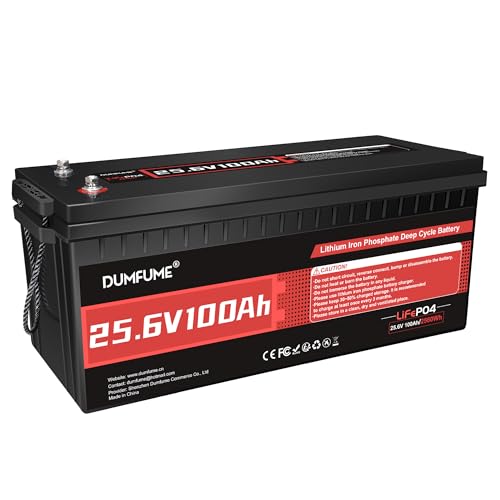
dumfume 24V 100Ah LiFePO4 Battery
Badge: Best for Most Storage Systems
Strengths
- IP65 waterproof enclosure is unusual in this group and suits exposed or marine-adjacent mounting
- Low-temperature cutoff protection is built in
- 2560Wh is a practical single-unit building block that can be paralleled as a system grows
Trade-offs
- 100A BMS limits continuous draw compared with the 200A large pick
- No series/parallel expansion figure is stated in the title, so confirm wiring plans with the maker first
- 100Ah runs a large inverter load for a shorter time than the 314Ah pick
Key specifications (from the listing)
- Voltage: 24V (nominal)
- Capacity: 100Ah
- Energy: 2560Wh
- BMS: built-in 100A
- Chemistry: LiFePO4
- Protection: low-temperature cutoff
- Enclosure: IP65 waterproof rating named in listing
- Certifications named in listing: UN38.3, UL1973
Consider where this pick sits in a guide to dedicated solar energy storage. Its listing promises 24v (nominal); 100ah; 2560wh; built-in 100a, and the honest reading of that promise is narrower than the headline: those are the facts the maker chose to publish, verified for this guide, and they define both what the product will do and the questions a careful buyer should still ask the seller. IP65 waterproof enclosure is unusual in this group and suits exposed or marine-adjacent mounting That strength is the reason it holds the “Best for Most Storage Systems” badge here rather than a lower slot.
The limitations deserve equal time. 100A BMS limits continuous draw compared with the 200A large pick In practice that means this pick rewards a buyer whose use case matches its design center and quietly penalizes a buyer who needed something else and hoped the headline would stretch. Matched against the other entries in this guide, its role is specific rather than universal — which is precisely what a badge system is for. Readers whose needs sit at the edges of this category may also want to read Best Heavy Duty 12 Volt Truck Batteries before deciding.
Day-to-day life with this pick is where the second strength on its list earns its place: low-temperature cutoff protection is built in That sounds like a small thing in a listing, and it is — right up until it becomes the detail you interact with every single time you use the product, long after the headline specifications have faded into the background. Reviewers of this category consistently underweight those recurring small interactions, because they are hard to photograph and harder to put in a comparison chart, yet they are what separate a purchase that settles into your routine from one that quietly irritates you for years. Weigh this pick’s everyday details at least as heavily as its biggest number.
There is also a second trade-off worth naming before the verdict: no series/parallel expansion figure is stated in the title, so confirm wiring plans with the maker first None of the six entries in this guide escapes trade-offs entirely — the honest differences are in which compromises each design chose. If the compromise named here touches something you care about daily, move to the pick whose compromises live in areas you care about less; that exchange, rather than any pursuit of a flawless product, is how readers end up satisfied with purchases in this category. Satisfaction is usually a match, not a maximum.
Best for: buyers whose needs match the “Best for Most Storage Systems” role described above / Not suited for: buyers outside that role, who should start with a different pick in this guide.
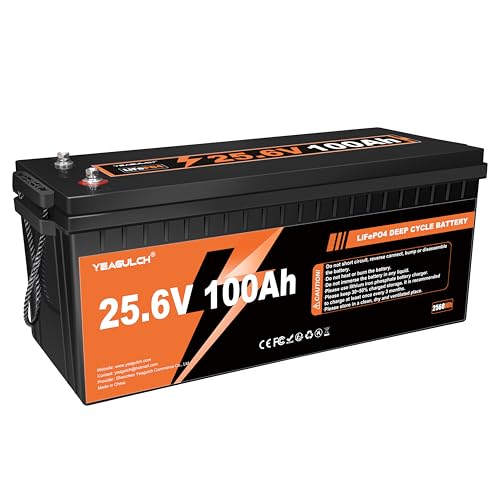
yeagulch 24V 100Ah LiFePO4 Battery
Badge: Best Solar Building Block
Strengths
- Title explicitly names trolling motors, off-grid solar, RV and marine use
- Low-temperature cutoff protects the cells during cold-weather charging
- Same 2560Wh class as the other 100Ah picks, so runtime comparisons are straightforward
Trade-offs
- 100A BMS is the ceiling for continuous current; high-draw inverters may need parallel units
- No waterproof rating is stated in the title, unlike the IP65 pick
- Shares its maker’s naming with the larger 314Ah unit, so check the capacity on the label before ordering
Key specifications (from the listing)
- Voltage: 24V (nominal)
- Capacity: 100Ah
- Energy: 2560Wh
- BMS: built-in 100A
- Chemistry: LiFePO4
- Protection: low-temperature cutoff
- Certifications named in listing: UN38.3, UL1973
Consider where this pick sits in a guide to dedicated solar energy storage. Its listing promises 24v (nominal); 100ah; 2560wh; built-in 100a, and the honest reading of that promise is narrower than the headline: those are the facts the maker chose to publish, verified for this guide, and they define both what the product will do and the questions a careful buyer should still ask the seller. Title explicitly names trolling motors, off-grid solar, RV and marine use That strength is the reason it holds the “Best Solar Building Block” badge here rather than a lower slot.
The limitations deserve equal time. 100A BMS is the ceiling for continuous current; high-draw inverters may need parallel units In practice that means this pick rewards a buyer whose use case matches its design center and quietly penalizes a buyer who needed something else and hoped the headline would stretch. Matched against the other entries in this guide, its role is specific rather than universal — which is precisely what a badge system is for, and why the comparison table below keeps its facts in one row rather than scattering them through prose.
Day-to-day life with this pick is where the second strength on its list earns its place: low-temperature cutoff protects the cells during cold-weather charging That sounds like a small thing in a listing, and it is — right up until it becomes the detail you interact with every single time you use the product, long after the headline specifications have faded into the background. Reviewers of this category consistently underweight those recurring small interactions, because they are hard to photograph and harder to put in a comparison chart, yet they are what separate a purchase that settles into your routine from one that quietly irritates you for years. Weigh this pick’s everyday details at least as heavily as its biggest number.
There is also a second trade-off worth naming before the verdict: no waterproof rating is stated in the title, unlike the ip65 pick None of the six entries in this guide escapes trade-offs entirely — the honest differences are in which compromises each design chose. If the compromise named here touches something you care about daily, move to the pick whose compromises live in areas you care about less; that exchange, rather than any pursuit of a flawless product, is how readers end up satisfied with purchases in this category. Satisfaction is usually a match, not a maximum.
Best for: buyers whose needs match the “Best Solar Building Block” role described above / Not suited for: buyers outside that role, who should start with a different pick in this guide.

Dyness 24V 100Ah LiFePO4 Battery
Badge: Best for Planned Expansion
Strengths
- Expansion path is stated plainly: 4P2S connection up to 20.48kWh
- Smart 100A BMS and a named brand with a stated 10-year lifetime framing
- Title explicitly covers marine, RV and solar use
Trade-offs
- Stated cycle figure (4000+) is lower than the 15000+ figures on rival listings here, so compare warranty terms carefully
- 100A BMS still caps single-unit continuous output
- Reaching the full 20.48kWh expansion means buying several more units and the cabling to match
Key specifications (from the listing)
- Voltage: 24V (nominal)
- Capacity: 100Ah
- Energy: 2560Wh
- BMS: smart 100A
- Chemistry: LiFePO4
- Expansion: 4P2S connection up to 20.48kWh named in listing
- Lifetime framing in listing: 10-year lifetime, 4000+ deep cycles
Consider where this pick sits in a guide to dedicated solar energy storage. Its listing promises 24v (nominal); 100ah; 2560wh; smart 100a, and the honest reading of that promise is narrower than the headline: those are the facts the maker chose to publish, verified for this guide, and they define both what the product will do and the questions a careful buyer should still ask the seller. Expansion path is stated plainly: 4P2S connection up to 20.48kWh That strength is the reason it holds the “Best for Planned Expansion” badge here rather than a lower slot.
The limitations deserve equal time. Stated cycle figure (4000+) is lower than the 15000+ figures on rival listings here, so compare warranty terms carefully In practice that means this pick rewards a buyer whose use case matches its design center and quietly penalizes a buyer who needed something else and hoped the headline would stretch. Matched against the other entries in this guide, its role is specific rather than universal — which is precisely what a badge system is for, and why the comparison table below keeps its facts in one row rather than scattering them through prose.
Day-to-day life with this pick is where the second strength on its list earns its place: smart 100a bms and a named brand with a stated 10-year lifetime framing That sounds like a small thing in a listing, and it is — right up until it becomes the detail you interact with every single time you use the product, long after the headline specifications have faded into the background. Reviewers of this category consistently underweight those recurring small interactions, because they are hard to photograph and harder to put in a comparison chart, yet they are what separate a purchase that settles into your routine from one that quietly irritates you for years. Weigh this pick’s everyday details at least as heavily as its biggest number.
There is also a second trade-off worth naming before the verdict: 100a bms still caps single-unit continuous output None of the six entries in this guide escapes trade-offs entirely — the honest differences are in which compromises each design chose. If the compromise named here touches something you care about daily, move to the pick whose compromises live in areas you care about less; that exchange, rather than any pursuit of a flawless product, is how readers end up satisfied with purchases in this category. Satisfaction is usually a match, not a maximum.
Best for: buyers whose needs match the “Best for Planned Expansion” role described above / Not suited for: buyers outside that role, who should start with a different pick in this guide.
VEMDIA 12V 100Ah LiFePO4 Battery (Group 31)
Badge: Series-Pair Component (Prose)
Prose-only pick — no Amazon link and no image in this guide. Reason: it does not carry the keyword’s core attribute, or it duplicates a linked pick, as explained in the review below.
Strengths
- Useful as a matched series-pair component: two identical 12V units wired in series make a 24V bank
- Group 31 footprint fits many existing battery trays and boxes
- Low-temperature protection and a smart BMS are named in the title
Trade-offs
- On its own it is a 12V battery — it does not meet a native 24V requirement by itself
- Series wiring adds balancing and cabling considerations a single 24V unit avoids
- Only half the energy per unit of the 24V 100Ah picks
Key specifications (from the listing)
- Voltage: 12V (nominal) — not a native 24V battery
- Capacity: 100Ah
- Energy: 1280Wh
- BMS: built-in 100A smart BMS
- Form factor: Group 31
- Protection: low-temperature protection
Consider where this pick sits in a guide to dedicated solar energy storage. Its listing promises 12v (nominal) — not a native 24v battery; 100ah; 1280wh; built-in 100a smart bms, and the honest reading of that promise is narrower than the headline: those are the facts the maker chose to publish, verified for this guide, and they define both what the product will do and the questions a careful buyer should still ask the seller. Useful as a matched series-pair component: two identical 12V units wired in series make a 24V bank That strength is the reason it holds the “Series-Pair Component (Prose)” badge here rather than a lower slot.
The limitations deserve equal time. On its own it is a 12V battery — it does not meet a native 24V requirement by itself In practice that means this pick rewards a buyer whose use case matches its design center and quietly penalizes a buyer who needed something else and hoped the headline would stretch. Matched against the other entries in this guide, its role is specific rather than universal — which is precisely what a badge system is for. Readers whose needs sit at the edges of this category may also want to read Best Priece On 12 Volt Car Battery before deciding.
Day-to-day life with this pick is where the second strength on its list earns its place: group 31 footprint fits many existing battery trays and boxes That sounds like a small thing in a listing, and it is — right up until it becomes the detail you interact with every single time you use the product, long after the headline specifications have faded into the background. Reviewers of this category consistently underweight those recurring small interactions, because they are hard to photograph and harder to put in a comparison chart, yet they are what separate a purchase that settles into your routine from one that quietly irritates you for years. Weigh this pick’s everyday details at least as heavily as its biggest number.
There is also a second trade-off worth naming before the verdict: series wiring adds balancing and cabling considerations a single 24v unit avoids None of the six entries in this guide escapes trade-offs entirely — the honest differences are in which compromises each design chose. If the compromise named here touches something you care about daily, move to the pick whose compromises live in areas you care about less; that exchange, rather than any pursuit of a flawless product, is how readers end up satisfied with purchases in this category. Satisfaction is usually a match, not a maximum.
Best for: buyers whose needs match the “Series-Pair Component (Prose)” role described above / Not suited for: buyers outside that role, who should start with a different pick in this guide.
Qwenoer 22.2V–24V 10Ah Lithium Battery Pack
Badge: Small DIY Pack (Prose)
Prose-only pick — no Amazon link and no image in this guide. Reason: it does not carry the keyword’s core attribute, or it duplicates a linked pick, as explained in the review below.
Strengths
- Handy for the small DIY jobs its title actually names, such as LED strips and CCTV cameras
- Charger and bare leads are included, which suits hobby wiring
- Compact pack format is easy to mount in small projects
Trade-offs
- 10Ah is roughly a tenth of the smallest true storage pick here — it cannot do solar-storage duty
- Li-ion chemistry, not the LiFePO4 chemistry the storage picks use
- Bare-leads hobby format has no deep-cycle BMS framing for house loads
Key specifications (from the listing)
- Voltage: 22.2V–24V
- Capacity: 10Ah — small pack, not a deep-cycle storage battery
- Chemistry: Li-ion (not LiFePO4)
- Included in listing: 25.2V 2A charger, bare leads wire, cable connector
- Named uses in listing: kids ride-on cars, DIY projects, LED strips, CCTV cameras
Consider where this pick sits in a guide to dedicated solar energy storage. Its listing promises 22.2v–24v; 10ah — small pack, not a deep-cycle storage battery; li-ion (not lifepo4); 25.2v 2a charger, bare leads wire, cable connector, and the honest reading of that promise is narrower than the headline: those are the facts the maker chose to publish, verified for this guide, and they define both what the product will do and the questions a careful buyer should still ask the seller. Handy for the small DIY jobs its title actually names, such as LED strips and CCTV cameras That strength is the reason it holds the “Small DIY Pack (Prose)” badge here rather than a lower slot.
The limitations deserve equal time. 10Ah is roughly a tenth of the smallest true storage pick here — it cannot do solar-storage duty In practice that means this pick rewards a buyer whose use case matches its design center and quietly penalizes a buyer who needed something else and hoped the headline would stretch. Matched against the other entries in this guide, its role is specific rather than universal — which is precisely what a badge system is for, and why the comparison table below keeps its facts in one row rather than scattering them through prose.
Day-to-day life with this pick is where the second strength on its list earns its place: charger and bare leads are included, which suits hobby wiring That sounds like a small thing in a listing, and it is — right up until it becomes the detail you interact with every single time you use the product, long after the headline specifications have faded into the background. Reviewers of this category consistently underweight those recurring small interactions, because they are hard to photograph and harder to put in a comparison chart, yet they are what separate a purchase that settles into your routine from one that quietly irritates you for years. Weigh this pick’s everyday details at least as heavily as its biggest number.
There is also a second trade-off worth naming before the verdict: li-ion chemistry, not the lifepo4 chemistry the storage picks use None of the six entries in this guide escapes trade-offs entirely — the honest differences are in which compromises each design chose. If the compromise named here touches something you care about daily, move to the pick whose compromises live in areas you care about less; that exchange, rather than any pursuit of a flawless product, is how readers end up satisfied with purchases in this category. Satisfaction is usually a match, not a maximum.
Best for: buyers whose needs match the “Small DIY Pack (Prose)” role described above / Not suited for: buyers outside that role, who should start with a different pick in this guide.
Comparison Table
| Pick | Badge | Key facts | Listing |
|---|---|---|---|
| yeagulch 24V 314Ah LiFePO4 Battery | Best Overall | 24V (nominal); 314Ah; 8038.4Wh; built-in 200A | Check on Amazon |
| dumfume 24V 100Ah LiFePO4 Battery | Best for Most Storage Systems | 24V (nominal); 100Ah; 2560Wh; built-in 100A | Check on Amazon |
| yeagulch 24V 100Ah LiFePO4 Battery | Best Solar Building Block | 24V (nominal); 100Ah; 2560Wh; built-in 100A | Check on Amazon |
| Dyness 24V 100Ah LiFePO4 Battery | Best for Planned Expansion | 24V (nominal); 100Ah; 2560Wh; smart 100A | Check on Amazon |
| VEMDIA 12V 100Ah LiFePO4 Battery (Group 31) | Series-Pair Component (Prose) | 12V (nominal) — not a native 24V battery; 100Ah; 1280Wh; built-in 100A smart BMS | Prose-only — no link |
| Qwenoer 22.2V–24V 10Ah Lithium Battery Pack | Small DIY Pack (Prose) | 22.2V–24V; 10Ah — small pack, not a deep-cycle storage battery; Li-ion (not LiFePO4); 25.2V 2A charger, bare leads wire, cable connector | Prose-only — no link |
Read the table by badge first and facts second. Most disappointment in this category comes from buying the right product for the wrong role, and the badge column exists to prevent exactly that. Shoppers whose brief is close but not identical may find Best Heavy Duty 12 Volt Truck Batteries a better starting point than forcing a fit here.
How to Choose the best 24 volt lithium ion batteries for solar storage
Start with the job, stated in one sentence, before you look at any product: the sentence that begins “I need this for…” and ends with the specific use. Every later decision — capacity, output, size, features — is a translation of that sentence into specifications. Buyers who skip it end up comparing products against each other instead of against their own lives, which is how capable products end up returned and unsuitable ones end up kept.
Certifications deserve a calm read. Several linked listings name UL 1973 and UN38.3 — the first relates to battery safety evaluation, the second to transport testing. Their presence in a listing is a positive signal about a maker’s diligence, but it is the maker’s claim as printed, and a careful buyer confirms documentation with the seller for any installation an insurer or inspector will see.
Warranty and lifetime framing differ across these picks — one states a 10-year lifetime with 4000+ cycles, others state 15000+ cycle figures. Those numbers are not directly interchangeable, because cycle claims depend on test conditions. Use them as a prompt to read the actual warranty terms: years covered, capacity retained, and what the maker asks of you in return.
Budget framing deserves a word, because this guide prints no prices. Think in tiers rather than figures: within any category there is a working tier that covers the brief competently, a step-up tier that buys durability, capacity or convenience you can name, and a prestige tier whose extra cost buys refinement more than function. Decide your tier from your usage — daily users rationally buy a tier higher than occasional users — and then let the verified picks within that tier compete on fit. Checking the latest price on Amazon for the one or two finalists, at the moment of purchase, is the only price research that stays true.
Then apply the filters in order. First, the hard constraints: the core attribute in the keyword, physical fit, and any compatibility your existing setup imposes. Second, the sizing decision, using the arithmetic in this guide rather than a headline number. Third, the ownership routine — cleaning, charging, storing, maintaining — because a product you will maintain beats a marginally better product you will not. Only after those three should badges and preferences arbitrate between the survivors, and in this guide that usually leaves exactly one pick standing.
How to Commission and Care for a 24V Solar Storage Battery
Commissioning a storage battery well takes an afternoon of patience. Begin by installing the battery in its permanent spot — dry, ventilated, and as temperature-stable as you can manage — and complete all wiring with the system off, fusing the positive run near the battery. Configure the charge controller or hybrid inverter for a 24V LiFePO4 bank before the first charge; manufacturer lithium profiles exist precisely because guessing voltages shortens battery life.
Charge the bank fully, then run one normal night on it and record what remains in the morning. That baseline tells you your true autonomy, and repeating the observation in the darkest month tells you your worst case. From there, care is light: keep terminals clean and tight, keep the battery’s surroundings uncluttered, and review your loads once a season — storage systems fail by slow load growth more often than by sudden faults.
Problem: morning state of charge keeps trending down over a week → your array is replacing less than the nights consume; trim loads or add panel capacity rather than blaming the battery. Problem: charging stops on cold mornings → low-temperature protection is working as designed; warm the space or wait for midday. Problem: a parallel bank’s units show different charge levels → check cable lengths and connection tightness; parallel units should share equal-length paths so they share current evenly.
LiFePO4 vs Other Lithium Chemistries for Stationary Storage
The phrase lithium ion covers several chemistries with very different personalities. The cells in consumer electronics optimize energy density; the LiFePO4 cells in every linked pick here optimize cycle life, thermal stability and tolerance of sitting at partial charge — precisely the life a storage battery leads. A storage battery may cycle once a day for a decade, so a chemistry that shrugs off thousands of deep cycles beats one that packs slightly more energy into a smaller box but fades faster.
LiFePO4 also asks less of its surroundings. It still needs a battery management system, low-temperature charge protection and sensible ventilation, but its failure behavior is more forgiving than higher-energy chemistries. For a battery that will live in a garage, a cabin or a utility closet rather than in a device you hold, that trade — a little density for a lot of durability — is the right one, and it is why the storage market has standardized on it.
Planning Storage Capacity: Nights of Autonomy and Cloudy-Day Reserve
Storage sizing starts with autonomy: how many nights, or how much of a grid outage, should the bank carry without help from panels or a generator? One night of essentials is a modest bank. Two or three nights of a fuller household load is a different purchase entirely. The honest method is to list the loads that truly must run, convert them to watt-hours per day, multiply by the days of autonomy you want, and then choose the battery combination that covers that figure at a moderate depth of discharge.
Against that math, the 100Ah picks at 2560Wh each are modular steps: one for essentials, several in parallel for a fuller house. The 314Ah pick at 8038.4Wh covers in one unit what would otherwise take three smaller batteries and the cabling between them. Neither approach is inherently better; modular banks grow gradually and isolate faults, while a single large unit is simpler and has one BMS watching everything. Decide which failure and expansion story you prefer before you buy, not after.
One more cross-check before you buy: readers who arrived here from a neighboring search often benefit from Best Lithium 12 Volt Car Battery, which covers the adjacent version of this decision with its own verified picks.
Common Buying Mistakes
- Treating ‘lithium ion’ as one thing and buying a non-LiFePO4 product for daily deep-cycle storage duty.
- Sizing storage to a summer day and leaving no autonomy for the dark, cloudy stretch that defines winter performance.
- Paralleling mismatched batteries — different capacities, brands or ages — and expecting them to share work evenly.
- Ignoring the charge controller’s profile, the single most common cause of a storage bank that underperforms its paper capacity.
- Counting a small hobby pack or a lone 12V battery as part of a 24V storage plan.
Notice the pattern across those mistakes: none of them is about buying a bad product. All of them are about skipping a verification step — a measurement, a profile setting, a category check, a habit honestly assessed. The picks in this guide are capable; the mistakes are what capable products cannot survive.
Final Recommendation
For dedicated storage, the 314Ah pick is the simplest route to real autonomy, while the 100Ah units suit households that prefer to grow a bank one verified step at a time.
Whichever pick you choose, buy it as the start of a routine rather than the end of a search: set it up as the how-to section describes, note your baseline experience in the first week, and keep the manual. And if your brief turns out to be the neighboring one, Best Priece On 12 Volt Car Battery is the guide written for it.
Frequently Asked Questions
Are LiFePO4 batteries really lithium ion batteries?
Yes — LiFePO4 is one family within lithium-ion technology, using an iron-phosphate cathode. For stationary storage it is generally preferred over other lithium-ion families because of its cycle life and thermal stability, which is why every linked pick in this guide uses it.
How much of a storage battery’s capacity should I use each night?
You can use most of a LiFePO4 battery’s capacity without the harm deep discharge causes lead-acid, but planning around a moderate nightly draw leaves reserve for cloudy stretches and is gentler over years. Size the bank so a normal night is a comfortable fraction, not a nightly emptying.
Can I expand a 24V storage bank later?
Usually, by paralleling identical units — and one linked pick, the Dyness, states a 4P2S connection up to 20.48kWh in its listing. Expansion works best with the same model bought as close in age as possible. Mixing capacities or brands in one bank is poor practice.
Do storage batteries need maintenance?
Very little physical maintenance: firm, clean connections and a space that does not bake or freeze. The real maintenance is attention — noticing if runtime changes, keeping the charge source correctly configured for lithium, and respecting low-temperature charging limits.
What protects a storage battery in winter?
The linked picks name low-temperature protection or cutoff, which stops charging when cells are too cold. That protection prevents damage but also means a frozen battery may refuse charge until it warms, so placement in the most temperature-stable space available is still worthwhile.
Should I choose one large battery or several smaller ones?
One large battery is simpler: one BMS, fewer cables, fewer connections to check. Several smaller batteries are modular: easier to carry, expandable in steps, and one unit can fail without emptying the whole bank. Both stories are legitimate; match the choice to your space, strength and expansion plans.