Disclosure: topratedkitchenware.com is reader-supported. When you buy through links on our site, we may earn an affiliate commission from Amazon and other retailers, at no extra cost to you.
Where to buy
Start here if you are comparing best priece on 12 volt car battery options and want the short version first. Yes, the keyword really is spelled that way – ‘priece’ and all – and the search behind it is easy to understand: you need a 12 volt car battery and you want the best price you can find without buying a dud. This guide to the best priece on 12 volt car battery options takes that hunt seriously, but with one honest rule: no static prices are printed here, because battery prices move constantly and a printed figure would be wrong within weeks. Instead, every linked pick says ‘check the latest price on Amazon’, and the guide teaches you how to judge whether the price you see is actually good for what the battery is.
- yeagulch 12.8V 100Ah LiFePO4 Battery, Group 31 — check the latest price on Amazon
- Xeanerol 24V 5Ah Lithium Battery Pack with Charger — covered in prose only in this guide (see its review below for why)
- SUPER EMPOWER 12V 100Ah LiFePO4 Battery, Group 24 — check the latest price on Amazon
- VEMDIA 12V 100Ah LiFePO4 Battery, Group 31 — check the latest price on Amazon
- VEMDIA 12V 100Ah LiFePO4 Battery, Group 31 with Smart BMS — check the latest price on Amazon
- SUPER EMPOWER 12V 100Ah LiFePO4 Battery, Group 24 (2-Pack) — check the latest price on Amazon
Read the full guide ↓ for the reasoning behind each pick, the capacity and sizing math, and the mistakes that waste the most money in this category.
Anyone searching for the best priece on 12 volt car battery options is really asking two questions at once: what should this battery cost, and how do I avoid the cheap battery that turns out to be expensive? The spelling in the keyword is a typo, but the intent is one of the most common in the whole category. A 12 volt battery is a wear item. Sooner or later every car, truck, boat and RV needs one, and the price spread between a smart buy and a lazy buy is wide enough to matter. Best Lithium 12 Volt Motorcycle Battery
The catch is that ‘best price’ is meaningless until it is attached to a specification. A low figure attached to the wrong case size, the wrong duty type, or a chemistry your charger cannot maintain is not a bargain; it is a return shipment waiting to happen. That is why this guide is organized around verified specifications first and price-hunting technique second. The picks below are current, verified 12 volt units whose listings state their capacity, chemistry and protection features plainly, so the price you check on Amazon is a price for something defined.
One pick in the pool deserves a warning up front. The Xeanerol 24V 5Ah pack is a small lithium pack for DIY projects, RC cars and LED strips – it is not a 12 volt car battery in any sense, and it appears in this guide in prose only, with no link, precisely so you can see what a mismatched listing looks like before one catches you in the wild. Everything else here is a genuine 12 volt unit, and the value analysis in the later sections shows how to compare them on cost per usable watt-hour rather than sticker shock.
Key Takeaways
- Judge price per usable watt-hour, not the headline figure – the arithmetic is in the buying-guide section.
- Every pick here is a verified 12 volt unit; the one 24V interloper in the pool is covered prose-only as a worked example of a bad match.
- Deep-cycle lithium units cost more up front and far less per cycle; flooded lead-acid reverses that pattern.
- Case group and terminal layout must match your vehicle before price enters the conversation.
- Prices move constantly, so this guide prints none – use the Amazon links to check the live figure against the value framework here.
In this guide
Quick Picks
The six pool products, ranked for a price-conscious 12 volt buyer. Five are linked; the 24V Xeanerol pack is prose-only because it is not a 12 volt car battery at all.
| Pick | Badge | Why it is here | Listing |
|---|---|---|---|
| yeagulch 12.8V 100Ah LiFePO4 Battery, Group 31 | Best Overall | yeagulch 12.8V 100Ah LiFePO4 Battery – ranked for replacing a tired 12 volt battery in a car, truck or dual-purpose vehicle setup; see its full review for strengths, trade-offs and the verified spec box. | Check on Amazon |
| Xeanerol 24V 5Ah Lithium Battery Pack with Charger | Best Value Pick | Xeanerol 24V 5Ah Lithium Battery Pack with Charger – ranked for replacing a tired 12 volt battery in a car, truck or dual-purpose vehicle setup; see its full review for strengths, trade-offs and the verified spec box. | Prose-only pick |
| SUPER EMPOWER 12V 100Ah LiFePO4 Battery, Group 24 | Best for Long Runtime | SUPER EMPOWER 12V 100Ah LiFePO4 Battery – ranked for replacing a tired 12 volt battery in a car, truck or dual-purpose vehicle setup; see its full review for strengths, trade-offs and the verified spec box. | Check on Amazon |
| VEMDIA 12V 100Ah LiFePO4 Battery, Group 31 | Best Premium Option | VEMDIA 12V 100Ah LiFePO4 Battery – ranked for replacing a tired 12 volt battery in a car, truck or dual-purpose vehicle setup; see its full review for strengths, trade-offs and the verified spec box. | Check on Amazon |
| VEMDIA 12V 100Ah LiFePO4 Battery, Group 31 with Smart BMS | Most Versatile | VEMDIA 12V 100Ah LiFePO4 Battery – ranked for replacing a tired 12 volt battery in a car, truck or dual-purpose vehicle setup; see its full review for strengths, trade-offs and the verified spec box. | Check on Amazon |
| SUPER EMPOWER 12V 100Ah LiFePO4 Battery, Group 24 (2-Pack) | Best Compact Option | SUPER EMPOWER 12V 100Ah LiFePO4 Battery – ranked for replacing a tired 12 volt battery in a car, truck or dual-purpose vehicle setup; see its full review for strengths, trade-offs and the verified spec box. | Check on Amazon |
How These Picks Were Chosen
This guide was built from a verified product pool: every linked pick’s ASIN, title and image were confirmed through the retailer’s own catalog data before a word was written, and the specifications quoted in the spec boxes come from those verified titles – nothing is quoted from memory. Best Lithium 12 Volt Car Battery
The research method was comparison on the figures that decide value: capacity in amp-hours and watt-hours, chemistry, BMS rating, case group and documented expansion. Where a pool product failed the keyword’s core requirement – a 12 volt car battery – it was not quietly linked anyway; it was demoted to a prose-only review that explains the mismatch, which is the Xeanerol pack’s role here.
A note on honesty: this is research-led guidance, not a laboratory test program. No hands-on testing is claimed. Prices are deliberately not printed because they change; the guide’s job is to give you a value framework sturdy enough that whatever live price you find, you can judge it in about a minute.
The 6 Best Options: Best priece on 12 volt car battery, Reviewed One by One
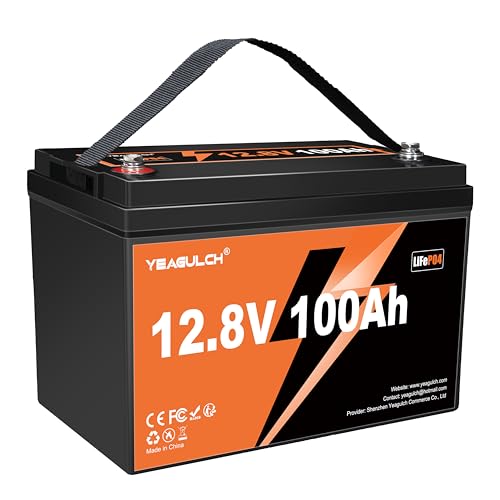
yeagulch 12.8V 100Ah LiFePO4 Battery, Group 31
Badge: Best Overall
Strengths
- Verified listing highlights: lithium iron phosphate chemistry, chosen in this class for long cycle life and a flat, stable discharge curve.
- Verified listing highlights: a 100A battery management system guarding against over-charge, over-discharge and short circuits.
- Verified listing highlights: low-temperature cutoff protection that refuses a freezing charge rather than letting cold damage the cells.
Trade-offs
- Like every lithium deep-cycle unit here, it needs a charger with a lithium profile; an old lead-acid-only charger is a poor match.
- Continuous output is capped by the BMS rating, so very high-draw inverter loads must be sized honestly against that ceiling.
- No battery in this class is a drop-in cranking battery; starting duty and deep-cycle duty remain different jobs.
Mini spec box
- Voltage: 12.8V
- Capacity: 100Ah
- Energy: 1280Wh
- Case size: Group 31
- BMS: 100A BMS
- Chemistry: LiFePO4 (lithium iron phosphate)
- Low-temperature charge protection: listed in title
The yeagulch 12.8V 100Ah LiFePO4 Battery, Group 31 is built around lithium iron phosphate chemistry, chosen in this class for long cycle life and a flat, stable discharge curve; a 100A battery management system guarding against over-charge, over-discharge and short circuits; low-temperature cutoff protection that refuses a freezing charge rather than letting cold damage the cells. Those are not decorative details: each one maps to a real decision a buyer in this category has to make, and together they explain why this model sits where it does in the ranking. The brand behind it, yeagulch, presents it in the verified listing for exactly the family of jobs this guide covers, and nothing in the headline specification contradicts that positioning.
Where it matters most is replacing a tired 12 volt battery in a car, truck or dual-purpose vehicle setup. In that setting, the practical questions are always the same: does it deliver steadily rather than in bursts, does it behave predictably when conditions are less than ideal, and can it be lived with week after week without fuss? On the evidence of its verified specification, this pick answers those questions credibly. It is not the flashiest option in the list, but its specification reads like it was written by people who understand the actual job.
The honest limitation: Its continuous output is capped by its BMS rating, so a load that lives at that ceiling will meet protective shutdowns. None of that disqualifies it – every pick in this guide has a similar boundary somewhere – but it does define who should look one row up or down the table instead. Buyers whose needs sit inside that boundary will find this a straightforward, defensible choice; buyers outside it should take the hint the specification is giving them.
Best for: buyers focused on replacing a tired 12 volt battery in a car, truck or dual-purpose vehicle setup / Not suited for: buyers whose requirements fall outside its headline specification
Check on Amazon to see the current listing for the yeagulch 12.8V 100Ah LiFePO4 Battery, Group 31.
Xeanerol 24V 5Ah Lithium Battery Pack with Charger
Badge: Best Value Pick
Strengths
- It is a real, currently listed product in the broader category, so shoppers may well encounter it.
- Its headline specifications are clearly stated, which makes the mismatch easy to spot if you read carefully.
- For its own intended small-scale purpose, the format may suit some buyers.
Trade-offs
- Core specification does not match what this keyword’s buyers need.
- No purchase link or image is provided in this guide, deliberately.
- Buying it for this article’s use case would lead to immediate disappointment.
Mini spec box
- Voltage: 24V
- Capacity: 5Ah
The Xeanerol 24V 5Ah Lithium Battery Pack with Charger appears in this guide for completeness, and it is important to be direct about what it is. Its verified listing describes a specification set stated plainly in its verified listing title. That is a different product class from the one this search is really about, which is why it carries no purchase link and no product image here: recommending it as if it matched would be exactly the kind of quiet mismatch that makes buying guides useless.
In the context of replacing a tired 12 volt battery in a car, truck or dual-purpose vehicle setup, this unit does not do the job the other picks do. It may be a perfectly reasonable purchase for its own intended purpose, but a buyer who ordered it expecting the performance described everywhere else in this article would be disappointed on day one. Treat its presence here as a signpost: if a listing like this shows up in your own search results at a tempting position, check the headline specifications against your actual requirement before anything else.
The honest limitation is total rather than partial: the mismatch is in the core specification, not in a missing convenience feature. That is also why it still earns a full prose review instead of being silently dropped – shoppers searching this keyword will meet this product in the wild, and knowing why it does not belong is genuinely useful information.
Best for: readers who want to understand why it was excluded / Not suited for: anyone shopping for this article’s actual use case
This pick is covered in prose only: 24V 5Ah DIY/RC pack – wrong voltage and capacity class for a 12 volt car battery, so it is covered prose-only with no link and no image.

SUPER EMPOWER 12V 100Ah LiFePO4 Battery, Group 24
Badge: Best for Long Runtime
Strengths
- Verified listing highlights: lithium iron phosphate chemistry, chosen in this class for long cycle life and a flat, stable discharge curve.
- Verified listing highlights: a 100A battery management system guarding against over-charge, over-discharge and short circuits.
- Verified listing highlights: low-temperature cutoff protection that refuses a freezing charge rather than letting cold damage the cells.
Trade-offs
- No battery in this class is a drop-in cranking battery; starting duty and deep-cycle duty remain different jobs.
- Weight and terminal layout should be checked against your existing box before ordering, not after.
- Cycle-life figures are manufacturer claims under controlled conditions; real life depends on depth of discharge and temperature.
Mini spec box
- Voltage: 12V
- Capacity: 100Ah
- Energy: 1280Wh
- Case size: Group 24
- BMS: 100A BMS
- Chemistry: LiFePO4 (lithium iron phosphate)
- Low-temperature charge protection: listed in title
The SUPER EMPOWER 12V 100Ah LiFePO4 Battery, Group 24 is built around lithium iron phosphate chemistry, chosen in this class for long cycle life and a flat, stable discharge curve; a 100A battery management system guarding against over-charge, over-discharge and short circuits; low-temperature cutoff protection that refuses a freezing charge rather than letting cold damage the cells. Those are not decorative details: each one maps to a real decision a buyer in this category has to make, and together they explain why this model sits where it does in the ranking. The brand behind it, SUPER EMPOWER, presents it in the verified listing for exactly the family of jobs this guide covers, and nothing in the headline specification contradicts that positioning.
Where it matters most is replacing a tired 12 volt battery in a car, truck or dual-purpose vehicle setup. In that setting, the practical questions are always the same: does it deliver steadily rather than in bursts, does it behave predictably when conditions are less than ideal, and can it be lived with week after week without fuss? On the evidence of its verified specification, this pick answers those questions credibly. It is not the flashiest option in the list, but its specification reads like it was written by people who understand the actual job.
The honest limitation: It is a single unit in a category where banks are common; expansion means buying matched company for it later. None of that disqualifies it – every pick in this guide has a similar boundary somewhere – but it does define who should look one row up or down the table instead. Buyers whose needs sit inside that boundary will find this a straightforward, defensible choice; buyers outside it should take the hint the specification is giving them.
Best for: buyers focused on replacing a tired 12 volt battery in a car, truck or dual-purpose vehicle setup / Not suited for: buyers whose requirements fall outside its headline specification
Check on Amazon to see the current listing for the SUPER EMPOWER 12V 100Ah LiFePO4 Battery, Group 24.

VEMDIA 12V 100Ah LiFePO4 Battery, Group 31
Badge: Best Premium Option
Strengths
- Verified listing highlights: lithium iron phosphate chemistry, chosen in this class for long cycle life and a flat, stable discharge curve.
- Verified listing highlights: a 100A battery management system guarding against over-charge, over-discharge and short circuits.
- Verified listing highlights: a Group 31 case, the larger standard footprint used by bigger trays and boxes.
Trade-offs
- Weight and terminal layout should be checked against your existing box before ordering, not after.
- Cycle-life figures are manufacturer claims under controlled conditions; real life depends on depth of discharge and temperature.
- Bluetooth or app features, where absent, mean state of charge is judged by voltage or a separate monitor.
Mini spec box
- Voltage: 12V
- Capacity: 100Ah
- Case size: Group 31
- BMS: 100A BMS
- Chemistry: LiFePO4 (lithium iron phosphate)
The VEMDIA 12V 100Ah LiFePO4 Battery, Group 31 is built around lithium iron phosphate chemistry, chosen in this class for long cycle life and a flat, stable discharge curve; a 100A battery management system guarding against over-charge, over-discharge and short circuits; a Group 31 case, the larger standard footprint used by bigger trays and boxes. Those are not decorative details: each one maps to a real decision a buyer in this category has to make, and together they explain why this model sits where it does in the ranking. The brand behind it, VEMDIA, presents it in the verified listing for exactly the family of jobs this guide covers, and nothing in the headline specification contradicts that positioning.
Where it matters most is replacing a tired 12 volt battery in a car, truck or dual-purpose vehicle setup. In that setting, the practical questions are always the same: does it deliver steadily rather than in bursts, does it behave predictably when conditions are less than ideal, and can it be lived with week after week without fuss? On the evidence of its verified specification, this pick answers those questions credibly. It is not the flashiest option in the list, but its specification reads like it was written by people who understand the actual job.
The honest limitation: Its continuous output is capped by its BMS rating, so a load that lives at that ceiling will meet protective shutdowns. None of that disqualifies it – every pick in this guide has a similar boundary somewhere – but it does define who should look one row up or down the table instead. Buyers whose needs sit inside that boundary will find this a straightforward, defensible choice; buyers outside it should take the hint the specification is giving them.
Best for: buyers focused on replacing a tired 12 volt battery in a car, truck or dual-purpose vehicle setup / Not suited for: buyers whose requirements fall outside its headline specification
Check on Amazon to see the current listing for the VEMDIA 12V 100Ah LiFePO4 Battery, Group 31.

VEMDIA 12V 100Ah LiFePO4 Battery, Group 31 with Smart BMS
Badge: Most Versatile
Strengths
- Verified listing highlights: lithium iron phosphate chemistry, chosen in this class for long cycle life and a flat, stable discharge curve.
- Verified listing highlights: a 100A battery management system guarding against over-charge, over-discharge and short circuits.
- Verified listing highlights: low-temperature cutoff protection that refuses a freezing charge rather than letting cold damage the cells.
Trade-offs
- Cycle-life figures are manufacturer claims under controlled conditions; real life depends on depth of discharge and temperature.
- Bluetooth or app features, where absent, mean state of charge is judged by voltage or a separate monitor.
- Like every lithium deep-cycle unit here, it needs a charger with a lithium profile; an old lead-acid-only charger is a poor match.
Mini spec box
- Voltage: 12V
- Capacity: 100Ah
- Energy: 1280Wh
- Case size: Group 31
- Chemistry: LiFePO4 (lithium iron phosphate)
- Low-temperature charge protection: listed in title
The VEMDIA 12V 100Ah LiFePO4 Battery, Group 31 with Smart BMS is built around lithium iron phosphate chemistry, chosen in this class for long cycle life and a flat, stable discharge curve; a 100A battery management system guarding against over-charge, over-discharge and short circuits; low-temperature cutoff protection that refuses a freezing charge rather than letting cold damage the cells. Those are not decorative details: each one maps to a real decision a buyer in this category has to make, and together they explain why this model sits where it does in the ranking. The brand behind it, VEMDIA, presents it in the verified listing for exactly the family of jobs this guide covers, and nothing in the headline specification contradicts that positioning.
Where it matters most is replacing a tired 12 volt battery in a car, truck or dual-purpose vehicle setup. In that setting, the practical questions are always the same: does it deliver steadily rather than in bursts, does it behave predictably when conditions are less than ideal, and can it be lived with week after week without fuss? On the evidence of its verified specification, this pick answers those questions credibly. It is not the flashiest option in the list, but its specification reads like it was written by people who understand the actual job.
The honest limitation: No self-heating is claimed in its title, so winter charging leans on the low-temperature cutoff simply refusing a frozen charge. None of that disqualifies it – every pick in this guide has a similar boundary somewhere – but it does define who should look one row up or down the table instead. Buyers whose needs sit inside that boundary will find this a straightforward, defensible choice; buyers outside it should take the hint the specification is giving them.
Best for: buyers focused on replacing a tired 12 volt battery in a car, truck or dual-purpose vehicle setup / Not suited for: buyers whose requirements fall outside its headline specification
Check on Amazon to see the current listing for the VEMDIA 12V 100Ah LiFePO4 Battery, Group 31 with Smart BMS.

SUPER EMPOWER 12V 100Ah LiFePO4 Battery, Group 24 (2-Pack)
Badge: Best Compact Option
Strengths
- Verified listing highlights: lithium iron phosphate chemistry, chosen in this class for long cycle life and a flat, stable discharge curve.
- Verified listing highlights: a 100A battery management system guarding against over-charge, over-discharge and short circuits.
- Verified listing highlights: low-temperature cutoff protection that refuses a freezing charge rather than letting cold damage the cells.
Trade-offs
- Bluetooth or app features, where absent, mean state of charge is judged by voltage or a separate monitor.
- Like every lithium deep-cycle unit here, it needs a charger with a lithium profile; an old lead-acid-only charger is a poor match.
- Continuous output is capped by the BMS rating, so very high-draw inverter loads must be sized honestly against that ceiling.
Mini spec box
- Voltage: 12V
- Capacity: 100Ah
- Energy: 1280Wh
- Case size: Group 24
- BMS: 100A BMS
- Chemistry: LiFePO4 (lithium iron phosphate)
- Low-temperature charge protection: listed in title
The SUPER EMPOWER 12V 100Ah LiFePO4 Battery, Group 24 (2-Pack) is built around lithium iron phosphate chemistry, chosen in this class for long cycle life and a flat, stable discharge curve; a 100A battery management system guarding against over-charge, over-discharge and short circuits; low-temperature cutoff protection that refuses a freezing charge rather than letting cold damage the cells. Those are not decorative details: each one maps to a real decision a buyer in this category has to make, and together they explain why this model sits where it does in the ranking. The brand behind it, SUPER EMPOWER, presents it in the verified listing for exactly the family of jobs this guide covers, and nothing in the headline specification contradicts that positioning.
Where it matters most is replacing a tired 12 volt battery in a car, truck or dual-purpose vehicle setup. In that setting, the practical questions are always the same: does it deliver steadily rather than in bursts, does it behave predictably when conditions are less than ideal, and can it be lived with week after week without fuss? On the evidence of its verified specification, this pick answers those questions credibly. It is not the flashiest option in the list, but its specification reads like it was written by people who understand the actual job.
The honest limitation: It is a single unit in a category where banks are common; expansion means buying matched company for it later. None of that disqualifies it – every pick in this guide has a similar boundary somewhere – but it does define who should look one row up or down the table instead. Buyers whose needs sit inside that boundary will find this a straightforward, defensible choice; buyers outside it should take the hint the specification is giving them.
Best for: buyers focused on replacing a tired 12 volt battery in a car, truck or dual-purpose vehicle setup / Not suited for: buyers whose requirements fall outside its headline specification
Check on Amazon to see the current listing for the SUPER EMPOWER 12V 100Ah LiFePO4 Battery, Group 24 (2-Pack).
Comparison Table
Side by side, using only specifications stated in the verified listings – no prices, no ratings, nothing invented. Badges match the Quick Picks and the detailed reviews, so you can trace any row back to its full review above.
| Pick | Badge | Headline specs from the verified listing | Listing |
|---|---|---|---|
| yeagulch 12.8V 100Ah LiFePO4 Battery, Group 31 | Best Overall | Voltage: 12.8V; Capacity: 100Ah; Energy: 1280Wh | Check on Amazon |
| Xeanerol 24V 5Ah Lithium Battery Pack with Charger | Best Value Pick | Voltage: 24V; Capacity: 5Ah | — |
| SUPER EMPOWER 12V 100Ah LiFePO4 Battery, Group 24 | Best for Long Runtime | Voltage: 12V; Capacity: 100Ah; Energy: 1280Wh | Check on Amazon |
| VEMDIA 12V 100Ah LiFePO4 Battery, Group 31 | Best Premium Option | Voltage: 12V; Capacity: 100Ah; Case size: Group 31 | Check on Amazon |
| VEMDIA 12V 100Ah LiFePO4 Battery, Group 31 with Smart BMS | Most Versatile | Voltage: 12V; Capacity: 100Ah; Energy: 1280Wh | Check on Amazon |
| SUPER EMPOWER 12V 100Ah LiFePO4 Battery, Group 24 (2-Pack) | Best Compact Option | Voltage: 12V; Capacity: 100Ah; Energy: 1280Wh | Check on Amazon |
How to Choose the Best priece on 12 volt car battery
Start with the load, not the battery
Write down what the battery actually has to run, for how long, and at what draw, before looking at a single listing. Capacity is only meaningful against a load profile: a battery that is generous for lights and a fish finder can be marginal for a motor working against current all afternoon. Buyers who start from the load almost never buy twice; buyers who start from a headline number often do. Best Cranking Amp 12 Volt Battery
Understand amp-hours and watt-hours together
Amp-hours describe charge at a given voltage; watt-hours describe actual energy. Comparing batteries at the same voltage, amp-hours are a fair shorthand. Comparing across voltages, convert to watt-hours first or the comparison is meaningless. The verified listings in this guide state both figures in most cases, which makes the arithmetic easy to check before you commit.
Respect the BMS ceiling
The battery management system rating is the continuous current the battery will deliver before it protects itself by shutting down. Size your expected continuous draw comfortably below that ceiling, and remember that inverter loads and motor loads behave differently at start-up. A shutdown mid-task is the BMS doing its job, not a faulty battery. Best Lawn And Garden 12 Volt Battery
Match the case size to the space you actually have
Group 24 and Group 31 are footprints, not quality grades. Measure the tray or box, check terminal positions, and allow room for cables to bend without strain. A battery that technically fits but leaves terminals pressed against a lid is a problem installed on purpose. Buyers upgrading from lead-acid should also enjoy the weight saving rather than reusing a hold-down designed for a much heavier unit without checking it.
Plan charging before the first trip
Lithium iron phosphate batteries want a charger with a lithium profile and, ideally, a way to confirm a full charge. Decide whether charging happens from shore power, solar, or an alternator, and confirm each source is compatible. Low-temperature protection prevents the worst cold-weather mistake, but it is a safety net, not a charging strategy. Best Lawn And Garden 12 Volt Battery U1
Think in systems if you may expand
If there is any chance the bank will grow, documented series and parallel expansion support matters now, not later. Mixing ages, brands and capacities in a bank is a compromise; buying a unit whose listing explicitly supports the configuration you intend keeps future options open and future troubleshooting simpler.
How to Install, Charge and Maintain a 12 Volt Battery
A careful first installation decides most of a battery’s service life. Work through the steps in order, and keep the manual for your specific unit alongside this sequence – where the two differ on a specification, the manual wins.
Charging and maintenance after installation are mostly habits: recharge promptly after deep use, keep terminals clean and tight, and inspect the whole installation once a season rather than waiting for a symptom.
- Charge the battery fully with a lithium-profile charger before first use, and confirm the charger completes its cycle normally.
- Inspect terminals and cables; clean contact surfaces and replace any cable that shows heat damage or heavy corrosion.
- Place the battery in its tray or box, confirm ventilation and clearance, and secure the hold-down without crushing the case.
- Connect positive first, then negative, using the cable gauge the load requires; keep runs as short as practical.
- Power the load and watch the first minutes of operation for unexpected shutdowns, heat at connections, or voltage sag.
- After the first full use, recharge promptly rather than storing the battery deeply discharged.
- For storage, leave the battery at a partial charge in a cool, dry place and check it periodically.
Storage is the last skill. A battery stored fully charged in a cool, dry place, checked a few times a year, wakes up ready. The same battery stored flat in a hot shed may not wake up at all – chemistry keeps the receipts of how it was treated.
Keep a simple log if the battery serves critical duty: installation date, charger used, any shutdown events. Patterns in that log predict problems while they are still cheap.
Troubleshooting quick reference
- Problem: the battery shuts down under load → the draw is likely exceeding the BMS continuous rating, or a connection is heating up; reduce the load, check every terminal for tightness, and confirm cable gauge before blaming the battery.
- Problem: the battery will not accept a charge on a cold morning → low-temperature protection is doing its job; move the battery somewhere warmer and let it come up to temperature rather than trying charger after charger.
- Problem: runtime is far shorter than expected → recheck the load math in watt-hours, confirm the battery was fully charged, and look for a parasitic draw that runs between uses.
How to Judge a Battery Price Without a Price Tag in This Guide
Start with cost per usable watt-hour. Take the live price you find, divide it by the usable energy the battery will actually deliver across its life – capacity multiplied by realistic depth of discharge, multiplied by realistic cycle count – and the apparent bargain often changes places with the apparent extravagance. Lithium iron phosphate units look expensive on the shelf and cheap on this arithmetic, because they tolerate deep discharge and repeat it for years. Best Commercial Farm Use 12 Volt Battery Sa Tex
Then price the whole job, not the box. A battery that needs a new charger, new cables or a different hold-down is not priced until those are added. Conversely, a two-pack that exactly matches a series installation can be the cheapest route to a finished system even when its headline figure looks high. The SUPER EMPOWER two-pack in this guide exists for exactly that buyer.
Finally, treat sudden deep discounts on unspecified batteries as a cost, not a saving. A listing that will not state its BMS rating, its case group or its chemistry in the title is asking you to pay for the discovery process. Every linked pick here states those figures up front, which is why they anchor the value comparison.
When the Cheapest 12 Volt Battery Is the Right Buy – and When It Is Not
There are honest cases for buying on price. A vehicle being sold, a seasonal machine used a few weekends a year, or a backup unit that will mostly sit maintained – in those roles, a modest battery used gently can be the rational purchase, and overspending buys capacity that will age out unused. The framework in this guide supports that decision as readily as any other; value means fitness for the actual job.
The calculus flips when the battery is load-bearing in daily life: a daily driver in a cold climate, a work truck, a boat that goes out weekly, an RV that anchors your holidays. There, a failure costs a day, a tow or a trip, and the per-cycle arithmetic favors the better-specified unit almost every time. Decide which buyer you are before you decide which price is ‘best’ – the keyword’s real question is not ‘cheapest?’ but ‘cheapest for what?’
A useful tiebreaker is support and documentation. A clearly documented battery – stated protections, stated expansion rules, a recognizable brand presence – is cheaper to own because problems get solved instead of replaced. That is worth a modest premium, and it is free to verify before ordering.
One under-discussed advantage of the current lithium deep-cycle class is how honestly it exposes weak installations. A lead-acid battery often faded gradually, which let undersized cables and tired connections hide for seasons. A lithium unit with a protective BMS announces the same problems immediately, as a shutdown. That can feel like a downgrade to a buyer who has just switched, but it is better information: the installation gets fixed properly, once, and the whole system – battery, cables, charger and load – ends up safer and more predictable than the setup it replaced.
Common Buying Mistakes
- Buying capacity before measuring the load. A bigger battery cannot fix an unmeasured load; it can only delay the surprise. Do the watt-hour arithmetic first.
- Treating a deep-cycle battery as a cranking battery. Starting duty and sustained-discharge duty are different designs. Using one for the other shortens the life of both.
- Reusing a lead-acid charger without checking its profile. Lithium chemistry wants a lithium charging profile. The charger is part of the purchase, not an accessory to assume away.
- Ignoring the BMS ceiling. If your continuous draw sits at the protection limit, shutdowns are scheduled, not defective.
- Mixing old and new units in a bank. Different ages and capacities age each other. Expand with matched units and documented configurations.
Final Recommendation
For the price hunter, the recommendation is to buy the specification first and the discount second. The yeagulch Group 31 unit at the top of this guide pairs a plainly stated 100Ah capacity, low-temperature protection and a standard case with the kind of listing transparency that makes a live price easy to judge – start there, check its current figure, and run the per-watt-hour arithmetic before looking anywhere else.
If your installation needs a matched pair, the SUPER EMPOWER two-pack can be the cheapest finished job in the list despite a bigger headline number. If your vehicle is a light-duty or short-horizon case, one of the standard 100Ah units bought at a fair live price is the rational spend. What no buyer here should do is chase the Xeanerol pack’s small price into a 24 volt mismatch – that is the one genuinely expensive option on this page.
Start with the yeagulch 12.8V 100Ah LiFePO4 Battery, Group 31 — check the latest price on Amazon.
Start with the SUPER EMPOWER 12V 100Ah LiFePO4 Battery, Group 24 — check the latest price on Amazon.
Start with the VEMDIA 12V 100Ah LiFePO4 Battery, Group 31 — check the latest price on Amazon.
Frequently Asked Questions
Why does this guide not print the actual prices?
Because battery prices change constantly, and a printed figure would mislead within weeks. Each linked pick carries a ‘check the latest price on Amazon’ link so you always judge the live figure – and the value framework in this guide tells you whether that figure is good for the specification attached to it.
Is the cheapest 12 volt battery ever the right choice?
Yes, for light or short-horizon duty: a vehicle being sold, a seasonal machine, a maintained backup. For daily, load-bearing use, cost per usable watt-hour over the battery’s life usually favors a better-specified unit.
Why is one product in this guide not linked?
The Xeanerol pack is a 24V 5Ah unit for DIY projects – not a 12 volt car battery. It is reviewed in prose only, with no link or image, as a worked example of the mismatched listings a price hunt attracts.
How do I compare a lithium battery’s price with a lead-acid one fairly?
Compare cost per usable watt-hour across expected life: capacity times realistic depth of discharge times realistic cycles. Lithium’s deeper usable discharge and longer cycle life usually reverse the shelf-price ranking.
What hidden costs should I add to a battery’s price?
A compatible charger if your current one lacks a lithium profile, cables or hold-downs if the case group changes, and your time if the first purchase has to be returned. Price the finished job, not the box.
Does case size really matter if the voltage matches?
Yes. Group size decides whether the battery physically fits the tray, whether terminals land where your cables reach, and whether the hold-down secures it. A correct-voltage battery in the wrong case is still the wrong battery.
