Disclosure: topratedkitchenware.com is reader-supported. When you buy through links on our site, we may earn an affiliate commission from Amazon and other retailers, at no extra cost to you.
Where to buy
This guide to the best lithium 12 volt battery options links five true lithium batteries — every one of them lithium iron phosphate (LiFePO4), the chemistry that has become the default meaning of a 12V lithium battery — and reviews one excellent sealed AGM battery in full as a prose-only entry, because an AGM is lead-acid, not lithium, and a lithium guide does not link it under a lithium title. The five linked picks span the full working range of the class, from a compact 10Ah electronics battery to a 300Ah storage block.
- VEMDIA 12V 100Ah LiFePO4 Lithium Battery, Group 31 with Smart BMS
- Renogy 12 Volt 100Ah Deep Cycle AGM Battery — prose-only, an AGM lead-acid battery, not lithium
- SUPER EMPOWER 12V 100Ah LiFePO4 Battery, Group 24 (2 Pack)
- VATRER POWER 12V 300Ah Deep Cycle LiFePO4 Lithium Battery
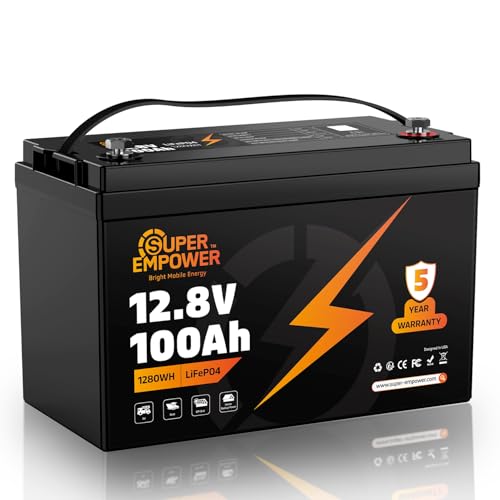
- SUPER EMPOWER 12.8V 100Ah LiFePO4 Battery, Group 31
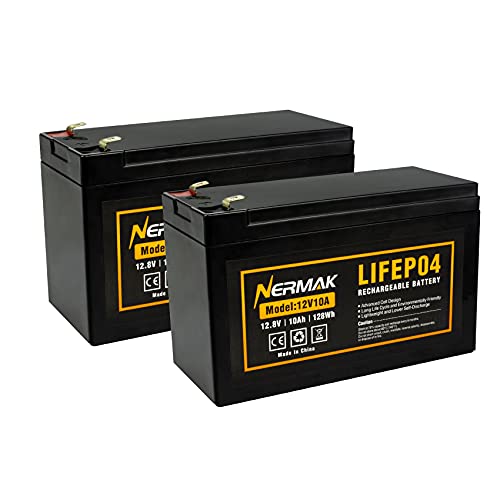
- Nermak 2 Pack 12V 10Ah LiFePO4 Deep Cycle Battery
Read the full guide ↓ for the detailed reviews, the explanation of why every serious 12V lithium battery is LiFePO4, and the sizing maths that matches a battery to a job.
Ask for the best lithium 12 volt battery and you are really asking about one chemistry. Lithium comes in several families, but the 12-volt world — RV house banks, trolling motors, marine systems, solar storage, golf cart conversions — has converged on lithium iron phosphate for reasons that are structural, not fashionable. LiFePO4 cells have a nominal voltage that stacks four-in-series into 12.8V, almost exactly the voltage a 12V system expects. The chemistry is thermally stable, tolerates deep discharge without complaint, and is engineered for thousands of deep cycles rather than hundreds. When a listing in this category says lithium and means business, it says LiFePO4 — and all five linked picks in this guide do.
That 12.8V figure deserves a sentence of its own, because it confuses shoppers every day. A 12V lithium battery and a 12.8V lithium battery are the same class of product: four LiFePO4 cells at 3.2V nominal each. Some makers label the class by the system it replaces (12V), others by the pack’s nominal arithmetic (12.8V). Both labels appear among the linked picks below, both are correct, and neither is a different voltage class. What would be a different class is 24V — and no 24V unit is linked in this guide, because the keyword’s voltage is as much a gate as its chemistry.
The real shopping questions start after chemistry and voltage are settled, and they are about scale and protection. Capacity in this line-up runs from 10Ah to 300Ah — a thirty-fold range that maps onto jobs from running a fish finder to banking a cabin. Battery management systems range from a compact 10A unit guarding an electronics battery to a 200A system with self-heating. The reviews below take each pick on its own terms, the buying guide turns capacity into arithmetic you can use, and the one prose-only review explains — respectfully, and in full — why the category’s best-known AGM still cannot be linked in a lithium guide.
Key Takeaways
- Every linked pick is LiFePO4: it is the lithium chemistry the entire 12V deep-cycle world is built on.
- 12V and 12.8V labels describe the same class — four LiFePO4 cells in series. Judge by capacity and BMS, not by the label variant.
- The AGM pick is prose-only on chemistry alone; it is a fine battery answering a different keyword.
- Capacity spans 10Ah to 300Ah: match the battery to the load’s amp draw and hours, not to the biggest number.
- Series and parallel expansion is stated outright for the SUPER EMPOWER picks (4P4S); where a title is silent, ask the manufacturer.
- Low-temperature charge protection appears across the 100Ah class — essential for batteries stored or charged in the cold.
In this guide
Quick Picks
| Pick | Badge | Why it is here | Link |
|---|---|---|---|
| VEMDIA 12V 100Ah LiFePO4, Group 31 Smart BMS | Best Overall | Smart 100A BMS, low-temperature protection, and a stated cycle count in the fifteen-thousand-plus range. | Check on Amazon |
| Renogy 12V 100Ah Deep Cycle AGM | Best Non-Lithium Alternative | The sealed lead-acid benchmark — reviewed in full, linked nowhere, because it is not lithium. | Prose-only — AGM, not lithium |
| SUPER EMPOWER 12V 100Ah LiFePO4, Group 24 (2 Pack) | Best Matched Pair | Two factory-matched blocks with stated 4P4S support for banks and 24V pairs. | Check on Amazon |
| VATRER POWER 12V 300Ah LiFePO4 | Best High Capacity | 300Ah, a 200A BMS, self-heating, and app monitoring in a single block. | Check on Amazon |
| SUPER EMPOWER 12.8V 100Ah LiFePO4, Group 31 | Best for Trolling and RV Banks | Trolling motors named in the title, stated 4P4S expansion, low-temperature cutoff. | Check on Amazon |
| Nermak 12V 10Ah LiFePO4 (2 Pack) | Best Compact Pick | Small-format deep-cycle lithium for electronics, lighting, and light mobility loads. | Check on Amazon |
How These Picks Were Chosen
This guide is research-led, and its linking rule has two gates, both taken from the keyword itself. Gate one is chemistry: the keyword says lithium, so only lithium batteries are linked — and in this pool, that means LiFePO4. The Renogy AGM fails gate one despite being a 12V deep-cycle battery of real quality, so it is reviewed in full as prose-only; pretending an AGM is a lithium battery would be a category error no amount of brand respect justifies. Gate two is voltage: the keyword says 12 volt, so only the 12V/12.8V class is linked. Every candidate was checked against its verified manufacturer title for both gates, and for the features its review discusses — capacity, BMS rating, temperature protection, and expansion support are all quoted from titles, never assumed.
Within the five linked picks, the evaluation weighted fitness for the jobs 12V lithium actually does. The 100Ah class is the centre of gravity — house banks, trolling motors, cart conversions — so protection quality and expansion documentation matter most there. The extremes of the range were judged by different standards: the 300Ah block by whether its supporting systems (BMS current, self-heating, monitoring) match its capacity ambition, and the 10Ah pack by whether it honestly serves the small-load world of electronics and lighting rather than pretending to propulsion work. Readers building toward a 24V system from 12V blocks will find the series discussion continued in our Best Lithium Battery For 24 Volt Trolling Motor guide. No prices or fixed ratings appear in this guide; manufacturer cycle figures are reported as stated claims, and every recommendation is expressed in terms that survive a change in the market.
The 6 Best Lithium 12 Volt Battery Options, Reviewed

VEMDIA 12V 100Ah LiFePO4 Lithium Battery, Group 31 with Smart BMS
Badge: Best Overall
Strengths
- Smart 100A BMS with low-temperature protection — the complete guard set for a house or propulsion bank.
- Stated 1280Wh and a deep-cycle ambition in the fifteen-thousand-plus range.
- Group 31 format fits the trays and boxes the 12V world is already built around.
Trade-offs
- The title states no expansion configuration, so series or parallel banking should be confirmed with the manufacturer.
- 100Ah is the versatile middle, not the maximum; large banks will still stack multiples.
- Smart protection is only visible when it saves you — in a heated space it may never announce itself.
Key specs (from manufacturer title): Voltage: 12V nominal; Capacity: 100Ah; Stated energy: 1280Wh; Group size: 31; BMS: 100A smart with low-temperature protection; Stated deep cycles: 15000+.
The best all-round 12V lithium battery is the one that disappears into the system and does its job for years, and this VEMDIA is specified exactly for that disappearance. Its smart BMS stands watch over the full list of lithium failure modes — over-charge, over-discharge, over-current, short circuit, and the cold-charge scenario that quietly ruins unprotected batteries in stored RVs and boats. Its capacity sits at the class’s centre of gravity: 100Ah is one trolling motor’s long day, one RV’s overnight, one cart bank’s quarter. And its stated cycle ambition signals design intent aimed at the decade, not the season.
Its honest limitation is documentary rather than electrical: the title does not state an expansion configuration, and expansion is how 100Ah batteries become systems. Single-battery buyers — a trolling motor, a small solar setup, a single house battery — can proceed on the strength of the specification as it stands. Bank builders should have the short manufacturer conversation about series and parallel use before ordering multiples, and treat a clear answer as part of the product. That caveat recorded, this is the guide’s default recommendation for the largest number of readers: the protected, proven-format, long-ambition 100Ah block. Owners whose 12V world floats will find its marine case argued in our Best Marine 12 Volt Battery guide as well.
Best for: The broad centre of 12V lithium use — RV, marine, solar, and single-bank buyers who value protection. / Not suited for: Bank builders who require expansion configurations stated in the title itself.
Renogy 12 Volt 100Ah Deep Cycle AGM Battery
Badge: Best Non-Lithium Alternative
Strengths
- Sealed AGM construction with no watering, no acid handling, and full lead-acid charger compatibility.
- Stated 3 percent self-discharge rate and a stated maximum discharge current of 1100A.
- A long-established, widely understood product in the 12V deep-cycle world.
Trade-offs
- It is not lithium. In a lithium guide, that is the whole entry under this heading.
- Usable capacity should be planned at about half the rating for longevity, unlike lithium’s most-of-rating.
- Several times a lithium battery’s weight, with a shorter deep-cycle service life.
Key specs (from manufacturer title): Voltage: 12 volt; Capacity: 100Ah; Chemistry: deep-cycle AGM lead-acid; Self-discharge: 3 percent stated rate; Max discharge current: 1100A stated.
Why is a lead-acid battery reviewed at length in a lithium guide? Because it is the battery many readers are replacing, the battery their charger already suits, and the battery against which every lithium claim in this article should be measured. The Renogy AGM is a genuinely good example of its kind: sealed so the watering can and the acid gloves are retired, slow to self-discharge in storage, and capable of very high discharge currents when a load demands them. For a lightly used system with a lead-acid charger, it remains a rational purchase — in the guides where its chemistry matches the keyword.
Here, it is the control group. Put its specification beside the linked lithium picks and the category’s story tells itself: plan on half its capacity as working energy where lithium offers most of its rating; expect a bank several times heavier; expect a shorter deep-cycle life under daily use. None of that makes it a bad battery — it makes it a different battery, and a lithium guide that linked it would be lying in its headline. It is therefore reviewed in full, praised where praise is earned, and linked nowhere. Readers for whom its profile is the right one will find it linked, appropriately, in our Best No Maintenance Rv 12 Volt Battery guide, where sealed and maintenance-free are the questions being asked.
Best for: Lead-acid charger owners and light-duty systems — in the guides where AGM is the subject. / Not suited for: Any reader whose requirement is actually lithium, which in this guide is every reader.

SUPER EMPOWER 12V 100Ah LiFePO4 Battery, Group 24 (2 Pack)
Badge: Best Matched Pair
Strengths
- Two matched 100Ah blocks in one purchase — the correct foundation for series pairs and parallel banks.
- States 4P4S expansion support and low-temperature cutoff in the title.
- Group 24 compactness suits the tightest battery boxes in the class.
Trade-offs
- A pair is a starting architecture, not every architecture: 48V banks need two pairs.
- Group 24 is the smaller case; Group 31 trays may prefer the larger-format picks.
- Matched discipline continues at replacement time — a future single swap should still match model and age as closely as possible.
Key specs (from manufacturer title): Voltage: 12V nominal per battery; Capacity: 100Ah per battery; Pack quantity: 2; Stated energy: 1280Wh; Group size: 24; BMS: 100A with low-temperature cutoff; Expansion: 4P4S, up to 20.48kWh stated.
Most 12V lithium batteries are not used alone for long. They are paired — two in series for a 24V trolling motor, two in parallel for a fatter 12V house bank, four in series for a cart — and pairing has one rule above all others: the partners must match. Same model, same batch, same age, same history. This two-pack is the only pick in the guide that sells the rule itself: two factory-matched Group 24 blocks with stated 4P4S support, ready to become a system the day they arrive.
The underlying block is the same well-credentialed 100Ah unit as its single-listed sibling — 100A BMS, low-temperature cutoff, 1280Wh stated — so the pair inherits the class’s full protection story. Its honest limits are arithmetic and geometry: two blocks are half of some banks and all of others, and the compact Group 24 case that fits everywhere also carries the standard capacity rather than the extended one. For buyers building a pair-based system from scratch — and the Best Prices On 12 Volt Mower Batteries crowd learning that outdoor equipment batteries obey the same matching rule — this is the most procedurally correct purchase in the guide.
Best for: Anyone building a two-battery system, or starting a larger bank with matched foundations. / Not suited for: Single-battery buyers, who should simply buy the single.

VATRER POWER 12V 300Ah Deep Cycle LiFePO4 Lithium Battery
Badge: Best High Capacity
Strengths
- 300Ah in one 12V block — a small bank’s worth of energy behind a single pair of terminals.
- Built-in 200A BMS matches the capacity with current headroom for strong loads.
- Self-heating plus app monitoring: cold defence and visibility that big batteries especially need.
Trade-offs
- Size and weight are in a different class from 100Ah units; packaging must be planned, not improvised.
- The title states no expansion configuration; confirm banking plans with the manufacturer.
- For light loads it is capital and mass far beyond the requirement.
Key specs (from manufacturer title): Voltage: 12V nominal; Capacity: 300Ah; BMS: built-in 200A; Features: self-heating, app monitoring, low/high temperature cutoff.
There are 12V jobs that laugh at 100Ah: the off-grid cabin running lights, refrigeration, and tools through a dark weekend; the RV that boondocks for days; the work vehicle whose bank is its livelihood. This VATRER block is built for those jobs, tripling the standard capacity in a single unit and — just as importantly — surrounding it with systems sized for the ambition. A 200A BMS gives strong inverters and motors their headroom. Self-heating answers lithium’s cold-charge weakness actively rather than by refusal. App monitoring gives the owner of a very large, very flat-curved battery an honest view of what is left, which on a battery this size is the difference between confidence and superstition.
The cautions scale with the battery. It is physically serious — measure the compartment, plan the lift, and respect the terminal hardware. Its title states no expansion configuration, so multi-unit architectures need the manufacturer’s word first. And its capacity is a commitment that light users simply do not need; a fish finder does not care that its battery could also run a cabin. Judged on its own brief, though, this is the most complete big-block package in the guide, and the pick that turns “12V lithium” from an accessory into infrastructure. The same capacity-first logic, priced carefully, animates the shoppers behind the misspelled but popular search Best Pricesgolf Cart 12 Volt Battery Prices, where big blocks meet bank maths.
Best for: Off-grid, boondocking, and working 12V systems with genuinely large daily loads. / Not suited for: Light or portable use, or compartments designed around 100Ah footprints.
SUPER EMPOWER 12.8V 100Ah LiFePO4 Battery, Group 31
Badge: Best for Trolling and RV Banks
Strengths
- Trolling motors are named first in its title’s purpose — propulsion duty is its home ground.
- States 4P4S expansion support up to 20.48kWh, so bank building is documented, not improvised.
- Low-temperature cutoff and a 100A BMS complete the protection set.
Trade-offs
- The 12.8V label invites confusion among shoppers who do not yet know it is the same class as 12V.
- Group 31 is the larger footprint; compact boxes should look at the Group 24 picks.
- Like all lithium here, it asks for a lithium-profile charger to live its best life.
Key specs (from manufacturer title): Voltage: 12.8V nominal (12V class); Capacity: 100Ah; Stated energy: 1280Wh; Group size: 31; BMS: 100A with low-temperature cutoff; Expansion: 4P4S, up to 20.48kWh stated.
If the VEMDIA at the top of this guide is the all-rounder, this SUPER EMPOWER is the specialist with the broader résumé: a 100Ah Group 31 block whose title leads with trolling motors and RVs, and whose expansion support is stated outright. That combination — propulsion-first positioning plus documented 4P4S banking — makes it the natural building block for the two most common multi-battery projects in the 12V world: the 24V trolling pair and the multi-block house or cart bank. Buy two and you have a matched-architecture 24V system; buy four and the cart conversation begins.
The 12.8V on its label is, to say it once more, the honest arithmetic of four LiFePO4 cells and no obstacle whatsoever to life in a 12V system — chargers, motors, and accessories specified for 12V lithium treat it as home. Its real-world limits are the class limits: standard rather than extended capacity per block, the larger Group 31 footprint, and the lithium charger conversation that accompanies any conversion from lead-acid. Within those, it is arguably the most bankable single pick in the guide, and the one this article would order in multiples with the least hesitation. Readers arriving from the misspelled twin query Best No Maintenenace 12 Volt Rv Battery will find the same block logic waiting in the RV guides.
Best for: Trolling propulsion, RV house banks, and any multi-block build wanting stated expansion support. / Not suited for: The tightest battery boxes, where the Group 24 picks fit better.
Nermak 2 Pack 12V 10Ah LiFePO4 Deep Cycle Battery
Badge: Best Compact Pick
Strengths
- Genuine LiFePO4 deep-cycle chemistry in a small, light, electronics-scale format.
- Sold as a two-pack with a built-in 10A BMS per battery and a stated 2000+ cycle design.
- Named uses — fish finders, lighting, scooters, power wheels, solar and wind — match its scale honestly.
Trade-offs
- 10Ah is electronics capacity, not propulsion or house-bank capacity; no framing changes that.
- The 10A BMS caps discharge current accordingly — this is a small-load battery by design.
- Paralleling many small units is a worse architecture than one right-sized battery for bigger jobs.
Key specs (from manufacturer title): Voltage: 12V; Capacity: 10Ah per battery; Pack quantity: 2; BMS: built-in 10A; Stated cycles: 2000+; Chemistry: LiFePO4 deep cycle.
Every category needs its honest small end, and this Nermak two-pack is the 12V lithium world’s. Ten amp-hours of LiFePO4 will not push a boat or power a cabin, and this battery does not pretend otherwise — its stated world is fish finders, LED lighting, scooters, kids’ ride-ons, and small solar or wind setups, and within that world it is exactly right: feather-light compared with the small sealed lead-acid batteries it replaces, deep-cycle by design, protected by its own 10A BMS, and sold as a matched pair for households with two jobs waiting.
The review’s duty is to hold the boundary in both directions. Do not ask this battery to do a 100Ah job — the capacity and the BMS current both forbid it, and disappointment would be a sizing error, not a product failure. Equally, do not let the big-block picks bully you out of the right small purchase: for electronics and light mobility, a 100Ah battery is cost, weight, and bulk spent on nothing. Sized honestly, the little Nermak is the most charming pick in the guide — proof that the lithium revolution in 12V is not only about banks and cabins, but also about the small battery in the kayak that finally weighs almost nothing.
Best for: Fish finders, lighting, scooters, ride-ons, and small renewable setups. / Not suited for: Trolling propulsion, house banks, or any load beyond small electronics and light mobility.
Comparison Table
| Pick | Chemistry | Capacity | BMS | Standout trait | Link |
|---|---|---|---|---|---|
| VEMDIA Group 31 Smart BMS | LiFePO4 | 100Ah | 100A smart | Low-temperature protection | Check on Amazon |
| Renogy AGM | AGM lead-acid | 100Ah | — | Prose-only — not lithium | Prose-only |
| SUPER EMPOWER 2 Pack | LiFePO4 | 100Ah × 2 | 100A | Matched pair, stated 4P4S | Check on Amazon |
| VATRER POWER | LiFePO4 | 300Ah | 200A | Self-heating, app monitoring | Check on Amazon |
| SUPER EMPOWER 12.8V | LiFePO4 | 100Ah | 100A | Trolling-first, stated 4P4S | Check on Amazon |
| Nermak 2 Pack | LiFePO4 | 10Ah × 2 | 10A | Compact electronics format | Check on Amazon |
How to Choose a 12V Lithium Battery
Start with the load, expressed in amps and hours. A fish finder drawing a couple of amps for a day needs a different universe from a trolling motor drawing tens of amps for the same day. Multiply draw by hours to get the amp-hours the job consumes, then choose a battery whose capacity covers that figure with room to spare — lithium rewards a buffer, because a battery that ends most days partially full lives longer than one that ends them empty. This single calculation explains the entire shape of this guide’s line-up: the 10Ah Nermak is correct for electronics, the 100Ah class is correct for a motor or an overnight, and the 300Ah VATRER is correct when the load is a dwelling.
Next, check the BMS against the load’s peak, not its average. The management system’s current rating is the ceiling on what the battery will deliver; a motor’s start-up surge or an inverter’s peak must fit beneath it, with margin. Then decide your architecture: single battery, series pair for 24V, parallel for capacity, or a full bank — and prefer picks whose titles state the expansion support your architecture needs. Add the climate question: batteries charged in freezing spaces need low-temperature protection or self-heating, full stop. Finally, budget the charger honestly. A lithium-profile charger matched to your system voltage is part of the battery purchase in every way that matters, and the one accessory this guide will never call optional.
How to Charge, Store, and Look After a LiFePO4 Battery
Daily care for lithium is simpler than lead-acid ever was — no watering, no equalisation, no acid — but it has its own short list of commandments. Charge with a lithium profile. Do not charge below freezing unless the battery protects or heats itself. Store at a partial charge for long rests rather than brim-full or empty, in a cool dry place. And keep terminals clean and connections tight, because a high-resistance connection wastes energy and generates heat in any chemistry.
- After installation, complete one full charge so the BMS can balance the cells before judging performance.
- Recharge promptly after deep use rather than letting the battery sit empty.
- Check state of charge with a shunt-based monitor or the battery’s app where fitted — voltage alone reads lithium badly.
- Inspect cables and terminals seasonally; re-torque anything that has relaxed.
- For winter storage, follow the maker’s stated state-of-charge guidance and disconnect parasitic loads.
Troubleshooting follows the protection logic. Problem: the battery refuses a charge on a cold morning → the low-temperature cutoff is protecting the cells; warm the battery and try again. Problem: the battery shuts down under a heavy load → the BMS has hit its current ceiling; the load is too big for the battery, not the other way round. Problem: capacity seems to shrink over a season → check for a parasitic draw draining it in storage, and confirm the charger is completing a full lithium-profile charge.
Why LiFePO4 Won the 12V World
It is worth understanding why this chemistry, specifically, took the category — because the reasons predict how these batteries will behave in your hands. LiFePO4’s discharge curve is famously flat: voltage holds near nominal through most of the capacity, then falls at the end. Motors run strong all day; electronics see a stable supply; and owners must gauge charge by counting energy rather than reading voltage. Its cycle tolerance at deep discharge is the second pillar: where lead-acid asks to be kept shallow, LiFePO4 accepts being used — most of its rating, most days — and is engineered around cycle counts that make that acceptance last for years. The third pillar is stability: the chemistry is inherently resistant to the thermal runaway that haunts other lithium families, which is why it is the lithium trusted in boats, RVs, and homes. Weight — roughly a third of lead-acid for the same usable energy — is the bonus everyone feels first and the reason conversions are described as transformations.
Series, Parallel, and the Architecture of a Bigger System
One 12V battery is a component; the systems readers actually dream about are architectures. Series wiring adds voltage — two 12V blocks make the 24V a larger trolling motor wants, four make a 48V cart bank. Parallel wiring adds capacity at the same voltage — two 100Ah blocks become a 200Ah house bank. The notation in the SUPER EMPOWER titles, 4P4S, certifies the largest supported combination of the two. Three disciplines govern every architecture: use identical blocks of the same age; keep cable runs short, equal, and correctly gauged; and charge the system as a system, with a charger specified for the total voltage. Break the first discipline and the weakest block taxes the rest; break the third and protection systems start making decisions you did not plan. Respect all three, and the little 12V block scales from a kayak fish finder to a cabin without changing its nature — only its company.
Lithium Versus the Alternatives, Without the Hype
Because this guide links only lithium, it owes you the honest version of the comparison you are actually making at the checkout. Against flooded lead-acid, lithium wins on every axis except purchase simplicity: no watering, no acid, no ventilation worries, a fraction of the weight, several times the usable energy per rated amp-hour, and a service life measured in many more cycles. Against AGM — the prose-only pick’s chemistry — the same list mostly holds, softened by AGM’s genuine virtues: it is sealed, it tolerates cold charging that lithium refuses, and it works with the charger already on your wall. Against the other lithium families you may meet in small electronics, LiFePO4 trades a little energy density for stability and cycle life, which is why the 12V deep-cycle world standardised on it.
Where lithium honestly loses deserves equal clarity. It costs more commitment up front, as a system, once the profile charger is counted. It refuses — by design — to be charged in freezing conditions unless protected or self-heating, which complicates the coldest storage scenarios. Its flat voltage curve demands a real state-of-charge gauge where lead-acid could be read with a voltmeter and experience. And its very longevity depends on electronics: a BMS is a circuit board standing guard for a decade, which is why maker quality and warranty seriousness matter more in this category than in the lead-acid world of plates and acid. None of these are secrets; all of them are in this guide’s reviews. A reader who weighs them and still chooses lithium — as most deep-cycle users now do — is choosing with the full ledger open, which is the only way this category should ever be bought.
Cold, Heat, and Water: The Environmental Realities
Batteries live where vehicles and boats live, and the environment writes half the ownership story. Cold is lithium’s famous caveat: discharging in the cold is fine, but charging below freezing can permanently damage unprotected cells, so the low-temperature cutoffs and self-heating systems across this line-up are not marketing garnish — they are the difference between a battery that survives a northern winter on a charger and one that quietly loses capacity doing it. If your battery will be charged anywhere that freezes, treat protection as a requirement, not an upgrade.
Heat is the slower enemy and it attacks every chemistry: sustained high temperatures accelerate ageing, shorten calendar life, and punish batteries stored in sun-baked compartments. Shade, ventilation, and sane storage are worth real years. Water, finally, is the marine reality: terminals corrode, connections loosen, and a battery that lives in a bilge-adjacent box needs its hardware inspected more often than its garage-kept twin. None of the picks in this guide claims a waterproof rating in its title, so none is credited with one here — enclose, mount, and maintain accordingly. Respect the three elements, and the chemistry’s promised years become plausible; ignore them, and no badge in any guide will save the bank.
What Deep Cycle Really Means in a Lithium Rating
The words deep cycle travel from the lead-acid world, where they describe plate construction built to survive repeated deep discharge instead of a starter’s shallow sprints. In lithium listings, the same words describe a design intent — cells, management, and construction aimed at being discharged deeply and recharged, day after day, for years — and they are paired with the cycle counts that quantify the intent. Reading those counts well is a skill: they are measured under stated conditions of depth, temperature, and rate, and your service will differ from the laboratory’s in every particular. The counts are best used comparatively, as evidence of design margin, and discounted by your own behaviour — a battery routinely run to empty in summer heat will not collect its laboratory total, whatever the title says.
There is also a quieter implication worth stating: a deep-cycle lithium battery expects to be the system’s energy reservoir, not its cranking source. Loads in this world are sustained — motors, lights, refrigeration, electronics — and the BMS current ratings across this guide, from 10A to 200A, describe sustained delivery ceilings. Match the reservoir to the load’s appetite and the ceiling to the load’s peak, and deep cycle stops being a label and becomes what it should be: a description of a battery doing the exact job it was engineered for, for a very long time.
Common Buying Mistakes
- Buying capacity by the headline. Match amp-hours to the load’s amps-times-hours, with a buffer — not to the biggest number on the page.
- Ignoring the BMS ceiling. A battery that cannot deliver your load’s peak current will shut down to protect itself, correctly.
- Assuming every lithium battery can be banked. Series and parallel use needs manufacturer support; prefer it stated in the title.
- Charging frozen lithium. Without low-temperature protection or self-heating, a freezing charge is permanent damage on an ordinary morning.
- Gauging charge by voltage. Lithium’s flat curve makes voltmeters optimistic until the very end; count energy instead.
- Linking chemistry words loosely. AGM is not lithium, and a guide — or a buyer — that treats them as interchangeable will mis-spec the charger too.
Final Recommendation
For most readers, the answer is the VEMDIA 12V 100Ah LiFePO4 Lithium Battery with Smart BMS: the protected, standard-format, long-ambition block at the centre of the class. Build pairs and banks from the SUPER EMPOWER 12V 100Ah LiFePO4 2 Pack when matching matters, step up to the VATRER 300Ah when the load is a dwelling, choose the trolling-first SUPER EMPOWER 12.8V for propulsion banks, and let the little Nermak pair remind you that the right battery is the one sized to its job. The AGM stays respectfully unlinked — a good battery, in the wrong guide. Choose by load, protect against your climate, charge with the right profile, and a 12V lithium battery will repay you for years. That is the quiet promise of this chemistry when it is bought carefully: not excitement, but a decade of mornings on which the battery is simply ready — the most valuable specification of all, and the one no title can print.
Frequently Asked Questions
Is a 12.8V battery the same as a 12V battery?
Yes, in this category they are the same class. A LiFePO4 pack is four 3.2V cells in series, giving a 12.8V nominal pack that serves 12V systems. Makers label it either way — by the system it replaces or by the cell arithmetic. What matters for compatibility is that the battery is a LiFePO4 deep-cycle unit intended for 12V systems, which every linked pick here is. If a listing ever leaves you unsure, compare its stated watt-hours against its volts-times-amp-hours arithmetic: a genuine 12V-class pack’s figures will agree with the four-cell math, and that small audit resolves the label question instantly.
Why is the AGM battery not linked in a lithium guide?
Because it is not lithium. AGM is absorbed-glass-mat lead-acid — a good, sealed, maintenance-free chemistry with its own guides and its own buyers. Linking it under a lithium keyword would misdescribe the product and mislead the purchase, particularly on charging: lithium and lead-acid want different charger profiles. It is reviewed in full so readers can see exactly what they are choosing between.
How long will a 100Ah lithium battery run my trolling motor?
Divide the battery’s usable capacity by your motor’s typical draw. At a moderate draw, a 100Ah LiFePO4 battery delivers a long day on the water; at full throttle in wind and current, expect proportionally less. The honest variables are thrust setting, boat size, and conditions — which is why this guide teaches the division rather than printing a duration no two anglers would share.
Can I replace my lead-acid battery with lithium using the same charger?
Plan on a lithium-profile charger. Some lead-acid chargers will partially charge a lithium battery, but partial is the operative word — the profile differs, the finishing behaviour differs, and protection events are handled differently. The charger is part of the conversion, and budgeting it from the start is the difference between a system that performs as specified and one that merely functions.
What size lithium battery do I need for a fish finder and lights?
Small — and that is a feature. Electronics draw a few amps; a long day of a fish finder and lighting typically consumes a modest number of amp-hours, which is precisely the world the 10Ah Nermak pair is built for. Oversizing electronics batteries buys weight and cost, not performance. Do the amps-times-hours sum for your actual devices and buy the battery that covers it with a sensible buffer.
How long does a 12V lithium battery actually last?
Two clocks run at once. The cycle clock counts deep discharges, and LiFePO4 designs are engineered around counts in the thousands — the linked picks state ambitions from the low thousands in the compact class to the fifteen-thousand range in the 100Ah class. The calendar clock counts years, heat, and storage habits. In typical deep-cycle service, owners should expect a well-kept LiFePO4 battery to outlast the lead-acid battery it replaced by a wide multiple; in abusive service — frozen charging, constant full-depth summers, loose connections — either clock can be spent early. The figures in titles are design statements, and your habits decide how much of them you collect.
Do lithium batteries need maintenance?
Very little, and none of it involves water or acid. Keep terminals clean and tight, charge with the correct profile, avoid charging in freezing conditions unless the battery is protected or self-heating, store at partial charge for long rests, and check state of charge with a proper monitor rather than a voltmeter. That short list, followed, is the whole maintenance regime — one of the genuine pleasures of the chemistry.
