Disclosure: topratedkitchenware.com is reader-supported. When you buy through links on our site, we may earn an affiliate commission from Amazon and other retailers, at no extra cost to you.
Where to buy
The six products below are the verified pool this guide to the best stand mixers reddit is built around. Only the true stand mixers carry purchase links, because only they match what the search asks for; the hand mixers are reviewed in full but prose-only, with no link and no image, so the guide never sells you one format dressed as another. Listings change, so check the current Amazon listing for the exact model before you buy.
- Prose-Only Alternative: Best Hand-Mixer Control: WEPSEN 5-Speed Hand Mixer with Mixing Bowls Set — reviewed prose-only below (no purchase link in this guide)
- Prose-Only Alternative: Best Compact Pick: Proctor Silex Easy Mix 5-Speed Hand Mixer 62511 — reviewed prose-only below (no purchase link in this guide)
- Prose-Only Alternative: Best Light-Duty Pick: LILPARTNER 7-Speed Hand Mixer with Stainless Steel Accessories — reviewed prose-only below (no purchase link in this guide)
- Prose-Only Alternative: Best Storage Design: Cuisinart Power Advantage Plus 9-Speed Hand Mixer HM-90S — reviewed prose-only below (no purchase link in this guide)
- Best Overall: Cuisinart Stand Mixer SM-50 in White Linen
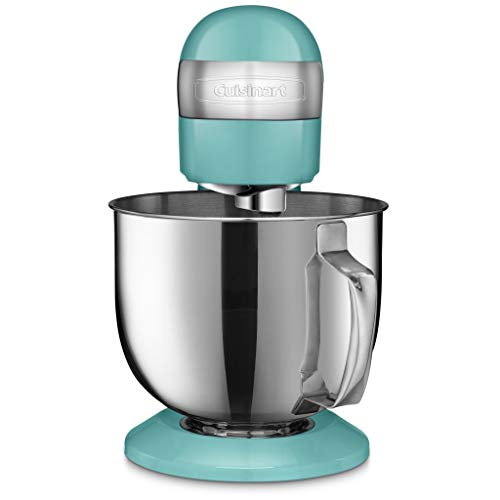
- Best for Regular Bakers: Cuisinart Stand Mixer SM-50 in Periwinkle Blue
Read the full guide ↓
Finding the best stand mixers reddit starts with a distinction that listings themselves often blur: a stand mixer and a hand mixer are different tools that happen to share a word. A stand mixer is a fixed, weighted machine with its own bowl; it mixes hands-free, kneads dough, and lives on the counter. A hand mixer is a light, hand-held motor with beaters; it stores in a drawer and handles batters and creams. Of the six verified products supplied for this keyword, 2 are true stand mixers and the rest are hand mixers — and this guide keeps that line bright, linking only the stand mixers and reviewing the hand mixers prose-only as the alternatives they are.
People add ‘reddit’ to a search when they want the unpolished version: what owners complain about after the honeymoon, which purchases people regret, and where the consensus lands after hundreds of real kitchens have weighed in. This guide is written in that spirit without inventing a single quotation or figure. It summarises the themes that recur in owner discussions of stand mixers — format regret, dough expectations, counter-space reality, colour-choice satisfaction — and applies them to the verified pool, linking the true stand mixers and reviewing the hand mixers prose-only, the way an honest forum answer would separate them.
What follows is a complete buying guide, not a list with prices stripped out. You will find how the picks were chosen, a full review of each of the six products with its strengths, trade-offs and specifications as verified in the pool, a comparison table, a buying-guide section on choosing between formats and sizes, a practical how-to section on using and caring for a mixer, and answers to the questions buyers of the best stand mixers reddit most often ask. Readers weighing neighbouring formats may also find our notes on Best Mixers With Crown Russe useful background before they decide.
Key Takeaways
- Only 2 of the six verified products in this pool are true stand mixers; those carry the purchase links in this guide.
- The stand mixers here are one platform — the Cuisinart SM-50, 12 speeds, 5.5 quart stainless steel bowl, whisk, paddle and dough hook included — in different finishes, so choose between them on finish and availability, not performance.
- Hand mixers in the pool are reviewed prose-only: excellent for batters, frostings and whipped work, not a substitute for hands-free stand mixing or dough kneading.
- Format first, then bowl size, then attachments, then finish — that ordering prevents nearly every common mixer regret.
- No prices or ratings are printed in this guide; both change too fast to print honestly, so check the live listing on the day you buy.
In this guide
Quick Picks
| Pick | Badge | Format | Key specification |
|---|---|---|---|
| WEPSEN 5-Speed Hand Mixer with Mixing Bowls Set | Prose-Only Alternative: Best Hand-Mixer Control | Hand mixer | 5 speeds; Includes 4 stainless steel nesting mixing bowls |
| Proctor Silex Easy Mix 5-Speed Hand Mixer 62511 | Prose-Only Alternative: Best Compact Pick | Hand mixer | 5 speeds; 215 watts of peak power |
| LILPARTNER 7-Speed Hand Mixer with Stainless Steel Accessories | Prose-Only Alternative: Best Light-Duty Pick | Hand mixer | 7 speeds; 5 stainless steel accessories included |
| Cuisinart Power Advantage Plus 9-Speed Hand Mixer HM-90S | Prose-Only Alternative: Best Storage Design | Hand mixer | 9 speeds; Snap-on storage case |
| Cuisinart Stand Mixer SM-50 in White Linen | Best Overall | Stand mixer | 12 speeds; 5.5 quart stainless steel bowl |
| Cuisinart Stand Mixer SM-50 in Periwinkle Blue | Best for Regular Bakers | Stand mixer | 12 speeds; 5.5 quart stainless steel bowl |
Read the table with the format column first. If your search for the best stand mixers reddit means hands-free mixing, dough work or big batches, only the stand-mixer rows answer it. If your real mixing life is batters, frostings and whipped cream in small batches, the prose-only hand-mixer rows may describe the tool you will actually enjoy owning — and the detailed reviews below treat both formats with equal seriousness so you can decide on evidence. Shoppers comparing adjacent categories sometimes also browse Best Mixers For A Marg Machine; keep your own format decision in front of you while you do.
How These Picks Were Chosen
This guide is research-led. The starting point was the verified product pool supplied for this keyword: six products whose identities, brands and headline specifications were confirmed through the Creators API before writing began. Each product was then assessed against the intent of the search — the best stand mixers reddit — on format, capacity, speed range, included attachments and the jobs it can honestly perform. That assessment produced the guide’s central, deliberate decision: products matching the keyword’s core format are linked; products in a different format are reviewed prose-only, without links or images, however good they are at their own job.
No hands-on testing is claimed. Where this guide describes performance, it reasons from verified specifications and from the established behaviour of the product type — what a dough hook in a fixed 5.5 quart bowl can do, what a 5-speed hand mixer cannot — rather than from invented bench results. No prices, star ratings or review counts are quoted anywhere, because all three change after publication and printing them would mislead within months. What does not change is format, bowl size, speed count and attachment list, so those are the facts this guide is built on, and they are the facts you can verify yourself on any listing in seconds.
Let community experience set your priorities: format fit first, bowl size second, attachment set third, and only then finish and extras. That ordering is not this guide’s invention — it is the shape of thousands of post-purchase reflections, distilled.
The 6 Picks for the best stand mixers reddit
WEPSEN 5-Speed Hand Mixer with Mixing Bowls Set
Badge: Prose-Only Alternative: Best Hand-Mixer Control
The WEPSEN 5-Speed Hand Mixer with Mixing Bowls Set is a hand mixer, and this guide reviews it as one — prose-only, with no purchase link, because the search asks for stand mixers and honesty about format is the whole point of a trustworthy guide. Its listed specification is 5 speeds, includes 4 stainless steel nesting mixing bowls, whisk and beater attachments, in a Set with stainless nesting bowls finish. Within the hand-mixer format that is a coherent offer: light, quick to deploy, quick to wash, and small enough to live in a drawer. Community discussions are blunt about hand mixers: owners like them for small, fast jobs and warn against expecting stand-mixer behaviour from them — which matches this guide’s prose-only treatment exactly.
Where this format shines is the everyday middle of home mixing. Cake and brownie batters come together in whatever bowl you already own. Frostings and buttercreams whip up without hauling a machine out of a cupboard. Whipped cream and egg whites for a dessert are a two-minute job. Cleanup is a pair of beaters in the dishwasher or a quick rinse, not a bowl-and-attachments production. For cooks whose mixing life looks like that — and for many households it genuinely does — a hand mixer is not a compromise at all; it is the correctly sized tool, and the stand mixer would be the extravagance.
The limitations are structural, not incidental. You are the stand: your hand holds the motor, guides it through the mixture, and feels every thickening moment, which is tiring in long or heavy work. There is no hands-free operation, no fixed bowl geometry, and no realistic path to kneading developed bread dough — small dough hooks in some hand-mixer kits can bring a soft dough together, but that is assembly, not kneading. Batch size is limited by your bowl and your arm rather than by a specification. Buy this format with those limits understood and it will satisfy; buy it expecting stand-mixer behaviour and it will disappoint, which is exactly the mismatch this guide’s prose-only treatment is designed to prevent.
Strengths
- Arrives as a kit — bowls, measuring tools and mixer in one purchase
- Stainless nesting bowls are useful well beyond mixing
- Simple 5-speed layout is approachable for beginners
Trade-offs
- A hand mixer bundle, not a stand mixer — no hands-free mixing
- The bowls are general mixing bowls, not a fitted mixer bowl
- Entry-level format; heavy or daily dough work is out of scope
Key specifications: 5 speeds; Includes 4 stainless steel nesting mixing bowls; Whisk and beater attachments; Measuring cups and spoons included.
Best for: new bakers equipping a kitchen from scratch on the hand-mixer side / Not suited for: anyone who needs genuine stand-mixer capability
Prose-only pick: no purchase link or image in this guide, because this is a hand mixer reviewed as an alternative format in a stand-mixer search.
Proctor Silex Easy Mix 5-Speed Hand Mixer 62511
Badge: Prose-Only Alternative: Best Compact Pick
The Proctor Silex Easy Mix 5-Speed Hand Mixer 62511 is a hand mixer, and this guide reviews it as one — prose-only, with no purchase link, because the search asks for stand mixers and honesty about format is the whole point of a trustworthy guide. Its listed specification is 5 speeds, 215 watts of peak power, bowl rest feature, in a Black finish. Within the hand-mixer format that is a coherent offer: light, quick to deploy, quick to wash, and small enough to live in a drawer. Community discussions are blunt about hand mixers: owners like them for small, fast jobs and warn against expecting stand-mixer behaviour from them — which matches this guide’s prose-only treatment exactly.
Where this format shines is the everyday middle of home mixing. Cake and brownie batters come together in whatever bowl you already own. Frostings and buttercreams whip up without hauling a machine out of a cupboard. Whipped cream and egg whites for a dessert are a two-minute job. Cleanup is a pair of beaters in the dishwasher or a quick rinse, not a bowl-and-attachments production. For cooks whose mixing life looks like that — and for many households it genuinely does — a hand mixer is not a compromise at all; it is the correctly sized tool, and the stand mixer would be the extravagance.
The limitations are structural, not incidental. You are the stand: your hand holds the motor, guides it through the mixture, and feels every thickening moment, which is tiring in long or heavy work. There is no hands-free operation, no fixed bowl geometry, and no realistic path to kneading developed bread dough — small dough hooks in some hand-mixer kits can bring a soft dough together, but that is assembly, not kneading. Batch size is limited by your bowl and your arm rather than by a specification. Buy this format with those limits understood and it will satisfy; buy it expecting stand-mixer behaviour and it will disappoint, which is exactly the mismatch this guide’s prose-only treatment is designed to prevent.
Strengths
- Compact and lightweight — one of the easiest formats here to lift, use and store
- Bowl-rest design lets it perch on the bowl edge between additions
- Simple 5-speed layout with no learning curve
Trade-offs
- A hand mixer — no stand, no bowl, no hands-free operation
- 215 watts of peak power is a light-duty figure for light-duty jobs
- Basic kit aimed at batters and creams, not dough
Key specifications: 5 speeds; 215 watts of peak power; Bowl rest feature; Compact and lightweight; Model 62511.
Best for: very occasional, light mixing in a small kitchen / Not suited for: stand-mixer work, dough, or frequent baking
Prose-only pick: no purchase link or image in this guide, because this is a hand mixer reviewed as an alternative format in a stand-mixer search.
LILPARTNER 7-Speed Hand Mixer with Stainless Steel Accessories
Badge: Prose-Only Alternative: Best Light-Duty Pick
The LILPARTNER 7-Speed Hand Mixer with Stainless Steel Accessories is a hand mixer, and this guide reviews it as one — prose-only, with no purchase link, because the search asks for stand mixers and honesty about format is the whole point of a trustworthy guide. Its listed specification is 7 speeds, 5 stainless steel accessories included, for whipping dough, cream and cake batters per listing, in a Light Pink finish. Within the hand-mixer format that is a coherent offer: light, quick to deploy, quick to wash, and small enough to live in a drawer. Community discussions are blunt about hand mixers: owners like them for small, fast jobs and warn against expecting stand-mixer behaviour from them — which matches this guide’s prose-only treatment exactly.
Where this format shines is the everyday middle of home mixing. Cake and brownie batters come together in whatever bowl you already own. Frostings and buttercreams whip up without hauling a machine out of a cupboard. Whipped cream and egg whites for a dessert are a two-minute job. Cleanup is a pair of beaters in the dishwasher or a quick rinse, not a bowl-and-attachments production. For cooks whose mixing life looks like that — and for many households it genuinely does — a hand mixer is not a compromise at all; it is the correctly sized tool, and the stand mixer would be the extravagance.
The limitations are structural, not incidental. You are the stand: your hand holds the motor, guides it through the mixture, and feels every thickening moment, which is tiring in long or heavy work. There is no hands-free operation, no fixed bowl geometry, and no realistic path to kneading developed bread dough — small dough hooks in some hand-mixer kits can bring a soft dough together, but that is assembly, not kneading. Batch size is limited by your bowl and your arm rather than by a specification. Buy this format with those limits understood and it will satisfy; buy it expecting stand-mixer behaviour and it will disappoint, which is exactly the mismatch this guide’s prose-only treatment is designed to prevent.
Strengths
- 7 speeds is a wide range for a compact hand mixer
- Five stainless accessories cover beaters, whisks and dough-style tools
- Dishwasher-safe accessories simplify cleanup
Trade-offs
- Hand mixer only — accessories do not turn it into a stand mixer
- Light Pink finish will not suit every kitchen
- Hand-holding through thicker dough mixtures is strenuous and slow
Key specifications: 7 speeds; 5 stainless steel accessories included; For whipping dough, cream and cake batters per listing; Dishwasher-safe accessories; Light Pink finish.
Best for: light baking and whipped work where colour and compact storage matter / Not suited for: stand-mixer jobs, big batches or regular bread dough
Prose-only pick: no purchase link or image in this guide, because this is a hand mixer reviewed as an alternative format in a stand-mixer search.
Cuisinart Power Advantage Plus 9-Speed Hand Mixer HM-90S
Badge: Prose-Only Alternative: Best Storage Design
The Cuisinart Power Advantage Plus 9-Speed Hand Mixer HM-90S is a hand mixer, and this guide reviews it as one — prose-only, with no purchase link, because the search asks for stand mixers and honesty about format is the whole point of a trustworthy guide. Its listed specification is 9 speeds, snap-on storage case, smoothstart anti-splatter technology, in a White finish. Within the hand-mixer format that is a coherent offer: light, quick to deploy, quick to wash, and small enough to live in a drawer. Community discussions are blunt about hand mixers: owners like them for small, fast jobs and warn against expecting stand-mixer behaviour from them — which matches this guide’s prose-only treatment exactly.
Where this format shines is the everyday middle of home mixing. Cake and brownie batters come together in whatever bowl you already own. Frostings and buttercreams whip up without hauling a machine out of a cupboard. Whipped cream and egg whites for a dessert are a two-minute job. Cleanup is a pair of beaters in the dishwasher or a quick rinse, not a bowl-and-attachments production. For cooks whose mixing life looks like that — and for many households it genuinely does — a hand mixer is not a compromise at all; it is the correctly sized tool, and the stand mixer would be the extravagance.
The limitations are structural, not incidental. You are the stand: your hand holds the motor, guides it through the mixture, and feels every thickening moment, which is tiring in long or heavy work. There is no hands-free operation, no fixed bowl geometry, and no realistic path to kneading developed bread dough — small dough hooks in some hand-mixer kits can bring a soft dough together, but that is assembly, not kneading. Batch size is limited by your bowl and your arm rather than by a specification. Buy this format with those limits understood and it will satisfy; buy it expecting stand-mixer behaviour and it will disappoint, which is exactly the mismatch this guide’s prose-only treatment is designed to prevent.
Strengths
- 9-speed range covers slow folding through fast whipping in a hand format
- SmoothStart helps prevent the flour-cloud start common with cheaper hand mixers
- Storage case keeps beaters and mixer in one place
Trade-offs
- A hand mixer — it cannot knead or mix unattended like a stand mixer
- White finish shows batter splashes and turmeric-type stains more readily
- Hand format tires the arm on long or thick mixes
Key specifications: 9 speeds; Snap-on storage case; SmoothStart anti-splatter technology; Model HM-90S.
Best for: frequent small-batch bakers who value speed control over hands-free operation / Not suited for: bread dough, double batches or hands-free mixing
Prose-only pick: no purchase link or image in this guide, because this is a hand mixer reviewed as an alternative format in a stand-mixer search.

Cuisinart Stand Mixer SM-50 in White Linen
Badge: Best Overall
The Cuisinart Stand Mixer SM-50 in White Linen is a true stand mixer: a counter-standing machine with a 5.5 quart stainless steel bowl, 12 speeds, and the three attachments that define the format — a chef’s whisk for aeration, a mixing paddle for general work, and a dough hook for kneading — plus a splash guard with a pour spout for adding ingredients mid-mix. The White Linen finish is this listing’s identity; mechanically it is the SM-50 platform shared by the other stand mixers in this guide, and this review will not pretend otherwise. This is the profile community threads keep landing on: a conventional, full-size stand mixer with standard attachments — the kind of purchase long-term owners report settling into rather than upgrading away from.
In daily use, the virtues compound. Hands-free operation means the machine creams butter while you measure flour, kneads while you wash up, and whisks while you line the tin — parallelism no hand mixer can offer. The 12-speed range matters most at its ends: low enough to fold flour into batter without toughening it or coating the kitchen, high enough to bring cream and egg whites to proper peaks. The stainless bowl is the right material for the job — light for its size, unreactive, dishwasher-tolerant and free of the staining and odour retention that plastic bowls suffer. The splash guard sounds like a minor accessory until your first full batch of icing sugar; then it becomes the reason your kitchen stays clean.
The honest limitation is the one shared by the whole class: this is a home machine, and home machines have a working envelope. Very stiff, low-hydration doughs in maximum batches will make it labour; very small volumes can sit low in the big bowl. Both are managed with technique — sensible batch sizes, low speeds for dough, a scrape-down at the start — and both are covered in the how-to section below. Judged inside its envelope, the SM-50 specification is complete: nothing essential is missing from the box for the standard home repertoire of cakes, cookies, breads, mashes and whipped work.
Strengths
- True hands-free stand mixing — the bowl and head do the work while your hands stay free
- 12 speeds give finer control than most home mixers, from slow folding to fast whisking
- The included whisk, paddle and dough hook cover cakes, doughs and whipped work in one box
Trade-offs
- Takes permanent counter space and is heavy to move in and out of a cupboard
- One machine in one finish — the colour is the only difference between the SM-50 listings in this guide
- A 5.5 quart bowl is generous for home batches but small for very large double doughs
Key specifications: 12 speeds; 5.5 quart stainless steel bowl; Chef’s whisk, mixing paddle and dough hook included; Splash guard with pour spout; Model SM-50NAS.
Best for: home bakers who want one full-size stand mixer for cakes, doughs and weekly baking / Not suited for: kitchens with no spare counter space or bakers who only mix occasional small batters
Check on Amazon — check the live listing for the White Linen finish before you buy.
Cuisinart Stand Mixer SM-50 in Periwinkle Blue
Badge: Best for Regular Bakers
The Cuisinart Stand Mixer SM-50 in Periwinkle Blue is a true stand mixer: a counter-standing machine with a 5.5 quart stainless steel bowl, 12 speeds, and the three attachments that define the format — a chef’s whisk for aeration, a mixing paddle for general work, and a dough hook for kneading — plus a splash guard with a pour spout for adding ingredients mid-mix. The Periwinkle Blue finish is this listing’s identity; mechanically it is the SM-50 platform shared by the other stand mixers in this guide, and this review will not pretend otherwise. This is the profile community threads keep landing on: a conventional, full-size stand mixer with standard attachments — the kind of purchase long-term owners report settling into rather than upgrading away from.
In daily use, the virtues compound. Hands-free operation means the machine creams butter while you measure flour, kneads while you wash up, and whisks while you line the tin — parallelism no hand mixer can offer. The 12-speed range matters most at its ends: low enough to fold flour into batter without toughening it or coating the kitchen, high enough to bring cream and egg whites to proper peaks. The stainless bowl is the right material for the job — light for its size, unreactive, dishwasher-tolerant and free of the staining and odour retention that plastic bowls suffer. The splash guard sounds like a minor accessory until your first full batch of icing sugar; then it becomes the reason your kitchen stays clean.
The honest limitation is the one shared by the whole class: this is a home machine, and home machines have a working envelope. Very stiff, low-hydration doughs in maximum batches will make it labour; very small volumes can sit low in the big bowl. Both are managed with technique — sensible batch sizes, low speeds for dough, a scrape-down at the start — and both are covered in the how-to section below. Judged inside its envelope, the SM-50 specification is complete: nothing essential is missing from the box for the standard home repertoire of cakes, cookies, breads, mashes and whipped work.
Strengths
- Full stand-mixer capability — hands-free mixing, kneading and whisking — in the Periwinkle Blue finish
- 5.5 quart stainless bowl suits family-size cake batters and bread doughs
- Three included attachments mean no immediate extra purchases for standard baking
Trade-offs
- Identical mechanics to the other SM-50 finishes; the finish is the only variable
- Large and heavy compared with any hand mixer in this guide
- The bowl size can feel oversized for a single small batch of whipped cream
Key specifications: 12 speeds; 5.5 quart stainless steel bowl; Chef’s whisk, mixing paddle and dough hook included; Splash guard with pour spout; Model SM-50TQNAS.
Best for: home bakers choosing the SM-50 platform who like the blue finish / Not suited for: small-batch-only cooks who rarely mix more than a cup or two at a time
Check on Amazon — check the live listing for the Periwinkle Blue finish before you buy.
Comparison Table
| Product | Format | Speeds | Bowl / kit | Attachments noted in listing | Link |
|---|---|---|---|---|---|
| WEPSEN 5-Speed Hand Mixer with Mixing Bowls Set | Hand | 5 speeds | Use your own bowl | Beaters | Prose-only |
| Proctor Silex Easy Mix 5-Speed Hand Mixer 62511 | Hand | 5 speeds | Use your own bowl | Beaters | Prose-only |
| LILPARTNER 7-Speed Hand Mixer with Stainless Steel Accessories | Hand | 7 speeds | Use your own bowl | Beaters | Prose-only |
| Cuisinart Power Advantage Plus 9-Speed Hand Mixer HM-90S | Hand | 9 speeds | Use your own bowl | Beaters, storage case | Prose-only |
| Cuisinart Stand Mixer SM-50 in White Linen | Stand | 12 speeds | 5.5 quart stainless bowl | Whisk, paddle, dough hook | Check on Amazon |
| Cuisinart Stand Mixer SM-50 in Periwinkle Blue | Stand | 12 speeds | 5.5 quart stainless bowl | Whisk, paddle, dough hook | Check on Amazon |
The table compresses the guide’s argument into one screen: format is the dividing line, and everything else is refinement. Among the stand mixers, the rows are mechanically identical — same speeds, same bowl, same attachments — because they are one platform in different finishes; among the hand mixers, the differences that matter are speed count, motor figure where stated, and whether a storage case or extra attachments are included. Readers who started by browsing Best Mixers For Bread Making will find the same lesson applies across the category: compare format and specification, not adjectives.
How to Choose the Right Mixer for Your Kitchen
Step one: settle the format question honestly. List the mixing jobs of your last month. If dough, double batches, or anything you would rather not hold a motor through appear on it, you are a stand-mixer buyer. If the list is batters, frostings, whipped cream and the occasional cake, a hand mixer covers it at a fraction of the storage cost. Most mixer regret is born right here, in a format decision made by price or by photograph instead of by job list.
Step two: size the bowl to your batches. A 5.5 quart bowl is the home sweet spot — family cakes, holiday mashes, a standard loaf’s worth of dough — with headroom to fold without spilling. Bigger is not better for small households: tiny volumes get lost under the paddle in an oversized bowl. Smaller is not thriftier for batch bakers: a bowl you must split every recipe into is a tax on every bake. Match the bowl to the batch you make most, not the largest you can imagine.
Step three: read the attachment list, not the marketing. Whisk, paddle and dough hook in the box means the machine covers aeration, general mixing and kneading from day one. For hand mixers, check whether beaters are joined by a whisk or dough hooks and whether a storage case keeps the kit together. Attachments you must buy separately are part of the real price, and attachments that do not exist for a format — there is no kneading solution for a hand mixer — are part of the real specification.
Step four: treat speed count as control, not power. More speeds mean finer steps, most valuable at the slow end: folding, starting dry ingredients, and gentle combining. Judge a mixer’s low-speed manners as carefully as its top speed. Then step five: plan the machine’s home. A stand mixer needs a permanent counter position with cabinet clearance and a nearby socket; a hand mixer needs a drawer. The machine that fits your kitchen’s geography is the machine that gets used.
Finally, a note on tiers. Within a format, price tiers buy control, capacity and kit rather than a different kind of mixing: more speeds, a bigger bowl, more attachments in the box, a storage case. Across formats, the tier jump is functional — hands-free operation and kneading exist only on the stand side. Spend across that line deliberately, and within a line on the specifications you will feel weekly. It is also worth a look at Best Reviewed Kitchenaid Mixers if your baking runs toward celebration-scale projects, where capacity planning matters even more.
How to Use, Clean and Maintain Your Mixer
Setup. Place a stand mixer on a clear, dry counter with room to raise the head or tilt it back, lock the bowl in place, and fit the attachment for the job — paddle for general mixing, whisk for aeration, hook for dough. For a hand mixer, choose a bowl with high sides and enough depth that the beaters stay submerged in the mixture; a bowl that is too wide and shallow invites splashing.
Mixing, step by step. (1) Bring ingredients to the state the recipe assumes — butter softened for creaming, eggs at room temperature for whisking. (2) Add dry ingredients in stages, starting the mixer at its lowest speed each time. (3) Scrape down the bowl sides and bottom once mid-mix; every mixer leaves a margin, and one scrape is the difference between even and almost-even. (4) Watch the mixture, not the clock: stop at the visual signs described in the guidance below. (5) For dough, knead at low speed and judge by smoothness and elasticity, not by minutes alone.
Cleaning. Detach attachments and wash them promptly; bowls and stainless attachments tolerate the dishwasher in most households’ practice, but check the manual for your model and finish. Wipe the body and head with a damp cloth, paying attention to the underside where splashes land. Never immerse a motor body. Dry attachments fully before storing them, and coil cords loosely.
Troubleshooting. Problem: flour erupts when starting → the speed was too high or all the flour went in at once; start at the lowest speed and add dry ingredients in stages, using the splash guard. Problem: mixture clings unmixed to the bowl bottom → stop and scrape down, and check the attachment is fully seated. Problem: dough climbs the hook → the batch is large or the speed high; pause, push the dough down, continue at low speed, and split future batches. Problem: a hand mixer labours and slows in a thick mixture → the job is beyond the format; thin the mixture if the recipe allows, work in smaller amounts, or move the job to a stand mixer.
The Complaints That Come Up Again and Again
Read enough owner threads and the same grievances repeat. First, format regret: buyers who chose a light appliance for dough work, or a huge machine for a tiny kitchen, and knew within a month. Second, flour clouds — starting too fast in dry ingredients, a technique problem blamed on machines. Third, dough climbing the hook and small bowls being asked to hold double batches. Fourth, storage friction: a mixer that lives in a cupboard gets used a fraction as often as one that lives on the counter. Notice that most recurring complaints are about fit, not defects — which is why this guide spends so much of its length on matching format, bowl and workload instead of on headline features.
Where Owner Consensus Usually Lands
The settled view in long-running discussions is refreshingly undramatic. Buy the format that matches your heaviest regular job, not your lightest. Standard attachments and a conventional design age better than novelty features. A mid-size bowl suits most households; very large and very small bowls both create edge cases. Colour is a legitimate deciding factor between identical machines because a mixer you enjoy looking at is a mixer that stays on the counter and gets used. And the hand mixer is not a failed stand mixer — it is the right tool for a large share of real kitchens, provided nobody asks it to knead. This pool, with one stand-mixer platform in several finishes plus a set of honest hand mixers, maps unusually well onto that consensus.
Practical Guidance for Everyday Mixing
Common Buying Mistakes
- Buying the wrong format for the heaviest job. A hand mixer bought for bread dough, or a stand mixer bought for twice-a-year whipped cream, both end as regrets; let your heaviest regular job set the format.
- Judging by headline power or speed count alone. Neither tells you about bowl geometry, low-speed control or attachments — the things you feel in every batch.
- Ignoring the attachment list. A machine without a dough hook is not a kneading machine, whatever the photographs imply; check the box contents, not the lifestyle images.
- Forgetting the machine’s home. No counter plan means a cupboard, and a cupboard means a mixer that rarely gets used.
- Chasing a printed price or score. Both move; buy on format and specification, and confirm the live figure on the day — a lesson that also applies when browsing Best Mixers For Loco Nut and similar roundups.
Final Recommendation
Start with the Cuisinart Stand Mixer SM-50 in White Linen: it is a true stand mixer on the SM-50 platform — 12 speeds, 5.5 quart stainless bowl, whisk, paddle and dough hook in the box — and it answers the search directly. If its finish is not for you, the Cuisinart Stand Mixer SM-50 in Periwinkle Blue is the same machine in Periwinkle Blue, so the choice between them is purely about which you would rather see on your counter every day. Choose a prose-only hand mixer instead only if your honest job list is light — batters, frostings, whipped work — and drawer storage matters more than hands-free power. Choose nothing until you have measured your counter and your typical batch; those two measurements, plus the format decision, are the whole purchase in miniature.
Frequently Asked Questions
What is the difference between a stand mixer and a hand mixer?
A stand mixer is a fixed machine with its own bowl that mixes hands-free and can knead dough with a hook attachment. A hand mixer is a light motor you hold, fitted with beaters, used in your own bowl. Stand mixers suit frequent, heavy or large-batch work; hand mixers suit light, occasional work and small kitchens.
Is a 5.5 quart bowl big enough for a family?
For the standard home repertoire — family cakes, cookie batches, holiday mashing, a loaf of bread dough — yes, it is the size most households settle on. It becomes limiting only for doubled stiff doughs or very large catering batches, which are better split into two mixes.
Can a hand mixer knead bread dough?
Not in any developed sense. Some hand mixers include small dough hooks that can bring a soft dough together, but kneading — sustained development of gluten in a resistant dough — needs the fixed geometry, weight and hook of a stand mixer. Expecting it of a hand mixer is the most common disappointment in this category.
Why does this guide print no prices or ratings?
Because both change constantly — by finish, by season and by retailer — and a printed figure becomes misinformation. The guide fixes what does not change (format, bowl, speeds, attachments) and directs you to the live listing for the figures of the day.
Does the colour of an SM-50 change anything?
No. The White Linen, Ruby Red, Periwinkle Blue and Onyx listings in this category are one machine — same speeds, bowl and attachments — in different finishes. Choose the finish you will enjoy leaving on the counter, because a mixer that lives on the counter is a mixer that gets used.
What do Reddit discussions say is the most common stand mixer buying mistake?
The recurring answer is buying the wrong format for the job — expecting a hand mixer to knead bread dough, or buying a large stand mixer that then lives in a cupboard because the kitchen cannot house it. The second most common is oversizing batches: filling a bowl beyond what the machine can work, then blaming the motor. Both mistakes are avoidable at the choosing stage, which is what the buying-guide section of this article is for.


