Disclosure: topratedkitchenware.com is reader-supported. When you buy through links on our site, we may earn an affiliate commission from Amazon and other retailers, at no extra cost to you.
Where to buy
Shopping for best modern bathroom sinks factories? Start with the six picks below. Each linked name takes you to its Amazon listing so you can check the latest price on Amazon and confirm the current size, finish and included hardware before you decide. We never print a fixed figure here, because listings change. Picks described in prose only are covered in full in the reviews, with honest notes on why they are not linked in this guide.
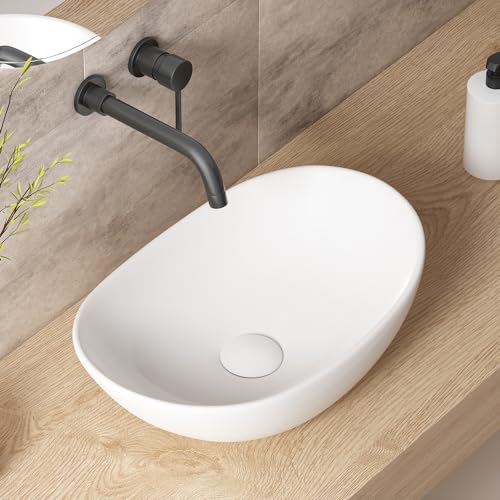
- KES Oval Vessel Sink BVS124 — Best Factory-Direct Style Pick. Check on Amazon for the current listing details.
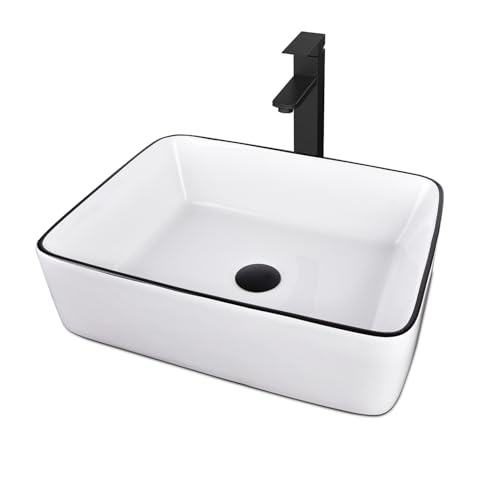
- GHOMEG Rectangular Vessel Sink, 24 x 14 Inch — Largest Format From the Pool. Check on Amazon for the current listing details.
- KGAR Marble-Pattern Vessel Sink with Faucet and Drain — Best Bundled Production. Check on Amazon for the current listing details.
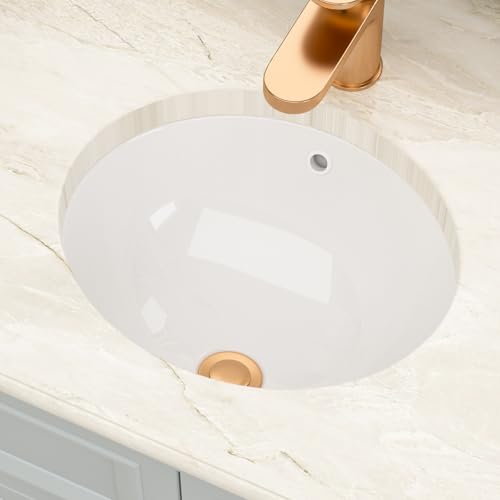
- CHIKESI Oval Undermount Sink, 13 x 11 Inch — Best Compact Production. Check on Amazon for the current listing details.
- DeerValley Oval Undermount Sink DV-1U303, 18 x 15 Inch — Best Volume-Ready Undermount. Check on Amazon for the current listing details.
- Kohler Caxton Oval Undermount Sink, 17 x 14 Inch — Best Established Maker. Check on Amazon for the current listing details.
Read the full guide ↓ for how each pick performs, where each one compromises, and which bathroom each one actually suits.
Searching for the best modern bathroom sinks factories is really a search for where modern basins come from, and what separates a factory that produces a reliable modern sink from one that produces a photograph. This guide answers that question the honest way: it examines six verified modern basins, identifies the maker behind each one as listed, and explains what each maker’s output reveals about its production, its sizing discipline, its finish consistency and its quality control. If you are sourcing for a project, a renovation business or a multi-bathroom property, this is the layer of the market that matters.
The six picks span the modern factory landscape in miniature. There are compact oval and rectangular vessels of the kind produced in high volume for the online market, a very large two-tone rectangular vessel, a hardware-bundled patterned basin, a compact undermount from a volume producer, and an oval undermount carrying the Kohler name, the established maker whose factory system sets the benchmark the newer producers are measured against. Together they let a buyer compare production philosophies, not just bowls.
A factory is ultimately judged by repeatability: the hundredth basin must match the first in size, glaze and drain position, because projects buy in multiples and notice drift. The sections below cover how to read a listing for production quality, what questions separate serious makers from resellers, and how the six producers behind these picks differ. The same sourcing discipline applies to the other fixtures in a project, as our guide to Best Toilets That Flush Well shows for a very different fixture category.
Key Takeaways
- Judge a sink factory by repeatability: listed sizes, glaze consistency and drain placement across a range.
- The six picks come from six different makers, from a global benchmark brand to focused online producers.
- Bundled production, basin with matched faucet and drain, signals a factory thinking in complete stations.
- Undermount and vessel lines reveal different factory strengths; volume producers here cover both.
- A maker that documents interior dimensions, as one pick here does, is showing its production discipline.
- For multi-bathroom projects, order a sample first and measure it against the listing before committing to multiples.
In this guide
Quick Picks
The short version for anyone comparing best modern bathroom sinks factories on a phone in a showroom aisle: six basins, six different strengths. The table gives the badge, the format and the listed size for each; the detailed reviews below explain the reasoning.
| Pick | Badge | Format | Listed size | Material |
|---|---|---|---|---|
| KES Oval Vessel Sink BVS124 | Best Factory-Direct Style Pick | Vessel (above-counter) | 16 x 13 inches (as listed) | Ceramic |
| GHOMEG Rectangular Vessel Sink, 24 x 14 Inch | Largest Format From the Pool | Vessel (above-counter) | 24 x 14 inches (as listed) | Porcelain ceramic |
| KGAR Marble-Pattern Vessel Sink with Faucet and Drain | Best Bundled Production | Vessel (above-counter) | 18 x 13 inches (as listed) | Ceramic |
| CHIKESI Oval Undermount Sink, 13 x 11 Inch | Best Compact Production | Undermount (under-counter) | 13 x 11 inches (as listed) | Porcelain |
| DeerValley Oval Undermount Sink DV-1U303, 18 x 15 Inch | Best Volume-Ready Undermount | Undermount (under-counter) | 18 x 15 inches (as listed) | Porcelain ceramic |
| Kohler Caxton Oval Undermount Sink, 17 x 14 Inch | Best Established Maker | Undermount (under-counter) | 17 x 14 inches (as listed) | Vitreous china class basin (see listing) |
How These Picks Were Chosen
These six were selected from the verified pool precisely because each carries a distinct maker’s name in its listing, which makes a factory-level comparison possible without inventing supply-chain claims. We make no claims about factory locations, capacities or certifications that the listings do not state; the analysis here reads production quality from the evidence a buyer can actually see: dimensional documentation, material naming, included hardware, format range and finish consistency within each listing.
The mix was kept deliberately representative. High-volume vessel production dominates the modern online market, so it dominates this line-up, but the two undermounts matter because undermount tolerances are less forgiving: a vessel can hide a millimetre of drift under its base, while an undermount’s flange and rim must agree with a cut stone counter. A factory that produces both formats credibly is demonstrating a wider competence than one that produces either alone.
This is research-led sourcing guidance, not a factory audit: no site visits are claimed, and no maker is certified here. Buyers building a full project specification can apply the same evidence standards to companion categories such as those in our guide to Best One Piece Bidet Toilets, where maker consistency matters just as much.
The 6 Picks for Best modern bathroom sinks factories, Reviewed in Detail

KES Oval Vessel Sink BVS124
Badge: Best Factory-Direct Style Pick
Strengths
- Clean, repeatable oval form in glossy white
- Compact size suits volume project specification
- Simple shape is forgiving to produce consistently
Trade-offs
- Maker’s wider range is narrow, a focused line
- Faucet and drain sourced separately
- Vessel format only
| Listed size | 16 x 13 inches (as listed) |
| Installation | Vessel (above-counter) |
| Material | Ceramic |
| Colour / finish | White |
The KES vessel represents the focused modern producer at its most typical: a clean, glossy, egg-shaped oval whose simple geometry is exactly what a well-run mould and glaze line produces most consistently. As factory evidence, its restraint is the point; this is a shape a production line can hold to tolerance unit after unit.
In service, its ceramic body and glossy glaze behave as a buyer hopes a production basin will: the oval bowl rinses clean, holds its gloss, and presents no surprises at the drain, which sits where the listed size, 16 x 13 inches (as listed), leads you to expect. For project work, that predictability across units is worth more than any single unit’s charm.
Its limitation as factory evidence is range: a focused line tells you little about a maker’s wider capability, and buyers needing many formats will source this producer for one station type only.
Best for: guest bathrooms and repeatable residential projects / Not suited for: buyers wanting a maker’s full catalogue in one place
Check on Amazon to confirm the current listing, finish options and included hardware for this basin.

GHOMEG Rectangular Vessel Sink, 24 x 14 Inch
Badge: Largest Format From the Pool
Strengths
- Largest format in the pool, produced in two-tone finish
- Rectangular geometry shows mould discipline
- Porcelain ceramic body at a demanding scale
Trade-offs
- Very large format limits project types
- Two-tone finish is a strong design commitment
- Heaviest handling in the pool
| Listed size | 24 x 14 inches (as listed) |
| Installation | Vessel (above-counter) |
| Material | Porcelain ceramic |
| Colour / finish | White and black |
The GHOMEG vessel is the pool’s production flex: a large rectangular body, 24 by 14 inches as listed, finished in white and black. Large flat ceramic forms warp and show glaze variation more readily than small ovals, so a maker offering this format credibly is demonstrating kiln control and finishing confidence that smaller pieces cannot prove.
In service, the scale is the experience: a rectangular basin of this listed size, 24 x 14 inches (as listed), gives a washroom a deliberate, designed centre, and its porcelain ceramic surface wipes down as readily as a small bowl’s. A factory that can ship this format consistently has earned a place on a statement-project shortlist.
Its limitation is project scope: a format this large and a finish this committed suit statement bathrooms, not standardised multi-unit work, and handling weight follows size.
Best for: statement bathrooms and boutique hospitality projects / Not suited for: small bathrooms and conservative schemes
Check on Amazon to confirm the current listing, finish options and included hardware for this basin.

KGAR Marble-Pattern Vessel Sink with Faucet and Drain
Badge: Best Bundled Production
Strengths
- Basin, faucet and drain produced as one bundle
- Marble-pattern finish applied consistently as listed
- Complete-station thinking simplifies project sourcing
Trade-offs
- Bundle fixes the faucet finish for every unit
- Pattern direction should be checked per unit
- Vessel format only
| Listed size | 18 x 13 inches (as listed) |
| Installation | Vessel (above-counter) |
| Material | Ceramic |
| Colour / finish | White with marble pattern |
| Included extras | Faucet and pop-up drain included as listed |
The KGAR basin shows a factory thinking beyond the bowl: the ceramic vessel is listed with its faucet and pop-up drain included, and a marble-pattern finish applied across a rectangular body. Bundling and patterning are both process commitments, and together they describe a producer organised around complete, design-led stations rather than commodity basins.
In service, the bundle proves its production logic: faucet, drain and rectangular bowl arrive as one maker’s matched set, the marble-pattern ceramic surface hides water spots between cleanings, and the listed size, 18 x 13 inches (as listed), suits standard vanities. Interfaces are where installations fail, and this maker has taken responsibility for them.
Its limitation is standardisation: the bundle’s fixed faucet finish is a virtue per project and a constraint across projects with different metal schemes.
Best for: projects wanting complete stations from one maker / Not suited for: projects with a fixed faucet finish already chosen
Check on Amazon to confirm the current listing, finish options and included hardware for this basin.

CHIKESI Oval Undermount Sink, 13 x 11 Inch
Badge: Best Compact Production
Strengths
- Compact undermount with overflow as listed
- Standard drain opening aids volume plumbing
- Under-counter format shows tolerance control
Trade-offs
- Small size limits it to compact stations
- Maker documentation is thinner than the benchmark’s
- Undermount installation needed per unit
| Listed size | 13 x 11 inches (as listed) |
| Installation | Undermount (under-counter) |
| Material | Porcelain |
| Colour / finish | See listing |
| Overflow | Yes, overflow included as listed |
| Drain opening | Standard 1.75 inch drain opening |
The CHIKESI compact undermount is volume production evidence of a different kind: an undermount’s flange and rim must agree with a cut counter, so offering a small under-counter oval with an overflow and a standard drain opening, as listed, signals a line built for repeatable fitting rather than one-off styling.
In service, its porcelain undermount body does the quiet work: the bowl disappears beneath the counter, the overflow listed for it guards the cabinet, and its listed size, 13 x 11 inches (as listed), fits the compact stations that volume projects repeat most. Consistency here is measured in uneventful installations.
Its limitation is documentation depth: the listing states the essentials, but specifiers used to benchmark-grade paperwork will find less of it here.
Best for: compact bathrooms specified in multiples / Not suited for: primary bathrooms needing generous bowls
Check on Amazon to confirm the current listing, finish options and included hardware for this basin.

DeerValley Oval Undermount Sink DV-1U303, 18 x 15 Inch
Badge: Best Volume-Ready Undermount
Strengths
- Undermount line aimed at homes and commercial settings as listed
- Oval form documented with listed dimensions
- Volume-ready standard sizing
Trade-offs
- Design is conservative for a modern brief
- Faucet and drain sourced separately
- Biscuit companion colour not offered in this listing
| Listed size | 18 x 15 inches (as listed) |
| Installation | Undermount (under-counter) |
| Material | Porcelain ceramic |
| Colour / finish | White |
| Overflow | Yes, overflow included as listed |
The DeerValley undermount is listed for homes and for commercial settings such as malls, restaurants and schools, and that positioning is itself factory information: commercial washroom supply is a repeatability business, won on standard sizing and consistent output rather than on styling novelty.
In service, the oval undermount’s porcelain ceramic body and listed size, 18 x 15 inches (as listed), deliver the standardised performance its commercial positioning promises: easy cleaning, ordinary hardware, and a bowl any maintenance team can replace like-for-like years later, which is a factory virtue invisible in photographs.
Its limitation is design ambition: this is a workhorse basin, and projects buying a modern look per se will find its styling deliberately conservative.
Best for: multi-unit and commercial washroom projects / Not suited for: design-led one-off bathrooms
Check on Amazon to confirm the current listing, finish options and included hardware for this basin.

Kohler Caxton Oval Undermount Sink, 17 x 14 Inch
Badge: Best Established Maker
Strengths
- Established maker’s production benchmark
- Classic oval undermount, widely specified
- Colour consistency the newer makers are judged against
Trade-offs
- Premium maker positioning within the pool
- Undermount installation needed per unit
- Conservative styling for statement projects
| Listed size | 17 x 14 inches (as listed) |
| Installation | Undermount (under-counter) |
| Material | Vitreous china class basin (see listing) |
| Colour / finish | White |
The Kohler Caxton is the benchmark against which the other five are fairly judged: an established maker’s oval undermount with its cutout fit stated in the listing. Its production story is specification-grade consistency, the same basin, in the same colours, held to the same dimensions across long model runs.
In service, the oval undermount’s glazed body and stated cutout fit make it the specifier’s comfort choice: it installs the way its documentation says it will, its listed size, 17 x 14 inches (as listed), matches standard vanity planning, and its colour holds steady beside the maker’s other fixtures.
Its limitation for this brief is freshness: the benchmark maker’s design language is proven rather than new, and buyers chasing the latest styling will look to the focused producers first.
Best for: specifiers who want the benchmark maker’s consistency / Not suited for: projects chasing the newest styling
Check on Amazon to confirm the current listing, finish options and included hardware for this basin.
Comparison Table
| Pick | Format | Listed size | Colour / finish | Overflow | Listing |
|---|---|---|---|---|---|
| KES Oval Vessel Sink BVS124 | Vessel (above-counter) | 16 x 13 inches (as listed) | White | Not stated in listing title | Check on Amazon |
| GHOMEG Rectangular Vessel Sink, 24 x 14 Inch | Vessel (above-counter) | 24 x 14 inches (as listed) | White and black | Not stated in listing title | Check on Amazon |
| KGAR Marble-Pattern Vessel Sink with Faucet and Drain | Vessel (above-counter) | 18 x 13 inches (as listed) | White with marble pattern | Not stated in listing title | Check on Amazon |
| CHIKESI Oval Undermount Sink, 13 x 11 Inch | Undermount (under-counter) | 13 x 11 inches (as listed) | See listing | Included | Check on Amazon |
| DeerValley Oval Undermount Sink DV-1U303, 18 x 15 Inch | Undermount (under-counter) | 18 x 15 inches (as listed) | White | Included | Check on Amazon |
| Kohler Caxton Oval Undermount Sink, 17 x 14 Inch | Undermount (under-counter) | 17 x 14 inches (as listed) | White | Not stated in listing title | Check on Amazon |
How to Choose: best modern bathroom sinks factories
For factory-level buying, the first factor is dimensional trust. Compare the listed size of a basin against the maker’s other listings: producers with disciplined moulds state dimensions consistently and, in the best cases here, document interior as well as exterior measurements. For a project order, buy one sample, measure it with a tape in three places, and check the drain position against its centre. A factory whose sample matches its listing to a few millimetres is a factory you can order fifty from; one whose sample drifts is telling you its process control in the only language that matters.
Second, judge glaze and finish consistency the same way, with a sample under your own light. Modern production lives or dies on the glaze line: colour, gloss and pattern should be even across the bowl, with no thin patches at the rim where handling concentrates. Patterned and two-tone finishes, represented in this pool, are the hardest to hold consistent, so a maker offering them credibly is demonstrating something real about its process. Check the sample’s base and flange too; finishing quality in unseen places is the classic tell of a serious factory.
Third, consider what the maker bundles and documents. A producer that supplies the basin with a matched faucet and pop-up drain, as one pick here does, is managing more of the tolerance chain itself, which usually means fewer on-site surprises. Documentation is the other signal: overflow arrangements, drain opening sizes and cutout fits stated in the listing, as the established maker’s pick states them, are the marks of a producer used to being specified by professionals.
Fourth, match the maker to the project’s scale honestly. Focused online producers are built for flexible, fast, smaller runs and direct pricing structures; established global makers are built for specification, consistency and long model lives. Neither is universally better, and many projects use both, benchmark basins in the primary bathrooms, volume lines in the guest rooms. The same portfolio thinking appears in our guide to Best Potty Seat For Elongated Toilets, where matching maker to use-case is also the core skill.
Finally, plan the order like a factory would: confirm multiples come from one production run where finish matching matters, keep one spare basin per project against breakage in transit or on site, and photograph and file the sample’s measurements with the order. Factories respect buyers who specify precisely, and precise specification is what turns a good first order into a reliable supply relationship.
How to Vet a Bathroom Sink Factory Before a Project Order
Vetting a maker before committing to multiples follows a sequence that costs one sample and a few days, and saves the classic project disaster of fifty basins that almost match. The steps below are the practical version used by careful renovators and small developers alike, and they apply whether the maker is a global brand or a focused online producer like most of this pool.
- Shortlist makers by the evidence in their listings: consistent dimensions, named materials, stated drain and overflow details.
- Order one sample of the exact basin, in the exact finish, before any multiple order is discussed.
- Measure the sample in three places, check drain centring, and compare every figure against the listing.
- Inspect the glaze under daylight and bathroom light, including the base and flange where finishing shortcuts hide.
- Dry-fit the sample with its intended faucet and drain, and run water through it to check drainage and splash behaviour.
- Ask how multiples are packed, whether one production run can supply the order, and what the breakage replacement process is.
- Record the sample’s measurements and photographs with the order paperwork before approving the full quantity.
Keep the sample. On a multi-bathroom project the approved sample is the reference every delivered unit is checked against, and it settles questions in seconds that otherwise become correspondence. When the project finishes, the sample becomes the spare, which is the correct ending for it.
Troubleshooting
Problem: Delivered units differ slightly in tone from the sample → compare them side by side in daylight before installation; a run change is the usual cause, and grouping the matching units per room hides variation that would glare within one vanity run.
Problem: A basin arrives with a glaze flaw at the rim → photograph it before installation and use the maker’s replacement process immediately; rim flaws matter doubly on vessels, where the rim is the most visible line in the room.
Problem: Drain position feels off-centre on one unit → measure it against the sample; a genuinely off-centre drain is a mould or finishing fault, not an installation problem, and it should be replaced rather than forced into alignment.
How Modern Ceramic Sinks Are Produced
A modern ceramic basin factory runs a sequence of forming, drying, glazing and firing that has been refined for a century and automated at its edges. Bodies are cast or pressed to shape, dried slowly enough to avoid warping, sprayed or dipped with glaze, and fired until body and glaze vitrify together. The modern part of the modern sink is mostly control: temperature uniformity in the kiln, mould maintenance, and inspection that rejects drift before it ships. When a listing’s dimensions are consistent across a maker’s range, you are seeing that control from the outside.
Finishes are where factories differentiate. A plain glossy white is the most forgiving finish to produce; marble patterns, two-tone bodies and deep retro colours each add a process step that can vary, which is why this pool’s patterned and two-tone picks are genuinely informative about their makers. A producer whose patterned finish reads evenly across a large rectangular bowl has a glazing process worth trusting with a project order.
Bundling is the other modern development: factories increasingly ship the complete station, basin with matched drain and sometimes faucet, because controlling the interfaces themselves produces fewer returns than blaming the installer’s other purchases. Project buyers feel that difference directly, and it is one reason the bundled pick in this guide earns its place in a factories discussion, much as complete-system thinking drives the categories in our guide to Best Smaller Toilets.
Established Makers vs Focused Online Producers
The established maker in this pool built its position on specification: architects and plumbers who specify the same basin for decades need model longevity, stated cutout fits and colour consistency across years, and they pay for that certainty. Its oval undermount here is deliberately unexciting, and that is the point; a benchmark product is one whose behaviour, in production and in service, holds no surprises.
The focused online producers compete on different virtues: faster styling, complete bundles, larger statement formats and direct availability. Their risk profile is different too, with shorter model lives and thinner documentation, which is why the sample-first vetting in this guide matters more with them. Judged fairly, both kinds of factory can serve a project well; judged carelessly, either can disappoint. The buyer’s process, not the maker’s category, is usually the deciding factor.
Practical Notes From Real Bathrooms
Ceramic and porcelain, in plain terms
Most of the basins in this guide are porcelain ceramic, a fired clay body with a glazed surface, and that combination has earned its place. The glaze is non-porous, so toothpaste, soap and hard-water minerals sit on the surface instead of soaking in, and a soft cloth with mild cleaner restores the shine. The trade-off is that ceramic is a hard, brittle material: a heavy glass bottle dropped from a height can chip it, and the chip exposes the body beneath the glaze. Treat the sink like the quality fixture it is, avoid abrasive scouring powders that dull the glaze over time, and it will outlast several faucets.
Overflow channels are a small detail that matters
Some basins include an overflow, a hidden channel near the top of the bowl that routes water to the drain if the basin fills with the stopper closed. It is easy to overlook when comparing listings, yet it quietly prevents the classic accident of a forgotten running tap flooding a vanity cabinet. If a basin has an overflow, its drain must be an overflow-compatible type so the channel can empty properly. If it has none, a simple grid or pop-up drain without overflow slots is the correct match. Checking this pairing before ordering takes a minute and saves a leak that only shows up weeks later.
Cleaning routines that keep the glaze bright
Daily care for a glazed basin is deliberately boring: rinse away toothpaste promptly, wipe with a soft cloth, and use a mild bathroom cleaner for soap film. Hard water leaves pale mineral rings near the drain and faucet base; a cloth soaked in a household vinegar solution, left in place briefly and then rinsed, loosens them without attacking the glaze. Avoid steel wool and gritty powders, which scratch the surface microscopically and give grime more to grip next time. Around an undermount rim, run a cloth along the seam where basin meets stone, because that hidden lip collects residue if it is never touched.
The seam under an undermount sink deserves respect
An undermount basin is held beneath the counter with adhesive and clips, and the thin seam between basin and stone is sealed with silicone. That seal is not decoration: it keeps splash water out of the cabinet and stops the joint from harbouring grime. When you install or inspect one, look for a continuous, neat bead and no gaps at the back where splashes concentrate. If an older seal has yellowed or lifted, strip it fully, clean both surfaces, and reapply rather than layering new silicone over failed material. A sound seam is also what lets you wipe crumbs and water straight off the counter into the bowl, the everyday pleasure that sells people on undermount designs.
Vessel sinks change the working height
A vessel bowl sits on top of the counter, so its rim ends up several inches higher than a conventional basin. On a standard-height vanity that can push the rim uncomfortably high for shorter adults and children, which is why many installers pair vessel bowls with a slightly lower vanity or a recessed drain board. Check the combined height of vanity, counter and bowl against the comfortable working height of the people using it, roughly matching what a normal sink rim would be. The bowl also needs a flat, stable footprint and a bead of sealant at its base to stop it rocking and to keep splash water from creeping underneath.
Drain hardware is part of the purchase
A basin and its drain are a matched pair, and listings differ on what is in the box. Some of the picks in this guide include a pop-up drain, and one even includes the faucet, while others are the bare bowl and expect you to choose hardware separately. A pop-up drain suits basins without a separate overflow lever, a grid drain keeps a clean look in a vessel bowl, and finish matching matters because the drain flange is visible every day. Budget your attention, not just money, for this: ordering the bowl alone and discovering the missing drain on installation day is the most common avoidable delay in a bathroom refresh.
Water spots, toothpaste and real life
Glossy white glaze shows every water spot in a photograph and almost none in real life once you adopt a ten-second wipe habit, but darker and patterned finishes behave differently. A marble-pattern or two-tone bowl hides dried droplets and toothpaste specks far better between cleanings, which is a genuine practical advantage in a busy family bathroom, while a deep retro colour makes the basin the deliberate centrepiece of the room and demands accessories that can live with it. None of these choices is wrong; the mistake is choosing a finish for the listing photo instead of for your own tolerance for visible splashes on a weekday morning.
When to call a plumber and when to DIY
Swapping a like-for-like basin on an existing vanity, with shut-off valves that work and a drain in the same position, is within reach of a careful DIYer with a wrench, plumber’s putty or silicone, and a free afternoon. The job changes character when the new basin needs a different counter cutout, when supply lines must move, or when the trap does not line up with the new drain position. Cutting stone countertops and re-routing waste pipes are the two tasks most worth handing to a professional, because mistakes there are expensive and wet. A sensible middle path is to fit the bowl yourself and have a plumber make the final connections and pressure-test them.
Check the box before the old sink comes out
The calmest installations share one habit: the new basin is unboxed, inspected and dry-fitted before anything is disconnected. Check the glaze for chips, confirm the drain opening and any included hardware, and set the bowl in place to verify the footprint, the faucet position and the look of the thing in your own light. Only then shut off the water and remove the old fixture. This order means a damaged or wrong item is discovered while the bathroom still works, and the return is a errand rather than an emergency. Photograph the plumbing under the old sink before touching it; that picture is the map for putting everything back.
Splash behaviour is a geometry problem
Splashing is rarely the faucet’s fault alone; it is the meeting of water stream, bowl depth and bowl shape. A shallow, flat-bottomed bowl returns energy upward, while a deeper bowl with curved walls absorbs it. When you test a new installation, run the faucet at full flow for ten seconds and watch where droplets land. If they reach the counter, adjust the aerator or the faucet angle before blaming the basin, because a small change in stream direction usually cures what looks like a bowl defect. This is also why pairing a tall vessel faucet with a shallow bowl deserves a dry test with a jug of water before the sealant cures.
The drain stopper decision nobody makes on purpose
Basins are used with whatever stopper the drain provides, yet the choice affects daily life: a pop-up stopper lets you fill the bowl for soaking or shaving with a fingertip press, a grid drain never closes and suits basins used only for running water, and a lift-rod stopper ties the basin to a matching faucet set. Decide which behaviour your household wants before the drain is chosen, because swapping later means working under the cabinet. Households with small children often prefer a pop-up they can operate easily, while guest bathrooms are well served by a simple grid that can never be left closed under a running tap.
Countertop materials and the sinks they suit
Stone and quartz counters accept every format in this guide, including undermounts, because their cut edges can be polished and sealed. Solid wood tops suit vessels beautifully but demand disciplined sealing around the base, where standing water does its slow work. Laminate tops are the restrictive case: their cut edges are vulnerable, so above-counter formats and drop-in styles are the safer pairing. Matching the basin format to the counter material is not a styling preference; it is the decision that determines whether the installation is still sound in ten years.
Accessibility is a sink specification too
A bathroom that serves older relatives or anyone with limited mobility needs the sink specified with the same care as the rest of the room: a rim height reachable from a seated position, knee clearance beneath where the layout allows, a faucet operable with a closed fist, and a bowl shallow enough that hands reach the water without leaning. Vessel bowls on tall vanities fail several of these tests at once, while a well-chosen undermount or lower installation passes them quietly. Designing for the household you will be in ten years is not pessimism; it is how a renovation avoids needing another renovation.
Guest bathroom logic differs from family logic
A guest bathroom sink is used briefly, by people being polite about it, in a room whose job is to make visitors feel the house is cared for. That argues for appearance and forgiveness over capacity: a handsome bowl, a finish that hides a day of water spots, and hardware that works intuitively for someone who has never used it. The family bathroom argues the opposite way, toward capacity, durability and cleaning speed. Many specification mistakes come from applying one room’s logic to the other, so name the room’s real job before choosing from this guide’s picks.
Sound, weight and the feel of quality
Two basins with identical listings can feel different the first time they are used, and the difference is usually mass and sound. A heavier ceramic body feels settled, resists the small knocks of bottles and brushes without ringing, and gives a faucet stream a duller, quieter landing note. A lighter body is easier to handle at installation and kinder to a modest vanity top. Neither is a defect; they are characters. If you can, handle a sample or read the listed weight where makers state it, because the feel of a sink is part of what you are buying for the next decade.
Planning the mirror and light with the basin
The basin, mirror and light fixture form one visual unit, and planning them separately is how bathrooms end up with a mirror narrower than the bowl or a light that shadows the face it was bought to illuminate. Centre the mirror on the basin, size it a little narrower than or equal to the vanity, and place light at face height on both sides where the room allows. When the basin is the widest element, the unit looks bottom-heavy; when the mirror matches its rhythm, even a modest basin looks designed. Check this composition in the dry-fit stage, when moving things is still free.
What to keep from the old installation
Before the old sink is removed, note three things worth keeping: the position of the supplies and drain, which dictates what the new basin must agree with; any shut-off valves that still close fully, which are worth more than they look; and the old faucet, if it is sound and its finish still pleases you, since reusing it can let the budget concentrate on the basin. Photograph everything, because memory of plumbing arrangements is unreliable by the following weekend. Renovation budgets reward households that replace what is worn and keep what is merely unfashionable for exactly one more cycle.
Measure the vanity before anything else
Start every sink decision with three measurements: the width of the vanity top, its depth from front edge to backsplash, and the distance from the wall to the centre of the existing drain. A basin that looks modest in a listing photo can eat the entire counter once faucet clearance is added, and a wide bowl on a shallow top leaves nowhere to set down a toothbrush. Write the numbers down, sketch the top to scale on paper if it helps, and check every candidate against that sketch. This ten-minute habit prevents more returns than any other step in the whole project, because most disappointment with a new sink is really a measuring problem discovered too late.
Leave room for the faucet, not just the bowl
Shoppers measure the bowl and forget the faucet, yet the faucet decides whether the finished sink is pleasant or annoying. A vessel bowl needs either a tall deck-mounted faucet behind it or a wall-mounted spout, and the spout has to reach far enough that water lands near the drain rather than splashing down the back wall of the bowl. An undermount basin pairs with almost any standard faucet, but the spout reach still matters: too short and you wash your hands against the back rim. Before ordering, note the spout height and reach your shortlist needs, and confirm the counter has drilling room or a pre-drilled pattern that matches.
Common Buying Mistakes
The expensive mistake in factory sourcing is committing to multiples on the strength of a listing photograph, without a measured sample. Photographs cannot show dimensional drift, glaze thinness at the rim, or a drain a few millimetres off centre, and all three appear for the first time on installation day if the sample step is skipped. The second mistake is mixing production runs across one visible run of vanities, where tone drift that would pass unnoticed between rooms glares within one sightline.
A subtler mistake is specifying by brand reputation in either direction: assuming an established name makes vetting unnecessary, or assuming a focused online producer cannot hold tolerances. Both assumptions replace evidence with folklore. Measure the sample, whichever name is on the box, and let the tape and the light make the decision.
Final Recommendation
For a project buyer, the practical shortlist is this: the Kohler Caxton when specification certainty matters most, the DeerValley undermount when volume and standard sizing lead, and the KGAR bundle when complete stations simplify the order. For design-led single bathrooms, the GHOMEG and KES vessels show what focused modern production does best. Whichever maker you choose, buy the sample first; that single habit is the difference between sourcing and gambling.
Start with KES Oval Vessel Sink BVS124, GHOMEG Rectangular Vessel Sink, 24 x 14 Inch, KGAR Marble-Pattern Vessel Sink with Faucet and Drain — check the latest price on Amazon for each and confirm the finish in your own light before ordering.
Related guides
Frequently Asked Questions
How can I tell if a sink factory is reliable?
By evidence you can check: consistent listed dimensions across its range, named materials, stated drain and cutout details, and a sample that measures and looks exactly as listed. Reliability is repeatability, and repeatability can be verified with one sample and a tape measure.
Which makers are behind the sinks in this guide?
As listed: KES, GHOMEG, KGAR, CHIKESI, DeerValley and Kohler. They range from focused online producers to an established global maker, and the reviews discuss what each one’s output shows about its production.
Should I order a sample before a multi-bathroom order?
Always. Measure it, inspect the glaze including the unseen surfaces, and dry-fit it with its faucet and drain. The sample becomes your reference for checking deliveries and your spare when the project ends.
Do factories sell complete sink stations?
Some do: one pick in this guide is listed with its faucet and pop-up drain included. Bundled production controls the interfaces between parts, which usually means fewer on-site surprises and one maker responsible for the whole station.
Are modern ceramic sinks still made by firing clay?
Yes. Modern production refines a traditional process, forming, glazing and firing ceramic bodies, with better process control. The gains show up as dimensional consistency, even glaze and reliable finishes rather than as a different material.
What should I check when multiples arrive?
Tone against the approved sample in daylight, dimensions on a spot-check basis, drain centring, and glaze at the rim. Group any slight variations by room so a single sightline never contains two tones.