Disclosure: topratedkitchenware.com is reader-supported. When you buy through links on our site, we may earn an affiliate commission from Amazon and other retailers, at no extra cost to you.
Where to buy
Short on time? This is the shortlist behind our guide to the best toilets that flush well, in ranked order. Linked names open the product’s online listing, where you can check the latest price on Amazon and confirm the full specification before you buy.
- Simple Project 750W PRO Macerating Toilet System — Best for Basements Without Drains
- Simple Project 600W Macerating Toilet System — Best Mid-Power Upflush
- TOTO Drake Two-Piece Elongated Toilet (1.6 GPF) — Best Overall Gravity Flush
- MAXSA Elongated Two-Piece Toilet — Best Quiet Siphonic Flush
- HOROW 17 Inch Comfort Height Toilet — Best Stated Flush Score
- Gerber Maxwell Crest Elongated Two-Piece Toilet — Best Anti-Clog Trapway
Read the full guide ↓
Introduction: Toilets that flush well — what actually matters
If you are hunting for the best toilets that flush well, you are probably done with the double-flush routine: the bowl that needs a second try, the plunger that lives beside the tank, the quiet embarrassment when guests visit. A toilet that flushes well is not a luxury feature. It is the whole job of the appliance, and it is decided by engineering you can actually read on a specification sheet — flush system design, trapway finish, flush volume and, in one case here, a stated performance score.
This shortlist splits into two honest families. Four picks are gravity toilets that clear a conventional floor drain by design: a swirling TORNADO FLUSH, a scored dual-flush valve, a glazed trapway and a quiet siphonic pull. Two picks are macerating systems that sidestep gravity entirely, grinding waste and pumping it away — the answer when the bathroom itself sits somewhere a normal toilet cannot flush from at all. Readers comparing the neighbouring question of Best Toilets That Flush Anything will find the same evidence standards applied there.
Every claim below is tied to what the verified listings actually state. Where a listing gives a number — a flush volume, a performance figure, a motor size — you will see it. Where it stays silent, the review says so, because a toilet that flushes well on paper it refuses to publish is a toilet to verify before you buy.
Key Takeaways
- Flush power comes from system design — rim-jet swirl, siphonic pull, trapway glaze or outright grinding — not from marketing adjectives.
- The HOROW is the only pick with a stated maximum performance figure: MAP 1000g in its verified title.
- The TOTO Drake at 1.6 gallons per flush trades water for the strongest drainline carry of the gravity picks.
- Macerating systems flush well from impossible locations — basements and attics — but trade gravity simplicity for a powered pump.
- Match the flush to your drain: old, long or rough drain runs reward full-volume flushes; modern drains suit 1.28-gallon designs.
In this guide
Quick Picks: best toilets that flush well
| Pick | Badge | Stated highlights | Link |
|---|---|---|---|
| Simple Project 750W PRO Macerating Toilet System | Best for Basements Without Drains | Type: macerating upflush system with pump; Motor: 750W PRO macerator; Inlets: 4 water inlets | Check on Amazon |
| Simple Project 600W Macerating Toilet System | Best Mid-Power Upflush | Type: macerating upflush system with pump; Motor: 600W macerator; Inlets: 3 water inlets plus AC vent | Check on Amazon |
| TOTO Drake Two-Piece Elongated Toilet (1.6 GPF) | Best Overall Gravity Flush | Type: two-piece gravity toilet; Flush: TORNADO FLUSH, 1.6 gallons per flush; Bowl: elongated, Universal Height | Check on Amazon |
| MAXSA Elongated Two-Piece Toilet | Best Quiet Siphonic Flush | Type: two-piece gravity toilet; Flush: siphonic, 1.28 gallons per flush, stated water-saving; Bowl: elongated, comfort height | Check on Amazon |
| HOROW 17 Inch Comfort Height Toilet | Best Stated Flush Score | Type: two-piece gravity toilet; Flush: dual flush 1.1 / 1.6 gallons per flush; Stated flush performance: Powerful MAP 1000g | Check on Amazon |
| Gerber Maxwell Crest Elongated Two-Piece Toilet | Best Anti-Clog Trapway | Type: two-piece gravity toilet; Bowl: elongated; Seat: soft-close seat stated | Check on Amazon |
How These Picks Were Chosen
We ranked these six on one question first: what, in the verified listing, actually makes the flush clear? Stated evidence outranked adjectives. A published performance figure counted most, followed by a named flush system with a mechanism a buyer can picture — rim jets that swirl, a siphon that pulls, a glazed trapway that resists snagging, a macerator that grinds. Listings that offered only the word powerful were read carefully and their silences noted in the reviews. If your shortlist widens, Best Toilets To Flush Heavy Turds is the companion comparison built for that angle.
The verified product pool for this guide was checked through the Amazon Creators API on 2026-11-20: every linked ASIN, product title and image in this article comes from that verified pool, and nothing has been added from memory, from another site, or from a retailer listing we could not verify. Specifications are quoted only where the verified title states them; where a title is silent — on a flush volume, a rough-in, a dimension — the review flags the silence instead of filling it with a plausible number.
This is research-led guidance, not laboratory testing: we did not flush-test these units, and no pick here earns credit for performance its listing does not state. Bowl shape, height and seat details were treated as comfort factors, scored second, because a comfortable toilet that cannot clear is still a failed toilet.
The 6 Best Toilets that flush well
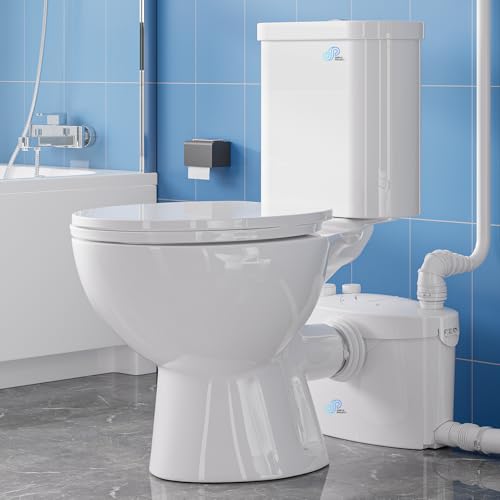
Simple Project 750W PRO Macerating Toilet System
Badge: Best for Basements Without Drains
Strengths
- The most powerful macerator motor in this shortlist, built to grind and pump waste upward where no floor drain exists
- Four inlets let one pump serve the toilet plus nearby fixtures such as a sink or shower
- Dual flush gives a lighter flush for liquid waste instead of a full pump cycle every time
Trade-offs
- Depends on electricity — a power cut means no flushing until power returns
- Pump and plumbing installation is a bigger project than bolting down a gravity toilet
- Motor noise, while described as quiet operation, is still audible in a way a gravity toilet is not
Key specifications (as stated in the verified listing):
- Type: macerating upflush system with pump
- Motor: 750W PRO macerator
- Inlets: 4 water inlets
- Flush: dual flush
- Stated positioning: basement and attic installations, space saving
The Simple Project 750W PRO is the heavy lifter of the macerating group: a toilet and pump system designed for bathrooms that sit below, or away from, the main sewer line. Instead of relying on gravity, its macerator grinds waste and toilet paper into a slurry and pumps it up and out through small-diameter pipe, which is why the listing positions it for basements and attics. The four-inlet design matters in a real renovation because the same pump can accept drainage from a hand basin or shower, turning an awkward corner into a complete small bathroom without breaking up a concrete floor to reach a drain. Dual flush is stated in the listing, which tempers water use on liquid-only flushes.
Judged purely on flushing, the 750W PRO replaces the question can gravity clear this with a pump that does not ask permission: waste is ground and pushed through narrow pipe under pressure, so bowl clearing is effectively total, every cycle. Its flush quality is therefore the most location-independent here — the limit is not the flush but the installation it demands.
Ownership is a pump’s rhythm: a short motor run per flush, a chamber to keep within its rules, and a manual worth reading once properly. Owners who treat it as infrastructure rather than an appliance — access preserved, rules posted — report the most boring and therefore best experience.
Best for: basement or attic bathrooms with no floor drain / Not suited for: homes wanting a silent, power-free gravity flush

Simple Project 600W Macerating Toilet System
Badge: Best Mid-Power Upflush
Strengths
- Proven mid-power macerator format for adding a basement bathroom without floor demolition
- Three inlets plus a vent connection cover a toilet, sink and shower combination
- Rear-outlet bowl keeps the discharge path short and hidden behind the unit
Trade-offs
- The stated flush volume is the older full-volume figure, so it is not a water-saving design
- Needs a power outlet near the unit and a vent path, which not every basement corner offers
- As with all macerators, wipes and non-paper items are strictly off limits
Key specifications (as stated in the verified listing):
- Type: macerating upflush system with pump
- Motor: 600W macerator
- Inlets: 3 water inlets plus AC vent
- Outlet: rear outlet bowl
- Flush volume stated: 1.6 gallons per flush
This 600W Simple Project system is the middleweight upflush option: the same basic idea as its stronger sibling — grind, then pump — sized for a single added bathroom rather than a whole suite. The listing states three water inlets and an AC vent connection, a rear-outlet bowl, and connections intended to also serve a sink and shower. For a basement conversion that is the practical package: one pump, one small discharge line run up to the house drain, and no jackhammer work on the slab. The trade is dependence on power and on the macerator rules — only waste and toilet paper go in, ever.
On flush quality, the 600W system delivers the same grind-and-pump certainty as its stronger sibling at a scale matched to one bathroom. The stated 1.6-gallon flush feeds the macerator generously, and the rear-outlet bowl keeps the path from bowl to pump short, which is where macerating systems earn their reliability.
Living with the 600W means the basement bathroom simply works, with the pump’s brief sound as the only reminder of the machinery. Keep the vent path as installed and the power on, and its flushing stays as certain in year three as in week one.
Best for: a single added basement bathroom on a mid-scale budget of effort / Not suited for: water-saving priorities — its stated flush is full-volume
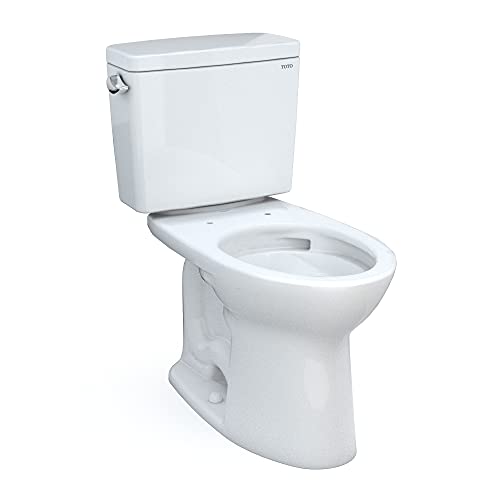
TOTO Drake Two-Piece Elongated Toilet (1.6 GPF)
Badge: Best Overall Gravity Flush
Strengths
- TORNADO FLUSH uses rim jets to swirl the full bowl, a design built around clearing power
- CEFIONTECT glaze gives waste and mineral residue a smoother, less adhesive surface
- Full 1.6-gallon volume carries a strong drainline push for older plumbing
Trade-offs
- Uses more water per flush than the 1.28-gallon efficiency class
- Two-piece construction has a tank-to-bowl seam that one-piece designs avoid
- Seat and rough-in details are not stated in the verified title and must be checked on the listing
Key specifications (as stated in the verified listing):
- Type: two-piece gravity toilet
- Flush: TORNADO FLUSH, 1.6 gallons per flush
- Bowl: elongated, Universal Height
- Surface: CEFIONTECT glaze
- Colour: Cotton White
- Model: CST776CSFG#01
The TOTO Drake is the reference point for gravity flushing in this group. Its TORNADO FLUSH system drives water through rim jets so the bowl is scrubbed by a swirling flush rather than a simple dump from the tank, and the full 1.6-gallon volume gives the drainline a strong carrying push — a combination that suits houses with older, longer or rougher drain runs. The CEFIONTECT glaze is the other half of the story: an extra-smooth ceramic surface that waste and mineral deposits stick to less readily, so the bowl stays cleaner between scrubs. Universal Height and an elongated bowl put it in the comfort mainstream for adult households.
For a gravity toilet, the Drake flushes well by mechanism, not luck: rim jets spin the water so the whole bowl surface is washed as the volume drops, and the full 1.6 gallons give the drainline a long carrying push. It is the gravity pick we would trust most on an older drain run.
Day to day, the Drake’s ownership story is its glaze: the bowl needs less aggressive cleaning, and the flush stays decisive because the surface it washes is not slowly roughening with residue. Parts for a mainstream TOTO model are a phone call, not a research project.
Best for: households that want one decisive flush on older drains / Not suited for: strict water conservation

MAXSA Elongated Two-Piece Toilet
Badge: Best Quiet Siphonic Flush
Strengths
- Stated water-saving 1.28-gallon siphonic flush in a mainstream comfort format
- Easy-clean ceramic is stated in the listing, which helps with routine bowl care
- Comfort height, elongated bowl, soft-close seat and standard rough-in are all stated in one package
Trade-offs
- Siphonic flushes trade some raw push for quieter operation compared with washdown designs
- The listing pairs a 15-inch figure with a comfort-height description — verify exact seat height on the full listing
- A newer name in toilets, without the long model history of the biggest brands
Key specifications (as stated in the verified listing):
- Type: two-piece gravity toilet
- Flush: siphonic, 1.28 gallons per flush, stated water-saving
- Bowl: elongated, comfort height
- Seat: soft-close seat stated
- Rough-in: 12 inch stated
- Surface: easy-clean white ceramic stated
The MAXSA entry is the straightforward modern specification: an elongated, comfort-height, two-piece toilet with a siphonic flush at the 1.28-gallon water-saving volume, a soft-close seat and the standard 12-inch rough-in, all stated plainly in the listing. The easy-clean ceramic callout matters for daily life — bowls that release residue easily need less aggressive scrubbing and fewer harsh chemicals. Siphonic action fills and pulls the bowl contents through the trapway in one motion, which tends to run quieter than high-velocity washdown designs, a real consideration for bathrooms off bedrooms.
The MAXSA flushes by siphon: the bowl fills, the trapway primes, and the contents are pulled through in one quiet motion. Siphonic clearing is thorough but gentler than a jet-driven flush, which is why this pick suits modern drains and noise-sensitive bathrooms more than ancient, sluggish pipework.
The MAXSA’s daily character is quiet competence — a flush you do not hear through a bedroom wall, in a format any plumber recognises. Its easy-clean surface keeps the weekly brush brief, which is its own kind of flushing well: a clean bowl clears better.
Best for: quiet bathrooms near bedrooms with modern drainage / Not suited for: very old or rough drain lines needing maximum push

HOROW 17 Inch Comfort Height Toilet
Badge: Best Stated Flush Score
Strengths
- The only pick whose verified title states a maximum flush performance figure — MAP 1000g
- Dual flush lets liquid waste leave on the lighter 1.1-gallon setting
- 17-inch ADA chair height suits tall users and anyone who finds low bowls hard to rise from
Trade-offs
- Chair height can leave shorter users and children with feet dangling
- The full-power figure applies to the full flush; the light flush is for liquids only
- Two-piece seam and standard footprint, so no space is saved versus compact designs
Key specifications (as stated in the verified listing):
- Type: two-piece gravity toilet
- Flush: dual flush 1.1 / 1.6 gallons per flush
- Stated flush performance: Powerful MAP 1000g
- Height: 17 inch, ADA chair height stated
- Users stated: seniors, elderly and tall adults
- Seat: soft-close seat stated
- Rough-in: 12 inch stated
HOROW’s 17-inch model is the specification heavyweight of the gravity group. Its verified title states a MAP 1000g flush performance figure — the top of the MaP scale, which measures how much solid test material a single flush clears — paired with a dual-flush valve offering a light 1.1-gallon liquid flush and the full 1.6-gallon solid flush. The 17-inch chair height is explicitly aimed at seniors, elderly users and tall adults, for whom sitting down and standing up from a low bowl is the daily friction point. A soft-close seat and the standard 12-inch rough-in complete a package that reads as deliberate rather than generic.
This is the evidence pick: a stated MAP 1000g figure means the flush has been measured clearing the maximum test load the MaP protocol applies. Use the full 1.6-gallon setting for solids — the light flush exists for liquids, and treating it as an all-purpose flush is how scored toilets get unfair reputations.
Owning the HOROW is owning a routine: full button for solids, light for liquids, and a chair-height seat that divides households into those who love it and those who are too short for it. The scored flush rewards the routine with total predictability.
Best for: buyers who want stated, measured clearing power plus chair height / Not suited for: small children and shorter users who dislike tall bowls

Gerber Maxwell Crest Elongated Two-Piece Toilet
Badge: Best Anti-Clog Trapway
Strengths
- Glazed trapway is stated — a smoother waste path is a genuine anti-blockage feature
- Tool-free install kit with the wax ring included lowers the barrier for a first DIY swap
- Soft-close seat included rather than sold as an add-on
Trade-offs
- Flush volume, seat height and rough-in are not stated in the verified title — check the full listing before ordering
- No stated flush performance figure to compare against scored rivals
- Elongated bowl needs the usual extra front-to-back room
Key specifications (as stated in the verified listing):
- Type: two-piece gravity toilet
- Bowl: elongated
- Seat: soft-close seat stated
- Colour: white
- Flush: described as efficient, clears the bowl with ease
- Trapway: glazed trapway stated to prevent clogs
- Install: tool-free install kit with wax ring included
Gerber is a plumber-channel name, and the Maxwell Crest reads like it: the listing leads on an efficient flush that clears the bowl with ease and a glazed trapway intended to prevent clogs — the trapway being the curved internal passage where rough, unglazed ceramic can snag paper and start a blockage. The other installer-friendly touch is the tool-free install kit with a wax ring in the box, which removes the two classic mid-project hardware-store runs. What the verified title does not state is flush volume, seat height or rough-in, so those three numbers must be confirmed on the full listing before this pick can be matched to a specific bathroom.
The Gerber flushes well by subtraction: the glazed trapway removes the rough ceramic snags where paper catches and blockages begin. Its listing describes the flush as efficient and bowl-clearing; without a published figure we rank it on that trapway logic, which is sound, rather than on a score it does not claim.
The Gerber’s ownership dividend is the trapway you never think about: blockages that used to announce themselves monthly simply stop appearing on the calendar. The included install kit’s convenience is a day-one pleasure; the glaze is the decade-long one.
Best for: DIY replacers who value a clog-resistant trapway and an included install kit / Not suited for: buyers who need published flush volume before ordering
Comparison Table
One view of the whole shortlist for the best toilets that flush well: stated format and headline specification per pick, with the honest gaps left visible. A dash in the link column marks a prose-only profile.
| Pick | Badge | Format | Headline stated specification | Link |
|---|---|---|---|---|
| Simple Project 750W PRO Macerating Toilet System | Best for Basements Without Drains | macerating upflush system with pump | Motor: 750W PRO macerator | Check on Amazon |
| Simple Project 600W Macerating Toilet System | Best Mid-Power Upflush | macerating upflush system with pump | Motor: 600W macerator | Check on Amazon |
| TOTO Drake Two-Piece Elongated Toilet (1.6 GPF) | Best Overall Gravity Flush | two-piece gravity toilet | Flush: TORNADO FLUSH, 1.6 gallons per flush | Check on Amazon |
| MAXSA Elongated Two-Piece Toilet | Best Quiet Siphonic Flush | two-piece gravity toilet | Flush: siphonic, 1.28 gallons per flush, stated water-saving | Check on Amazon |
| HOROW 17 Inch Comfort Height Toilet | Best Stated Flush Score | two-piece gravity toilet | Flush: dual flush 1.1 / 1.6 gallons per flush | Check on Amazon |
| Gerber Maxwell Crest Elongated Two-Piece Toilet | Best Anti-Clog Trapway | two-piece gravity toilet | Bowl: elongated | Check on Amazon |
How to Choose Toilets that flush well
Start with the mechanism, because mechanism is destiny. Rim-jet designs such as TORNADO FLUSH wash the bowl as they empty it, which keeps the bowl cleaner between scrubs and helps the flush start from a clean surface. Siphonic designs pull rather than push: quieter, very effective on modern drains, slightly less forgiving on old ones. A glazed trapway does not add power; it removes friction, so paper and waste slide instead of catching. Macerators replace the whole question with a pump — total clearing, at the cost of power and moving parts.
Then read flush volume as a drain-matching tool, not a virtue. A 1.6-gallon flush carries waste further along a horizontal drain run before the water gives up, which matters in older homes with long, rough or shallow-sloped pipes. A 1.28-gallon flush is the modern efficiency standard and is entirely sufficient on sound modern drainage. Dual-flush models split the difference: a light setting around 1.1 gallons for liquids, full volume for solids — but only if everyone in the house uses the buttons as intended. The related shortlist at Best Toilets With Flush Pressure applies the same stated-specification method to its own brief.
Finally, respect the one published score in this group. MaP figures exist precisely so buyers can compare clearing power without guessing: the scale runs upward to 1000 grams of test material cleared in a single flush. When a listing publishes a top-end figure, that is evidence. When it publishes nothing, the honest position is that clearing power is unproven on paper — which is why several reviews here direct you to the full listing before money moves.
One more factor deserves its line because it quietly decides satisfaction: sound. A flush that clears violently and announces itself through two walls will be forgiven in a family bathroom and resented in an en-suite. Siphonic designs are the quiet end of this pool, full-volume rim-jet designs the assertive end, and macerators add a motor’s voice entirely their own. If the bathroom shares a wall with a light sleeper, weight the quiet mechanisms up a place in your personal ranking — the clearing differences among these six are smaller than the 3 a.m. differences.
How to Keep a Strong Flush Strong: Setup and Care
A toilet that flushes well can be undermined by setup. On a gravity install, confirm the rough-in measurement — the distance from the finished wall to the centre of the floor flange — matches the toilet before it is unboxed, and set the bowl on a fresh wax ring with even, alternating bolt pressure so the trapway seals squarely to the flange. A rocking bowl breaks that seal and weakens every flush. Set the tank water level to the line marked inside the tank: too low starves the flush, too high wastes water into the overflow. On dual-flush models, teach the household which button is which on day one. For the adjacent case, see the thinking collected under Best Toilets With Forceable Flush.
For macerating systems, the setup rules are different: a nearby power outlet, a vent path, and discharge pipe routed to the main drain exactly as the manual directs. Keep the route as short and straight as the room allows. Then adopt the macerator law — nothing but waste and toilet paper, ever; wipes labelled flushable are the single most common cause of macerator failure.
Maintenance is mostly water chemistry and restraint. Clean the bowl with a brush and a mild cleaner; avoid in-tank bleach tablets, which attack flappers and seals and quietly shorten flush performance. Once a year, check that the fill valve shuts off crisply and the flapper or flush tower seals without leaking — a slow tank leak is a weak flush waiting to happen.
One last setup truth belongs in every flush-well plan: give the new toilet its first week honestly. Do not judge the flush on day one with the tank level wherever the factory left it, and do not excuse a genuinely weak performance as settling in. Check the level, watch the jets, run the bucket test, and make the small corrections while the installation is fresh in memory and every joint is still easy to reach.
Troubleshooting
- Problem: the flush is lazy and needs a second press → check the tank water level first; a level below the marked line is the most common cause, followed by a worn flapper leaking volume before the flush starts.
- Problem: waste clears the bowl but the drain gurgles or backs up → the bowl is outperforming the drain run; suspect a partial drain blockage or venting issue rather than the toilet, and clear the line before blaming the fixture.
- Problem: a macerator runs but clearing slows → power off and check for a forbidden item in the chamber; wipes and hygiene products are the usual culprits, and the manual’s access procedure is the safe route.
Gravity or Macerating: Which Flush Can You Trust More?
A well-designed gravity flush has one moving idea — water weight and shape — and centuries of refinement behind it. It cannot lose power in a blackout, it has no motor to age, and its failure modes are a worn flapper or a tired fill valve. When a gravity toilet in this shortlist states a strong mechanism or a measured score, that performance will be the same in year ten as in week one, given basic seal maintenance.
A macerator flushes with more certainty and more machinery. Inside its chamber there is no partial clear: waste is liquefied and pumped out, which is why macerating owners rarely discuss plungers. The trust question is longevity and dependence — pumps age, power fails, and repairs are specialist compared with a flapper swap. Choose gravity when a floor drain exists; choose macerating when the room itself is impossible, and accept the trade with open eyes. Households often cross-shop this with Best Toilets With Power Flush, where the same products are judged on a different priority.
Reading Flush Claims Like an Engineer
Listings speak three languages. The first is measurement: a MaP figure, a flush volume, a motor wattage — numbers a rival could test. The second is mechanism: named systems and stated features such as a glazed trapway or rim jets, which describe how the result is achieved. The third is adjectives — powerful, efficient, high-performance — which describe nothing checkable at all.
This guide weighted the languages in that order, and it is a transferable habit. When two toilets compete for your money, prefer the one whose listing states a figure over the one that states a feeling, and prefer a stated mechanism over both when figures are absent. Where this shortlist’s listings were silent — an unstated flush volume here, an unpublished score there — the reviews flag the silence rather than filling it with a guess. Households often cross-shop this with Best Toilets With Power Flush, where the same products are judged on a different priority.
Inside a Flush: Where the Power Is Won and Lost
Follow one flush in slow motion and the engineering in this shortlist stops being abstract. The handle or button trips a valve and the tank’s stored water is released in a few seconds — the speed of that release is the first variable, because the same gallons delivered slowly are a rinse and delivered fast are a force. In the bowl, the water splits its work: rim jets wash the walls and start the rotation or siphonic build, while the main flow drives toward the trapway. Everything a listing brags about happens inside those seconds.
The trapway is where flushes are lost. It is the only exit, it bends twice, and its diameter and surface decide how much of the water’s energy survives the journey. A glazed trapway, like the Gerber’s stated one, preserves energy by refusing friction; a scored design like the HOROW’s simply brings more energy to spend. Macerators step outside the physics entirely — their flush only has to reach the chamber, a journey of inches, after which a motor supplies energy no tank of water could.
The final act belongs to the drain. The flush must hand its load to a moving column of water in the pipe and that column must keep moving until the stack. This is why the same toilet can be a hero in one house and a disappointment in another, and why this guide keeps returning to drain condition: flush power is a chain, and the toilet is only its first link.
Three Homes, Three Right Answers
The 1960s ranch with original cast-iron drains: the pipes are rough, the runs are long, and the current toilet is a low-volume retrofit that never stood a chance. This home takes the 1.6-gallon Drake — full volume for carry, swirl for clearing — and its flush problems end at the fixture, because the fixture was the mismatch all along.
The new-build with modern plastic drainage and a water-conscious family: the drains would forgive almost anything, so efficiency leads. The MAXSA’s quiet siphonic flush at 1.28 gallons or the HOROW’s dual flush — with the household trained on the buttons — both flush well here, and the HOROW’s stated score settles any argument about whether efficiency means weakness.
The basement suite added for a parent or a tenant: there is no floor drain and gravity is not invited. The Simple Project systems turn the question from how well can it flush to where shall we put the bathroom, with the 750W PRO covering the full suite and the 600W covering the single added room.
Field Notes: What Owners Notice After the First Month
The first month with a strong-flush toilet rearranges small habits. The plunger leaves its station. Guests stop being briefed. The household’s background anxiety about one particular bathroom — every clog-prone home has one — dissolves so gradually that nobody marks the day it went. That uneventfulness is the product working as specified, and it is worth naming because it never appears in a listing.
Owners of the scored and full-volume gravity picks describe the same discovery: the flush becomes a non-event with a sound they stop hearing. Owners of the siphonic pick notice the quiet first and the clearing second, which is the correct order for a bathroom off a bedroom. Macerator owners describe a different first month — learning the pump’s normal voice so precisely that any change would be obvious, which is the system’s built-in early-warning working as intended.
The recurring complaint, across designs, is never about clearing. It is about the things the reviews flagged: a chair-height seat a shorter partner dislikes, a light flush button a child treats as the only button, a pump’s hum in a silent house at 3 a.m. Flush power is a specification; living with a toilet is an ecosystem. The verdicts in this guide exist to match both.
Month one is also when installation truths surface: the tank level that was set a fraction low, the flapper that was tired from the factory, the rim jets on a hard-water line already asking for attention. Every one is a ten-minute correction, and the households that make them in month one are the ones still praising the flush in year five.
Before You Buy: A Final Checklist
Run this list against your own bathroom before any pick in this guide — linked or prose-only — takes your money. It is the whole method of the article compressed into five checks.
- Your drain’s age and material, and whether its runs are long or rough — this chooses your flush volume.
- A stated mechanism or figure for every pick you seriously consider — no adjectives-only finalists.
- The rough-in measurement, taken from the finished wall, before any order is placed.
- Seat inclusion and type confirmed on the listing, not assumed from photographs.
- For macerators: power point, vent path and the household’s agreement to the input rule.
Which Pick, For Which Reader: A Final Routing
If your bathroom is ordinary and your drains are old, route yourself to the Drake and stop shopping. Its combination of full volume, swirl and glaze is the answer the largest number of flush-well seekers actually need, and its mainstream model number means the answer stays serviceable for decades. Indecision beyond this point, for this reader, is entertainment rather than diligence.
If your household counts water or your drains are young, route to the HOROW for its measured score with dual-flush economy, or to the MAXSA for quiet siphonic efficiency — choosing between them by whether you trust a published figure or a quiet mechanism more, and by whether chair height suits your household’s legs.
If your blockage history is really a trapway history — snags, mats, the same toilet stalling on paper — route to the Gerber and its glazed passage, accepting the homework of verifying its unstated volume on the listing. It is the specialist’s pick in a generalist’s list, and specialists know who they are.
And if your bathroom does not yet exist where you want it — the basement, the attic, the conversion — route to the Simple Project systems and never think about gravity again: the 750W PRO for the full suite, the 600W for the single room. Flush well, in the end, is a property of the match. This routing is the match, written down.
Common Buying Mistakes
- Buying flush power for the wrong drain — a gentle siphonic 1.28-gallon flush on a long, rough, old drain run, or a full-volume flush where water bills punish every gallon.
- Using the light dual-flush setting for solids to save water, then blaming the toilet for the predictable result.
- Ignoring the trapway: an unglazed, narrow trapway will snag paper no matter how dramatic the tank sounds.
- Putting wipes, cotton products or anything labelled flushable into a macerating system.
- Skipping the rough-in measurement and discovering the mismatch with the old toilet already removed.
Final Recommendation
If a floor drain exists and you want the surest single flush, start with the TOTO Drake at 1.6 gallons for older drainage, or the HOROW if you want the reassurance of a stated maximum score with dual-flush economy on liquid visits. The Gerber is the quiet achiever for buyers who fear blockages more than weak flushes, thanks to that glazed trapway.
Choose the MAXSA when quiet, efficient, mainstream flushing is the brief and your drains are modern. Choose a macerating Simple Project when the bathroom location itself is the obstacle — 750W PRO for a fuller suite, 600W for a single added bathroom. Flush well is a match between mechanism and house, not a single winner.
Start your shortlist here: Simple Project 750W PRO Macerating Toilet System, Simple Project 600W Macerating Toilet System, TOTO Drake Two-Piece Elongated Toilet (1.6 GPF). Check on Amazon for the current listing details of each before you decide.
Frequently Asked Questions
What actually makes a toilet flush well?
Four things working together: enough water volume delivered fast, a flush mechanism that uses that water to wash and move the bowl contents, a smooth and adequately sized trapway, and a drain line able to carry what it receives. This shortlist shows each lever — rim-jet swirl, siphonic pull, trapway glazing, measured dual-flush design, and macerating pumps that replace gravity entirely.
Is 1.6 gallons per flush better than 1.28?
It is stronger medicine, not automatically better. The extra volume carries waste further along the drain, which helps older or longer drain runs. On sound modern drains, a well-designed 1.28-gallon flush clears completely and saves water on every visit. Match volume to your plumbing, not to a bigger-is-better instinct.
What does a MAP 1000g figure mean?
MaP testing measures how much solid test material a toilet clears in one flush, and 1000 grams is the top of the scale. The HOROW in this shortlist states that figure in its verified title, which is why it carries the stated-score badge: it is published evidence of clearing power rather than a marketing adjective.
Do macerating toilets flush as well as normal toilets?
Inside the bowl, they flush more certainly: waste is ground and pumped away rather than persuaded by gravity. The trade-offs are elsewhere — power dependence, pump noise, maintenance and a strict rule that only waste and toilet paper may enter. For a basement without a drain they are not a compromise; they are the enabling technology.
Why does my current toilet need two flushes?
Usually one of three causes: the tank water level sits below its marked line, the flapper or seal leaks volume before the flush, or the toilet’s trapway and drain are mismatched — a low-volume flush on a rough old drain. The first two are cheap fixes; the third is the replacement case this guide is written for.
Does a glazed trapway really matter?
Yes, quietly. The trapway is the curved internal passage waste travels through, and unglazed ceramic there is rough at microscopic level, giving paper fibres purchase to catch and mat. A glazed trapway, stated on the Gerber pick here, keeps that passage slick, which is why plumbers treat it as a genuine anti-blockage feature rather than a finish detail.
How can I test whether a new toilet will flush well in my house?
You cannot test the exact unit before purchase, which is why stated evidence matters: published scores, volumes and mechanisms. After installation, the bucket test and a week of normal use tell the truth quickly. If a well-specified toilet disappoints immediately, suspect installation — water level, seal, or a drain issue — before the design.
Do pressure-assist toilets flush better than these?
Pressure-assist designs store energy in a vessel and release it violently; they clear superbly and sound like it. None appears in this verified pool, so none is ranked here. For most homes the mechanisms in this shortlist — swirl, siphon, glaze, score and maceration — deliver one-flush clearing without the noise and parts complexity of a pressure vessel.