Disclosure: topratedkitchenware.com is reader-supported. When you buy through links on our site, we may earn an affiliate commission from Amazon and other retailers, at no extra cost to you.
Where to buy
If you are hunting for the best van blankets, judge them on four jobs a house blanket never faces: a van blanket has to do four jobs a house blanket never faces: stay on the bed while the bed moves, pack into almost no space, survive laundromat washing, and keep a sleeper warm in an uninsulated metal box. Every pick below is a verified fleece or sherpa blanket from this guide’s product pool, assessed against those four jobs. Use the links to check the latest price on Amazon, and read the full guide ↓ for the layering and condensation method.
- Bedsure Faux Fur Sherpa Blanket (Grey) — Best Overall Van Blanket — Check on Amazon
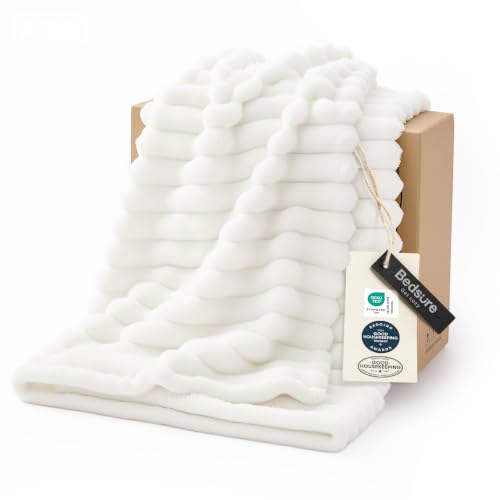
- BEDELITE Ribbed Fleece Throw Blanket (Cream) — Best Everyday Van Layer
- Bedsure GentleSoft Sherpa Fleece Throw Blanket (Grey) — Best for Cold Van Nights
- Bedsure Cloud Bubble Blanket (Beige) — Best Lightweight Summer Van Blanket
- PU MEI Sherpa Fleece Throw Blanket (Grey-Soft Blue) — Best Full-Coverage Bunk Blanket
- BEDELITE 3D Ribbed Jacquard Fleece Throw Blanket (Pink) — Best Light Layer with Style
Read the full guide ↓
The best van blankets are chosen under constraints that house blankets never meet. Space is measured in litres, the bed is shaken by every mile, the room is a metal shell that swings from oven to fridge between afternoon and dawn, and the laundry is a laundromat in a town you may never visit again. A blanket that thrives in that world is grippy enough to stay made, warm without any power supply, washable without ceremony and sized to the bunk rather than to a bedroom. Fleece and sherpa throws dominate van life for exactly those reasons, and this guide compares six verified examples of the type.
Each pick is matched to a van job: the grippy sherpa that anchors a bunk, the ribbed fleece that lives on the bed full-time, the oversized blanket that finally lets two people share a van bed properly, the feather-light layer for summer and small vans. You will also find the working method — how to layer a van bed for a thirty-degree temperature swing, how to manage the condensation that makes van bedding feel damp, and the storage habits that keep blankets fresh in a small space. Readers dressing the van’s interior to feel like a small home can compare finishes in Best Velvet Blankets.
One boundary up front: these are non-heated blankets, deliberately. A van’s electrical budget is precious, and every pick here warms with trapped air rather than watts. Where a van has shore power or a large power station, heated options exist as a separate category; this guide’s job is the unplugged foundation that works in every layby, forest road and festival field, whether the battery is full or flat.
Key Takeaways
- Grip is the van-specific feature: sherpa and textured layers stay on the bunk while smooth throws migrate with every mile.
- Layer two mid-weight blankets rather than one heavy one — van temperatures swing too far for a single fixed weight.
- Non-heated fleece and sherpa protect the van’s power budget; they warm with trapped air, not watts.
- Condensation, not cold, is what makes van bedding feel damp — ventilation and a morning airing routine matter as much as the blanket.
- Size to the bunk: 50 x 60 inch throws suit single bunks; couples need the 60 x 80 inch coverage or one throw each.
In this guide
Quick Picks
| Pick | Badge | Size | Material / build |
|---|---|---|---|
| Bedsure Faux Fur Sherpa Blanket (Grey) | Best Overall Van Blanket | 50″ x 60″ | Faux fur fleece face with sherpa reverse |
| BEDELITE Ribbed Fleece Throw Blanket (Cream) | Best Everyday Van Layer | 50″ x 60″ | Ribbed fleece, plush warm build, machine washable |
| Bedsure GentleSoft Sherpa Fleece Throw Blanket (Grey) | Best for Cold Van Nights | 50″ x 60″ | GentleSoft sherpa fleece, non-heated, thick warm build |
| Bedsure Cloud Bubble Blanket (Beige) | Best Lightweight Summer Van Blanket | 50″ x 60″ | Lightweight bubble-textured fleece throw |
| PU MEI Sherpa Fleece Throw Blanket (Grey-Soft Blue) | Best Full-Coverage Bunk Blanket | 60″ x 80″ | Reversible sherpa fleece with lattice flannel side |
| BEDELITE 3D Ribbed Jacquard Fleece Throw Blanket (Pink) | Best Light Layer with Style | 50″ x 60″ | 3D ribbed jacquard fleece, lightweight plush build |
How These Picks Were Chosen
Picks were drawn from the verified product pool for this blanket programme, with ASINs, titles and images confirmed against pool data before writing, and each review states only what that data supports — size, build and colour. We then ranked the six against van-specific criteria that general blanket reviews ignore: grip on a moving bed, packed size, warmth without power, washability in commercial machines, and colour practicality between laundromat visits.
The guide is research-led and honest about it: no invented field testing, no borrowed ratings. The behaviour of fleece and sherpa in damp, cold, confined conditions is well established, and each review separates that material knowledge from the product data and names the limitation plainly — bulk, drying time, pale colours on the road — so you can choose with the trade-offs in view.
The 6 Best Van Blankets, Reviewed for Life on the Road

Bedsure Faux Fur Sherpa Blanket (Grey)
Badge: Best Overall Van Blanket
Strengths
- Sherpa reverse grips bunk mattresses and bench cushions so bedding stays put
- Grey hides road dust and campsite grime between laundromat visits
- Thick pile is the warmest single layer here for cold van nights
Trade-offs
- Bulkiest pick to store in a small van
- Too warm for summer nights in hot climates
- Deep pile collects crumbs and grit that need shaking out at stops
| Spec | Detail |
|---|---|
| Size | 50″ x 60″ |
| Material | Faux fur fleece with sherpa reverse (per API title) |
| Colour | Grey |
| Heating | Non-heated |
A van bed has an enemy a house bed never meets: the road. Every layered bed in a van is quietly dismantled by vibration and cornering, and the blanket that wins in a van is first of all the blanket that stays where it was made. This Bedsure’s sherpa reverse is why it tops the list — the deep pile keys into bunk mattresses and converted bench cushions, so the bed you made at the campsite is still the bed you get into after forty miles of washboard gravel. The faux fur face then does the comfort work, giving a small, hard bunk the soft first contact that makes it feel like a bed rather than a shelf.
Warmth is the second half of the case. Vans lose heat through every panel, and on cold nights a thick sherpa layer is the difference between sleeping and enduring, especially layered over a lighter fleece as this guide’s method section describes. Grey is the right colour for the life: dust, ash and the general film of travel disappear into it between washes. It is bulky, it is too much blanket for a hot summer night, and its pile will collect the van’s crumbs — shake it at every stop — but as the anchor blanket of a van bed, nothing else in the six does the whole job as well.
Best for: converted vans, campervans and cold-night bunk sleeping / Not suited for: tiny vans with no storage or hot-climate summer trips

BEDELITE Ribbed Fleece Throw Blanket (Cream)
Badge: Best Everyday Van Layer
Strengths
- Ribbed channels trap warmth without sherpa-level bulk
- Texture keeps the layer from roping up in a narrow bunk
- Machine washable for laundromat stops on long trips
Trade-offs
- Cream shows travel dirt faster than the grey picks
- Mid-weight warmth — needs a partner layer in real cold
- Ribs can hold grit until shaken out properly
| Spec | Detail |
|---|---|
| Size | 50″ x 60″ |
| Material | Ribbed fleece (per API title) |
| Care | Machine washable |
| Colour | Cream |
If the sherpa pick is the van’s winter anchor, this ribbed BEDELITE is its everyday layer — the blanket that lives on the bunk full-time. The ribbed construction earns that role in two ways. The channels trap warm air along the body, so the blanket sleeps warmer than flat fleece of the same packed size, which matters when every cubic inch of storage is argued over. And the texture gives the fabric a slight body of its own, so in a narrow bunk it lies flat instead of twisting into the rope that smooth throws become by the second night.
It is also the easiest pick to keep clean on the road: a standard machine wash at a laundromat, a quick dry, back on the bunk. Cream is its one van-life compromise — it will show the travel film sooner than grey, and fastidious travellers will wash it more often — but for vans whose interior is light-toned and tidy, it looks like part of the build rather than camping gear. Pair it with the sherpa for cold snaps and it covers most of the year on its own.
Best for: full-time van living and long road trips / Not suited for: mud-season travel or the coldest nights alone

Bedsure GentleSoft Sherpa Fleece Throw Blanket (Grey)
Badge: Best for Cold Van Nights
Strengths
- Thick sherpa pile feels warm instantly in a cold van
- Grey is the most forgiving colour for life on the road
- Non-heated — no drain on the van’s battery or power station
Trade-offs
- Takes the most storage space of the fleece-family picks
- Overkill in summer or in heated vans
- Pile needs a shake-out routine to stay fresh between washes
| Spec | Detail |
|---|---|
| Size | 50″ x 60″ |
| Material | GentleSoft sherpa fleece (per API title) |
| Heating | Non-heated |
| Colour | Grey |
Every van dweller knows the specific cold of a metal box at 5 a.m., and this grey sherpa is the pick aimed squarely at it. Its deep pile holds the thickest layer of still air in this line-up, and in an unheated van that translates directly into sleep: pulled over a base layer on the bunk, it takes the edge off mountain nights and late-autumn campsites that send thinner blankets into retirement. Being non-heated is a feature in this context, not a lack — it asks nothing of the leisure battery, the power station or the campsite hookup, and it works identically in a layby and on a serviced pitch.
The costs are the familiar sherpa ones, magnified by van life: it is the bulkiest fleece-family pick to store, its pile wants a shake at every stop, and in July it should be vacuum-bagged or left at home. Winter and shoulder-season travellers, ski-trip sleepers and anyone whose van is a year-round bedroom will consider those costs trivial against the warmth. For cold vans, this is the blanket to build the bed around.
Best for: winter van trips, mountain nights and unheated vans / Not suited for: summer travel or vans with no spare storage

Bedsure Cloud Bubble Blanket (Beige)
Badge: Best Lightweight Summer Van Blanket
Strengths
- Lightest, smallest-packing pick for vans where space is everything
- Bubble texture keeps fabric off the skin in humid weather
- Doubles as the daytime seat throw, earning its storage space
Trade-offs
- Minimal insulation — a warm-season blanket only
- Light fabric shifts on the bunk unless tucked
- Beige shows road dust sooner than grey
| Spec | Detail |
|---|---|
| Size | 50″ x 60″ |
| Material | Fleece with bubble texture (per API title) |
| Weight class | Lightweight (per API title) |
| Colour | Beige |
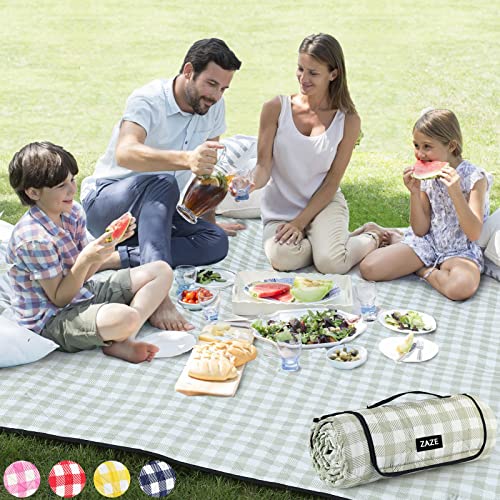
Small vans run on a ruthless rule: everything aboard must earn its volume twice. The Cloud Bubble earns it. As the lightest, smallest-packing pick here, it is the summer night layer — the raised bubbles hold the fabric off the skin so humid air can move, while still giving the covered, settled feeling that helps people sleep in a strange layby. By day it is the seat throw and the picnic layer, which is exactly the double duty a small van demands of every textile it carries.
Its limits are absolute and should be respected: this is not a cold-night blanket, and in the mountains or after September it becomes the top sheet of a layered bed rather than the bed’s warmth. It also needs a tuck at the bunk’s edge to stay placed, being too light to hold itself. For warm-season touring, festival weekends and vans where storage is measured in litres, it is the pick that respects the space budget while still making the bunk feel like a bed.
Best for: summer touring, small vans and warm climates / Not suited for: cold nights or as the only blanket on a trip

PU MEI Sherpa Fleece Throw Blanket (Grey-Soft Blue)
Badge: Best Full-Coverage Bunk Blanket
Strengths
- 60 x 80 inches covers a full bunk and tucks on both sides
- Reversible: sherpa warmth one side, smoother flannel the other
- Best single-blanket answer for couples sharing a van bed
Trade-offs
- Largest packed size here — needs a real storage plan
- Heavier to wash and slower to dry at laundromats
- Too much blanket for a single narrow bunk
| Spec | Detail |
|---|---|
| Size | 60″ x 80″ |
| Material | Sherpa fleece with flannel reverse (per API title) |
| Colour | Grey-soft blue |
| Design | Reversible, lattice pattern |
Five of these picks are throws; this PU MEI is a blanket, and in a van that distinction is a strategy. At 60 x 80 inches it covers a converted double bunk properly — tucked down both sides, long enough for tall sleepers, wide enough that two people are not negotiating over a 50-inch throw at 2 a.m. For couples in vans, that coverage is the single biggest comfort upgrade in this guide, because van beds are narrower than home beds and every inch of blanket width is shared territory.
The reversible build suits van rhythms: sherpa side in for cold nights, smoother flannel side against the skin in milder weather, and the grey-blue colour family hides travel wear gracefully. The honest costs are logistics — it packs biggest, washes heaviest and dries slowest of the six, so it belongs in vans with a garage space, a storage box or a bed it can simply live on. In a larger conversion, a sprinter or any van where the bed is permanent, it is the most home-like blanket here.
Best for: couples, larger conversions and permanent van beds / Not suited for: solo narrow bunks or minimal-storage builds

BEDELITE 3D Ribbed Jacquard Fleece Throw Blanket (Pink)
Badge: Best Light Layer with Style
Strengths
- Lightweight plush packs small as a second layer
- 3D ribbed texture adds warmth and resists sliding
- Pink jacquard finish suits styled, social-media-friendly builds
Trade-offs
- Pink shows road dirt fastest of all six picks
- Lightweight warmth only — a layer, not a winter blanket
- Decorative finish deserves gentler washing than workhorse fleece
| Spec | Detail |
|---|---|
| Size | 50″ x 60″ |
| Material | 3D ribbed jacquard fleece (per API title) |
| Weight class | Lightweight (per API title) |
| Colour | Pink |
A visible strand of van life cares how the interior looks — the build is photographed, filmed and lived in as a small home, not endured as transport — and this pink ribbed jacquard throw is the pick for that strand. It is a genuinely useful light layer first: plush, warm for its low packed weight, and textured enough to stay on the bunk. But its jacquard finish also does the decorative work that plain fleece cannot, turning a converted bed into a styled interior in every photo and every morning.
Treat it as the top layer and the finishing layer rather than the bed’s foundation: over the ribbed cream fleece or under the sherpa on cold nights, it adjusts temperature in small steps, which is how van beds actually get managed. Its compromises are obvious — pink and road dust are enemies, and it will be washed more often than any other pick here — but for travellers whose van is also their backdrop, that is a fair trade for the best-looking layer in the guide.
Best for: styled van builds, content creators and light layering / Not suited for: rough off-grid travel or mud-season trips
Comparison Table
| Pick | Badge | Size | Standout trait | Shop |
|---|---|---|---|---|
| Bedsure Faux Fur Sherpa Blanket (Grey) | Best Overall Van Blanket | 50″ x 60″ | Grippy sherpa side keeps the bunk made on the move | Check on Amazon |
| BEDELITE Ribbed Fleece Throw Blanket (Cream) | Best Everyday Van Layer | 50″ x 60″ | Ribbed texture resists bunching in narrow bunks | Check on Amazon |
| Bedsure GentleSoft Sherpa Fleece Throw Blanket (Grey) | Best for Cold Van Nights | 50″ x 60″ | Deepest warm-air layer for unheated vans | Check on Amazon |
| Bedsure Cloud Bubble Blanket (Beige) | Best Lightweight Summer Van Blanket | 50″ x 60″ | Packs smallest here for warm nights and small vans | Check on Amazon |
| PU MEI Sherpa Fleece Throw Blanket (Grey-Soft Blue) | Best Full-Coverage Bunk Blanket | 60″ x 80″ | The only oversized pick — full bunk coverage for two | Check on Amazon |
| BEDELITE 3D Ribbed Jacquard Fleece Throw Blanket (Pink) | Best Light Layer with Style | 50″ x 60″ | Lightweight layer that makes a styled van interior feel finished | Check on Amazon |
How to Choose a Blanket for a Van
Start with the bunk’s dimensions, not the blanket’s marketing. Measure the sleeping platform, then choose coverage: a 50 x 60 inch throw is right for a single bunk or a converted bench, laid diagonally or tucked; a double bunk wants either the 60 x 80 inch blanket in this guide or the two-throw system, one per sleeper, which many couples prefer because it ends blanket negotiation and lets each side run a different warmth. Next, weigh packed size against your storage reality. A blanket that lives permanently on the bed — the ribbed fleece strategy — costs no storage at all; a winter sherpa that must be stowed all summer needs a vacuum bag and a plan.
Then choose the warmth system, and think in layers. Vans swing temperature harder than houses: a bunk comfortable at bedtime can be near freezing by dawn at altitude. Two layers — a mid-weight fleece plus a sherpa — cover that swing by addition and subtraction, and each layer alone covers the mild nights at either end of the season. One heavy blanket cannot do that trick. Finally, interrogate care: the blanket must survive commercial washers and dryers, dry fast enough for a same-day laundromat stop, and be a colour that forgives the interval between washes — which is why grey dominates this guide. Travellers who also keep a house bed layered for winter can cross-check Best Warm And Thick Blankets.
Layering a Van Bed and Beating Condensation
Step 1: Insulate under the mattress first. Cold rises from the van floor through the bunk; a mat or foam under the mattress does more than any blanket. Step 2: Make the bed in layers. Fitted sheet, mid-weight fleece as the working layer, sherpa folded at the foot ready to pull up — the bed is then adjustable across the whole night without remaking it. Step 3: Crack ventilation before sleep. A window or vent opened a fraction is the single most effective anti-condensation measure in a van; two sleepers exhale roughly a pint of water overnight, and it will settle on the coldest surfaces, including bedding, if it cannot escape. Step 4: Morning airing. Fold the blankets back, open the doors while you make coffee, and let the bunk breathe daily; on still, damp trips, a weekly full airing in sun at a stop keeps the bedding genuinely fresh.
Troubleshooting: Problem: blankets feel damp every morning although it has not rained → that is condensation, not a leak; increase night ventilation and air the bed daily before blaming the fabric. Problem: the bed is dismantled after every drive → the layers are too smooth; put a sherpa or textured side against the mattress, or store the made bed rolled and strapped. Problem: you are warm at midnight and cold at dawn → the swing is beating a single layer; add the folded reserve layer at the foot of the bed as standard, not as an afterthought. Problem: bedding smells stale within a week → moisture is being sealed in; never close damp blankets in a storage box, and schedule the laundromat by smell, not by calendar. For the dressier end of van interiors, Best Velver Blankets covers velour-style finishes, while Best Warm Blankets For A Warm Bed applies to vans on hookup with a bed to pre-warm.
Van Blankets vs Camping Blankets vs House Blankets
The three categories overlap in materials and diverge in priorities, and buying across them blindly is how vans end up with the wrong gear. Camping blankets optimise for the pack: minimum weight and volume, tolerance of ground use, and prices that reflect technical fabrics. House blankets optimise for the sofa and the bed: drape, looks and comfort at any bulk. Van blankets sit between the two and optimise for the vehicle: they must pack like camping gear but live like house gear — on the bed full-time, washed in commercial machines, expected to look decent in a small interior that is also a living room.
That middle position explains this guide’s picks: throws rather than technical quilts, because a van bed is a real bed used nightly; washable fleece and sherpa rather than down, because laundromats are the van’s laundry room and down hates them; grippy textures rather than silky finishes, because the bed moves. A dedicated camping blanket still wins for the hiker who sleeps out of the van on trails — the categories are complements, not rivals — and the heritage end of blanket buying is covered in Best Vintage Wool Blankets for travellers who prefer natural fibres and accept their care demands.
Van Bed Setups by Vehicle: From Micro Campers to Sprinters
The right blanket system scales with the vehicle, and it is worth walking the range because the same six picks assemble differently in each. In a micro camper or an estate car conversion, the bed is a folded platform, storage is a couple of boxes, and the blanket must effectively disappear by day. There the Cloud Bubble and the ribbed jacquard earn their place: both pack to almost nothing, both double as seat throws in the daytime living configuration, and layered together they handle warm and mild nights, which is most of what micro campers chase. In a classic short-wheelbase van — the Transporter and Transit Custom class — the bed is usually a rock-and-roll bench or a fixed rear bunk, and the everyday ribbed fleece plus folding sherpa combination is the sweet spot: the fleece lives on the bed, the sherpa lives in a vacuum bag under it, and the system covers three seasons without a storage crisis.
In long-wheelbase and high-top conversions, where the bed is permanent and the van is a genuine small home, the PU MEI’s full coverage comes into its own and the bed can be made like a house bed, layers and all, because nothing needs to be struck each morning. Sprinter-class and motorhome sleepers can even run the two-blanket rotation — one set on the bed, one in the wash cycle — exactly as the under-blanket guides describe for houses. The principle never changes across the range: the blanket system must match the daily conversion ritual of the specific van. A system that requires ten minutes of packing every morning will be abandoned by the second week of a trip, however warm it is, while a system that folds away with the bed will still be working in month six. Choose for the ritual, not for the brochure photograph.
Keeping Van Blankets Fresh: The Laundromat System
Freshness is the unglamorous discipline that separates pleasant van life from the slow decline into a van that smells like a tent. Blankets are the largest textiles aboard and they set the interior’s background smell, so their care system deserves the same planning as water and power. The working system has three parts. First, daily airing: blankets folded back and doors or windows open for the length of a coffee, every morning without exception, because the night’s moisture must leave the fabric before the day’s driving seals it in. Second, the shake-out at stops: grit, crumbs and dust are the van blanket’s daily intake, and a thirty-second shake at a rest stop removes more of it than any wash. Third, the laundromat rhythm: a full wash for the working layers every one to three weeks of nightly use, chosen by smell rather than calendar, with complete drying before anything returns to the bunk — a laundromat’s large dryers are an advantage here, because sherpa pile that would take a day on a line at home is bone dry in one cycle.
Two habits protect the system between washes. Keep a light top throw — the Cloud Bubble is ideal — as the sacrificial layer that meets dusty clothes, wet dogs and picnic spillages first, so the warm layers beneath stay cleaner for longer. And never, ever seal blankets into an airtight box while they carry any moisture at all; the sealed box is where van bedding goes to acquire the smell that no amount of later washing fully removes. Travellers who run this system report the same discovery house dwellers make with layered beds: the blankets stop being a chore and become invisible infrastructure, noticed only on the rare night they are missing. That invisibility, in a space as small as a van, is worth more than any single feature a blanket can advertise.
Sleeping Two in a Van: Blanket Diplomacy and Other Practicalities
Two people in a van bed is an exercise in applied diplomacy, and blankets are its main instrument. The shared-blanket debate that is merely annoying in a house becomes trip-defining in a bunk that is narrower than a home double, exposed to cold from both sides, and impossible to leave without waking the other sleeper. The two-throw system — one blanket per person, overlapped in the middle — resolves most of it: each sleeper controls their own warmth, a restless partner’s blanket theft becomes physically impossible, and the cold edge problem disappears because each throw tucks around its own sleeper. Where a couple prefers the shared-bed feel, the oversized PU MEI is the honest answer, because width is the whole argument; a standard throw shared by two adults in a van is a nightly negotiation nobody wins.
Practicalities multiply from there. Different temperature preferences, trivial at home, are amplified by the van’s swing, so mismatched layers — sherpa on the cold sleeper’s side, light fleece on the warm sleeper’s — are a feature of the two-throw system rather than a compromise. Early risers should take the door side and the lighter layer, so leaving the bed disturbs neither the bedding nor the sleeper. And on the coldest nights, the shared body heat under one oversized blanket genuinely outperforms two separate systems, which is why many couples run two throws as the default and the big blanket as the winter reserve. However a couple assembles it, the meta-lesson of van bedding holds: in the smallest bedroom there is, the blankets are not accessories to the bed. They are the bed’s climate system, its storage problem and its peace treaty, all in six washable layers.
Power-Free Warmth: Why Van Life Runs on Trapped Air
Every van has two budgets, money and electricity, and blankets belong to the technology that spends neither. A heated blanket drawing through the night competes with the fridge, the lights, the water pump and the phone chargers for a leisure battery that must also survive until the next drive or sunny day; a fleece or sherpa blanket draws exactly nothing, forever, in any weather, at any state of charge. That is not a purist’s argument — plenty of vans with solar roofs and big lithium banks run heated accessories happily — but it explains why the unplugged layer is the foundation even in those vans: it is the warmth that remains when everything electrical is off, broken or being saved for the morning’s engine start. Trapped air is the oldest insulation technology there is, and pile fabrics are simply its most washable form.
The practical consequence is a sizing rule for warmth: buy insulation by the coldest night of the trip, not the average one, because the cost of carrying one extra layer is a litre of storage while the cost of lacking it is a night of broken sleep at altitude. The layered picks in this guide are chosen so that their combinations span that range — bubble fleece alone for the valley in July, ribbed fleece for the coast in September, sherpa over fleece for the mountain pass in October — without any single blanket being so specialised that it is dead weight the rest of the year. Travellers extending the same power-free logic to a house bed will find its foundation layer treated in depth in the under-blanket guides, and those outfitting a nursery corner of the van for a small child can adapt the light layers discussed under Best Warm Baby Blankets with the usual safe-sleep cautions for infants.
Common Buying Mistakes
Buying one heavy blanket for a vehicle with a thirty-degree swing. Layers adjust; a single fixed weight is wrong twice a night.
Ignoring condensation and blaming the blanket. Damp-feeling bedding in a van is a ventilation problem nine times out of ten.
Choosing white or cream for a van with no storage discipline. Road life is dusty; grey exists in this guide for a reason.
Storing blankets sealed while damp. A closed box plus a dewy blanket equals a smell no wash fully removes.
Sizing by house-bed habits. A king blanket in a van is a storage crisis; size to the bunk and use two throws for two sleepers.
Final Recommendation
For most vans, the decision is a system, not a single blanket. Start with the Bedsure Faux Fur Sherpa Blanket (Grey) if you want the safest all-round choice, and look at the Bedsure GentleSoft Sherpa Fleece Throw Blanket (Grey) if the runner-up profile described in its review fits your situation better.
Anchor the bed with the grippy sherpa, live daily with the ribbed fleece, and add the Cloud Bubble or the oversized PU MEI to taste — summer lightness or couple-sized coverage. Ventilate every night, air the bed every morning, and the smallest bedroom you will ever own becomes one of the most comfortable.
Frequently Asked Questions
What size blanket is best for a van bed?
For a single bunk or converted bench, a 50 x 60 inch throw is the practical size — enough coverage to tuck, small enough to store. For a double bunk, choose either a 60 x 80 inch blanket like the PU MEI in this guide or two throws, one per sleeper, which lets each person manage their own warmth.
How do van dwellers keep blankets from feeling damp?
Ventilation and routine. Crack a vent or window every night so breath moisture escapes instead of condensing on bedding, fold the bed back every morning to air, and give the blankets a full sun airing at stops. Fleece helps because it dries fast and feels less clammy than cotton while damp.
Are heated blankets practical in a van?
They can be, on hookup or with a generously sized power station, but they spend the resource van life can least spare. Most van dwellers use non-heated layers like the picks here as the foundation and treat any powered warmth as a luxury extra. Never run heating from a flat or marginal battery and expect a warm morning start.
How often should van blankets be washed?
By use and smell rather than calendar — typically every one to three weeks of nightly use, sooner after dusty or smoky stops. All six picks here tolerate standard machine washing, which is a deliberate selection criterion for laundromat life; dry them fully before they go back on the bunk.
Can one blanket serve as both van bedding and picnic blanket?
The lighter fleece picks can, and in a small van that double duty is valuable. Keep one rule: the picnic side is the outside, and shake any ground layer out thoroughly before it returns to the bed — or better, dedicate the lightest throw to outdoor duty and keep the bunk blankets for the bunk. Warm-weather woven specialists for the house side are compared in Best Waffle Blankets For Beds.
What is the best blanket setup for winter van life?
Insulation under the mattress, a mid-weight fleece as the working layer, a deep sherpa like the grey Bedsure picks as the warmth layer, and a spare light throw for the coldest hours — plus disciplined ventilation, because winter condensation is worse, not better. That system, all non-heated, handles the great majority of winter van nights.
How should van blankets be stored while driving?
Three systems work, and the right one depends on the bed. If the bed is permanent, the blankets simply stay on it, made and tucked — the sherpa’s grip keeps the bed assembled over all but the roughest roads, and a strap or cargo net across the bunk handles the rest. If the bed converts from seating, the blankets need a home that is reachable in the dark: a storage box at the foot of the bed zone, a net hammock above the bunk, or vacuum bags in the garage for the out-of-season layer. The one system to avoid is loose storage in the living space, where blankets migrate, gather dust and crumbs, and are sat on in their sleeping role. Whatever the system, blankets go away dry — a blanket stored damp after a dewy night will greet you at the next stop with a smell that announces exactly what happened.
What blanket should a van carry for unexpected guests or a second sleeper?
The spare-blanket problem is where small vans earn their reputation for ingenuity. A second sleeper — a friend on the front seats folded flat, a child on a cab bunk, a partner who lost the argument about who gets the main bed — needs a real layer, not the picnic throw. The efficient answer is to make the van’s own layering system do double duty: the ribbed fleece that serves as the main bed’s working layer on mild nights becomes the guest’s blanket on the nights the main sleeper upgrades to the sherpa, and the Cloud Bubble rides permanently as the emergency third layer that turns a seat into a survivable bed. Households that travel as a family often add one more dedicated light throw per child, stored in the child’s own box so it is never hunted for at midnight. The principle is the same one that runs through this whole guide: in a van, blankets should be a small, interchangeable system in which every layer has two jobs, rather than a pile of single-purpose bedding that the storage cannot afford and the trip does not need.
Do van blankets need to be a particular colour?
Only practically. The van interior is a dust environment with a bed in it, and colours divide sharply by how they handle the interval between laundromat visits: greys and mid-tones effectively disappear that interval, beiges manage it, and cream and pink announce it. That is a rhythm question, not a rule — a traveller who washes weekly can run any colour in this guide happily, and the styled builds that choose the pink jacquard are making a deliberate trade of laundry frequency for looks. What colour cannot do is substitute for the airing and washing system; a grey blanket stored damp smells exactly like a pink one. Choose the shade that matches your laundry rhythm and your interior, then let the care system do the real work of keeping the smallest bedroom on the road feeling like a place you chose, rather than a space you merely tolerate between drives, season after season.