Disclosure: topratedkitchenware.com is reader-supported. When you buy through links on our site, we may earn an affiliate commission from Amazon and other retailers, at no extra cost to you.
Where to buy
The six picks below are the short list for best winter blankets for toddler bed. Each name links to its Amazon listing, where you can confirm the current size and color options and check the latest price on Amazon. Read the full guide ↓ for the detailed reviews, the safety and sizing reasoning, and the care steps that keep these blankets soft wash after wash.
- Bedsure Fuzzy Bubble Faux Fur Throw — Best Overall
- Serenhom Ultra-Soft Fuzzy Faux Fur Throw — Best for Cold Rooms
- Bedsure Soft Beige Throw Blanket — Best Easy-Care Pick
- Bedsure Soft Fleece Throw Blanket in Grey — Best Lightweight Pick
- Bedsure GentleSoft Sherpa Throw in Beige — Best Plush Warmth
- Bedsure GentleSoft White Throw Blanket — Best Bright Nursery Layer
The search for the best winter blankets for toddler bed starts with a small mattress and a newly independent sleeper. A toddler bed — typically the crib mattress on a low frame, about 28 by 52 inches — is where a child between roughly eighteen months and three years learns to sleep under their own blanket, in their own room, through nights that get properly cold. The blanket has to be warm enough for winter, light enough for a small child to manage, soft enough to become part of the bedtime routine, and washable enough to survive the reality of toddler life.
One boundary before the picks: this guide is for toddlers who have moved out of the crib. Loose blankets are not for infants in cribs, and nothing here should be read as crib bedding advice; for that stage, see our separate guidance on Best Winter Blankets For Babies and follow your pediatrician’s safe-sleep advice. For a toddler in a bed, though, the right blanket is a genuine sleep tool, and the six fleece and plush throws below cover the realistic range: a soft minky-textured all-rounder, a thick sherpa-backed option for cold rooms, two easy-care mid-weights, the lightest and most manageable fleece for the youngest toddlers, and a bright spare for rotation.
A sizing note that runs through every review: all six picks are 50 by 60 inch throws, which is larger than a toddler mattress. That is workable — folded lengthwise, a throw becomes a well-fitting, tuckable layer — and the reviews explain how each one behaves folded. What we did not do is pretend these are purpose-sewn toddler sizes. They are family throws chosen for softness, weight, and washability, adapted honestly to a small bed.
Key Takeaways
- Toddler beds use the crib mattress (about 28 x 52 in); a 50 x 60 in throw folded lengthwise covers it with tuck-in margin.
- Lightness is a feature: the easiest blanket for a small toddler to pull up, push off, and carry is the lightweight grey fleece.
- Cold rooms need the sherpa-backed picks; warm rooms need the mid-weights — over-layering a toddler is as disruptive as under-layering.
- Washability decides real life: the machine-washable beige throw is the workhorse pick for most families.
- These blankets are for toddlers in beds, never for infants in cribs.
- Texture helps routine: bubble and plush surfaces give toddlers something comforting to hold at bedtime.
In this guide
Quick Picks
| Pick | Badge | Size | Best use | Link |
|---|---|---|---|---|
| Bedsure Fuzzy Bubble Faux Fur Throw | Best Overall | 50 x 60 in | Everyday toddler bed | Check on Amazon |
| Serenhom Ultra-Soft Fuzzy Faux Fur Throw | Best for Cold Rooms | 50 x 60 in | Cold-room toddler bed | Check on Amazon |
| Bedsure Soft Beige Throw Blanket | Best Easy-Care Pick | 50 x 60 in | Wash-rotation workhorse | Check on Amazon |
| Bedsure Soft Fleece Throw Blanket in Grey | Best Lightweight Pick | 50 x 60 in | Youngest toddlers / travel | Check on Amazon |
| Bedsure GentleSoft Sherpa Throw in Beige | Best Plush Warmth | 50 x 60 in | Cold-night top layer | Check on Amazon |
| Bedsure GentleSoft White Throw Blanket | Best Bright Nursery Layer | 50 x 60 in | Spare / bright nursery | Check on Amazon |
How These Picks Were Chosen
This is a research-led guide. We compared the verified listings in this pool on the attributes that matter for a toddler bed and that a buyer can confirm before ordering: dimensions, fabric and construction (single fleece, minky-style fleece, fleece with sherpa or plush pile), stated care, and weight class. We weighted softness, manageable weight, and washability ahead of maximum warmth, because at this age a blanket the child can handle and the parent can wash beats a theoretically warmer blanket that fails either test.
We also applied two filters specific to this keyword. First, age fit: every pick is presented for toddlers sleeping in a bed, with the youngest-transition advice attached to the lightest pick and the heaviest pick reserved for confident, mobile toddlers. Weighted blankets are deliberately absent — they are not appropriate for toddlers — and no pick here is electric, so there are no cords or controllers in a child’s bed. Second, honesty about format: these are 50 by 60 inch family throws, not purpose-made toddler bedding, and each review says how that plays out on a 28 by 52 inch mattress rather than hiding it.
Parents comparing options for slightly older children, or for the family couch the toddler also naps on, may find our broader guide to Best Winter Blankets For Toddlers useful alongside this one; it weighs the same pool of materials for general toddler use rather than bed use specifically.
The 6 Best Winter Blankets for Toddler Bed, Reviewed

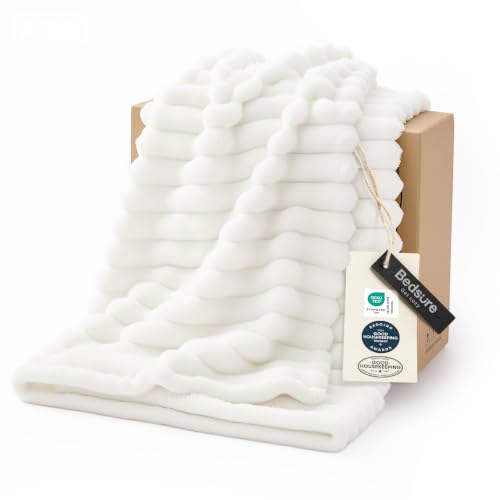
Bedsure Fuzzy Bubble Faux Fur Throw
Badge: Best Overall
Strengths
- Minky-style fleece is exceptionally soft against a toddler’s skin and face
- Bubble texture gives small hands something to hold, which many toddlers find settling at bedtime
- Taupe tie-dye hides the small stains that toddler life produces daily
Trade-offs
- Thick plush build is warm; in a well-heated room it may be more blanket than a hot toddler needs
- 50 x 60 inches is larger than a toddler mattress, so it needs folding or tucking
- Faux fur texture wants gentle washing to keep its loft
Mini spec box
- Size: 50 x 60 inches (throw)
- Fabric: minky fleece with faux fur bubble texture
- Color in this listing: tie-dye taupe
- Use: toddler bed top layer (folded), couch, reading corner
A toddler bed is a small bed with a big job: it is where a child learns to sleep independently, often in a room that cools down overnight, with a blanket they will kick off, drag around, and demand by name. This Bedsure throw earns the top spot because its minky-style fleece is the softest surface in this pool, and softness is not a luxury at this age — it is the feature that makes a child accept the blanket as part of the bedtime routine rather than a foreign object to be thrown on the floor.
The bubble texture matters more than it looks. Toddlers are tactile sleepers; many settle faster with something textured to hold, rub, or bunch in a fist. The raised bubble pattern gives that feedback across the whole surface instead of only at a tag or a corner, and the taupe tie-dye coloring keeps the blanket looking pleasant in a nursery while forgiving juice spots and cracker dust between washes.
Sizing needs one honest paragraph. A toddler mattress is roughly 28 by 52 inches, and this throw is 50 by 60, so it is deliberately oversized. Folded lengthwise, it becomes a narrower, double-layer blanket that covers a toddler completely with tuck-in margin at the sides, which keeps it in place far better than a small blanket that shifts every time the child rolls. Unfolded, it drapes — fine for a supervised couch nap, less tidy on the bed itself. Most families end up folding it for the bed and opening it fully for story time.
The limitation is warmth calibration. This is a thick, plush blanket, and in a nursery kept warm all night it can be too much for a toddler who sleeps hot, especially over warm pajamas. Use it as the main layer in a normally heated room with lighter sleepwear, or as the top layer you remove once the child is asleep in a warm room. As with every pick in this guide, it is intended for toddlers who have moved to a bed — not for infants in cribs, where loose blankets do not belong.
Best for: Toddlers who settle best with a soft, textured blanket they can hold onto / Not suited for: Warm rooms where a thinner layer would keep a hot sleeper more comfortable

Serenhom Ultra-Soft Fuzzy Faux Fur Throw
Badge: Best for Cold Rooms
Strengths
- Thick sherpa-backed build is the warmest option in this pool for cold nurseries
- Deep plush pile feels like a stuffed-animal surface, which toddlers gravitate toward
- Brown tie-dye is the most stain-forgiving color here
Trade-offs
- Heaviest feel of the group; best for older toddlers rather than the youngest bed-transitioners
- Long plush pile needs gentle, low-heat care
- Very warm — easy to over-layer in a heated room
Mini spec box
- Size: 50 x 60 inches (throw)
- Construction: faux fur face with sherpa warmth
- Texture: rabbit bubble texture
- Color in this listing: brown tie dye
- Use: cold-room toddler bed layer, family couch
Some nurseries are simply cold: the room over the garage, the north-facing bedroom, the house where the thermostat drops at night to save fuel. This Serenhom throw is the pick for those rooms. Its faux fur face and sherpa warmth make it the thickest, most insulating blanket in this pool, and on a toddler bed in a cold room it can be the difference between a child who sleeps through and one who wakes at 3 a.m. having kicked into the cold air.
The rabbit bubble texture gives the surface a plush, stuffed-toy quality. Toddlers who carry a comfort object to bed often transfer that attachment to a blanket with this kind of pile, and because it is a full bed layer rather than a small lovey, it stays useful for years — first on the toddler bed, later as the child’s own couch throw.
Use the warmth deliberately. In a cold room, this can be the single top layer over pajamas. In a normal room, it is the blanket you add for the coldest weeks and rotate out in spring. Because it is the heaviest-feeling pick here, we suggest it for toddlers who are confidently mobile in bed — children who push blankets off and pull them back without help — rather than for a child in their first weeks out of the crib.
The trade-offs are care and calibration. Deep pile wants a gentle cycle and low drying heat, and a blanket this warm makes it easy to over-layer a small child, which is uncomfortable rather than cozy. Check the child’s temperature by their torso, not their hands, and remove a layer if they feel hot or sweaty. Warmth is the goal; overheating is not.
Best for: Cold nurseries and older toddlers who can manage a substantial blanket themselves / Not suited for: First weeks of crib-to-bed transition, or warm rooms

Bedsure Soft Beige Throw Blanket
Badge: Best Easy-Care Pick
Strengths
- Machine washable and unfussy — the blanket you can wash twice a week without a ritual
- Soft, fluffy surface without long pile, a good middle ground for younger toddlers
- Neutral beige suits almost any nursery color scheme
Trade-offs
- Beige shows stains more readily than the tie-dye and grey picks
- Mid-weight warmth; cold rooms may need it layered over a sheet or a lighter blanket
- Throw size still needs folding to sit neatly on a toddler mattress
Mini spec box
- Size: 50 x 60 inches (throw)
- Care: machine washable
- Color in this listing: beige
- Use: toddler bed layer, couch, travel
- Profile: soft and fluffy without deep pile
Every toddler household needs one blanket whose care instructions are simply: wash it. Night leaks, stomach bugs, spilled milk at story time — the toddler-bed blanket is the most frequently washed textile in the house, and this Bedsure throw is built for that reality. It is machine washable, soft and fluffy without a deep fragile pile, and inexpensive-feeling enough in spirit that nobody panics when it needs an unscheduled trip through the machine at midnight.
The surface is the right compromise for younger toddlers. It is plush enough to feel like a comfort object, but the pile is shorter than the faux fur picks, so it lies flatter on a small bed, folds into a tidy layer, and does not overwhelm a small sleeper. Folded in half lengthwise it covers a toddler mattress neatly with tuck at both sides.
Beige is a double-edged choice. In the nursery it is calm, warm-toned, and matches natural wood cribs-turned-beds and most bedding sets. On the debit side, it will show every stain until wash day, where the tie-dye picks hide them. If your laundry rhythm is frequent, that hardly matters; if the blanket will go a week between washes, consider the grey fleece below instead.
Warmth sits in the middle of this pool: enough for a heated home through winter as the main toddler-bed layer, and easy to supplement with a flat sheet underneath on the coldest nights. For the family that wants one dependable, washable, no-drama blanket, this is the pick.
Best for: Families who wash the bed blanket constantly and want zero special care / Not suited for: Cold rooms as the only layer, or households that wash infrequently

Bedsure Soft Fleece Throw Blanket in Grey
Badge: Best Lightweight Pick
Strengths
- Lightest pick here — the easiest for a small toddler to push off, pull up, and carry
- Grey hides stains and lint better than any light color
- Fast-drying fleece is practical for travel, grandparents’ houses, and daycare naps
Trade-offs
- Least insulation in the pool; a cold room needs another layer with it
- Single-layer fleece feels less plush than the minky and sherpa picks
- Utilitarian look rather than a decorative nursery piece
Mini spec box
- Size: 50 x 60 inches (throw)
- Fabric: lightweight fleece
- Color in this listing: grey
- Use listed by maker: sofa, travel, camping — and toddler bed layer
- Profile: folds small, dries fast
Lightweight is a safety and independence feature at this age, not a compromise. A toddler who has just moved to a bed is still learning to manage covers: pulling them up when cold, pushing them off when warm, and carrying the blanket to the couch for morning cartoons. This grey fleece is the easiest blanket in the pool for a small child to do all of that with, and that manageability is exactly why it suits the youngest toddlers in this guide.
It is also the practical travel pick. The maker lists travel and camping among its uses, and fleece’s fast drying and small folded size make it the blanket that lives in the car or the grandparents’ tote. A familiar blanket is a powerful sleep cue away from home; one that can be washed and dried the same day can actually keep up with a trip.
On the toddler bed, treat it as the base layer of a system. In a heated room it is enough on its own for much of the winter for a warm sleeper. In a cooler room, layer it over a flat sheet or under one of the plush picks, and let the child kick the top layer rather than ending up uncovered entirely.
Be clear about what it is not: it is not the plush, sink-in comfort object the faux fur picks are, and it is not a cold-room solution by itself. Buy it for lightness, washability, and independence, and it will be the most-used blanket in the house even if it is not the most loved photograph in the nursery.
Best for: Youngest toddlers, warm sleepers, travel, and layering systems / Not suited for: Cold rooms as a standalone winter layer

Bedsure GentleSoft Sherpa Throw in Beige
Badge: Best Plush Warmth
Strengths
- Thick plush warmth for cold nights without any electric element or cord
- Smooth fleece on one side, deep pile on the other — two feels in one blanket
- Beige pile reads soft and calm in a nursery
Trade-offs
- Plush pile flattens if washed hot or dried on high heat
- Beige shows soil between washes
- Warm enough that warm-room toddlers may kick it off by midnight
Mini spec box
- Size: 50 x 60 inches (throw)
- Construction: fleece with thick sherpa-style plush
- Heating: none (non-heated)
- Color in this listing: beige
- Use: toddler bed top layer, reading chair
The GentleSoft sherpa throw is the cozy-maximalist pick: fleece on one face, a thick plush pile on the other, and no heating element, cord, or controller anywhere — an important simplicity for a child’s bed. Reversed with the pile against the child, it traps a deep layer of warm air; flipped smooth-side down, it lies flatter as a top layer over another blanket.
On a toddler bed it works best as the cold-weather top layer rather than the everyday blanket. Keep the easy-care beige throw or the grey fleece as the base, and bring this out when the room turns genuinely cold, when the child is recovering from a cold and wants maximum cocoon, or for the reading chair where parent and toddler sit together under one blanket for stories.
That shared-reading use is worth dwelling on. A 50 by 60 inch plush throw covers an adult and a toddler in a chair comfortably, and blankets that participate in the bedtime routine — stories under the blanket, then the blanket goes on the bed — help a child accept the bed itself. Routine is the real sleep technology at this age, and a blanket that shows up for both halves of it earns its space.
Care and color are the costs. The pile wants gentle washing and low heat, and beige will show the week’s adventures. If your household’s laundry is high-heat and infrequent, the grey fleece will age better in your hands. If you can give it gentle care, this is the warmest-feeling, most comforting layer in the guide.
Best for: Cold nights, story time, and toddlers who love a plush cocoon / Not suited for: High-heat laundry routines or warm rooms

Bedsure GentleSoft White Throw Blanket
Badge: Best Bright Nursery Layer
Strengths
- Off white brightens a small nursery and pairs with any bedding color
- Soft fleece layer adds warmth without deep pile
- A good spare blanket for guests-with-toddlers and grandparents’ houses
Trade-offs
- The least stain-forgiving color in this pool by a wide margin
- Mid-level warmth; not the cold-room pick
- Decorative value drops fast if it is not washed often
Mini spec box
- Size: 50 x 60 inches (throw)
- Fabric: cozy fleece
- Color in this listing: off white
- Use: toddler bed layer, photo-friendly nursery textile
- Profile: soft, light, decorative
Let us be honest about why this pick is in the guide: sometimes the blanket also has to look right. Off white fleece brightens a small nursery, sits beautifully against natural wood and pastel bedding, and photographs like the nursery in your head rather than the one with cracker crumbs in it. As a spare layer — the blanket folded on the guest bed for a visiting grandchild, or the clean one in rotation while the everyday blanket is in the wash — it is genuinely useful.
The fleece itself is a straightforward, cozy mid-weight layer. It lacks the deep pile of the sherpa picks and the texture of the bubble blankets, which makes it a calm, flat-lying option for a toddler who prefers smoothness, and a sensible middle layer in a stacked system: sheet, this fleece, and a plush throw on top for the coldest nights.
Now the obvious trade-off, stated plainly so nobody is surprised: off white and toddlers are natural enemies. This blanket will show everything, and it will need washing more often than any other pick here to keep its one great advantage — its look. Families who already run a frequent laundry rhythm will manage fine; families who do not should choose the taupe, brown, or grey picks and enjoy the same warmth with far less visible evidence.
Think of it as the presentation layer and the spare, not the workhorse. Bought with that expectation, it is a pleasure. Bought as the only blanket for a busy toddler, it will spend its life looking tired.
Best for: Spare and rotation duty, grandparents’ houses, and calm, bright nurseries / Not suited for: Primary everyday use in a low-laundry household
Comparison Table
| Blanket | Construction | Size | Role | Link |
|---|---|---|---|---|
| Bedsure Fuzzy Bubble Faux Fur Throw | Minky fleece, bubble texture | 50 x 60 inches (throw) | Soft all-rounder | Check on Amazon |
| Serenhom Ultra-Soft Fuzzy Faux Fur Throw | Faux fur + sherpa | 50 x 60 inches (throw) | Cold-room warmth | Check on Amazon |
| Bedsure Soft Beige Throw Blanket | Fleece, machine washable | 50 x 60 inches (throw) | Easy-care layer | Check on Amazon |
| Bedsure Soft Fleece Throw Blanket in Grey | Lightweight fleece | 50 x 60 inches (throw) | Lightest layer | Check on Amazon |
| Bedsure GentleSoft Sherpa Throw in Beige | Fleece + thick sherpa | 50 x 60 inches (throw) | Plush warmth | Check on Amazon |
| Bedsure GentleSoft White Throw Blanket | Fleece | 50 x 60 inches (throw) | Spare layer | Check on Amazon |
How Much Warmth Does a Toddler Actually Need?
Parents tend to shop for toddler blankets the way they shop for themselves — by maximum warmth — but a toddler’s night is different. Small children cannot regulate layers the way adults do: they cannot easily add a blanket back at 3 a.m., and they signal discomfort by waking rather than by adjusting. The goal is a layer matched to the room, not the warmest layer you can find. In a nursery kept at a typical heated temperature, a mid-weight fleece over ordinary winter pajamas is the right default for most toddlers, which is why the easy-care beige throw and the grey fleece anchor this guide.
Step up to the sherpa-backed picks when the room itself is the problem: rooms over garages, rooms with a single exterior wall vent, houses where the heat is set back overnight. Step down when the child consistently wakes sweaty at the neck or kicks covers off within the first hour. Check temperature at the torso with the back of your hand; hands and feet run cool on everyone and are unreliable witnesses.
Room temperature also interacts with what else is on the bed. A toddler in fleece pajamas under a plush blanket in a warm room is wearing two blankets. Think of pajamas and blanket as one system with a total budget, and adjust whichever half is easier on a given night.
Building the Bedtime Routine Around the Blanket
The most underrated feature of a toddler blanket is that it can become the routine. Children this age fall asleep to sequences, not to lectures, and a blanket that appears at the same point every night — bath, pajamas, stories under the blanket in the chair, blanket onto the bed, lights down — becomes a sleep cue as reliable as any song. This is one reason textured picks like the bubble minky fleece perform so well in real homes: the blanket is not just warm, it is recognizable by touch in the dark.
It also explains why families should resist rotating five different blankets randomly. Pick one primary blanket for the bed, keep one spare for wash nights, and let the child form the attachment. When the blanket must be washed, wash it in the morning so it is back by bedtime; a missing blanket at 7 p.m. can cost an hour of everyone’s evening.
Travel follows the same logic. A familiar blanket in a strange bed — a hotel, a grandparent’s house, a first camping trip — carries the routine with it. The lightweight grey fleece is the travel pick here precisely because it folds small and dries fast; families planning outdoor overnights can also read our notes on Best Wool Blankets For Hiking for the grown-ups’ side of the packing list.
When to Size Up, and What Comes After the Toddler Bed
A toddler bed is a short chapter. Most children move to a twin bed between ages three and five, and the blanket question changes with the mattress: coverage becomes the issue, and a 50 by 60 inch throw stops being oversized and starts being a top layer or a couch blanket. The good news is that nothing in this guide is wasted at that transition. The plush and sherpa picks become the child’s own reading and couch throws, and the fleece picks become travel and spare-bed layers.
The sign that a blanket no longer fits the toddler bed stage is not the calendar but the coverage: if the child regularly ends up uncovered because the blanket is bunched at the foot or dragged off by its own weight when folded, it is time to reassess. Either fold differently, move to the lightest pick, or accept that the child is ready for a twin setup with bedding sized for it. Conversely, a blanket that a child loves and manages well should not be replaced just because a birthday passed.
Durability across this whole period is mostly a laundry story. The picks that survive three years of weekly washing are the ones washed gently and dried low. Treat the plush piles kindly and they will still be soft when they graduate to the couch; treat everything on high heat and even the best fleece will feel tired within a year.
Fleece vs Natural Fibers for a Toddler Bed
Some parents arrive at this guide hoping for wool or cotton, and the hesitation about synthetics is understandable, so here is the honest comparison. Wool is a wonderful blanket fiber for adults and older children: it breathes, it manages moisture, and it lasts. On a toddler bed it runs into three practical walls. It is usually heavier for the same warmth, which matters for a small child managing their own covers. It often wants gentler washing than a blanket that gets washed weekly and sometimes daily. And many toddlers object to even a slight wool texture against bare skin at exactly the age when objections are expressed by throwing the blanket out of the bed.
Readers who want to explore the natural-fiber route for the rest of the family can compare constructions in our guide to Best Wool Blend Blankets, where blends soften wool’s hand-feel, and in Best Wool Blankets Withe Edging, which looks at finished-edge traditional blankets. Those are adult and household blankets, though; for the toddler bed itself, the deciding factors are weight, washability, and a surface a child will accept against their face at 7 p.m. every night.
Cotton sits between the two: soft and familiar, but slower to dry and less insulating when damp, and a wet cotton blanket in a cool room feels cold rather than cozy. Fleece’s real advantages at this age are unglamorous and decisive — it is light for its warmth, it comes out of the wash nearly dry, it stays soft without any break-in, and it tolerates the sheer frequency of toddler laundry. That is why every pick in this guide is a fleece-family textile, chosen on purpose rather than by default.
One more material note: texture is a material property too. The bubble minky surface, the rabbit-style plush, and the smooth fleece in this pool are all polyester-family fabrics, but they behave differently against skin and in the wash, and toddlers vote on those differences nightly. If your child has already shown a preference — clutching one blanket, rejecting another — trust that data over any fiber debate. The best material for a toddler bed is the one the toddler will actually sleep under.
A Realistic Two-Blanket System for the Whole Winter
Here is the setup we would hand to a friend. Blanket one is the workhorse: the machine-washable beige throw, folded lengthwise on the bed every night, washed weekly and whenever life happens. Blanket two is chosen by your room. Cold nursery: the Serenhom sherpa or the GentleSoft plush, kept folded at the foot of the bed and pulled up on the coldest nights. Warm nursery or warm child: the lightweight grey fleece, which doubles as the travel blanket and the wash-night spare. The remaining picks fill the edges — the bubble minky for a texture-loving child, the off white as the clean spare at a grandparent’s house.
This system costs less frustration than any single perfect blanket, because toddler bedding fails in rotation, not in quality: the perfect blanket in the washing machine at bedtime is, for that night, no blanket at all. Two adequate blankets that are always available beat one ideal blanket that is sometimes missing, and a child who knows both of them will accept the spare without a protest that resets the whole evening.
Store the off-duty blanket where the child can see the rotation is normal — a basket by the bed or the bottom drawer of the dresser — rather than making it vanish into a distant closet. Toddlers accept substitutions they can predict, and a spare that lives in the room reads as part of the furniture of sleep, not as a replacement smuggled in after a crisis.
Label both blankets with the child’s name if either will travel to daycare, a grandparent’s house, or a sibling’s room. Toddler blankets are champion wanderers: they migrate to couches, car seats, stroller baskets, and forts, and a labeled blanket finds its way back to the bed before bedtime instead of being discovered under a cushion at midnight. A small stitched label also survives washing better than marker on a care tag.
Reassess the system at the season’s edges. In early autumn and late spring, the workhorse alone is usually right. In the coldest weeks, the second layer earns its place. And when the child moves to a twin bed, the same two blankets graduate to top-layer and couch duty, and the system thinking — a washable base, a warmth layer, a spare — carries straight into the next stage of bedding.
Common Buying Mistakes
Putting a loose blanket in a crib. The most important mistake is an age mistake. These blankets are for toddlers in beds. Infants in cribs should sleep without loose blankets; use sleep sacks for warmth at that stage and save this guide for the bed transition.
Buying a weighted blanket for a toddler. Weighted blankets are marketed heavily and are not appropriate for toddlers, who may not be able to move a heavy blanket off themselves. Every pick in this guide is a conventional, light, movable layer — keep it that way at this age.
Shopping for maximum warmth. An over-warm toddler kicks the blanket off, then wakes cold and calls for you. Match the weight class to the room temperature and pajamas as one system instead of buying the thickest option by default.
Ignoring the fold. A 50 by 60 inch throw unfolded on a 28 inch mattress is a bunching, dragging mess. If you are not willing to fold and tuck, shop for purpose-sized toddler bedding instead of a throw.
Choosing white as the only blanket. Off white is lovely as a spare and a presentation layer. As the sole blanket in a house with a busy toddler and a slow laundry rhythm, it will look permanently tired.
Forgetting the spare. One blanket means one midnight crisis per stomach bug. Two blankets in rotation — a workhorse and a spare — is the real minimum for a toddler bed.
Final Recommendation
For most families, start with the Bedsure Soft Beige Throw Blanket as the everyday workhorse — washable, soft, and mid-weight — and add the Bedsure Soft Fleece Throw Blanket in Grey if your toddler is young, small, or a warm sleeper who needs the lightest manageable layer. Choose the Bedsure Fuzzy Bubble Faux Fur Throw instead if your child settles best with texture to hold, and reserve the sherpa-backed picks for genuinely cold rooms. Whatever you choose, fold it to the mattress, keep a spare in rotation, and let the same blanket show up every night: at this age, the routine is the warmth.
Frequently Asked Questions
What size blanket fits a toddler bed?
A toddler mattress is about 28 by 52 inches. Purpose-made toddler blankets are smaller than standard throws, but a 50 by 60 inch throw folded lengthwise covers the mattress with tuck-in margin and works well in practice, as long as the foot end is tucked and the blanket tops out around the child’s chest.
When can a child start sleeping with a blanket?
Loose blankets belong with the move out of the crib into a toddler bed, which for most children happens somewhere between eighteen months and three years. In the crib, infants should sleep without loose bedding. If you are unsure about your child’s readiness, your pediatrician’s guidance comes before any buying guide, including this one.
Are weighted blankets safe for toddlers?
No. A toddler may not be able to push a heavy blanket off, and weighted blankets are not recommended at this age. Choose a light, conventional blanket the child can move freely, and revisit the question only when the child is much older and a clinician agrees it is appropriate.
How warm should a toddler’s room and blanket be?
Match the system, not a single number: room temperature, pajamas, and blanket together should leave the child’s torso comfortably warm, not hot or sweaty. In a normally heated room, a mid-weight fleece is the right default; reserve sherpa-backed plush for rooms that are genuinely cold overnight.
How often should I wash a toddler’s bed blanket?
Weekly as a baseline, and immediately after illness, leaks, or spills. That rhythm is why washability is weighted so heavily in this guide, and why keeping a second blanket in rotation is close to essential.
Why does my toddler kick their blanket off every night?
Usually because they are warm in the first part of the night — kicking is temperature regulation. Try one weight class lighter, tuck the foot end so the blanket stays nearby, and use slightly warmer pajamas so an uncovered stretch is not a cold one. If the blanket is unfolded and oversized, folding it lengthwise also reduces the drag that pulls it to the floor.
What blanket should I send for daycare or preschool naps?
Send the lightest, fastest-washing one you own — in this pool, the grey fleece. Nap mats are small, rooms are warm, and the blanket comes home needing a wash more often than you expect. A familiar blanket from home also helps a toddler nap in a group setting, because the smell and texture are part of the sleep routine they know. Label it, send the spare on wash weeks, and do not send the plush favorite your child cannot sleep without at home; a lost daycare blanket should be an inconvenience, not a bedtime emergency.
Should the blanket match the toddler’s pajamas or the room temperature?
Room temperature decides the blanket; pajamas are the fine adjustment. Set the layer for the room the child actually sleeps in — which may be several degrees cooler than the living room where you read the thermostat — then use pajama weight to fine-tune. If you find yourself changing pajamas drastically night to night to compensate, the blanket weight class is wrong for the room, and stepping the blanket up or down one class will stabilize the whole system.
Can these throws be used for naps on the couch or at grandparents’ houses?
Yes — that flexibility is a strength of the throw format. The lightweight grey fleece is the best traveler of the group because it folds small and dries fast, and a familiar blanket doubles as a sleep cue in a strange place, which helps naps happen at all.