Disclosure: topratedkitchenware.com is reader-supported. When you buy through links on our site, we may earn an affiliate commission from Amazon and other retailers, at no extra cost to you.
Where to buy
The six picks below are the short list for best winter blankets for toddlers. Each name links to its Amazon listing, where you can confirm the current size and color options and check the latest price on Amazon. Read the full guide ↓ for the detailed reviews, the safety and sizing reasoning, and the care steps that keep these blankets soft wash after wash.
- Bedsure Soft Fleece Throw Blanket in Grey — Best Overall
- Bedsure GentleSoft Sherpa Throw in Beige — Best Plush Warmth
- Bedsure GentleSoft White Throw Blanket — Best Spare and Rotation Pick
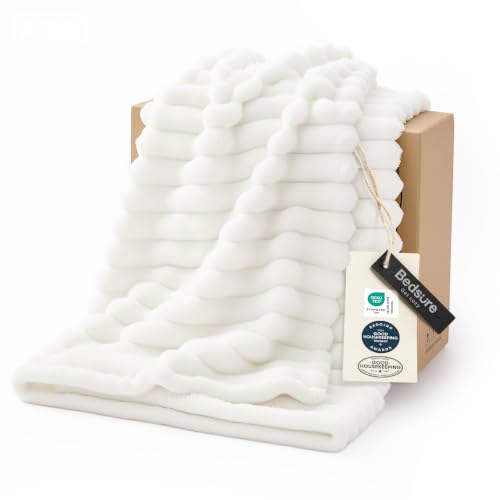
- blunique Ultra Soft Faux Fur Bubble Throw — Best Texture for Comfort
- Bedsure Faux Fur Fluffy Fleece Sherpa Blanket in Grey — Best for Cold Days
- BEDELITE Ribbed Fleece Throw Blanket in Cream — Best Easy-Care Texture
The best winter blankets for toddlers are not really chosen the way adult blankets are. An adult shops for warmth and size; a toddler’s blanket has to survive being dragged across floors, slept on in cars, washed on short notice, and demanded by name at moments of crisis — while still keeping a small child warm through winter. Softness matters, but so do weight a child can manage, a surface their hands love, and a care routine a tired parent can actually keep.
This guide compares six fleece and plush throws that fit a toddler’s real life in different ways: a lightweight grey fleece a child can carry and control themselves, two deep-pile sherpa options for cold rooms and couch time, a highly tactile faux fur bubble blanket for texture-seeking children, a ribbed fleece that balances texture with easy washing, and a calm off white spare for rotation. Every pick is a conventional blanket — none is weighted, which would be inappropriate at this age, and none is electric, so there are no cords in a child’s hands or bed.
A quick age note: these are blankets for toddlers — children who are up, walking, napping on mats and couches, and sleeping in toddler or twin beds. Loose blankets are not for infants in cribs. Within the toddler years, though, the right blanket is one of the hardest-working comfort tools in the house, and the differences between these six are real: independence versus plushness, texture versus washability, warmth versus a child’s ability to manage the layer themselves. Readers focused specifically on the bed itself, rather than all-day use, will find the sizing and tucking detail they need in our companion coverage of toddler-bed setups linked from the sections below.
Key Takeaways
- Independence is a warmth feature: the lightweight grey fleece is the blanket a toddler can carry, pull up, and manage alone.
- Texture is a preference, not a gimmick — bubble and ribbed surfaces help tactile toddlers settle; smooth fleece suits children who reject pile.
- Cold settings need sherpa depth; warm rooms need mid-weights. Over-layering a toddler causes kicking, then cold wake-ups.
- No weighted blankets and no electric blankets for toddlers — every pick here is a light, cordless, movable layer.
- Two blankets in rotation is the real minimum: one in use, one in the wash or ready for the worst night.
- Color is maintenance: grey hides toddler life, cream and off white demand a frequent laundry rhythm.
In this guide
Quick Picks
| Pick | Badge | Size | Best use | Link |
|---|---|---|---|---|
| Bedsure Soft Fleece Throw Blanket in Grey | Best Overall | 50 x 60 in | All-day independence | Check on Amazon |
| Bedsure GentleSoft Sherpa Throw in Beige | Best Plush Warmth | 50 x 60 in | Couch and story time | Check on Amazon |
| Bedsure GentleSoft White Throw Blanket | Best Spare and Rotation Pick | 50 x 60 in | Spare / rotation | Check on Amazon |
| blunique Ultra Soft Faux Fur Bubble Throw | Best Texture for Comfort | 50 x 60 in | Comfort texture | Check on Amazon |
| Bedsure Faux Fur Fluffy Fleece Sherpa Blanket in Grey | Best for Cold Days | 50 x 60 in | Cold days | Check on Amazon |
| BEDELITE Ribbed Fleece Throw Blanket in Cream | Best Easy-Care Texture | 50 x 60 in | Daycare and floor play | Check on Amazon |
How These Picks Were Chosen
This is a research-led guide built from the verified listings in this pool. We compared dimensions, fabric and construction — single fleece, ribbed fleece, minky-style and faux fur surfaces, fleece with sherpa pile — stated care instructions, and weight class. For this keyword we deliberately weighted three things ahead of raw warmth: whether a toddler can physically manage the blanket, whether the surface gives comfort a child can feel, and whether the care routine survives weekly or twice-weekly washing, because a toddler blanket is washed more than any other textile in the home.
Two safety filters were applied to the whole pool. First, no weighted products: weighted blankets are not appropriate for toddlers, who must always be able to move a blanket off themselves freely. Second, no heated products: cords and controllers do not belong in a toddler’s bed or hands. Every pick that remains is a passive, washable layer whose warmth comes from fabric and pile alone.
We were also honest about format. These are 50 by 60 inch family throws, not miniature toddler-only products. For all-day toddler use that is mostly an advantage — the size covers a child completely, works on couches and car seats, and stays useful for years — and where the size cuts the other way, such as a small child carrying a plush pick, the review says so. Children who run hot in every season are a special case; the airflow-first approach in Best Winter Blankets That Breathe is the right detour for them.
The 6 Best Winter Blankets for Toddlers, Reviewed

Bedsure Soft Fleece Throw Blanket in Grey
Badge: Best Overall
Strengths
- Lightest pick here, so a toddler can drag it, carry it, and pull it over themselves without help
- Grey hides the daily evidence of toddler life better than any light color
- Fast-drying fleece keeps up with travel, daycare, and frequent washing
Trade-offs
- Least insulation in the pool; cold rooms and cold cars need a warmer layer with it
- Smooth fleece is less of a tactile comfort object than the textured picks
- Utilitarian appearance rather than a decorative nursery piece
Mini spec box
- Size: 50 x 60 inches (throw)
- Fabric: lightweight fleece
- Color in this listing: grey
- Use listed by maker: sofa, travel, camping
- Profile: folds small, dries fast, easy for a toddler to carry
A toddler’s blanket is not really bedding. It is a companion object that happens to provide warmth: it goes from the bed to the couch, from the couch to the car, from the car to a grandparent’s floor, and back to the bed by evening, collecting meals, miles, and naps along the way. Judged by that actual job description, this lightweight grey fleece is the best overall pick in the pool, because it is the blanket a small child can operate entirely by themselves.
Weight is the headline. A toddler who can pull their own blanket over their legs in the car seat, drag it to the reading corner, and haul it back to bed is a toddler who feels competent — and who wakes you less often to do it for them. Heavy plush blankets have their place, and two of them are reviewed below, but they are parent-managed textiles. This one is child-managed, and at this age that difference shows up every single day.
The maker lists travel and camping among its uses, and that mobility is the second half of the case. Fleece folds small, tolerates being stuffed in a tote, and dries quickly after a wash or a damp outing. Grey is the right color for the role: it conceals the gray-brown patina of real toddler use between washes better than cream or white ever will.
The honest limit is warmth per layer. This is the lightest insulation here, and in a cold room, a cold car on a January morning, or an unheated cabin, it should be the inner layer of a pair rather than the only layer. Dress the child for the temperature and let this blanket handle the drafts and the comfort, or step up to the sherpa picks below for the coldest settings.
Best for: Everyday toddler independence: bed, couch, car, daycare, and travel in one blanket / Not suited for: The coldest rooms as a standalone layer

Bedsure GentleSoft Sherpa Throw in Beige
Badge: Best Plush Warmth
Strengths
- Thick plush pile is the warmest-feeling surface in this pool for seated, still toddlers
- Two faces — smooth fleece and deep pile — give a child a choice of textures
- No cords or heating elements, so it is simple and safe to leave with a child
Trade-offs
- Heavier for a small toddler to carry room to room
- Pile needs gentle washing and low drying heat to stay fluffy
- Beige shows soil between washes
Mini spec box
- Size: 50 x 60 inches (throw)
- Construction: fleece with thick sherpa-style plush
- Heating: none (non-heated)
- Color in this listing: beige
- Use: couch cuddles, reading chair, cold-evening layer
When a toddler is still — watching a movie, listening to stories, winding down before bed — they get cold faster than when they are moving, and that is the moment this sherpa throw exists for. The deep plush pile traps a thick layer of warm air, and the two-faced construction lets a child choose the smooth fleece side or bury themselves in the pile side, a small autonomy that toddlers take surprisingly seriously.
On the family couch this is the blanket a parent and toddler share, and shared blankets do developmental work: the reading-under-one-blanket ritual is how many children learn to associate blankets, books, and bedtime in one calm sequence. At 50 by 60 inches it covers an adult’s lap and a whole toddler simultaneously, which is exactly the geometry of story time.
It is deliberately non-heated. There is no cord to tangle, no controller to chew on, no auto-shutoff to think about — for a child’s blanket, the absence of electronics is a feature, and warmth comes from pile and layering instead.
Expect to manage this blanket for your child rather than with them. It is the heaviest-feeling everyday pick here, its pile wants gentle care, and beige will show the week. In exchange you get the coziest cold-evening layer in the guide. Households that wash everything hot should look at the ribbed fleece below instead; households with a cold living room will understand this pick immediately.
Best for: Story time, movie nights, and cold living rooms where the toddler sits still / Not suited for: Toddlers who insist on carrying their blanket everywhere themselves

Bedsure GentleSoft White Throw Blanket
Badge: Best Spare and Rotation Pick
Strengths
- The clean spare every toddler household needs for wash nights and illness nights
- Smooth fleece suits toddlers who dislike deep pile or heavy texture
- Off white pairs with any nursery or living-room palette
Trade-offs
- Shows every stain; needs the most frequent washing in this pool
- Mid-level warmth only
- Its main advantage — appearance — fades if laundry is infrequent
Mini spec box
- Size: 50 x 60 inches (throw)
- Fabric: cozy fleece
- Color in this listing: off white
- Use: spare blanket, grandparents’ house, guest rotation
- Profile: soft, smooth, bright
Every experienced toddler parent owns a blanket whose job title is “the spare,” and this off white fleece is the best candidate for that role in this pool. The main blanket will be in the wash on the worst possible night — that is not pessimism, it is the statistical shape of life with a two-year-old — and the household that has a clean, familiar, acceptable spare already in the house sleeps better for it.
As a textile it is a calm, smooth, mid-weight fleece. That smoothness is a real preference axis among toddlers: some children seek texture, others reject pile and fuzz and want a flat, cool-feeling surface against their cheek. If your toddler is in the second camp, this may be more than a spare in your house; it may be the main blanket, with the grey fleece as its backup.
Off white also makes it the natural grandparents’-house blanket: bright, neutral, welcome in any room, and not so precious that anyone minds it living in a tote between visits. A familiar blanket in an unfamiliar house is a nap-making device, and a dedicated one that stays there is even better.
The warning label is obvious and we will print it anyway: white and toddlers are adversaries. This blanket needs washing more often than any other pick here to stay itself. Buy it as the spare and the smooth option, with a frequent-laundry rhythm, and it is a quiet household hero. Buy it as the only blanket in a low-laundry home and it will look tired within a month.
Best for: Wash-night spare, smooth-texture toddlers, and grandparents’ houses / Not suited for: Sole-blanket duty in a household that washes infrequently

blunique Ultra Soft Faux Fur Bubble Throw
Badge: Best Texture for Comfort
Strengths
- Bubble texture gives a toddler’s hands constant, soothing feedback across the whole surface
- Thick plush build feels like a stuffed animal in blanket form — a natural comfort object
- Cream white looks soft and calm in a nursery or living room
Trade-offs
- Cream white shows stains quickly, second only to the off white pick
- Thick and plush, so it is a parent-carried blanket for younger toddlers
- Faux fur pile needs gentle, low-heat care
Mini spec box
- Size: 50 x 60 inches (throw)
- Fabric: faux fur with bubble texture
- Color in this listing: cream white
- Use: comfort blanket, couch, bedroom layer
- Profile: thick, plush, highly tactile
Some toddlers do not have a favorite blanket so much as a favorite texture, and this is the texture pick. The blunique’s faux fur surface is worked into a raised bubble pattern, so a child’s hands find something to hold, squeeze, and rub everywhere they land. For a toddler who self-soothes by touch — clutching a sleeve, a tag, a parent’s shirt — a whole blanket of feedback can become the comfort object that makes naps and bedtimes measurably calmer.
The build is thick and plush, closer to a beloved stuffed animal than to a sheet-like layer, and that is the right mental model. This is the blanket for the reading chair, the sick day on the couch, the long car ride where a child wants to burrow. Its warmth is genuine, a product of pile depth rather than any heating element.
Cream white is the aesthetic choice and the practical risk in one. In the nursery it is soft, bright, and calm; in real toddler service it will record every encounter with food, markers, and the outdoors until wash day. Families who fall for the texture should consider their laundry rhythm honestly — the same tactile idea in a forgiving color would be the grey sherpa below.
It is also a blanket a younger toddler will not haul around independently; expect to carry it for them for a while. If your child is a texture-seeker and you can give faux fur gentle care, this is the pick most likely to become the famous one — the blanket whose absence is noticed by the whole household.
Best for: Texture-seeking toddlers who settle by touch, and comfort-focused couch time / Not suited for: Independent carrying by the youngest toddlers, or low-laundry households

Bedsure Faux Fur Fluffy Fleece Sherpa Blanket in Grey
Badge: Best for Cold Days
Strengths
- Thick, warm build for the coldest days, in the most stain-forgiving color of the plush picks
- Faux fur face and sherpa warmth give both texture and insulation
- Grey works in nurseries, living rooms, and cars without showing travel wear
Trade-offs
- Substantial blanket; younger toddlers will not manage it alone
- Deep pile on both faces means the most careful washing in this guide
- Can be too warm over heavy pajamas in a heated room
Mini spec box
- Size: 50 x 60 inches (throw)
- Construction: faux fur fluffy fleece with sherpa
- Color in this listing: grey
- Use: couch, bed, cold-day layering
- Profile: thick and warm with a forgiving color
This is the cold-snap pick: a thick faux fur and sherpa blanket in the one color that forgives a toddler’s entire lifestyle. Where the cream and beige plush picks ask you to choose between coziness and practicality, the grey sherpa declines the choice. It is the blanket for the unheated mudroom bench, the cold car warmed up too late, the drafty living room in the oldest week of January.
The construction pairs a fluffy faux fur face with sherpa warmth, so it delivers the tactile comfort toddlers seek and the insulation parents are actually shopping for. On the couch it swallows a toddler whole in the best way; layered over a bed it is the top layer that ends the “I’m cold” negotiations for the night.
Grey deserves its own sentence, because with toddlers color is a maintenance strategy. Juice, dust, car-seat crumbs, and the grey film of winter sidewalks all disappear into this shade between washes, which means the blanket looks cared-for on the schedule a real family can keep, not the schedule a product photo assumes.
Manage the warmth. Over fleece pajamas in a heated room, this blanket can push a toddler from cozy to sweaty, and a sweaty toddler kicks everything off and wakes cold later. Pair it with lighter sleepwear, or use it as the shared couch layer and keep a mid-weight on the bed. It is also the most care-demanding wash in the guide — gentle cycle, low heat — so households with a blast-everything laundry style should choose the ribbed fleece instead.
Best for: Cold houses, cold cars, and families who want plush warmth in a forgiving color / Not suited for: Warm rooms over heavy pajamas, or high-heat laundry routines

BEDELITE Ribbed Fleece Throw Blanket in Cream
Badge: Best Easy-Care Texture
Strengths
- Ribbed texture gives tactile interest without deep, fragile pile
- Machine washable and plush — the easiest-care textured pick here
- Ribbing helps the blanket drape and stay put on a small bed or couch
Trade-offs
- Cream shows stains more than grey or tie-dye options
- Ribbed fleece is mid-weight; cold rooms will layer it
- Texture is subtler than the bubble picks, which strong texture-seekers may find less engaging
Mini spec box
- Size: 50 x 60 inches (throw)
- Fabric: fleece with ribbed texture
- Care: machine washable
- Color in this listing: cream
- Use: everyday toddler blanket, couch, bed layer
The BEDELITE ribbed fleece is the engineer’s answer to the toddler blanket problem: how do you give a child texture to hold without giving the parent a fragile pile to maintain? Ribbing. The raised ribs run across a plush fleece surface, providing grip, drape, and tactile interest, while the fabric underneath stays a straightforward machine-washable fleece that tolerates real family laundry.
That drape is an underrated virtue. Ribbed fabric falls into place and stays there — over a toddler’s legs in a stroller, across a nap mat, along the back of a couch — where slick fleece slides off and deep pile bunches. For floor play and fort-building, the blanket that stays where a toddler puts it generates noticeably less frustration, for everyone.
Cream is the color compromise: brighter and softer-looking than grey, more forgiving in practice than pure white, though still a light color that will show a busy week. Given that this pick is the easiest textured blanket here to wash, the color is a fair trade for most families.
Warmth is mid-weight, which for most heated homes is the correct default for most of winter, layered up on the coldest nights. If you want one textured blanket that can be the everyday bed, couch, and car blanket without a special-care ritual, this is the most balanced pick in the guide — the connoisseur’s choice is the bubble faux fur, but the pragmatist’s choice is this.
Best for: Everyday textured use with minimal care fuss, including stroller and floor play / Not suited for: Strong texture-seekers who want deep pile, or the coldest rooms alone
Comparison Table
| Blanket | Construction | Size | Role | Link |
|---|---|---|---|---|
| Bedsure Soft Fleece Throw Blanket in Grey | Lightweight fleece | 50 x 60 inches (throw) | Manageable all-rounder | Check on Amazon |
| Bedsure GentleSoft Sherpa Throw in Beige | Fleece + thick sherpa | 50 x 60 inches (throw) | Plush warmth | Check on Amazon |
| Bedsure GentleSoft White Throw Blanket | Fleece | 50 x 60 inches (throw) | Spare layer | Check on Amazon |
| blunique Ultra Soft Faux Fur Bubble Throw | Faux fur, bubble texture | 50 x 60 inches (throw) | Tactile comfort | Check on Amazon |
| Bedsure Faux Fur Fluffy Fleece Sherpa Blanket in Grey | Faux fur + sherpa | 50 x 60 inches (throw) | Cold-day warmth | Check on Amazon |
| BEDELITE Ribbed Fleece Throw Blanket in Cream | Ribbed fleece | 50 x 60 inches (throw) | Easy-care texture | Check on Amazon |
Matching the Blanket to the Toddler: Four Common Types
The independent carrier. Some toddlers adopt a blanket the way Linus did and carry it everywhere. For them, weight and drag-ability outrank everything: the lightweight grey fleece or the ribbed fleece, both manageable, both washable enough to survive being a part-time floor textile. Buy two of the chosen one if you can; a carrier’s blanket in the wash is a household emergency.
The texture seeker. These children rub fabric between their fingers to fall asleep and hunt for tags, seams, and cuffs. Give them surface: the bubble faux fur first, the ribbed fleece as the easier-care alternative. Texture seekers often reject smooth blankets entirely, so do not waste money on a beautiful plain blanket for a child who has already told you, behaviorally, what they need.
The warm sleeper. Warm toddlers kick, sweat at the neck, and wake when over-layered. They need the lightest layer that still feels like a blanket — the grey fleece — plus pajamas doing part of the thermal work, and a room checked by torso temperature rather than by adult comfort. The sherpa picks will live on the couch in this house, not the bed.
These types overlap in real children, and most toddlers are a blend — a texture seeker who is also a warm sleeper, an independent carrier in a cold room. Read the types as dials rather than boxes: identify your child’s strongest trait first, choose for that, then adjust the second trait with layering or pajamas. A blanket bought for the dominant trait and adjusted for the rest will outperform a blanket bought by averaging every consideration into a compromise nobody loves.
The sibling shadow. A toddler with an older sibling often wants whatever the sibling has, in miniature. If the older child sleeps under a plush throw, the toddler will campaign for plush too. The sherpa picks let you honor that campaign safely at toddler scale: same family of blanket, but light, cordless, and manageable, with the heavier sibling version staying in the sibling’s room. Matching within the family is a legitimate buying reason at this age, as long as the toddler version passes the push-off test on its own merits.
The daycare napper. A child who naps daily away from home needs a blanket optimized for logistics rather than luxury: light, fast-washing, clearly labeled, and emotionally replaceable. The ribbed fleece and the grey fleece split this duty in most families. Send the blanket your child likes but does not love most, keep the beloved one at home, and wash the daycare blanket on a fixed weekly rhythm so it never becomes the reason a nap — or an evening — goes sideways.
The cold-room sleeper. Where the room is the problem — over a garage, at the end of a heating run — the sherpa and faux fur picks earn their bulk. Layer them over a lighter base so the child can shed the top layer without ending up bare, and re-check the system whenever the weather or the heating schedule changes.
Blankets Beyond the Bed: Cars, Strollers, Daycare, and Grandparents
Most toddler blanket hours happen outside the bed. In the car, a blanket covers legs in a seat where the heating vents aim at adults, and the lightweight fleece wins again: it folds into the seat-back pocket, washes after the inevitable spill, and does not overwhelm a harnessed child. Never drape a thick blanket under or behind a child in a car seat — the blanket goes over the buckled harness, never between the child and the straps.
At daycare, the nap blanket should be the most washable one you own, labeled with the child’s name, and emotionally replaceable: send the ribbed fleece or the grey fleece, and keep the beloved texture blanket at home where its loss would actually matter. A familiar blanket from the rotation still helps a toddler nap in a group room, because smell and texture carry the home routine with them.
Grandparents’ houses reward a dedicated blanket that lives there — the off white spare is ideal — so the sleep setup is identical every visit and nobody has to remember to pack bedding. The same logic applies to regular caregivers and co-parenting households: duplicate the system, not just the object, and bedtime stays boring in the best way across addresses.
What Toddlers Outgrow, and What These Blankets Become
Between three and five, most children move to a twin bed and graduate from toddler blankets to full bedding — but throws do not retire. The plush picks become reading and movie blankets, the fleece picks become car and travel blankets, and the ribbed fleece becomes the fort, picnic, and floor-play textile. A 50 by 60 inch throw is sized for a lap and a couch long after it stops being sized for a small bed, which is why buying decent washable quality at this stage is not wasted money.
The comfort-object chapter closes more slowly. A child may keep choosing the toddler blanket for sleep long after it stops covering them, using it as a pillow-side companion rather than a layer. That is normal and harmless; let the blanket’s role shrink naturally instead of confiscating a working sleep cue in the name of tidiness.
When a blanket finally wears out — pile gone, edges frayed — replace it with the same weight class and a similar surface, and overlap the two for a few nights before retiring the original. Families who keep the material family consistent, whether that is smooth fleece, ribbed fleece, or a natural-fiber direction like the options in Best Wool Blend Blankets for older children, rarely have a transition fight on their hands.
A Safety Checklist for Toddler Blankets
Weight the child can move. Any blanket a toddler sleeps with must be light enough for that child to push off, pull away from their face, and crawl out from under without effort. Test it awake: if your child cannot easily throw the blanket off during play, it does not belong on their bed. This single test is why every pick in this guide is a light fleece or plush throw and why weighted products were excluded before any other comparison began.
Nothing electric, nothing corded. Heated blankets, heated throws, and anything with a controller or a cable should stay out of toddler beds and toddler hands. Warmth at this age comes from fabric, pile, pajamas, and room temperature — four dials that cannot malfunction in the night.
Face and head stay clear. However the blanket is arranged, it should top out around the child’s chest in bed, with the head and face uncovered. Oversized throws should be folded and tucked at the foot end so they cannot migrate upward, and couch naps for the youngest toddlers should be supervised with the same rule applied.
Check the blanket itself regularly. Look for loose threads, unraveling edges, and thinning spots, especially on textured and faux fur surfaces that get loved hard. A blanket shedding long loose fibers or coming apart at the seams should be repaired or retired; toddlers put everything in their mouths, and a disintegrating blanket is not a comfort object anymore.
Allergy and skin notes. Wash any new blanket before first use to remove loose fibers and finishing residue, and watch for skin reactions in the first week. Fleece-family fabrics are generally well tolerated, but every child’s skin has opinions, and a rash that appears with a new blanket and fades without it is useful information to act on, not to push through.
When the Blanket Retires: Hand-Me-Downs and Donations
Toddler blankets accumulate in a house: the primary, the spare, the travel one, the gifted ones. When a child graduates to full bedding, sort the pile honestly. The beloved comfort blanket stays — stored if necessary, but kept; its value is sentimental, not thermal. Sound, clean spares can go to younger siblings, cousins, or friends entering the toddler years, where a pre-softened blanket with a known wash history is genuinely welcome.
Blankets beyond family use can still do work. Shelters and outreach programs consistently need warm, washable blankets, and a clean fleece throw in good condition is a practical donation — our guide to Best Wool Blankets For Homeless outreach covers what donation programs actually look for and why washable, durable layers matter most to the people distributing them. Pet shelters are the other generous destination: worn but clean blankets that are no longer fit for a child’s bed make excellent bedding for animals, and most shelters accept them gratefully.
What should not be passed on: blankets with fraying edges, loose long fibers, or damaged seams, for children or for donation alike. Retire those to cleaning rags or textile recycling. And when the family eventually replaces the grown-ups’ outdoor layers too, the durability-first thinking in Best Wool Blankets For Hiking and the traditional constructions in Best Wool Blankets Withe Edging are the right next reads — the toddler years are simply the chapter where washable, light, and soft outrank everything else.
Common Buying Mistakes
Buying a weighted blanket for a toddler. It is the most marketed mistake in this category. A toddler must be able to move any blanket off themselves freely; weighted products fail that test at this age, full stop. Every pick in this guide is light and movable on purpose.
Buying for the photograph instead of the laundry. Cream and white plush look perfect in a nursery photo and record every day of real use. If your laundry rhythm is slow, choose grey and tie-dye shades and let the blanket look good on your actual schedule.
Buying maximum warmth by default. An over-warm toddler kicks the blanket off, cools down uncovered, and wakes everyone. Match weight class to the room and pajamas as one system.
Ignoring the child’s texture vote. Toddlers reject blankets with their whole bodies. If yours hunts for tags and rubs fabric to sleep, buy texture; if yours pushes pile away, buy smooth. The child’s demonstrated preference is better data than any product description.
Owning exactly one blanket. One blanket plus one stomach bug equals one very long night. A primary and a spare is the minimum viable system.
Putting loose blankets with an infant. This guide is for toddlers. Babies in cribs sleep without loose blankets; revisit this shopping list when the crib chapter closes.
Final Recommendation
Start with the Bedsure Soft Fleece Throw Blanket in Grey if you can only buy one: it is the blanket your toddler can actually manage, carry, and live with every day. Add the blunique Ultra Soft Faux Fur Bubble Throw if your child settles by touch, or the Bedsure Faux Fur Fluffy Fleece Sherpa Blanket in Grey if your house runs cold and you want plush warmth in a forgiving color. Keep the off white throw as the spare, and let the ribbed fleece handle daycare and floor duty. Match the layer to the room, honor the texture vote, and keep the same blanket at bedtime every night — that consistency, more than any single product, is what makes winter sleep work at this age.
Frequently Asked Questions
What size blanket is right for a toddler?
A 50 by 60 inch throw covers a toddler completely with room to tuck and grow, and it works across the bed, couch, car, and stroller. Smaller blankets are outgrown quickly and tend to end up bunched at a child’s feet; the throw format stays useful for years after the toddler stage ends.
Are weighted blankets okay for toddlers?
No. A toddler must be able to move a blanket off themselves easily and at all times, and weighted blankets are not recommended for this age group. Choose a light, conventional blanket — every pick in this guide qualifies — and save any weighted-blanket questions for much older children and professional advice.
How many blankets does a toddler need?
Two in rotation at minimum: a primary bedtime blanket and a clean spare for wash nights and illness. Many families add a third, lightweight travel blanket that lives in the car. Beyond three, you are collecting rather than solving.
Why does my toddler drag their blanket everywhere?
Because it is a comfort object as much as a covering: the familiar texture and smell help a small child regulate in new or stressful situations. A blanket light enough to carry, like the grey fleece here, supports that independence safely. It is a phase most children outgrow gradually on their own.
How often should a toddler’s blanket be washed?
Weekly in normal service, and immediately after illness, spills, or accidents. That frequency is why machine washability and low-heat drying are treated as first-order features in this guide, ahead of decorative qualities.
My toddler kicks every blanket off. What should I change?
Start by assuming they are warm, not contrary: step down one weight class, lighten the pajamas, or both, and check their torso rather than their hands to judge temperature. If the blanket is heavy plush, move it to couch duty and put the lightweight fleece on the bed. A blanket that stays on is usually a lighter blanket.
Should a toddler’s blanket be a different one for naps and for night sleep?
It can be, and for many families the nap blanket is simply the travel or couch blanket, because naps happen where life happens. What matters is consistency within each setting: the same blanket for bedtime every night, and a familiar one for naps. Children read blankets as place markers — this blanket means this kind of sleep — and keeping the association stable helps both naps and nights start faster.
What if my toddler is attached to a blanket that is wearing out?
Overlap the replacement rather than swapping overnight. Introduce the new blanket — ideally the same weight class and a similar surface — alongside the old one for a week or two, let the child use both, then quietly retire the worn one to a keepsake box. Abrupt replacement of a comfort object is a self-inflicted bedtime crisis; gradual overlap is almost always accepted without a fight.
How do I keep a white or cream toddler blanket looking decent?
Wash it more often than feels necessary, treat stains before they set by rinsing promptly, and dry it fully on low heat so it goes back into service bright. Accept that a light blanket in toddler service is a high-maintenance textile: if the routine slips, the blanket will show it, which is why this guide positions the light colors as spares and presentation picks rather than workhorses.
Can a toddler use an electric or heated blanket?
We do not recommend it. Heated blankets involve cords, controllers, and hot spots that require adult supervision and management, which is the opposite of what a toddler’s independent blanket should be. Passive warmth from fleece and pile, layered to the room, is the right technology at this age.