Where to buy
Check the latest price, availability and delivery on Amazon. Orders are placed on Amazon. We may earn a commission from qualifying purchases.
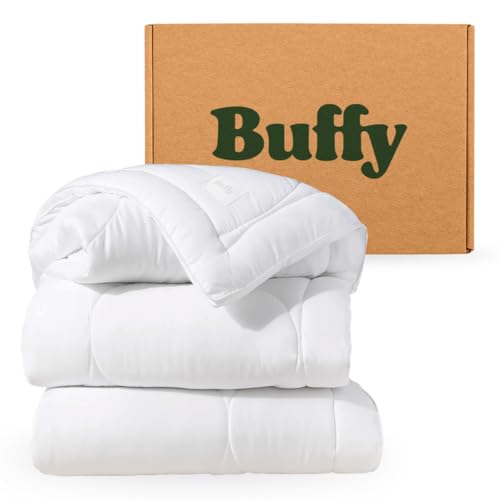
- Best overall for guest rooms: Buffy Cloud Comforter, Full/Queen — Check on Amazon
- Egyptian Bedding Siberian Goose Down Comforter, Queen — Check on Amazon
- REST Evercool Cooling Comforter, Full/Queen — Check on Amazon
- APSMILE All Season Down Comforter, Queen — Check on Amazon
See 2 more Amazon options
- Pacific Coast Goose Feather Down Fiber Comforter, Queen — Check on Amazon
- Serta Goose Feather Down Fiber Comforter, Queen — Check on Amazon
Read the full guide ↓
Disclosure: As an Amazon Associate, topratedkitchenware.com earns from qualifying purchases. Links to Amazon on this page are affiliate links; they cost you nothing extra. Listing details such as price and availability change often, so check the current Amazon listing before you buy.
A guest room comforter has the strangest job in the house. It is slept under perhaps thirty nights a year, by people whose sleep habits you mostly do not know — a mother-in-law who runs cold, a college friend who kicks off anything heavier than a sheet, a grandchild who spills cocoa — and yet it is judged more harshly than the comforter on your own bed, because it is the one your guests remember your house by. Two hundred dollars is a generous budget for that job, and this guide spends it the way a good host thinks: one comforter, in the queen size every price below refers to, that feels like a hotel bed the moment a guest pulls it up, warms the broad middle of sleepers rather than one person’s exact preference, and goes back into the closet or the wash between visits without drama or a dry-cleaning bill you resent.
The six picks below are the same six comforters our base guide verified at this budget — genuine goose down with a stated fill power, premium down-alternative, a specialist cooling comforter, hotel-supplier feather fiber and one remarkable value pick — but every one is re-judged here through the guest-room lens. That lens changes the ranking logic. Loft still matters, because a made guest bed is read by its loft before a guest touches it. But washability between visits matters more than on your own bed, an all-season warmth that suits most guests matters more than the perfect warmth for you, and the honest arithmetic is cost per guest-night: a well-made comforter used thirty nights a year for six years spreads its cost across a great many stays, while a cheap insert you replace twice is the expensive option wearing a bargain costume.
A note on prices before you start, because comforter pricing on Amazon changes often and guest-room shopping is usually done in a hurry before a visit. The same listing can show very different pricing for a twin and a queen, a coupon can vanish within a week, and two picks below make sense only when they are discounted. Check the current price on Amazon for the queen size before you order. If a pick shows above $200 for the queen on the day you shop, move to the next row — and if guests arrive Friday, order the pick in budget today rather than the straddler you hope will drop.
In this guide
Quick Picks
Short on time, or comparing several options at once? Each row below names a guest-room situation and the product that suits it, with a link to the listing. Pricing references are to the queen size — check the current price on Amazon.
| Guest-room need | Pick | Why it stands out for guests | Link |
|---|---|---|---|
| Best overall for guest rooms | Buffy Cloud Comforter, Full/Queen | Hotel-smooth lyocell shell, machine washable between every visit | Check on Amazon |
| Best luxury impression | Egyptian Bedding Siberian Goose Down Comforter, Queen | Maker-stated 750 fill power and 60 oz of goose down — the made bed guests photograph | Check on Amazon |
| Best for warm guests | REST Evercool Cooling Comforter, Full/Queen | Cool-to-the-touch shell for the guest who always runs hot; buy it on sale | Check on Amazon |
| Best balanced natural fill | APSMILE All Season Down Comforter, Queen | 46 oz of down and feather fiber in an organic cotton cover, genuinely all-season | Check on Amazon |
| Best hotel pedigree | Pacific Coast Goose Feather Down Fiber Comforter, Queen | From the brand that supplies hotel bedding, right at the budget line | Check on Amazon |
| Best value | Serta Goose Feather Down Fiber Comforter, Queen | Real goose feather fiber and a cotton cover at the value end of this tier | Check on Amazon |
How These Picks Were Chosen
The first filter was the budget itself, applied to the queen size. Every product below is a real Amazon listing whose queen or Full/Queen size sells at or under $200 in the United States — at its regular price, or, in one clearly flagged case, at the sale prices it returns to again and again. Anything whose queen size lives permanently above the line was left out, however good it might be: Brooklinen’s all-season down comforter, for example, is a fine product whose Full/Queen size sits well above this tier on Amazon, and it belongs to a different guide. Where a pick only falls inside this budget when it is discounted, the review says so plainly.
The second filter is this variant’s own, and it is a host’s filter rather than a sleeper’s. We asked four questions of every candidate. Does it read as a hotel bed when the room is made — because guests form their impression at the doorway, from the loft and the drape? Is its warmth the broad middle — an all-season weight a cold sleeper can top with a throw and a warm sleeper can push to their waist — rather than an extreme tuned to one body? Can it be washed at home, or at minimum aired and fluffed back to freshness, between one guest leaving and the next arriving? And does its cost make sense divided by guest-nights rather than calendar years, the honest way to price anything in a spare room? Picks that failed the warmth question — the winter-weight and summer-weight variants several of these brands also sell — were excluded even when they shared a listing with a pick.
We did not sleep under these comforters ourselves, and we certainly did not poll our guests. We read the maker listings and specification pages, compared fill types, fill weights, fill-power claims, shell fabrics and dimensions, and cross-checked prices against retailer listings and deal coverage. Warmth words — all-season, medium warmth, extra fluffy — are maker descriptions, and we treat them that way throughout: a comforter’s real warmth is set by how much fill is inside it and how lofty that fill is, not by the adjectives on the box. Fill power and fill weight are explained in plain terms further down, because at this price they are the two numbers that separate a genuine bargain from an expensive disappointment — and in a guest room they decide whether one comforter can serve everyone who visits.
One thing we checked carefully was what each fill actually is. At $200 the listings mix four different things — cluster down, down fiber, feather fiber and synthetic down-alternative — and they are not interchangeable, however similar the photos look. Each review names the fill precisely as the maker states it, including the percentages where the maker publishes them. In a guest room the distinction has a practical edge: you will not be there at 2 a.m. to hand over a different blanket, so the fill’s behavior — loft, weight, breathability, how it recovers after months in a closet — has to be right on its own.
The 6 Best Comforters for Guest Rooms Under $200
Buffy Cloud Comforter, Full/Queen
Who it suits: Hosts who want the guest bed to feel like a good hotel’s — smooth, lofty, neutral — and who wash the bedding after every visit without thinking twice about it.
The Cloud is the comforter that built Buffy’s name, and it earns the hero spot in a guest room for a reason beyond its sleeping qualities, excellent as they are: it goes in a home washing machine. Guest bedding lives a different life from your own — washed after a weekend, folded into a closet for six weeks, and expected to come out smelling like nothing and looking like a hotel. The Cloud’s shell is eucalyptus lyocell — listed as rayon from eucalyptus on the Amazon page — which feels smooth and cool rather than papery, releases closet staleness in a normal wash, and dries without the clumping drama of washed down. The fill is layers of fiber made from recycled plastic bottles; Buffy says each comforter keeps about 50 bottles out of landfill, a maker claim, but the fill itself is real, lofty and evenly distributed in stitched quilting that survives repeated laundering.
The guest-facing numbers are equally well judged. The Full/Queen measures 90 by 90 inches — enough drape on a queen guest bed to look deliberate rather than skimpy — it is an all-season weight, the correct default for a room whose occupants change, and it has corner tabs for a duvet cover. The listing is sold by Buffy Inc. itself on Amazon — check the current price on Amazon for the Full/Queen size. Run the guest-night arithmetic in your head: thirty guest-nights a year over six years spreads the cost of a durable, washable comforter across a great many stays, for the bed your visitors will describe to other people.
- Eucalyptus lyocell shell that feels cool and smooth, not plasticky — the hotel touch.
- Machine washable at home, so every guest gets a genuinely fresh bed.
- Recycled-bottle fiber fill with corner tabs for duvet-cover use.
Honest limitation: It is a synthetic fill, however good: it will not match real down’s warmth-to-weight ratio, and a genuinely cold guest in an unheated spare room in January will want the extra blanket you keep folded nearby — the heavier winter version costs more than this budget allows in queen. Note also the size trap on the listing: the King/Cal King sits above this guide’s budget, so make sure the Full/Queen option is the one in the cart.
Choose it if your guest room hosts often and the bedding turns over with every visit. Skip it if your guests are mostly down devotees who will notice the difference, or your spare room is unheated and winter guests are the norm.
Egyptian Bedding Siberian Goose Down Comforter, Queen
Who it suits: Hosts furnishing a guest room meant to impress — the in-law suite, the room your parents judge you by — where the made bed’s loft is half the point.
This is the genuine article: a queen comforter filled with Siberian goose down at a maker-stated 750 fill power, with 60 ounces of fill in the queen size — a generous fill weight that explains the loft reviewers keep remarking on. The cover is 600 thread count 100 percent Egyptian cotton, the construction is baffle box, which gives the down room to loft instead of being sewn flat, and the finished size is a true 90 by 90 inches. In a guest room that specification list translates into one visible thing: a bed that mounds. Where a thin insert lies apologetically flat under a duvet cover, 60 ounces of high-fill-power down stands up and catches the light, and that first doorway impression — this room was prepared for me — is what guests carry home. Mattress Clarity’s reviewers, who did sleep under it, called it one of the loftiest, most luxurious down comforters they had tried. Reviewer coverage has positioned the queen well inside this budget, so check the current price on Amazon before you order — it sits deep inside this tier for specs that usually belong to a higher one.
The guest-room caveats are about care rather than comfort. Egyptian Bedding is an Amazon-native label, not a heritage down house: its thread-count and origin language is marketing-rich, its customer service is not Brooklinen’s, and some owners report the occasional escaping feather, the classic down-comforter tax. Down also asks more of a host between visits: it wants airing and a proper fluff to recover loft after weeks in a closet, it does not take kindly to a small home machine, and the guest with a feather sensitivity — one you may not know has one — is better served by the Buffy above. Buy it for the fill and the impression, inspect it on arrival, and fluff it properly before the first guest judges the loft. Judged purely on the down you get for this tier, and on doorway drama, nothing else in this guide is close.
- Maker-stated 750 fill power goose down — the highest claim in this guide.
- 60 oz fill weight in queen, in a 600 TC Egyptian cotton baffle-box shell.
- Reviewer-tested loft, positioned well inside this tier for the queen.
Honest limitation: An Amazon-native brand with marketing-heavy copy and occasional feather leakage reported; the down claims are the maker’s, its positioning in this tier rests on reviewer coverage rather than a stable list figure, and down is the highest-maintenance fill here between visits.
Choose it if the guest room is a showpiece and your guests are down people. Skip it if you need bedding that washes at home after every visit, or a guest with a feather sensitivity is on the calendar.
REST Evercool Cooling Comforter, Full/Queen
Who it suits: Hosts whose spare room runs warm — the upstairs room, the one over the garage, the south-facing one — or whose regular guests are the people who open a window in November.
Every host knows this guest: the one who is too hot in every bed ever offered, who asks about the thermostat at dinner and sleeps with a foot outside the covers. An ordinary all-season comforter is the wrong tool for them, and a rotating guest room meets this guest sooner or later. The Evercool is a different species from the other five picks: a lightweight cooling blanket-comforter whose proprietary Evercool shell fabric is designed to feel cool on contact and stay that way, wrapped around a light plant-based fiber fill. It measures 90 by 90 inches in Full/Queen, weighs about 5.5 pounds — far less than the down picks — is machine washable, which matters for between-visits turnover, and carries Good Housekeeping bedding awards, which the listing makes much of. REST does not publish a Q-Max coolness figure, a point in its favor for honesty: the Q-Max numbers rival cooling brands quote describe a fraction of a second of first contact, not the temperature under the quilt at 3 a.m. What owners report is simpler — it feels cool when you get in and does not turn into a sauna by morning.
Pricing needs the honest treatment this guide gives straddlers, and in a guest room the straddle has a scheduling edge. The Evercool’s list positioning on Amazon sits above this budget, and it is also sold through REST’s own site — but it is discounted so reliably that it regularly falls inside this tier. Check the current price on Amazon before you order. Our advice is printed here rather than buried: this pick belongs in a $200 guide only at its sale price, so buy it when a sale is live and well before the visit, never in the week the guests arrive, when you will pay list and resent it. Bought on sale, it is the one purpose-built answer in this guide for the guest who runs hot — and hosts with a warm spare room may fairly treat it as the room’s main comforter rather than a specialty layer, with a folded blanket in the closet for the rare cold sleeper.
- Purpose-built cooling shell that feels cool on contact, all night design.
- Lightweight at about 5.5 lb in queen — no heavy, trapping feel for warm guests.
- Machine washable, and a repeat Good Housekeeping award winner per the maker.
Honest limitation: Its list positioning sits above this guide’s budget; it only qualifies on sale, and it is a buy-on-sale-only pick in the strict sense — and a cold guest will find a 5.5 lb cooling blanket far too light, so it cannot be the room’s only layer in winter.
Choose it if your spare room runs warm or your regular guests run hot, and a sale price is live. Skip it if the listing is showing full price, or one all-purpose comforter has to serve every guest in every season.
APSMILE All Season Down Comforter, Queen
Who it suits: Hosts who want one natural-fill comforter that genuinely splits the difference — warm enough for a January parent, breathable enough for a July cousin — without a seasonal swap.
The guest-room warmth problem is that you are not choosing for a sleeper, you are choosing for a population. APSMILE’s all-season queen is the pick in this guide engineered most directly at that problem. APSMILE is a factory brand that sells an enormous range of feather and down bedding, and its all-season queen is the sensible middle of that range: 90 by 90 inches, 46 ounces of down and feather fiber fill — the medium of its three warmth levels, aimed at year-round use in a normally heated home — and a 100 percent organic cotton cover, with corner tabs for a duvet cover and OEKO-TEX certification claimed on the listing. The brand markets the line on high fill power — 750 is the figure attached to its hotel-collection comforters, a maker claim — but for guest duty it is the 46-ounce middle fill weight that matters, because it is the weight a normally heated spare room wants in both January and July. Check the current price on Amazon for the queen — recent listings and deal coverage have positioned it comfortably inside this budget.
Read the fill description the way this guide teaches: this is down and feather fiber — processed down and feather material — not the intact clusters of the Egyptian Bedding pick above, so expect a flatter, more uniform loft and a comforter a touch heavier for its warmth. In a guest bed that trade is often a feature: the made bed looks smooth and tailored rather than billowy, the fill does not migrate into corners over a season of storage, and a cotton cover that does not rustle is a genuine kindness to a light-sleeping guest. The listing also claims machine washability, which most feather products refuse — verify the care label on arrival, but if it holds, this is the natural-fill pick that asks least of the host. One warning, carried from the base guide: APSMILE’s many near-identical listings make it easy to order the wrong warmth level, and here the wrong warmth level is the whole ballgame — confirm “all season” and “queen” before you pay.
- 46 oz of down and feather fiber in a 100 percent organic cotton cover.
- The true middle warmth level — the one-comforter answer for rotating guests.
- OEKO-TEX certification claimed; corner tabs for cover use; positioned in the middle of this tier.
Honest limitation: Down and feather fiber is not cluster down — loft and lightness are a step below the Siberian pick — and APSMILE’s lookalike listings make it easy to order a winter or summer weight by mistake.
Choose it if you want one natural-fill comforter that serves every guest without a seasonal swap. Skip it if maximum made-bed loft is the priority, or you tend to grab the first listing variant without checking it.
Pacific Coast Goose Feather Down Fiber Comforter, Queen
Who it suits: Hosts who want the guest bed to have the exact thing hotels use — because this is the consumer line of the company that supplies them.
Pacific Coast Feather Company is the quiet incumbent of this category: a long-running American down processor whose bedding supplies hotel programs, selling the same constructions direct on Amazon. There is a pleasing literalness in putting it in a guest room: the “hotel feel” hosts chase is, in a fair number of actual hotels, this supply chain. Its all-season queen is a 90 by 90 inch insert filled with white goose feather and down fiber — independent spec roundups put the down fiber share at about 50 percent — with baffle-box construction and no fewer than eight corner and center loops, the most duvet-cover attachment points in this guide. That last detail is a guest-room feature, not a footnote: a guest bed is made and remade by the host, often in a hurry, and an insert that stays anchored to its cover instead of bunching into a corner is the difference between a bed that looks prepared and a bed that looks slept in before anyone arrives. Recent listings have positioned the queen right at the top of this guide’s tier, exactly on its ceiling: no headroom, and worth saying plainly.
Two warnings ride with this pick, and both matter more on a deadline. First, its positioning sits exactly at the ceiling, so a small upward drift puts the queen over budget — check the current price on Amazon before ordering. Second, one recent crawl of this listing showed no featured offer available, which is why this guide’s publisher notes put the featured-offer check first: if there is no live featured offer when you shop, do not force it — the Buffy above is in budget today. What that top-of-tier positioning buys, when the offer is live, is process rather than novelty: a specialist down house washes, sorts and sterilizes its fill to a standard the no-name listings do not describe, and owners tend to keep Pacific Coast bedding for years, refluffing rather than replacing — exactly the service pattern a guest room wants, since the comforter spends most of its life stored and must come back to loft on demand. Nothing about it is fashionable. It is the safest pair of hands in this guide, provided the listing cooperates on the day.
- Decades-old down specialist that supplies hotel bedding programs.
- Eight corner and center loops — the best duvet-cover anchoring here, for a bed that stays made.
- Goose feather and down fiber fill with baffle-box construction.
Honest limitation: It sits exactly at the budget line with no room for price drift, and one recent crawl showed no featured offer on the listing — check availability and the live price first, and have a fallback ready if guests are coming soon.
Choose it if proven processing, durability and the literal hotel supply chain matter more than features. Skip it if the live queen price has drifted above $200, the featured offer is missing, or you need it this week and cannot risk the check.
Serta Goose Feather Down Fiber Comforter, Queen
Who it suits: Hosts furnishing a perfectly decent guest room on a real-world budget — the room that hosts twice a year and does not need a premium centerpiece to be welcoming.
Cost-per-guest-night honesty cuts both ways, and this is the pick that proves it. A branded comforter, made for Serta by Blue Ridge Home Fashions, filled with 90 percent white goose feather fiber and 10 percent white goose down fiber inside a 100 percent cotton cover: the queen is 90 by 90 inches, sewn in boxes to keep the fill spread, rated by the maker for all-season medium warmth, and labeled hypoallergenic by the maker — a label we repeat as the maker’s, since feather products are not the obvious choice for the truly feather-sensitive, and a host should not promise a sensitive guest otherwise. It sits at the value end of this tier, and Amazon’s sale cycle is part of the story: deal coverage and buying guides have repeatedly shown the Full/Queen all-season discounted well below its usual positioning. Check the current price on Amazon. For a guest room hosting only a handful of nights a year, that value positioning spreads very thinly across each stay — and the guest under it sleeps under real goose feather fill in a cotton cover, not a swishy microfiber insert, which is more than most spare beds in most houses offer.
The compromises are equally clear, and one is specific to guest duty. Feather fiber is the heaviest, least lofty fill in this guide — the comforter feels substantial rather than cloud-like, the made bed looks neat rather than dramatic, and an occasional quill sensation through a thin cover is possible, which a duvet cover mostly solves. Care is the sharper cost: the listing’s guidance is dry clean only. On your own bed that is an errand; in a guest room it is a scheduling problem, because a comforter that cannot be home-washed cannot be turned around in the 48 hours between one guest leaving and the next arriving. The practical pattern is a washable duvet cover washed after every visit, the comforter aired on the line, and dry cleaning on a planned cycle, not an emergency one. Judged on warmth for this tier — and per guest-night — a cotton-covered goose feather comforter at the value end has no rival here, and even at its usual list positioning it sits below the other picks in this guide while remaining a real, natural-fill product.
- Real goose feather and down fiber in a 100 percent cotton cover.
- Positioned at the value end of this tier; check the current price on Amazon.
- Licensed brand made by an established bedding manufacturer.
Honest limitation: Dry clean only — the one pick here that cannot be home-washed between back-to-back guests — and a feather-fiber fill is heavier and flatter than down, with the possibility of feeling a quill through the cover without a duvet cover over it.
Choose it if the guest room hosts occasionally and value per guest-night is the honest metric. Skip it if your guest calendar runs back-to-back and home washing between visits is non-negotiable.
Comparison Table
| Product | Fill (as maker states) | Best guest-room use | Link |
|---|---|---|---|
| Buffy Cloud Comforter, Full/Queen | Recycled fiber, lyocell shell | Washable premium down-alternative — check price on Amazon | Check on Amazon |
| Egyptian Bedding Siberian Goose Down, Queen | Goose down, stated 750 fill power, 60 oz | Maximum real-down loft and impression — check price on Amazon | Check on Amazon |
| REST Evercool Cooling Comforter, Full/Queen | Plant-based fiber, cooling shell | Warm rooms and hot guests — buy on sale, check price on Amazon | Check on Amazon |
| APSMILE All Season Down Comforter, Queen | Down and feather fiber, 46 oz | One all-season natural fill for every guest — check price on Amazon | Check on Amazon |
| Pacific Coast Goose Feather Down Fiber, Queen | Goose feather and down fiber | Hotel-grade processing, positioned at the top of this tier — check price on Amazon | Check on Amazon |
| Serta Goose Feather Down Fiber, Queen | 90% goose feather fiber, 10% down fiber | Value natural fill at the low end of this tier — check price on Amazon | Check on Amazon |
How to Choose a Comforter for a Guest Room Under $200
- Choose the warmth for the population, not a person. All-season is the guest-room default because your guests rotate. Winter-weight delights one cold sleeper and roasts three others; keep a folded throw in the room for the cold tail of the distribution instead.
- Decide the between-visits routine before you buy. If bedding is washed after every guest, the Buffy and the Evercool are built for your machine. If you use a washable duvet cover and air the insert, the down and feather picks open up — except the dry-clean-only Serta, which needs a planned cleaning cycle, not a turnaround wash.
- Buy loft for the doorway, fill for the night. Guests judge the room standing up. A high-loft made bed (the Siberian) signals preparation; but check the fill weight behind the loft — 60 oz serves a sleeper, a photogenic 30 oz does not.
- Read fill power and fill weight together. Fill power is loft per ounce; fill weight is how many ounces you get. Either number quoted alone is marketing, and on a guest bed you cannot compensate at midnight with your own preferences.
- Check the down percentage, not the product name. “Goose down comforter” on a listing can legally sit above a fill that is mostly feather fiber. The reviews above quote the maker’s stated percentages wherever they are published — and ask any regular guest about feather sensitivity before a feather fill becomes the house default.
- Buy the queen price, not the headline price. Comforter listings lead with the twin price. Every figure in this guide is the queen or Full/Queen; confirm the size selector shows queen before comparing anything — and note the Buffy’s king size sits above this budget.
- Count the loops if you use a duvet cover. A guest bed is remade often, by you, quickly. Corner tabs are the minimum; the Pacific Coast’s eight loops are what stops an insert migrating inside its cover between making and arrival.
- Do the guest-night arithmetic. Think of the cost spread across realistic guest-nights over the comforter’s life, not across years on the calendar. It reverses several intuitions: a premium washable pick can be the economical option for a busy guest room, and the value-priced Serta the rational one for a room used twice a year.
- Treat sale prices as the real price for straddlers — but buy ahead. The Evercool only qualifies on sale and the Pacific Coast sits exactly at the line. Both reward a host who buys in a calm month, not in the week the guests land.
The Hotel Test: What Guests Actually Notice
Hosts furnishing a guest room tend to shop for the sleeper; hotels furnish for the impression, and the impression is formed in about four seconds at the doorway. What reads as “hotel” is not thread count or brand. It is loft — a bed that mounds slightly under its cover instead of lying flat; whiteness or a calm neutral, which is why five of these six picks are at their best inside a plain washable duvet cover; and drape, the way a 90 by 90 inch comforter falls past the mattress edge far enough to look intentional. The Siberian wins this test outright on loft, the Pacific Coast was built for the industry that invented it, and the Buffy passes on its lyocell shell’s smoothness. The Serta, honestly, passes it least: feather fiber makes a tidy, flat, perfectly respectable bed, and a host who cares about the doorway moment should accept that trade knowingly.
The second half of the hotel test happens at 3 a.m., and it is about temperature neutrality. Hotels do not tune a room to a guest; they provide a medium layer and let the guest adjust at the margins — a folded blanket, a window that opens. That is exactly this guide’s all-season logic: the APSMILE’s 46-ounce middle weight is the hotel weight, and the host’s job is the margins — leave a throw, leave the spare blanket visible, and if your spare room is the warm one, the Evercool converts its worst feature into the thing a hot-sleeping guest writes home about. What no hotel does is give a guest a winter-weight duvet in a heated house and call it luxury; warmth you cannot escape is not hospitality.
Between Visits: Washing, Airing and Storing
A guest comforter spends most of its life waiting — folded in a closet, sealed in a storage bag, or sitting made on a bed in a closed room — and how a fill behaves in waiting decides whether the next guest gets a fresh bed or a flat, faintly stale one. This is where the six picks separate. The Buffy and the Evercool wash at home and dry without ceremony: strip, wash, dry, remake or store. They suit hosts whose guest room turns over monthly or more. The down and feather-fiber picks ask for a different rhythm: a washable duvet cover takes the per-visit washing, the insert is aired and shaken back to loft before the room is made, and cleaned only occasionally, on the maker’s terms. The Serta’s dry-clean-only label is the extreme case: plan its cleaning like a seasonal chore, the way you would a coat, and never promise yourself a 48-hour turnaround you cannot keep.
Storage is where guest comforters quietly die. Down and feather fills tolerate compression badly over months: a vacuum bag that is brilliant for a two-week move will flatten 60 ounces of loft into a sad mat over a winter, and some of that loft never returns. Store the down picks loose, in a breathable cotton bag, on a shelf — the hidden price of the Siberian’s doorway drama. The synthetics forgive tight closets, one more reason the Buffy suits small homes. Either way, budget ten minutes before each visit for the fluff-and-air ritual: shake the comforter out and let it breathe on the made bed for an afternoon, and it will present as if it had been waiting attentively rather than suffocating in a bag.
Cost Per Guest-Night: The Honest Arithmetic
Guest-room purchases are usually judged by the wrong denominator. A comforter is not expensive or cheap per year; it is expensive or cheap per night somebody actually sleeps under it, and spare rooms vary so wildly in use that the same purchase can be extravagant in one house and trivial in another. Run your own numbers. A busy guest room might host thirty nights a year; over a conservative six-year life that is 180 nights, which spreads the cost of any pick in this guide — the washable Buffy, the balanced APSMILE, even the top-of-tier Pacific Coast — thinly across every stay. At that level of use the differences between picks matter far less than how guests sleep — buy the comforter your guests will sleep best under.
A quiet guest room inverts the conclusion. At six guest-nights a year, the same six-year life is only 36 nights, so a premium pick is spread across far fewer stays, while the value-positioned Serta — especially when it is discounted — still puts real goose feather fill and a cotton cover on the bed for the low end of this tier. That is not a downgrade; it is the correct allocation, and the savings can go toward the good pillows the quiet room’s guests will notice more. The one false economy is the very cheap insert: a bargain microfiber comforter replaced three times in six years ends up costing more over its life than a durable value pick bought well, and sleeps worse every night of its life. Low cost per night is a property of lasting things bought at the right point in their tier.
Common Buying Mistakes
- Buying a winter-weight comforter for a heated guest room because it sounded more luxurious, then hosting a year of guests who sleep on top of it.
- Tuning the guest bed to your own sleep temperature instead of the all-season middle your rotating guests need.
- Comparing a twin headline price against a rival’s queen price and concluding the first brand is cheaper.
- Buying on fill power alone and receiving a beautifully graded wisp of down — always find the fill weight.
- Believing the title word “down” without reading the fill percentages in the specification table.
- Ordering a dry-clean-only comforter for a guest room that turns over weekly, with no cleaning plan between guests.
- Vacuum-bagging a down comforter for a whole season and wondering why the loft never came back.
- Paying list price for the Evercool in the week guests arrive, when its sales recur all year.
- Judging vacuum-packed down in its first hour, before it has had a day of airing and fluffing to reach full loft.
- Skipping the duvet cover on a feather-fiber comforter, then blaming the comforter for the occasional quill.
Final Recommendation
- Most guest rooms: Buffy Cloud Comforter, Full/Queen.
- Guest room as showpiece: Egyptian Bedding Siberian Goose Down Comforter, Queen.
- Warm room or hot-sleeping guests: REST Evercool Cooling Comforter, Full/Queen — on sale only.
- One warmth for every guest: APSMILE All Season Down Comforter, Queen.
- Hotel pedigree: Pacific Coast Goose Feather Down Fiber Comforter, Queen.
- Rarely used guest room: Serta Goose Feather Down Fiber Comforter, Queen.
Our top two are the Buffy Cloud for most hosts and the Egyptian Bedding Siberian for hosts whose guest room is meant to make an impression, because they answer the two searches that bring shoppers to this budget: the washable, hotel-smooth comforter that makes turnover effortless, and the genuine high-loft down comforter that makes a guest feel expected. If your spare room runs warm, both step aside for the Evercool at its sale price; if it hosts twice a year, the honest pick is the value-positioned Serta, with the savings spent elsewhere in the room. None of these will out-spec a higher-tier flagship on provenance, and they do not try to. They are the honest $200 layer, re-judged for a bed you make for other people: check the queen size is selected, check the current price on Amazon, count your guest-nights, and buy the fill your hosting pattern — not your own sleep — actually needs.
Frequently Asked Questions
What warmth level is best for a guest room?
All-season, almost always. Your guests rotate, and their preferences average out to the middle: a medium fill weight — the APSMILE’s 46 oz is the reference here — in a normally heated room, with a folded throw in the room for the cold sleeper and a window or fan for the warm one. Winter-weight and summer-weight comforters are tuned to one body; a guest room has a population.
Can you really buy a good down comforter for a guest room under $200?
Yes — in queen size, from Amazon-native and hotel-supplier brands. The Egyptian Bedding Siberian pairs a maker-stated 750 fill power with 60 oz of fill and sits well inside this tier, and Pacific Coast sells its hotel-line feather and down fiber queen at the top of this tier. Check the current price on Amazon for either. What you give up versus higher-tier brands is provenance, trials and service, not necessarily warmth.
How often should guest bedding be washed?
The duvet cover and sheets after every guest; the comforter itself on its maker’s terms. The Buffy and the Evercool can be home-washed after every visit if you prefer, which is their practical advantage. Down and feather inserts under a washed cover need airing and fluffing between guests and a proper clean only occasionally — and the Serta in this guide is dry clean only, so plan that clean seasonally rather than between back-to-back guests.
Is down or down-alternative better for guests?
For the guest, down wins on loft and the made-bed impression; for the host, a good down-alternative wins on washing, storage tolerance and never having to ask a visitor about feather sensitivity. At $200 the best of both exist — the Siberian for down, the Buffy Cloud for alternative — so decide by your turnover: frequent guests favor the washable pick, occasional honored guests favor the down.
Why does the guest comforter look flat after months in the closet?
Compression and time. Down and feather fills stored tightly — especially vacuum-bagged — lose loft, and some never fully returns. Store them loose in a breathable bag, then give the comforter 24 to 48 hours of airing, shaking and ideally a low-heat tumble with dryer balls before the visit. Judge it on the day the guest arrives, not the hour you pull it out.
Is a cooling comforter worth keeping for guests?
If your spare room runs warm or a regular guest runs hot, yes — a purpose-built cooling shell like the Evercool’s works on contact feel as well as insulation, and it converts the room’s worst feature into a kindness. It is a summer-weight product, though: keep a real blanket in the room for cold sleepers, and never pay its list positioning when its sales recur — check the current price on Amazon.
Should I use a duvet cover on a guest comforter?
Yes, and in a guest room it is close to mandatory. The cover is what gets washed after every visit, which is what lets a dry-clean-only or occasionally-cleaned insert stay fresh for years; it softens the occasional feather quill on the feather-fiber models; and a plain white or neutral cover is most of the hotel look by itself. Tie or clip the insert’s corner loops to the cover’s ties — the Pacific Coast’s eight loops exist precisely because a migrating insert is the most common complaint about cover use. The Buffy and the Evercool work uncovered, but a cover still extends their life and lets you change the room’s look for the price of a sheet set.
What size comforter fits a queen guest bed?
A standard queen comforter measures about 90 by 90 inches, which is what most picks here are; Full/Queen sizes are the same product in these ranges. On a deep mattress, 90 inches leaves a modest side drape — if you want the hotel overhang, look for oversized queen models around 98 inches square, and check the size selector twice before ordering, because king pricing is quoted on the same pages and the Buffy’s king sits above this guide’s budget.
