Where to buy
Check the latest price, availability and delivery on Amazon. Orders are placed on Amazon. We may earn a commission from qualifying purchases.
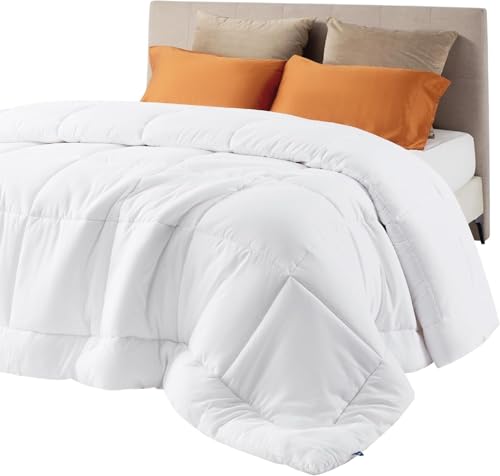
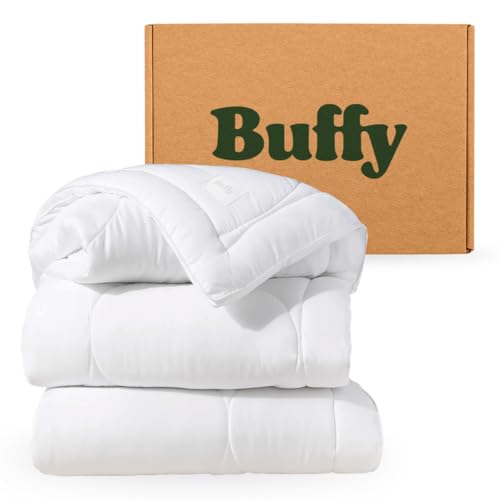
- Best overall: Buffy Cloud Comforter, Full/Queen — Check on Amazon
- Egyptian Bedding Siberian Goose Down Comforter, Queen — Check on Amazon
- REST Evercool Cooling Comforter, Full/Queen — Check on Amazon
- APSMILE All Season Down Comforter, Queen — Check on Amazon
See 2 more Amazon options
- Pacific Coast Goose Feather Down Fiber Comforter, Queen — Check on Amazon
- Serta Goose Feather Down Fiber Comforter, Queen — Check on Amazon
Read the full guide ↓
Disclosure: As an Amazon Associate, topratedkitchenware.com earns from qualifying purchases. Links to Amazon on this page are affiliate links; they cost you nothing extra. Listing details such as price and availability change often, so check the current Amazon listing before you buy.
A small bedroom changes the comforter question completely. In a big room, a comforter is one purchase among many: there is a linen closet for the winter spare, a guest bed for the overflow, and floor space for furniture that does some of the visual work. In a small room there is none of that. There is one bed, and the bed is most of the room — which means the comforter on it is the largest single surface anyone sees, the layer you sleep under in every season, and, when it is not on the bed, a bulky object that has to live somewhere in a home with nowhere spare. One comforter has to do every job, and it has to do them all in about ninety square inches of closet.
That is why $200 is such a useful budget here. It is the first price at which a single comforter can honestly be an all-year, wash-at-home, good-looking answer rather than a seasonal compromise: genuine goose down with a stated fill power appears, premium down-alternative brands sell their flagships, cotton shells replace swishy microfiber, and one specialist cooling comforter joins the list. Every pick in this guide is judged in the queen size — the Full/Queen size where a brand combines the two — because comforter pricing climbs by size and a smaller size quoted in a queen guide helps nobody. If your small room runs a full or twin bed, check price on Amazon for that size; use the queen size as your reference point when you compare.
For most small bedrooms we would begin with the Buffy Cloud, the washable down-alternative that looks finished without a cover and asks nothing of a home with no linen closet. If you want actual down — the lightness, the loft, the way it compresses into a fraction of the storage space a synthetic needs — the Egyptian Bedding Siberian is the genuine article at a surprisingly accessible position in this tier. Below you will find a quick picks table, detailed notes on each of the six, a comparison table, a buying checklist written for small rooms, the mistakes small-bedroom shoppers make most at this price, and answers to the questions that come up again and again.
In this guide
Quick Picks
Short on time, or comparing several options at once? Each row below names a buyer type and the product that suits it, with a link to the listing. All picks are shown in queen size — check price on Amazon.
| Buyer type | Pick | Why it stands out | Link |
|---|---|---|---|
| Best overall | Buffy Cloud Comforter, Full/Queen | Washes at home and looks finished uncovered — one comforter, every job | Check on Amazon |
| Best real down | Egyptian Bedding Siberian Goose Down Comforter, Queen | Stated 750 fill power down that packs down small when stored | Check on Amazon |
| Best for hot sleepers | REST Evercool Cooling Comforter, Full/Queen | Cool-to-the-touch and thin to store; buy it on sale | Check on Amazon |
| Best down-and-feather blend | APSMILE All Season Down Comforter, Queen | 46 oz of down and feather fiber in an organic cotton cover | Check on Amazon |
| Best hotel pedigree | Pacific Coast Goose Feather Down Fiber Comforter, Queen | Hotel-supplier processing and eight cover loops, right at the budget line | Check on Amazon |
| Best value | Serta Goose Feather Down Fiber Comforter, Queen | Real goose feather fiber and a cotton cover at the value end of this guide | Check on Amazon |
How These Picks Were Chosen
The first filter was the budget itself, applied to the queen size. Every product below is a real Amazon listing whose queen or Full/Queen size is positioned at or under $200 in the United States — check the current price on Amazon, since listings change. Anything whose queen size sits well above this budget was left out, however good it might be: Brooklinen’s all-season down comforter, for example, is a fine product positioned well above this tier, and it belongs to a different guide. In one clearly flagged case, a pick only fits this budget when it is discounted, and the review says so plainly.
The second filter was the small bedroom itself, and it eliminated a different set of products. A comforter for a small room has to pass three tests a big-house comforter never faces. It must be genuinely all-season, because there is no closet holding a summer quilt and a winter duvet to rotate between. It must store small or not need storing at all, because the space under the bed and the top shelf of the wardrobe are already spoken for. And it must look right uncovered or behave inside a duvet cover, because in a room where the bed fills the view, the comforter’s drape and surface are effectively the room’s décor. Picks that failed those tests — winter-weight-only quilts, dry-clean divas with no compensating virtue, inserts that bunch and wander inside a cover — were marked down or left out.
We did not sleep under these comforters ourselves. We read the maker listings and specification pages, compared fill types, fill weights, fill-power claims, shell fabrics and dimensions, and cross-checked specifications against retailer listings and other coverage. Warmth words — all-season, medium warmth, extra fluffy — are maker descriptions, and we treat them that way throughout: a comforter’s real warmth is set by how much fill is inside it and how lofty that fill is, not by the adjectives on the box. Specifications were checked the slow way, on the maker’s own Amazon listing where one could be read and otherwise across independent sources; where the evidence is thinner than we would like, the review says so openly rather than papering over it, and the live listing is the final word on the day you buy — check the current price on Amazon there.
One thing we checked carefully was what each fill actually is. At $200 the listings mix four different things — cluster down, down fiber, feather fiber and synthetic down-alternative — and they are not interchangeable, however similar the product photos look. Each review names the fill precisely as the maker states it, including the percentages where the maker publishes them, so you know whether you are buying down, feathers, or polyester wearing a down costume. In a small room the distinction has a practical edge, too: cluster down compresses to a fraction of its lofted size in a storage bag, while a synthetic comforter mostly stays the size it is — a fact that matters when the storage bag has to fit under the bed.
The 6 Best Comforters for Small Bedrooms Under $200
Buffy Cloud Comforter, Full/Queen
Who it suits: Small-bedroom owners who want one comforter that does everything — sleeps all year, washes in a home machine, and looks like finished bedding rather than an insert waiting for a cover.
The Cloud is the comforter that built Buffy’s name, and in a small room its virtues compound. The shell is eucalyptus lyocell — listed as rayon from eucalyptus on the Amazon page — which feels smooth and cool rather than papery, and the fill is layers of fiber made from recycled plastic bottles; Buffy says each comforter keeps about 50 bottles out of landfill, which is a maker claim, but the fill itself is real, lofty and evenly distributed in stitched quilting. The Full/Queen measures 90 by 90 inches, it goes in a home washing machine, and it has corner tabs for tying into a duvet cover if you want one. Amazon’s listing is sold by Buffy Inc. itself — check price on Amazon for the Full/Queen size, and check Buffy’s own site as well if you want to compare channels.
For a small room, the decisive facts are the washing and the surface. There is no linen closet in this scenario, which means there is no spare comforter to put on the bed while this one is at a dry cleaner across town — a comforter that washes at home in the morning is back on the bed by night, and that logistics point outweighs most specification differences. The lyocell shell also earns its keep visually: it has a smooth, matte drape that reads as a finished bedspread, so you can skip the duvet cover entirely and save both the money and the closet shelf a rotation of covers would have needed. Warm sleepers in heated bedrooms will find the all-season weight plenty; note the size trap on the listing, where the King/Cal King size sits above this guide’s budget — make sure the Full/Queen option is the one in the cart, and check the current price on Amazon for that size.
- Eucalyptus lyocell shell that drapes smoothly and looks finished without a cover.
- Machine washable at home — back on the bed the same day, no spare needed.
- Recycled-bottle fiber fill with corner tabs if you do use a duvet cover.
Honest limitation: It is a synthetic fill, however good: it will not match real down’s warmth-to-weight ratio, it does not compress small for storage the way down does, and very cold sleepers in unheated rooms will want the heavier winter version, which sits above this budget in queen.
Choose it if you want one washable, all-season comforter that is also the room’s best-looking surface. Skip it if you are set on genuine down, or your storage plan depends on a comforter that packs down tiny.
Egyptian Bedding Siberian Goose Down Comforter, Queen
Who it suits: Down purists in small rooms — and small rooms are where down’s storage advantage is worth the most — who know what fill power means and cannot believe a stated 750 fill power is available at this price, with eyes open about the brand behind it.
This is the genuine article: a queen comforter filled with Siberian goose down at a maker-stated 750 fill power, with 60 ounces of fill in the queen size — a generous fill weight that explains the loft reviewers keep remarking on. The cover is 600 thread count 100 percent Egyptian cotton, the construction is baffle box, which gives the down room to loft instead of being sewn flat, and the finished size is a true 90 by 90 inches. Mattress Clarity’s reviewers, who did sleep under it, called it one of the loftiest, most luxurious down comforters they had tried. For specs that usually sit in a higher tier, this pick is positioned deep inside this budget — check price on Amazon before you buy, since the live listing is the final word.
The small-bedroom case for down is compression. Lofted on the bed, this is the fullest-looking comforter in the guide — and in a room that is mostly bed, that deep, hotel-style loft is the décor. Off the bed, genuine down squeezes down to a fraction of that volume in a storage bag, sliding under a bed or onto a wardrobe shelf that would never swallow a synthetic comforter at full size. No other fill in this guide changes size so obligingly between its two jobs. The honest context is the brand: Egyptian Bedding is an Amazon-native label, not a heritage down house, its thread-count and origin language is marketing-rich, and some owners report the occasional escaping feather, the classic down-comforter tax. Buy it for the fill, inspect it on arrival, and air and fluff it properly before judging the loft, because vacuum-packed down needs hours to recover.
- Maker-stated 750 fill power goose down — the highest claim in this guide.
- 60 oz fill weight in queen, in a 600 TC Egyptian cotton baffle-box shell.
- Compresses far smaller than any synthetic here — the storage-friendly luxury.
Honest limitation: An Amazon-native brand with marketing-heavy copy and occasional feather leakage reported; the down claims are the maker’s, and there is no long brand warranty standing behind them.
Choose it if real down loft on the bed and real compression off it are the whole point of the purchase. Skip it if brand pedigree, a sleep trial and painless returns matter more to you than fill specifications.
REST Evercool Cooling Comforter, Full/Queen
Who it suits: Hot sleepers in small, warm rooms — the bedroom that traps the day’s heat, has no room for a fan tower, and makes an ordinary comforter unusable by 2 a.m.
The Evercool is a different species from the other five picks: a lightweight cooling blanket-comforter whose proprietary Evercool shell fabric is designed to feel cool on contact and stay that way, wrapped around a light plant-based fiber fill. It measures 90 by 90 inches in Full/Queen, weighs about 5.5 pounds — far less than the down picks here — is machine washable, and carries Good Housekeeping bedding awards, which the listing makes much of. REST does not publish a Q-Max coolness figure for this fabric, a point in its favor for honesty: the Q-Max numbers quoted by rival cooling brands describe a fraction of a second of first contact, not the temperature under the quilt at 3 a.m. What owners consistently report is simpler — it feels cool when you get in and does not turn into a sauna by morning.
Small rooms run warm: less air volume, a bed that fills most of it, often one window doing all the ventilating. That is the Evercool’s home turf. It also wins the storage test outright — at 5.5 pounds and summer weight, it folds to the smallest package in this guide, the one comforter here that could live in a drawer. Its pricing needs the honest treatment this guide gives straddlers. The Evercool is positioned above this budget at its regular positioning, on Amazon and on REST’s own site — but it is discounted often enough to bring it into this tier. Our advice is printed here rather than buried: this pick belongs in a $200 guide only when it is discounted into the budget, so check the current price on Amazon before you shop and walk away if the listing sits above $200 on the day you look.
- Purpose-built cooling shell that feels cool on contact, all night design.
- Lightweight at about 5.5 lb in queen — folds away smaller than anything here.
- Machine washable, and a repeat Good Housekeeping award winner per the maker.
Honest limitation: Its regular positioning sits above this guide’s budget; it only qualifies when discounted, and cold sleepers will find a 5.5 lb cooling blanket far too light for winter — in a one-comforter home, that seasonality is a real cost.
Choose it if overheating is your actual problem and you can catch it discounted into this budget — check the current price on Amazon. Skip it if you need one comforter to cover winter too, or the listing is showing full price on the day you shop.
APSMILE All Season Down Comforter, Queen
Who it suits: Small-bedroom shoppers who want a real down-and-feather fill in a natural cotton cover at a mid-tier price — the balanced one-comforter answer for a normally heated home.
APSMILE is a factory brand that sells an enormous range of feather and down bedding, and its all-season queen is the sensible middle of that range: 90 by 90 inches, 46 ounces of down and feather fiber fill, and a 100 percent organic cotton cover, with corner tabs for a duvet cover and OEKO-TEX certification claimed on the listing. The brand markets the line on high fill power — 750 is the figure attached to its hotel-collection comforters, a maker claim — and the all-season fill weight is the medium of its three warmth levels, aimed at year-round use in a normally heated home, which is exactly the brief a one-comforter small bedroom sets. It is positioned in the middle of this tier — check price on Amazon for the queen size.
Read the fill description the way this guide teaches: this is down and feather fiber — processed down and feather material — not the intact clusters of the Egyptian Bedding pick above, so expect a slightly flatter, more uniform loft and a comforter that feels a touch heavier for its warmth. That flatter profile is not all downside in a small room: it drapes closer to the bed, reads neater in a tight space where a towering loft can look like it is swallowing the furniture, and still compresses better in storage than a synthetic of similar warmth. In exchange you get a natural-fiber fill that breathes better than polyester, a cotton cover that does not rustle like plastic, and a listing that claims machine washability, which most feather products refuse. One caution travels with the brand: APSMILE sells many near-identical listings, so check the size and warmth level on the variant you actually order.
- 46 oz of down and feather fiber in a 100 percent organic cotton cover.
- OEKO-TEX certification claimed; corner tabs for cover use.
- Mid-tier positioning in this guide — check price on Amazon.
Honest limitation: Down and feather fiber is not cluster down — loft and lightness are a step below the Siberian pick — and APSMILE’s many near-identical listings make it easy to order the wrong warmth level or size.
Choose it if you want natural fill and a cotton shell at a fair mid price, with a neat, close drape. Skip it if maximum loft per ounce is your priority, or you tend to grab the first listing variant without checking it.
Pacific Coast Goose Feather Down Fiber Comforter, Queen
Who it suits: Buyers who use a duvet cover and trust supply chains more than startups — Pacific Coast has made down bedding for hotels for decades, and this is its consumer all-season queen.
Pacific Coast Feather Company is the quiet incumbent of this category: a long-running American down processor whose bedding supplies hotel programs, selling the same constructions direct on Amazon. Its all-season queen is a 90 by 90 inch insert filled with white goose feather and down fiber — independent spec roundups put the down fiber share at about 50 percent — with baffle-box construction and no fewer than eight corner and center loops, the most duvet-cover attachment points in this guide. That last detail matters more in a small bedroom than anywhere: when the bed is the room’s entire visual field, an insert that has migrated and bunched inside its cover is not a minor annoyance, it is the first thing you see from the doorway. Eight loops keep the surface smooth and the bed looking made. It is positioned right at the top of this guide’s budget, and that is worth saying plainly — check the current price on Amazon before you order.
What that top-of-budget positioning reflects is process rather than novelty. A specialist down house washes, sorts and sterilizes its fill to a standard the no-name listings do not describe, and owners of Pacific Coast bedding tend to keep it for years, refluffing rather than replacing — a real virtue when replacing also means finding storage for the old one. The trade is that nothing about it is fashionable: no cooling fabric, no recycled-bottle story, no trial period fanfare. Two checks before ordering: confirm the current price on Amazon, because small changes can push this size over budget and the king sizes sit well beyond it; and confirm the listing is actually offering the comforter, because one recent crawl of this listing showed no featured offer available. If both check out, it is the safest pair of hands in this guide.
- Decades-old down specialist that supplies hotel bedding programs.
- Eight corner and center loops — the best duvet-cover anchoring here.
- Goose feather and down fiber fill with baffle-box construction.
Honest limitation: It sits right at the top of this budget, so check the current price on Amazon, and one recent crawl showed no featured offer on the listing — check availability first.
Choose it if proven processing, durability and a smooth in-cover drape matter more than features. Skip it if the live queen price has drifted above $200, or you want a washable synthetic instead.
Serta Goose Feather Down Fiber Comforter, Queen
Who it suits: Value hunters in small rooms who want real goose feather fill and a cotton cover at the value end of this tier.
Every guide at this budget needs its reality check, and this is it: a branded comforter, made for Serta by Blue Ridge Home Fashions, filled with 90 percent white goose feather fiber and 10 percent white goose down fiber inside a 100 percent cotton cover. The queen is 90 by 90 inches, sewn in boxes to keep the fill spread, rated by the maker for all-season medium warmth, and labeled hypoallergenic by the maker — a label we repeat as the maker’s, since feather products are not the obvious choice for the truly feather-sensitive. It is the value pick in this guide: the most accessible genuine feather-and-down comforter from a household name that we could verify — check price on Amazon. In a small bedroom, choosing a value pick like this can leave more of the $200 budget free for the sheets, pillows and lighting that have to share the room.
The compromises are equally clear. Feather fiber is the heaviest, least lofty fill in this guide — this comforter feels substantial rather than cloud-like, drapes flatter than the down picks, and the feather share means an occasional quill sensation through a thin cover is possible, which a duvet cover mostly solves. It also compresses less obligingly than cluster down, so its storage footprint is the largest of the natural fills here. Care is the other cost: the listing’s guidance is dry clean only, which in a one-comforter home means a day with a bare bed or a blanket standing in — plan the cleaning for a morning, not a season. But judged as warmth for its tier, a cotton-covered goose feather comforter at the value end of this guide has no rival here, and it remains a real, natural-fill product while sitting below the other picks in this guide.
- Real goose feather and down fiber in a 100 percent cotton cover.
- Value-end positioning in this tier — check price on Amazon.
- Licensed brand made by an established bedding manufacturer.
Honest limitation: Dry clean only, and a feather-fiber fill is heavier and flatter than down — with the possibility of feeling a quill through the cover without a duvet cover over it, and the bulkiest storage footprint of the natural fills here.
Choose it if you want natural fill at the value end of this tier and will use a duvet cover. Skip it if home washing is non-negotiable, storage space is your tightest constraint, or you want down’s light, high loft.
Comparison Table
| Product | Fill (as maker states) | Best use | Link |
|---|---|---|---|
| Buffy Cloud Comforter, Full/Queen | Recycled fiber, lyocell shell | Washable premium down-alternative that looks finished uncovered — check price on Amazon | Check on Amazon |
| Egyptian Bedding Siberian Goose Down, Queen | Goose down, stated 750 fill power, 60 oz | Maximum real-down loft that packs down small — check price on Amazon | Check on Amazon |
| REST Evercool Cooling Comforter, Full/Queen | Plant-based fiber, cooling shell | Hot sleepers in warm small rooms — only when discounted into this budget; check the current price on Amazon | Check on Amazon |
| APSMILE All Season Down Comforter, Queen | Down and feather fiber, 46 oz | Natural fill in organic cotton with a neat drape — check price on Amazon | Check on Amazon |
| Pacific Coast Goose Feather Down Fiber, Queen | Goose feather and down fiber | Hotel-grade processing, stays smooth in a cover, at the top of this budget — check price on Amazon | Check on Amazon |
| Serta Goose Feather Down Fiber, Queen | 90% goose feather fiber, 10% down fiber | Value natural fill at the low end of this tier — check price on Amazon | Check on Amazon |
How to Choose a Comforter for a Small Bedroom Under $200
- Buy one all-season comforter, not a rotation. With no linen closet, a summer quilt plus a winter duvet is a storage problem wearing a bedding costume. Every pick here is an all-season weight or, in the Evercool’s case, a deliberate hot-room exception.
- Plan where it lives off the bed before you buy. Measure the under-bed gap or wardrobe shelf it must fit into. Cluster down compresses smallest, the Evercool folds thinnest, and a feather-fiber comforter barely compresses at all.
- Decide the fill family first. Cluster down is lightest, loftiest and most compressible; feather and down fiber are heavier and cheaper; premium synthetics wash at home. In a small room, storage behavior is part of the fill decision, not an afterthought.
- Read fill power and fill weight together. Fill power is loft per ounce; fill weight is how many ounces you get. A 750 fill power comforter with 60 oz of fill is a warm comforter. Either number quoted alone is marketing.
- Check the down percentage, not the product name. “Goose down comforter” on a listing can legally sit above a fill that is mostly feather fiber. The reviews above quote the maker’s stated percentages wherever they are published.
- Buy the queen size, not the headline size. Comforter listings often lead with a smaller size. Every pick in this guide is judged in queen or Full/Queen; confirm the size selector shows queen before comparing anything, and check price on Amazon for the size you actually need.
- Judge the drape, because the bed is the room. A 90 by 90 queen leaves modest overhang on a thick mattress. If the bed dominates your room — it does — that overhang and the shell’s surface are your décor; a smooth lyocell or cotton shell reads calmer than a rustling, shiny one.
- Decide about washing before you buy. Dry-clean-only comforters strand a one-comforter home on cleaning day. If home washing matters, the Buffy and the Evercool are the picks built for it; otherwise plan on a duvet cover and a same-day cleaner.
- Count the loops if you use a duvet cover. Corner tabs are the minimum; the Pacific Coast’s eight loops are what stops an insert migrating inside its cover and ruining the bed’s line in a room with nowhere to hide it.
- Watch for discounts on the straddlers. The Evercool in particular only fits this budget when discounted. Set your ceiling first, check the current price on Amazon, and let the deal come to you.
One Comforter, Every Job: Life Without a Linen Closet
The hidden assumption in most bedding advice is storage. Guides cheerfully recommend a lightweight quilt for summer, a mid-weight for the shoulder seasons and a heavy duvet for winter, because the guide-writer’s house has a linen closet and yours, in a small bedroom, does not. Every comforter you own beyond the one on the bed has to live in the same few cubic feet as your out-of-season clothes, your towels and your suitcase — which means the second comforter is not a comfort upgrade, it is a storage tax you pay every day of the year.
That is the real argument for spending up to $200 on a single comforter instead of splitting the money across two cheaper ones. The money buys the all-season middle done properly: enough fill weight to matter in January, a shell breathable enough for July in a heated or cooled home, and construction — baffle boxes, even quilting, fills that do not clump — that survives being the only option for years rather than a season at a time. Layering does the fine-tuning a rotation used to do: a throw or a light blanket over the same comforter adds winter warmth and folds into a drawer, and in a heatwave the comforter folds back to the foot of the bed. One excellent layer, adjusted at the edges, beats three mediocre layers competing for a shelf.
It also simplifies the laundry maths that small homes run on. One comforter, washed at home or cleaned on a planned day, with a duvet cover taking the weekly dirt if you use one — that is a system that fits in a small bedroom. Two or three comforters in rotation is a system that fits in a house.
The Storage Footprint: Where a Comforter Goes When It Is Not on the Bed
Sooner or later every comforter spends time off the bed: a heatwave week, a wash day, a guest on an air mattress who gets the spare blanket instead. In a small bedroom, that moment is a logistics problem, and the six picks here solve it very differently. Cluster down is the storage champion — the Siberian’s 60 ounces of high-fill-power down loft into the fullest comforter in this guide on the bed, then compress in a storage bag to a flat package that slides under most beds. The Evercool barely needs compressing: at 5.5 pounds and summer weight it folds to drawer size. The APSMILE’s feather fiber gives back some of that advantage, the Buffy’s synthetic fill mostly holds its volume, and the Serta’s feather fiber is the bulkiest package of the six — worth knowing before it arrives.
Two habits make any of them fit. First, store the comforter in the room it serves: under the bed it belongs to, in a breathable bag — down and feather fills in particular should not live sealed in plastic for months, and no fill enjoys a damp space. Second, measure before you assume: an under-bed gap that takes a storage bag is usually six to eight inches, and a compressed down comforter fits it while an uncompressed synthetic often does not. If your bed has no under-space and your wardrobe is full, that arithmetic alone can decide this guide for you — it points at down, or at the Evercool.
And keep the perspective the small room teaches: the comforter that never leaves the bed needs no storage at all. An all-season pick that stays in service twelve months a year has a storage footprint of zero, which is one more reason the one-comforter strategy beats the rotation in a small home.
The Bed Is the Room: Drape, Loft and the One Luxury That Fits
There is a consolation prize for the small bedroom, and it is a good one: the room cannot fit most luxuries, but it can fit this one. A bigger sofa will not fit, a reading chair will not fit, a dressing table will not fit — a genuinely premium comforter fits exactly where the cheap one did. It takes no extra floor, no extra wall, no extra anything. Of all the upgrades $200 can buy a bedroom, it is the only one whose size is identical to the thing it replaces, which makes a small bedroom the one place where splurging on bedding is not indulgence but simple geometry.
Because the bed dominates the room, the comforter’s surface does the work furniture does elsewhere. Loft reads as luxury from the doorway — the Siberian’s deep baffle-box loft is, visually, the nicest object in most small rooms it lands in. Drape decides whether the bed looks tailored or tented: closer-draping fills like the APSMILE’s feather fiber and the Buffy’s smooth lyocell fall neatly over the mattress edge, while high-loft down billows, which suits some rooms and overwhelms others at close quarters. And the shell is the color and texture the whole room is judged by, at a distance of about four feet. Choose it the way you would choose a sofa fabric for a small living room — because functionally, that is what it is.
None of this requires spending the whole $200. The Serta, at the value end of this tier, can leave more of the budget for the sheets and pillow that share the same small stage. But if you do spend it, spend it knowing the small room is where the money shows most: nowhere else in the home does one purchase cover so much of what you see, and so much of how you sleep.
Common Buying Mistakes
- Buying a summer quilt and a winter duvet for a home with no linen closet, then storing one on the bed’s foot all year.
- Comparing a twin headline price against a rival’s queen price and concluding the first brand is cheaper.
- Buying on fill power alone and receiving a beautifully graded wisp of down — always find the fill weight.
- Believing the title word “down” without reading the fill percentages in the specification table.
- Ignoring storage until delivery day, then discovering an uncompressed synthetic comforter fits nowhere in the room.
- Ordering a dry-clean-only comforter with no plan for cleaning day in a one-comforter home.
- Judging vacuum-packed down in its first hour, before it has had a day of airing and fluffing to reach full loft.
- Paying the regular price for the Evercool without checking for a discount first, when it is discounted on a regular cycle — check the current price on Amazon.
- Skipping the duvet cover on a feather-fiber comforter, then blaming the comforter for the occasional quill.
- Buying maximum loft for a tiny room without picturing it: a billowing comforter on a bed that fills the room can crowd the space visually.
Final Recommendation
- Most small bedrooms: Buffy Cloud Comforter, Full/Queen.
- Real down devotees, tight storage: Egyptian Bedding Siberian Goose Down Comforter, Queen.
- Hot sleepers in warm rooms: REST Evercool Cooling Comforter, Full/Queen — on sale only.
- Natural fill, neat drape: APSMILE All Season Down Comforter, Queen.
- Cover users who want it smooth: Pacific Coast Goose Feather Down Fiber Comforter, Queen.
- Tightest budget: Serta Goose Feather Down Fiber Comforter, Queen.
Our top two are the Buffy Cloud for most small bedrooms and the Egyptian Bedding Siberian for down lovers, because they answer the two searches that bring small-room shoppers to this budget: the washable, finished-looking comforter that does every job and never needs storing, and the genuine high-loft down comforter that is also the most compressible thing in the guide. If heat is your problem rather than cold, both step aside for the Evercool when it is discounted into this budget. None of these will out-spec a flagship from a higher tier on provenance, and they do not try to. They are the honest $200 layer, sized for a room where one comforter has to be the whole system: check the queen size is selected, check the current price on Amazon, and buy the fill family that matches how you sleep and where the comforter will live.
Frequently Asked Questions
Can one comforter really work all year in a small bedroom?
Yes, and in a small home it has to. An all-season fill weight in a normally heated or cooled home covers most sleepers twelve months a year; layer a thin blanket or throw over it for the coldest weeks and fold it back in a heatwave. Every pick in this guide except the deliberately summer-weight Evercool was chosen to be that single, year-round layer.
Where do I store a comforter in a small bedroom?
Under the bed, in a breathable storage bag, is the usual answer — and it favors compressible fills. Cluster down packs down smallest, the Evercool folds thin enough for a drawer, and feather-fiber and synthetic comforters keep most of their bulk, so measure your under-bed gap before choosing. The better trick is needing no storage: an all-season comforter that stays on the bed all year stores itself.
Can you really buy a good down comforter for under $200?
Yes — in queen size, from Amazon-native and hotel-supplier brands. The Egyptian Bedding Siberian pairs a maker-stated 750 fill power with 60 oz of fill and sits inside this budget — check price on Amazon — and Pacific Coast sells its hotel-line feather and down fiber queen at the top of this budget. What you give up versus brands in higher tiers is provenance, trials and service, not necessarily warmth.
Is down or down-alternative better for a small room?
Down wins on warmth per ounce, longevity and — decisively in a small room — compression: it stores in a fraction of the space. A good down-alternative like the Buffy Cloud wins on home washing and on looking finished without a cover. The deciding factors are your storage space and your washing habits, in that order.
What fill power should I look for?
For cluster down, 600–700 is good, 750 is excellent and 800-plus is the premium tier that mostly lives above this budget. But never read it alone: multiply by fill weight in your head. A 750 fill power comforter with 60 oz of fill is a warm winter-capable quilt; the same fill power at 30 oz is a summer layer.
Why does my new down comforter look flat?
Because it was vacuum-packed. Down and feather comforters need 24 to 48 hours of airing, shaking and ideally a low-heat tumble with dryer balls to recover their loft. Judge the comforter on the second night, not the first hour, and return it only if it is still flat after a full day of fluffing.
Can I machine wash a down comforter?
Some, and the listing’s care label is the authority. The Buffy Cloud and the Evercool are built for home machines. The Serta in this guide is dry clean only, and most feather and down products ask for large-capacity machines, gentle cycles and complete drying if they allow washing at all. In a one-comforter home, plan wash day around a same-day dry and let a duvet cover take the weekly dirt in between.
Should I use a duvet cover in a small bedroom?
With the down and feather picks, usually yes: a washable cover takes the dirt and the friction, softens the occasional feather quill, and lets you change the look of a room that is mostly bed for the price of a sheet set. Tie the insert’s loops to the cover’s ties — the Pacific Coast’s eight loops exist because a migrating insert is the most common complaint about cover use. The exception is the Buffy, whose lyocell shell looks finished uncovered and washes at home; skipping the cover saves a shelf of storage, which in a small room is a legitimate reason.
What size comforter fits a queen bed in a small room?
A standard queen comforter measures about 90 by 90 inches, which is what most picks here are; Full/Queen sizes are the same product in these ranges. On a deep mattress, 90 inches leaves a modest side drape — enough to look finished without pooling on a small room’s floor. If your small bedroom runs a full or twin bed, order that size of the same pick: check price on Amazon for that size, and every judgment in this guide still applies.