Where to buy
Check the latest price, availability and delivery on Amazon. Orders are placed on Amazon. We may earn a commission from qualifying purchases.
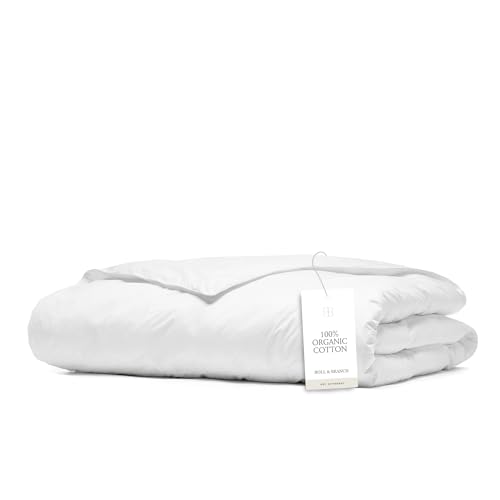
- Best overall: Boll & Branch Down Duvet Insert, Full/Queen, All Season — Check on Amazon
- puredown Goose Down Comforter, Full/Queen, 800 Fill Power — Check on Amazon
- Continental Bedding Siberian Goose Down Comforter, Queen, 800 Fill Power — Check on Amazon
- Globon Winter White Goose Down Comforter, Queen — Check on Amazon
See 2 more Amazon options
- CUDDLE DREAMS Classic Wool Comforter, Midweight, Queen — Check on Amazon
- APSMILE Down Comforter, Queen, All Season — Check on Amazon
Read the full guide ↓
Disclosure: As an Amazon Associate, topratedkitchenware.com earns from qualifying purchases. Links to Amazon on this page are affiliate links; they cost you nothing extra. Listing details such as price and availability change often, so check the current Amazon listing before you buy.
A $700 comforter budget inside an apartment deserves a harder look than the same budget inside a house, and this guide starts with two facts most premium roundups skip. The first is about the market: on Amazon, no single queen comforter verifiably costs $700. The highest queen prices we could tie to a live Amazon listing sit well below this guide’s ceiling, and the one listing known to cross that ceiling at times — the Continental Bedding Siberian — has a volatile price that has spent time both above and below it. The second fact is about renting: a comforter follows you from lease to lease, but it is also one of the bulkiest things you own, it needs professional-style cleaning that a building without in-unit laundry makes awkward, and its off-season twin has to live somewhere in a home where every closet shelf is already spoken for. Premium money spent well in an apartment buys one flagship comforter plus a lighter rotation partner, stored and cleaned on a plan — not a flagship blanket with nowhere to put its winter sibling.
Everything in this guide is judged in the queen size — full/queen where a brand sells a combined size — because comforter prices change with size and a king price quoted in a queen guide helps nobody. For most apartment buyers we would begin with the Boll & Branch down duvet insert: responsibly sourced down in an organic cotton baffle-box shell from a brand that publishes its certifications — check the current price on Amazon. If you want the highest stated fill power with the clearest spec sheet, the puredown below it states 93% goose down at a maker-rated 800 fill power — check its current price on Amazon too. Below you will find a quick picks table, detailed notes on each of the six, a comparison table, a renter’s buying checklist, an honest account of when an apartment should not spend this money at all, and answers to common questions.
In this guide
Quick Picks
Short on time? Each row below names a buyer type and the product that suits it, with a link to the listing. Prices move with sales and stock, so check the current price on Amazon.
| Buyer type | Pick | Why it stands out | Link |
|---|---|---|---|
| Best overall | Boll & Branch Down Duvet Insert, Full/Queen, All Season | Responsibly sourced down, organic cotton baffle-box shell, published certifications — check price on Amazon | Check on Amazon |
| Best stated specs | puredown Goose Down Comforter, Full/Queen, 800 Fill Power | 93% goose down and a 700-thread-count cotton shell, oversized at 98 x 90 — check price on Amazon | Check on Amazon |
| Best ceiling pick | Continental Bedding Siberian Goose Down Comforter, Queen | 800 fill power Siberian white goose down; a notably volatile listing price — buy only when the current price on Amazon sits comfortably inside the budget | Check on Amazon |
| Best winter value in real down | Globon Winter White Goose Down Comforter, Queen | 800 fill power winter weight with a moisture-treated fill, at the value end of this guide’s range — and home-washable, which matters without in-unit laundry | Check on Amazon |
| Best natural alternative to down | CUDDLE DREAMS Classic Wool Comforter, Midweight, Queen | 240 GSM Australian wool in a quiet cotton shell, OEKO-TEX certified — the most accessible pick here, and the flattest-storing rotation partner | Check on Amazon |
| Best second comforter | APSMILE Down Comforter, Queen, All Season | 46 oz of feather and down fiber in a baffle box — the rotation partner, at a mid-level point in this guide’s range | Check on Amazon |
How These Picks Were Chosen
The first filter was the budget, applied to the queen size specifically — and applied honestly in both directions. Every product below is a real Amazon listing whose queen or full/queen version belongs under the $700 ceiling in the United States; because listing prices change constantly, this guide prints no figure for any of them — check the current price on Amazon instead. The Continental Bedding pick is the deliberate edge case: its price is known to swing widely and has at times sat above the ceiling, so the guide flags that volatility openly and tells you to buy it only when the current price sits comfortably inside the budget. Anything whose queen price we could not verify at all was left unlinked or left out, however famous the brand — that is why the silk comforter discussed later in this guide is named without a link.
The second filter is the one this variant adds: the apartment test. A pick had to survive four renter questions. Can it be cleaned by someone whose building has a basement laundry room with standard machines, or no laundry at all — meaning either a home-washable rating, a duvet cover doing the weekly work, or a professional-cleaning trip that is realistic twice a year rather than a frequent errand? Can its off-season partner be stored in the space a rental actually has — a closet shelf, the top of a wardrobe, under the bed — without vacuum-compressing down for months, which down should not endure? Is it sized and weighted for a queen bed in a room that may also hold the desk, the dresser and the drying rack? And does the purchase still make sense if the lease ends in eleven months — which, for a comforter, it usually does, because a good comforter moves with you in a single bag. Picks that failed the first two questions on care or storage were demoted or reframed honestly in their reviews rather than quietly dropped.
We did not use these products ourselves. We read maker listings and specification pages, compared fill materials, down percentages, fill weights, shell fabrics, dimensions and care instructions, and favored products that publish the numbers premium prices rest on: a down percentage, a fill weight in ounces, a shell you can identify. Where a maker prints a warmth, loft or fill-power figure, this guide reports it as a maker claim, because fill power in particular is a lab measure of one ounce of down under controlled conditions — it grades the down, not the comforter, and a high number on a thin fill can sleep colder than a modest number on a heavy one.
The 6 Best Comforters for Apartments Under $700
Boll & Branch Down Duvet Insert, Full/Queen, All Season
Who it suits: Renters on a stable lease — a year or more left, or a building they expect to renew in — who want the flagship purchase to be the verifiable one, and who will use a duvet cover.
This is the pick the premium tier is supposed to look like. The fill is responsibly sourced, triple-washed white down held in baffle boxes — fabric walls between the layers, so the down keeps its loft instead of being pinched flat at every stitch — inside a down-proof shell of certified organic long-staple cotton. The brand is Fair Trade Certified, the down carries International Down Standard sourcing certification, and the finished textile is OEKO-TEX Standard 100 certified, per the brand and review coverage. The insert comes in three weights, and the full/queen all-season version is the flagship configuration here; check the current price on Amazon, which varies by weight. The lightweight full/queen is listed at about 6.6 lb, which tells you the design priority: loft and drape, not bulk — a mercy in a small bedroom.
For an apartment, the all-season weight is the strategically right member of the range, and this guide’s flagship plan is built on it: one insert warm enough for a heated rental’s winter — buildings with central heat often run warmer than houses, sometimes uncontrollably so — paired with the wool comforter below for the shoulder seasons, inside this budget with room to spare. The duvet cover is not optional at this level in a rental: it is what makes a flagship insert compatible with a building laundry room, because the cover goes in a standard machine weekly and the insert itself needs professional-style cleaning only occasionally. Budget for a good cover out of the remainder rather than treating it as an accessory.
Now the honesty this pick requires, because it is the most instructive in the guide. Boll & Branch does not publish the fill power of its own duvet on its own product page. The 650 fill-power figure attached to this insert comes from review coverage — Sleep Foundation’s testing roundup — not from the maker, and at a flagship price that omission is worth naming: fill power is the number buyers are taught to compare, and the flagship brand in this guide declines to state it. Judge the insert on what is verifiable instead — certified sourcing, an organic shell, baffle-box construction, three honest weight options — and it earns its place. Judge it as a fill-power purchase and you are buying a number the seller would not print. The brand’s published warranty, per the same coverage, covers its mattresses and foundations rather than bedding, and its bedding trial is 30 nights; read the current terms on the listing before ordering.
- Responsibly sourced, triple-washed down in baffle boxes, per the brand — loft without stitched-flat squares.
- Certified organic long-staple cotton shell; Fair Trade Certified, with IDS and OEKO-TEX marks reported in coverage.
- Three weight options in the full/queen size — check the current price on Amazon for the all-season configuration.
Honest limitation: The maker does not publish a fill-power figure for this duvet — the 650 figure in circulation comes from reviewers, not Boll & Branch — and the brand’s warranty coverage of bedding is limited, so the premium buys certified materials and construction rather than a stated spec or a long guarantee. In a rental without in-unit laundry it also commits you to a duvet cover and occasional professional cleaning.
Choose it if your lease is stable, traceable sourcing and an organic shell matter more to you than a headline fill-power number, and you will keep it in a cover. Skip it if you may move within months and would rather not haul a flagship, you shop by fill power, or you want a warranty that treats a flagship comforter like a flagship purchase.
puredown Goose Down Comforter, Full/Queen, 800 Fill Power, Winter Oversized (98 x 90 Inch)
Who it suits: Cold sleepers in cold buildings — the drafty pre-war rental, the top-floor unit under a thin roof — and spec shoppers who want the down percentage, the fill power and the fill weight all printed where they can be checked.
If the Boll & Branch is the flagship by reputation, the puredown is the flagship by spec sheet. The listing states the fill plainly: 93% white goose down — a genuinely high down share, well above the 75% minimum a fill must meet to be labeled simply “down” in the US — at a maker-rated 800 fill power, with 40 ounces of fill in the full/queen. The shell is 100% cotton at a stated 700 thread count, the construction is a pinch-pleat baffle style, and the dimensions are honestly oversized at 98 by 90 inches, so it drapes a queen bed instead of merely covering it. The down is RDS and OEKO-TEX Standard 100 certified per the maker. It sits below the flagship in this guide’s range — check the current price on Amazon — while delivering real, high-share down that leaves much of this budget unspent.
The apartment reading of that spec sheet cuts two ways. In a cold unit, this is the one comforter that can substitute for heating you do not control: when the radiators are on a building timer or the windows are original single-pane, 40 ounces of high-loft down is a genuine quality-of-life purchase, and paired with the APSMILE below it forms a two-comforter system with a comfortable budget remainder. In a warm unit — and overheated rentals are at least as common as cold ones, especially small units surrounded by other people’s heat — the same spec sheet is a warning. Read the warmth words carefully: the maker itself labels this version winter weight and “extra warmth,” and in a heated bedroom it will be too much blanket for much of the year. The oversized drape also deserves a renter’s second look: 98 by 90 inches hangs beautifully on a queen with floor space around it, and pools awkwardly on a queen pushed against a wall.
Note also that 800 is the maker’s fill-power rating: weigh the 40-ounce fill weight alongside it — together they describe a warm comforter by any arithmetic. Like all real down it wants professional-style care rather than weekly machine washing, so the duvet-cover rule applies with full force, and its off-season storage is the bulky half of the rotation problem below.
- 93% white goose down per the listing — a down share most listings in this category never state.
- Maker-rated 800 fill power with 40 oz of fill in the full/queen; RDS and OEKO-TEX certified per the maker.
- Oversized 98 x 90 inches in a 700-thread-count cotton shell — check the current price on Amazon.
Honest limitation: It is a winter-weight comforter: 40 oz of high-loft down will overheat warm sleepers and heated apartments outside the cold months, the oversized drape needs floor space a small bedroom may not have, and like all real down it wants professional-style care rather than weekly machine washing.
Choose it if your unit runs cold, your winters are real, and you want the clearest spec sheet in this guide. Skip it if your building’s heat is generous or uncontrollable, you want one comforter for July and January alike, or your queen bed sits tight against the walls.
Continental Bedding Siberian Goose Down Comforter, Queen, 800 Fill Power
Who it suits: Patient, price-watching renters with a secure lease who want the highest-ceiling down Amazon sells — and are willing to buy it only when its current price behaves.
This listing defines Amazon’s verifiable comforter ceiling, and it is included with its volatility stated openly rather than hidden behind a single friendly number. The product is a Siberian white goose down comforter at a maker-rated 800 fill power, model CB-Siberian-800FP-Duvet-Q. Its listing price is famously unstable: price trackers show it swinging widely over time, at times sitting comfortably inside this guide’s budget and at other times above the $700 ceiling altogether. In other words, the same comforter can be a legitimate under-$700 pick one season and an out-of-budget one the next. Continental Bedding’s wider range supports the positioning — its Serenity line of 700 fill-power Hungarian white goose down comforters, minimum 90% down per the brand’s retail listings, sits in a similar premium tier at other retailers — but this Siberian queen’s Amazon price is the volatile one: check the current price on Amazon before anything else.
The apartment angle sharpens the buying rule rather than changing it. Renting runs on fixed dates — a lease start, a move-in weekend, a first cold snap in a new unit — and a price-dip purchase refuses to be scheduled. If your move is in three weeks and the Siberian’s current price is sitting above the ceiling, the correct apartment decision is to buy the puredown instead and sleep warm on night one, not to spend your first month in the unit refreshing a price page. Conversely, if you are settled mid-lease with a dip alert set, this is the one premium purchase where patience can be worth a great deal: bought on a dip, it can undercut the flagship tier while out-specifying it. What the money buys when the price cooperates is the top of the Amazon down market: Siberian down is prized because birds raised in severe cold grow larger clusters, and larger clusters are what 800 fill power measures. What it never buys is price stability — any guide quoting one fixed number for this listing would be quoting a coin toss.
- Siberian white goose down at a maker-rated 800 fill power — the ceiling specification on Amazon.
- A notably volatile listing price that has crossed this guide’s ceiling in both directions — check the current price on Amazon.
- The brand’s Hungarian-down Serenity queen sits in a similar premium tier at other retailers, corroborating the positioning.
Honest limitation: The price is the limitation. This listing has sold above this guide’s $700 ceiling within the last year, and nothing about the product changes when it does — buy the price, not the product, and only when the current price sits comfortably inside the budget. A renter on a move-in deadline cannot schedule a dip.
Choose it if you are settled mid-lease, can wait for a dip, and want the highest-specification down Amazon lists. Skip it if you need a comforter by a move-in date at a predictable price — the puredown gives you a stated 93% down at 800 fill power at a steadier, lower point in the range.
Globon Winter White Goose Down Comforter, Queen (90 x 90 Inch)
Who it suits: Renters without in-unit laundry, above all — winter sleepers who want genuine 800-fill-power down without flagship prices or flagship cleaning logistics, and who can live with a spec sheet that leaves one number out.
The Globon is the value shock of this guide: a winter-weight goose down comforter, maker-rated at 800 fill power, in a 420-thread-count shell with corner tabs, positioned at the value end of this guide’s range for the queen; check the current price on Amazon. The fill is a white goose down and feather blend treated with a moisture-repellent process the maker markets for faster drying and better performance in humid bedrooms, the construction uses tall-walled box chambers to keep the fill distributed, and the brand states RDS and OEKO-TEX certifications in its materials. Unusually for down at any price, Globon rates this comforter for home washing — and in an apartment guide that single line outweighs several spec-sheet virtues, because it converts the comforter’s care from a professional-cleaning errand across town into a trip to the building’s laundry room with the largest machine free.
Its honesty gap is the mirror of Boll & Branch’s. Where the flagship will not state its fill power, the Globon will not state its down-to-feather ratio: the listing describes the fill as goose down and feather without publishing the split, so the down share could sit anywhere the label law allows. Reviewers also note it is lighter than its “winter” name suggests — high fill power insulates efficiently, so a warm comforter need not be a heavy one, but shoppers picturing a dense, tuck-you-in blanket should recalibrate toward lofty and light. At its value-tier positioning, though, those are footnotes rather than objections: this is the most accessible route in the guide to down that lofts like down, and paired with the wool comforter below it builds the value rotation — a complete year of natural-fill bedding well inside this budget, in the guide where the budget is hardest to justify spending in full.
- Maker-rated 800 fill power winter down at the value end of this guide’s range — the guide’s price-to-loft outlier; check the current price on Amazon.
- Moisture-treated fill and a home-washable rating, per the maker — rare practicality in real down, and decisive in a building without in-unit laundry.
- Sold since 2017 with RDS and OEKO-TEX certifications stated in brand materials.
Honest limitation: The down-to-feather ratio is not published, so the 800 fill-power figure cannot be converted into an exact warmth prediction; the loft is light for a “winter” label, which cold sleepers who equate weight with warmth may find surprising; and home-washable still means the building’s largest machine, not a small stacked unit.
Choose it if you want real high-loft down on a mid-market budget, a washable winter comforter, or the winter half of the value rotation. Skip it if the unpublished fill ratio bothers you — the puredown prints its 93% — or you want a heavy, dense blanket feel.
CUDDLE DREAMS Classic Wool Comforter, Midweight for All Season, Queen (88 x 88 Inch)
Who it suits: Renters whose building heat swings — freezing in October, tropical in January — couples who disagree about temperature, and anyone whose down comforter feels like a sealed plastic bag by 3 a.m.
Every premium guide needs the pick that is not down, because down’s one genuine weakness is moisture: it insulates superbly in dry air and sulks when damp. Wool is the opposite specialist. This comforter carries 240 GSM of Australian wool — the brand’s midweight, all-season fill weight, with lighter 120 GSM summer and heavier winter versions in the same line — inside a soft, noiseless jacquard cotton shell, with eight ties for a duvet cover, double-stitched edges, and an OEKO-TEX Standard 100 certification. It is the most accessible pick in this guide — check the current price on Amazon — and, pound for pound, possibly the most useful.
The apartment case for wool is storage as much as sleep. Wool sleeps flatter than down — a drape rather than a puff — and that flatness is a genuine renter asset: as the rotation’s off-season half, this is the comforter that folds onto a closet shelf or slides under the bed without the loft anxiety that comes with compressing down for months. Wool’s comfort claim is temperature regulation, and it is a comfort claim, not a medical one: wool fibers absorb and release moisture vapor, which is why a wool comforter feels less clammy across a night of temperature swings than either down or polyester — exactly the conditions of a rental where the thermostat is in the landlord’s unit, on a timer, or simply optimistic. As a single all-season comforter in a temperate climate it is a complete answer; in this guide’s flagship allocation it is the shoulder-season partner that stays on the bed when the winter down goes into storage. Care is the friction: coverage describes dry-clean-only handling, and owners report a mild natural wool scent on opening that fades with airing — air it by an open window before the first night, not after.
- 240 GSM Australian wool fill — the midweight of a three-weight line — in a quiet jacquard cotton shell.
- OEKO-TEX Standard 100 certified, eight duvet ties, and an inspection zipper to verify the fill.
- The most accessible pick in the guide and the flattest-storing — check the current price on Amazon.
Honest limitation: Wool does not loft: expect a flatter, heavier drape than any down pick here, plus dry-clean-style care and a faint wool scent at first. Cold sleepers in cold houses will find the midweight a three-season comforter, not a winter one.
Choose it if your building’s heat is unpredictable, you sleep hot, you share a bed with someone who does not, or your rotation partner must store flat. Skip it if the cloud-like puff of down is the whole point of the purchase, or you need machine-washable care above all.
APSMILE Down Comforter, Queen, All Season (90 x 90 Inch)
Who it suits: Renters building the two-comforter rotation on the sensible half of this budget — an honest, mid-warmth feather-and-down-fiber comforter to pair with a winter flagship, or a first real-fill comforter at a sane price.
The APSMILE closes the guide because it makes the allocation work. The queen measures 90 by 90 inches with 46 ounces of fill — a genuine medium warmth by weight — in a baffle box under a 400-thread-count double-brushed cotton-blend cover, with corner tabs for a duvet cover. The fill is feather and down fiber, and the guide prints that phrase without decoration: this is processed fill made from feathers and down, not the down clusters of the puredown or the Continental. It insulates evenly, drapes well and sits at a mid-level point in this guide’s range — a fraction of the flagship tier; check the current price on Amazon. APSMILE sells the same line in lightweight and winter weights and oversized sizes, useful if the standard queen’s drape is short on a thick mattress.
Judge it as the rotation’s working half and it is exactly right for a rental. Paired with the puredown, the two cover winter and the rest of the year better than any single comforter at their combined level could, well inside this budget; paired with the Globon, the system sits lower still. The medium weight is also the honest default for apartment heat: in a unit that runs warm, this — not the winter flagship — is the comforter that will actually spend the year on the bed, with the flagship earning its keep for the coldest weeks. Its ceiling is the fill itself: fiber fills compress sooner than cluster down over years of use, which matters more to a renter planning to move the same bedding through several leases, the cover is a cotton blend rather than pure cotton, and the brand’s “750 fill power” language in its wider marketing refers to its fiber fill’s loft claim — a maker figure that does not compare with the cluster-down ratings above. Bought with those limits understood, it is the pick that turns a $700 budget from one expensive blanket into a bedding system a small apartment can actually house.
- 46 oz of feather and down fiber fill in a baffle box — a true medium warmth by fill weight.
- 400-thread-count cotton-blend cover with corner tabs; lightweight and winter siblings in the same line.
- A mid-level price point in this guide’s range — the rotation partner that fits the budget; check the current price on Amazon.
Honest limitation: The fill is feather and down fiber, not down clusters: expect less loft per ounce and a shorter peak-loft life than the puredown or Continental, and do not compare the brand’s fiber fill-power language with cluster-down ratings.
Choose it if you are building a two-season rotation, your unit runs warm, or you want real-fill warmth at a mid price. Skip it if this is a one-comforter purchase meant to be the best blanket you own for a decade — that is the puredown or the Boll & Branch.
Comparison Table
| Product | Type | Best use | Link |
|---|---|---|---|
| Boll & Branch Down Duvet Insert, Full/Queen | Down, organic cotton shell, baffle box | Certified flagship for duvet-cover users | Check on Amazon |
| puredown Goose Down Comforter, Full/Queen | 93% goose down, 800 fill power (maker) | Cold units and spec shoppers | Check on Amazon |
| Continental Bedding Siberian Comforter, Queen | Siberian goose down, 800 fill power (maker) | The ceiling pick — buy only on a price dip | Check on Amazon |
| Globon Winter Goose Down Comforter, Queen | Goose down/feather, 800 fill power (maker) | Real winter down that can be home-washed | Check on Amazon |
| CUDDLE DREAMS Classic Wool Comforter, Queen | Australian wool, 240 GSM | Unpredictable building heat; stores flat | Check on Amazon |
| APSMILE Down Comforter, Queen | Feather and down fiber, 46 oz | The all-season half of a two-comforter rotation | Check on Amazon |
How to Choose a Comforter for an Apartment Under $700
- Check your lease before your cart. A comforter follows you to the next unit, so a long, stable lease justifies flagship money; a lease ending in four months argues for the Globon-plus-wool value rotation now and the flagship after the move.
- Do the allocation first. No single Amazon queen comforter verifiably costs $700, so decide whether you are buying one flagship plus a rotation partner — the pattern this guide recommends — before you fall for any one listing.
- Read fill power and fill weight together. Fill power grades the down; fill weight decides the warmth. An 800-fill-power comforter with 40 oz of fill (the puredown) is a winter blanket; the same rating on half the fill is a summer one.
- Demand the down percentage. US labeling lets a fill be called “down” at 75% clusters. The puredown states 93%; where a listing will not state its ratio at all, like the Globon, treat it as a blend and judge it on fill weight.
- Separate clusters from fiber. Down clusters, down fiber and feather fiber are three different products at three different levels. The APSMILE is honest value; trouble starts when fiber wears cluster language.
- Audit your building’s heat, not the calendar. “Winter” and “all-season” are maker words. A top-floor unit under central heat may need the medium APSMILE in January; a drafty ground-floor unit may need the puredown from October. Use fill ounces: around 46 oz is medium warmth in a queen, 40 oz of high-loft down is seriously warm, 240 GSM of wool is temperate all-season.
- Plan the cleaning before the purchase. Without in-unit laundry, your real options are a duvet cover washed weekly plus professional cleaning once or twice a year, or the Globon’s home-washable rating in the building’s largest machine. If neither fits your life, premium down is the wrong purchase this lease.
- Measure the storage, not just the bed. The off-season comforter needs a home: a breathable bag on a closet shelf or under the bed. Down must not sit vacuum-compressed for months; wool stores flattest; if neither fits, buy one all-season comforter instead.
- Price-watch the volatile listings. The Continental Siberian’s price swings widely and has crossed this guide’s ceiling in both directions. On listings like that, a price tracker and patience are worth more than any coupon — but never let a tracker delay a move-in.
- Confirm the size against your cover and your room. Queens here run from 88 x 88 to an oversized 98 x 90 inches. Measure your duvet cover before ordering, and picture the drape in your room.
When a Renter Should Not Spend Premium Money
Start with the honest negative, because apartment life supplies more reasons to pause than house life does. Do not spend flagship money if your lease ends within a few months and the next place is unknown: bed size changes — a queen flagship is a stranded asset in a furnished studio with a full bed — and every move risks a bulky, expensive textile being crushed, dampened or lost in transit. Do not spend it if your building’s heat is generous and uncontrollable: in a unit that sits at 76 degrees all winter, the puredown’s 40 ounces of 800-fill down is not a luxury, it is a storage problem that occasionally visits the bed, and the medium-weight APSMILE will serve you better from a far lower point in this guide’s range. Do not spend it if you have no realistic cleaning route — no duvet-cover discipline, no affordable cleaner nearby, no machine big enough — because a premium down comforter that cannot be kept clean degrades into an ordinary one on a renter’s timeline. And do not spend it to impress a room you are barely in: if the apartment is a weekday crash pad, the value rotation is the correct answer.
What the premium money genuinely buys, when the situation justifies it, is real. It buys down itself, in quantity and quality: fills that are mostly down clusters rather than feather fiber, stated at 800 fill power, in shells — 700-thread-count cotton, certified organic cotton — that would be extravagances at entry level. It buys construction that preserves loft, and certification you can check: RDS for the down’s sourcing, OEKO-TEX for the finished textile, Fair Trade for the flagship’s supply chain. What it does not buy is a $700 comforter, because Amazon does not verifiably sell one in queen size — the flagship here sits well below the ceiling and the ceiling listing’s price swings across it in both directions — nor does it buy certainty: the two most expensive picks in this guide each withhold something, one its fill power and one its price stability. At $700 you are buying the best-verified materials on the platform, plus, if you allocate, a second comforter for the other half of the year. In an apartment, that second comforter is not a bonus. It is the plan.
One Flagship, One Rotation Partner: Spending $700 in a Small Rental
The allocation this guide recommends is simple: one winter flagship, one lighter natural comforter, a duvet cover, and the discipline to leave the remainder unspent. The flagship plan pairs the Boll & Branch all-season insert with the CUDDLE DREAMS wool — a combination that fits inside this budget with a deliberate remainder left over, which is roughly what the good duvet cover both comforters deserve costs. The spec plan pairs the puredown winter comforter with the APSMILE all-season: a true winter blanket and a true medium one, again with a comfortable remainder unspent. The value plan pairs the Globon winter down with the same wool comforter — a complete year of natural-fill bedding well inside the budget, and the right answer for a short lease or a warm building. Check the current price on Amazon for each half of whichever plan you choose before ordering, since listing prices move.
The apartment logistics of the rotation are where renters usually improvise badly, so here is the worked version. Twice a year, when the building’s heat switches on or off, swap the comforters: the off-season one gets aired — over a balcony rail, a shower rod, or the backs of two chairs — then folded loosely into a breathable cotton storage bag, never a vacuum bag, because months of hard compression breaks down down clusters and the loft you paid for. The wool comforter is the easier half to store: it folds flat onto a closet shelf or into an under-bed box, which is one reason it anchors two of the three plans. The down flagship is the bulky half; its honest homes are the top shelf of the bedroom closet or under the bed in its breathable bag, and if your unit has neither, run a one-comforter plan — the Boll & Branch all-season or the APSMILE medium — rather than a rotation that lives on the floor. Cleaning slots into the same two weekends: covers are washed weekly in the building laundry, and the inserts go to a professional cleaner with oversized machines once or twice a year (the Globon excepted — it can take the building’s largest washer), because a comforter already off the bed can spend a day at the cleaner without leaving you blanketless.
The Silk Exception, and the Fill-Power Equation
One premium family is missing from the picks, deliberately. Silk-filled comforters are a genuine luxury category: THE COTTON & SILK sells a queen comforter on Amazon filled with 100% long-strand mulberry silk in a cotton shell, OEKO-TEX certified, and silk specialists sell queen silk comforters direct at premium prices. But this session could not tie a current Amazon queen price to that listing — its specifications verified, its price did not — so it is named here unlinked rather than linked on a guess, described by its tier rather than by any figure. For apartment sleepers it would be a tempting swap-in if a live price verifies at or under $700: silk stores flatter than down and drapes without bulk in a small room. Until then, the wool pick covers the natural-fill, temperature-swing job with a linked listing whose current price you can check on Amazon.
Silk’s absence leaves room for the equation that governs everything linked. Warmth is fill power multiplied by fill weight, moderated by the shell: fill power tells you how much air one ounce of down traps, fill weight tells you how many ounces you bought. That is why the puredown’s pairing of a maker-rated 800 with 40 ounces marks it as the warmest pick here, why a hypothetical 800-fill comforter with 18 ounces would be a summer blanket wearing a winter number, and why fiber fills — which have no comparable cluster rating — should be judged on ounces and GSM alone, as this guide judges the APSMILE’s 46 ounces and the wool’s 240 GSM. Any listing printing only the first half of the equation asks you to admire the down and ignore the blanket. At $700 budgets, read both numbers or buy a different listing.
Common Buying Mistakes
- Assuming a $700 budget means a $700 comforter exists, then stretching to a king size or a boutique listing to “use” money that the queen market never asked for.
- Spending flagship money months before a move, then discovering the next unit’s bed is a different size — or furnished.
- Buying winter weight for an overheated apartment and blaming the comforter for hot nights a medium fill would have prevented.
- Comparing a king price in one listing with a queen price in another; premium listings default to their most dramatic size, and the headline figure follows it.
- Buying fill power without fill weight — an 800 rating on a thin fill sleeps colder than a 650 on a heavy one.
- Paying cluster-down prices for feather fiber because the headline said “down” and the percentages went unread.
- Treating a volatile listing’s headline price as its settled price — the Continental’s swings widely across this guide’s ceiling in both directions — and delaying a move-in to wait for a dip.
- Skipping the duvet cover on a premium insert in a building without in-unit laundry, then washing the insert itself into early retirement in an undersized machine.
- Vacuum-compressing the off-season down comforter for months to make it fit a small closet, and unpacking it to find the loft gone.
- Judging loft in the first hour out of the vacuum pack, before the down has had a day or two to expand — a particular trap on move-in day.
- Ignoring the care label’s running cost — professional cleaning for down and wool is part of the price every year you own it, and harder to arrange without a car.
Final Recommendation
- Most apartment buyers: Boll & Branch Down Duvet Insert, Full/Queen, All Season — with the wool partner and a duvet cover, inside the budget with a remainder to spare.
- Cold units and spec shoppers: puredown Goose Down Comforter, Full/Queen, 800 Fill Power.
- Patient price-watchers mid-lease: Continental Bedding Siberian Goose Down Comforter, Queen — on a dip only.
- No in-unit laundry: Globon Winter White Goose Down Comforter, Queen.
- Unpredictable building heat and couples: CUDDLE DREAMS Classic Wool Comforter, Midweight, Queen.
- Building the rotation on a budget: APSMILE Down Comforter, Queen, All Season.
Our top two are the Boll & Branch and the puredown, the premium tier’s two honest philosophies. The Boll & Branch sells verifiable sourcing, an organic shell and inspectable construction, at the flagship point of this guide’s range — and declines to state its fill power, which this guide has printed rather than forgiven. The puredown prints everything — 93% down, a maker-rated 800 fill power, 40 ounces, a 700-thread-count shell — from a lower point in the range. In an apartment, though, the plan matters as much as the pick: either flagship, paired with the wool comforter or the APSMILE, stored loosely in a breathable bag and kept clean through a duvet cover, builds a year-round natural-fill system inside this budget with money left over. Read the percentages, multiply the fill power by the ounces, check your lease and your laundry room, check the current price on Amazon, and leave the rest unspent.
Frequently Asked Questions
Can you really buy a $700 comforter on Amazon?
Not verifiably, in queen size. The most expensive queen comforters we could tie to an Amazon listing sit well below the ceiling, and the Continental Bedding Siberian — the one listing known to cross it — does so only when its volatile price swings high; at other times it sits comfortably inside the budget. Treat any single-figure quote for a “700-dollar comforter” with suspicion, and treat this budget as an allocation: a flagship, a rotation partner, a duvet cover, and a remainder.
Is premium bedding worth it in a rental apartment?
It can be, because a comforter is one of the few premium purchases that is fully portable — it moves with you, unlike fitted storage or flooring. It is worth it when your lease is stable, your bed size is settled, your building’s heat calls for the weight you are buying, and you have a cleaning plan. It is not worth it months before an uncertain move, in an overheated unit, or without any way to keep it clean; then the Globon-and-wool value rotation is the honest spend.
How do I clean a premium down comforter without in-unit laundry?
Let a duvet cover do the weekly work — it fits a standard building machine — and take the insert to a professional cleaner with oversized machines once or twice a year, timed to the seasonal swap so the bed is never left bare. Air the comforter on a balcony, over a shower rod or across chairs in between. The exception in this guide is the Globon, which its maker rates for home washing in a large machine. Never force a queen down comforter into a small stacked washer: the fill can tear its baffles and will not dry evenly.
Where do I store a second comforter in a small apartment?
In a breathable cotton bag — never vacuum-compressed for months, which damages down loft — on the top shelf of the bedroom closet or in an under-bed box. Choose the rotation partner with storage in mind: the wool folds flattest, the APSMILE is moderate, and a high-loft down flagship is the bulky half, so give the shelf to whichever is off-season. If neither shelf nor under-bed space exists, run a single all-season comforter instead of a rotation.
Is 800 fill power worth paying for?
It is worth paying for when it arrives with fill weight and a stated down percentage, as on the puredown — 93% down, 800 fill power, 40 ounces is a verifiably warm specification. Fill power alone is half an equation: it grades the down, not the blanket. And treat every fill-power figure as a maker claim; there is no shelf-edge test you can run at home.
Down, wool or silk: which premium fill should an apartment sleeper choose?
Down for maximum warmth per ounce and loft, in dry, cold conditions — that is the puredown and the Continental. Wool for temperature swings, unpredictable building heat and couples who sleep at different temperatures — that is the CUDDLE DREAMS, at a far lower point in the range, and the flattest-storing. Silk for light, draping, gentle insulation in warm rooms — a genuine luxury, but the one family this guide could not link with a verified Amazon queen price, so check the current listing carefully before buying it anywhere.
Is a two-comforter rotation really better than one expensive all-season comforter?
For most bedrooms, yes — and apartments are no exception once storage is planned. A winter weight and a medium weight, swapped twice a year, match the room’s actual temperature better than any compromise blanket, and each rests half the year, extending loft life. On this guide’s plans the full system — puredown plus APSMILE, or Boll & Branch plus wool — sits inside the budget either way, with the remainder honestly unspent; check the current price on Amazon for each half before ordering.
What if the Continental Siberian is over $700 when I check?
Then it is, for that day, outside this guide — its price will move again, in both directions. Buy the puredown at its steadier, lower point in the range, or set a tracker alert and wait for the Siberian’s price to settle back inside the budget. Do not let the wait collide with a move-in date: a comforter you will own for a decade is worth a fortnight of patience, but a cold first week in a new unit is worth more.
