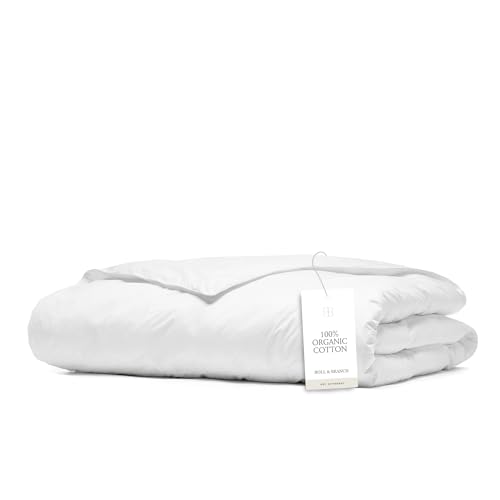
Where to buy
Check the latest price, availability and delivery on Amazon. Orders are placed on Amazon. We may earn a commission from qualifying purchases. Every pick in this guide is for the queen size — full/queen where a brand sells a combined size — because that is the size most guest beds wear, and a king in a queen guide helps nobody.
- Best overall: Boll & Branch Down Duvet Insert, Full/Queen, All Season — Check on Amazon
- puredown Goose Down Comforter, Full/Queen, 800 Fill Power — Check on Amazon
- Continental Bedding Siberian Goose Down Comforter, Queen, 800 Fill Power — Check on Amazon
- Globon Winter White Goose Down Comforter, Queen — Check on Amazon
See 2 more Amazon options
- CUDDLE DREAMS Classic Wool Comforter, Midweight, Queen — Check on Amazon
- APSMILE Down Comforter, Queen, All Season — Check on Amazon
Read the full guide ↓
Disclosure: As an Amazon Associate, topratedkitchenware.com earns from qualifying purchases. Links to Amazon on this page are affiliate links; they cost you nothing extra. Listing details such as price and availability change often, so check the current Amazon listing before you buy.
A guest room is the strangest place in the house to spend premium bedding money, and this guide will ask the question most $700 roundups skip. Start with the ceiling fact: no single queen comforter on Amazon verifiably fills the whole $700 budget. The most expensive queen we could tie to a live Amazon listing sits at the top of the premium tier, the genuine high-fill-power down comforters cluster below it, and one listing — the Continental Bedding Siberian — is volatile enough to cross this guide’s ceiling at times, spending as much time above $700 as below it. Then add the guest-room fact: a typical guest bed sleeps perhaps twenty nights a year, and many sleep six. Premium money spread over so few nights a year is the hardest bedding money in your house to justify. So this is not a guide to spending $700 on a guest blanket. It is a guide to what the top of Amazon’s comforter market actually looks like, which of it genuinely improves a guest’s night, and how to allocate a $700 budget honestly — a flagship where it will be slept on nightly, a proper comforter in the guest room, and change left over.
For most people we would begin with the Boll & Branch down duvet insert: responsibly sourced down in an organic cotton baffle-box shell, in the all-season midweight that suits unknown guests best, — check the current price on Amazon for the full/queen. If your guest room hosts constantly — family most weekends, a parent for the winter — it earns its premium positioning here. If it hosts twice a year, read the APSMILE review first: it sits far lower in the tier and is the honest guest-room buy for most houses, and the flagship money belongs on your own bed. Below you will find a quick picks table, detailed notes on each of the six, a comparison table, a buying checklist, the guest-night thinking, the mistakes hosts make most in this tier, and answers to common questions.
In this guide
Quick Picks
Short on time? Each row below names a host type and the product that suits it, with a link to the listing. All picks are queen size; premium comforter prices move with sales and stock, so check the current price on Amazon before you buy.
| Buyer type | Pick | Why it stands out | Link |
|---|---|---|---|
| Best overall for a busy guest room | Boll & Branch Down Duvet Insert, Full/Queen, All Season | Responsibly sourced down, organic cotton baffle-box shell, published certifications — check price on Amazon | Check on Amazon |
| Best for cold-climate guest rooms | puredown Goose Down Comforter, Full/Queen, 800 Fill Power | 93% goose down and a 700-thread-count cotton shell, oversized at 98 x 90 — check price on Amazon | Check on Amazon |
| Best ceiling pick | Continental Bedding Siberian Goose Down Comforter, Queen | 800 fill power Siberian white goose down; a volatile listing that crosses the ceiling at times — buy only when the current price checks within budget | Check on Amazon |
| Best washable winter value | Globon Winter White Goose Down Comforter, Queen | 800 fill power winter weight the maker rates for home washing, at the accessible end of this tier — check price on Amazon | Check on Amazon |
| Best for guests of unknown temperature | CUDDLE DREAMS Classic Wool Comforter, Midweight, Queen | 240 GSM Australian wool regulates across hot and cold sleepers — check price on Amazon | Check on Amazon |
| Best honest guest-room buy | APSMILE Down Comforter, Queen, All Season | 46 oz of feather and down fiber in a baffle box — the medium warmth guests actually need — check price on Amazon | Check on Amazon |
How These Picks Were Chosen
The first filter was the budget, applied to the queen size specifically — and applied honestly in both directions. Every product below is an Amazon listing for a queen or full/queen version that belongs in this under-$700 tier in the United States; check the current price on Amazon before you buy, because premium listings move. The Continental Bedding pick is the deliberate edge case: it often sits under the ceiling, but it has also crossed over it, and the guide tells you to buy it only when the current price checks within budget. Anything we could not verify as a real listing in this tier was left unlinked or left out, however famous the brand — that is why the silk comforter discussed later in this guide is named without a link.
The second filter is the guest filter, and it reorders the base guide’s priorities. A guest cannot adjust your thermostat, does not know your house’s cold corners, and will politely say they slept fine regardless — so a guest comforter is judged on a middle warmth that offends nobody, on care that survives being washed between visits, and on how it presents under a duvet cover, because the cover is what a guest actually sees and touches. Above all it is judged against how often the room is actually used: a flagship that is reasonable on a bed slept on nightly is extravagant on a bed a quiet guest room uses only a handful of nights a year. Where a pick’s premium only makes sense at high guest traffic, the review says so and names the traffic it needs.
We did not use these products ourselves. We read maker listings and specification pages, compared fill materials, down percentages, fill weights, shell fabrics, dimensions and care instructions, and favored products that publish the numbers premium prices are supposed to rest on: a down percentage, a fill weight in ounces, a shell you can identify. Where a maker prints a warmth, loft or fill-power figure, this guide reports it as a maker claim, because fill power is a lab measure of one ounce of down under controlled conditions — it grades the down, not the comforter, and no guest in history has identified it through a duvet cover. The spread is deliberate: a certified flagship, a spec-led winter down, a volatile ceiling listing to buy opportunistically, a washable winter value, a wool comforter for temperature-unknown guests, and an inexpensive feather-fiber all-season comforter that is, for most guest rooms, the correct answer.
The 6 Best Comforters for Guest Rooms Under $700
Boll & Branch Down Duvet Insert, Full/Queen, All Season
Who it suits: Hosts whose guest room works hard — family most weekends, a parent for the season, a room that doubles as your own retreat — and who will use a duvet cover.
This is the pick the premium tier is supposed to look like, and in a guest room its virtues are the presentational ones. The fill is responsibly sourced, triple-washed white down held in baffle boxes — fabric walls between the layers, so the down keeps its loft instead of being pinched flat at every stitch — inside a down-proof shell of certified organic long-staple cotton. The brand is Fair Trade Certified, the down carries International Down Standard sourcing certification, and the finished textile is OEKO-TEX Standard 100 certified, per the brand and review coverage. The insert comes in three weights, and it is the all-season midweight that matters here: a guest room gets one warmth for every visitor, and the middle weight is the one that suits a January parent and a July cousin without either of them wrestling the blanket off at 3 a.m. Check the current price on Amazon for the full/queen all-season; the three weights sit at different points in the premium tier. Under a crisp cover, this is the closest thing in the guide to the hotel bed guests write home about.
Now the honesty this pick requires in a guest room, and it is about use before it is specifications. In a busy guest room — twenty guest-nights a year over a long life — a flagship at the top of this tier is defensible for a bed that is practically a second master. In a room that hosts only a few nights a year, the same insert is premium money spread over very little use, for a benefit the guest experiences as “slept well” — which the APSMILE below, far lower in the tier, also produces. There is a second honesty: Boll & Branch does not publish the fill power of its own duvet on its own product page. The 650 fill-power figure attached to this insert comes from review coverage — Sleep Foundation’s testing roundup — not from the maker. Judge the insert on what is verifiable — certified sourcing, an organic shell, baffle-box construction, three honest weight options — and it earns its place in a high-traffic guest room. Judge it as a fill-power purchase and you are buying a number the seller would not print. The brand’s published warranty, per the same coverage, covers its mattresses and foundations rather than bedding, and its trial on bedding is 30 nights; read the current terms on the listing before ordering.
- Responsibly sourced, triple-washed down in baffle boxes, per the brand — loft without stitched-flat squares.
- All-season midweight is the one warmth that suits unknown guests across the year.
- Certified organic long-staple cotton shell; Fair Trade Certified, with IDS and OEKO-TEX marks reported in coverage.
- Full/queen all-season at the top of this tier — check price on Amazon; three weight options in the same line.
Honest limitation: The maker does not publish a fill-power figure for this duvet — the 650 figure in circulation comes from reviewers, not Boll & Branch — and at low guest traffic it is the hardest premium in this guide to justify: premium money needs regular use, and a quiet guest room does not offer it.
Choose it if your guest room hosts regularly, doubles as your own retreat, or is where a long-stay parent sleeps — the traffic exists to justify it. Skip it if the room hosts a few weekends a year: buy the APSMILE for the guest bed and put flagship money on your own.
puredown Goose Down Comforter, Full/Queen, 800 Fill Power, Winter Oversized (98 x 90 Inch)
Who it suits: Cold-climate hosts whose guest season is the cold season — holiday visitors in a cold house, a guest room over an unheated garage — and spec shoppers who want every number printed.
If the Boll & Branch is the flagship by reputation, the puredown is the flagship by spec sheet. The listing states the fill plainly: 93% white goose down — a genuinely high down share, well above the 75% minimum a fill must meet to be labeled simply “down” in the US — at a maker-rated 800 fill power, with 40 ounces of fill in the full/queen. The shell is 100% cotton at a stated 700 thread count, the construction is a pinch-pleat baffle style, and the dimensions are honestly oversized at 98 by 90 inches, so it drapes a queen guest bed with the generous overhang that makes a made bed look like a hotel’s. The down is RDS and OEKO-TEX Standard 100 certified per the maker. The full/queen is fulfilled by Amazon — check the current price on Amazon — real, high-share down positioned below the flagship in this tier, leaving much of this guide’s budget unspent.
The guest-room judgment turns on one word in its name: winter. Forty ounces of 800-fill-power down is a lot of insulation — the maker itself labels this version winter weight and “extra warmth” — and a guest who sleeps warm, in a heated house, in October, will spend the night pushing it off and conclude your guest bed runs hot. Guests do not complain; they sleep badly and say nothing, which is why the middle-weight rule exists. Where this pick earns its guest-room place is the house whose guest traffic is genuinely winter traffic: the spare room that hosts family at the holidays, in a cold climate, in a house whose guest room is its coldest room. There, a real winter comforter is not excess — it is the difference between a guest who sleeps and a guest who lies awake cold at 4 a.m. The oversized drape helps the presentation, and in a busy guest room its premium is easier to justify than the flagship’s. Note that 800 is the maker’s fill-power rating: treat it as a strong claim from a brand that at least publishes its percentages, and weigh the 40-ounce fill weight alongside it. In the rotation plan at the end of this guide, this is also the comforter we would put on the host’s own bed in winter, with the guest room taking the medium weight — the allocation that gives both beds the right blanket.
- 93% white goose down per the listing — a down share most listings in this category never state.
- Maker-rated 800 fill power with 40 oz of fill in the full/queen; RDS and OEKO-TEX certified per the maker.
- Oversized 98 x 90 inches drapes a guest bed properly — check price on Amazon.
Honest limitation: It is a winter-weight comforter, and winter weight is the wrong default for unknown guests: 40 oz of high-loft down will overheat warm sleepers and heated bedrooms outside the cold months, and like all real down it wants professional-style care rather than a wash between every visit.
Choose it if your guest season is the cold season, your guest room is the cold room, or it will live on your own bed as the winter flagship. Skip it if guests come year-round to a warm house — the middle weights below will serve them better.
Continental Bedding Siberian Goose Down Comforter, Queen, 800 Fill Power
Who it suits: Patient, price-watching hosts furnishing a guest room with no deadline — the one purchase that can wait for a dip, because the guests have not booked yet.
This is the listing that defines Amazon’s verifiable comforter ceiling, and it is included with its volatility stated plainly. The product is a Siberian white goose down comforter at a maker-rated 800 fill power, model CB-Siberian-800FP-Duvet-Q, positioned at the very top of this tier. Its pricing history for the queen is extraordinary in its volatility: the same comforter has sat both comfortably inside this guide’s budget and well outside it, sometimes within the same season. Continental Bedding’s wider range supports the positioning — its Serenity line of 700 fill-power Hungarian white goose down comforters, minimum 90% down per the brand’s retail listings, also sits in the premium tier at other retailers — but this Siberian queen’s Amazon price is the volatile one, and the guide treats it accordingly. This pick stays flagged as a deliberate straddle: it belongs in an under-$700 guide only on the days its price behaves.
A guest room is, oddly, the best room in the house for this purchase, because it is the one furnishing job with no deadline. Your own bed needs a comforter this week; the guest bed needs one eventually, before the next visit, whenever that is — which means a price alert and patience cost you nothing. Set the alert, buy it only when the current price on Amazon checks comfortably within this guide’s budget — ideally on one of its dips — and walk away without regret when it sits above the ceiling, because the Boll & Branch plus the wool below together cover more of the year. What the money buys when the price cooperates is the top of the Amazon down market: Siberian down is prized because birds raised in severe cold grow larger clusters, and larger clusters are what 800 fill power is measuring. Whether a guest needs the top of the down market is a separate question, and the honest answer is no — no guest distinguishes Siberian clusters from the puredown’s through a duvet cover. Buy this because you want it in the house, not because visitors will know.
- Siberian white goose down at a maker-rated 800 fill power — the ceiling specification on Amazon.
- A volatile premium listing: it has crossed this guide’s ceiling before, so check the current price on Amazon and buy only on a dip.
- The brand’s Hungarian-down Serenity queen also sits in the premium tier at other retailers, corroborating the positioning.
Honest limitation: The price is the limitation. This listing has sat above this guide’s $700 ceiling within the last year, and nothing about the product changes when it does — buy it only when the current price checks within budget, and only on a dip.
Choose it if you can wait for a dip and want the highest-specification down Amazon lists, in the one room that lets you wait. Skip it if guests arrive Friday, or you need a predictable price — the puredown gives you a stated 93% down at 800 fill power in a steadier, lower position in the tier — check price on Amazon.
Globon Winter White Goose Down Comforter, Queen (90 x 90 Inch)
Who it suits: Hosts who wash the guest bedding after every visit and refuse to pay professional-cleaning prices to do it — and cold-room hosts who want genuine down loft without flagship money.
The Globon is the value shock of this guide: a winter-weight goose down comforter, maker-rated at 800 fill power, in a 420-thread-count shell with corner tabs, sold in this form since 2017 — and positioned at the accessible end of this premium tier for the queen; check the current price on Amazon. The fill is a white goose down and feather blend treated with a moisture-repellent process the maker markets for faster drying and better performance in humid bedrooms, the construction uses tall-walled box chambers to keep the fill distributed and the edges full, and the brand states RDS and OEKO-TEX certifications in its materials. The guest-room headline, though, is care: unusually for down at any price, Globon rates this comforter for home washing. Between-guests laundry is the hidden running cost of premium guest bedding — a dry-clean-only flagship quietly adds a cleaning bill to every visit — and this pick deletes it. Wash it at home, dry it fully, remake the bed.
Its honesty gap is the mirror of Boll & Branch’s. Where the flagship will not state its fill power, the Globon will not state its down-to-feather ratio: the listing describes the fill as goose down and feather without publishing the split, and under US labeling that means the down share could sit anywhere the label law allows. Reviewers who have weighed it also note it is lighter than its “winter” name suggests — high fill power insulates efficiently, so a warm comforter need not be a heavy one — and for guests that lightness cuts both ways: it will not overheat a warm sleeper the way the puredown can, but a guest who equates a thin blanket with a cold night may need a throw folded at the foot of the bed as reassurance. At its accessible position in the tier, though, those are footnotes: this is one of the most accessible routes in the guide to down that lofts like down, it survives the between-visits wash cycle that guest bedding actually lives on, and in a busy guest room its premium is among the easiest in this tier to justify.
- Maker-rated 800 fill power winter down at the accessible end of the tier for the queen — check price on Amazon — the guide’s loft-for-the-tier outlier.
- Home-washable per the maker — the between-guests wash needs no professional cleaner.
- Moisture-treated fill, per the maker, for humid bedrooms and faster drying.
- Sold since 2017 with RDS and OEKO-TEX certifications stated in brand materials.
Honest limitation: The down-to-feather ratio is not published, so the 800 fill-power figure cannot be converted into an exact warmth prediction; and the loft is light for a “winter” label, which guests who equate weight with warmth may misread on the first night.
Choose it if you wash guest bedding after every stay and want real down that tolerates it. Skip it if the unpublished fill ratio bothers you — the puredown prints its 93% — or your guest room is warm and a winter weight of any kind is the wrong tool.
CUDDLE DREAMS Classic Wool Comforter, Midweight for All Season, Queen (88 x 88 Inch)
Who it suits: Hosts whose guests arrive with unknown thermostats — the father-in-law who opens a window in January and the aunt who asks for an extra blanket in July, sometimes in the same week.
Every premium guest-room guide needs the pick that is not down, because a guest room’s core problem is not cold — it is variance. You do not know how your guest sleeps, and down is a specialist: it insulates superbly for the sleeper it suits and sulks for the one it does not. Wool is the opposite specialist. This comforter carries 240 GSM of Australian wool — the brand’s midweight, all-season fill weight, with lighter 120 GSM summer and heavier winter versions in the same line — inside a soft, noiseless jacquard cotton shell, with eight ties for a duvet cover, double-stitched edges, and an OEKO-TEX Standard 100 certification. A short zipper in the shell lets you inspect the wool itself, a transparency gesture more brands should copy. The midweight queen sits at the accessible end of this guide — check the current price on Amazon — which makes it one of the most accessible picks here and, for a guest room specifically, arguably the most useful.
Wool’s comfort claim is temperature regulation, and it is a comfort claim, not a medical one: wool fibers absorb and release moisture vapor, which is why a wool comforter feels less clammy across a night of temperature swings than either down or polyester. For a host, that translates into the widest comfort window of any pick here — the hot sleeper and the cold sleeper both get through the night under the same blanket, which is exactly the bet a guest room has to place. It will not loft like the down picks: wool sleeps flatter and heavier, with a drape rather than a puff, and on a made guest bed that flat drape actually presents neatly, like a hotel’s tailored bed rather than a cloud. The frictions are care and first impressions: coverage of this line describes dry-clean-only handling, which is a poor match for wash-after-every-visit hosts, and owners report a mild natural wool scent on opening that fades with airing — air it well before the first guest, not the afternoon they arrive. It is also the most accessible insurance in the guide against the guest who sleeps at the wrong temperature.
- 240 GSM Australian wool fill — the midweight of a three-weight line — in a quiet jacquard cotton shell.
- The widest comfort window in the guide: one blanket for hot and cold sleepers alike.
- OEKO-TEX Standard 100 certified, eight duvet ties, and an inspection zipper to verify the fill.
- At the accessible end of this tier for the queen — check price on Amazon.
Honest limitation: Wool does not loft: expect a flatter, heavier drape than any down pick here, plus dry-clean-style care that fights the wash-between-visits routine, and a faint wool scent at first that needs airing before guests arrive.
Choose it if your guests’ temperatures are a lottery, or the guest room itself swings hot and cold with the weather. Skip it if you machine-wash the guest comforter after every stay — the Globon is the washable pick — or the cloud-like puff of down is the presentation you want.
APSMILE Down Comforter, Queen, All Season (90 x 90 Inch)
Who it suits: Most hosts, most of the time — the medium-warmth, real-fill-feeling comforter at a price a low-traffic guest room can actually justify.
The APSMILE closes the guide because it is the answer the guest-room use case keeps pointing at. The queen measures 90 by 90 inches with 46 ounces of fill — a genuine medium warmth by weight — in a baffle-box construction under a 400-thread-count double-brushed cotton-blend cover, with corner tabs for a duvet cover. The fill is feather and down fiber, and the guide prints that phrase without decoration: like the feather-fiber Serta that anchored our under-$100 guide, this is processed fill made from feathers and down, not the down clusters of the puredown or the Continental. It insulates evenly, drapes well and costs a fraction of cluster down — the queen is fulfilled by Amazon and sits far lower in this tier — check the current price on Amazon. APSMILE sells the same line in lightweight and winter weights and in oversized sizes, useful if the standard queen’s drape is short on a thick guest mattress.
Judge it through a guest’s eyes and the fiber-versus-cluster distinction mostly evaporates. A guest experiences a comforter through a duvet cover, for a night or three, as warmth and drape and a bed that looks cared for — and on all three the APSMILE delivers the premium impression at a non-premium price: medium warmth that suits the unknown sleeper, an even fill with no cold squares, and a cover-friendly build. What the guest cannot experience is the thing cluster down actually buys — loft that survives a decade — because that virtue belongs to the nightly bed, not the guest bed. The honest limits are the ones from the base guide: fiber fills compress sooner than cluster down over years of use, the cover is a cotton blend rather than pure cotton, and the brand’s “750 fill power” language in its wider marketing refers to its fiber fill’s loft claim — a maker figure that does not compare with the cluster-down fill power of the picks above, and which this guide does not print as one. Whether the room hosts regularly or only a few nights a year, its lower position in the tier is the pick that lets a host stop apologizing for the guest bed without apologizing for the bill.
- 46 oz of feather and down fiber fill in a baffle box — a true medium warmth by fill weight.
- 400-thread-count cotton-blend cover with corner tabs; lightweight and winter siblings in the same line.
- Far lower in the tier than the cluster-down picks — check price on Amazon — premium impression, guest-room-friendly positioning.
Honest limitation: The fill is feather and down fiber, not down clusters: expect less loft per ounce and a shorter peak-loft life than the puredown or Continental, and do not compare the brand’s fiber fill-power language with cluster-down ratings.
Choose it if your guest room hosts the normal amount — a few weekends to a few weeks a year — and you want it genuinely good rather than theoretically perfect. Skip it if the room hosts constantly and will wear a comforter out, or this purchase is really the flagship for your own bed wearing a guest-room excuse.
Comparison Table
| Product | Type | Best use | Link |
|---|---|---|---|
| Boll & Branch Down Duvet Insert, Full/Queen | Down, organic cotton shell, baffle box | Busy guest rooms and hotel presentation | Check on Amazon |
| puredown Goose Down Comforter, Full/Queen | 93% goose down, 800 fill power (maker) | Cold-climate and winter-season guests | Check on Amazon |
| Continental Bedding Siberian Comforter, Queen | Siberian goose down, 800 fill power (maker) | The ceiling pick — buy only on a price dip | Check on Amazon |
| Globon Winter Goose Down Comforter, Queen | Goose down/feather, 800 fill power (maker) | Real down that survives home washing | Check on Amazon |
| CUDDLE DREAMS Classic Wool Comforter, Queen | Australian wool, 240 GSM | Guests of unknown temperature | Check on Amazon |
| APSMILE Down Comforter, Queen | Feather and down fiber, 46 oz | The honest buy for a normal guest room | Check on Amazon |
How to Choose a Comforter for a Guest Room Under $700
- Count your guest-nights before you count fill power. Twenty-plus nights a year can justify a flagship; a handful cannot. The guest-night section below works through that thinking for the picks in this guide.
- Default to the middle warmth. Guests cannot adjust your heating and will not complain — they will just sleep badly. An all-season midweight plus a folded throw at the foot covers more guests than any winter or summer specialist.
- Put the flagship where the nights are. If one bed in the house sleeps 365 nights a year and the other sleeps 20, the premium comforter belongs on the first bed. The rotation section shows the allocations that give both beds the right blanket inside this budget.
- Decide the washing question first. If you wash the guest comforter after every visit, care labels outrank fill labels: the Globon’s home-washable rating is worth more in a guest room than the puredown’s extra down percentage. If the comforter lives under a duvet cover that takes the washes, dry-clean-style picks become practical again.
- Never skip the duvet cover. It is what the guest sees, touches and judges; it takes the spills, the sunscreen and the weekly washes; and it is the reason a lower-tier fiber comforter and a top-tier flagship present almost identically. Budget for a good one out of the remainder.
- Read fill power and fill weight together. Fill power grades the down; fill weight decides the warmth. An 800-fill-power comforter with 40 oz of fill (the puredown) is a winter blanket; the same rating on half the fill is a summer one.
- Separate clusters from fiber. Down clusters, down fiber and feather fiber are three different products at three different prices. The APSMILE is honest value; trouble starts when fiber wears cluster language — or when a host pays cluster-down prices for a bed that is used too rarely to justify them.
- Price-watch the volatile listings. The Continental Siberian is volatile enough to cross this guide’s ceiling, and a guest room is the one purchase that can wait for a dip. Check the current price on Amazon, and patience is worth more than any coupon.
- Confirm the size against your cover. Queens in this guide run from 88 x 88 to an oversized 98 x 90 inches. Measure your guest room’s duvet cover before ordering, or the flagship will bunch inside it.
- Air and store it like you mean it. A guest comforter spends most of its life stored or waiting: never store down compressed for months, air any new comforter — especially the wool — well before the first guest, and make sure it is dry before it goes back on the bed.
Guest-Night Thinking: The Premium Question at $700
Here is the thinking this guide keeps promising. Picture two guest rooms over the life of a comforter. A busy room hosts twenty nights a year — family most months, a parent for a season — and over the years that use adds up to a bed that is practically a second master: there, a flagship at the top of the tier, and the puredown just below it, can genuinely earn their premium. A quiet room hosts only a few nights a year — two short visits, the reality for many guest rooms — and over the same span it sees only a fraction of that use: there, the same flagship is premium money spread over very little sleep, while the APSMILE, the wool and the Globon, all far lower in the tier, still deliver a warm, even, well-presented bed. The comforters did not change. The room’s calendar did, and the calendar is what premium guest-room spending actually turns on.
Compare your own bed, where a flagship comforter is slept on nightly, year after year. That is the whole argument in one line: premium bedding money earns its keep through the nights slept on it, and the guest room offers the fewest nights in the house. None of this says buy the guest room something shabby — a guest remembers a bad bed, and the medium picks in this guide are genuinely good. It says the flagship premium — the step up from a very good comforter to the best-verified one — buys improvements measured in years of nightly loft on your bed and in almost nothing measurable across a quiet guest room’s occasional nights. Spend the $700 where the nights are, and let the guest room have the excellent middle.
One Warmth for Unknown Guests: The Hotel Problem
Hotels solved the guest problem long ago, and their answer is boring: one medium-weight duvet, a cover washed after every guest, and layering within reach — a throw or light blanket folded at the foot, so the cold sleeper can pull it up and the warm sleeper can push the duvet down. Nobody’s comfort depends on guessing right, because the bed offers a range instead of a single bet. A home guest room should copy the system, not the thread count. The medium weight is the all-season class in this guide: the Boll & Branch all-season, the APSMILE’s 46 ounces, the wool’s 240 GSM. The winter specialists — the puredown’s 40 ounces of 800-fill down, the Globon’s winter weight — are bets that your guests sleep cold, and bets lose half the time: an overheated guest in a closed room has no remedy, while a cold guest with a throw at the foot has one already in reach.
The other half of the hotel feel is presentation, and presentation is cheap. Guests judge the bed by what they touch: the duvet cover’s fabric, sheets that feel crisp, a comforter whose fill is even rather than pooled in the corners. That is a construction and laundry standard, not a price standard — baffle boxes and box chambers keep fill distributed in the lower-tier APSMILE as well as in the top-tier flagship, and a freshly washed cover over the APSMILE reads as “good hotel” to anyone who has not read the invoice. Buy the even fill and the good cover, fold the throw, and the guest experience is complete. The premium above that is real, but it accrues to the owner who sleeps under it nightly — which is the rotation’s point.
The Rotation, Reframed: Flagship on Your Bed, System in the Guest Room
The base version of this guide recommends a two-comforter rotation — a winter flagship and a lighter natural comforter, swapped twice a year. In a house with a guest room, the smarter allocation is a rotation across beds instead of across seasons: the flagship goes where the nights are, the guest room gets a complete, honest system, and the budget covers both. Worked within this guide’s budget, the spec plan pairs the puredown winter comforter — check the current price on Amazon — on your bed, where its 40 ounces earn their keep nightly, with the APSMILE all-season in the guest room, leaving room in the budget for the duvet covers both beds deserve. The flagship plan puts the Boll & Branch on your bed and the CUDDLE DREAMS wool in the guest room, which pairs the best-verified insert with the guest room’s widest temperature window, the combination we would choose for a house whose guests arrive in all seasons. And the guest-room-only plan, for hosts whose own bed is already sorted, pairs the APSMILE with the wool: a medium fiber comforter and a regulating wool layer that between them cover hot guests, cold guests and every month of the year, well within the budget.
There is a quieter rotation already sitting in most houses: the hand-me-down. When your own bed’s comforter is replaced, the old one — if it is clean, even-filled and honestly still warm — is a legitimate guest-room comforter, and the new premium money goes entirely to the nightly bed. This guide’s picks are for hosts whose hand-me-down is genuinely finished, or whose guest room is being furnished from nothing. What the reframed rotation refuses to do is the common thing: put the newest, most expensive blanket on the bed that sleeps least, while the bed that sleeps most makes do. Reverse that instinct and a $700 budget stops being a guest-room extravagance and becomes what it should have been all along — a whole house that sleeps well, guests included.
Common Buying Mistakes
- Putting the newest, most expensive comforter on the bed that sleeps the fewest nights, while your own bed keeps the tired one.
- Buying winter weight for guests because you sleep cold — your guests are a sample of everyone, and the middle warmth plus a throw covers more of them.
- Skipping the duvet cover on a premium insert, then washing the insert itself between guests into early retirement.
- Assuming guests can tell premium down through a cover, and paying cluster-down prices for an impression a fiber comforter makes equally well.
- Treating a volatile listing’s headline price as fixed: the Continental moves enough to cross this guide’s ceiling, so check the current price on Amazon and buy only on a dip.
- Buying the king size of a premium listing by default, then wondering why the queen guest bed swims in it.
- Choosing dry-clean-only bedding for a guest room you strip and wash after every single visit.
- Airing a new wool comforter the afternoon the guests arrive, instead of the week before.
- Storing the guest comforter compressed for months, then judging its loft on the one weekend it is used.
- Stretching to “use up” a $700 budget on one guest blanket when no $700 queen comforter verifiably exists on Amazon — the remainder is a feature, not a failure.
Final Recommendation
- Busy guest rooms: Boll & Branch Down Duvet Insert, Full/Queen, All Season.
- Cold-climate and winter guests: puredown Goose Down Comforter, Full/Queen, 800 Fill Power.
- Patient price-watchers: Continental Bedding Siberian Goose Down Comforter, Queen — on a dip only.
- Wash-after-every-visit hosts: Globon Winter White Goose Down Comforter, Queen.
- Guests of unknown temperature: CUDDLE DREAMS Classic Wool Comforter, Midweight, Queen.
- Most guest rooms, honestly: APSMILE Down Comforter, Queen, All Season.
Our top two are the Boll & Branch and the puredown, because they represent the premium tier’s two honest philosophies — verifiable sourcing and construction at the top of the tier — check price on Amazon — with the fill power left unstated; and everything printed, 93% down at a maker-rated 800 fill power and 40 ounces, positioned below the flagship. But the guest-room lens adds the rider the base guide does not need: buy one of them for the guest room only if the room’s calendar justifies it, and otherwise buy it for your own bed and let the guest room take the APSMILE, the wool, or both together, well within the budget. Your guests will sleep exactly as well — a medium warmth, an even fill, a clean cover — and you will sleep on the flagship 365 nights a year instead of admiring it down the hall. Read the percentages, weigh the fill power against the ounces, weigh the premium against your guest-nights, check the current price on Amazon, and leave whatever the market does not honestly charge you unspent.
Frequently Asked Questions
How much should you actually spend on a guest room comforter?
Judge it against your guest-nights. At twenty or more nights a year, a flagship at the top of this tier — check the current price on Amazon — is a fair purchase. At the more typical handful of nights a year, the honest spend is the medium class — the APSMILE or the wool, both far lower in the tier — with the premium money moved to your own bed, where it is used nightly. The comforter guests praise is medium-warm, even-filled and clean, and that description is not expensive.
Can you really buy a $700 comforter on Amazon?
Not verifiably, in queen size. The most expensive queen comforter we could tie to a live Amazon listing is the Boll & Branch, at the top of this tier — check the current price on Amazon; the Continental Bedding Siberian is volatile enough to cross $700 at times, but it also sits well below the ceiling on its dips. Treat any single-figure quote for a “700-dollar comforter” on Amazon with suspicion, and treat this budget as an allocation: a flagship, a guest-room system, and a remainder.
What warmth is best for guests you do not know?
The middle. An all-season midweight — the Boll & Branch all-season, the APSMILE’s 46 oz, the wool’s 240 GSM — plus a throw folded at the foot of the bed covers the widest range of sleepers, because a cold guest can add the throw while an overheated guest in a winter-weight bed has no remedy. Wool widens the window further, since its moisture handling keeps both hot and cold sleepers comfortable across a night of swings.
Will guests be able to tell it is premium down?
Through a duvet cover, for a night or two, almost certainly not — and this guide says so because hosts deserve to hear it before paying for the distinction. What guests register is warmth in the right range, fill that is even rather than lumpy, and bedding that smells freshly washed. Cluster down’s real virtues — loft that survives years of nightly use — accrue to whoever sleeps under it every night, which is the argument for putting the flagship on your own bed.
Down, wool or fiber for a guest room?
It depends on the room’s calendar and your laundry habits. Down — the puredown or, on a dip, the Continental — for cold houses and winter guest seasons. Wool for unknown temperatures and year-round guests, if you can live with dry-clean-style care. Feather and down fiber — the APSMILE — for the normal guest room: medium warmth, an even fill, a premium impression, and a price the guest-nights can justify. If you wash after every visit and want real down, the Globon is the one pick rated for home washing.
How often should a guest room comforter be washed?
Wash the duvet cover and sheets after every guest — that is the layer guests touch, and it is most of the hygiene job. The comforter itself needs washing far less often when it lives under a cover: seasonally, after a long stay, or after any spill. That rhythm is why a duvet cover is non-negotiable with premium inserts, and why hosts who prefer to wash everything every time should choose the home-washable Globon and accept its unpublished fill ratio as the trade.
What if the Continental Siberian is over $700 when I check?
Then it is, for that day, outside this guide — its history says the price will move again, in both directions. A guest room is the easiest purchase in the house to delay: set an alert, buy the puredown — in a steadier, lower position in the tier, check price on Amazon — if guests are imminent, and let the Siberian come back within budget. Overpaying a volatile listing at its peak is the one mistake this budget makes easy.
Should the guest room just get my old comforter?
Often, yes — and this guide would rather tell you that than sell you a sixth comforter. If your current comforter is clean, evenly filled and still warm, it is a perfectly good guest-room comforter, and the premium budget belongs entirely on your nightly bed. Replace the guest bedding when the hand-me-down is genuinely finished — lumpy, thin, or impossible to wash back to fresh — and when you do, the APSMILE and the wool are where the honest money goes.
- Best Comforter Under $700
- Best Comforter For Guest Rooms Under $200
- Best Comforter Under $400
- Best Duvet Cover Set Under $100
- Best Bed Sheet Set Under $200
- Best Wool Comforter Under $200
