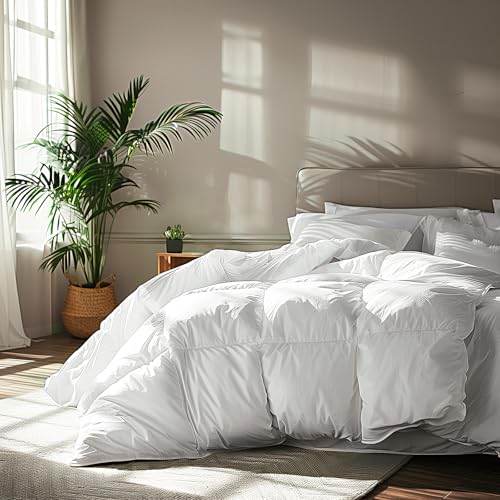
Where to buy
Check the latest price, availability and delivery on Amazon. Orders are placed on Amazon. We may earn a commission from qualifying purchases.
- Best overall: Serta Goose Feather Down Fiber Comforter — Duvet Insert, Full/Queen 90×90 — Check on Amazon
- WhatsBedding Feather Down Fiber Duvet Insert, Queen 90×90 — Check on Amazon
- Royoliving Premium Feathers Down Duvet Insert, Queen 90×90 — Check on Amazon
- Bedsure Comforter Duvet Insert, GentleSoft Down Alternative, Queen 88×88 — Check on Amazon
See 2 more Amazon options
- LINENSPA All-Season Down Alternative Comforter — Duvet Insert, Queen 88×92 — Check on Amazon
- Utopia Bedding Comforter Duvet Insert, Queen 88×88 — Check on Amazon
Read the full guide ↓
Disclosure: As an Amazon Associate, topratedkitchenware.com earns from qualifying purchases. Links to Amazon on this page are affiliate links; they cost you nothing extra. Listing details such as price and availability change often, so check the current Amazon listing before you buy.
A guest room changes what a good duvet insert is. The insert on your own bed gets judged every night; the one in the spare room gets judged a few dozen nights a year, by people whose warmth preferences you mostly do not know, and it spends the rest of its life sitting made-up and idle in a room nobody heats. That changes the buying maths completely. Durability under nightly use matters less. Washability between guests matters more. A fill that suits an unknown sleeper — medium warmth, no strong quirks — matters more than the fill you personally love. And the value should be read against actual use, not just the purchase: spread over the nights a guest bed actually hosts, the differences between picks in this guide matter less than how well each one suits the room, the cover and the sleeper.
One honesty note before the picks, because this category needs it at every budget. No insert under $100 is filled mostly with genuine down clusters — the soft, quill-free undercoat that lofts high and insulates at almost no weight. That product starts above this budget. What $100 genuinely buys for a guest bed is the honest tier below it: inserts filled with goose feather and down fiber — real goose fill processed into a fiber form — and well-made down alternative inserts with the loops, tabs and plain shells that make an insert work inside a cover. For a guest room, that tier is not a compromise. It is arguably the right tier outright: the cover is the layer your guests see, touch and judge, and every pick below leaves money in the budget for a good one.
For most hosts we would begin with the Serta feather down fiber insert, whose medium warmth and familiar hotel feel suit the widest range of guests. If the room hosts often and the reset between guests is your real problem, the Bedsure further down is the pick that solves it, because the insert itself goes through the wash. Below you will find a quick picks table, detailed notes on each of the six, a comparison table, a buying checklist written for hosts, the mistakes hosts make most in this category, and answers to the questions that come up again and again.
In this guide
Quick Picks
Short on time, or comparing several options at once? Each row below names a hosting situation and the product that suits it, with a link to the listing. Sizes are for the queen or full/queen size named — check price on Amazon for the current listing.
| Hosting situation | Pick | Why it stands out | Link |
|---|---|---|---|
| Best overall for guests | Serta Goose Feather Down Fiber Duvet Insert, Full/Queen 90×90 | Real goose feather/down fiber in a cotton shell, at a familiar hotel weight | Check on Amazon |
| Feather feel for less | WhatsBedding Feather Down Fiber Duvet Insert, Queen 90×90 | The same fill family as the Serta, positioned as a value alternative in this tier | Check on Amazon |
| For a regular guest you know well | Royoliving Premium Feathers Down Duvet Insert, Queen 90×90 | Whole feather-and-down fill with real body — positioned at the top of this tier | Check on Amazon |
| Easiest reset between guests | Bedsure GentleSoft Duvet Insert, Queen 88×88 | Eight tabs and an insert that itself machine washes | Check on Amazon |
| Best on a tight budget | LINENSPA Down Alternative Duvet Insert, Queen 88×92 | Eight loops and a 3-year warranty at the budget end of this tier | Check on Amazon |
| Rarely used rooms and second covers | Utopia Bedding Duvet Insert, Queen 88×88 | The proven spare-bed workhorse at the budget end of this tier | Check on Amazon |
How These Picks Were Chosen
The first filter was the budget itself, applied honestly, and the second was the job in the title: a duvet insert, for a guest room. Every product below is a real Amazon listing in this under-$100 tier in the queen or full/queen size in the United States, and every one is sold as an insert or is genuinely built to work as one — plain shell, and tabs, loops or ties to anchor it inside a cover. Decorative comforter sets, bed-in-a-bag bundles and standalone blankets were left out, because they do not answer the search you actually made. Where a pick sits at the top of this tier — the Royoliving is the case here — we say so in its review, and you should check the current price on Amazon to confirm it still sits within the budget before you buy.
On top of the insert filter, we applied a guest test with four questions. First: would this suit a sleeper you cannot interview? That favours medium, all-season warmth over specialist fills, and penalises quirks — heavy weight, noticeable quill feel, strong odours out of the pack — that a guest will politely never mention. Second: how does the bed get reset between guests? The cover always gets washed; the question is whether the insert can be refreshed too, and how much work that takes. Third: how does it age through the idle months? A guest insert spends most of its life stored in a made bed in an unheated room, so calendar ageing matters more than wear. Fourth: how does the value look at guest-room usage rates? We cover that in the section further down, because at low usage rates washability, storage and fit for an unknown sleeper matter more than small differences between picks in the same tier.
We did not use these products ourselves. We read the maker listings and specification pages, compared fill compositions ounce by ounce and percentage by percentage, checked dimensions against standard duvet cover sizes, and counted the attachment points, because on an insert those details decide whether the product works at all. A fill percentage printed in a listing’s product information outweighed a headline claim; where a brand’s marketing language and its own specification table disagreed, we followed the table and said so.
One thing we looked at closely was fill honesty, because this category’s vocabulary is slippery. “Down fiber” and “feather fiber” are processed forms of real goose down and feathers — genuine animal fill, but not the down clusters that give a premium duvet its loft, and no insert in this guide is filled mostly with clusters. The Serta and WhatsBedding are fiber fills and are described as fiber throughout this guide, including where their own listings reach for grander words. The Royoliving’s fill is mostly whole feathers with a minority of down, which is a different trade again: more genuine feather body, more weight, more quill feel. Warmth, loft and fill-power figures quoted anywhere below are maker claims, printed as claims, and the section on fill words further down explains exactly what each term does and does not promise.
The 6 Best Duvet Inserts for Guest Rooms Under $100
Serta Goose Feather Down Fiber Duvet Insert, All Season Medium Warmth, Full/Queen 90×90
Who it suits: Hosts who want the guest bed to feel like a decent hotel bed — real goose fill, a familiar weight, nothing a visitor has to get used to.
This is the insert that defines the honest top of this tier, and it suits guests for a specific reason: it is the most familiar sleep in the guide. The listing’s own product information gives the fill precisely: 90% white goose feather fiber and 10% white goose down fiber, inside a 100% cotton cover, at the full 90 by 90 inch full/queen size. Read that fill line the way we do in this guide: it is feather and down fiber — real goose material that has been processed into a fiber fill — and not a fill of down clusters. What fiber buys you is much of the breathability, drape and natural warmth regulation of goose fill well below the tier above it; what it does not buy is the weightless loft of a premium down duvet. Check price on Amazon for the current listing for this size.
For a guest bed, the all-season medium-warmth rating is the right default in a way it might not be on your own bed. You know whether you sleep hot; you do not know whether next month’s visitor does. A medium insert inside a cover, with a blanket folded at the foot of the bed for cold sleepers, covers the widest range of guests without anyone having to ask for anything. The cotton shell helps too: it breathes with the fill instead of wrapping it in polyester, and it is quiet — no rustle through a thin cover when a guest turns over in an unfamiliar room. As an insert it carries the Serta name from Blue Ridge Home Fashions, one of the largest feather-bedding makers in the US market, which shows in the consistency of the specification data — model number, UPC and fill percentages all published, which is more than most listings in this tier offer.
- Genuine goose fill — 90% feather fiber / 10% down fiber per the listing — in the middle of this tier.
- Medium all-season warmth: the safest single choice for guests whose preferences you do not know.
- 100% cotton shell: breathable and quiet inside a cover.
- Check price on Amazon for the current price for the full/queen size.
Honest limitation: It is a fiber fill, not a down-cluster fill — heavier and lower-lofting than a true down duvet — and feather-family fills want gentler care than synthetics, so the between-guests reset for this pick is the cover wash plus airing the insert, not a machine cycle; read the care label before assuming it can go through a home wash like the down alternative picks below.
Choose it if your guest room hosts a rotation of different people and you want the one insert that suits the most of them. Skip it if washing the insert itself between guests is non-negotiable — take the Bedsure instead.
WhatsBedding Feather Down Fiber Duvet Insert, Queen 90×90
Who it suits: Hosts who like the Serta’s recipe — feather and down fiber in cotton — and would rather focus the rest of the budget on the cover guests actually see.
WhatsBedding builds its insert on the same honest formula: a fill of feather and down fiber, a 100% cotton shell, the full 90 by 90 inch queen footprint, and corner tabs to tie into a cover. The brand states its fill is OEKO-TEX certified, a maker claim we print as a claim, and positions the insert as all-season hotel-style bedding. Check the current price on Amazon for the queen size. Positioned as a value route into the feather-fiber family, it offers the same basic construction, the same cotton shell and the same size, from a smaller brand in this tier. Judged through the guest lens, that positioning is well aimed — guests judge the cover, the pillows and the mattress long before they form any opinion about which brand of insert is inside.
The trade for that value positioning is depth of track record, and it matters slightly more in a guest room than in your own room, because you will not be sleeping on the purchase and catching a mistake early. WhatsBedding sells a wide and confusing range of near-identical feather comforters — different fill recipes, different piping, different warmth ratings under very similar titles — so the discipline with this pick is to buy the exact listing linked here, the feather down fiber queen 90×90, and to check the fill line on the product page matches before ordering. Judged on its own listing, the insert does everything the category asks: real goose fiber fill, a breathable natural shell, tabs at the corners so it stays spread inside the cover instead of balling into one end, and a medium all-season weight that suits the unknown-sleeper test.
- Feather and down fiber fill with a 100% cotton shell — the Serta formula in a value position in this tier.
- Corner tabs for tying into a duvet cover.
- Full 90×90 inch queen size.
- Check price on Amazon for the current price for the queen size.
Honest limitation: The verification trail is thinner than the Serta’s, and the brand’s lookalike model range makes it easy to land on the wrong listing; confirm the fill and size on the page before you buy.
Choose it if you want feather fiber in cotton in a value position in this tier. Skip it if you prefer the deepest record and the most consistent specification data — that is the Serta.
Royoliving Premium Feathers Down Duvet Insert, Queen 90×90 (50 oz)
Who it suits: Hosts with a regular guest whose tastes they actually know — a parent who visits monthly, say — who want that bed to feel like a traditional feather duvet, and who want that traditional feel within this tier.
The Royoliving is the connoisseur’s pick of the six, and the one that needs the most careful framing, especially for guests. Where the Serta and WhatsBedding use fiber processed from feathers and down, this insert’s fill — 80% feathers and 20% down in the brand’s material specification for this model line — is whole feather and down fill, with a stated 50 ounces of it in the queen. The brand states the fill is RDS and DOWNPASS certified, and the listing claims a “750+ fill power” figure; treat that number as a maker claim, because fill power is a measure designed for down clusters, and on a feather-rich blend it functions as marketing rather than as a comparable laboratory grade. What is not marketing is the feel difference: whole-feather fills have body, weight and drape that fiber fills do not, and inside a cover this is the insert that feels most like a traditional hotel feather duvet.
The guest-room catch is that body and weight are a preference, not a universal upgrade. A guest who loves a feather bed will think you have done something wonderful; a guest who sleeps hot, or who dislikes any quill texture through a cover, will simply sleep worse and say nothing. That is why we position this pick for a known, regular guest rather than a rotating cast — it is the one insert in the guide you buy for a person, not for a room. The second catch is its position in the tier. It sits at the ceiling of this under-$100 budget, so check the current price on Amazon before you buy and confirm this queen size still sits within the budget. When it does, it is arguably the most substantial insert in this guide; if the current listing has moved above this tier, take the Serta instead.
- Whole feather-and-down fill (brand spec: 80% feathers / 20% down) — the most genuine fill here.
- 50 oz fill weight in the queen size; 100% cotton cover with corner tabs.
- Brand states RDS and DOWNPASS certified fill.
- Positioned at the ceiling of this tier — check price on Amazon before you buy.
Honest limitation: It sits at the top of this budget, so confirm the current price on Amazon still falls within the under-$100 tier before ordering — and a feather-rich fill is heavier, can have a faint quill feel through a thin cover, and wants the fluffing and airing routine feather bedding has always needed; for unknown guests, that texture is a gamble.
Choose it if the current price on Amazon sits within this tier and you are outfitting the bed for a guest you know loves feather bedding. Skip it if the current listing sits above this budget, or the room hosts strangers whose preferences you cannot predict.
Bedsure Comforter Duvet Insert, GentleSoft Down Alternative, Queen 88×88, Cream
Who it suits: Hosts whose real problem is the turnaround — the insert that itself goes through the wash between guests, so the whole bed, not just the cover, starts fresh.
Below the feather family, this is where the down alternative picks take over, and the Bedsure is the best of them for hosts. It is a quilted down alternative insert with box stitching and eight tabs — corners and side midpoints — which is the attachment arrangement that actually keeps an insert spread flat inside a cover instead of migrating into a lump at the foot. The brand certifies its materials to OEKO-TEX Standard 100, and the whole thing machine washes and dries, which for a guest room is the single most practical feature in this guide: the cover takes the weekly wash on your own bed, but a guest bed’s freshness question is about the layer underneath, and this is the pick where that layer can go through a large home machine instead of being aired and hoped over. It is positioned at the lower end of this tier — check price on Amazon for the current listing.
Two honest cautions belong with it. First, the size: at 88 by 88 inches it is a smaller queen than the 90 by 90 feather picks, which suits an 88-inch cover perfectly and leaves slack in a 90-inch one — measure your guest room’s cover before ordering, because a small insert in a big cover is the classic bunching complaint, and it is your guest who will discover it at midnight. Second, check the current price on Amazon before you buy, as listings in this category change often. The cream colorway linked here is the configuration described; the same insert sells in other colors, and each should be checked on its own listing.
- Eight tabs — the best attachment setup in this guide for staying flat in a cover.
- Fully machine washable — the only construction here that resets the insert itself between guests.
- OEKO-TEX Standard 100 certified materials per the brand.
- Positioned at the lower end of this tier — check price on Amazon.
Honest limitation: The 88×88 inch size runs small against 90-inch covers — check the current price on Amazon and compare its position in the tier against the feather picks before you decide.
Choose it if a full wash-the-insert reset between guests matters most. Skip it if your guest cover is a true 90×90 and you hate any slack — look at the Serta or WhatsBedding instead.
LINENSPA All-Season Down Alternative Comforter — Duvet Insert, Queen 88×92
Who it suits: Hosts furnishing a guest bed on a budget who still want a named brand, a warranty and proper cover loops — and rooms that host a handful of times a year.
The LINENSPA is the value anchor of the guide. Its listing specifies a 300 GSM down alternative fill — a maker figure, and a genuinely mid-weight one: the all-season choice for a heated home — inside a microfiber shell, with box stitching and eight corner and side loops for tying into a cover. It carries a 3-year warranty, which almost nothing else in this tier bothers to offer, and it machine washes. That warranty deserves a guest-room reading: warranties run on calendar time, not on nights slept, so a three-year warranty on a bed that hosts twenty nights a year is coverage the insert will likely never need but costs you nothing — while the same warranty on your own nightly bed is the one doing real work. It sits at the budget end of this tier — check price on Amazon for the current queen listing.
Its dimensions deserve a sentence of their own: 88 by 92 inches is a longer, narrower queen than the 90-square feather picks, which suits sleepers who want length over the foot of the bed and covers cut to the same pattern. The brand markets this model with the word “hypoallergenic” in its name; we print that as a maker label only — a polyester fill does not host the things feather fill can, but no insert treats allergies, and this guide makes no such claim for any pick. What the LINENSPA honestly is: the insert equivalent of a reliable appliance, bought by the tens of thousands, that does the whole guest-room job at the budget end of this tier.
- Eight loops and box stitching — a proper insert layout at the budget end of this tier.
- 300 GSM maker-rated fill: a true all-season mid-weight for unknown sleepers.
- 3-year warranty and full machine washability.
- Check price on Amazon for the current price for the queen size.
Honest limitation: The microfiber shell breathes less well than the cotton shells above it and can sleep warmer, and the 88×92 sizing is a different shape from 90×90 covers — match it to your guest cover’s dimensions, not just its size name.
Choose it if the budget is the point and you want loops, warranty and washability anyway. Skip it if your guests tend to sleep hot and you want a cotton shell against the fill — step up to the feather family.
Utopia Bedding Comforter Duvet Insert, Queen 88×88, White
Who it suits: Anyone equipping a rarely used guest bed, a second cover set or a holiday let, who wants a proven insert at the budget end of this tier.
Utopia Bedding’s insert is the category’s long-running workhorse: siliconized fiberfill inside a microfiber shell, box stitched with piped edges, corner tabs for the cover, and a listing whose product information — model, UPC, dimensions — is as complete as the Serta’s. The queen measures 88 by 88 inches. Check the current price on Amazon for the white queen linked here, as other color options are listed separately. In the base guide we called this the guest-room pick; in this guide it simply comes home. For a bed slept in a dozen nights a year, its plainness is the point: it washes in any large machine, dries fast, stores without ceremony, and asks for nothing during the months nobody is in the room.
Set expectations where they belong. This is the flattest-lofting pick in the guide; the loft that reads as plush in the feather family simply is not here, and the microfiber shell is a functional fabric rather than a pleasure to touch — though inside a cover, the shell is the one part a guest never touches. For a guest room that hosts most weekends, the Bedsure above is the better down alternative as a step up within this tier, and the Serta is the better bed. For a room that hosts at holidays and the odd overflow night, the Utopia’s combination of tier position, documentation and sheer installed base is hard to argue with — and the guest-room use discussion in the next sections shows why stepping far above this tier here buys so little for a rarely used bed.
- Corner tabs, box stitching and piped edges — the full insert checklist.
- Machine washable and quick to dry; ideal for guest and rental beds.
- Check price on Amazon for the current price for the white queen size.
- Complete published specifications from a long-running listing.
Honest limitation: The lowest loft of the six and a plainly functional microfiber shell; for a frequently used guest bed it feels noticeably flatter than the feather picks and the Bedsure.
Choose it if the room hosts rarely and you want the proven budget option in this tier. Skip it if the guest bed is used most weekends and loft matters — step up within this tier instead.
Comparison Table
| Product | Fill | Size (queen) | Attachment | Link |
|---|---|---|---|---|
| Serta Goose Feather Down Fiber Duvet Insert | 90% goose feather fiber / 10% down fiber | 90×90 in | Insert build, cotton shell | Check on Amazon |
| WhatsBedding Feather Down Fiber Duvet Insert | Feather and down fiber | 90×90 in | Corner tabs | Check on Amazon |
| Royoliving Premium Feathers Down Duvet Insert | 80% feathers / 20% down (brand spec), 50 oz | 90×90 in | Corner tabs | Check on Amazon |
| Bedsure GentleSoft Duvet Insert | Down alternative | 88×88 in | 8 tabs | Check on Amazon |
| LINENSPA Down Alternative Duvet Insert | Down alternative, 300 GSM (maker figure) | 88×92 in | 8 loops | Check on Amazon |
| Utopia Bedding Duvet Insert | Down alternative (siliconized fiberfill) | 88×88 in | Corner tabs | Check on Amazon |
How to Choose a Duvet Insert for a Guest Room Under $100
- Count your guest-nights first. A room that hosts most weekends justifies the feather picks; a room that hosts only a few nights a year does not. The guest-room use section below explains why frequency matters more than small differences within this tier.
- Measure the guest cover, not the bed. Queen inserts come in at least three shapes — 90×90, 88×88 and 88×92 inches. An insert smaller than its cover bunches; one the same size or an inch larger stays spread. The cover’s internal dimensions decide which pick fits.
- Choose medium warmth, then layer. You cannot interview your guests. An all-season medium insert, plus a folded blanket at the foot of the bed for cold sleepers and the option to throw the insert back for hot ones, covers more people than any single specialist fill.
- Count the attachment points. Four corner tabs are the minimum; eight tabs or loops (corners plus side midpoints) keep the insert flat through the night and through the wash. A guest will not re-tie a migrated insert — they will just sleep badly in a lump.
- Decide the between-guests question before buying. If the insert itself must go through your home machine, buy down alternative (Bedsure, LINENSPA, Utopia). Feather-family inserts live happily inside a washed cover but want spot or professional cleaning themselves.
- Read the fill percentages, not the headline. “Goose down” on a banner can mean 10% down fiber in the specification table. The fill line in the product information — percentages, fiber versus whole feather versus cluster — is the product you are actually buying.
- Treat fill-power numbers on blends as marketing. Fill power grades down clusters in a laboratory test. A “750 fill power” claim on a feather-rich or fiber fill is a maker’s figure, not a comparable grade; fill weight in ounces and the percentages tell you more.
- Spend the visible money on the cover. Guests see, touch and judge the cover, the pillowcases and the sheets. An honest mid-tier insert inside a good cover reads as a luxury bed; a premium insert inside a tired cover does not.
- Check the current price on Amazon. Picks at the ceiling of this tier, such as the Royoliving, need a current-price check to confirm they still sit within the under-$100 budget before you buy.
- Fluff before guests arrive, not after they complain. An insert that has sat compressed in a made bed for two months needs shaking out and a few hours of air before the bed is remade. Build it into the hosting routine.
The Guest-Room Math: Use Matters More Than Tier Position
Host thinking is different from owner thinking, and it flatters this whole tier. A guest insert is not judged by nightly use over years; it is judged by a handful of stays, long idle stretches in a made bed, and how completely it resets between visitors. That is why small differences in position within this under-$100 tier matter less than fit for the job. In a busy guest room — the kind that takes visitors most months — buy the feel and the reset: the Serta’s familiarity for an unknown sleeper, or the Bedsure’s washability when turnaround is the real problem, should decide, not a small step from one end of the tier to the other. Check price on Amazon for whichever pick you choose, and keep the focus on warmth, size and attachment.
A quiet room points the other way. At only a few guest-nights a year — the holidays and one overflow weekend — washability, storage behaviour and simplicity point toward the down alternative picks, and keeping the insert choice at the budget end of this tier leaves more of the overall budget for the cover your guests will actually judge. What this thinking never justifies is leaving this tier for a guest bed: a mostly-cluster down insert from the tier above buys loft and lightness that no guest identifies through a cover, while the honest picks here already cover warmth, sizing and reset needs for a bed that hosts only occasionally.
A Bed for a Sleeper You Have Never Met
The defining problem of the guest bed is that its user is a stranger to your buying decision. You do not know whether they sleep hot or cold, whether they like weight on their legs, whether a feather quill through a thin cover will bother them, or whether they will spend the night politely enduring the wrong choice rather than asking for a blanket. Every pick in this guide was filtered through that uncertainty, and it explains the ranking. Medium warmth beats specialist warmth. Cotton shells beat microfiber for the sleeper who runs warm, because the cover above cannot fix a shell that traps heat against the fill. Adjustable systems — layers that can be added or removed — beat any single perfect fill, which is why the folded blanket at the foot of the bed is part of the recommendation and not a decoration.
It also explains the one deliberate exception. The Royoliving, with its whole-feather body and weight, is the only pick here that is a genuine preference rather than a safe default — which is why we frame it for the guest you do know: the parent who visits every month and loves a feather bed, the friend whose tastes you have shared a house with before. For that guest, diplomacy runs the other way. A bed made up the way they like it, in a house that is not theirs, is a form of welcome no hotel matches. Buy the safe inserts for the room; buy the Royoliving for the person.
A word, too, about what the guest actually experiences, because it should steer the rest of the budget. Nobody has ever identified an insert through a cover. What a guest registers is the cover’s fabric against their skin, the pillow, the sheets, whether the bed is warm enough without being stuffy, and whether the insert stays spread or migrates into a rope at the foot. Attachment points and sizing — the unglamorous insert virtues — are what protect that experience, and they are present across this tier. Spend accordingly: an honest insert, correctly sized, with eight attachment points where you can get them, inside the best cover the remaining budget allows.
Between Guests: Washing, Storing and the Idle Months
A guest insert lives two lives: a few nights of use, and long stretches of storage disguised as a made bed. Managing the second life is most of the job. The reset between guests has a natural order. The cover, sheets and pillowcases go through the wash every time — that part is not optional and no insert choice changes it. The insert itself is where the picks divide. The three down alternative inserts (Bedsure, LINENSPA, Utopia) can go through a large home machine and be dried thoroughly, which settles the freshness question completely; do it when a stay has been long or the room has sat closed through a humid summer, and air the insert rather than washing it after a single short night. The feather-family inserts (Serta, WhatsBedding, Royoliving) want gentler handling — spot cleaning, airing, and professional cleaning when they eventually need it — which is a real, if infrequent, cost of choosing them.
Storage discipline matters more than most hosts expect. An insert left in a made bed in an unheated, unventilated room for months should be aired when you open the room up, and shaken out and given a few hours to re-loft before the bed is remade for arrivals — everything here ships vacuum-packed and re-compresses under its own made-bed weight over time. If you store a spare insert out of the bed, use a breathable bag rather than a sealed plastic one, and never store any fill damp: a mildew smell in a guest room is the one hosting failure guests actually do mention. Finally, match the insert count to the hosting pattern. One insert per guest bed, washed or aired in rotation, beats a cupboard of spares; the exception is the holiday let or the two-cover household, where the Utopia’s position at the budget end of this tier makes a genuine second insert the rational buy.
What $100 Does Not Buy
It does not buy a duvet filled mostly with down clusters. That product — 75% or more down content, a stated fill power that means something, a baffle-box build from an established down house — starts above this tier: the APSMILE all-season queen, Serta’s European down queen, and the puredown 800-fill-power goose down insert are all positioned well above this budget on Amazon, all named here without links as the ceiling markers they are. For your own bed, that gap buys real loft and lightness. For a guest bed, the use discussion above shows what it buys instead: an improvement guests are unlikely to identify through a cover. It also does not reliably buy the mid-priced feather brands whose listings cannot hold a featured offer: Egyptian Bedding’s long-running 48 oz queen and Pacific Coast’s feather down fiber queen both surfaced in research with no featured offer available, so both are named here unlinked rather than recommended on a guess. A Hotel Grand feather down fiber queen sits in this tier by positioning, but its exact listing could not be verified this session; if it verifies at publish time it is the first swap-in for this guide.
What $100 does buy, spent well, is everything a guest bed actually needs: genuine goose fiber in cotton from two makers, the most feather-rich insert in this tier, and down alternative inserts with eight-point attachment, certifications and warranties at the budget end of this tier. The gap between this tier and the one above is real but narrow in daily use — loft and lightness, mostly — and for a layer that lives hidden inside a cover, on a bed that hosts a few dozen nights a year, it is the gap most hosts are happiest not paying for.
Common Buying Mistakes
- Buying by the size name instead of the inches, then wondering why a “queen” insert bunches inside a 90-inch cover.
- Spending the whole budget on the insert and nothing on the cover — the cover is the layer your guests touch, wash and judge.
- Choosing a specialist fill — heaviest feather, warmest winter weight — for guests whose preferences you do not know.
- Reading “goose down” in a headline and never checking the fill percentages in the specification table.
- Paying for a fill-power number on a feather or fiber blend, where the figure is a maker claim rather than a laboratory grade.
- Choosing four corner tabs when eight-point attachment exists in this tier — then leaving a guest to fight a migrated insert.
- Buying a feather-family insert for a household that needs to machine wash the insert itself between guests, not just the cover.
- Making up the guest bed straight from two months of storage without airing or fluffing the insert first.
- Judging loft straight out of the vacuum pack, before the fill has had its 24–48 hours to expand.
- Assuming every color and size option of a listing is the same; check the exact size and color you need on Amazon before you buy.
Final Recommendation
- Most hosts: Serta Goose Feather Down Fiber Duvet Insert.
- Feather fill for less: WhatsBedding Feather Down Fiber Duvet Insert.
- For a regular guest you know well: Royoliving Premium Feathers Down Duvet Insert.
- Easiest reset between guests: Bedsure GentleSoft Duvet Insert.
- Tightest budget: LINENSPA Down Alternative Duvet Insert.
- Rarely used rooms and spares: Utopia Bedding Duvet Insert.
Our top two are the Serta for hosts whose rooms see a rotation of guests and the Bedsure for hosts whose real problem is the turnaround, because between them they cover the two honest reasons to shop this tier for a guest room at all: a bed that suits almost anyone, and a bed that resets completely between visits. If the Royoliving’s current price on Amazon sits within this tier when you read this and your guest room has a regular whose tastes you know, it is the personal upgrade — if it sits above this budget, the Serta is the better buy in this tier. Measure the cover, count the tabs, read the fill percentages on the listing rather than the banner, consider how often your own room actually hosts, and check the current price on Amazon before you order; the insert that matches your cover’s inches and your laundry habits is the right one, whichever badge it wears.
Related guides
Frequently Asked Questions
What is the difference between a duvet insert and a comforter?
Construction and finish. An insert is built to live inside a cover: plain shell, and tabs, loops or ties to fasten it to the cover so it stays flat. A comforter is finished to be seen and used bare, and may have no attachment points. Many products are sold under both names; judge by the attachment points, the shell and the dimensions, not the title.
What size duvet insert do I need for a queen guest cover?
Match the insert to the cover’s internal measurements. Queen covers are commonly 88 or 90 inches square; an insert the same size or one inch larger stays spread, while one two inches smaller bunches. This guide includes all three common queen shapes — 90×90, 88×88 and 88×92 — so pick the one that matches your guest cover’s tag, not just its size name.
How warm should a guest room duvet insert be?
Medium and all-season, for almost every host. You do not know your guests’ warmth preferences, and a medium insert can be adjusted in both directions — a folded blanket at the foot of the bed for cold sleepers, the insert thrown back for hot ones. Specialist winter or summer fills only make sense when the same known guest uses the room all season.
Should I wash the insert between guests?
The cover, sheets and pillowcases: yes, every time. The insert: it depends on the fill. The down alternative picks in this guide machine wash, and a wash after a long stay or a closed-up summer is reasonable; after a single short night, airing is enough. The feather-family picks want spot or professional cleaning rather than home washing — the cover is their washable layer.
Is feather fiber the same as a down comforter?
No. Feather and down fiber are real goose fill processed into a fiber form: breathable and warm, but heavier and lower-lofting than the down clusters in a true down duvet, with a possible faint quill feel. A mostly-cluster down insert starts above this budget. The fiber picks in this guide are labeled as fiber everywhere, including where their own listings use grander language.
How many loops or tabs should a guest room insert have?
Four corner points are the minimum that works. Eight — corners plus side midpoints, as on the Bedsure and LINENSPA here — is noticeably better at keeping the insert flat through the night and after washing, and it matters more in a guest room, because a guest will not fix a migrated insert themselves. If your cover has internal ties, count them and match the insert’s points to them.
How should I store a guest duvet insert between visits?
Either in the made bed, aired and fluffed before arrivals, or in a breathable storage bag — never sealed plastic, and never damp. Give a stored insert a few hours to re-loft after unpacking, and a full 24 to 48 hours before judging a brand-new one, since everything here ships vacuum-packed.
Is it worth spending more than $100 on a guest room insert?
For most hosts, no. The step above this tier buys loft and lightness from mostly-cluster down — for an improvement guests cannot identify through a cover at guest-room usage rates. Keep the budget focused on the cover, the pillows and the sheets, which are the layers a guest actually judges.
