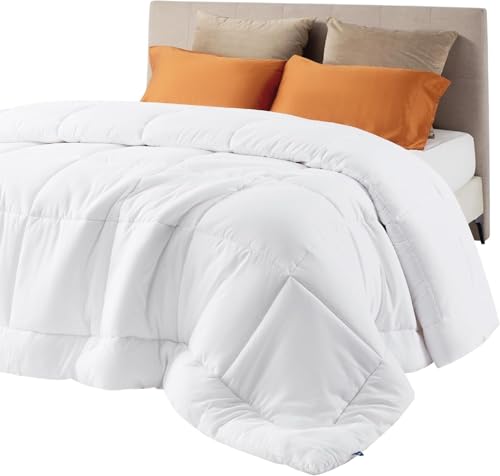
Where to buy
Check the latest price, availability and delivery on Amazon. Orders are placed on Amazon. We may earn a commission from qualifying purchases.
- Best overall: Serta Goose Feather Down Fiber Comforter — Duvet Insert, Full/Queen 90×90 — Check on Amazon
- WhatsBedding Feather Down Fiber Duvet Insert, Queen 90×90 — Check on Amazon
- Royoliving Premium Feathers Down Duvet Insert, Queen 90×90 — Check on Amazon
- Bedsure Comforter Duvet Insert, GentleSoft Down Alternative, Queen 88×88 — Check on Amazon
See 2 more Amazon options
- LINENSPA All-Season Down Alternative Comforter — Duvet Insert, Queen 88×92 — Check on Amazon
- Utopia Bedding Comforter Duvet Insert, Queen 88×88 — Check on Amazon
Read the full guide ↓
Disclosure: As an Amazon Associate, topratedkitchenware.com earns from qualifying purchases. Links to Amazon on this page are affiliate links; they cost you nothing extra. Listing details such as price and availability change often, so check the current Amazon listing before you buy.
A small bedroom changes what a duvet insert has to do. The room has less air to absorb your body heat, so it warms up faster at night and can feel stuffy by 2 a.m.; it often has an exterior wall or a window right beside the bed, so it can also swing cold in winter. The bed is more likely to be a twin or a full than a queen, pushed against a wall on one side. And there is usually no linen closet — the spare insert, the off-season blanket and the insert itself all have to live in the same few cubic feet you sleep in. An insert that is perfect in a big primary bedroom can be the wrong one here: too warm, too bulky to store, too much drape pooling on the floor.
So this guide takes the six best-verified duvet inserts under $100 and re-judges them for small rooms specifically. The honesty rules are the same as in our main under-$100 guide. Nothing in this tier is filled mostly with genuine down clusters — that product starts above this budget. What $100 buys is goose feather and down fiber (real goose fill processed into fiber form, framed as fiber everywhere in this guide), one whole feather-and-down insert that sits at the top of this tier, and well-made down alternative inserts with the tabs and loops that make an insert stay put inside a cover. Prices are not printed in this guide because they change often — check the current price on Amazon for the size your small room actually needs; most of these listings also sell twin and full sizes, and each size and color is priced independently on the live listing.
For most small bedrooms we would start with the Serta feather down fiber insert: its cotton shell breathes in a room that runs warm, and it is quiet in a room where every rustle sounds close. If storage is your binding constraint, the flatter down alternative picks store smaller and wash in any large machine. Below you will find a quick picks table, detailed notes on each of the six, a comparison table, a buying checklist written for small rooms, the mistakes small-bedroom shoppers make most, and answers to the questions that come up again and again.
In this guide
Quick Picks
Short on time, or comparing several options at once? Each row below names a small-bedroom situation and the product that suits it, with a link to the listing. Check the current price on Amazon for the queen/full-queen size and for the smaller sizes these listings offer.
| Buyer type | Pick | Why it stands out | Link |
|---|---|---|---|
| Best overall | Serta Goose Feather Down Fiber Duvet Insert, Full/Queen 90×90 | Breathable cotton shell for rooms that run warm; quiet at close quarters | Check on Amazon |
| Best feather value | WhatsBedding Feather Down Fiber Duvet Insert, Queen 90×90 | The same fill family as the Serta, positioned lower in this tier — check price on Amazon | Check on Amazon |
| Best for a cold, drafty small room | Royoliving Premium Feathers Down Duvet Insert, Queen 90×90 | The warmest, heaviest fill here — positioned at the top of this tier; check the current price on Amazon | Check on Amazon |
| Best proportioned for small beds | Bedsure GentleSoft Duvet Insert, Queen 88×88 | The smallest queen here, eight tabs, fully machine washable | Check on Amazon |
| Best on a tight budget | LINENSPA Down Alternative Duvet Insert, Queen 88×92 | Eight loops and a 3-year warranty at the entry end of this tier — check price on Amazon | Check on Amazon |
| Best for storage-starved rooms | Utopia Bedding Duvet Insert, Queen 88×88 | The flattest loft here — least bulk on the bed and in storage | Check on Amazon |
How These Picks Were Chosen
The first filter was the budget itself, applied honestly, and the second was the job in the title: a duvet insert. Every product below is a real Amazon listing in the queen or full/queen size in the United States, positioned within this under-$100 tier — check the current price on Amazon to confirm where it sits when you shop — and every one is sold as an insert or is genuinely built to work as one — plain shell, and tabs, loops or ties to anchor it inside a cover. Decorative comforter sets, bed-in-a-bag bundles and standalone blankets were left out, however appealing they look. Where a pick sits at the very top of this tier — the Royoliving is the case here — we say so in its review rather than presenting it as a mid-tier option.
The third filter is the one this guide exists for: the small-bedroom test. We asked of every pick how it behaves in a room with little air volume and less storage. Does the shell breathe, or does it trap heat in a room that already runs warm? How much physical bulk does the insert add — on the bed, where an oversized insert drapes to the floor and makes a small room look smaller, and off the bed, where it has to fit under the mattress, in a drawer or on the one closet shelf? Can it be washed in the large machines a small-space dweller actually has access to? And is it proportioned to the twin and full beds small rooms usually hold, or is it a big queen insert that will swamp them?
We did not use these products ourselves. We read the maker listings and specification pages, compared fill compositions ounce by ounce and percentage by percentage, checked dimensions against standard duvet cover sizes, and counted the attachment points, because on an insert those details decide whether the product works at all. A fill percentage printed in a listing’s product information outweighed a headline claim; where a brand’s marketing language and its own specification table disagreed, we followed the table and said so.
One thing we looked at closely was fill honesty, because this category’s vocabulary is slippery. “Down fiber” and “feather fiber” are processed forms of real goose down and feathers — genuine animal fill, but not the down clusters that give a premium duvet its loft, and no insert in this guide is filled mostly with clusters. The Serta and WhatsBedding are fiber fills and are described as fiber throughout this guide, including where their own listings reach for grander words. The Royoliving’s fill is mostly whole feathers with a minority of down, which is a different trade again: more genuine feather body, more weight, more quill feel. Warmth, loft and fill-power figures quoted anywhere below are maker claims, printed as claims.
The 6 Best Duvet Inserts for Small Bedrooms Under $100
Serta Goose Feather Down Fiber Duvet Insert, All Season Medium Warmth, Full/Queen 90×90
Who it suits: Small-bedroom sleepers whose room runs warm, who want real goose fill inside their cover, from an established bedding name, without leaving the budget.
This is the insert that defines the honest top of this tier. The listing’s own product information gives the fill precisely: 90% white goose feather fiber and 10% white goose down fiber, inside a 100% cotton cover, at the full 90 by 90 inch full/queen size. Read that fill line the way we do in this guide: it is feather and down fiber — real goose material that has been processed into a fiber fill — and not a fill of down clusters. What fiber buys you is much of the breathability, drape and natural warmth regulation of goose fill in a more accessible form; what it does not buy is the weightless loft of a premium down duvet. Check price on Amazon for the current figure in the queen and in the smaller sizes.
Two of its qualities matter more in a small room than anywhere else. The first is the cotton shell: an insert spends its life sealed inside a cover, and a cotton shell breathes with the fill instead of wrapping it in polyester — in a small room that heats up quickly overnight, that breathability is the difference between an insert you keep on the bed all year and one you strip off in June. The second is quiet. Cotton does not rustle the way synthetic shells can, and in a small room, where the bed is close to every wall and often to a sleeping partner’s ear, a silent insert matters a great deal. The all-season medium-warmth rating is the right default for a small heated room: warm enough for winter with ordinary pajamas, not so heavy that the room’s own warmth makes it unbearable. It carries the Serta name from Blue Ridge Home Fashions, one of the largest feather-bedding makers in the US market, and its specification data — model number, UPC, fill percentages — is fully published, which is more than most listings in this tier offer.
- Genuine goose fill — 90% feather fiber / 10% down fiber per the listing — positioned in the middle of this tier.
- 100% cotton shell: breathes in warm small rooms and stays quiet at close quarters.
- Full 90×90 inch sizing matches standard queen duvet covers exactly.
- Positioned in the middle of this tier — check the current price on Amazon.
Honest limitation: It is a fiber fill, not a down-cluster fill — heavier and lower-lofting than a true down duvet — and at 90×90 it is the joint-largest footprint here: on a full bed in a small room the drape is generous, so check the listing’s smaller sizes if your bed is a twin or full. Feather-family fills also want gentler care than synthetics; read the care label before assuming it can go through a wash cycle like the down alternative picks below.
Choose it if your small room runs warm and you want the most genuine goose fill this budget buys from a proven maker. Skip it if you need to machine wash the insert itself regularly — take a down alternative instead.
WhatsBedding Feather Down Fiber Duvet Insert, Queen 90×90
Who it suits: Buyers who like the Serta’s recipe — feather and down fiber in cotton — and want the same recipe positioned lower in this tier.
WhatsBedding builds its insert on the same honest formula: a fill of feather and down fiber, a 100% cotton shell, the full 90 by 90 inch queen footprint, and corner tabs to tie into a cover. Everything said above about the Serta’s small-room virtues applies here too — the breathable, quiet cotton shell is the reason this recipe suits a small warm room — positioned lower in this tier. The brand states its fill is OEKO-TEX certified, a maker claim we print as a claim, and positions the insert as all-season hotel-style bedding. Check the current price on Amazon for the live figure: this is the value route into the feather-fiber family — the same basic construction, the same cotton shell, the same size, from a smaller brand positioned below the Serta in this tier.
The trade for that lower positioning is depth of track record. WhatsBedding sells a wide and confusing range of near-identical feather comforters — different fill recipes, different piping, different warmth ratings under very similar titles — so the discipline with this pick is to buy the exact listing linked here, the feather down fiber queen 90×90, and to check the fill line on the product page matches before ordering. That discipline matters doubly if you are ordering a smaller size for a twin or full bed, because the lookalike models multiply across the size grid. Judged on its own listing, the insert does everything the category asks: real goose fiber fill, a breathable natural shell, tabs at the corners so it stays spread inside the cover instead of balling into one end, and a medium all-season weight.
- Feather and down fiber fill with a 100% cotton shell — the Serta formula, positioned lower in this tier.
- Corner tabs for tying into a duvet cover.
- Full 90×90 inch queen size.
- Positioned below the Serta in this tier — check the current price on Amazon.
Honest limitation: The verification trail is thinner than the Serta’s — its documentation is less extensive than the Serta’s published specification record — and the brand’s lookalike model range makes it easy to land on the wrong listing; confirm the fill and size on the page before you buy.
Choose it if you want feather fiber in cotton in a lower tier position than the Serta. Skip it if you prefer the deepest review record and the most consistent specification data — that is the Serta.
Royoliving Premium Feathers Down Duvet Insert, Queen 90×90 (50 oz)
Who it suits: Sleepers in a cold small room — a drafty window, an exterior wall, a radiator that never quite reaches — who want the most genuine feather-and-down content available under $100 and are willing to shop at the top of this tier to get it.
Small bedrooms are not all warm. A small room with one exterior wall and an old window can be the coldest room in the home, and that is the room this pick is for. Where the Serta and WhatsBedding use fiber processed from feathers and down, this insert’s fill — 80% feathers and 20% down in the brand’s material specification for this model line — is whole feather and down fill, with a stated 50 ounces of it in the queen. The brand states the fill is RDS and DOWNPASS certified, and the listing claims a “750+ fill power” figure; treat that number as a maker claim, because fill power is a measure designed for down clusters, and on a feather-rich blend it functions as marketing rather than as a comparable laboratory grade. What is not marketing is the feel difference: whole-feather fills have body, weight and drape that fiber fills do not, and inside a cover this is the insert that feels most like a traditional hotel feather duvet — and the warmest layer in this guide.
The catches are tier position and bulk. This pick sits at the very top of this under-$100 tier, so check the current price on Amazon before you rely on it for this budget — if the live figure sits above the tier when you shop, take the Serta instead. And 50 ounces of whole feather is the bulkiest fill here: on the bed it has real presence, and off the bed it needs the most storage room of the six — though feather does compress well in a vacuum bag, which is how a small room should store it. Choose it when your room is genuinely cold and its current price sits within this tier.
- Whole feather-and-down fill (brand spec: 80% feathers / 20% down) — the most genuine and warmest fill here.
- 50 oz fill weight in the queen size; 100% cotton cover with corner tabs.
- Brand states RDS and DOWNPASS certified fill.
- Positioned at the top of this tier — check the current price on Amazon to confirm it sits within budget.
Honest limitation: It sits at the ceiling of this tier, so its fit for this budget depends on the live listing — check the current price on Amazon — and a feather-rich fill is the heaviest and bulkiest here, can have a faint quill feel through a thin cover, and wants the fluffing and airing routine feather bedding has always needed.
Choose it if its current price on Amazon sits within this tier and your small room is the cold one in the home. Skip it if your room runs warm, storage is your binding constraint, or its current price sits above this tier.
Bedsure Comforter Duvet Insert, GentleSoft Down Alternative, Queen 88×88, Cream
Who it suits: Small-bedroom sleepers who want an insert proportioned to a smaller bed — tabs, washable fill, no special care — and do not mind synthetic fill.
Below the feather family, this is where the down alternative picks take over, and the Bedsure earns its small-bedroom billing on dimensions before anything else: at 88 by 88 inches it is the smallest queen in this guide, which means less overhang pooling toward the floor and a better proportion on the full and small-queen beds small rooms actually hold. It is a quilted down alternative insert with box stitching and eight tabs — corners and side midpoints — which is the attachment arrangement that actually keeps an insert spread flat inside a cover instead of migrating into a lump at the foot. The brand certifies its materials to OEKO-TEX Standard 100, and the whole thing machine washes and dries. That last point carries extra weight for small-space dwellers: many have no machine of their own, and a down alternative insert can go through a laundromat’s large machines without drama, while the feather-family picks above want gentler handling. Check the current price on Amazon for the queen and for the smaller sizes.
Two honest cautions belong with it. First, the flip side of its size: at 88 by 88 inches it suits an 88-inch cover perfectly and leaves slack in a 90-inch one — measure your cover before ordering, because a small insert in a big cover is the classic bunching complaint. Second, check the live listing for your color and size: the cream colorway linked here is the configuration described in this guide, and the same insert sells in other colors that are priced independently on Amazon.
- Eight tabs — the best attachment setup in this guide for staying flat in a cover.
- The smallest queen footprint here — better proportioned for small beds and rooms.
- Fully machine washable, including in a laundromat’s large machines.
- Positioned in the lower half of this tier — check the current price on Amazon.
Honest limitation: The 88×88 inch size runs small against 90-inch covers, so confirm its current position in this tier on Amazon before comparing it directly with the feather picks.
Choose it if washability, proportion and a stay-put fit inside the cover matter most. Skip it if your cover is a true 90×90 and you hate any slack — look at the Serta or WhatsBedding instead.
LINENSPA All-Season Down Alternative Comforter — Duvet Insert, Queen 88×92
Who it suits: Budget-first buyers in small rooms who want a named brand, a warranty and proper cover loops at the entry end of this tier.
The LINENSPA is the value anchor of the guide. Its listing specifies a 300 GSM down alternative fill — a maker figure, and a genuinely mid-weight one: the all-season choice for a heated home — inside a microfiber shell, with box stitching and eight corner and side loops for tying into a cover. It carries a 3-year warranty, which almost nothing else in this tier bothers to offer, and it machine washes in any large machine. Check the current price on Amazon for the queen and for the smaller sizes — this pick is positioned at the entry end of this tier.
Its small-room profile is mixed, and we will print both sides. Its dimensions — 88 by 92 inches — make it the longest insert here, which suits a tall sleeper on a full or queen bed who wants length over the foot. But its microfiber shell is the least breathable in the guide, and in a small room that warms up overnight that is a real charge, not a footnote: the shell can sleep warmer than the cotton-shelled feather picks. The brand markets this model with the word “hypoallergenic” in its name; we print that as a maker label only — a polyester fill does not host the things feather fill can, but no insert treats allergies, and this guide makes no such claim for any pick. What the LINENSPA honestly is: the insert equivalent of a reliable appliance, bought by the tens of thousands, that does the whole job at the entry end of this tier.
- Eight loops and box stitching — a proper insert layout at the entry end of this tier.
- 300 GSM maker-rated fill: a true all-season mid-weight.
- 3-year warranty and full machine washability.
- Positioned at the entry end of this tier — check the current price on Amazon.
Honest limitation: The microfiber shell breathes less well than the cotton shells above it and can sleep warmer — a genuine drawback in a small room that already runs hot — and the 88×92 sizing is a different shape from 90×90 covers; match it to your cover’s dimensions, not just its size name.
Choose it if the budget is the point and you want loops, warranty and washability anyway. Skip it if your small room runs warm and you want a cotton shell against the fill — step up to the feather family.
Utopia Bedding Comforter Duvet Insert, Queen 88×88, White
Who it suits: Anyone whose small room has almost no storage, who wants the least bulky insert that still does the whole job, at the entry end of this tier.
Utopia Bedding’s insert is the category’s long-running workhorse: siliconized fiberfill inside a microfiber shell, box stitched with piped edges, corner tabs for the cover, and a listing whose product information — model, UPC, dimensions — is as complete as the Serta’s. The queen measures 88 by 88 inches. Check the current price on Amazon for the white queen linked here and for other colors, which are priced independently.
What makes it the small-bedroom storage pick is its loft — or rather its lack of it. This is the flattest insert in the guide, and flat is a feature when space is the constraint: it adds the least visual bulk to a bed that dominates a small room, it folds or rolls to the smallest stored volume of the six, and it fits the under-bed boxes and single drawers that are the only storage most small rooms have. It also washes in any large machine and dries fast, which suits a laundromat routine. Set expectations where they belong, though: the loft that reads as plush in the feather family simply is not here, and the microfiber shell is a functional fabric rather than a pleasure to touch — though inside a cover, the shell is the one part you never touch. For a nightly main bed where warmth and drape are the point, the Bedsure above is the better down alternative, positioned higher in this tier; for a small room where the insert must disappear when it is not on the bed, the Utopia’s plainness is exactly right.
- The flattest loft here — least bulk on the bed and the smallest stored volume.
- Corner tabs, box stitching and piped edges — the full insert checklist.
- Machine washable and quick to dry; easy laundromat care.
- Positioned at the entry end of this tier — check the current price on Amazon.
Honest limitation: The lowest loft and least warmth presence of the six and a plainly functional microfiber shell; as the only layer on a cold night it feels noticeably thinner than the feather picks and the Bedsure.
Choose it if storage space is your binding constraint and you want the proven entry-tier option. Skip it if your room is cold and loft is warmth to you — look at the Royoliving at the top of this tier, or the Serta.
Comparison Table
| Product | Fill | Size (queen) | Attachment | Link |
|---|---|---|---|---|
| Serta Goose Feather Down Fiber Duvet Insert | 90% goose feather fiber / 10% down fiber | 90×90 in | Insert build, cotton shell | Check on Amazon |
| WhatsBedding Feather Down Fiber Duvet Insert | Feather and down fiber | 90×90 in | Corner tabs | Check on Amazon |
| Royoliving Premium Feathers Down Duvet Insert | 80% feathers / 20% down (brand spec), 50 oz | 90×90 in | Corner tabs | Check on Amazon |
| Bedsure GentleSoft Duvet Insert | Down alternative | 88×88 in | 8 tabs | Check on Amazon |
| LINENSPA Down Alternative Duvet Insert | Down alternative, 300 GSM (maker figure) | 88×92 in | 8 loops | Check on Amazon |
| Utopia Bedding Duvet Insert | Down alternative (siliconized fiberfill) | 88×88 in | Corner tabs | Check on Amazon |
How to Choose a Duvet Insert for a Small Bedroom Under $100
- Start with your room’s temperature problem, not the season name. Small rooms swing both ways: little air volume warms fast from body heat, but a small room on an exterior wall can be the coldest in the home. Warm room: breathable cotton shell, lighter fill (Serta, WhatsBedding, Utopia). Cold room: fill mass (the Royoliving’s 50 oz) or the Bedsure’s mid-weight.
- Size the insert to the bed you have, not the bed in the listing photo. Small rooms usually hold twin or full beds. This guide is framed around the queen size; the same listings sell smaller sizes that are priced independently — check the current price on Amazon in the size selector, and match the insert to your cover’s internal inches.
- Avoid oversized drape. A queen insert on a full bed in a small room drapes to the floor, collects dust, and makes the room look smaller. An insert the same size as the cover, or one inch larger, stays spread without the puddle.
- Measure your cover, not your bed. Queen inserts come in at least three shapes — 90×90, 88×88 and 88×92 inches. An insert smaller than its cover bunches; one the same size or an inch larger stays spread. The cover’s internal dimensions decide which pick fits.
- Count the attachment points. Four corner tabs are the minimum; eight tabs or loops (corners plus side midpoints) keep the insert flat through the night and through the wash. In a bed pushed against a wall, you cannot easily re-spread a migrated insert from the wall side — attachment matters more, not less.
- Budget storage before you buy. If the insert must live under the bed or in a drawer when it is off the bed, favor flat-lofting synthetics (Utopia, Bedsure) or plan on a vacuum storage bag for feather fills, which compress well. Never store any insert damp.
- Match the insert to your laundry reality. No machine at home? The down alternative picks go through a laundromat’s large machines without drama. Feather-family inserts live happily inside a washed cover but want spot or professional cleaning themselves.
- Read the fill percentages, not the headline. “Goose down” on a banner can mean 10% down fiber in the specification table. The fill line in the product information — percentages, fiber versus whole feather versus cluster — is the product you are actually buying.
- Treat fill-power numbers on blends as marketing. Fill power grades down clusters in a laboratory test. A “750 fill power” claim on a feather-rich or fiber fill is a maker’s figure, not a comparable grade; fill weight in ounces and the percentages tell you more.
- Check the current price on Amazon before you decide. Two picks here — the Royoliving at the ceiling of this tier and the Bedsure in the lower half of it — are best judged against their live listings. Confirm each pick still sits within this under-$100 tier in the size you need, then choose on fill, size and care.
Small Bedrooms Run Hot and Cold Differently
A bedroom’s temperature is a volume problem. A large room holds a lot of air, and that air buffers the heat a sleeping body gives off all night. A small room holds very little air, so the same body heat raises its temperature faster and further — which is why so many small bedrooms feel fine at bedtime and stuffy by 2 a.m., especially with the door closed. The insert’s job in that room is different from its job in a big one: breathability beats raw warmth. A cotton shell over a fiber fill (the Serta, the WhatsBedding) lets heat and moisture move through the layer instead of trapping them against you, and a lighter synthetic (the Utopia) simply adds less insulation to a room that is already adding its own.
The same small room can also be the coldest in the home, and for the opposite structural reason: a small room often has a higher share of exterior wall, an older window, or a position at the end of a heating run. If that is your room, the logic inverts — fill mass is what you are buying, and the Royoliving’s 50 ounces of whole feather and down, or the Bedsure’s mid-weight fill, earns its place. The honest way to choose is to diagnose your own room first: if you kick covers off by morning, buy breathability; if you wake cold at 4 a.m., buy mass. No insert fixes a room that is both — that is a ventilation and heating problem — but the wrong insert can make either version worse, and in a small room you feel the mistake at closer range.
Right-Size the Insert: Twin, Full and the Oversized-Drape Trap
Most insert guides are written for queen beds, because most inserts are sold for queen beds. Small bedrooms break that assumption: the bed is often a twin, a twin XL in a dorm-style room, or a full, and it is frequently pushed against a wall. The six picks in this guide were researched in their queen and full/queen sizes. The same listings generally offer twin and full sizes, but each size is priced independently on the live listing — so use the queen descriptions here as the guide to each pick’s position in this tier, and check the current price on Amazon for your size before you order.
What does transfer exactly from the queen research is the sizing discipline. Match the insert to the inside of your cover: same inches, or one inch larger, never two inches smaller. And resist the oversized look that photographs well in big rooms. In a small bedroom, excess drape does not read as luxury; it reads as clutter, it pools on the floor where it collects dust, it hangs against the wall the bed is pushed to, and it makes an already dominant bed look bigger. A right-sized insert on a twin or full bed, inside a cover that fits it, is the version of this purchase that makes a small room feel calmer.
No Closet, No Problem: Storing an Insert in a Small Room
In a big home, the off-season insert goes in a linen closet. In a small bedroom, there is no linen closet, so storage is a design constraint on the purchase itself. Three facts help. First, loft is stored volume: the Utopia’s flat profile folds or rolls to the smallest package of the six, and the Bedsure is close behind, while the Royoliving’s 50 ounces of whole feather is the bulkiest thing here off the bed. Second, natural fills compress better than they look: feather and down fiber squeeze down hard in a vacuum storage bag and re-loft when shaken out, which is the small room’s best trick for keeping a feather pick (the Serta, the WhatsBedding) in an under-bed box. Third, whatever you store must go away clean and completely dry — a damp insert in a sealed bag in a warm small room is a mildew risk, and this is one more place the machine-washable synthetics are easier: wash, dry thoroughly, then store.
The laundry half of the storage problem deserves its own sentence, because small-space dwellers disproportionately rely on laundromats and shared machines. A queen down alternative insert fits a laundromat’s large-capacity machines comfortably; the feather-family picks are happier with the cover washed weekly and the insert itself spot-cleaned or professionally cleaned per its label. If your routine is one trip with everything in it, buy accordingly — the Bedsure, LINENSPA and Utopia were chosen with that routine in mind, and the cover remains the layer you will actually wash every week.
Common Buying Mistakes
- Buying a queen insert for a twin or full bed because the guide describes the queen — then living with drape pooled on the floor.
- Buying by the size name instead of the inches, then wondering why a “queen” insert bunches inside a 90-inch cover.
- Choosing maximum warmth for a small room that actually runs hot, and stripping the insert off the bed by June.
- Ignoring storage until the insert arrives, then keeping a bulky feather insert on the only chair in the room.
- Reading “goose down” in a headline and never checking the fill percentages in the specification table.
- Paying for a fill-power number on a feather or fiber blend, where the figure is a maker claim rather than a laboratory grade.
- Choosing four corner tabs when eight-point attachment is available in this tier — then fighting a migrated insert you cannot reach from the wall side of the bed.
- Storing an insert damp, or sealed airtight for months without airing, and blaming the fill for the smell.
- Assuming every color and size child of a listing shares one price; they are priced independently on the live listing — check the current price on Amazon for the exact child you want.
- Spending the whole budget on the insert and nothing on a decent cover — the cover is the layer you touch, wash and see.
Final Recommendation
- Most small bedrooms: Serta Goose Feather Down Fiber Duvet Insert.
- Feather fill for less: WhatsBedding Feather Down Fiber Duvet Insert.
- Cold, drafty small rooms: Royoliving Premium Feathers Down Duvet Insert.
- Best proportioned and washable: Bedsure GentleSoft Duvet Insert.
- Tightest budget: LINENSPA Down Alternative Duvet Insert.
- Least storage bulk: Utopia Bedding Duvet Insert.
Our top two are the Serta for the small room that runs warm — real goose fiber in a breathable, quiet cotton shell — and the Bedsure for the small room whose problems are proportion and laundry, because between them they cover the two honest reasons to shop this tier in a small space at all. If your room is the cold one and the Royoliving’s current price on Amazon sits within this tier when you read this, it is the warmth upgrade; if it sits above this tier, the Serta is the better choice in this budget. Diagnose your room’s temperature, measure your cover, size the insert to the bed you actually have, plan where it will live when it is off the bed, and check the current price on Amazon for your size before you order.
Related guides
Frequently Asked Questions
What size duvet insert do I need for a twin or full bed in a small room?
Match the insert to your cover’s internal measurements, whatever the bed size: an insert the same size as the cover, or one inch larger, stays spread, while one two inches smaller bunches. The picks in this guide are described in queen/full-queen; the same listings generally sell twin and full sizes, but each size is priced independently, so check the current price on Amazon for your size on the listing.
Why does my small bedroom get so hot at night?
Air volume. A small room holds little air, so body heat raises its temperature faster than in a large room, especially with the door closed. The insert-side fix is breathability and less insulation: a cotton shell over fiber fill, or a lighter synthetic, rather than the warmest fill in the guide. If the room itself is the problem, ventilation will do more than any insert.
Can a small bedroom be too cold for these inserts instead?
Yes — a small room on an exterior wall or with an old window can be the coldest in the home. Then buy fill mass: the Royoliving’s stated 50 oz of whole feather and down is the warmest layer here, and the Bedsure’s mid-weight fill is the washable alternative. All six are all-season products; the feather family carries the most warmth per layer.
How do I store a duvet insert with no linen closet?
Flat-lofting synthetics (Utopia, Bedsure) fold or roll smallest, into an under-bed box or a drawer. Feather and down fiber fills compress well in a vacuum storage bag and re-loft on shaking. Always store the insert clean and completely dry, and air it before it goes back on the bed.
Is feather fiber the same as a down comforter?
No. Feather and down fiber are real goose fill processed into a fiber form: breathable and warm, but heavier and lower-lofting than the down clusters in a true down duvet, with a possible faint quill feel. A mostly-cluster down insert starts above this budget. The fiber picks in this guide are labeled as fiber everywhere, including where their own listings use grander language.
Can I machine wash a duvet insert?
The down alternative picks, yes — in a large-capacity machine, on gentle, dried thoroughly on low; a laundromat’s big machines suit a queen insert well. The feather-family picks want gentler handling: the cover takes the regular washing, and the insert itself is usually spot-cleaned or professionally cleaned per its care label.
How many loops or tabs should a duvet insert have?
Four corner points are the minimum that works. Eight — corners plus side midpoints, as on the Bedsure and LINENSPA here — is noticeably better at keeping the insert flat through the night and after washing, and it matters most when the bed sits against a wall and you cannot easily re-spread the insert from that side.
Why did my new insert look flat when it arrived?
Because it was vacuum-packed for shipping, like nearly every insert sold online. Unpack it, shake it out and give it 24 to 48 hours to expand; a short tumble on low, where the care label allows, speeds the loft up. Judge the fill after that window — if it is still flat and lumpy after two days, that is a return conversation, not a waiting problem.
- Best Duvet Insert Under $100
- Best Duvet Insert For Small Bedrooms Under $75
- Best Duvet Insert For Apartments Under $100
- Best Comforter Under $100
- Best Duvet Cover Set Under $75
- Best Bed Sheet Set Under $100