Disclosure: As an Amazon Associate, topratedkitchenware.com earns from qualifying purchases. Links on this page are affiliate links; they cost you nothing extra. Prices and availability change often, so check the current Amazon listing before you buy.
Roundups of cake pan reviews tend to read like a catalogue shuffled into a ranking, so this one is organised differently: by the baker you are and the cakes you actually make. These cake pan reviews assess the leading real-world options — anodized, classic aluminum, coated, budget, and springform — against the criteria that decide home baking outcomes: evenness of rise, crust quality, release, durability, and how a pan behaves on its fiftieth bake rather than its first. Read the verdicts by use case, and you will land on the right pan faster than any single overall winner could take you there.
Key Takeaways
- Best overall across our cake pan reviews: Fat Daddio’s anodized aluminum round, for even baking and longevity.
- Best classic value: Nordic Ware’s natural aluminum round — the traditional benchmark at an honest tier.
- Easiest release for learners: USA Pan’s coated round; sturdiest coated option: Chicago Metallic’s nonstick round.
- Best budget start: Wilton’s Performance Pans round — sound geometry at an entry tier.
- Best specialist: Nordic Ware’s springform, for cheesecakes and tortes that cannot be flipped.
- Every pick is prose-only in this roundup; check price on Amazon for the listing that fits your size.
In this guide
Cake Pan Reviews: How We Assessed These Pans
A cake pan earns its score in the oven, not on the shelf, so the assessment behind these reviews weights baking behaviour above everything. Evenness comes first: does the layer rise level, with a crumb set uniformly from edge to centre? Crust follows: pale, tender, and golden rather than dark and tough. Release is judged with standard preparation — grease and parchment — because that is how these pans are meant to be used. Durability is assessed by material logic and construction: coatings are consumable, anodized and bare aluminum are not, and a pan that flexes in the hand today will warp in the oven eventually. Finally, each pan is judged at the size and role it is sold for, because a springform and a layer round are different tools wearing similar silhouettes.
Before blaming a pan for uneven results, it is worth auditing the oven it bakes in. A thermometer placed in the centre often disagrees with the set temperature by enough to matter, and the back corners of many ovens run hotter than the front. Rotating pans halfway through, keeping them off the oven walls, and leaving a gap between twin pans for air movement correct most of the imbalance. Fan-assisted ovens generally want a slightly lower temperature for cakes so the crust does not set and dry before the centre finishes. The pan delivers the heat; the oven decides how fairly it arrives.
Best Overall: The Anodized Benchmark

Fat Daddio’s Anodized Aluminum Round Cake Pan
Fat Daddio’s built its name on anodized aluminum rounds with straight sides and a smooth, sealed finish, and this is the pan bakers graduate to when they start caring about flat, even layers. The anodized surface resists reaction with acidic batters, releases cleanly with basic greasing and a parchment round, and shrugs off the kind of weekly use that dulls lesser pans. It sits in the premium tier of the category and justifies it through longevity rather than novelty.
Treat this as the buy-it-once option. The Fat Daddio’s round is the pan most likely to still be baking evenly a decade from now, which makes its premium positioning easier to accept than a cheaper pan replaced twice. Best for: committed layer-cake bakers, acidic batters, and anyone standardising a two-pan set. Not suited for: bakers who want a coated nonstick release and no parchment routine.
What lifts the Fat Daddio’s above a crowded field is the absence of a weakness to manage. There is no coating to baby, no dark finish to compensate for, no flex to forgive. Bake after bake it returns the same level layer, and that consistency is what serious home bakers are actually purchasing. If the roundup had to keep one pan and retire the rest, this is the pan that stays.
Best Classic: The Uncoated Workhorse

Nordic Ware Natural Aluminum Round Cake Pan
Nordic Ware’s natural aluminum round is the classic uncoated workhorse: light, bright-surfaced, and shaped for even browning, from a company that has made American bakeware for generations. Without a coating there is nothing to wear out, so the pan’s tenth year performs much like its first, provided you grease and line it properly. It is the reference point for how a layer cake is supposed to bake — level rise, pale golden crust, clean edges.
If you want to learn what a cake pan is supposed to do, start here. The Nordic Ware round sits in the entry-to-mid tier and spends its budget on the metal and the shape rather than on a finish. Best for: traditional layer cakes, bakers who line with parchment as a matter of habit, and long service life. Not suited for: bakers who dislike greasing pans or want slice-and-serve convenience.
The Nordic Ware round is the pan against which newcomers should calibrate their expectations, because it does the fundamental job — even heat, clean geometry — with no assistance from a coating. Everything it asks of you, namely greasing and lining, is a habit that transfers to every other pan you will ever own. In a category addicted to finishes and features, its plainness is the feature.
Easiest Release: The Coated Contenders
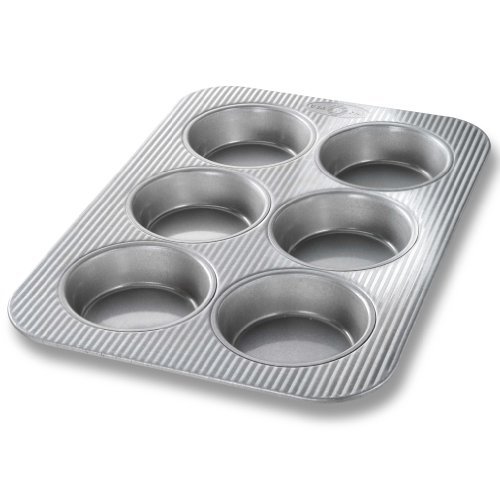
USA Pan Bakeware Round Cake Pan
USA Pan’s round cake pan uses aluminized steel with the brand’s silicone-based nonstick coating and a corrugated surface texture designed to encourage airflow and release. In practice it behaves like the organised middle of the market: sturdy, noticeably rigid in the hand, and forgiving at unmolding time for bakers who are still building confidence. The coating asks for the usual nonstick courtesies — no metal utensils, gentle washing — in exchange for easy release while it lasts.
This is the pan to hand a newer baker who keeps losing cakes at the flipping stage. The USA Pan round sits in the mid tier and trades a little of bare aluminum’s lifespan for a lot of release security. Best for: beginners, sticky batters, and bakers who value easy cleanup. Not suited for: anyone who wants a pan to hand down, or who habitually reaches for a metal spatula.
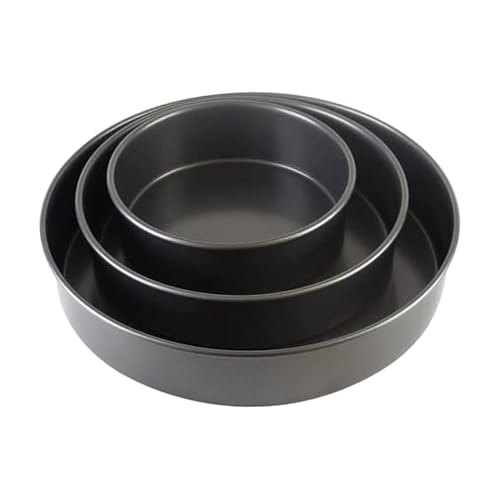
Chicago Metallic Professional Nonstick Round Cake Pan
Chicago Metallic’s professional nonstick round brings a bakery name to the home nonstick format: a heavier pan with a coated surface aimed at clean release and even, controlled browning. It feels more substantial than most coated pans, which helps it sit flat and heat steadily, and the finish handles the release side of baking with minimal preparation. As with every coated pan, its lifespan is set by how gently it is treated at the sink and in the drawer.
Choose the Chicago Metallic if easy release matters but you still want a pan with some heft and discipline to it. It sits in the mid tier. Best for: regular bakers who prefer nonstick convenience with a sturdier build. Not suited for: metal utensils, broiler finishing, or anyone who treats bakeware roughly.
Between the two coated options, the choice is temperament. The USA Pan is the friendlier teacher, forgiving the skipped parchment and the impatient flip. The Chicago Metallic is the sturdier long-term bet within the coated class, with a build that feels closer to the uncoated benchmarks. Both ask for the same care contract — gentle tools, gentle washing, no broiler — and both honour it with genuinely easy release for as long as the coating holds. Bakers whose nemesis is the stuck cake will find their answer in this section; bakers who hate replacing tools should keep reading upward.
Coated nonstick pans, usually steel or aluminized steel under the coating, promise the easiest release in the category, and when the coating is new they deliver: cakes slide out with almost no coaxing. The trade-offs arrive later. Nonstick coatings dislike metal utensils, high broiler heat, and abrasive scrubbing, and once the surface is scratched or worn, release gets worse rather than staying average. Dark nonstick finishes also absorb more heat, so edges and bottoms brown faster; many bakers drop the oven temperature slightly to compensate. Treat a nonstick cake pan as a convenience with a lifespan, not a lifetime tool, and it earns its place.
Best Budget: The Sensible Start

Wilton Performance Pans Round Cake Pan
Wilton’s round is the sensible entry-tier answer: buy two, line them, and bake without overthinking the equipment. Best for: occasional bakers, first layer cakes, and tight budgets. Not suited for: high-volume baking where a heavier pan’s durability and consistency repay their premium positioning.
Wilton’s Performance Pans round is the accessible, everywhere-available aluminum option, the pan many bakers own first because it was on the shelf when the birthday was announced. It is lighter than the premium anodized pans and asks a little more care to avoid dents, but the fundamental geometry — straight sides, sensible depth, even-heating aluminum — is right, and geometry is most of the job. For occasional bakers it covers the requirement completely.
Budget pans fail in predictable ways — warping, scorching, sloped sides — and the Wilton round avoids the fatal ones. It is lighter than the benchmarks and will show its age sooner under heavy use, but its geometry is right, and geometry is what the cake experiences. For a first pair of pans, or a second size bought for occasional use, it is the rational spend. The upgrade path from here is painless: everything you learn on this pan transfers directly to the anodized benchmark when the hobby deepens.
Best Specialist: The Springform

Nordic Ware Springform Pan
Nordic Ware’s springform applies the company’s aluminum expertise to the clasp-and-ring format, aiming at the two things that decide whether a springform is loved or banished: a seal that keeps water baths and thin batters where they belong, and a latch that still works smoothly after years of cheesecakes. It is a specialist, not a replacement for standard rounds, and judged as a specialist it is one of the safer names to buy.
If cheesecake is on your regular rotation, this is the supporting pan that makes it routine rather than risky. It sits in the mid tier for springforms. Best for: cheesecake, crumb-crust tortes, and mousse cakes. Not suited for: thin, runny layer batters, which belong in a solid round pan.
The springform is the cake pan’s specialist cousin: a ring with a clasp that releases sideways, sitting on a loose base. It exists for cakes that cannot survive being flipped — cheesecakes with delicate tops, crumb-crusted tortes, and icebox cakes that set rather than bake. A good springform seals tightly enough that a water bath does not creep in, and its clasp still works smoothly after years of use. It is not a substitute for a standard round, because the seam can leak thin batters and the base leaves a slight lip on the cake, but for its category of bakes nothing else does the job as gracefully.
Head to Head: What Actually Differs
| Criterion | Anodized (Fat Daddio’s) | Classic aluminum (Nordic Ware) | Coated (USA Pan / Chicago Metallic) | Budget aluminum (Wilton) |
|---|---|---|---|---|
| Evenness of rise | Excellent | Excellent | Good; edges run ahead | Good |
| Crust | Pale, tender | Pale, tender | Deeper colour; adjust heat | Pale, tender |
| Release | Very good with parchment | Good with parchment | Excellent while coating lasts | Good with parchment |
| Durability | Excellent | Excellent | Limited by coating | Good with care |
| Care demands | Low | Low | Gentle tools and washing | Low |
| Tier | Premium | Entry to mid | Mid | Entry |
Read across the rows and the story of the whole category appears: the differences among good pans are differences of surface and lifespan, not of basic competence. That is genuinely good news for buyers, because it means the mid tier is not a compromise — it is where most of the value in the category lives. It also means the decision framework in the cake pan buying guide matters more than any single ranking here, and the single-pan deep dive in cake pan review goes further into design and technique.
Choosing by the Cakes You Bake
Layer Cakes and Celebration Bakes
Your shortlist is the anodized benchmark or the classic workhorse, bought as a matched pair in nine-inch, with parchment rounds and baking strips as the supporting kit. At this level of baking, the pan’s job is to disappear: level layers, clean edges, no surprises on the morning of the party. The techniques in how to bake a layer cake evenly and how to level a cake layer assume exactly this class of pan, and together they form the reliable celebration-cake system.
Cheesecakes, Tortes, and Set Desserts
The springform is your primary pan and the standard rounds are supporting actors. Judge springforms by seal and clasp rather than by coating claims, wrap the outside in foil for water baths if your model wants the insurance, and let cheesecakes cool at the pace the recipe demands — the pan is part of the setting environment, not just the mould. One excellent springform outperforms a drawer of mediocre ones, because the failure mode here is not a slightly darker crust; it is bath water in the base of the cake.
Sticky, Fruity, and Caramel Bakes
Reach for the coated pans. Upside-down cakes and caramel-heavy batters punish bare metal and reward a sound nonstick surface with a clean, glossy release that preserves the topping you arranged so carefully. Warm the pan briefly before flipping, follow the recipe’s rest time, and the coated pan does the rest. This is the one category where we would steer even experienced bakers away from their uncoated favourites — or at least toward parchment insurance and a very patient hand.
Everyday Snacking Cakes and Small Bakes
Frequency beats ceremony here. The budget round or a square pan, kept accessible rather than stored beautifully, is the right tool for the Tuesday cake. At this rhythm, the best pan is the one already clean and within reach, and the modest tiers lose nothing to the premium ones because the cakes are forgiving and the turnaround is quick. Save the benchmark pans for the bakes with an audience.
What the Reviews Agree On
Across every credible assessment of this category, the same conclusions recur, and they are worth stating plainly because they outlast any model year. Pale beats dark for cakes. Straight sides beat sloped. Pairs beat singles. Parchment beats promises. And the pan is a system with the oven, the batter, and the baker’s habits — which is why cake pan pros and cons reads so differently from a simple product ranking, and why the value question in is a cake pan worth it depends on your calendar more than on any pan.
If you bake a layer cake in both a pale aluminum pan and a dark pan on the same day, the difference is easy to see. The aluminum pan produces a finer, more even crust and a level top that needs little trimming, because the metal spreads heat smoothly and does not scorch the batter where it touches the sides. That is why so many bakery kitchens standardise on aluminum: it behaves predictably from the first bake to the five hundredth. It is not the prettiest material, and it can dent if dropped on a hard floor, but for the actual job of baking cake it remains the benchmark everything else is judged against.
Batter quantity is where pan choice becomes arithmetic. A standard two-layer recipe is written for a specific total volume, and spreading it across smaller pans makes deeper layers that need longer in the oven, while forcing it into larger pans makes thin layers that dry quickly. When you change pan size, change the bake time expectation and start testing early rather than trusting the printed minutes. Filling a pan more than about two-thirds full invites overflow and a dense, underbaked band in the centre; filling it barely a third full gives you a pancake, not a layer. The pan, the batter volume, and the clock are one system, and adjusting any one of them means adjusting the others.
Care and Longevity Notes From the Roundup
The lifespan of a cake pan is mostly decided at the sink. Hot water, a soft cloth, and patience with an occasional soak will clean almost anything a cake leaves behind, while abrasive pads and harsh detergents slowly strip finishes and roughen surfaces that batter then clings to. Dry pans before putting them away, because trapped moisture between stacked pans is how dull spots and off flavours start. Keep them out from under the cast iron, and never use the pan as a cutting board or a roasting tray for savoury drippings you cannot fully remove. Simple habits, repeated, are the whole maintenance programme.
The recurring cake pan mistakes are boringly consistent. Bakers buy one pan for a two-layer recipe and bake the second half of the batter an hour later, by which time the leavening has spent itself. They grease a pan like a roasting tray, flour and all, then wonder why the cake slid down the sides and rose like a volcano. They pull the cake out the second the timer sounds instead of testing, or leave it in the pan until it steams itself soggy. And they blame the recipe for a dark, heavy crust that a black pan in an optimistic oven produced all by itself. Every one of these is a process fix, not a talent gap.
The dedicated maintenance walkthrough is how to clean cake pans; keep it bookmarked for the first time a fruit cake leaves its sugars welded to the base. Everywhere else in the bakeware cupboard, the same brands recur — the best baking pans roundup covers the sheet and specialty side of the shelf.
The Roundup Verdict
If you bake layers seriously, buy the Fat Daddio’s pair and stop researching. If you bake traditionally and value longevity per pound spent, the Nordic Ware pair is the connoisseur’s quiet answer. If cakes keep sticking and confidence is the thing being baked, start with USA Pan or Chicago Metallic and let easy wins accumulate. If you are equipping a kitchen from zero, Wilton gets you baking this weekend. And if cheesecake is your love language, the Nordic Ware springform is the specialist to trust. No pan on this list will embarrass you; the only true mistake in the category is the warped, dark, sloped pan that no roundup recommends and every bargain bin offers.
More From the Cake Pan Test Kitchen
Cake Strips, Explained Properly
Cake strips deserve a fuller explanation than they usually get. A damp fabric strip pinned around the outside of the pan insulates the wall, so the batter near the edge heats at closer to the pace of the centre. The result is a flatter top, a moister edge, and less of the hard, dark crust ring that home bakers trim away and waste. Strips are inexpensive, reusable, and forgiving of imperfect ovens, which is why so many decorators treat them as part of the pan rather than an accessory. If you adopt one upgrade beyond the pan itself, this is the strongest candidate.
Freezing Layers Like a Professional
Freezing layers is the professional habit that most improves home cake results, and the pan plays a quiet role in it. Layers cooled completely, wrapped well, and frozen for even a few hours become firmer, easier to level, and far easier to frost without crumbs tearing into the icing. A straight-sided pan produces layers that wrap neatly and stack in the freezer without wasted space. Thaw the layers still wrapped so condensation forms on the wrapping rather than the crumb. Many bakers find that a frozen-then-thawed layer is also moister, because the rest redistributes moisture evenly through the crumb.
Transporting a Finished Cake Safely
Transporting a cake is where pan decisions echo unexpectedly. A cake baked in the pan it will travel in — a sturdy round for a casual gathering, a springform for a cheesecake — avoids the riskiest moment in baking, the transfer. For layered cakes, the safest route is to transport the frosted cake on a rigid board in a box, chilled so the icing is firm. If you regularly bake for other people’s events, a pan with a fitted lid or a dedicated carrier earns its shelf space quickly, and straight-sided layers stack into a far more stable travelling cake than domed ones.
Baking Cakes at Altitude
Altitude quietly rewrites cake pan behaviour. At elevation, leavening gases expand faster, so batters rise enthusiastically and can overflow a pan that behaved perfectly at sea level, then fall as the weak structure cools. The standard corrections — a little less leavening, a little more flour and liquid, a slightly hotter oven — pair with filling pans less full than usual. Bakers who move between elevations learn to treat the printed fill line as a local guideline rather than a law, and to test a new recipe in a single pan before committing a full celebration cake to it.
Chocolate Cakes and Pan Colour
Chocolate cakes expose pan colour more ruthlessly than any other batter. A dark pan on a dark cake hides the visual cues bakers rely on, so overbaking becomes easy and underbaking the centre becomes common; the tester and the spring-back test matter more than the crust colour. Cocoa-based batters are also mildly acidic, which is where an anodized or well-seasoned pan earns goodwill by not reacting with the batter. Dusting a greased pan with cocoa instead of flour keeps the crust uniformly dark, a small aesthetic detail that makes an uniced chocolate layer look deliberate rather than unfinished.
Testing Whether a Pan Has Warped
There is a simple test for whether a pan’s base is still flat: set it on a level counter and press each side. A pan that rocks has warped, and a warped pan bakes a layer that is thick on one side and thin on the other no matter how carefully you level the batter. Warping usually comes from thermal shock — a hot pan under a cold tap — or from being crushed under heavier cookware. The fix is prevention: let pans cool before washing, store them protected, and retire a pan whose base has bowed, because no technique fully compensates for uneven contact and uneven batter depth.
Scaling a Recipe Across Pan Sizes
Scaling a recipe across pan sizes is easier when you think in batter volume rather than in the recipe’s servings line. Each pan size has a comfortable working capacity, and keeping the batter depth roughly constant preserves the bake time and crumb you liked. Doubling a recipe for a bigger celebration is usually safer as two standard layers than as one giant deep layer, because deep batters bake unevenly in home ovens. When in doubt, bake the extra batter as a small taster cake in a spare pan; it tests doneness, gives the baker a preview slice, and removes the temptation to overfill the main pans.
Cutting Your Own Parchment Rounds
Parchment rounds can be bought pre-cut, but cutting your own takes seconds and costs almost nothing: trace the pan’s base on a sheet of parchment, fold the circle into quarters, and trim along the line. Keep a small stack of rounds for each pan size you own, stored flat inside the pans themselves, and the preparation ritual loses its only fiddly step. A round that is slightly small is fine; one that climbs the sides in wrinkles will print those wrinkles into the cake’s base, so trim generously rather than forcing an oversized round to fit.
Doneness, Tested Three Ways
Doneness is better judged by converging evidence than by any single test. The edges of a finished layer pull very slightly away from the pan’s sides. The surface springs back when pressed gently in the centre rather than holding the fingerprint. A thin tester — a skewer, a strand of dry spaghetti, the tip of a paring knife — emerges with a few moist crumbs clinging to it, neither wet batter nor bone dry. When two of the three signs agree, the cake is done; when they disagree, trust the tester and give the centre the few extra minutes it is asking for.
The Two-Pan Workflow, Step by Step
Baking two layers well is a workflow, not a moment. Weigh the empty pans if your scale allows it, then divide the batter by weight so both layers match. Set the pans on the same rack with a gap between them, note the time each goes in if they cannot enter together, and swap their positions once if your oven demands it. Cool both layers on racks, level them only when fully cool, and wrap them if frosting waits until tomorrow. None of these steps is difficult; together they are the difference between a cake that assembles itself and one that fights you.
Rescuing a Broken Layer
A broken layer is an inconvenience, not a catastrophe, and experienced bakers treat it as raw material. A layer that cracks on unmolding can be reassembled in the pan with a little frosting as mortar, chilled until firm, and used as the bottom layer where the repair will never show. A layer that sticks and tears can become trifle, cake pops, or the crumb base of a cheesecake. The professional secret is that serving confidence matters more than structural perfection: a rescued cake presented whole-heartedly is remembered as a cake, while a perfect cake served apologetically is remembered as an apology.
Why Batter Temperature Matters
Batter temperature is the quiet variable in many inconsistent results. A batter mixed from cold eggs and milk enters the oven behind schedule, so the leavening spends part of its life warming up instead of lifting, and the edges — heated by the pan — set before the centre has risen fully. Ingredients at cool room temperature emulsify better, trap air more evenly, and bake on the recipe’s stated timeline. The fix costs nothing but foresight: set the eggs and dairy out while the oven preheats and the pans are lined, and the whole bake becomes more predictable.
Mapping Your Oven’s Hot Spots
Every oven has a geography, and mapping yours takes one deliberate bake. Arrange identical small cakes or slices of bread across the rack, bake them, and read the pattern of browning like a weather chart: the dark corner is your hot spot, the pale one your cool zone. From then on you can place pans deliberately — delicate sponges in the calm centre, the second layer rotated through the warm zone halfway — instead of discovering the map anew on a birthday morning. Tape the map inside a cupboard door if your memory needs the help.
Cooling Racks Are Part of the System
The cooling rack is part of the pan system, not an afterthought. A layer left to cool on a solid surface steams its own base, undoing the crisp release you achieved and softening the bottom crust. A rack lets air circulate underneath, so the crumb sets evenly and the layer reaches frosting temperature without a damp underside. Size matters: a rack smaller than the layer invites the same tipping accidents as a small plate. Own one rack that comfortably holds your largest layer, and the unmolding step — the moment of maximum drama in cake baking — becomes routine.
Buying a Used Pan: What to Check
Second-hand cake pans can be excellent buys, because good aluminum survives its first owner easily. Inspect before you buy: set the pan on a flat surface and check for rocking, look down the sides for straightness, and reject coated pans whose surface is scratched or peeling, since a used coating’s remaining life is unknowable. Bare and anodized pans with honest wear are the bargains; wash them thoroughly, run a test bake, and they will serve a second career. Avoid pans with deep dents at the rim, which telegraph a warped base even when the pan sits still.
Lining Square Pans Without Wrinkles
Square pans ask one extra preparation skill: lining corners without wrinkles that print into the cake. The reliable method is to grease the pan, then lay a parchment sling — a sheet cut to the base’s width and long enough to climb two opposite sides — and press it flat, letting the overhang become handles. A second sling across the first covers the other two sides for cakes that must lift out whole, like brownies. Crease the parchment sharply at the base edges with a fingernail; a crisp fold in the paper becomes a crisp corner on the cake.
Slicing Layers Cleanly
How you store a layer between baking and frosting decides its texture at serving. Unfrosted layers, cooled completely and wrapped tightly, keep beautifully overnight at room temperature and often taste better the next day as flavours settle. Frosted cakes want the refrigerator if the filling is perishable, but they should return to room temperature before serving, because cold mutes both flavour and crumb tenderness. The pan plays no role in this stage, yet the habit completes the system: bake, cool, wrap, rest, frost, and serve at the temperature the cake was designed for.
Storing Frosted and Unfrosted Layers
Greasing a pan looks trivial and is quietly full of choices. Butter adds flavour and helps a golden crust, but its milk solids can bond at high heat; neutral oil spreads thinner and releases cleanly; solid shortening leaves the most reliable film for intricate pans. Baking sprays are convenient, though sprays containing flour suit cakes well while additive-heavy sprays can bake into a sticky residue on coated surfaces over time. Whichever fat you choose, the technique is constant: a thin, complete film on the base, a parchment round over it, and restraint on the sides so the batter can climb as it rises.
When to Retire a Pan
Deep pans and very rich batters sometimes need help conducting heat to the centre, and the traditional tool is a flower nail — a small metal nail with a flat head, set head-down in the centre of the lined pan before the batter goes in. The metal core carries heat into the middle of the batter, so the centre sets closer to the edges’ schedule and the finished layer is flatter and more even. It is an old decorator’s trick, costs almost nothing, and removes cleanly after baking. For standard two-inch layers it is unnecessary; for deep celebration layers it can be the difference between level and domed.
Greasing Methods, Compared
A water bath is where springform pans earn or lose their reputation, and a little insulation makes the system forgiving. Wrapping the outside of the pan in a wide sheet of foil, set in place before the batter is poured, guards the seam against slow leaks. Placing the wrapped pan inside a slightly larger solid cake pan adds a second wall and makes lifting the whole assembly in and out of the oven far more secure. The bath water itself should be hot when it goes in, so the oven’s energy goes into the cheesecake rather than into heating the bath from cold.
The Flower Nail Trick for Deep Layers
Convection fans change how a cake pan behaves, because moving air delivers heat to the pan’s surfaces faster than still air does. Crusts set earlier and can dry or darken before the centre finishes, which is why fan ovens generally call for a modest temperature reduction for cakes. Pale aluminum pans tolerate convection best, since their gentler surface heating offsets the fan’s enthusiasm. If your layers consistently emerge with firm, dark edges and a tender centre, suspect the fan before the recipe, and either reduce the heat or switch the fan off for the cake programme if your oven allows it.
Insulating a Springform for the Water Bath
The recipe’s pan line is the most skipped sentence in baking, and the most consequential. When a recipe says two nine-inch rounds, it is telling you the batter volume, the expected depth, and the timing all at once. Substituting pans without adjusting expectations is how good recipes earn bad reputations. Read the pan line before preheating, weigh the batter if you change anything, and start doneness checks early whenever the geometry differs from the printed one. Bakers who develop this one reading habit find that recipes suddenly become more reliable across the whole book, not just for cakes.
Cake Pans in a Convection Oven
Humid days bake differently, and the pan is part of the story. Flour absorbs moisture from the air, sugars pull it in, and a cake that released perfectly last month can cling today because the batter itself was wetter and stickier. On very humid days, be extra faithful to the parchment round, give the baked layer its full cooling rest so steam stops working against you, and expect a minute or two of additional oven time. None of this requires new equipment — it requires noticing that baking is a conversation between the recipe, the room, and the pan, and adjusting your side of it.
Cake Pan: What Long-Term Use Reveals That a First Test Misses
Start with how a {p} holds up once the novelty wears off and routines settle in. Most coverage of a cake pan concentrates on the first week of ownership, yet the decisions that matter most tend to surface later, once the cake pan has to earn its place in an ordinary weekday routine rather than a carefully staged first attempt. Write down the three jobs you expect it to do most often, in the order you actually do them, and judge every claim you read against that short personal list instead of against a generic ideal.
Troubleshooting is easier when you expect the usual failure points. With any cake pan, the recurring problems tend to cluster in the same places: uneven results from overloading or poor arrangement, wear showing first on the parts handled most often, and small annoyances with lids, seals, handles, controls or fittings that only appear after repeated use. Before buying, look for whether those wear parts can be cleaned properly, replaced or worked around, and whether the instructions address them directly rather than pretending they never happen.
Use a short decision checklist to finish. One, does it fit the space and the storage you really have. Two, does it handle your three most common jobs without a workaround. Three, do the edge cases you listed stay manageable. Four, can every wear part be cleaned or replaced without drama. Five, would you still choose it if a friend described the same drawbacks in their own kitchen. A cake pan that passes all five is a sound buy; one that fails two or more is a compromise you are choosing with open eyes, which is a very different thing from being surprised later.
Work through a realistic scenario, not a best case. Picture the busiest version of the job: more people to serve, less time than planned, ingredients or materials that are slightly out of the ordinary, and a clean-up waiting at the end. Ask how the cake pan behaves at that upper edge, because a model that only shines on a small, simple load will disappoint precisely when you need it most. If the honest answer is that you would split the job into batches or fall back on an older method, factor that into the decision now rather than discovering it later.
When you check listings such as Fat Daddio’s Anodized Aluminum Round Cake Pan, Nordic Ware Natural Aluminum Round Cake Pan and USA Pan Bakeware Round Cake Pan, use them as worked examples: run through the same checks below on each one in turn, so the comparison stays honest and like for like rather than based on whichever listing happens to shout loudest.
Finally, plan the first fortnight deliberately. Use the cake pan for one familiar job first, so you have a baseline you trust, then introduce the harder cases one at a time and note what changes. Small adjustments to arrangement, timing, quantity or preparation usually close most of the gap between disappointing first results and the performance the design is capable of. That short learning period is also the fairest test of long-term ownership: if the routine has not settled by the end of it, the mismatch is real, and it is better to know while returning or exchanging is still straightforward.
Measure before you commit. Note the footprint, the clearance above and behind the spot where the cake pan will live, and the route you will carry it by when it is hot, full or awkward. A cake pan that technically fits but blocks a cupboard door, crowds a neighbouring appliance or has to be dragged across a worktop every time will quietly fall out of use, whatever its merits on paper. In the Kitchen Cookware category especially, a few centimetres of clearance and a sensible storage plan separate a daily tool from a bulky regret.
Frequently Asked Questions
Which cake pan do reviewers rate best overall?
Across comparative assessments, anodized aluminum rounds — with Fat Daddio’s as the widely cited example — take the overall honours because they combine even heat, a non-reactive surface, and a lifespan measured in decades rather than coating cycles. Classic uncoated aluminum, such as Nordic Ware’s round, finishes a very close second and often wins on value. Coated pans win specific categories, especially ease of release for beginners. The honest summary is that the top of this category is a plateau, not a peak: several pans bake excellently, and your habits should choose among them.
Are expensive cake pans worth it according to reviews?
Reviews consistently find that moving from the cheapest pans to the solid mid and premium tiers buys real improvements: flatter, thicker metal that resists warping, straighter sides, and finishes that stay consistent for years. Beyond that plateau, extra spend buys brand and refinement rather than visibly better cake. The worst value is at the very bottom, where thin, dark pans actively damage results. Most reviewers therefore recommend one good pair bought once over a large cheap set, a conclusion our own assessment of the category supports without hesitation.
How many cake pans should a home baker own?
The consensus kit is smaller than most people expect: two matching rounds in your primary size, one springform if you bake cheesecake or tortes, and optionally one square pan for brownies and snacking cakes. That set covers the vast majority of home cake recipes. Extra sizes earn their place only when a specific recipe enters your regular rotation. Owning more shapes than that mostly buys storage problems, and several of the pans in typical bundled sets duplicate what a good pair of rounds already does well.
Do nonstick cake pans perform as well as regular pans in reviews?
They perform differently rather than worse. Coated pans win release tests, especially with sticky batters, and they forgive skipped preparation. They lose ground on crust control, because dark finishes brown faster, and on longevity, because the coating is a finite-life surface that demands gentle handling. In blind baking terms, a cake from a good coated pan and a cake from a good aluminum pan are both excellent; the difference shows in the baker’s workload and in how the pan performs after years of use, which is why reviews split their recommendations by baker type.
What size cake pan appears most often in recipes?
The nine-inch round is the recipe world’s default, and most layer cakes are developed for a pair of them. Eight-inch pans are the common second size, producing taller layers from the same batter with a slightly longer bake. Six-inch pans serve small households and practice bakes, while ten-inch rounds suit wide party layers. Because timings assume the stated pan, owning the nine-inch pair first aligns your results with the largest number of recipes, and other sizes can be added deliberately as your baking habits reveal themselves.
When should I replace a cake pan?
Replace an uncoated pan when it warps — test by setting it on a flat counter and pressing the rim; rocking means the base has bowed and layers will bake unevenly from now on. Replace a coated pan when cakes begin sticking despite correct preparation, which signals the coating has worn past its working life. Deep scratches, a peeling surface, or a springform clasp that no longer seals are also retirement signals. A sound aluminum pan, by contrast, can serve for decades, so replacement is the exception in this category rather than a routine cost.
Related Guides and Next Steps
Keep building your cake baking setup with these companion guides from the same kitchen collection: cake pan review, the cake pan buying guide, cake pan pros and cons, the best Nordic Ware bakeware picks, the best nonstick bakeware sets, why cakes stick to the pan. Each one covers a neighbouring decision — materials, technique, troubleshooting, or the next piece of bakeware — so you can solve the whole problem rather than one corner of it.


