Disclosure: As an Amazon Associate, topratedkitchenware.com earns from qualifying purchases. Links on this page are affiliate links; they cost you nothing extra. Prices and availability change often, so check the current Amazon listing before you buy.
Is a Saucepan Worth It? The Short Answer
So, is a saucepan worth it for a typical home kitchen? Worth it if you simmer sauces, cook grains, reheat leftovers or boil vegetables several times a week and your current pan scorches, spills or fights you. Not worth it if you almost never cook in liquid, already own a pan that does these jobs comfortably, or need a large stock pot or a wide skillet instead. The value is not novelty; it is the removal of small daily frictions from jobs you already do constantly.
Reheating is unglamorous and constant. Soups, curries, leftover pasta sauce and yesterday’s vegetables all come back to the hob in a saucepan, usually in modest quantities and usually when you are in a hurry. A pan that heats evenly reheats without a scorched ring at the base and a cold centre, and a pan with a comfortable handle and a pouring-friendly rim makes the small job feel effortless. Because reheating happens so often, small daily frictions matter more than occasional peak performance, and a pan you enjoy using on a tired Tuesday is worth a great deal.
Value in a saucepan is measured in years of unremarkable, reliable service. A pan that heats evenly, cleans without drama, stores where you need it and survives daily handling will repay its cost in avoided frustration, while a pan with one annoying flaw will tax you every single time you cook. Think in cost per year of comfortable use rather than in the number on a tag, and be wary of paying extra for features you will not use or saving a little by accepting a flaw you will meet every day. Durability, fit for your hob and fit for your habits are where the value actually lives.
In this guide
What You Actually Get From a Good Saucepan
A saucepan earns its place when a liquid needs steady, gentle heat rather than a fierce blast. Sauces, soups in small batches, custards and reheated leftovers all punish hot spots and reward even heating. When the base spreads heat calmly, a simmer stays a simmer instead of breaking into a rolling boil at one edge while the centre lags behind. That steadiness is why cooks reach for this shape so often, and it is also why judging a saucepan only by how quickly it boils water misses most of what it actually does during a normal week of cooking.
The defining shape is tall sides with a relatively narrow base, and that geometry matters more than it first appears. Tall sides slow evaporation, keep splashes inside the pan and give a spoon room to move without sloshing liquid over the rim. The narrower base concentrates the pan on one burner and leaves neighbouring burners free, which is a real advantage on a crowded hob. At the same time, tall sides make whisking into corners and scraping the base a deliberate act, so the junction between wall and base, and the reach of your spoon, deserve attention.
Grains reveal a different side of the pan. Rice, quinoa, oats and other grains need a lid that seals well, sides tall enough to contain starchy bubbling, and heat low and even enough to avoid a scorched layer underneath a still-crunchy top. A saucepan that simmers unevenly will show it here before anywhere else. If grains are a daily habit in your kitchen, weight the lid fit and the low-heat behaviour heavily in your decision, and be honest about the batch size you cook most often rather than the largest batch you might cook twice a year.
Acidic cooking is a useful test. Tomato sauces, wine-based pan sauces, citrus glazes and vinegar reductions sit in a saucepan for a long time, in close contact with the surface. A non-reactive surface handles that contact without picking up off flavours or discolouring, which is one reason stainless interiors are so widely chosen for sauce work. If you cook a lot of bright, acidic food, put surface reactivity near the top of your list, ahead of small differences in weight or handle shape that you will adapt to within a week.
The Real Costs Beyond Money
Storage is the constraint nobody mentions in a showroom. A saucepan lives in a cupboard or drawer, often nested or stacked, with a lid that needs a home too. Before choosing, picture where the pan will actually sit, whether the handle length clears the cupboard door, and whether the lid will rattle around loose or rest neatly. A slightly smaller pan that stores easily will be used more than a larger pan that has to be excavated. Measure your space if it is tight, and remember that handles, not bodies, are usually what make cookware awkward to store.
Cleaning decides whether a pan stays in rotation. Sauces reduce and catch, milk scorches, grains glue themselves to the base, and a pan that is miserable to clean will quietly be avoided. Look for an interior without awkward crevices, a base junction that a sponge can actually reach, and honest guidance about soaking. Most stuck-on residue gives up after a soak in warm water and a patient scrub; aggressive scouring is rarely needed and can be the wrong choice for some finishes. Judge cleaning by your real habits, not by how you clean on your best day.
Weight is a balance, not a contest. A heavier pan often feels steadier and can spread and hold heat in a way that suits long simmering, but it must still be lifted, tilted, carried and washed by real hands, sometimes one-handed, sometimes when full and hot. A lighter pan is kinder day to day but may feel less settled on the burner. The right answer depends on your strength, your wrists and your cooking style, and the only reliable test is imagining the pan at its heaviest realistic moment, not admiring it empty.
Many kitchens are better served by two well-chosen saucepans than by one compromise. A smaller pan handles sauces, melting, reheating single portions and side tasks without waste, while a larger one covers grains for the family, soups and batch sauces. Two pans also solve the common collision where one pan is simmering and another task appears. If budget or storage forces a single pan, choose for the task you do most often and accept that the extremes will be a little awkward; a pan chosen for a rare largest case is oversized for almost everything else it will ever do.
Who It Pays Off For
The regular sauce and grain cook gains the most, because even simmering and a good lid improve results several times a week. The leftover-driven household gains quietly, through reheating that does not scorch and a pan that is pleasant to reach for. The cook replacing a failing pan gains reliability: fewer hot spots, a lid that fits and a handle that inspires confidence change everyday cooking more than any novelty feature.
Safety note: handles can grow hot during long cooking, even on handles designed to stay cooler, because heat travels and because oven use changes everything. Treat every handle as hot until you have checked it carefully, keep a dry oven glove or thick cloth within reach, and turn handles inward so they do not overhang the edge of the hob where a sleeve or a passing child could catch them. A habit of assuming a handle is hot costs nothing; the opposite assumption eventually costs a burn.
Safety note: steam is the quiet hazard of saucepan cooking. When you open a lid, tilt it away from your face and hands and lift the far edge first, so the burst of steam escapes away from you rather than into your wrist and face. This matters most after simmering sauces, boiling vegetables or cooking grains, when a dense cloud has built up under the lid. Go slowly, keep your face back, and never lean over a pan to smell what is cooking while it is still steaming hard.
Safety note: a saucepan full of sauce, water or grains is far heavier than the empty pan you lifted in a shop, and it is at its most awkward exactly when it is hottest. If a larger pan has a helper handle opposite the main handle, use it, with a glove on both hands, and carry the pan close to your body on a clear, dry route to the sink or counter. If a pan has no helper handle, consider whether its full weight is genuinely manageable for you before you commit to that size.
Material shapes almost everything about how a saucepan behaves. Stainless steel is durable, non-reactive with acidic sauces and forgiving of metal utensils, though it asks for reasonable heat management to limit sticking. Clad construction, where different metals are bonded together, aims to combine a hard-wearing cooking surface with a core that spreads heat more evenly. Nonstick surfaces release delicate sauces and porridge easily but need gentler utensils and heat. None of these is automatically best; the honest question is which set of habits you already have and which trade-offs you will actually live with happily.
Who Should Skip It
Skip it if your cooking is almost entirely frying, roasting and grilling, and wet cooking is rare; a skillet and a stock pot may already cover your needs. Skip it if you only need very large batches, where a stock pot is the honest tool. And skip the upgrade if your current saucepan already heats evenly, fits your hob and feels safe when full; replacing a pan that works, purely for novelty, rarely pays off in the kitchen.
Acidic cooking is a useful test. Tomato sauces, wine-based pan sauces, citrus glazes and vinegar reductions sit in a saucepan for a long time, in close contact with the surface. A non-reactive surface handles that contact without picking up off flavours or discolouring, which is one reason stainless interiors are so widely chosen for sauce work. If you cook a lot of bright, acidic food, put surface reactivity near the top of your list, ahead of small differences in weight or handle shape that you will adapt to within a week.
Grains reveal a different side of the pan. Rice, quinoa, oats and other grains need a lid that seals well, sides tall enough to contain starchy bubbling, and heat low and even enough to avoid a scorched layer underneath a still-crunchy top. A saucepan that simmers unevenly will show it here before anywhere else. If grains are a daily habit in your kitchen, weight the lid fit and the low-heat behaviour heavily in your decision, and be honest about the batch size you cook most often rather than the largest batch you might cook twice a year.
Reheating is unglamorous and constant. Soups, curries, leftover pasta sauce and yesterday’s vegetables all come back to the hob in a saucepan, usually in modest quantities and usually when you are in a hurry. A pan that heats evenly reheats without a scorched ring at the base and a cold centre, and a pan with a comfortable handle and a pouring-friendly rim makes the small job feel effortless. Because reheating happens so often, small daily frictions matter more than occasional peak performance, and a pan you enjoy using on a tired Tuesday is worth a great deal.
Cleaning decides whether a pan stays in rotation. Sauces reduce and catch, milk scorches, grains glue themselves to the base, and a pan that is miserable to clean will quietly be avoided. Look for an interior without awkward crevices, a base junction that a sponge can actually reach, and honest guidance about soaking. Most stuck-on residue gives up after a soak in warm water and a patient scrub; aggressive scouring is rarely needed and can be the wrong choice for some finishes. Judge cleaning by your real habits, not by how you clean on your best day.
Strengths and Trade-Offs of Owning One
Strengths:
- Handles the most frequent wet-cooking jobs in one versatile shape.
- Tall sides and a lid make simmering, grains and reheating calmer and cleaner.
- Pairs naturally with a skillet and a stock pot without duplicating either.
Trade-offs:
- Takes cupboard space and needs a home for its lid.
- Requires heat management and proper cleaning like any serious pan.
- One size cannot be ideal for both tiny sauces and large batches.
Safety note: handles can grow hot during long cooking, even on handles designed to stay cooler, because heat travels and because oven use changes everything. Treat every handle as hot until you have checked it carefully, keep a dry oven glove or thick cloth within reach, and turn handles inward so they do not overhang the edge of the hob where a sleeve or a passing child could catch them. A habit of assuming a handle is hot costs nothing; the opposite assumption eventually costs a burn.
Safety note: steam is the quiet hazard of saucepan cooking. When you open a lid, tilt it away from your face and hands and lift the far edge first, so the burst of steam escapes away from you rather than into your wrist and face. This matters most after simmering sauces, boiling vegetables or cooking grains, when a dense cloud has built up under the lid. Go slowly, keep your face back, and never lean over a pan to smell what is cooking while it is still steaming hard.
Safety note: a saucepan full of sauce, water or grains is far heavier than the empty pan you lifted in a shop, and it is at its most awkward exactly when it is hottest. If a larger pan has a helper handle opposite the main handle, use it, with a glove on both hands, and carry the pan close to your body on a clear, dry route to the sink or counter. If a pan has no helper handle, consider whether its full weight is genuinely manageable for you before you commit to that size.
Alternatives to Consider Instead of, or Alongside, a Saucepan

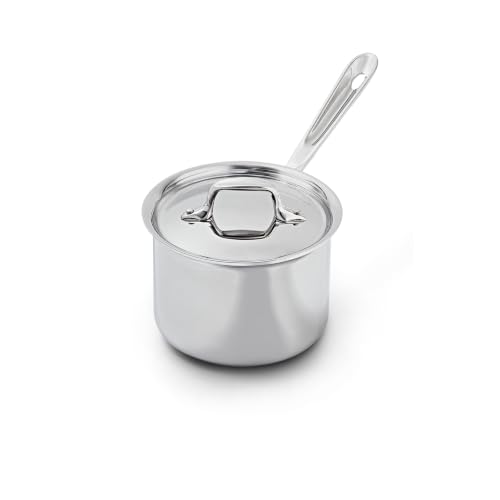
Cuisinart Chef’s Classic Stainless Saucepan
Best for: cooks who want a mid-range saucepan option to shortlist for everyday sauce, grain and reheating work, and who will confirm the exact current configuration, included lid and hob compatibility on the listing before buying. Not suited for: buyers who need a very large batch pan, a specialised shape, or a finish they have not checked against their own utensils and cleaning habits.
Consider this option in the context of the jobs described in this guide rather than on reputation alone. Think about how its handle will feel when the pan is full, how the lid will behave during a long simmer, and whether its size matches the batches you cook most weeks. As a mid-range choice it should be judged on even heating, comfortable handling, straightforward cleaning and a surface that suits the sauces and grains you actually make. Check price on Amazon for the current listing, and treat any detail that matters to you, from induction compatibility to oven guidance, as something to verify there rather than assume.
Strengths:
- A recognisable, widely available option that is easy to research and compare.
- Suits the core saucepan jobs of simmering, reheating and small-batch cooking.
- Fits naturally alongside a stock pot for large batches and a skillet for frying.
Trade-offs:
- Exact configuration and included pieces must be confirmed on the current listing.
- No single saucepan is ideal for both tiny sauces and very large batches.
- Handle comfort and full weight are personal and should be judged honestly.

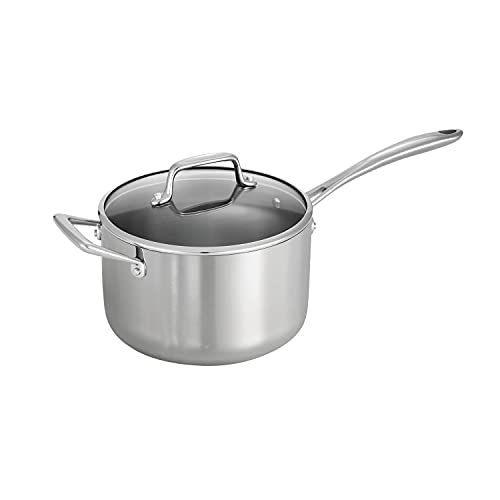
Tramontina Tri-Ply Clad Saucepan
Best for: cooks who want a mid-range saucepan option to shortlist for everyday sauce, grain and reheating work, and who will confirm the exact current configuration, included lid and hob compatibility on the listing before buying. Not suited for: buyers who need a very large batch pan, a specialised shape, or a finish they have not checked against their own utensils and cleaning habits.
Consider this option in the context of the jobs described in this guide rather than on reputation alone. Think about how its handle will feel when the pan is full, how the lid will behave during a long simmer, and whether its size matches the batches you cook most weeks. As a mid-range choice it should be judged on even heating, comfortable handling, straightforward cleaning and a surface that suits the sauces and grains you actually make. Check price on Amazon for the current listing, and treat any detail that matters to you, from induction compatibility to oven guidance, as something to verify there rather than assume.
Strengths:
- A recognisable, widely available option that is easy to research and compare.
- Suits the core saucepan jobs of simmering, reheating and small-batch cooking.
- Fits naturally alongside a stock pot for large batches and a skillet for frying.
Trade-offs:
- Exact configuration and included pieces must be confirmed on the current listing.
- No single saucepan is ideal for both tiny sauces and very large batches.
- Handle comfort and full weight are personal and should be judged honestly.

Farberware Classic Stainless Steel Saucepan
Best for: cooks who want a entry-level saucepan option to shortlist for everyday sauce, grain and reheating work, and who will confirm the exact current configuration, included lid and hob compatibility on the listing before buying. Not suited for: buyers who need a very large batch pan, a specialised shape, or a finish they have not checked against their own utensils and cleaning habits.
Consider this option in the context of the jobs described in this guide rather than on reputation alone. Think about how its handle will feel when the pan is full, how the lid will behave during a long simmer, and whether its size matches the batches you cook most weeks. As a entry-level choice it should be judged on even heating, comfortable handling, straightforward cleaning and a surface that suits the sauces and grains you actually make. Check price on Amazon for the current listing, and treat any detail that matters to you, from induction compatibility to oven guidance, as something to verify there rather than assume.
Strengths:
- A recognisable, widely available option that is easy to research and compare.
- Suits the core saucepan jobs of simmering, reheating and small-batch cooking.
- Fits naturally alongside a stock pot for large batches and a skillet for frying.
Trade-offs:
- Exact configuration and included pieces must be confirmed on the current listing.
- No single saucepan is ideal for both tiny sauces and very large batches.
- Handle comfort and full weight are personal and should be judged honestly.
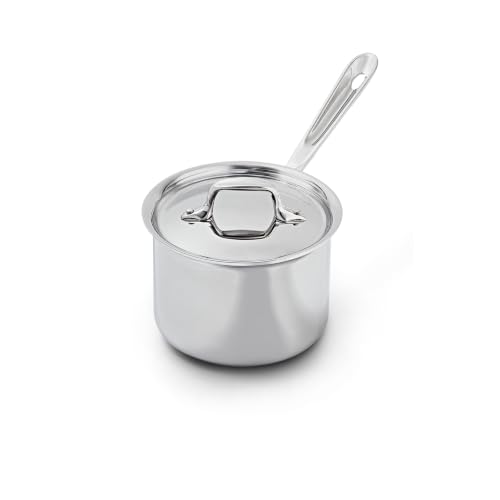
All-Clad D3 Stainless Saucepan
Best for: cooks who want a premium saucepan option to shortlist for everyday sauce, grain and reheating work, and who will confirm the exact current configuration, included lid and hob compatibility on the listing before buying. Not suited for: buyers who need a very large batch pan, a specialised shape, or a finish they have not checked against their own utensils and cleaning habits.
Consider this option in the context of the jobs described in this guide rather than on reputation alone. Think about how its handle will feel when the pan is full, how the lid will behave during a long simmer, and whether its size matches the batches you cook most weeks. As a premium choice it should be judged on even heating, comfortable handling, straightforward cleaning and a surface that suits the sauces and grains you actually make. Check price on Amazon for the current listing, and treat any detail that matters to you, from induction compatibility to oven guidance, as something to verify there rather than assume.
Strengths:
- A recognisable, widely available option that is easy to research and compare.
- Suits the core saucepan jobs of simmering, reheating and small-batch cooking.
- Fits naturally alongside a stock pot for large batches and a skillet for frying.
Trade-offs:
- Exact configuration and included pieces must be confirmed on the current listing.
- No single saucepan is ideal for both tiny sauces and very large batches.
- Handle comfort and full weight are personal and should be judged honestly.
How to Get the Most Value If You Buy
The most common saucepan mistakes are ordinary: heat too high because the pan feels slow, a lid lifted constantly so a simmer never settles, a pan crowded beyond what its base can heat evenly, and metal utensils or harsh scouring used without checking what the surface allows. Each is fixable with patience rather than money. Bring liquids up gradually, let the lid do its work, leave room in the pan, and match utensils and cleaning to the material. Good saucepan cooking is mostly calm heat and timing, and a decent pan rewards that approach immediately.
A saucepan earns its place when a liquid needs steady, gentle heat rather than a fierce blast. Sauces, soups in small batches, custards and reheated leftovers all punish hot spots and reward even heating. When the base spreads heat calmly, a simmer stays a simmer instead of breaking into a rolling boil at one edge while the centre lags behind. That steadiness is why cooks reach for this shape so often, and it is also why judging a saucepan only by how quickly it boils water misses most of what it actually does during a normal week of cooking.
Cleaning decides whether a pan stays in rotation. Sauces reduce and catch, milk scorches, grains glue themselves to the base, and a pan that is miserable to clean will quietly be avoided. Look for an interior without awkward crevices, a base junction that a sponge can actually reach, and honest guidance about soaking. Most stuck-on residue gives up after a soak in warm water and a patient scrub; aggressive scouring is rarely needed and can be the wrong choice for some finishes. Judge cleaning by your real habits, not by how you clean on your best day.
Pouring sounds minor until you pour from a pan daily. A rolled or shaped rim can mean the difference between a clean stream into a bowl and a dribble down the side onto the counter. This matters for sauces you strain, water you drain and leftovers you transfer to storage containers. If you can, mimic the pouring motion when you handle a pan, and think about pouring with your non-dominant hand while holding a spoon or a container in the other. Small ergonomic details like this are invisible in a product photo and obvious within a week of ownership.
The Decision Checklist
Answer honestly: Do you cook in liquid at least twice a week? Does your current pan scorch, spill or heat unevenly? Will the new pan fit your hob and your cupboard? Can you lift it comfortably when full? Will its surface suit your sauces and your cleaning habits? If most answers are yes, a saucepan is very likely worth it. If most are no, keep your money and your cupboard space for the tool your cooking actually calls for.
Cleaning decides whether a pan stays in rotation. Sauces reduce and catch, milk scorches, grains glue themselves to the base, and a pan that is miserable to clean will quietly be avoided. Look for an interior without awkward crevices, a base junction that a sponge can actually reach, and honest guidance about soaking. Most stuck-on residue gives up after a soak in warm water and a patient scrub; aggressive scouring is rarely needed and can be the wrong choice for some finishes. Judge cleaning by your real habits, not by how you clean on your best day.
Storage is the constraint nobody mentions in a showroom. A saucepan lives in a cupboard or drawer, often nested or stacked, with a lid that needs a home too. Before choosing, picture where the pan will actually sit, whether the handle length clears the cupboard door, and whether the lid will rattle around loose or rest neatly. A slightly smaller pan that stores easily will be used more than a larger pan that has to be excavated. Measure your space if it is tight, and remember that handles, not bodies, are usually what make cookware awkward to store.
Match the base to your burners. A base much smaller than the burner wastes heat up the sides and can overheat handles, while a base much larger than the burner heats unevenly on some hobs. On induction, the base must be magnetic and make good flat contact; on gas, a stable, flat base keeps the pan centred over the flame; on ceramic glass, a smooth, flat base avoids rocking and scratching. Your hob type is not a footnote to the decision. For many buyers it is the first filter, and it should rule out unsuitable pans before looks or brand ever enter the conversation.
Pouring sounds minor until you pour from a pan daily. A rolled or shaped rim can mean the difference between a clean stream into a bowl and a dribble down the side onto the counter. This matters for sauces you strain, water you drain and leftovers you transfer to storage containers. If you can, mimic the pouring motion when you handle a pan, and think about pouring with your non-dominant hand while holding a spoon or a container in the other. Small ergonomic details like this are invisible in a product photo and obvious within a week of ownership.
Weight is a balance, not a contest. A heavier pan often feels steadier and can spread and hold heat in a way that suits long simmering, but it must still be lifted, tilted, carried and washed by real hands, sometimes one-handed, sometimes when full and hot. A lighter pan is kinder day to day but may feel less settled on the burner. The right answer depends on your strength, your wrists and your cooking style, and the only reliable test is imagining the pan at its heaviest realistic moment, not admiring it empty.
More Practical Notes for Everyday Saucepan Cooking
A saucepan earns its place when a liquid needs steady, gentle heat rather than a fierce blast. Sauces, soups in small batches, custards and reheated leftovers all punish hot spots and reward even heating. When the base spreads heat calmly, a simmer stays a simmer instead of breaking into a rolling boil at one edge while the centre lags behind. That steadiness is why cooks reach for this shape so often, and it is also why judging a saucepan only by how quickly it boils water misses most of what it actually does during a normal week of cooking.
The defining shape is tall sides with a relatively narrow base, and that geometry matters more than it first appears. Tall sides slow evaporation, keep splashes inside the pan and give a spoon room to move without sloshing liquid over the rim. The narrower base concentrates the pan on one burner and leaves neighbouring burners free, which is a real advantage on a crowded hob. At the same time, tall sides make whisking into corners and scraping the base a deliberate act, so the junction between wall and base, and the reach of your spoon, deserve attention.
A lid is not an accessory on a saucepan; it is half the tool. A well-fitting lid holds in steam for grains, keeps a sauce at a gentle simmer without constant topping up, and reduces splatter across the hob. A glass lid lets you check progress without lifting it and releasing heat, while a metal lid is lighter and more forgiving of knocks. Whichever style you prefer, check how the lid sits, whether it rattles, and how its handle feels in an oven glove, because you will lift it far more often than you expect.
Safety note: a saucepan full of sauce, water or grains is far heavier than the empty pan you lifted in a shop, and it is at its most awkward exactly when it is hottest. If a larger pan has a helper handle opposite the main handle, use it, with a glove on both hands, and carry the pan close to your body on a clear, dry route to the sink or counter. If a pan has no helper handle, consider whether its full weight is genuinely manageable for you before you commit to that size.
Material shapes almost everything about how a saucepan behaves. Stainless steel is durable, non-reactive with acidic sauces and forgiving of metal utensils, though it asks for reasonable heat management to limit sticking. Clad construction, where different metals are bonded together, aims to combine a hard-wearing cooking surface with a core that spreads heat more evenly. Nonstick surfaces release delicate sauces and porridge easily but need gentler utensils and heat. None of these is automatically best; the honest question is which set of habits you already have and which trade-offs you will actually live with happily.
Acidic cooking is a useful test. Tomato sauces, wine-based pan sauces, citrus glazes and vinegar reductions sit in a saucepan for a long time, in close contact with the surface. A non-reactive surface handles that contact without picking up off flavours or discolouring, which is one reason stainless interiors are so widely chosen for sauce work. If you cook a lot of bright, acidic food, put surface reactivity near the top of your list, ahead of small differences in weight or handle shape that you will adapt to within a week.
Grains reveal a different side of the pan. Rice, quinoa, oats and other grains need a lid that seals well, sides tall enough to contain starchy bubbling, and heat low and even enough to avoid a scorched layer underneath a still-crunchy top. A saucepan that simmers unevenly will show it here before anywhere else. If grains are a daily habit in your kitchen, weight the lid fit and the low-heat behaviour heavily in your decision, and be honest about the batch size you cook most often rather than the largest batch you might cook twice a year.
Reheating is unglamorous and constant. Soups, curries, leftover pasta sauce and yesterday’s vegetables all come back to the hob in a saucepan, usually in modest quantities and usually when you are in a hurry. A pan that heats evenly reheats without a scorched ring at the base and a cold centre, and a pan with a comfortable handle and a pouring-friendly rim makes the small job feel effortless. Because reheating happens so often, small daily frictions matter more than occasional peak performance, and a pan you enjoy using on a tired Tuesday is worth a great deal.
Cleaning decides whether a pan stays in rotation. Sauces reduce and catch, milk scorches, grains glue themselves to the base, and a pan that is miserable to clean will quietly be avoided. Look for an interior without awkward crevices, a base junction that a sponge can actually reach, and honest guidance about soaking. Most stuck-on residue gives up after a soak in warm water and a patient scrub; aggressive scouring is rarely needed and can be the wrong choice for some finishes. Judge cleaning by your real habits, not by how you clean on your best day.
Storage is the constraint nobody mentions in a showroom. A saucepan lives in a cupboard or drawer, often nested or stacked, with a lid that needs a home too. Before choosing, picture where the pan will actually sit, whether the handle length clears the cupboard door, and whether the lid will rattle around loose or rest neatly. A slightly smaller pan that stores easily will be used more than a larger pan that has to be excavated. Measure your space if it is tight, and remember that handles, not bodies, are usually what make cookware awkward to store.
Match the base to your burners. A base much smaller than the burner wastes heat up the sides and can overheat handles, while a base much larger than the burner heats unevenly on some hobs. On induction, the base must be magnetic and make good flat contact; on gas, a stable, flat base keeps the pan centred over the flame; on ceramic glass, a smooth, flat base avoids rocking and scratching. Your hob type is not a footnote to the decision. For many buyers it is the first filter, and it should rule out unsuitable pans before looks or brand ever enter the conversation.
Pouring sounds minor until you pour from a pan daily. A rolled or shaped rim can mean the difference between a clean stream into a bowl and a dribble down the side onto the counter. This matters for sauces you strain, water you drain and leftovers you transfer to storage containers. If you can, mimic the pouring motion when you handle a pan, and think about pouring with your non-dominant hand while holding a spoon or a container in the other. Small ergonomic details like this are invisible in a product photo and obvious within a week of ownership.
Weight is a balance, not a contest. A heavier pan often feels steadier and can spread and hold heat in a way that suits long simmering, but it must still be lifted, tilted, carried and washed by real hands, sometimes one-handed, sometimes when full and hot. A lighter pan is kinder day to day but may feel less settled on the burner. The right answer depends on your strength, your wrists and your cooking style, and the only reliable test is imagining the pan at its heaviest realistic moment, not admiring it empty.
Many kitchens are better served by two well-chosen saucepans than by one compromise. A smaller pan handles sauces, melting, reheating single portions and side tasks without waste, while a larger one covers grains for the family, soups and batch sauces. Two pans also solve the common collision where one pan is simmering and another task appears. If budget or storage forces a single pan, choose for the task you do most often and accept that the extremes will be a little awkward; a pan chosen for a rare largest case is oversized for almost everything else it will ever do.
Value in a saucepan is measured in years of unremarkable, reliable service. A pan that heats evenly, cleans without drama, stores where you need it and survives daily handling will repay its cost in avoided frustration, while a pan with one annoying flaw will tax you every single time you cook. Think in cost per year of comfortable use rather than in the number on a tag, and be wary of paying extra for features you will not use or saving a little by accepting a flaw you will meet every day. Durability, fit for your hob and fit for your habits are where the value actually lives.
Worth It, Counted: A Practical Trial Before You Decide
Borrow, rent, or simulate before you commit if you possibly can, and run the saucepan through your real week rather than an imagined improved version of it. Keep a plain tally of uses for a month, on paper on the fridge if necessary, because the honest count of actual uses is the number every value judgement secretly depends on. Note what each use replaced: a purchase, a chore done by hand, another appliance’s time, or nothing at all because the job would simply not have happened. Record the minutes the saucepan saves or costs across a whole session, including setup and cleaning, since value lives in the full cycle and not in the headline moment.
Write down the uses that felt like genuine pleasure rather than mere efficiency, because enjoyment is a legitimate return and pretending otherwise distorts the arithmetic. Ask who else in the household benefits and who merely tolerates the storage, the noise, or the counter space, and count those votes without weighting your own twice. Where a shortlist names specific examples, such as Cuisinart Chef’s Classic Stainless Saucepan, run these same checks against that listing line by line rather than assuming the general verdict transfers unchanged. Apply the identical test to Tramontina Tri-Ply Clad Saucepan as well, on the same day and under the same conditions, because a fair comparison needs one ruler rather than two moods.
- Tally real uses for one full month
- Log what each use actually replaced
- Count full-cycle minutes including cleaning
- Give the space a vote in the decision
- Imagine a breakdown in year two
- Set a decision deadline with a default
If Farberware Classic Stainless Steel Saucepan is also in contention, give it the same worksheet and let the three sets of answers sit side by side before anyone reaches for a checkout button. Consider the space as a cost with a rent of its own: a saucepan that earns its footprint weekly is a different proposition from one that squats on it monthly. Think about the season ticket question: whether your interest is a durable habit or a project-shaped enthusiasm that will fade when the project ends. Compare against the honest alternative, which is usually doing the job with what you already own, slowly and imperfectly, rather than against doing it not at all.
Imagine the saucepan breaking in year two and ask whether you would replace it immediately, eventually, or never, since that imagined answer is the cleanest verdict available before buying. Factor in the learning period without resenting it, but do not let a promise of future ease excuse a present that your tally says is not working. Notice whether you keep finding new jobs for it or keep finding excuses to use it, because the difference between those two patterns is the difference between value and clutter. Give the decision a deadline and a default: if the tally has not persuaded you by that date, the answer is no for now, and no is a complete decision rather than a failure.
Revisit the question if your household, space, or routine changes materially, because worth is a property of a match between product and life, not of the product alone. Write the sentence that would make it worth it, in advance and in numbers you can check, so the verdict comes from evidence you gathered rather than from mood at the checkout. Count the accessories you would genuinely buy alongside it as part of the commitment, since a product that only works with extras is really the bundle, sized as such. Ask whether the same money and space spent on your current setup, on better ingredients, storage, or a repair, would beat the improvement the saucepan promises.
Frequently Asked Questions
What is a saucepan mainly used for?
A saucepan is mainly used for cooking in liquid: simmering sauces, heating soups, cooking grains, boiling vegetables and reheating leftovers. Its tall sides contain splashes and slow evaporation, while its single long handle makes it easy to move, tilt and pour. It is not a frying pan and not a bulk stock pot; it sits between them as the everyday pan for wet cooking in small to moderate batches, which is why most kitchens use one far more often than they expect.
How do I stop sauces catching on the base?
Use calmer heat, stir into the corners, and give the pan time to heat evenly instead of forcing it with a high flame or a maximum setting. Thick sauces, milk and grains catch most readily, so lower the heat as they thicken and keep a spoon moving across the base. If something does catch, soak the pan in warm water before scrubbing. Patience, both in cooking and in cleaning, prevents most scorched bases without any special equipment or harsh scouring.
Can I put a saucepan in the oven?
Some saucepans are designed for oven use and others are not, and the lid and handle materials matter as much as the body. Never assume. Check the current listing and the maker guidance for the exact pan you own or are considering, including any guidance about lids, before using it in an oven. If oven finishing is central to how you cook, make that a first filter when shortlisting rather than a detail you hope will work out after buying.
How do I avoid steam burns when opening a pan?
Tilt the lid away from you and lift the far edge first, so steam escapes away from your face and hands, and keep your face back rather than leaning over the pan. Use a dry glove or cloth, go slowly after grains, vegetables or sauces have been simmering under a lid, and remember that the steam burst is strongest in the first moment. This small habit is one of the most valuable safety routines in everyday saucepan cooking.
Should I buy one saucepan or two different sizes?
For many kitchens, two sizes are more useful than one compromise: a smaller pan for sauces, melting and reheating, and a larger one for grains, soups and family batches. Two pans also help when one is already simmering and another task appears. If storage or budget allows only one, choose for the job you do most often and accept some awkwardness at the extremes, rather than buying for a rare largest batch and living with an oversized pan every day.
How should I clean a saucepan after cooking grains or milk?
Fill it with warm water and let it soak before you scrub; grains, milk and reduced sauces soften considerably with time. Use the cleaning tools the surface allows, work patiently around the base junction, and avoid harsh scouring unless the maker guidance permits it. Drying the pan before storing it keeps it ready for the next use. Most cleaning frustration comes from attacking residue immediately and aggressively, when a soak and a gentler approach would have done the job more easily.
Related Guides and Next Steps
Keep exploring with these related guides from the same kitchen: