Disclosure: As an Amazon Associate, topratedkitchenware.com earns from qualifying purchases. Links on this page are affiliate links; they cost you nothing extra. Prices and availability change often, so check the current Amazon listing before you buy.
So, is a teapot worth it? The short answer: worth it if you drink loose leaf tea most days, if you ever pour for more than one person, or if the small ceremony of brewing properly is part of what you enjoy. Not worth it if tea is an occasional mug at your desk, if your kitchen has no room for single-purpose vessels, or if you know the routine of warming, timing and rinsing will irritate you by the second week. Everything below exists to help you decide which of those people you honestly are.
A teapot is not an expensive object, but it is a committed one: it takes cupboard space, it asks for a little care, and it changes how a household makes tea. Weighing it properly means looking past the purchase to the daily reality — the flavour it unlocks, the minutes it costs, the sessions it improves and the ones it complicates. This guide works through the value, the real costs, the people it pays off for and the people it does not, then finishes with a checklist you can answer in a minute.
Key Takeaways
- Worth it if: loose leaf is your daily tea, you pour for others, or the ritual itself is the pleasure.
- Not worth it if: tea is occasional, solo and hurried — an infuser mug serves that life better.
- The flavour gain is real but indirect: room for leaves to expand, and an end to over-steeping.
- The true costs are attention, cupboard space and careful handling, not money.
- Buy the size for your real routine; the wrong size is the main reason teapots get abandoned.
In this guide
What You Actually Get
The infuser is where a teapot succeeds or fails for loose leaf drinkers. Whole leaves need space to expand and move; a cramped little ball or a shallow basket steeps them unevenly and can leave a pot tasting half brewed. Look for a deep, wide, fine-mesh stainless basket that reaches well down into the pot, because the mesh must stay submerged when the pot is only partly filled, and the holes must be fine enough to hold back broken leaf and rooibos dust. A removable basket also makes emptying and rinsing far easier, and it lets you lift the leaves out the moment the steep is right, which is the simplest defence against bitterness.
Match the pot to the leaves you actually drink. Whole-leaf green and oolong teas expand dramatically and reward a roomy infuser and a pot you can watch, which is why glass pots with deep baskets are so popular with those drinkers. Black tea is more forgiving and suits any material, though a heat-holding ceramic or cast iron pot flatters a long breakfast steep. Herbal blends and rooibos shed fine particles, so they need the finest mesh you can find. Blooming teas are theatre as much as drink, and only a clear glass pot does them justice.
Serving guests is where a larger pot earns its place. One brew fills every cup at the same strength, refills are a pour rather than a fresh round of bags and kettles, and the pot itself gives the table a centre. Plan the details: warm the pot before the guests sit down, brew slightly stronger than your own taste if milk will be added at the table, and keep a small jug of hot water nearby for anyone who likes their tea weaker. A tea warmer or a simple cosy stretches the pot’s useful life across a long, chatty hour without the last cups turning stewed and cold.
It is worth being honest about the fact that a teapot is partly an emotional purchase. Brewing in a pot slows the process down in a way a mug and a bag never will: warming the pot, watching the leaves move, pouring for someone else before yourself. For many owners that small ceremony is the entire point, and it is a legitimate one. A pot that makes you want to brew properly will improve your tea more than a technically superior pot that lives at the back of a cupboard, so choose the design you will reach for on an ordinary Tuesday, not the one that only impresses guests.
You also get consistency, which is the underrated benefit. A pot brews the same volume the same way every morning, so your sense of how much leaf and how long a steep your favourite tea wants becomes reliable knowledge rather than daily guesswork. That consistency is what turns casual drinkers into people who can taste the difference between harvests. It sounds like a small thing; over a year of mornings it is the whole hobby.
The Real Costs Beyond Money
Think about cost in terms of tiers rather than numbers. Entry-level glass and ceramic pots brew genuinely good tea and ask only for careful handling in return. Mid-range pots buy you better infusers, better spouts, replacement parts and finishes that survive daily use with grace. Premium cast iron and artisan ceramic buy heat, presence and longevity measured in decades rather than years. None of these tiers changes the leaf itself, which is where most of the flavour lives; the sensible order is always decent leaves first, a pot that suits your routine second, and upgrades only when you know exactly which frustration you are paying to remove.
Weight is easy to overlook in a listing and impossible to ignore at the table. A cast iron pot full of water can be a serious lift, and even a large ceramic pot grows surprisingly heavy once filled. If anyone in the household has weak wrists, arthritis, or simply prefers an easy pour, favour a smaller pot, a lighter material, and a handle that allows a two-handed lift for the first pour. There is no virtue in struggling: a medium pot you handle confidently will give you more pleasure, and better tea, than a statement piece you hesitate to pick up.
The good news is that a teapot is one of the easiest vessels in the kitchen to keep clean, provided you keep up with it. Rinse the pot and infuser with warm water straight after use, before tea oils and tannin dry onto the surfaces, and most days that rinse is genuinely all you need. Soap is a matter of material: glass and glazed ceramic tolerate a mild washing-up liquid perfectly well, while unglazed interiors and seasoned pots should be kept to water only, because residues can linger in porous surfaces and flavour the next brew. Whatever the material, dry the pot with the lid ajar so moisture never sits sealed inside.
Add the learning curve, which is gentle but real. Your first brews in a new pot are experiments in quantity, timing and pouring, and a few will be too weak or too strong before the routine settles. Add, too, the fragility tax if you choose glass or fine ceramic: not money, but the permanent low-level care of a gentle hand in a busy sink. None of these costs is large. Together they explain why a teapot delights the households that wanted the ritual and annoys the ones that only wanted a drink.
Who It Pays Off For
The Daily Loose Leaf Drinker
If loose leaf is already your habit, a pot is not an indulgence but the missing half of the equipment. Your leaves finally get room to open, your steeps end on time, and the per-cup improvement repeats every single day. For this drinker the question is never whether, only which — and the answer is in our choosing guide, linked below.
The Host
Serving guests is where a larger pot earns its place. One brew fills every cup at the same strength, refills are a pour rather than a fresh round of bags and kettles, and the pot itself gives the table a centre. Plan the details: warm the pot before the guests sit down, brew slightly stronger than your own taste if milk will be added at the table, and keep a small jug of hot water nearby for anyone who likes their tea weaker. A tea warmer or a simple cosy stretches the pot’s useful life across a long, chatty hour without the last cups turning stewed and cold.
The Ritual Keeper
It is worth being honest about the fact that a teapot is partly an emotional purchase. Brewing in a pot slows the process down in a way a mug and a bag never will: warming the pot, watching the leaves move, pouring for someone else before yourself. For many owners that small ceremony is the entire point, and it is a legitimate one. A pot that makes you want to brew properly will improve your tea more than a technically superior pot that lives at the back of a cupboard, so choose the design you will reach for on an ordinary Tuesday, not the one that only impresses guests.
Who Should Skip It
The Desk Drinker in a Hurry
If your tea happens between meetings, in a mug, at a keyboard, a pot adds ceremony to a moment that has no room for it. An infuser mug gives you loose leaf with a fraction of the washing up, and it will still be used in six months, which is the only verdict that counts.
The Occasional Tea Drinker
A household that makes tea twice a month will not build the habits that make a pot shine; the pot will sit, gather dust and eventually be given away. Spend the same money on a small selection of good teas for the mug you already use, and revisit the idea if the habit grows.
The Minimalist Kitchen
Store a teapot the way you would store anything you want to keep unchipped: lid seated or resting beside it rather than balanced on top, nothing heavy stacked above it, and enough space that it is not knocked every time a mug comes out of the cupboard. Cast iron prefers a dry cupboard and a moment’s attention after washing, because trapped moisture is what invites rust on rims and spouts. If a pot will sit unused for a long stretch, wash it, dry it fully, and leave the lid slightly open so the interior stays fresh rather than musty.
Strengths and Trade-Offs of Owning One
Strengths:
- Whole leaves expand properly, so flavour is fuller and cleaner.
- The steep ends when you say so, which ends bitterness from over-steeping.
- One brew serves everyone at even strength, poured in rounds.
Trade-offs:
- A routine of warming, timing, rinsing and careful storage, every time.
- Fragile materials ask for a gentle hand for the life of the pot.
- A full pot is heavy and holds near-boiling water, so it must be handled with respect.
Hot water deserves plain respect rather than fear. Tea is brewed with water hot enough to scald, and a teapot concentrates that water into a vessel you carry and tilt. Keep the routine calm: fill the pot on a stable surface near the kettle rather than carrying a full kettle across the kitchen, set a glass pot down only on a heat-safe surface such as a trivet or wooden board, and keep the handle turned away from the edge of the counter where a sleeve or a child could catch it. Pour slowly, keep your free hand clear of the stream and the steam, and let the pot, not your grip, do the work.
Alternatives to Consider
A teapot is not the only honest way to brew. A kettle paired with a simple infuser mug covers solo drinking with less washing up, a French press steeps loose leaf perfectly well if you pour promptly so the leaves do not over-steep, and an electric kettle with a built-in infuser basket automates the whole process for busy households. What none of these quite replaces is the shared pot at the centre of a table: multiple cups from one brew, poured in rounds, at a pace that encourages people to stay seated. If that scene is what you are buying, a teapot is the right tool and the alternatives are compromises.

ForLife Stump Teapot — the low-commitment way in
The ForLife Stump Teapot is a compact ceramic pot with a devoted following, named for its short, stacked shape that sits stable and pours neatly. Its stainless infuser basket is deeper and finer than most at this size, which makes it unusually good with smaller-leaf teas, and the whole pot is sized honestly for one or two people rather than pretending to serve a crowd. The glazed ceramic holds heat respectably across a unhurried cup or two.
The Stump is the pot we would point to for a desk, a small kitchen, or a single drinker who still wants the full loose leaf ritual without brewing a litre they will not finish. The lid and basket are replaceable through the maker, which quietly extends the pot’s life by years. Best for: solo drinkers and couples who brew small and often. Not suited for: serving guests or anyone who regularly pours for three or more.
Best for: testing whether the ritual suits you, at solo scale Not suited for: households that already know they serve crowds
Hiware Glass Teapot — the inexpensive experiment
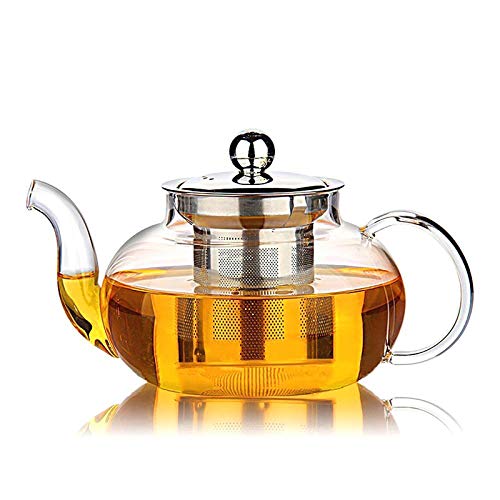
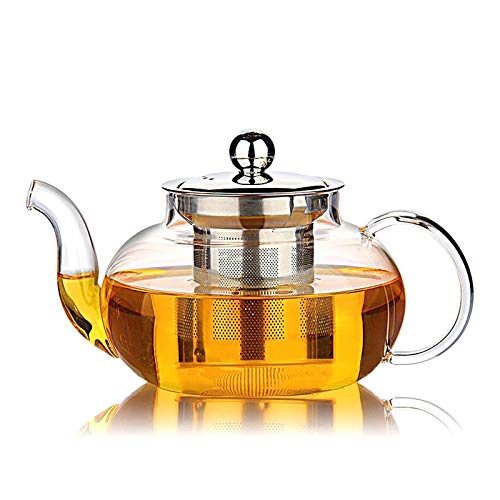
The Hiware Glass Teapot is the straightforward recommendation for a first loose leaf pot: clear glass, a removable stainless infuser, a shape that pours without drama, and an entry-level position that makes it an easy decision. Nothing about it is exotic, and that is precisely its strength. The infuser lifts out so leaves stop steeping on time, the glass shows you the strength of the brew at a glance, and the whole pot rinses clean in seconds.
Owners should treat it as what it is — a light, practical glass pot rather than a heirloom. It will not keep tea hot through a long afternoon, and it deserves the usual glass courtesies around thermal shock and careful washing. For a single drinker or a couple moving from bags to loose leaf, it covers the job with the least fuss and the least commitment of any pot here. Best for: beginners, small households and everyday loose leaf. Not suited for: entertaining a crowd or slow sessions where heat retention matters.
Best for: finding out whether loose leaf in a pot beats your mug Not suited for: anyone certain they want a lifetime pot immediately
How to Get the Most Value If You Buy
Different teas want different water, and the teapot itself cannot fix water that starts wrong. Delicate green and white teas scald in fully boiling water and turn bitter and flat; robust black teas and most herbal blends need the full heat to open up properly. Because a teapot is a steeping vessel rather than a heating one for most designs, your kettle habits decide the temperature and the pot decides how well that heat is held during the steep. A heavy pot pre-warmed with a rinse of hot water holds a steadier temperature than a cold thin glass pot, which is one reason the same leaves can taste different from two different pots.
Judge capacity by the session, not by the biggest gathering you host once a year. Most households settle into one of two patterns: a small daily pot for one or two people, or a generous pot that comes out when friends visit. If both patterns sound familiar, a medium pot that brews well half full is the flexible answer, because a good teapot should still pour cleanly and keep heat when it is not filled to the brim. Leaves also need room to expand, so a pot that looks just big enough on paper can feel crowded once whole leaves unfurl inside it.
Longevity in a teapot is mostly about the parts that fail first: lids, infuser meshes and handles. A maker who sells replacement lids and baskets turns an accident into an errand instead of a replacement purchase, and that support is worth real weight in a buying decision. Glass owners should expect to handle their pot gently forever; ceramic owners should expect chips only from carelessness; cast iron, kept dry and treated kindly, is the one material that can plausibly be handed on. Judge a pot by how gracefully it ages in your actual kitchen, not by how it photographs on the day it arrives.
Is a Teapot Worth It? Run the Decision Checklist
- Do you drink loose leaf tea at least most days?
- Do you ever pour tea for another person?
- Will you enjoy, rather than tolerate, a two-minute brewing routine?
- Do you have a cupboard spot where a pot can live safely?
- Can everyone who will use it lift a full pot confidently?
- Are you willing to rinse it straight after use?
Four or more honest yeses: buy the pot, sized to your real session. Two or fewer: choose an infuser mug and spend the difference on leaves. In between: start with an entry-level glass pot and let a month of mornings cast the deciding vote.
Teapot: The Break-Even Test: When the Purchase Pays Off
Start with how often a {p} must actually be used before it earns its counter or cupboard space. Most coverage of a teapot concentrates on the first week of ownership, yet the decisions that matter most tend to surface later, once the teapot has to earn its place in an ordinary weekday routine rather than a carefully staged first attempt. Write down the three jobs you expect it to do most often, in the order you actually do them, and judge every claim you read against that short personal list instead of against a generic ideal.
Troubleshooting is easier when you expect the usual failure points. With any teapot, the recurring problems tend to cluster in the same places: uneven results from overloading or poor arrangement, wear showing first on the parts handled most often, and small annoyances with lids, seals, handles, controls or fittings that only appear after repeated use. Before buying, look for whether those wear parts can be cleaned properly, replaced or worked around, and whether the instructions address them directly rather than pretending they never happen.
Measure before you commit. Note the footprint, the clearance above and behind the spot where the teapot will live, and the route you will carry it by when it is hot, full or awkward. A teapot that technically fits but blocks a cupboard door, crowds a neighbouring appliance or has to be dragged across a worktop every time will quietly fall out of use, whatever its merits on paper. In the Coffee & Tea category especially, a few centimetres of clearance and a sensible storage plan separate a daily tool from a bulky regret.
When you check listings such as ForLife Stump Teapot and Hiware Glass Teapot, use them as worked examples: run through the same checks below on each one in turn, so the comparison stays honest and like for like rather than based on whichever listing happens to shout loudest.
Finally, plan the first fortnight deliberately. Use the teapot for one familiar job first, so you have a baseline you trust, then introduce the harder cases one at a time and note what changes. Small adjustments to arrangement, timing, quantity or preparation usually close most of the gap between disappointing first results and the performance the design is capable of. That short learning period is also the fairest test of the break-even calculation: if the routine has not settled by the end of it, the mismatch is real, and it is better to know while returning or exchanging is still straightforward.
Edge cases deserve a deliberate pass. Think about the odd shapes, the thicker or thinner than usual loads, the leftovers, the second helping and the guest with different preferences. A well-chosen teapot handles the exceptions gracefully, or at least predictably, while a poor match turns every exception into a workaround. List your two or three most common exceptions in advance and check, from the manual or the listing details, that nothing about them is ruled out by size, shape, material or care requirements.
Work through a realistic scenario, not a best case. Picture the busiest version of the job: more people to serve, less time than planned, ingredients or materials that are slightly out of the ordinary, and a clean-up waiting at the end. Ask how the teapot behaves at that upper edge, because a model that only shines on a small, simple load will disappoint precisely when you need it most. If the honest answer is that you would split the job into batches or fall back on an older method, factor that into the decision now rather than discovering it later.
Frequently Asked Questions
Is a teapot worth it if I only drink tea occasionally?
Probably not as a first purchase. If tea is a weekly rather than daily habit, an infuser mug covers the experience with less cost and less cupboard space, and you can upgrade the moment the ritual starts to matter to you. Capacity is the first decision because it quietly shapes every brew you make afterwards A pot that is too large for a solo drinker leaves tea sitting and stewing while you work through it, and the second half of the pot rarely tastes as good as the first.
Does a teapot actually make tea taste better?
It can, indirectly. A pot with a roomy infuser lets whole leaves expand properly, and lifting the leaves out on time prevents the bitterness that ruins many loose leaf brews in a mug. Judge an infuser by three things: room, reach and removal Room means the leaves can swell to several times their dry size without packing tight Reach means the basket sits deep enough that a half pot still steeps properly, which matters more often than most people expect.
Is a teapot worth it for one person?
Yes, if you choose a genuinely small pot. A compact pot sized for one or two cups gives a solo drinker the full ritual without brewing more than will be drunk well. A good spout pours in a clean, controlled stream and stops without a dribble down the side of the pot That sounds like a small thing until you have mopped tea off a tablecloth for the third time, or watched a thin, sputtering stream splash near-boiling water closer to your fingers than you would like.
What is the main hidden cost of owning a teapot?
Attention rather than money. A pot asks to be warmed, timed, rinsed and stored with a little care, and fragile materials ask for a gentle hand in the sink for as long as you own them. Tea stain is cosmetic long before it is a problem, but it does build The brown film that creeps over the inside of a pot is tannin, and left for months it can start to dull the flavour of delicate teas and make a glass pot look tired.
Teapot or electric kettle with an infuser — which is worth it?
The electric option wins on convenience and temperature control; the teapot wins on the table. If you drink at a desk, choose convenience. If tea is something you sit down to, the pot earns its place. If your water is hard, limescale will eventually cloud a glass pot and crust the inside of any pot used with stovetop heating The fix is gentle and cheap: fill the pot with a mixture of water and plain white vinegar, leave it to sit until the deposits soften, then rinse very thoroughly several times so no trace of vinegar survives to meet your next brew.
How long will a decent teapot last?
Glass lasts as long as it is handled kindly, glazed ceramic survives years of daily use, and cast iron kept dry can serve for decades. Makers who sell replacement lids and infusers extend any pot’s life considerably. Thermal shock is the one risk glass owners must genuinely understand Borosilicate glass tolerates heat well, but a sudden extreme change — a cold pot filled instantly with boiling water on a freezing stone counter, or a hot pot plunged into cold washing-up water — stresses any glass.
Related Guides
how to choose a teapot, step by step
teapot pros and cons in plain language
our teapot reviews and model notes
our guide to the best teapots for loose leaf tea
our roundup of the best teapot sets
our step-by-step guide on how to brew loose leaf tea
More Notes From the Tea Shelf
Reading a teapot listing well is a skill in itself. Photographs flatter capacity by filling pots to the brim, when the usable brewing volume is always less once leaves and headroom are accounted for. Descriptions that boast about stovetop use deserve a careful second read, because some mean the pot can sit on a warmer and others mean genuine direct heat. The details that predict daily satisfaction are the unglamorous ones: infuser depth, lid fit, whether replacement parts exist, and how the spout is shaped. Shop for those, and the silhouette can look after itself.
A note on serving: the order and manner of pouring changes what lands in each cup. The first pour from a pot is often slightly weaker than the last, because the brew strengthens as it sits and settles. Hosts who care about fairness pour in rounds — a little into each cup, then back around — so every guest gets an even share of the pot’s character. It is an old habit from formal tea service, and it survives because it works. Keep the pot close to the cups, pour slowly, and let the spout finish dripping before you move to the next cup.
Storing leaves near the pot sounds obvious and is often done badly. Tea absorbs odours eagerly, so the cupboard above the spices is the worst home for it, and a clear jar on a sunny counter degrades leaves with light. Keep tea in a sealed, opaque container in a cool cupboard, and keep the pot itself clean and dry beside it. The pairing matters because a stale-smelling pot can undo good leaves: if a pot ever smells of the cupboard, a warm bicarbonate soak and a thorough rinse will bring it back to neutral.
Finally, remember that a teapot improves with familiarity. The first brews in a new pot are experiments: you learn how fast it pours, how quickly it gives up heat, how strong the second steep runs. Keep the variables simple while you learn — same leaves, same routine — and adjust one thing at a time. Within a week the pot stops being equipment and becomes part of how you make tea, which is exactly the point at which it starts earning its place on the counter.
There is a quiet skill in warming the pot, and it separates a good brew from a flat one more often than leaf quality does. A cold pot steals heat from the water the moment it is poured, dropping the steep below the temperature the leaves wanted. A quick rinse with hot water while the kettle comes to the boil costs nothing and takes seconds, yet it keeps the brew in its proper range from first pour to last. Heavy pots benefit most, because their walls hold the most heat, but even a thin glass pot brews more evenly when it starts warm.
Over-steeping is the flavour fault that a good teapot is specifically designed to prevent. Leaves left sitting in brewed tea keep releasing tannin, and a pleasant pot turns bitter and stewed. This is why removable infusers matter so much: the moment the tea reaches the strength you like, the leaves come out and the clock stops. If your pot has no infuser, decant the whole brew into a second warmed pot or a serving jug. It feels like a small ceremony because it is one, and the difference in the cup is immediate.
Water quality is the invisible ingredient. Heavily chlorinated tap water can flatten delicate teas, and very hard water leaves both scale in the pot and a dull film on the surface of the brew. You do not need special equipment to improve matters: a simple filter jug, or even letting a jug of tap water stand uncovered for a while before boiling, takes the edge off chlorine. If your glass pot clouds quickly or your kettle furs up fast, your water is telling you something, and the tea will taste better when you listen.
Tea cosies and warmers divide opinion, but their logic is sound. A pot loses heat through its walls and lid, and a simple fabric cosy slows that loss enough to keep a second round pleasant. Candle warmers do the same job with more theatre, though they should only be used with pots the maker rates for that gentle direct heat, and never left unattended. The alternative strategy is simply to brew smaller pots more often, which many experienced drinkers prefer, because freshly brewed tea always beats kept tea no matter how warm it stays.
Further Notes for Careful Buyers
The most common teapot mistake is buying for the wrong household size, and the second most common is ignoring the infuser. Shoppers fall for a silhouette, take home a pot that brews twice what they drink or half what they serve, and then quietly stop using it. The third mistake is treating every pot as stovetop-safe: most teapots are steeping vessels, not kettles, and direct heat will crack glass that is not rated for it, damage enamel, and ruin a ceramic pot’s glaze. Read the maker’s guidance for your exact model, and when in doubt, boil the water in a kettle and let the pot do the job it was designed for.
As a gift, a teapot succeeds when it matches the recipient’s habits rather than the giver’s taste. A glass pot with a good infuser is the safest present for a loose leaf beginner, because it is forgiving, easy to clean and enjoyable to watch. Cast iron suits the established drinker who will appreciate its weight and ritual. Whatever you choose, include the leaves: a small bag of something approachable turns a handsome object into an invitation, and it saves the new owner from the pot sitting unused while they wonder where to begin.
Glass teapots earn their popularity honestly: you can watch the leaves unfurl and judge the colour of the brew without lifting the lid, which makes timing a delicate green or a blooming tea far easier. Borosilicate glass, the type used by most reputable makers, handles the heat of freshly boiled water well and does not hold flavours from previous brews, so a floral jasmine today will not haunt a smoky black tea tomorrow. The trade-off is fragility and heat loss. Glass asks for a gentler hand in the sink and gives up its warmth faster than heavier materials, so long, slow sessions may need a warmer or a smaller pot.
A glass pot suits drinkers who treat brewing as something to watch as much as to taste. The clear walls turn the steep into a small performance, and they make the pot the natural home for flowering teas that open into a bloom as they steep. Glass is also the easiest material to keep truly clean, because any scale or staining is visible the moment it starts, long before it can affect flavour. Handle it with the respect you would give a good wine glass: set it down on a heat-safe surface rather than a cold stone counter, and avoid sudden swings from hot water to cold rinses.
Cast iron teapots, modelled on the Japanese tetsubin tradition, are the heavyweights of the category in every sense. The thick walls hold heat far longer than glass or thin ceramic, so a pot poured at the start of a long conversation is still pleasantly warm at the end of it. Most modern versions are lined with enamel inside, which protects the brew from metallic flavours and makes care simpler than bare iron. That weight is also the honest drawback: a full cast iron pot is genuinely heavy, and lifting and pouring it safely means using two hands and a steady grip, especially for anyone with limited wrist strength.
Choose cast iron when the ritual matters as much as the tea. These pots pour slowly and deliberately, they look handsome enough to leave out on the counter, and they reward unhurried drinkers who brew one pot and linger over it. They are less suited to quick weekday mornings, because the pot itself takes a moment to warm through and the whole experience encourages patience. Treat the enamel lining kindly: avoid thermal shock, dry the pot after use so the rim and spout stay free of rust, and never scrub the interior with anything abrasive enough to chip the lining.
Ceramic and porcelain teapots are the traditional middle ground, and for many households they remain the most forgiving choice. The walls are thick enough to hold heat respectably, the material does not react with the tea, and a glazed interior rinses clean without retaining flavours. Ceramic also offers the widest range of shapes and finishes, from plain everyday pots to hand-glazed pieces that anchor a table setting. The weaknesses are familiar ones: ceramic chips if it meets a hard edge, and a dropped lid is usually a finished lid, so a maker who sells replacement parts is worth favouring.
A ceramic pot is the quiet all-rounder of the tea shelf. It suits the drinker who moves between black tea at breakfast and herbal blends in the evening, because a glazed pot can be washed back to neutral between very different teas. Heat retention sits between glass and cast iron, which is exactly right for a pot shared across a meal. When you shop, pick the pot up if you can, or read the handling notes carefully: balance matters more than decoration, and a pot that feels nose-heavy when empty will feel worse when it is full of near-boiling water.
Stainless steel teapots trade a little romance for a great deal of practicality. They shrug off knocks that would end a glass or ceramic pot, they are light for their size, and many are happy on the stovetop as well as at the table. The better designs use a brushed or double-walled build to tame the two classic complaints: a body that gets uncomfortably hot to touch and a metallic note in delicate teas. If you brew mostly robust black teas and breakfast blends, steel is a workhorse. If your heart belongs to subtle white and green teas, glass or ceramic will usually flatter them more.
Pouring is the moment where teapot design meets safety. A full pot is heavy, the water inside is hot enough to scald, and steam rises from the spout and lid as you tilt. A well-shaped spout keeps the stream predictable so you can pour slowly and stop exactly when you mean to. Practise a new pot with cold water first if you are unsure of its manners; ten seconds at the sink teaches you more about its balance and stream than any product description. Keep the receiving cup close, pour with the pot supported rather than stretched across the table, and never rush the last tilt.
The handle has one job: to let you lift a pot of near-boiling water with total confidence. It should stay cool enough to hold without a cloth, give your fingers room so knuckles never brush the hot body of the pot, and feel secure when your hands are wet. Side handles, overhead rattan-wrapped handles on cast iron pots, and modern heat-resistant grips all solve the problem differently, and none is automatically best. What matters is the combination of clearance, grip and balance in your hand, with the pot full rather than empty, because water weight changes the way every pot behaves.
A lid should sit securely enough that it does not slide or chatter when you pour, and many good designs add a small retaining lip or a silicone ring for exactly that reason. Hold the lid with a fingertip as you pour until you know your pot’s habits; even a well-made lid can shift at a steep tilt. The lid also matters for heat: a pot that fits its lid snugly keeps the brew warmer and steams less across your hand as you lift it. Check how the lid opening handles the infuser as well, because a wide mouth makes filling, emptying and cleaning noticeably easier every single day.
Tea drinkers who keep several teas in rotation should think about flavour memory. Unglazed clay is famous for seasoning itself to one tea over time, which devotees love and generalists should avoid. Glazed ceramic, glass and enamel-lined cast iron all wash back to neutral, so they suit a varied shelf. If you drink one beloved tea almost exclusively, a dedicated pot can deepen the ritual; if your cupboard holds a dozen blends, neutrality is worth more than character, and your cleaning routine matters more than the material debate.
One More Round of Notes
Second steeps deserve a mention, because a good pot makes them easy and a poor one makes them pointless. Many whole-leaf teas give a second and even a third infusion, lighter and sweeter than the first, provided the leaves were not exhausted by an over-long first steep and are not left sitting wet and warm for hours. A pot with a basket you can lift, drain and rest makes the habit simple: brew, lift, pour, and return the leaves to the pot with fresh hot water when you are ready for the next round.
There is a practical art to pouring for a table that nobody teaches and everybody notices when it goes wrong. Fill cups in short rounds rather than one full cup at a time, so strength evens out across the table. Keep the pot’s spout over the cup before you tilt, not after, and finish each pour with a small pause so the last drip falls where you intend. Set the pot back on its trivet or board rather than directly on wood or fabric, because a hot base marks surfaces quietly and permanently.
Tea temperature at the table is a compromise between brewing and drinking, and a pot sits at the centre of it. Water hot enough to extract properly is too hot to drink comfortably, so a few minutes between pouring and sipping is not a flaw in the ritual but part of its design. Heavy pots hold the remaining tea in its pleasant range while the first cups cool; light glass pots ask you to drink at a brisker pace. Neither is wrong — but knowing which rhythm your pot imposes helps you choose the pot that suits your table.
A word about lids and steam: when you lift a lid mid-steep to check the leaves, you release the heat the pot has been holding and invite a face-full of steam if you lean in carelessly. Tilt the lid away from you as you lift, the way you would with any hot covered vessel, and replace it promptly. The same care applies when you remove an infuser basket straight after the steep: it drips, it steams, and it deserves a small tray or the upturned lid waiting to receive it rather than a dash across the tablecloth.
Households that keep both coffee and tea drinkers often ask whether one vessel can serve both. A teapot can certainly brew coffee in a pinch, but the oils coffee leaves behind are persistent, and a pot that has held coffee will lend its ghost to delicate teas for several washes afterwards. Keep the vessels separate if the teas you drink are subtle. If your teas are robust and your coffee occasional, a thorough bicarbonate soak will reset the pot — but the honest answer for a two-drink household is two vessels, each kept for its own drink.
Seasoned drinkers develop small superstitions about their pots, and most of them are simply compressed experience. Rinsing with hot water before brewing, keeping one pot for one family of teas, never letting leaves sit overnight — each habit survives because it protects flavour or the pot itself. New owners do not need to adopt anyone’s rituals wholesale. Adopt the ones in this guide that solve problems you actually have, keep your own routine simple enough to repeat daily, and let your preferences accumulate the way everyone else’s did: one brew at a time.
If a pot will be used by several people, agree the house rules early and keep them kind and simple. Rinse it after use. Never put it on direct heat unless it is rated for it. Set it down on the trivet, not the counter edge. Say if it is cracked rather than hoping nobody notices. Shared equipment lasts when everyone treats it as shared, and a teapot — handled daily, filled with near-boiling water, passed around a table — rewards that small collective care more than most objects in the kitchen.
Buying a second pot is a different decision from buying the first, and usually a better-informed one. By then you know whether your sessions run long or short, whether guests actually come, and whether your leaves are delicate or forgiving. Most two-pot households settle on a small daily pot and a larger or heavier pot for company, a pairing that covers nearly every occasion without compromise. If your first pot taught you that lesson, it has earned its keep even if the second pot is the one you reach for most.