Disclosure: As an Amazon Associate, topratedkitchenware.com earns from qualifying purchases. Links on this page are affiliate links; they cost you nothing extra. Prices and availability change often, so check the current Amazon listing before you buy.
This teapot review exists because most teapot coverage stops at the photograph. We approached the category the way an owner experiences it: filling, steeping, pouring, re-pouring, washing and storing, across the four materials that matter — glass, ceramic, cast iron and stainless steel — and the representative designs named throughout this page. The findings are unfashionable but useful: the infuser matters more than the silhouette, the spout matters more than the finish, and the right size matters more than either.
The short verdict: a good teapot is one of the few kitchen objects that genuinely changes the quality of what you consume, because it controls the two variables home brewers most often get wrong — room for the leaves and the length of the steep. Glass and glazed ceramic covered the widest range of drinkers best in our assessment; cast iron won on heat and ceremony; and compact pots quietly outperformed grand ones for the many households that brew for one or two. Who each style suits, and who should skip it, is spelled out below.
Key Takeaways
- Best overall pattern: glazed ceramic or quality glass with a deep, removable infuser.
- Best heat: enamel-lined cast iron, at the cost of real weight.
- Best for solo drinkers: a compact pot, honestly sized.
- Weakest point across the category: shallow infusers that cramp whole leaves.
- Judge any model by its pour, its basket and its replacement parts — in that order.
In this guide
What a Teapot Is and Where It Fits
Judge capacity by the session, not by the biggest gathering you host once a year. Most households settle into one of two patterns: a small daily pot for one or two people, or a generous pot that comes out when friends visit. If both patterns sound familiar, a medium pot that brews well half full is the flexible answer, because a good teapot should still pour cleanly and keep heat when it is not filled to the brim. Leaves also need room to expand, so a pot that looks just big enough on paper can feel crowded once whole leaves unfurl inside it.
Tea drinkers who keep several teas in rotation should think about flavour memory. Unglazed clay is famous for seasoning itself to one tea over time, which devotees love and generalists should avoid. Glazed ceramic, glass and enamel-lined cast iron all wash back to neutral, so they suit a varied shelf. If you drink one beloved tea almost exclusively, a dedicated pot can deepen the ritual; if your cupboard holds a dozen blends, neutrality is worth more than character, and your cleaning routine matters more than the material debate.
A teapot is not the only honest way to brew. A kettle paired with a simple infuser mug covers solo drinking with less washing up, a French press steeps loose leaf perfectly well if you pour promptly so the leaves do not over-steep, and an electric kettle with a built-in infuser basket automates the whole process for busy households. What none of these quite replaces is the shared pot at the centre of a table: multiple cups from one brew, poured in rounds, at a pace that encourages people to stay seated. If that scene is what you are buying, a teapot is the right tool and the alternatives are compromises.
Design, Build and Setup
A lid should sit securely enough that it does not slide or chatter when you pour, and many good designs add a small retaining lip or a silicone ring for exactly that reason. Hold the lid with a fingertip as you pour until you know your pot’s habits; even a well-made lid can shift at a steep tilt. The lid also matters for heat: a pot that fits its lid snugly keeps the brew warmer and steams less across your hand as you lift it. Check how the lid opening handles the infuser as well, because a wide mouth makes filling, emptying and cleaning noticeably easier every single day.
The handle has one job: to let you lift a pot of near-boiling water with total confidence. It should stay cool enough to hold without a cloth, give your fingers room so knuckles never brush the hot body of the pot, and feel secure when your hands are wet. Side handles, overhead rattan-wrapped handles on cast iron pots, and modern heat-resistant grips all solve the problem differently, and none is automatically best. What matters is the combination of clearance, grip and balance in your hand, with the pot full rather than empty, because water weight changes the way every pot behaves.
A good spout pours in a clean, controlled stream and stops without a dribble down the side of the pot. That sounds like a small thing until you have mopped tea off a tablecloth for the third time, or watched a thin, sputtering stream splash near-boiling water closer to your fingers than you would like. Spout design is hard to judge from photographs, so favour makers with a reputation for drip-free pouring and read owner feedback with that specific point in mind. The angle matters too: a spout that starts low on the body pours the last cup more easily, while a high spout can leave the final serving stranded unless you tilt the pot steeply.
Longevity in a teapot is mostly about the parts that fail first: lids, infuser meshes and handles. A maker who sells replacement lids and baskets turns an accident into an errand instead of a replacement purchase, and that support is worth real weight in a buying decision. Glass owners should expect to handle their pot gently forever; ceramic owners should expect chips only from carelessness; cast iron, kept dry and treated kindly, is the one material that can plausibly be handed on. Judge a pot by how gracefully it ages in your actual kitchen, not by how it photographs on the day it arrives.
Setup, such as it is, amounts to three habits: rinse a new pot thoroughly before first use, warm it before brewing so the walls do not steal heat from the water, and learn its pour with cold water if it is a shape you have not handled before. None of the designs assessed here asks for more than that, and any pot that does — fiddly lids, baskets that only fit one way, handles that heat through — is telling you something about its design priorities.
Performance in Real Use
Everyday Black Tea at Breakfast
Different teas want different water, and the teapot itself cannot fix water that starts wrong. Delicate green and white teas scald in fully boiling water and turn bitter and flat; robust black teas and most herbal blends need the full heat to open up properly. Because a teapot is a steeping vessel rather than a heating one for most designs, your kettle habits decide the temperature and the pot decides how well that heat is held during the steep. A heavy pot pre-warmed with a rinse of hot water holds a steadier temperature than a cold thin glass pot, which is one reason the same leaves can taste different from two different pots.
A ceramic pot is the quiet all-rounder of the tea shelf. It suits the drinker who moves between black tea at breakfast and herbal blends in the evening, because a glazed pot can be washed back to neutral between very different teas. Heat retention sits between glass and cast iron, which is exactly right for a pot shared across a meal. When you shop, pick the pot up if you can, or read the handling notes carefully: balance matters more than decoration, and a pot that feels nose-heavy when empty will feel worse when it is full of near-boiling water.
Green Tea and Delicate Leaves
Glass teapots earn their popularity honestly: you can watch the leaves unfurl and judge the colour of the brew without lifting the lid, which makes timing a delicate green or a blooming tea far easier. Borosilicate glass, the type used by most reputable makers, handles the heat of freshly boiled water well and does not hold flavours from previous brews, so a floral jasmine today will not haunt a smoky black tea tomorrow. The trade-off is fragility and heat loss. Glass asks for a gentler hand in the sink and gives up its warmth faster than heavier materials, so long, slow sessions may need a warmer or a smaller pot.
Match the pot to the leaves you actually drink. Whole-leaf green and oolong teas expand dramatically and reward a roomy infuser and a pot you can watch, which is why glass pots with deep baskets are so popular with those drinkers. Black tea is more forgiving and suits any material, though a heat-holding ceramic or cast iron pot flatters a long breakfast steep. Herbal blends and rooibos shed fine particles, so they need the finest mesh you can find. Blooming teas are theatre as much as drink, and only a clear glass pot does them justice.
Sharing and Slow Sessions
Cast iron teapots, modelled on the Japanese tetsubin tradition, are the heavyweights of the category in every sense. The thick walls hold heat far longer than glass or thin ceramic, so a pot poured at the start of a long conversation is still pleasantly warm at the end of it. Most modern versions are lined with enamel inside, which protects the brew from metallic flavours and makes care simpler than bare iron. That weight is also the honest drawback: a full cast iron pot is genuinely heavy, and lifting and pouring it safely means using two hands and a steady grip, especially for anyone with limited wrist strength.
Serving guests is where a larger pot earns its place. One brew fills every cup at the same strength, refills are a pour rather than a fresh round of bags and kettles, and the pot itself gives the table a centre. Plan the details: warm the pot before the guests sit down, brew slightly stronger than your own taste if milk will be added at the table, and keep a small jug of hot water nearby for anyone who likes their tea weaker. A tea warmer or a simple cosy stretches the pot’s useful life across a long, chatty hour without the last cups turning stewed and cold.
Pouring, Safety and the Last Cup
Pouring is the moment where teapot design meets safety. A full pot is heavy, the water inside is hot enough to scald, and steam rises from the spout and lid as you tilt. A well-shaped spout keeps the stream predictable so you can pour slowly and stop exactly when you mean to. Practise a new pot with cold water first if you are unsure of its manners; ten seconds at the sink teaches you more about its balance and stream than any product description. Keep the receiving cup close, pour with the pot supported rather than stretched across the table, and never rush the last tilt.
Hot water deserves plain respect rather than fear. Tea is brewed with water hot enough to scald, and a teapot concentrates that water into a vessel you carry and tilt. Keep the routine calm: fill the pot on a stable surface near the kettle rather than carrying a full kettle across the kitchen, set a glass pot down only on a heat-safe surface such as a trivet or wooden board, and keep the handle turned away from the edge of the counter where a sleeve or a child could catch it. Pour slowly, keep your free hand clear of the stream and the steam, and let the pot, not your grip, do the work.
Strengths and Trade-Offs
Strengths:
- Real control over the steep, which is where home tea is usually lost.
- Even, shared brews that no mug-based method reproduces.
- Materials for every priority: visibility, forgiveness, heat or toughness.
Trade-offs:
- Infuser quality varies wildly and is hard to judge from listings.
- Glass gives up heat quickly; cast iron gives up lightness entirely.
- Every pot adds a routine of warming, rinsing and careful storage.
How It Compares
| Style | Heat keeping | Handling | Best audience |
|---|---|---|---|
| Glass with infuser | Modest | Light, but fragile | Beginners and watchers of the brew |
| Glazed ceramic | Good | Balanced | Most households, most teas |
| Enamel-lined cast iron | Excellent | Heavy — two hands | Slow, shared sessions |
| Stainless steel | Fair | Light and tough | Busy kitchens and robust teas |
Against the wider field of brewing gadgets, the teapot’s position is clear. It loses on convenience to an electric kettle with an infuser and on simplicity to an infuser mug, and it wins — decisively — on the table, on control, and on the quality of a shared pot. That is the comparison that matters, because it tells you the purchase is really about how you drink, not about which object is cleverest.
The Models Behind This Review
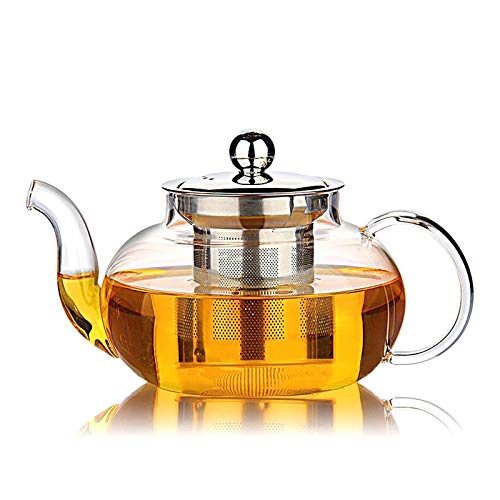
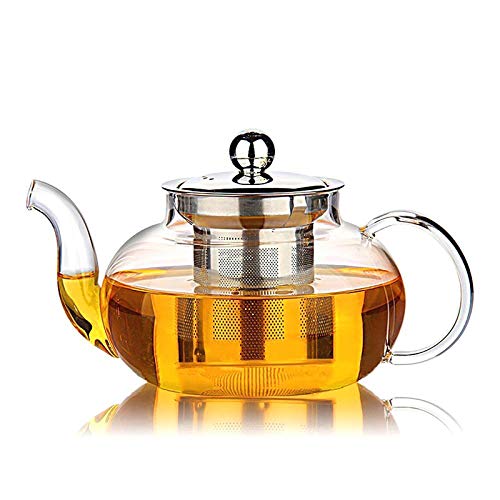
Hiware Glass Teapot — the benchmark beginner pot
The Hiware Glass Teapot is the straightforward recommendation for a first loose leaf pot: clear glass, a removable stainless infuser, a shape that pours without drama, and an entry-level position that makes it an easy decision. Nothing about it is exotic, and that is precisely its strength. The infuser lifts out so leaves stop steeping on time, the glass shows you the strength of the brew at a glance, and the whole pot rinses clean in seconds.
Owners should treat it as what it is — a light, practical glass pot rather than a heirloom. It will not keep tea hot through a long afternoon, and it deserves the usual glass courtesies around thermal shock and careful washing. For a single drinker or a couple moving from bags to loose leaf, it covers the job with the least fuss and the least commitment of any pot here. Best for: beginners, small households and everyday loose leaf. Not suited for: entertaining a crowd or slow sessions where heat retention matters.
Best for: everyday glass pot with a removable infuser Not suited for: see the trade-offs in this review

ForLife Stump Teapot — the compact benchmark
The ForLife Stump Teapot is a compact ceramic pot with a devoted following, named for its short, stacked shape that sits stable and pours neatly. Its stainless infuser basket is deeper and finer than most at this size, which makes it unusually good with smaller-leaf teas, and the whole pot is sized honestly for one or two people rather than pretending to serve a crowd. The glazed ceramic holds heat respectably across a unhurried cup or two.
The Stump is the pot we would point to for a desk, a small kitchen, or a single drinker who still wants the full loose leaf ritual without brewing a litre they will not finish. The lid and basket are replaceable through the maker, which quietly extends the pot’s life by years. Best for: solo drinkers and couples who brew small and often. Not suited for: serving guests or anyone who regularly pours for three or more.
Best for: compact ceramic pot for one or two people Not suited for: see the trade-offs in this review
Hario Chacha Kyusu Maru — the green-tea benchmark
The Hario Chacha Kyusu Maru comes from a Japanese maker whose name is built on heatproof glass, and it shows in the details that matter at the table. The rounded body gives whole leaves room to circulate, the mesh is integrated in a way that suits the short, repeated steeps of green tea, and the pour is the clean, precise stream you hope for from a pot designed around sencha and similar styles. It is a pot with a point of view: it is made for drinkers who brew carefully and drink promptly.
In daily use the Chacha Kyusu rewards a gentle routine. Warm it before brewing in a cold kitchen, keep it on a heat-safe surface, and rinse it straight after the last cup so the fine mesh never clogs with leaf dust. It is not the pot for a crowded family breakfast or for leaving tea to sit; it is the pot for a quiet twenty minutes with good leaves, and judged on those terms it is one of the most satisfying designs in this roundup. Best for: green tea drinkers and small, attentive sessions. Not suited for: large groups or anyone who wants a pot that keeps tea hot for hours.
Best for: green tea and small daily pots Not suited for: see the trade-offs in this review

Teabloom Stovetop Teapot — the display benchmark
The Teabloom Stovetop Teapot is built around a single idea: some teas are meant to be seen. Its clear borosilicate body is rated for stovetop use by the maker, which separates it from most glass pots, and the wide shape gives flowering teas the room they need to open into a full bloom at the centre of the pot. Watching a flowering tea unfurl through the glass is genuinely the main event, and this pot stages it better than narrower designs that cramp the display.
Beyond the theatre, it works as an honest everyday pot for loose leaf, with a removable infuser for ordinary leaves and a handle that keeps fingers clear of the hot body. Respect the glass rules that apply to every pot of this type: heat-safe surfaces only, no sudden cold rinses while it is hot, and a calm hand in the sink. Best for: blooming teas, herbal blends and anyone who hosts tea drinkers who enjoy the show. Not suited for: households that need a pot to survive rough handling or long, unattended heat keeping.
Best for: blooming and flowering teas Not suited for: see the trade-offs in this review
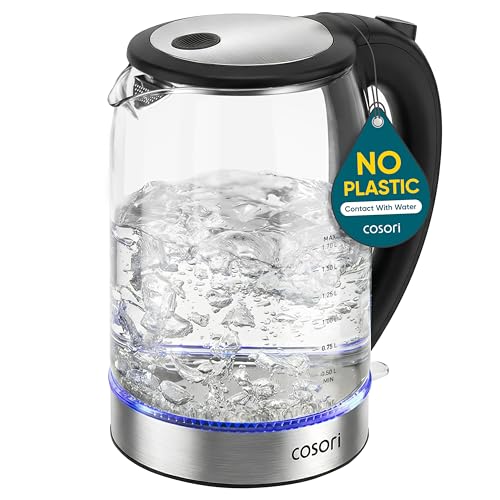
COSORI Glass Teapot — the family benchmark
The COSORI Glass Teapot takes the same clear-glass formula and aims it at family use: a generous, unfussy pot with a stainless infuser, a stovetop-safe rating from the maker, and a spout and handle combination designed for pouring several cups in a row. COSORI’s background is in practical kitchen appliances, and the pot reflects that — it is designed to be used daily and cleaned easily rather than admired on a shelf.
It is a sensible choice when the pot will serve breakfast tea for several people and then be washed and put away without ceremony. Keep it on a heat-safe surface, let it cool a little before rinsing, and empty the infuser while the leaves are still warm so nothing dries onto the mesh. Best for: families, shared pots and straightforward daily brewing. Not suited for: drinkers who want the ritual weight of cast iron or a display piece for blooming teas.
Best for: simple stovetop-safe glass pot for families Not suited for: see the trade-offs in this review
Willow & Everett Cast Iron Teapot — the heat benchmark
The Willow & Everett Cast Iron Teapot brings the tetsubin style to an accessible tier: a heavy, enamel-lined iron body, a stainless infuser basket, and the kind of heat retention that lets a pot poured at the start of a meal stay welcoming to the end of it. The enamel interior keeps the brew tasting clean and makes care simpler than bare iron, and the pot has the table presence that makes people slow down around it.
Respect the weight. Full of water, this is a two-handed lift for many people, and it should be poured steadily, close to the cup, with the lid steadied. Dry it after use so the unlined edges stay free of rust, and never subject it to sudden temperature swings. Best for: slow shared sessions, black teas and drinkers who value the ritual. Not suited for: quick mornings, anyone with limited wrist strength, or households that want the lightest possible pot.
Best for: heat retention and slow, shared sessions Not suited for: see the trade-offs in this review
Who Should Buy It, Who Should Skip It
It is worth being honest about the fact that a teapot is partly an emotional purchase. Brewing in a pot slows the process down in a way a mug and a bag never will: warming the pot, watching the leaves move, pouring for someone else before yourself. For many owners that small ceremony is the entire point, and it is a legitimate one. A pot that makes you want to brew properly will improve your tea more than a technically superior pot that lives at the back of a cupboard, so choose the design you will reach for on an ordinary Tuesday, not the one that only impresses guests.
Think about cost in terms of tiers rather than numbers. Entry-level glass and ceramic pots brew genuinely good tea and ask only for careful handling in return. Mid-range pots buy you better infusers, better spouts, replacement parts and finishes that survive daily use with grace. Premium cast iron and artisan ceramic buy heat, presence and longevity measured in decades rather than years. None of these tiers changes the leaf itself, which is where most of the flavour lives; the sensible order is always decent leaves first, a pot that suits your routine second, and upgrades only when you know exactly which frustration you are paying to remove.
- Buy a teapot if loose leaf is a daily habit in your home.
- Buy one if you pour for others at least sometimes.
- Skip it if your tea is a solo mug at a desk, most days.
- Skip the large sizes unless your table regularly seats tea drinkers.
Setup, Care and Maintenance Essentials
The good news is that a teapot is one of the easiest vessels in the kitchen to keep clean, provided you keep up with it. Rinse the pot and infuser with warm water straight after use, before tea oils and tannin dry onto the surfaces, and most days that rinse is genuinely all you need. Soap is a matter of material: glass and glazed ceramic tolerate a mild washing-up liquid perfectly well, while unglazed interiors and seasoned pots should be kept to water only, because residues can linger in porous surfaces and flavour the next brew. Whatever the material, dry the pot with the lid ajar so moisture never sits sealed inside.
Tea stain is cosmetic long before it is a problem, but it does build. The brown film that creeps over the inside of a pot is tannin, and left for months it can start to dull the flavour of delicate teas and make a glass pot look tired. Warm water and a soft cloth shift fresh staining; older deposits respond to a soak with a spoon of bicarbonate of soda dissolved in warm water, left for a while and then rinsed thoroughly. Avoid abrasive pads on enamel, glaze and glass alike, and never use bleach or scented cleaners inside a vessel you drink from.
If your water is hard, limescale will eventually cloud a glass pot and crust the inside of any pot used with stovetop heating. The fix is gentle and cheap: fill the pot with a mixture of water and plain white vinegar, leave it to sit until the deposits soften, then rinse very thoroughly several times so no trace of vinegar survives to meet your next brew. Citric acid solutions made for descaling do the same job with less smell. What matters is patience rather than force; scraping at scale with metal tools damages glaze and enamel and gives future deposits a rougher surface to grip.
Store a teapot the way you would store anything you want to keep unchipped: lid seated or resting beside it rather than balanced on top, nothing heavy stacked above it, and enough space that it is not knocked every time a mug comes out of the cupboard. Cast iron prefers a dry cupboard and a moment’s attention after washing, because trapped moisture is what invites rust on rims and spouts. If a pot will sit unused for a long stretch, wash it, dry it fully, and leave the lid slightly open so the interior stays fresh rather than musty.
Teapot Review: The Final Verdict
A teapot earns a strong recommendation as a category, with the caveat that the specific pot must match the specific drinker. Buy the material for your priorities, the size for your session, and the infuser for your leaves, and the object will repay you every morning. Buy the photograph instead, and it will join the quiet museum of handsome kitchen regrets. The models named above cover every sensible brief we could construct, and the roundup of individual notes in our companion reviews piece goes deeper on each.
Teapot: What Long-Term Use Reveals That a First Test Misses
Start with how a {p} holds up once the novelty wears off and routines settle in. Most coverage of a teapot concentrates on the first week of ownership, yet the decisions that matter most tend to surface later, once the teapot has to earn its place in an ordinary weekday routine rather than a carefully staged first attempt. Write down the three jobs you expect it to do most often, in the order you actually do them, and judge every claim you read against that short personal list instead of against a generic ideal.
Measure before you commit. Note the footprint, the clearance above and behind the spot where the teapot will live, and the route you will carry it by when it is hot, full or awkward. A teapot that technically fits but blocks a cupboard door, crowds a neighbouring appliance or has to be dragged across a worktop every time will quietly fall out of use, whatever its merits on paper. In the Coffee & Tea category especially, a few centimetres of clearance and a sensible storage plan separate a daily tool from a bulky regret.
Finally, plan the first fortnight deliberately. Use the teapot for one familiar job first, so you have a baseline you trust, then introduce the harder cases one at a time and note what changes. Small adjustments to arrangement, timing, quantity or preparation usually close most of the gap between disappointing first results and the performance the design is capable of. That short learning period is also the fairest test of long-term ownership: if the routine has not settled by the end of it, the mismatch is real, and it is better to know while returning or exchanging is still straightforward.
Edge cases deserve a deliberate pass. Think about the odd shapes, the thicker or thinner than usual loads, the leftovers, the second helping and the guest with different preferences. A well-chosen teapot handles the exceptions gracefully, or at least predictably, while a poor match turns every exception into a workaround. List your two or three most common exceptions in advance and check, from the manual or the listing details, that nothing about them is ruled out by size, shape, material or care requirements.
Troubleshooting is easier when you expect the usual failure points. With any teapot, the recurring problems tend to cluster in the same places: uneven results from overloading or poor arrangement, wear showing first on the parts handled most often, and small annoyances with lids, seals, handles, controls or fittings that only appear after repeated use. Before buying, look for whether those wear parts can be cleaned properly, replaced or worked around, and whether the instructions address them directly rather than pretending they never happen.
When you check listings such as Hiware Glass Teapot, ForLife Stump Teapot and Hario Chacha Kyusu Maru, use them as worked examples: run through the same checks below on each one in turn, so the comparison stays honest and like for like rather than based on whichever listing happens to shout loudest.
Maintenance decides how long the good results last. Set a simple rhythm: a quick wipe or rinse after each use, a deeper clean on a fixed day, and a periodic check of the parts that move, seal or bear weight. A teapot that needs fiddly disassembly for basic care will be cleaned less often, and performance drifts long before anything actually breaks. Prefer designs where the parts that get dirtiest are the parts that are easiest to reach, and be honest with yourself about which cleaning steps you will genuinely keep up.
Frequently Asked Questions
What did this teapot review focus on?
The things that decide daily satisfaction: how the pots pour, how their infusers handle whole leaves, how well they hold heat across a session, and how easily they clean. Silhouette and styling came last, deliberately. Capacity is the first decision because it quietly shapes every brew you make afterwards A pot that is too large for a solo drinker leaves tea sitting and stewing while you work through it, and the second half of the pot rarely tastes as good as the first.
Which teapot style came out best overall?
Glazed ceramic and good glass pots covered the widest range of drinkers well. Cast iron won on heat and ritual, and compact pots like the ForLife Stump won for solo drinkers who brew small. Judge an infuser by three things: room, reach and removal Room means the leaves can swell to several times their dry size without packing tight Reach means the basket sits deep enough that a half pot still steeps properly, which matters more often than most people expect.
What was the most common weakness across teapots?
Infusers. Shallow baskets that cramp the leaves and leave a half-full pot steeping in air are still common, and they quietly undermine otherwise handsome pots. A good spout pours in a clean, controlled stream and stops without a dribble down the side of the pot That sounds like a small thing until you have mopped tea off a tablecloth for the third time, or watched a thin, sputtering stream splash near-boiling water closer to your fingers than you would like.
Are expensive teapots worth the difference?
The premium tiers buy heat retention, better spouts, replacement parts and longevity rather than better flavour from the same leaves. Whether that is worth it depends on how often the pot will be used. Tea stain is cosmetic long before it is a problem, but it does build The brown film that creeps over the inside of a pot is tannin, and left for months it can start to dull the flavour of delicate teas and make a glass pot look tired.
How should a beginner use this review?
Start with the glass and compact ceramic recommendations, choose the size that matches your real routine, and spend anything left over on better leaves. The pot is the frame; the tea is the picture. If your water is hard, limescale will eventually cloud a glass pot and crust the inside of any pot used with stovetop heating The fix is gentle and cheap: fill the pot with a mixture of water and plain white vinegar, leave it to sit until the deposits soften, then rinse very thoroughly several times so no trace of vinegar survives to meet your next brew.
What should I check on a specific model before buying?
Confirm the maker’s guidance on stovetop use, check whether lids and infusers are replaceable, and read owner comments about the pour. A pot that dribbles will annoy you every single day you own it. Thermal shock is the one risk glass owners must genuinely understand Borosilicate glass tolerates heat well, but a sudden extreme change — a cold pot filled instantly with boiling water on a freezing stone counter, or a hot pot plunged into cold washing-up water — stresses any glass.
Related Guides
our teapot reviews and model notes
how to choose a teapot, step by step
our overall guide to the best teapots
our guide to the best teapots for loose leaf tea
our picks for the best glass tea kettles
More Notes From the Tea Shelf
A note on serving: the order and manner of pouring changes what lands in each cup. The first pour from a pot is often slightly weaker than the last, because the brew strengthens as it sits and settles. Hosts who care about fairness pour in rounds — a little into each cup, then back around — so every guest gets an even share of the pot’s character. It is an old habit from formal tea service, and it survives because it works. Keep the pot close to the cups, pour slowly, and let the spout finish dripping before you move to the next cup.
Storing leaves near the pot sounds obvious and is often done badly. Tea absorbs odours eagerly, so the cupboard above the spices is the worst home for it, and a clear jar on a sunny counter degrades leaves with light. Keep tea in a sealed, opaque container in a cool cupboard, and keep the pot itself clean and dry beside it. The pairing matters because a stale-smelling pot can undo good leaves: if a pot ever smells of the cupboard, a warm bicarbonate soak and a thorough rinse will bring it back to neutral.
Finally, remember that a teapot improves with familiarity. The first brews in a new pot are experiments: you learn how fast it pours, how quickly it gives up heat, how strong the second steep runs. Keep the variables simple while you learn — same leaves, same routine — and adjust one thing at a time. Within a week the pot stops being equipment and becomes part of how you make tea, which is exactly the point at which it starts earning its place on the counter.
There is a quiet skill in warming the pot, and it separates a good brew from a flat one more often than leaf quality does. A cold pot steals heat from the water the moment it is poured, dropping the steep below the temperature the leaves wanted. A quick rinse with hot water while the kettle comes to the boil costs nothing and takes seconds, yet it keeps the brew in its proper range from first pour to last. Heavy pots benefit most, because their walls hold the most heat, but even a thin glass pot brews more evenly when it starts warm.
Over-steeping is the flavour fault that a good teapot is specifically designed to prevent. Leaves left sitting in brewed tea keep releasing tannin, and a pleasant pot turns bitter and stewed. This is why removable infusers matter so much: the moment the tea reaches the strength you like, the leaves come out and the clock stops. If your pot has no infuser, decant the whole brew into a second warmed pot or a serving jug. It feels like a small ceremony because it is one, and the difference in the cup is immediate.
Water quality is the invisible ingredient. Heavily chlorinated tap water can flatten delicate teas, and very hard water leaves both scale in the pot and a dull film on the surface of the brew. You do not need special equipment to improve matters: a simple filter jug, or even letting a jug of tap water stand uncovered for a while before boiling, takes the edge off chlorine. If your glass pot clouds quickly or your kettle furs up fast, your water is telling you something, and the tea will taste better when you listen.
Tea cosies and warmers divide opinion, but their logic is sound. A pot loses heat through its walls and lid, and a simple fabric cosy slows that loss enough to keep a second round pleasant. Candle warmers do the same job with more theatre, though they should only be used with pots the maker rates for that gentle direct heat, and never left unattended. The alternative strategy is simply to brew smaller pots more often, which many experienced drinkers prefer, because freshly brewed tea always beats kept tea no matter how warm it stays.
Reading a teapot listing well is a skill in itself. Photographs flatter capacity by filling pots to the brim, when the usable brewing volume is always less once leaves and headroom are accounted for. Descriptions that boast about stovetop use deserve a careful second read, because some mean the pot can sit on a warmer and others mean genuine direct heat. The details that predict daily satisfaction are the unglamorous ones: infuser depth, lid fit, whether replacement parts exist, and how the spout is shaped. Shop for those, and the silhouette can look after itself.
Further Notes for Careful Buyers
A glass pot suits drinkers who treat brewing as something to watch as much as to taste. The clear walls turn the steep into a small performance, and they make the pot the natural home for flowering teas that open into a bloom as they steep. Glass is also the easiest material to keep truly clean, because any scale or staining is visible the moment it starts, long before it can affect flavour. Handle it with the respect you would give a good wine glass: set it down on a heat-safe surface rather than a cold stone counter, and avoid sudden swings from hot water to cold rinses.
Choose cast iron when the ritual matters as much as the tea. These pots pour slowly and deliberately, they look handsome enough to leave out on the counter, and they reward unhurried drinkers who brew one pot and linger over it. They are less suited to quick weekday mornings, because the pot itself takes a moment to warm through and the whole experience encourages patience. Treat the enamel lining kindly: avoid thermal shock, dry the pot after use so the rim and spout stay free of rust, and never scrub the interior with anything abrasive enough to chip the lining.
Ceramic and porcelain teapots are the traditional middle ground, and for many households they remain the most forgiving choice. The walls are thick enough to hold heat respectably, the material does not react with the tea, and a glazed interior rinses clean without retaining flavours. Ceramic also offers the widest range of shapes and finishes, from plain everyday pots to hand-glazed pieces that anchor a table setting. The weaknesses are familiar ones: ceramic chips if it meets a hard edge, and a dropped lid is usually a finished lid, so a maker who sells replacement parts is worth favouring.
Stainless steel teapots trade a little romance for a great deal of practicality. They shrug off knocks that would end a glass or ceramic pot, they are light for their size, and many are happy on the stovetop as well as at the table. The better designs use a brushed or double-walled build to tame the two classic complaints: a body that gets uncomfortably hot to touch and a metallic note in delicate teas. If you brew mostly robust black teas and breakfast blends, steel is a workhorse. If your heart belongs to subtle white and green teas, glass or ceramic will usually flatter them more.
The infuser is where a teapot succeeds or fails for loose leaf drinkers. Whole leaves need space to expand and move; a cramped little ball or a shallow basket steeps them unevenly and can leave a pot tasting half brewed. Look for a deep, wide, fine-mesh stainless basket that reaches well down into the pot, because the mesh must stay submerged when the pot is only partly filled, and the holes must be fine enough to hold back broken leaf and rooibos dust. A removable basket also makes emptying and rinsing far easier, and it lets you lift the leaves out the moment the steep is right, which is the simplest defence against bitterness.
Weight is easy to overlook in a listing and impossible to ignore at the table. A cast iron pot full of water can be a serious lift, and even a large ceramic pot grows surprisingly heavy once filled. If anyone in the household has weak wrists, arthritis, or simply prefers an easy pour, favour a smaller pot, a lighter material, and a handle that allows a two-handed lift for the first pour. There is no virtue in struggling: a medium pot you handle confidently will give you more pleasure, and better tea, than a statement piece you hesitate to pick up.
The most common teapot mistake is buying for the wrong household size, and the second most common is ignoring the infuser. Shoppers fall for a silhouette, take home a pot that brews twice what they drink or half what they serve, and then quietly stop using it. The third mistake is treating every pot as stovetop-safe: most teapots are steeping vessels, not kettles, and direct heat will crack glass that is not rated for it, damage enamel, and ruin a ceramic pot’s glaze. Read the maker’s guidance for your exact model, and when in doubt, boil the water in a kettle and let the pot do the job it was designed for.
As a gift, a teapot succeeds when it matches the recipient’s habits rather than the giver’s taste. A glass pot with a good infuser is the safest present for a loose leaf beginner, because it is forgiving, easy to clean and enjoyable to watch. Cast iron suits the established drinker who will appreciate its weight and ritual. Whatever you choose, include the leaves: a small bag of something approachable turns a handsome object into an invitation, and it saves the new owner from the pot sitting unused while they wonder where to begin.