The best dishwashers that heat water are the ones that do not depend on the hot water tap. Every dishwasher uses hot water, but not every dishwasher makes it. A machine with a built-in heater takes the incoming water and raises it to the temperature the cycle needs, whether that is a normal wash, a sanitize cycle, or a steam cycle. That matters because the water from a household supply is rarely hot enough on its own: it cools in the pipes on the way to the kitchen, and it arrives at whatever temperature the water heater was set to, which is often lower than the temperature a sanitize cycle needs. The six models in this guide all heat their own water, and every one of them states the evidence in its verified listing, from a sanitize cycle to steam to a stated heating temperature.
Heating the water inside the machine changes what the dishwasher can do. Hot water dissolves grease, softens dried food, and sanitizes, and a machine that controls its own temperature can do all three reliably, load after load. The group below covers the full range of kitchens that need it: a GE with a sanitize cycle, an LG that turns heated water into steam, a countertop COMFEE that states its heating temperature outright, a compact Midea with a high-temp wash, a Kenmore that adjusts water temperature with sensors, and a quiet Sharp with heated drying. All six are linked to their verified listings so the specifications below can be checked directly.
In this guide
Quick picks: best dishwashers that heat water
| # | Product | Where to buy |
|---|---|---|
| 1 | GE GDF450PGRBB built-in tall tub dishwasher with sanitize | Check on Amazon |
| 2 | LG LDP6810SS top control dishwasher with TrueSteam | Check on Amazon |
| 3 | COMFEE countertop dishwasher with high-temp hygiene cycle | Check on Amazon |
| 4 | Midea 18 inch built-in dishwasher with high-temp wash | Check on Amazon |
| 5 | Kenmore Elite built-in dishwasher with SmartWash | Check on Amazon |
| 6 | Sharp SDW6757ES top control dishwasher with heated dry option | Check on Amazon |
How We Chose the Best Dishwashers That Heat Water
We started from the listing, not from the brand. A dishwasher only made this guide if its verified listing states a feature that proves it heats water: a sanitize cycle, a steam system, a high-temp wash, a stated heating temperature, or a sensor system that adjusts water temperature. That rule sounds strict, but it is the only honest way to write this guide, because every dishwasher uses hot water and almost none of them say how hot the water is. The picks below pass that test, and the exact wording from the listing is given in each section so the claim can be checked.
Capacity came next, because a dishwasher that heats water is only useful if it fits the household. The guide covers a countertop machine for one or two people, an 8 place compact built-in, and full-size machines up to 15 place settings, so a single person in an apartment and a family of five can both find a machine here. Sound level was the third test: the group runs from 42 dBA to 55 dBA, and the quietest models prove that a heater does not have to mean a noisy machine. The countertop COMFEE is the only pick without a stated sound level, because countertop listings rarely give one.
Build quality closed the list. A stainless steel tub holds heat better than a plastic tub, which helps a heater do its work, and it resists stains and odors over years of hot water and detergent. Most of the picks here have a stainless steel tub, and the ones that do not are the compact models, where the tub material is part of the price compromise. We kept only complete dishwashers. Parts, accessories, detergents, and cleaners were excluded, because none of them is a dishwasher, and one listing that looked like a match turned out to be a machine with a model code but no brand in its title, so it was left out. No pick was credited with a feature its listing does not claim.
One more test mattered and it is easy to overlook: how the machine behaves when the incoming water is cold. A dishwasher without a heater can only wash with the water that arrives, so a cold morning or a long pipe run means a lukewarm wash. A dishwasher with a heater does not care: it raises the water to the temperature the cycle needs, every time. That independence is the real benefit of the picks in this guide, and it is why the sanitize cycle, the steam system, and the stated heating temperature are the features that matter most, rather than the number of cycles or the color of the front.
Quick Comparison: Best Dishwashers That Heat Water
All six picks at a glance. Sound level and capacity are the fastest way to narrow the list, and the last column names the heating feature that sets each model apart.
| Model | Sound level | Capacity | Heating feature |
|---|---|---|---|
| GE GDF450PGRBB | 55 dBA | Full-size 24 in. | Sanitize cycle |
| LG LDP6810SS | 44 dBA | Full-size 24 in. | TrueSteam |
| COMFEE’ countertop | Not stated | Countertop | Heats water to 158 F |
| Midea 18 in. | Not stated | 8 place | High-temp wash |
| Kenmore Elite | 42 dBA | 15 place | SmartWash water temperature |
| Sharp SDW6757ES | 45 dBA | Full-size 24 in. | Heated dry option |

1. GE GDF450PGRBB 24 in. Built-in Tall Tub Front Control Dishwasher with Sanitize and Dry Boost
Key specs: GE GDF450PGRBB; 24 in.; built-in tall tub; front control; black; Sanitize cycle; Dry Boost; 55 dBA.
The GE GDF450PGRBB is a 24 inch built-in tall tub dishwasher in black with front controls, and it leads this guide because its listing states a Sanitize cycle, which is the clearest sign a dishwasher heats its own water. A sanitize cycle raises the wash water to a high temperature and holds it there, which is what kills the germs that a normal-temperature wash leaves behind, and it can only work if the machine has a built-in heater. The listing also states Dry Boost, a heating element and blower system for drying, and a 55 dBA sound level. A tall tub gives the interior more height for large plates and tall glasses without making the machine itself any bigger.
Heating the water inside the machine matters because the hot water coming from a household supply is rarely hot enough on its own, and it cools in the pipes on the way to the kitchen. A dishwasher with its own heater does not depend on the supply temperature: it takes the incoming water and raises it to the temperature the cycle needs, whether that is a normal wash or a sanitize cycle. That is why the Sanitize cycle is the feature to look for. It is the cycle used for cutting boards, baby bottles, and anything that needs more than a normal clean, and the GE states it plainly in the listing. The front controls are simple to read, and the Dry Boost system means the load also dries properly once it has been washed hot.
Strengths: First, the Sanitize cycle proves the machine heats its own water to a high temperature and holds it there. Second, Dry Boost adds a heating element and blower for drying, so the machine heats at both ends of the cycle. Third, the tall tub and full-size 24 inch format take a complete family load in one run.
Trade-offs: First, at 55 dBA this is the loudest machine in this guide, so it is best run when the kitchen is not in use for conversation. Second, the listing states no third rack, so cutlery goes in a basket rather than on a dedicated upper level. Third, the black finish shows dust and fingerprints more readily than stainless steel.
Who it fits: a household that wants a straightforward full-size dishwasher with a real sanitize cycle and heated drying.
Best for: sanitizing loads and heated drying in a full-size built-in. Not suited for: an open-plan home that needs the quietest possible machine, or a buyer who wants a third rack.
Check price on Amazon: GE GDF450PGRBB built-in tall tub dishwasher with sanitize

2. LG LDP6810SS 24 Inch Top Control Dishwasher with TrueSteam and ThinQ
Key specs: LG LDP6810SS; 24 inch; top control; 44 dBA; 3rd rack; TrueSteam; ThinQ; QuadWash system; height adjustable 3rd rack.
The LG LDP6810SS is a 24 inch top control dishwasher rated at 44 dBA, and it earns its place here through TrueSteam, which is steam made from water the machine heats itself. The listing states QuadWash, TrueSteam, a height adjustable 3rd rack, and ThinQ smart connectivity. QuadWash uses four spray arms instead of two, so water reaches dishes from more angles, and TrueSteam adds steam to the wash, which loosens dried-on food and helps with sanitizing. Steam can only come from heated water, so the TrueSteam name is direct evidence that this machine heats its own water and uses that heat as a cleaning tool rather than just as a temperature setting.
Steam changes the daily routine more than any other heating feature. Dishes that used to need soaking or scrubbing before loading can go straight in, because the steam softens dried food during the wash. That matters for a household with baked-on dishes, because it means the machine does the work instead of the sink. The height adjustable third rack solves the other common annoyance, which is tall glasses and large utensils that do not fit anywhere sensible. At 44 dBA the machine is quiet enough for open-plan living, and the top controls keep the front clean while ThinQ lets the machine be monitored from a phone.
Strengths: First, TrueSteam is steam made from water the machine heats, so it loosens dried-on food and helps sanitize the load. Second, the QuadWash system with four spray arms reaches more of every load than a standard two-arm design. Third, the height adjustable 3rd rack adapts to tall glasses and large utensils instead of forcing a compromise on loading.
Trade-offs: First, steam cycles take longer than a standard wash, so a quick turnaround load is not the steam cycle. Second, the ThinQ smart features need a phone and a network to be useful, and add nothing for a buyer who will not use them. Third, the top controls are hidden when the door is closed, so the cycle status is not visible at a glance.
Who it fits: a household that hates pre-rinsing and wants steam cleaning and flexible rack space in a quiet machine.
Best for: dried-on food and steam cleaning with a heated-water system. Not suited for: a buyer who needs the fastest possible cycle, or who will never use smart features.
Check price on Amazon: LG LDP6810SS top control dishwasher with TrueSteam
3. COMFEE' Countertop Dishwasher with High-Temp Hygiene Cycle
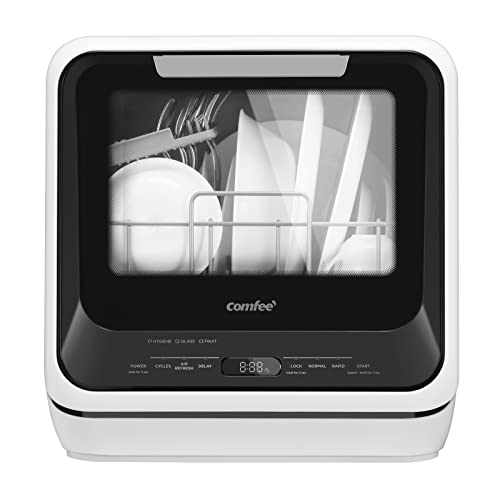
Key specs: COMFEE’ countertop dishwasher; portable; 1.32 gallon water tank; 6 programs; no hookup needed; high-temp hygiene cycle heats water to 158 degrees Fahrenheit; air-dry; 360 degree dual spray; black.
The COMFEE’ countertop dishwasher is the most direct evidence in this guide that a dishwasher heats its own water: the listing states that the Hygiene cycle heats the water up to 158 degrees Fahrenheit. That number is the point. A countertop dishwasher with a built-in water tank has no hot water supply at all, so it must heat the water itself, and this one does it openly, with a cycle designed for really dirty dishes and for cleaning baby dinnerware. The machine holds a 1.32 gallon water tank, runs 6 programs, needs no hookup, and uses 360 degree dual spray arms to reach the load from every angle.
A countertop machine that heats its own water is a different kind of appliance from a built-in that shares the household hot water supply. It can sit on a counter in an RV, a dorm, or an apartment with no dishwasher plumbing, fill its tank from a tap, and still wash hot, because the heater is inside the machine. The Hygiene cycle is the one to use for greasy loads and baby items, and the air-dry mode circulates air to keep the dishes and the machine dry and fresh between uses. The compact size means it washes a small load at a time, but for one or two people that is the right size, and the freedom from plumbing is worth more than capacity.
Strengths: First, the Hygiene cycle states the heated water temperature directly, so there is no guessing about whether this machine heats water. Second, the built-in tank and no-hookup design mean it works anywhere with a tap and a power outlet. Third, 6 programs with 360 degree dual spray cover the real range of small loads, from glassware to heavily soiled dishes.
Trade-offs: First, a countertop machine washes a small load at a time, so a family will run it several times a day. Second, the water tank has to be filled by hand, which is an extra step a plumbed-in machine never needs. Third, the compact format has no third rack and no room for large pots and pans.
Who it fits: a single person, a couple, an RV owner, or a student who needs hot-water washing with no plumbing at all.
Best for: hot-water hygiene washing anywhere, with no hookup needed. Not suited for: a family-size household, or a kitchen that already has a built-in dishwasher opening.
Check price on Amazon: COMFEE countertop dishwasher with high-temp hygiene cycle

4. Midea 18 Inch Built-in Dishwasher with Heated Dry and High-Temp Wash
Key specs: Midea 18 inch built-in dishwasher; 8 place settings; stainless steel tub; 6 washing cycles; Energy Star certified; heated dry; high-temp wash; black.
The Midea 18 inch built-in dishwasher is the compact built-in pick in this guide, and its listing states a high-temp wash alongside heated dry, which is the combination this guide is about: heat in the wash and heat in the dry. The high-temp wash raises the water temperature for greasy loads, and the heated dry uses the element to finish the load, so the machine heats at both ends of the cycle. The machine holds 8 place settings in a stainless steel tub, runs 6 washing cycles, and carries Energy Star certification, all in a slim body designed for apartments, small kitchens, and RVs.
A high-temp wash is the feature that separates a dishwasher that merely uses hot supply water from one that heats water itself. The incoming water may arrive lukewarm after traveling through cold pipes, and a machine without a heater can only wash with what arrives. The Midea raises the temperature itself, which is what makes the difference on greasy pans and dried food. The stainless steel tub holds that heat better than a plastic tub and resists stains and smells over time. Six programs cover heavy, normal, eco, delicate, and quick loads, and the Energy Star rating keeps running costs down for a household that runs the machine often.
Strengths: First, the listing states both a high-temp wash and heated dry, so the machine heats the water for cleaning and the air for drying. Second, the stainless steel tub and Energy Star certification give it durability and efficiency for a compact machine. Third, the slim 18 inch body fits apartments, small kitchens, and RVs that cannot take a full-size dishwasher.
Trade-offs: First, 8 place settings is a small capacity, so it suits one or two people rather than a family. Second, the compact format has no third rack and fewer cycles than a full-size machine. Third, the black finish shows dust and water marks more readily than silver or white.
Who it fits: a small household, an apartment, or an RV owner who wants hot washing and heated drying in a slim built-in.
Best for: compact spaces that still need real heated washing and drying. Not suited for: a family-size household, or a standard 24 inch dishwasher opening.
Check price on Amazon: Midea 18 inch built-in dishwasher with high-temp wash
5. Kenmore Elite 24 Inch Built-In Dishwasher with SmartWash and TurboDry
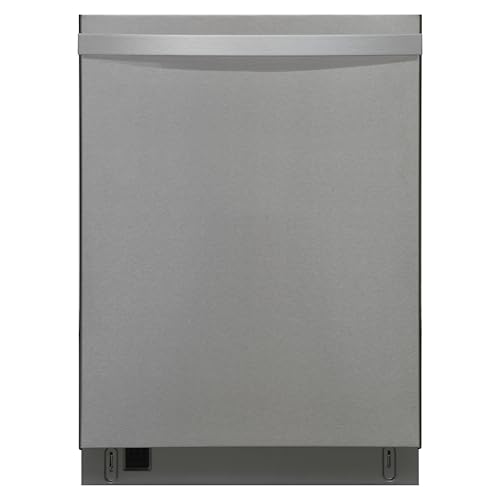
Key specs: Kenmore Elite; 24 inch; built-in; fingerprint resistant stainless steel; 42 dBA; TotalFlex 3rd rack; UltraWash Plus; TurboDry; QuietWash; SmartWash; 15 place settings; ENERGY STAR certified.
The Kenmore Elite is a 24 inch built-in dishwasher in fingerprint resistant stainless steel, rated at 42 dBA, and it earns its place here through SmartWash, which detects the soil level and automatically adjusts the water temperature, pressure, and cycle time. A machine that adjusts water temperature is a machine that heats water: the sensor measures how dirty the load is, and the heater raises the water to the temperature that load needs, rather than washing every load at the same fixed temperature. The listing also states UltraWash Plus with three pressurized spray arms and fresh filtered water, TurboDry, and a TotalFlex 3rd rack, with 15 place settings and ENERGY STAR certification.
Sensor-driven heating is the most efficient way to heat water in a dishwasher, because it only heats as much as the load needs. A lightly soiled load gets a gentler, cooler wash, and a heavily soiled load gets the full hot treatment, which saves energy without giving up cleaning power. UltraWash Plus backs that up with three pressurized spray arms and fresh filtered water, and the listing says there is no scrubbing or soaking needed before loading. TurboDry handles the drying side, and the TotalFlex third rack is removable, so it can come out entirely when a tall item needs the space. At 15 place settings it is one of the largest machines in this guide.
Strengths: First, SmartWash sensors adjust the water temperature to the actual soil level, so the machine heats water precisely when the load needs it. Second, UltraWash Plus with three pressurized spray arms and TurboDry covers both cleaning and drying thoroughly. Third, 15 place settings with a removable TotalFlex 3rd rack give one of the largest capacities in this guide.
Trade-offs: First, the Kenmore brand does not carry the same premium badge as Bosch or LG, which matters to some buyers. Second, the long feature list means more settings to learn, so a buyer who wants the simplest machine may find it busy. Third, the fingerprint resistant finish still needs occasional cleaning to look its best.
Who it fits: a large household that wants maximum capacity and sensor-driven heating at a mid-range price.
Best for: large loads with sensor-adjusted water temperature and strong drying. Not suited for: a buyer who wants a premium brand badge, or the simplest possible controls.
Check price on Amazon: Kenmore Elite built-in dishwasher with SmartWash

6. Sharp SDW6757ES 24 in. Top Control Dishwasher with Heated Dry Option
Key specs: Sharp SDW6757ES; 24 in.; top control; 45 dBA; soil sensors; premium white LED interior lighting; smooth glide rails; heated dry option; Power Wash Zone.
The Sharp SDW6757ES is a 24 inch top control dishwasher rated at 45 dBA, and it closes this guide with the quietest heated machine here. The listing states a heated dry option, soil sensors, premium white LED interior lighting, smooth glide rails, and a Power Wash Zone. The heated dry option is the evidence that this machine heats: the element that dries the load is the same kind of heater that raises wash temperatures, and the listing describes the heated dry as more dependable than condensation drying, faster and more efficient. The soil sensors measure how dirty the load is and adjust the cycle, so the machine does not waste heat and water on a load that does not need them.
The Power Wash Zone gives the dirtiest items extra spray pressure, which is the part of the wash that does the heavy lifting on baked-on food, while the soil sensors keep the cycle matched to the load. The LED interior lighting sounds like a luxury until the first time a dark glass is loaded in a dim kitchen, and the smooth glide rails matter every day, because racks that slide easily do not get forced or jammed. At 45 dBA the machine is quiet enough to run during dinner, and the top controls keep the front clean. It is the most refined machine in this guide to load and to live with, and the heated dry option means it also finishes the load properly.
Strengths: First, the heated dry option is faster and more dependable than condensation drying, especially for plastics. Second, soil sensors and the Power Wash Zone adapt the wash to the actual dirt on the load. Third, at 45 dBA with LED interior lighting and smooth glide rails, it is the most refined machine in this guide to load and to live with.
Trade-offs: First, the listing does not state a place-setting count, so capacity has to be judged from the 24 inch format rather than a number. Second, top controls are hidden when the door is closed, so the cycle status is not visible at a glance. Third, the heated dry option has to be selected for loads that need it, rather than running by default.
Who it fits: a household that wants heated washing and drying in a quiet, well-finished machine with sensor-driven cycles.
Best for: quiet running with heated drying and sensor-adjusted cleaning. Not suited for: a buyer who wants the heating on by default, or visible front controls.
Check price on Amazon: Sharp SDW6757ES top control dishwasher with heated dry option
Buying Guide: How to Pick a Dishwasher That Heats Water
Start with the listing, not the brand. The words to look for are sanitize cycle, steam, high-temp wash, or a stated heating temperature. If a listing says nothing about heating, the machine probably relies on the household hot water supply, and it will wash only as hot as the water that arrives. Check the capacity next: a full-size 24 inch machine takes 12 to 16 place settings, an 18 inch machine takes 8, and a countertop machine takes a small load at a time. The three sizes are not interchangeable, because the cutout, the water supply, and the drain all have to match, so measure the opening before ordering.
Then think about the sound level, because a heater does not have to mean noise, and the group in this guide runs from 42 dBA to 55 dBA. A buyer who runs the machine at night should lean toward the quieter end, while a buyer who runs it during the day can accept a louder machine for a lower price. Check the tub material too: a stainless steel tub holds heat, which helps the heater do its work, and it resists stains and odors over time, while a plastic tub is cheaper but cools quickly and shows its age sooner. Finally, check the brand service network in the area, because a dishwasher is a plumbed-in appliance and the speed of a repair depends on parts and technicians being available.
Loading matters with a heated machine just as it does with any other. Place large items at the sides and back of the lower rack, keep plastics on the top rack away from the heating element, and do not nest bowls and spoons together, because water cannot reach surfaces that touch. A third rack, where fitted, helps by giving cutlery and small items their own level, which frees space below for plates and pans. Use the sanitize or steam cycle for the loads that need it, such as cutting boards and baby items, and the normal cycle for everything else, because heating water to the maximum for every load wastes energy without improving the result.
One more practical point: a dishwasher that heats water uses more energy in the wash phase than one that does not, because the heater draws power. That cost is small compared with the cleaning benefit, but it is real, and buyers who run the machine daily should know it. Most of the picks here offer a choice: the sanitize, steam, or high-temp cycle can be selected for the loads that need it and skipped for a light load that would come clean without it. Using the heating cycles only when they are needed keeps the energy use down without giving up the benefit.
How to Use and Care for Your Dishwasher
Load it properly and it will cause fewer problems than any other habit. Scrape food off plates instead of rinsing them, because the detergent needs something to work on and the filter needs food to trap. Place large items at the sides and back of the lower rack, keep plastics on the top rack away from the heating element, and do not nest bowls and spoons together, because water cannot reach surfaces that touch. Run full loads whenever possible, and use the sanitize or steam cycle for the loads that need it, such as cutting boards and baby bottles, rather than the heaviest cycle every time.
Clean the filter once a month. It twists out of the bottom of the tub, rinses under a tap, and goes back in seconds, and a clogged filter is the most common cause of dirty dishes and bad smells. Wipe the door seal and the edge of the door with a damp cloth at the same time, because food and grease collect there and cause odors. Once a month, run an empty hot cycle with a dishwasher cleaner or a cup of white vinegar on the top rack, which clears grease from the spray arms and the pump. Check the spray arms now and then to make sure the holes are not blocked by a seed or a piece of food.
Use the right detergent in the right amount. Too much detergent leaves a film on glasses, too little leaves food behind, and the sensor-driven machines in this guide adjust the wash to the soil level, so they need the detergent dose the manual recommends rather than a guess. Keep the rinse aid dispenser filled if the model has one, because it helps water sheet off dishes and improves drying, especially on plastics. Leave the door slightly open after a cycle if the model does not release it automatically, so steam escapes and the interior dries instead of staying damp.
Common Mistakes to Avoid
The most common mistake is assuming the hot water tap does the heating. It does not, or not reliably: water cools in the pipes, and the supply temperature is often lower than a sanitize cycle needs. A dishwasher that heats its own water is the only way to guarantee a hot wash, and the picks in this guide are chosen for exactly that reason. The second mistake is pre-rinsing every dish under the tap. Modern dishwashers and detergents are designed to work with food soil, and a fully rinsed plate can trick the soil sensor into shortening the cycle, so the load comes out dirtier than it should. Scrape, do not rinse.
The third mistake is overloading. Cramming in one more pan blocks the spray arms, and a blocked spray arm means the dishes behind it do not get washed at all, no matter how hot the water is. Run the load that fits and run a second one if needed. The fourth mistake is using the sanitize or steam cycle for every load. Those cycles take longer and use more energy, and a light load does not need them. Match the cycle to the soil, and let the soil sensor do its job on the sensor models in this guide. The last mistake is ignoring the filter and the spray arms until there is a problem. A monthly clean takes minutes and prevents most of the issues that lead to service calls.
Our Final Recommendation
For most households, the LG LDP6810SS is the strongest choice in this guide: 44 dBA, TrueSteam made from water the machine heats, QuadWash with four spray arms, and a height adjustable third rack, all in a quiet, well-finished full-size machine. If the budget is tighter and the household is smaller, the Midea 18 inch gives a high-temp wash and heated dry in a slim built-in, while the COMFEE countertop gives a stated heating temperature with no plumbing at all. If sanitizing matters above all else, the GE GDF450PGRBB with its Sanitize cycle is the pick.
For the largest households, the Kenmore Elite takes 15 place settings with sensor-driven water temperature and TurboDry at 42 dBA, which is the best combination of capacity and quiet running here. For the quietest heated machine, the Sharp SDW6757ES runs at 45 dBA with a heated dry option, soil sensors, and a Power Wash Zone. Whichever model fits the kitchen, the pattern is the same: a stated heating feature, a stainless tub where possible, and the heating cycles used for the loads that need them will give a hot, thorough wash from every load.
Frequently Asked Questions
Do all dishwashers heat water?
No. Many dishwashers rely on the household hot water supply and wash only as hot as the water that arrives. The models in this guide have built-in heaters, so they raise the water to the temperature the cycle needs, every time.
What does a sanitize cycle do?
A sanitize cycle raises the wash water to a high temperature and holds it there, which kills germs that a normal-temperature wash leaves behind. It is the cycle to use for cutting boards, baby bottles, and anything that needs more than a normal clean.
How hot does the COMFEE countertop dishwasher heat water?
The listing states that its Hygiene cycle heats the water up to 158 degrees Fahrenheit, which is hot enough for heavily soiled dishes and baby dinnerware.
Is steam cleaning better than a normal wash?
Steam loosens dried-on food that a normal wash struggles with, so dishes need less pre-rinsing and fewer re-washes. Steam cycles take longer than a standard wash, so they are best used for the loads that need them rather than every load.
Why is my dishwasher not washing hot enough?
The usual causes are a long pipe run from the water heater, so the water cools on the way, or a machine without a built-in heater. A dishwasher that heats its own water, like the models in this guide, does not depend on the supply temperature.
Does heating water use a lot of energy?
A heater draws power, so a sanitize or steam cycle uses more energy than a normal cycle. Most models let the heating cycles be selected only when they are needed, so the extra energy can be kept to the loads that benefit from it.
How often should I clean the dishwasher filter?
Once a month. The filter twists out of the bottom of the tub, rinses under a tap, and goes back in seconds. A clogged filter is the most common cause of dirty dishes and bad smells.
More Dishwasher Guides
These guides on the same site cover related dishwasher choices:


