Disclosure: this article contains affiliate links, and if you buy through them we may earn an affiliate commission at no extra cost to you.
A dishwasher can only clean as well as the chemistry you feed it. The machine supplies hot water, pressure, and time, but the detergent does the actual work of lifting baked-on egg, dissolving grease, suspending food particles so they rinse away instead of redepositing, and keeping minerals from settling on your glassware as a chalky film. When dishes come out gritty or glasses look foggy, most people blame the appliance. Nine times out of ten, the real problem is a mismatch between the detergent format, the dose, and the water coming out of the tap.
That mismatch is easy to make, because the detergent aisle has quietly split into three different products wearing similar packaging. Pre-measured pods and tablets dominate the shelves and promise effortless dosing. Powders, once the default, now sit in bigger boxes at the back and reward people who like to control the dose themselves. Gels fill the gap for shoppers who want something that pours like a liquid and dissolves fast in short cycles. Each format behaves differently in hard water, in quick-wash programs, and in the smaller, more water-efficient machines sold today, which use far less water per cycle than the dishwashers of twenty years ago and therefore concentrate whatever you put in the dispenser.
This guide walks through the six detergents we would actually buy for our own kitchens, spanning the premium pod tier, a flexible mid-range powder, a plant-based option, a tablet formulated for high-end European machines, and a booster that rescues households fighting very hard water. Along the way we explain how to read an ingredient panel without a chemistry degree, how to dose for a half load without wasting product, why rinse aid matters more than most detergent upgrades, and how to fix the three complaints that send people shopping in the first place: white film, water spots, and glasses that turn cloudy over time. Prices in this category move constantly with coupons and multi-packs, so instead of printing numbers that would be stale within a week, each pick is positioned by tier in plain words and ends with a prompt to check the current price on Amazon.
Our picks at a glance
The table below summarizes the lineup in qualitative terms. It is a map, not a verdict: the detailed reviews that follow explain which households each product suits and where each one falls short.
| Product | Format | Tier | Best for | Watch out for |
|---|---|---|---|---|
| Cascade Platinum Plus | Pod | Premium | Baked-on messes, no pre-rinsing | Overkill for light loads |
| Finish Ultimate | Pod | Premium | Glass protection, hard-water shine | Needs a full, hot cycle to shine |
| Cascade Complete Powder | Powder | Mid-range | Adjustable dosing, everyday value | Can clump in a damp dispenser |
| Seventh Generation Dishwasher Packs | Pack | Mid-range | Plant-based formula, fragrance-free cleaning | Softer on burnt-on cheese |
| Miele UltraTabs | Tablet | Premium | Miele and European machines, glass care | Tuned for one ecosystem |
| Lemi Shine Booster | Booster powder | Budget add-on | Very hard water, film removal | Not a standalone detergent |
Two of these six are everyday detergents you would use on their own. Four are specialists in one way or another: two premium pods that trade a higher per-wash cost for convenience and glass care, one tablet built around a particular brand of machine, and one booster that is never used alone but transforms the performance of whatever detergent you already own when the local water is working against you.
In this guide
What to look for in a dishwasher detergent
Format first: pods, powder, or gel
Pods and tablets are pre-measured, which removes the most common user error in dishwashing: guessing the dose. A pod typically combines detergent, enzymes, and sometimes a rinse-aid component in separate chambers that release at different points in the cycle. That staging is genuinely useful, because enzymes work best early at moderate temperatures while other ingredients do more good later. The trade-off is rigidity. A pod doses for a full, dirty load whether you are washing six plates or forty, and in a small modern machine that uses little water, a full pod in a light load can leave residue or a faint detergent taste on silicone utensils.
Powder is the flexible format. You can fill the dispenser cup a third full for a light load, heap it for a roasting pan disaster, and add a spoonful to the pre-wash cup or the bottom of the tub for cycles that need a head start. Powder is also usually the cheapest way to buy competent cleaning chemistry per wash. Its weaknesses are storage and handling: it absorbs moisture, clumps in a steamy kitchen, and loses punch if the box sits open for months. Gel sits between the two, pouring easily and dissolving quickly, which suits short cycles, but gels are typically the mildest cleaners of the three and rarely match a good pod or powder on dried-on food.
Enzymes do the heavy lifting
Modern detergents are built around enzymes, and understanding two of them explains most performance differences. Proteases break down protein-based soils such as egg, milk, and cheese. Amylases attack starches from pasta, rice, oatmeal, and potatoes. Lipases, found in some premium formulas, work on greasy residues. Enzymes need time and warmth rather than extreme heat, which is why eco cycles that run longer at lower temperatures often clean surprisingly well with an enzyme-rich detergent, and why scraping a plate bone-dry and letting egg dry on it for two days defeats even the best product. If your loads lean heavily on breakfast dishes and pasta nights, prioritize a formula that leads with its enzyme system; the premium pods in this guide do exactly that.
Hard water changes everything
Water hardness is a measure of dissolved calcium and magnesium, and it is the single biggest variable in dishwasher results. Hard water minerals react with detergent ingredients and reduce their effectiveness, then deposit on dishes as white film and spots. Detergents fight back with builders and chelating agents that bind minerals before they can settle, and premium formulas carry more of this mineral-fighting capacity. If your kettle furs up with scale, your shower glass spots no matter what you do, or your water utility reports hardness in the high range, you should either choose a detergent with strong hard-water performance or plan on a citric-acid booster and rinse aid as permanent partners. We return to hard water in depth later in this guide, because for roughly a third of households it matters more than which detergent they buy.
Rinse aid is not optional decoration
Rinse aid lowers the surface tension of the final rinse water so it sheets off dishes instead of beading into droplets that dry as spots. It also helps plastics dry, which no detergent can fully manage on its own. Many pods advertise built-in rinse aid, and that helps, but a filled rinse-aid dispenser in the machine still outperforms the amount that can be packed into a pod. If you change only one thing after reading this guide, fill the rinse-aid reservoir and set its dosage dial to the middle. Detergent choice comes second.
Dosing for modern machines
Today’s dishwashers use a fraction of the water of older models, and many have soil sensors that shorten the cycle when the load looks clean. Both trends punish over-dosing. Too much detergent in too little water leaves gritty residue, cloudy glass, and a slippery feel on plastics. This is the practical argument for powder in a modern machine: you can match the dose to the load. It is also why pods perform best in full loads on normal or heavy cycles, where there is enough water and time to use the whole dose. For half loads and quick washes, a partial scoop of powder or a gentler pack is often the smarter tool.
Ingredients, fragrance, and sensitivities
Most mainstream detergents are now phosphate-free in the consumer market, and cleaning performance comes from enzymes, oxygen-based bleaching agents, and builders instead. Households with sensitive skin or a preference for simpler ingredient lists gravitate to plant-based packs, accepting a little less power on burnt-on food. Fragrance is a matter of taste: some pods leave a noticeable scent on plastic containers and water bottles, which bothers some people enough to switch to a fragrance-free formula. If your storage containers come out smelling perfumed, that is a detergent trait, not a machine fault, and the plant-based pick below is the usual escape route.
Shelf life and storage quietly decide performance
Detergent is a perishable product, and the cupboard under the sink is a hostile place for it: warm, damp, and steamed every time the machine runs. Enzymes slowly lose activity with age and heat, oxygen bleach weakens as it absorbs moisture, and pods stored in a humid tub fuse into a single reluctant brick whose chambers no longer release in sequence. Powder cakes into lumps that measure unevenly and dissolve poorly. None of this is dramatic, but it explains the familiar experience of a detergent that “stopped working” halfway through a giant box: the product aged out in storage while the machine and water stayed the same.
The fixes are mundane and effective. Keep only a working supply under the sink and store the reserve somewhere cool and dry. Transfer powder to a sealed container with a scoop that lives inside it, so measuring stays consistent and moisture stays out. Keep pods in their original container or a latched jar, both for potency and because their bright, squishy appearance genuinely attracts small children; treat them with the same respect you give laundry pods. Buy sizes matched to your household’s pace, finishing a container within a few months of opening, and write the opening date on the box if your household runs two products in rotation. Fresh mid-range detergent stored well will beat premium detergent stored badly, which is one more reason the cheapest performance upgrade in this entire guide is a sealed container and a drier shelf.
Septic systems and greywater
Standard dishwasher detergents in normal doses are broadly compatible with septic systems, since the volume per cycle is small and the ingredients break down. Powder users on septic systems sometimes prefer to avoid heavy doses of powdered builders and to keep the dose modest, which aligns neatly with the dosing advice above. As always, the septic manufacturer’s guidance for your specific system wins over any general advice in a buying guide.
The best dishwasher detergents, reviewed

Cascade Platinum Plus
Cascade Platinum Plus is the pod we would hand to someone who refuses to pre-rinse and regularly loads the machine with the evidence: lasagna dishes with carbonized edges, oatmeal pots left since morning, sheet pans that roasted vegetables at high heat. Its formula leans hard on enzymes, and in practice it handles dried-on starch and protein better than any other pod in this roundup. It is positioned as the premium tier of the Cascade line, and the positioning is honest: this is the maximum-cleaning option, priced accordingly, for people who would rather pay a little more per wash than re-wash anything by hand.
The chambered design releases ingredients in stages, and the practical effect shows up most on mixed loads. Glassware comes out clear rather than merely clean, plastics shed water better than they do with basic pods, and stainless cutlery loses the rainbow haze that cheaper formulas leave behind. In hard-water homes it holds up respectably, though it is not invincible: with very hard water and no rinse aid, a faint film can still appear on glasses after a few weeks, which is a water problem asserting itself rather than a detergent failure.
Strengths:
- Outstanding on dried-on and baked-on food, including egg and oatmeal
- Strong all-in-one performance that reduces the need for pre-rinsing to a quick scrape
- Consistently clear glassware and cutlery in moderately hard water
- Widely available in many pack sizes, including large warehouse tubs
Trade-offs:
- Premium per-wash cost, especially in small packs
- Full-strength dose is wasted on light or half loads
- Noticeable fragrance that can linger on silicone and plastic containers
This pod suits busy households that run full, genuinely dirty loads most days and value a load-it-and-forget-it routine. It is less suited to singles or couples running small daily loads, where a powder you can under-dose will clean just as well for less. If your current detergent leaves you re-washing casserole dishes, this is the upgrade that ends the argument, so check price on Amazon.
Finish Ultimate
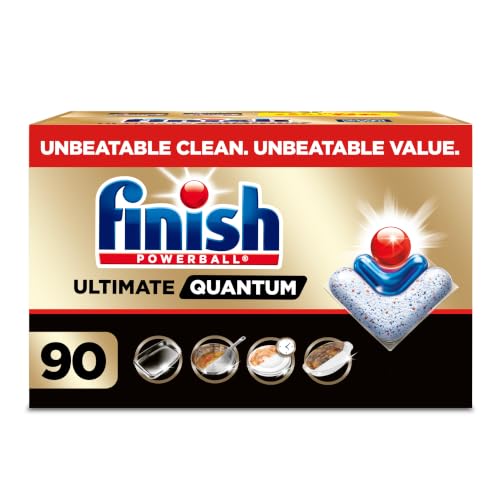
Finish Ultimate is the other premium pod in this guide, and its personality is different from Cascade’s. Where Platinum Plus is a blunt instrument for heavy soil, Finish Ultimate is tuned for finish quality: the shine on glasses, the absence of spots, and protection against the gradual etching and cloudiness that make older glassware look tired. Its formula emphasizes water-sheeting and glass-care chemistry, and households that entertain and care about how their wine glasses look under light tend to prefer it.
On everyday soil it cleans thoroughly and confidently. On the very worst burnt-on pans it is a half-step behind the Cascade pod, occasionally leaving a shadow of carbon on the worst corner of a roasting dish that a second cycle or a soak would have handled. In exchange, glasses come out of the machine looking polished rather than merely washed, and in moderately hard water it resists spotting longer between rinse-aid refills. The pods also handle the quick cycles of modern machines gracefully, dissolving fully where some thick tablets can leave a residue corner in a cold, fast wash.
Strengths:
- Excellent glass shine and spot prevention, even as rinse aid runs low
- Formulated with glass protection in mind for long-term clarity
- Dissolves reliably in shorter and cooler cycles
- Balanced cleaning that suits mixed everyday loads
Trade-offs:
- Slightly less aggressive on carbonized, burnt-on food than the top Cascade pod
- Premium pricing, with the best value only in larger packs
- Performance drops noticeably if used in a barely warm eco cycle with heavy soil
Choose Finish Ultimate if your loads are mostly everyday dishes and glassware, your water is moderately hard, and you judge a detergent by the glasses rather than the roasting pan. It is the connoisseur’s pod of this roundup, and hosts who polish glasses before guests arrive will understand it immediately, so check price on Amazon.

Cascade Complete Powder
Cascade Complete Powder is the quiet workhorse of this guide and, for many households, the smartest buy. It is a mid-range powder with a competent enzyme and builder system, sold in large boxes that make its per-wash cost a fraction of any pod’s. What elevates it above a mere budget choice is control. You decide the dose every single wash: a shallow scoop for a breakfast load, a full cup for Sunday’s cooking marathon, a spoonful sprinkled in the tub for a pre-wash boost when the machine lacks a pre-wash cup.
That control matters more each year as machines use less water. In a compact or modern efficient dishwasher, a carefully judged half dose of this powder routinely outperforms a full pod, because there is no surplus chemistry left to cloud the rinse. Cleaning on normal soil is thoroughly good; on baked-on food it needs either the heavy cycle or a brief soak to match the premium pods, which is a fair trade at its price tier. It also stores well if you keep the box closed and dry, ideally decanted into a sealed container in a steamy kitchen.
Strengths:
- Adjustable dosing suits half loads, small machines, and sensor cycles
- Lowest cost per effective wash in this roundup by a wide margin
- Dependable everyday cleaning with a solid enzyme system
- Easy to add a little extra for pre-wash on heavily soiled loads
Trade-offs:
- Clumps if the dispenser or storage box gets damp
- Needs the heavy cycle or a soak to match premium pods on burnt-on food
- No built-in rinse-aid component, so the machine’s dispenser must stay filled
This is the pick for households that run varied loads, own a water-efficient machine, or simply refuse to pay pod prices for chemistry that powder delivers for pennies. It rewards a small amount of attention with excellent value, and it is the detergent we would stock in a rental property or a busy family kitchen alike, so check price on Amazon.

Seventh Generation Dishwasher Packs
Seventh Generation’s dishwasher packs serve the household that reads ingredient lists. The formula is plant-based in its cleaning agents, free of added fragrance, and built for people who react to the perfumed residue that mainstream pods can leave on water bottles and baby items. It sits in the mid-range tier, and its cleaning personality matches that position: dependable on everyday soil, gentler on the extreme cases.
Day to day, these packs handle cereal bowls, pasta plates, and coffee mugs without drama, and glassware comes out clean with a neutral smell that many families actively prefer. Where they show their limits is carbonized food: the cheese fused to a casserole dish after a hot bake may need a soak or a second pass. Starch and protein from normal meals, handled within a day, are fine. The packs dissolve reliably in normal cycles, though in very short, cool washes a pack placed in a damp dispenser can occasionally soften unevenly, so drop it in dry and run the cycle promptly.
Strengths:
- Plant-based formula with no added fragrance on dishes or plastics
- Solid everyday cleaning for typical family loads
- Convenient pre-measured packs without pod pricing at the premium tier
- A comfortable choice for households managing skin or scent sensitivities
Trade-offs:
- Less power on burnt-on cheese and carbonized pan residues
- Benefits from rinse aid in hard water more than the premium pods do
- Per-wash cost above powder, though below the premium pods
Pick these packs if ingredient transparency and a neutral finish matter more to you than maximum attack on burnt pans, and your cooking rarely produces truly scorched cookware. For most weekday loads they are all the detergent a household needs, so check price on Amazon.

Miele UltraTabs
Miele UltraTabs are the specialist’s tablet: formulated by an appliance manufacturer for its own machines, with the water chemistry, cycle profiles, and glass-care priorities of European dishwashers in mind. They sit firmly in the premium tier. If you own a Miele dishwasher, these tablets are the reference point its cycles were tuned around, and the results show it: exceptionally clear glassware, gentle treatment of delicate items, and reliable dissolving even in the shorter automatic programs.
The formula includes a salt function and rinse-aid component designed to work with the machine’s own systems, and owners who use the brand’s salt and rinse aid alongside get the full effect. In non-Miele machines the tablets still clean very well, particularly on glass and everyday soil, though the value argument weakens because part of what you are paying for is ecosystem tuning. Tablet size can also be a minor annoyance in small dispenser cups of some compact machines, where a tablet that does not sit flat may release late.
Strengths:
- Superb glass care and clarity, tuned for Miele and European machines
- Integrated salt and rinse-aid functions complement the machine’s systems
- Dissolves dependably in automatic and shorter cycles
- Gentle enough for delicate glassware and decorated items
Trade-offs:
- Premium pricing that makes most sense inside the Miele ecosystem
- Tablet dimensions can sit awkwardly in some compact dispenser cups
- Heavy burnt-on soil still prefers the most aggressive mainstream pod
These tablets suit Miele owners first and foremost, plus anyone with a European machine and a collection of glassware worth protecting. For that audience the premium is justified by the glass results alone, so check price on Amazon.

Lemi Shine Booster
Lemi Shine Booster is not a detergent, and it is important to say so plainly before praising it. It is a citric-acid-based booster powder, sold at a budget-friendly tier, that you add alongside your regular detergent when hard water is defeating it. The citric acid binds the calcium and magnesium that cause white film and spots, neutralizing the water’s interference so your detergent can do its actual job. For households in genuinely hard-water regions, this small addition routinely produces a bigger visible improvement than switching detergent brands altogether.
Used as directed, typically sprinkled in the bottom of the tub or the pre-wash compartment for the worst loads, it strips the chalky film from glasses that had looked permanently fogged and prevents new deposits from forming. It is also useful as an occasional machine treatment: a booster-heavy empty cycle helps dissolve mineral buildup on the tub and spray arms. What it cannot do is clean on its own; without a real detergent’s enzymes and surfactants, food soil stays put. Think of it as correcting the water so the detergent you already like can perform as its makers intended.
Strengths:
- Removes and prevents hard-water film and spots more effectively than detergent swaps
- Rescues glassware that looks permanently cloudy from mineral deposits
- Works with any detergent format, including the powder and packs above
- Doubles as an occasional mineral treatment for the machine itself
Trade-offs:
- Not a standalone detergent; it must accompany a real detergent
- An extra step and an extra product to keep in stock
- Severely etched glass, damaged by years of soft-water corrosion, cannot be restored by any booster
If your glasses wear a white film no detergent has fixed, this is the product that was made for your problem, and pairing it with a mid-range powder is one of the best-value combinations in this entire guide, so check price on Amazon.
best cookware sets that are dishwasher safe
Hard water, film, and spots: the troubleshooting section
Most detergent disappointment is actually water disappointment, so it pays to diagnose before you shop. White film that wipes or rinses off a glass with a splash of vinegar is mineral deposit: hard water leaving calcium behind. Film that does not respond to vinegar, on glasses that have been washed for years in very soft water with strong detergent, is more likely etching, a permanent microscopic corrosion of the glass surface. The distinction matters because deposits can be prevented and removed, while etching can only be slowed. The vinegar test takes ten seconds and tells you which problem you have.
For deposits, the fix is a system, not a single product. Keep the rinse-aid dispenser filled, because sheeting water cannot leave spot-shaped minerals behind. Consider the booster above for very hard water, or choose one of the premium pods whose builder systems are designed for mineral-heavy supplies. Check that your machine’s water softener, if it has one, is set to your actual hardness level and filled with dishwasher salt; a softener set to zero is a common hidden cause of film in European machines. Finally, confirm the incoming water is hot enough: run the kitchen tap until it is hot before starting the machine, since a cycle that begins with lukewarm water underperforms no matter what detergent rides along.
Spots on otherwise clean dishes are usually a drying issue rather than a washing issue. Rinse aid solves most of it. Unloading the bottom rack first prevents water pooled on top of mugs from dripping onto dry dishes below. Plastics will always dry worst, because they hold little heat; a cracked-open door after the cycle or a heated-dry setting helps more than any detergent change. Gritty residue, by contrast, points back to dosing and loading: too much detergent for the water volume, a spray arm blocked by a tall pan, or a filter that needs rinsing. The detergent is part of the system, and the system rewards a quick audit before money is spent.
Loading and habits that make any detergent look better
Scrape, do not rinse. Modern enzymes need food soil to work on, and pre-rinsed dishes can cause sensor cycles to run short and mild. A quick scrape into the bin is all the preparation a good detergent asks for. Load so that water can reach every surface: bowls angled down, spoons mixed rather than nested, large items at the sides and back where they cannot shield the rest or block the dispenser door. Check that the upper spray arm spins freely with the rack pushed in, because a trapped arm quietly ruins a whole load.
Maintain the machine like the appliance it is. Rinse the filter under the tap monthly; a clogged filter redeposits yesterday’s food on today’s glasses. Wipe the door gasket, run an empty hot cycle with a machine cleaner or a booster treatment every month or two if your water is hard, and keep the rinse-aid and salt reservoirs topped up. These small habits make a mid-range powder perform like a premium product, and they make premium pods perform at their best. Detergent choice is the last ten percent of dishwashing results; loading, water, and maintenance are the other ninety.
Reading an ingredient panel without a chemistry degree
Detergent packaging shouts about what is absent and whispers about what is present, but the ingredient list follows a logic you can learn in five minutes. Sodium carbonate, often listed first in powders, is washing soda: it raises the water’s alkalinity so grease lets go of surfaces. Sodium percarbonate is the oxygen bleach source; in hot water it releases the peroxide that fades tea and coffee stains. The enzymes appear by class or name: subtilisin is a protease, amylase explains itself, and lipase handles fats. TAED, when present, is an activator that lets the oxygen bleach work at lower temperatures, which is one reason some premium pods perform well in eco cycles.
Builders and chelators carry names like sodium citrate, which is simply the salt of citric acid, the same chemistry the booster pick uses in concentrated form. Their job is to grab calcium and magnesium before those minerals can dull the wash or spot your glasses. Polycarboxylates are dispersants that keep loosened soil floating until it drains. None of this requires memorizing: the pattern to recognize is balance. A formula strong in enzymes but weak in builders shines on food and fails on film in hard water. A formula heavy on builders but light on enzymes polishes glasses and leaves egg behind. The picks in this guide were chosen because each is balanced for its stated job, and their reviews note plainly where each one’s balance tips.
One more label habit is worth forming: treat “natural” and “plant-based” as descriptions of ingredient sourcing, not of gentleness or weakness by definition. The plant-based packs above clean everyday loads properly because their enzyme choices are sound. Conversely, a mainstream pod’s synthetic origin says nothing bad about its safety in normal use; these products are regulated, dosed in grams, and rinsed away. Judge by performance on your soil and your water, and by the sensitivities of your household, not by the adjectives on the front of the box.
How a wash cycle uses detergent, stage by stage
Understanding what happens inside the machine explains why format and dosing matter so much. A typical cycle opens with a pre-wash: the tub fills, water sprays for a few minutes to soften and flush away loose debris, then drains. Anything you sprinkled in the bottom of the tub or the pre-wash cup works during this phase, which is why powder users can give a filthy load a head start that a sealed pod cannot. The main wash follows, and this is when the dispenser door springs open and the real dose lands in hot water. Enzymes get to work first, digesting protein and starch while the water is warm rather than scalding, and the detergent’s builders soften the water locally so the cleaning agents are not wasted fighting minerals.
Midway through the main wash, temperatures climb and the oxygen-based bleaching components activate, tackling tea, coffee, and tomato stains that enzymes ignore. Surfactants keep the loosened soil suspended in the water so it drains away instead of settling back onto plates. Then come one or two rinses, the last of them dosed with rinse aid from its separate reservoir, and finally the drying phase, which in modern machines may rely on residual heat, a fan, or a door that pops open on its own. Every stage has a chemical preference, and the staged chambers of a premium pod are an attempt to deliver the right ingredient to the right stage. Powder gives you manual control of the first stage. Gel dissolves so fast that it effectively front-loads everything, which is why it suits quick cycles and disappoints on long, dirty ones.
This stage-by-stage view also explains a common frustration: detergent left in the dispenser after the cycle. A pod or tablet that lands in a cutlery basket shadow, a dispenser door blocked by a tall tray, or water too cool to dissolve a thick tablet will all leave residue. The fix is mechanical, not chemical: keep the dispenser area clear, place pods in the dispenser rather than the tub unless the manufacturer says otherwise, and make sure the incoming water starts hot.
Pods vs powder vs gel: the honest comparison
Strip away marketing and the three formats differ on five practical axes. On dosing accuracy, pods win by design and powder wins by flexibility, an apparent contradiction that resolves once you see they solve different problems: pods prevent under-dosing by careless users, while powder prevents over-dosing in small machines and light loads. On raw cleaning ceiling, the best pods and a well-dosed powder are close, with premium pods edging ahead on glass finish thanks to their staged rinse components. On cost per wash, powder wins decisively, often by a factor of several, because you are buying chemistry without portioning, film, and packaging.
On storage, pods are tidy but must stay dry and away from children, since their concentrated, candy-like appearance is a genuine household hazard that requires a latched container. Powder is bulky and moisture-sensitive but inert and easy to decant. Gel is the most forgiving to store and the kindest to septic-conscious households that prefer liquids, but it brings up the rear on cleaning power per wash. On environmental footprint, the honest answer is that it depends: pods generate film and packaging per dose, powder ships in recyclable cardboard but is heavier per wash, and concentrated anything beats diluted anything. Households that care most tend to choose powder in bulk or plant-based packs and run full loads, which matters more than format tribalism.
Our practical recommendation is a two-product cupboard for most homes: a powder for everyday adjustable dosing, plus either a premium pod for dinner-party glassware and disaster loads, or a booster if hard water is your recurring enemy. That combination covers every scenario in this guide for less than an all-pod habit.
Which detergent fits your household
Families cooking from scratch daily
Your loads are full, varied, and genuinely dirty, with oatmeal, eggs, pasta, and roast pans in rotation. A premium pod earns its price here because the soil level justifies the full dose every time, and the time saved not pre-rinsing is real. Keep powder as backup for the occasional light load. If your water is hard, add the booster from day one rather than after the film appears.
Couples and small households
You run half loads or wait days to fill the machine, and food dries on in the meantime. Powder is your format: small doses for small loads, and a soak or the heavy cycle when dried-on food accumulates. Pods will over-dose your light loads and scent your plastics. A mid-range powder plus disciplined rinse aid will quietly outperform a premium pod habit in this kitchen.
Hosts who care about glassware
If the state of your wine glasses genuinely matters to you, build around glass care: the Finish or Miele options above, rinse aid always, and a softener setting matched to your water. Load glasses securely so they cannot knock together, and accept that the very worst roasting pans may get a hand soak so the glass loads can run on a gentler program.
Hard-water households
Your enemy is mineral, not food. Any competent detergent plus the citric booster and filled rinse aid beats any premium detergent alone. Verify your machine’s softener setting, keep salt topped up if it has a softener, and run a monthly empty hot cycle to keep spray-arm holes clear of scale.
Sensitive skin and fragrance-free homes
Choose the plant-based packs, rinse aid without added scent where available, and an extra rinse if your machine offers one. Store containers unsealed to air out. If a mainstream pod is ever used for a party load, run plastics through one more short rinse before using them for baby items.
Common mistakes that waste detergent
The first mistake is rinsing dishes clean before loading, then wondering why the sensor cycle under-washes and leaves detergent residue: the machine sensed clean dishes, shortened the wash, and left concentrated chemistry with too little soil and time. Scrape only. The second is filling the powder cup to the brim for every load, a habit from the era of weak detergents and huge water volumes; modern machines need a fraction of that, and the excess becomes grit on glasses. The third is storing pods under the sink in a humid, unlatched tub, where they fuse together, lose potency, and sit within reach of small children. The fourth is ignoring the filter for a year and blaming the detergent for the resulting film of redeposited food. The fifth is running every load on the quick cycle with a slow-dissolving tablet, then concluding the brand is bad when the cycle was simply too short and cool for the format chosen.
Each of these mistakes is free to fix, and together they explain more disappointing dishwashers than any product choice. Audit your habits first, then let the reviews above solve whatever problem remains.
Special loads: baby items, crystal, aluminum, and cast iron
Some loads deserve a detergent decision of their own. Baby bottles and pump parts accumulate milk fat and protein, which is protease territory; any of the enzyme-forward picks handles them well, and fragrance-free formulas are the comfortable choice because residues and scents matter more here. Run these items on the top rack, use the sanitize cycle if your machine offers one and the item’s maker allows it, and let everything air-dry fully before reassembly.
Crystal and delicate stemware sit at the opposite extreme: the risk is not soil but damage. Strong alkaline chemistry, high heat, and years of repetition can etch fine glass, and softened water accelerates the process because it removes the minerals that otherwise buffer the wash. If you wash crystal in the machine at all, choose the gentlest effective detergent, the glass or china cycle, and a modest dose; many collectors hand-wash instead, and no buying guide should pretend that is irrational. Everyday tumblers and wine glasses, by contrast, thrive on the glass-care picks in this guide and come out clearer than hand washing usually achieves.
Aluminum bakeware darkens in dishwashers because alkaline detergent reacts with the metal; the pan still works, but its bright finish dulls to grey. If the appearance matters, hand-wash aluminum or accept the patina as the price of convenience. Cast iron and carbon steel should stay out entirely, not because detergent is uniquely harmful but because prolonged hot water strips seasoning and invites rust; a quick hand wash and dry on the stove keeps them as they should be. Nonstick pans split the difference: most modern coatings tolerate the machine, but hand washing extends their life, and detergent choice barely matters compared with that decision. Knowing which items to exclude protects both your cookware and your opinion of your detergent, which is often blamed for damage that loading choices caused.
Eco cycles, low temperatures, and detergent
Eco programs wash cooler and longer, trading heat for time, and they interact with detergent in ways worth understanding. Enzymes approve of this bargain: they work steadily at moderate temperatures and only denature when water gets very hot, so a long eco cycle with an enzyme-rich detergent often cleans everyday soil beautifully. Oxygen bleach is the component that suffers, since it activates with heat; tea-stained mugs may emerge from eco cycles slightly shadowed unless the formula includes a low-temperature activator, one quiet advantage of the premium pods. Dissolution matters too: thick tablets in a cool, gentle eco wash can under-dissolve, while powders and modern pods handle it well.
The practical rule is to match format to program. If your household runs eco most days, favor powders or pods known to dissolve fully at low temperatures, keep doses modest because eco cycles use little water, and run one hot, heavy cycle weekly with your strongest detergent to degrease the machine itself. That rhythm keeps both dishes and appliance in good shape without giving up the energy savings that made you choose eco in the first place.
How we chose these six
This roundup was built around the variables that actually decide results: format, enzyme strength, mineral handling, and machine type. We required every pick to be a real, currently sold product from an established maker, to represent a distinct role rather than a near-duplicate of another pick, and to cover the tiers a shopper will actually encounter, from a budget booster to premium manufacturer tablets. Two mainstream premium pods anchor the convenience end, a powder and a plant-based pack cover the households that pods serve badly, a manufacturer tablet represents the European-machine ecosystem, and the booster exists because hard water is the most common reason detergent shopping starts at all. Where a pick has a real weakness, its review says so; a guide that finds no trade-offs is advertising, not advice.
Frequently asked questions
Are pods really better than powder?
Pods are more consistent, not magically stronger. A premium pod packages a well-designed dose with staged ingredients, which suits full, dirty loads and people who want zero decisions. Powder matches or beats pods when you adjust the dose to the load, especially in small modern machines and half loads, and it costs far less per wash. The better format is the one that matches how your household actually loads the machine.
Can I use half a pod for a small load?
No. Pods are sealed single doses, and cutting one makes a mess while breaking the staged-release design. For small loads, use a powder you can measure down, or run the machine when it is fuller. This single limitation is the strongest practical argument for keeping a box of powder in the cupboard even if pods are your everyday choice.
Why do my plastic containers smell like detergent?
Plastics and silicone absorb fragrance compounds, and strongly scented premium pods are the usual source. Switching to a fragrance-free formula such as the plant-based packs in this guide normally ends the problem within a few washes. Storing containers unsealed so they air out between uses also helps.
How do I know if my water is hard?
Look for the supporting evidence: scale in the kettle, spots on shower glass, and film on dishwasher glassware. Your water utility publishes a hardness figure in its annual quality report, and inexpensive test strips confirm it in a minute. Knowing the number tells you whether to invest in premium mineral-fighting formulas, a booster, or simply better rinse-aid discipline.
Is expensive detergent worth it?
It is worth it for specific problems: heavy baked-on soil, valuable glassware, or hard water. For everyday loads in average water, a good mid-range powder with filled rinse aid gets you nearly all the way there for a fraction of the cost. Spend premium money where your household’s actual pain point lives, not as a default.
Run your own two-week detergent test
Reviews narrow the field, but your water, your machine, and your cooking make the final decision, and a simple home test settles arguments better than any guide. Pick your two leading candidates, ideally one from each of two formats, and give each a full week of normal service. Keep everything else constant: same rinse-aid setting, same loading habits, no heroic pre-rinsing to help a favorite win. Judge on three things only. First, the worst item of the week: the casserole, the oatmeal pot, the sheet pan. Second, the glasses: hold one up to a window and look for film, spots, and haze. Third, the plastics: check for lingering scent and for the slippery residue that signals over-dosing.
Write down the dose you used and the cycle you ran for the worst loads, because memory flatters whichever product you wanted to win. At the end of two weeks, most households find the answer is not close: one product visibly suits their water and their soil, and the other becomes the backup box. If both disappoint on film, your problem is water, and the booster plus rinse-aid discipline will fix what no third detergent candidate would. If both disappoint on baked-on food, your problem is cycle selection or loading, and the heavy cycle with a premium pod once a week will fix what daily frustration could not.
What about store brands and warehouse brands?
Private-label detergents have improved to the point where dismissing them is snobbery rather than judgment. Warehouse-club pods and powders are often formulated to a competent mainstream standard and cost dramatically less per wash; for everyday loads in average water, many households cannot tell the difference in a blind week of testing, and the two-week method above is exactly how to find out honestly. Where the big brands still earn their premium is at the edges: the strongest enzyme systems for baked-on soil, the most careful glass protection, and the most reliable dissolution in cool, short cycles. Buy store brand for the ordinary, brand name for the problem loads, and let your own test draw the line between them.
One caution applies to every format and brand: buy sizes you will finish within a few months. Pods absorb moisture and clump, powders cake and weaken, and even tablets lose their edge in a steamy under-sink cupboard. A smaller box bought fresh beats a bargain tub that spends a year degrading next to the water heater, and the per-wash math quietly reverses when the last third of a giant container underperforms.
The bottom line
If you want a single sentence of shopping advice before the nuance: buy the powder for everyday control, keep one premium option for the loads that defeat it, and treat your water before you blame your detergent. Households that follow that order almost never stay frustrated for long, because each step removes the most common cause of disappointment before money goes to the next one.
Choose the detergent that matches your water, your machine, and your loads rather than the one with the loudest packaging: premium pods for heavy soil and glass care, honest powder for control and value, a booster when the water itself is the enemy. Get those three variables right and the machine you already own will start performing like the upgrade you were about to buy.