Plain aluminum sheets are simple, tough and brown food well, while nonstick sheets help food release and clean up more easily. The right choice depends on what you bake and how you like to wash up. Many kitchens keep both types.
How Each Type Works
Aluminum conducts heat quickly and evenly, which helps baked goods brown at a steady pace. A bare aluminum pan has no coating to scratch or peel, so you can use metal tools on it with less worry.
A nonstick sheet has a slick coating applied to a metal base, often steel or aluminum. The coating helps delicate foods slide off. Many makers recommend avoiding metal utensils and harsh scouring pads, so follow the care sheet.
Side by Side
| Factor | Plain aluminum | Nonstick |
|---|---|---|
| Browning | Even, light to golden | Often darker if the base is dark-colored |
| Food release | Needs oil or liner | Releases more easily |
| Cleaning | May need soaking | Usually a quick wipe |
| Durability | Handles scrubbing, may stain | Coating can wear if scratched |
| Oven limits | Generally high | Check the maker’s maximum |
What to Bake on Each
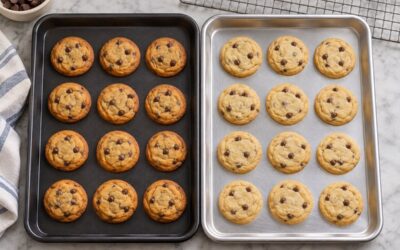
- Cookies and biscuits do well on plain light aluminum, since the heat is gentle and even.
- Roasted vegetables brown nicely on aluminum, particularly with a thin layer of oil.
- Sticky foods such as glazed items or cheese crisps release more easily from nonstick or a liner.
- Dark nonstick pans can brown the bottoms faster, so watch the oven closely.
Care Tips for Both
- Let the pan cool before washing to avoid sudden temperature shocks.
- Wash by hand with warm water and mild soap unless the maker says dishwasher use is fine.
- Avoid cutting on the pan with knives or pizza cutters, especially coated ones.
- Dry fully and store flat or upright.
Bare aluminum can darken or discolor with some detergents and acidic foods. That change is usually cosmetic. Check the maker’s guide if you are unsure.
Buying Tips
Look at weight and rim strength before anything else. A thin, flimsy sheet bends in the oven no matter what it is made of. Choose a size that fits your oven with a little room on all sides, and check the maker guide for the highest temperature the pan can handle. If you roast at high heat often, plain aluminum is usually the simpler option, because there is no coating to worry about. If you bake delicate, sticky items, a nonstick sheet or a liner may save you effort.
Construction and Rim Design Worth Inspecting
Two sheets labeled the same size can behave very differently depending on how they are built. Start with the rim. A rolled or reinforced edge, sometimes wrapped around a wire, adds stiffness and helps the sheet stay flat when it goes from a cool counter into a hot oven. A plain stamped edge with no reinforcement flexes more easily, which is where the loud popping sound and the permanent bend usually come from.
Next, think about thickness. A heavier gauge of metal spreads heat more evenly and resists twisting, but it also takes a little longer to warm up and is harder to lift with one hand. A very thin sheet heats fast and is easy to handle, yet it is more likely to develop hot spots and to bend over time. If the listing does not state the thickness, compare weight and read what other buyers say about flatness.
Corners matter as well. Sharp inside corners trap crumbs and are harder to wipe, while gently rounded corners release food and clean up faster. Check whether the sheet has a flat base or a pattern of ridges. Ridges can add strength and let air move under the food, but they can also leave marks on delicate cookies. Finally, look at how the edges are finished. Smooth, folded edges are kinder to hands and dish towels than raw, sharp ones. These construction details apply equally to bare aluminum and nonstick sheets, so judge them first and the surface second.
Dark Finish Versus Light Finish
Color changes how a pan handles oven heat. Light, matte or bare metal reflects some of the heat and tends to brown food gently. Dark surfaces absorb more heat and usually brown the bottoms faster. Many nonstick sheets are dark, which is why the same cookie recipe can come out with darker bases on a coated sheet than on a plain light aluminum one.
This is a tendency rather than a rule, and the effect depends on the oven, the rack position and the recipe. If you move to a dark sheet, a sensible habit is to check the bake a little earlier than the recipe says and look at the underside of one cookie or biscuit. If the bottoms are browning too quickly, move the rack up one position, or slide a second empty sheet beneath the first to soften the heat from below.
Shiny surfaces and matte surfaces also differ. A very glossy interior can reflect heat and slow browning, while a slightly rough or aged aluminum surface often browns a bit more. That is one reason older, well-used plain sheets sometimes bake differently from brand-new ones. Neither is wrong, but if you want repeatable results, stick to one type for delicate items like shortbread and meringues, and keep the other type for roasting and sticky jobs where deeper color is welcome.
Liners and Ways to Protect the Surface
A liner can make either type of sheet easier to live with. Parchment paper keeps sticky or sugary foods from welding to the metal and spares you scrubbing. A reusable silicone baking mat does the same job and can be washed and reused, though you should check its stated temperature limit and whether it suits the size of your sheet. Foil can be useful for messy roasting, but it is not a nonstick surface by itself and can tear.
On bare aluminum, a liner protects the finish from staining and from acidic or salty foods. On a nonstick sheet, a liner reduces direct contact with sticky sugar and with cutting tools, which can extend the life of the coating. Avoid cutting food on the sheet itself, whatever the surface, and do not use a pizza wheel directly on a coated pan.
A few liner cautions apply. Do not let parchment hang over the edge where it could touch a heating element, and check that the paper is rated for your oven temperature. Silicone mats can slightly slow browning on the bottoms of cookies, so adjust your timing if the first batch looks pale. Spray oils can leave a sticky film that is hard to remove, so brush on a thin layer of liquid oil instead when you do not use a liner.
Matching Sheets to Your Oven and Habits
Before choosing between aluminum and nonstick, think about how you actually use the oven. If you roast vegetables and potatoes at high heat several times a week, a sturdy bare aluminum sheet is a low-fuss choice because there is no coating that might be limited by temperature. If your oven runs hot or you tend to preheat aggressively, always compare your usual setting with the maker’s stated maximum for a coated sheet.
If you bake in batches, buy sheets that nest or stack neatly and that fit your oven rack with a little space on every side. A sheet that nearly touches the oven walls blocks airflow and causes uneven browning. Convection ovens move air around the pan, so a low rim helps hot air reach the food, while a deep rim can shade the edges.
Also consider cleanup tolerance. People who dislike scrubbing may be happier with a coated sheet and a liner. People who prefer to scour freely and use whatever tool is handy usually prefer bare metal. Households that bake only a few times a year can pick either and simply follow the care sheet. If you cook for a crowd, a pair of identical sheets makes it easier to rotate trays and get matching results across batches.
Signs a Sheet Is Worn Out
Baking sheets do not last forever, and knowing when to retire one saves frustration. For nonstick sheets, the clearest warning signs are scratches that expose the metal underneath, flaking or peeling of the coating, and food that suddenly sticks where it used to slide off. Once the coating is breaking apart, it is sensible to stop using the sheet for food contact and replace it, following the maker’s advice.
For bare aluminum, wear looks different. Deep dents, a sheet that rocks on a flat counter, or a permanent warp that makes oil pool in one corner all reduce even cooking. Surface darkening or a cloudy, stained look is usually cosmetic, but pitting or heavy corrosion is a reason to replace the pan.
Both types can acquire baked-on residue that no longer wipes off. Some residue is harmless and only affects appearance, but a thick, sticky layer can smoke in the oven and transfer a burnt smell to food. Try a soak in warm soapy water and a soft non-scratch scrubber first, and read the care sheet before using anything stronger. If cleaning no longer restores a sheet and it bends, smokes or sheds coating, treat it as a consumable and replace it.
FAQ
Do I still need parchment on a nonstick pan?
Not always, but a liner makes cleanup quicker and protects the coating from sticky messes.
Will a bare aluminum pan warp?
Thin pans can bend in strong heat or when cold water hits a hot pan. A sturdier rim helps resist this.
Can I use cooking spray on a nonstick baking sheet?
Many makers advise against aerosol sprays because the residue can build up into a sticky film that is hard to remove. A thin brush of liquid oil or a liner is usually gentler. Check the care sheet for your sheet.
Why do my cookies brown more on the bottom with a dark sheet?
Dark surfaces absorb more heat than light ones, so bases can brown faster. Try a higher rack position, check earlier, or stack a second sheet underneath to soften the heat.
What size baking sheet should I buy?
Pick the largest size that still leaves a little clearance around all sides in your oven, since a sheet that touches the walls blocks airflow. Measure the rack and check the listing for outer dimensions, including the rim.
Is a rimmed sheet better than a flat cookie sheet?
Rimmed sheets are more versatile because they hold juices and roasting oil and tend to resist warping. Flat or low-rim sheets make it easy to slide cookies off, so some bakers own one of each.
Is discoloration on bare aluminum a problem?
Darkening or cloudy patches are usually cosmetic and come from detergents, minerals or acidic foods. If the surface is deeply pitted or corroded, it is time to replace the pan.
Can I put baking sheets in the dishwasher?
Only if the maker says so. Dishwasher detergents can dull or darken bare aluminum and may shorten the life of a coating, so hand washing is the safer default.
Should I preheat the baking sheet?
Some recipes, such as roasted vegetables or certain breads, call for a preheated sheet to get a quick sear. Follow the recipe and confirm the maker allows heating the sheet empty.
The Short Version
Choose plain aluminum for even browning and rugged use, and nonstick for easy release and fast cleaning. If you bake often, keep one of each and follow the care instructions that come with them.