Disclosure: topratedkitchenware.com is reader-supported. When you buy through links on our site, we may earn an affiliate commission from Amazon and other retailers, at no extra cost to you.
Where to buy
This guide to the best 24 volt lithium trolling motor battery options starts with an honest warning: most batteries sold for trolling motors are 12-volt units, and only one pick in our verified pool is a true, single-unit 24-volt lithium battery. That pick is linked below. The other five are covered in full as prose-only entries — four 12-volt batteries that anglers commonly pair in series, and one small 24-volt pack that belongs in ride-on toys and DIY projects, not on a trolling motor. We link only what genuinely matches a 24-volt trolling system, and we say plainly why the rest do not.
- SUPER EMPOWER 12.8V 100Ah LiFePO4 Battery, Group 31 — prose-only, wrong voltage for a single-unit 24V system
- Nermak 12V 10Ah LiFePO4 Deep Cycle Battery, 2 Pack — prose-only, wrong voltage and far too small for a trolling motor
- yeagulch 12.8V 100Ah LiFePO4 Lithium Battery, Group 31 — prose-only, wrong voltage for a single-unit 24V system
- ABKPOWER 12V 20Ah LiFePO4 Battery — prose-only, wrong voltage and sized for fish finders, not propulsion
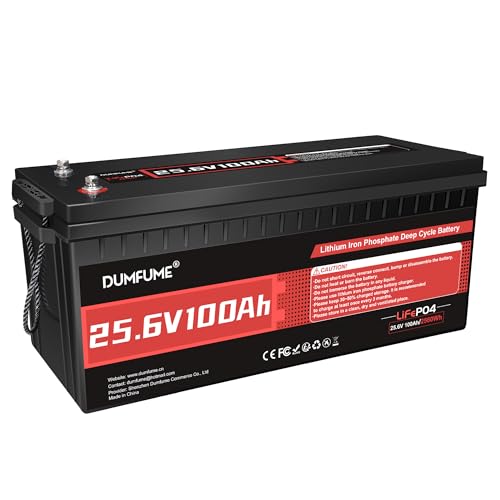
- dumfume 24V 100Ah LiFePO4 Lithium Battery
- Qwenoer 22.2V-24V 10Ah Lithium Battery Pack — prose-only, a small ride-on and DIY pack, not a deep-cycle trolling battery
Read the full guide ↓ for the detailed reviews, the series-wiring discussion, and the checks that decide whether a battery truly belongs in a 24-volt trolling system.
Shopping for the best 24 volt lithium trolling motor battery sounds simple until you open the listings. A 24-volt trolling motor needs a 24-volt power source, yet the lithium market is built overwhelmingly around 12-volt deep-cycle batteries, because those same units serve RVs, solar banks, and 12-volt motors. True single-unit 24-volt lithium batteries exist, but they are the minority, and they sit on the shelf next to 12-volt batteries whose titles mention trolling motors prominently — because a pair of them, wired in series, is the traditional way to build a 24-volt system. Both routes are legitimate. What is not legitimate is buying a single 12-volt battery for a 24-volt motor and discovering the mismatch at the ramp.
This guide therefore does two jobs at once. It reviews the one verified pick that is a genuine 24-volt lithium deep-cycle battery in a single case, and it reviews the 12-volt alternatives honestly, in their proper role: as halves of a series pair, or as batteries for the 12-volt jobs elsewhere on the boat. It also flags the small 24-volt lithium pack in the pool for what it is — a light-duty pack for kids’ ride-on cars and DIY electronics — because its voltage number alone could fool a hurried buyer into a bad match. Voltage is necessary for compatibility. It is nowhere near sufficient.
Throughout the guide, every capacity, voltage, cycle, and protection figure comes from the verified listing titles in our research pool. Where a title does not state a figure, we do not invent one. If you are comparing the wider 24-volt landscape while you read, our companion shortlist at Best 24 Volt Marine Battery covers the same voltage class from the boat-electrics angle, and Best 24 Volt Trolling Motor Battery looks at the broader field without the lithium-only filter applied here.
Key Takeaways
- Only one pick in this guide is a true single-unit 24-volt lithium trolling battery: the dumfume 24V 100Ah LiFePO4, and it is the linked recommendation.
- Four picks are 12-volt batteries. They cannot run a 24-volt motor alone; their honest role is as a matched series pair, or on a 12-volt system.
- One pick is a genuine 24-volt pack but a light-duty one, built for ride-on cars and DIY projects. Voltage alone never qualifies a battery for propulsion duty.
- Capacity in amp-hours, the battery management system’s current rating, and low-temperature charge protection matter as much as voltage once compatibility is settled.
- Series wiring two 12-volt batteries doubles voltage but not amp-hours; a single 24-volt 100Ah battery and a series pair of 12-volt 100Ah batteries store the same energy on paper, with different wiring, weight distribution, and failure points.
In this guide
Quick Picks
| Pick | Badge | Why it is here | Link |
|---|---|---|---|
| SUPER EMPOWER 12.8V 100Ah LiFePO4, Group 31 | Best Series-Pair Candidate | A 100Ah deep-cycle unit whose title names trolling motors and states series-parallel expansion support. | Prose-only — 12.8V, not 24V |
| Nermak 12V 10Ah LiFePO4, 2 Pack | Best for Fish Finders and Small Loads | A small 10Ah deep-cycle pair for electronics and light loads, nowhere near propulsion size. | Prose-only — 12V, 10Ah |
| yeagulch 12.8V 100Ah LiFePO4, Group 31 | Best High-Cycle 12V Alternative | A 100Ah Group 31 unit with a very high stated cycle figure and low-temperature protection. | Prose-only — 12.8V, not 24V |
| ABKPOWER 12V 20Ah LiFePO4 | Best Compact 12V for Electronics | A 20Ah unit aimed at fish finders, lighting, and small backup loads. | Prose-only — 12V, 20Ah |
| dumfume 24V 100Ah LiFePO4 | Best Overall — True 24V Pick | The only genuine single-unit 24V deep-cycle lithium battery in the pool, with a 100A BMS and waterproof rating stated. | Check on Amazon |
| Qwenoer 22.2V-24V 10Ah Lithium Pack | Best for Ride-On and DIY Projects | A small 24V li-ion pack with charger and bare leads, built for ride-on cars and electronics projects. | Prose-only — not deep-cycle |
How These Picks Were Chosen
We built this shortlist from a verified research pool of lithium batteries whose listings were checked through the Amazon Creators API, so every product name, voltage, capacity, and feature mentioned in this guide traces back to a real, current listing title rather than to memory or marketing copy. From that pool we selected the six batteries a buyer searching this keyword is most likely to encounter, then applied the keyword’s own filters in order: the battery must be lithium, it must suit trolling motor duty, and — the filter that eliminates most of the field — it must deliver 24 volts.
That voltage filter is where honesty matters most. Four of the six picks are 12-volt or 12.8-volt batteries. Their titles mention trolling motors because anglers do use them, in series pairs, on 24-volt motors, and singly on 12-volt motors. We kept them in the guide because a buyer comparing options will meet them immediately, and because the series-pair route is a real purchasing decision with real trade-offs. But we did not link them as answers to a 24-volt question, and we did not photograph them into the guide as if they were 24-volt products. Each is reviewed fully, labelled prose-only, and judged in its correct role.
The same discipline removed the small Qwenoer pack from linked contention despite its correct voltage. Its title describes a 10Ah li-ion pack with bare leads and a small charger, intended for kids’ ride-on cars, DIY projects, solar panels in the hobby sense, LED strips, and CCTV cameras. Nothing in that description is deep-cycle propulsion equipment. A trolling motor under load is one of the harshest jobs a small battery can be given, and matching a voltage number while ignoring the duty class is how batteries get ruined and trips get cut short.
This is a research-led guide. We compared listing data, specifications stated by the manufacturers, and the documented characteristics of each battery class; we did not run these batteries on our own boats, and we make no hands-on testing claims. Prices and ratings change constantly on marketplace listings, so we print neither: check the latest price on Amazon for any pick you shortlist, and read current owner feedback there as one input among several.
The 6 Best 24 Volt Lithium Trolling Motor Battery Options, Reviewed Honestly
A note on the order below: the picks follow our research pool order, not a ranking from best to worst, because five of the six are here as context and caution rather than as contenders. The single linked pick is the one that answers the keyword directly. Read the prose-only reviews as buying intelligence — they explain the alternatives you will be offered, and when each alternative is actually the right purchase for a different job.
SUPER EMPOWER 12.8V 100Ah LiFePO4 Battery, Group 31
Badge: Best Series-Pair Candidate
Strengths
- 100Ah capacity in a Group 31 deep-cycle case, with 1280Wh of stated energy — a full-size trolling-class battery in its own voltage class.
- The title states support for 4P4S expansion up to 20.48kWh, which is the manufacturer explicitly blessing series and parallel builds.
- Low-temperature cutoff and a built-in 100A battery management system are both stated, the two protections that matter most for early-season fishing.
Trade-offs
- It is a 12.8-volt battery. Alone, it cannot power a 24-volt trolling motor at all.
- Used in a series pair, it doubles your wiring, your charger complexity, and the number of units that must age and be maintained together.
- Group 31 is a large, heavy case format; two of them need a battery compartment with genuine room and secure mounting.
Spec box (from the verified listing title): Voltage 12.8V; Capacity 100Ah; Energy 1280Wh; BMS 100A; Format Group 31 deep cycle; Low-temperature cutoff stated; Expansion supports 4P4S, up to 20.48kWh; Stated uses include RV, trolling motor, marine, and solar.
As a 12-volt battery, this is a thoroughly credible trolling motor unit, and its expansion rating is the detail that earns it the series-pair badge. Many lithium batteries permit series connection only within limits, and some prohibit it; a title that states 4P4S support is telling you the manufacturer designed the battery management system to tolerate being stacked. Two of these in series give a 24-volt, 100Ah bank — the same nominal energy as the single 24-volt pick in this guide — with the weight split across two cases that are individually easier to lift and position in a cramped bow compartment.
The honest limitation is everything that comes with the pair. Series batteries should be the same model, the same age, and charged in balance; a charger setup for a series lithium pair costs more thought than a single-unit charger, and if one unit’s protection system trips under load, the motor stops regardless of the other unit’s health. None of that makes the pair a bad choice — for years it was the only lithium choice — but it is complexity you accept in exchange for flexibility, including the option to split the pair back into 12-volt service later.
Best for: anglers who already own one compatible unit, or who value the flexibility of a series pair / Not suited for: anyone who wants a single battery that runs a 24-volt motor out of the box
Nermak 12V 10Ah LiFePO4 Deep Cycle Battery, 2 Pack
Badge: Best for Fish Finders and Small Loads
Strengths
- A genuinely deep-cycle small battery, with a stated cycle life of 2000+ cycles and a built-in 10A BMS.
- Sold as a two-pack, which suits the way small electronics batteries get used — one in service, one in reserve, or two small loads served separately.
- Its title names fish finders, lighting, scooters, and solar or wind power, which is an accurate map of what a 10Ah battery does well.
Trade-offs
- 10Ah is electronics capacity, not propulsion capacity; a trolling motor would drain it in a small fraction of a fishing session.
- It is a 12-volt battery, so it fails this keyword’s voltage test as well as its capacity test.
- The 10A BMS ceiling confirms the design intent: this battery is built for gentle, steady small loads.
Spec box (from the verified listing title): Voltage 12V; Capacity 10Ah per unit, sold as a 2 pack; Chemistry LiFePO4 deep cycle; Stated cycles 2000+; BMS 10A built in; Stated uses include solar and wind power, scooters, lighting, Power Wheels, and fish finders.
Every boat that carries a trolling motor also carries small electrical loads, and this little battery exists in this guide to draw the line between the two worlds. A fish finder, a GPS unit, a set of navigation lights — these sip current, and a lightweight 10Ah lithium battery serves them beautifully, often as a dedicated electronics battery that isolates sensitive screens from the voltage sag of a hard-working propulsion bank. Kayak anglers in particular build whole power systems around batteries of exactly this class.
What it cannot do is move the boat. Propulsion is a high-draw, hours-long job; the entire premise of a 24-volt trolling system is sustained power delivery, and a 10Ah battery with a 10A protection ceiling is the opposite of that premise in both capacity and current. We include it, unlinked, because searches for trolling batteries surface small batteries constantly, and a buyer who understands why this one is wrong for propulsion understands the category. Buy it for the fish finder. It will be excellent at that.
Best for: powering fish finders, lighting, and small electronics on any boat / Not suited for: any propulsion duty, at any voltage
yeagulch 12.8V 100Ah LiFePO4 Lithium Battery, Group 31
Badge: Best High-Cycle 12V Alternative
Strengths
- A full 100Ah, 1280Wh deep-cycle capacity in the standard Group 31 footprint.
- The title states 15000+ deep cycles, the highest cycle figure in this guide’s pool, signalling a long service design intent.
- Low-temperature protection is stated, and the listed uses span RV, marine, camping, off-grid, and home energy storage.
Trade-offs
- Again, 12.8 volts: this is half of a 24-volt series system, not a 24-volt battery.
- The title does not name trolling motors specifically, even though marine use is stated; check the current listing carefully for your exact application.
- Like every series candidate, it commits you to a matched pair and balanced charging if used at 24 volts.
Spec box (from the verified listing title): Voltage 12.8V; Capacity 100Ah; Energy 1280Wh; BMS 100A; Format Group 31; Stated cycles 15000+ deep cycles; Low-temperature protection stated; Stated uses include RV, marine, camping, off-grid, and home energy storage.
On paper, within its own voltage class, this is one of the strongest specifications in the guide: full-size capacity, a substantial management system, cold-weather protection, and a cycle claim that, if the battery lives up to even a healthy fraction of it, means a very long working life. For a 12-volt trolling motor, or as half of a carefully matched 24-volt pair, it deserves a place on any shortlist, and buyers comparing it against the SUPER EMPOWER unit above are really choosing between two philosophies of the same build — stated expansion support on one side, a headline cycle figure on the other.
Its limitation for this keyword is the same as every 12-volt pick here, and repetition is the point: a 24-volt motor does not care how good a 12-volt battery is. Quality does not convert voltage. If your motor is 24-volt and you want a single battery, the linked pick below is your answer in this guide; if you are deliberately building a pair, this yeagulch unit and the SUPER EMPOWER are the two candidates we would compare first, bought as a matched set from the start.
Best for: 12-volt trolling systems and buyers deliberately building a matched series pair / Not suited for: single-battery 24-volt installations
ABKPOWER 12V 20Ah LiFePO4 Battery
Badge: Best Compact 12V for Electronics
Strengths
- 256Wh of stated energy in a compact case, with a 20A BMS sized honestly for its class.
- A stated cycle life of 6000+ cycles, strong for a small battery.
- Its stated uses — fish finder, solar, RV, marine, home backup, lighting — describe real small-load work it can genuinely do.
Trade-offs
- 12 volts and 20Ah: wrong on voltage and far short on capacity for a 24-volt trolling motor.
- Even on a small 12-volt motor, 20Ah is a short session, not a day of fishing.
- Compact batteries tempt buyers into undersizing; this one’s honest home is electronics and backup, not propulsion.
Spec box (from the verified listing title): Voltage 12V; Capacity 20Ah; Energy 256Wh; BMS 20A; Chemistry LiFePO4 deep cycle; Stated cycles 6000+; Stated uses include fish finder, solar, RV, marine, home backup, and lighting.
Think of this battery as the middle rung of the small-load ladder: twice the Nermak’s capacity, a stronger management system, and enough stored energy to run a fish finder and lights through a long day, or to serve as a tidy backup battery for small home and RV loads. In a kayak or a small jon boat with a modest electronics suite, it is a sensible, light, long-lived choice, and its cycle figure suggests the manufacturer expects it to be charged and discharged for years.
It appears in this guide for the same educational reason as the Nermak: search results blur the line between batteries that power a boat’s electronics and batteries that power the boat. The gap between 20Ah and the 100Ah class is not a detail; it is roughly the gap between running a screen and running a motor for a day. Keep this battery in its lane and it is a good one. Ask it to push a hull and it will simply run out, quickly and predictably.
Best for: electronics, lighting, and small backup loads on boats and in RVs / Not suited for: trolling propulsion beyond the shortest, smallest-motor outings

dumfume 24V 100Ah LiFePO4 Lithium Battery
Badge: Best Overall — True 24V Pick
Strengths
- It is what the keyword asks for: a single-case 24-volt, 100Ah LiFePO4 deep-cycle battery, with 2560Wh of stated energy — no series pair, no balance charging, one unit to mount and maintain.
- A built-in 100A BMS gives the bank a protection ceiling in the class a 24-volt trolling motor expects, with low-temperature cutoff protection stated.
- The title states an IP65 waterproof rating and carries UN38.3 and UL1973 certifications, two signals that the unit was built and tested for vehicle and marine-adjacent service rather than adapted from a hobby pack.
Trade-offs
- A single 24-volt unit is a single point of failure; a series pair degrades more gracefully in the sense that each half can be tested, replaced, or repurposed separately.
- 100Ah at 24 volts is a substantial, heavy battery; confirm your compartment dimensions and your willingness to lift it before ordering.
- The stated uses in the title are RV, marine, solar, and off-grid; trolling motors are not named, so read the current listing in full and confirm it suits your motor’s draw before you buy.
Spec box (from the verified listing title): Voltage 24V; Capacity 100Ah; Energy 2560Wh; BMS 100A built in; Stated cycles 15000 deep cycles; Low-temperature cutoff protection stated; Waterproof rating IP65 stated; Certifications UN38.3 and UL1973 stated; Stated uses include RV, marine, solar, and off-grid.
This is the battery the keyword describes, and the only one in the pool that lets a 24-volt trolling owner do the simple thing: buy one battery, wire one battery, charge one battery. The simplification is worth more than it first appears. A single management system watches the whole bank, so there is no pair to drift out of balance; a single charger profile serves the whole bank; and the wiring run is the short, thick, simple run that marine electrical work is supposed to be. For a new 24-volt installation, or for an owner replacing a tired series pair and tired of maintaining it, this is the clean-sheet answer.
The energy figure deserves a moment of arithmetic, because it is the number that decides your day. At 2560Wh, this bank stores the same energy as the classic series pair of 100Ah 12-volt batteries, which is the configuration 24-volt trolling systems were built around for years. In practical terms that means a full day of ordinary trolling for most freshwater setups, with the usual caveat that wind, current, hull weight, and how hard you run the motor move the real figure considerably. Lithium’s flat discharge curve also means the motor keeps near-full thrust far deeper into the bank than lead-acid ever allowed, which is the upgrade anglers notice most.
The honest limitation is the one printed in the trade-offs: the title’s stated uses do not name trolling motors, even though marine use, the waterproof rating, the capacity, and the management system all point at exactly this class of work. Treat that as a prompt to verify, not as a disqualification — open the listing, read the manufacturer’s stated applications and current owner feedback, and confirm your motor’s maximum draw sits comfortably under the stated BMS ceiling.
Best for: 24-volt trolling owners who want one battery, one charger, and no series pair to manage / Not suited for: buyers who specifically want the redundancy and flexibility of two separate 12-volt units
Check on Amazon to see the current listing for the dumfume 24V 100Ah LiFePO4, confirm the stated applications and dimensions, and read the most recent owner feedback.
Qwenoer 22.2V-24V 10Ah Lithium Battery Pack
Badge: Best for Ride-On and DIY Projects
Strengths
- A genuine 24-volt-class li-ion pack that arrives with its own 25.2V 2A charger, which is the right, matched way to charge a small pack like this.
- Bare leads and a cable connector make it easy to integrate into DIY projects, LED strip installations, and CCTV setups.
- For its stated job — kids’ ride-on cars — a 10Ah pack is a sensible capacity that keeps weight low.
Trade-offs
- It is not a deep-cycle battery. Nothing in its title claims deep-cycle design, a propulsion-class BMS, or marine suitability.
- 10Ah at small-pack discharge rates cannot sustain a trolling motor; the mismatch is about duty class, not just capacity.
- Bare-lead hobby construction is not sealed marine construction; it does not belong in a wet bow compartment.
Spec box (from the verified listing title): Voltage 22.2V-24V; Capacity 10Ah; Chemistry li-ion; Charger 25.2V 2A included; Connection bare leads wire with cable connector; Stated uses include kids’ ride-on cars, DIY projects, solar panels, LED light strips, and CCTV cameras.
This pack is the guide’s clearest lesson in why voltage is only the first filter. Its voltage is right — genuinely 24-volt class — and a buyer scanning quickly could stop there. But everything else about it describes a different world: a toy car’s afternoon, a hobbyist’s bench project, a camera that needs backup power. Those are worthy jobs, and for them this pack, with its matched charger included, is a tidy solution. A trolling motor, which draws hard and long and lives in spray and vibration, is simply not among them, and no honest guide should link it as if it were.
We keep it in the guide, unlinked and clearly labelled, because it will appear in your search results too, wearing the right voltage like a disguise. When you see it there, you will know what it is. If your actual project is a ride-on car refresh or a small DIY build, buy it for that with confidence. If your project is a boat, scroll back up to the deep-cycle batteries where you belong.
Best for: ride-on cars, DIY electronics, LED strips, and CCTV backup / Not suited for: trolling motors or any marine propulsion or deep-cycle duty
Comparison Table
| Pick | Badge | Voltage and capacity (from listing title) | Key stated features | Link |
|---|---|---|---|---|
| SUPER EMPOWER 12.8V 100Ah LiFePO4 | Best Series-Pair Candidate | 12.8V, 100Ah, 1280Wh | 100A BMS; low-temp cutoff; 4P4S expansion stated | Prose-only |
| Nermak 12V 10Ah LiFePO4 2 Pack | Best for Fish Finders and Small Loads | 12V, 10Ah | 10A BMS; 2000+ cycles stated | Prose-only |
| yeagulch 12.8V 100Ah LiFePO4 | Best High-Cycle 12V Alternative | 12.8V, 100Ah, 1280Wh | 100A BMS; 15000+ cycles stated; low-temp protection | Prose-only |
| ABKPOWER 12V 20Ah LiFePO4 | Best Compact 12V for Electronics | 12V, 20Ah, 256Wh | 20A BMS; 6000+ cycles stated | Prose-only |
| dumfume 24V 100Ah LiFePO4 | Best Overall — True 24V Pick | 24V, 100Ah, 2560Wh | 100A BMS; IP65 stated; UN38.3 and UL1973 stated | Check on Amazon |
| Qwenoer 22.2V-24V 10Ah Pack | Best for Ride-On and DIY Projects | 22.2V-24V, 10Ah | Charger included; bare leads; hobby and ride-on uses stated | Prose-only |
How to Choose a 24 Volt Lithium Trolling Motor Battery
Start with the architecture decision, because it shapes everything else: one true 24-volt battery, or two 12-volt batteries in series. A single unit, like the linked dumfume pick, gives you one management system, one charger profile, simpler wiring, and no balance maintenance, at the cost of a single point of failure and one heavy lift. A series pair gives you flexibility — the units can serve 12-volt duty separately, and each is lighter to handle — at the cost of matched-pair discipline: same model, same age, bought together, charged in balance, and replaced together when the time comes. Neither answer is wrong. Buying one 12-volt battery by accident, for a 24-volt motor, is the only wrong answer, and it is the most common one.
Next, do the capacity maths in watt-hours, not amp-hours, because watt-hours are the only honest currency across voltages. Multiply volts by amp-hours: a 24V 100Ah battery holds 2560Wh, and so does a series pair of 12.8V 100Ah batteries at roughly 2560Wh combined. Then think about your motor’s appetite in plain terms — how many hours you fish, how much of that time the motor is actually turning, and how hard wind and current make it work. Lithium batteries can be discharged far deeper than lead-acid without harm, which is why a lithium bank of the same nominal size fishes noticeably longer, but no chemistry repeals arithmetic: if your days are long and your water is rough, capacity is the specification to protect.
Then check the management system. The BMS current rating is the ceiling on what the battery will deliver before protection intervenes, and it must sit comfortably above your motor’s maximum draw, not merely above its cruising draw, because starting, weeds, and shallow-water bursts all spike current. A 100A-class BMS, as stated on the linked pick, is the expected class for this job. Also confirm low-temperature charge protection if you fish early or late season: lithium cells should not be charged below freezing, and a battery whose protection system enforces that automatically is protecting an investment, not inconveniencing you.
Finally, weigh the unglamorous factors. Case size and group format decide whether the battery physically fits your compartment — measure the compartment, not your optimism. Weight decides whether you will dread moving it. Waterproofing and vibration tolerance decide whether it survives the environment. And if your wider refit includes the rest of the 24-volt system, the background reading at Best 24 Volt Solar Battery is useful, because many of these same deep-cycle batteries serve solar banks ashore, and the sizing logic transfers directly.
How to Wire, Charge, and Care for a 24V Lithium Trolling System
Installation begins with the motor’s own documentation: confirm the motor is a 24-volt model and note its maximum current draw, then size cables and the circuit protection the motor manufacturer specifies. With a single 24-volt battery, the run is simple — positive and negative to the motor circuit, with the specified breaker in line, every terminal tight, crimped, and protected against corrosion and accidental contact. Keep the run as short as the layout allows, route cables away from sharp edges and fuel lines, and secure the battery so it cannot shift in a seaway; a battery that moves will eventually chafe a cable or loosen a terminal.
If you choose the series-pair route instead, wire the two 12-volt batteries positive-to-negative between them, and take the motor’s feeds from the free positive of one battery and the free negative of the other, so the motor sees the combined voltage. Use two units of the same model bought together, start them at the same state of charge, and periodically check that they remain in balance; a pair that drifts apart delivers less than its paper capacity and ages unevenly. Some owners add a dedicated disconnect for storage and service, and the considerations behind that accessory are covered in our companion guide at Best 24 Volt Trolling Motor Battery Disconnect Switch.
Charging is where lithium ownership is won or lost. Use a charger with a lithium profile matched to your system voltage — a 24-volt charger for a single 24-volt battery, or the arrangement the battery manufacturer specifies for a series pair. Never charge a lithium battery below freezing unless its protection and heating features explicitly allow it; the low-temperature cutoffs stated on several picks in this guide exist because charging cold cells causes permanent internal damage that no later care can undo. Store the bank partially charged rather than brim-full if it will sit for a season, keep it dry and off a freezing floor, and give it a top-up on the schedule the manufacturer recommends.
Troubleshooting follows a short pattern. Problem: the motor runs weakly or cuts out under load → check terminal tightness and cable condition first, then state of charge, then whether the battery’s protection has tripped from an over-current event. Problem: one battery in a series pair is hot, swollen, or at a different voltage from its partner → stop using the pair, separate the units, and treat the odd one as retired until a competent check says otherwise. Problem: the charger refuses to start on a cold morning → that is protection working as designed; warm the battery above freezing and try again rather than defeating the safeguard.
Series Pair or Single Battery: The Honest Trade-Off
The series pair is the incumbent technology, and incumbency has virtues: chandlers stock 12-volt batteries everywhere, a failed half can be replaced in any port town, and the same units can run a 12-volt motor or house loads when the 24-volt motor is not in use. If your boat already carries a healthy matched pair, there is no urgency in this guide — maintain it well and replace it as a pair when it fades.
The single 24-volt battery is the simplification play, and simplification compounds: one unit to buy, wire, charge, monitor, and eventually replace, with no balance drift and no argument about which half failed. As true 24-volt lithium units like the linked pick become common, the pair’s remaining advantages narrow to flexibility and familiarity. New installations, in our judgement, should default to the single unit; existing healthy pairs should be run out their lives. That is the whole controversy, and it is smaller than the internet suggests.
Why Lithium Replaced Lead-Acid on Trolling Boats
The conversion story is worth understanding because it explains the prices and the enthusiasm. A lithium deep-cycle battery delivers most of its stored energy at near-constant voltage, so a trolling motor keeps its thrust late into the day instead of fading as a lead-acid bank sags. It tolerates deep discharge as routine rather than as damage, it recharges faster, and it weighs roughly half as much for the same usable energy — a difference you feel in the bow of a small boat and in your shoulders at the ramp. Against that stand a higher purchase cost, the freezing-charge restriction, and the need for a lithium-profile charger. For anglers who fish often, the arithmetic and the afternoon thrust win. For a boat used twice a year, a modest lead-acid pair may still be the rational buy, and this guide will not pretend otherwise. Readers weighing the wider small-cell end of the lithium world as well can browse Best 37 Volt 18650 Battery for the cell-level counterpart to these complete batteries.
Reading a 24V Lithium Listing Without Getting Fooled
Listings in this category reward slow reading. The voltage in a title is sometimes the voltage of a single unit and sometimes the voltage of a system the unit can join, and only the surrounding words tell you which. A title that pairs a 12-volt figure with expansion language is describing a building block; a title that states 24 volts alongside a single capacity and a single management system is describing a complete battery. When in doubt, look for the energy figure: watt-hours belong to the unit being sold, and a single battery claiming 24-volt duty should state an energy figure consistent with its own voltage and capacity multiplied together.
Apply the same scepticism to cycle figures and protection lists. A stated cycle count is a manufacturer’s claim under the manufacturer’s test conditions, useful for comparing design intent between listings, useless as a promise about your boat. Protection features, by contrast, are concrete: a named low-temperature cutoff, a stated BMS current, and recognised transport and safety certifications such as the UN38.3 and UL1973 marks on the linked pick are checkable facts about how the unit was built. Weight your decision toward the checkable facts, treat the headline claims as seasoning, and always confirm the current version of the listing before money moves, because marketplace titles are edited more often than most buyers realise.
Common Buying Mistakes
- Buying a single 12-volt battery for a 24-volt motor. The most common and most avoidable error in this category. Check the motor’s voltage plate before you check any listing.
- Matching voltage and ignoring duty class. A 24-volt hobby pack is not a trolling battery. Deep-cycle design, capacity, and BMS rating must all fit propulsion work.
- Comparing amp-hours across voltages. 100Ah at 12 volts is half the energy of 100Ah at 24 volts. Compare watt-hours.
- Mixing a series pair. Different models, ages, or states of charge in series guarantee imbalance and a shortened life for both units.
- Charging below freezing without protection. Cold charging permanently damages lithium cells. Respect the cutoff; warm the battery first.
- Undersizing the BMS ceiling. A protection system that trips at full throttle in the weeds is not protection; it is an interruption. Match the rating to the motor’s maximum draw with margin.
Final Recommendation
For most anglers setting up or refreshing a 24-volt trolling system, the recommendation is the dumfume 24V 100Ah LiFePO4: the only true single-unit 24-volt lithium deep-cycle battery in this guide, with the capacity, management rating, waterproofing, and certifications the job calls for. Buy it, wire it simply, charge it with a proper 24-volt lithium-profile charger, and go fishing. Choose the series-pair route instead — the SUPER EMPOWER or yeagulch 100Ah units, bought as a matched pair — if you value 12-volt flexibility, already own one compatible unit, or need replacement halves available in any port. Keep the Nermak and ABKPOWER small batteries for the electronics they were built to serve, and leave the Qwenoer pack to the ride-on cars and workbenches it was designed for. Every pick in this guide is good at something; the whole art of this purchase is refusing to ask any of them to be good at the wrong thing.
Related guides
Frequently Asked Questions
Can I run a 24-volt trolling motor on one 12-volt battery?
No. A 24-volt motor needs a 24-volt supply. One 12-volt battery will not run it properly, and the correct solutions are a single 24-volt battery or two 12-volt batteries wired in series. There is no adapter or setting that changes this.
Is a single 24V battery better than two 12V batteries in series?
For simplicity, yes: one management system, one charger profile, no balance maintenance. For flexibility, the pair still wins, since each unit can serve 12-volt duty separately. Energy is the same when capacities match — compare watt-hours, not amp-hours.
How long will a 24V 100Ah lithium battery run a trolling motor?
It stores 2560Wh, and real runtime depends on how hard the motor works: throttle setting, wind, current, and hull all matter. Most freshwater anglers get a full day of ordinary trolling from this class of bank, with lithium’s flat discharge keeping thrust strong far longer than lead-acid would.
Why is the small 24V pack in this guide not recommended for trolling?
Because voltage is only one requirement. The Qwenoer pack is a 10Ah li-ion unit with bare leads, built for ride-on cars and DIY projects. It has neither the capacity, the deep-cycle design, nor the discharge capability that propulsion duty demands.
Can I charge a lithium trolling battery in freezing weather?
Not safely, unless the battery has specific cold-charge features. Charging lithium cells below freezing causes permanent damage, which is why several picks here state low-temperature cutoff protection. Warm the battery first, and let the protection system do its job.
Do I need a special charger for a 24V lithium battery?
Yes. Use a charger with a lithium profile matched to 24-volt systems for a single battery, or the manufacturer-specified arrangement for a series pair. A lead-acid charger with the wrong profile can undercharge, overcharge, or confuse the battery’s protection system.
What does the BMS rating mean for a trolling battery?
It is the maximum current the battery’s management system will deliver before protection intervenes. It must exceed your motor’s maximum draw with margin, so that starts, bursts, and weed-fouled moments do not trip the battery mid-manoeuvre.