Disclosure: topratedkitchenware.com is reader-supported. When you buy through links on our site, we may earn an affiliate commission from Amazon and other retailers, at no extra cost to you.
Where to buy
If you want the best all season blankets strategy — one that survives January and July — start with the six verified picks below. Each name links to its Amazon listing so you can check the latest price on Amazon and confirm the current size and colour — and read the season notes in each review, because an all-season claim means something different for a lightweight fleece than for a sherpa.
- BEDELITE Ribbed Fleece Throw Blanket, Cream — Best Year-Round Anchor. Check on Amazon for the current listing details.
- Bedsure GentleSoft Sherpa Fleece Throw Blanket, Grey — Best Winter Anchor. Check on Amazon for the current listing details.
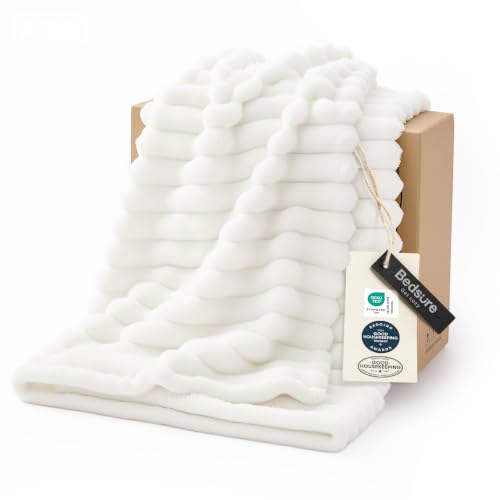
- Bedsure Cloud Bubble Blanket, Beige — Best Shoulder-Season Layer. Check on Amazon for the current listing details.
- PU MEI Sherpa Fleece Throw Blanket, Grey-Soft Blue — Best Two-Season Reversible. Check on Amazon for the current listing details.
- BEDELITE 3D Ribbed Jacquard Fleece Throw Blanket, Pink — Best Light Layer With Colour. Check on Amazon for the current listing details.
- Bedsure Fuzzy Bubble Faux Fur Throw Blanket, Tie-Dye Taupe — Best Cold-Snap Statement Piece. Check on Amazon for the current listing details.
Read the full guide ↓ for how each pick performs, where each one compromises, and which households each one actually suits.
The best all season blankets are not a magical fabric that feels identical in a heatwave and a freeze. No such blanket exists, and any listing implying otherwise is selling you a compromise described as a miracle. What genuinely works across the year is a smarter idea: blankets whose warmth can be adjusted by how you use them — layered, folded, flipped or rotated — so the same purchase serves a cold January night and a mild September evening without apology.
This guide is honest about that from the first line. Among the six verified picks below you will find a lightweight ribbed fleece that truly can stay on the bed or sofa all year in a temperate home, heavier sherpa and faux fur options that anchor the winter end of an all-season rotation, and reversible and bubble-textured designs that earn their keep in the shoulder seasons when the weather cannot decide. Read together, they form a system: one light anchor, one warm anchor, and flexible layers between.
We will show you the layering maths, the seasonal rotation that keeps each blanket fresher for longer, and the climates where a single blanket really can do it all versus the climates where a two-blanket rotation is the honest answer. If your home has one season that dominates — deep winters, say — weight your choice toward that end of the guide and let the lighter picks handle the rest of the year. Shoppers focused purely on winter warmth should also see Best Cozy Throw Blankets for the cold-first angle.
Key Takeaways
- All-season performance comes from layering and rotation, not from a single miracle fabric — plan for a light anchor and a warm anchor.
- Lightweight fleece throws are the only picks that can honestly stay in use twelve months a year in most homes.
- Reversible blankets double their seasonal range: smooth face for mild nights, sherpa face for cold ones.
- Shoulder seasons — spring and autumn — are where mid-weight and bubble-textured blankets earn their place.
- Rotating blankets by season extends each one’s life, because pile and fibres recover while they rest.
In this guide
Quick Picks
| Pick | Badge | Size / format | Standout trait |
|---|---|---|---|
| BEDELITE Ribbed Fleece Throw Blanket, Cream | Best Year-Round Anchor | Throw, 50×60 in | Lightweight ribbed fleece, machine washable |
| Bedsure GentleSoft Sherpa Fleece Throw Blanket, Grey | Best Winter Anchor | Throw, 50×60 in | Thick non-heated sherpa fleece |
| Bedsure Cloud Bubble Blanket, Beige | Best Shoulder-Season Layer | Throw, 50×60 in | Lightweight bubble-textured fleece |
| PU MEI Sherpa Fleece Throw Blanket, Grey-Soft Blue | Best Two-Season Reversible | Throw, 60×80 in | Reversible lattice flannel and sherpa in the largest size here |
| BEDELITE 3D Ribbed Jacquard Fleece Throw Blanket, Pink | Best Light Layer With Colour | Throw, 50×60 in | Lightweight 3D ribbed jacquard fleece in pink |
| Bedsure Fuzzy Bubble Faux Fur Throw Blanket, Tie-Dye Taupe | Best Cold-Snap Statement Piece | Throw (see listing for exact dimensions) | Thick minky-style faux fur bubble fleece in tie-dye taupe |
How These Picks Were Chosen
All six picks were verified against the publisher’s product pool before writing: sizes, fabrics and texture claims come from the verified listing data, and every pick carries its Amazon link because every pick can play a real role in an all-season system. Where a pick is honestly a winter-weight blanket, the review says so and assigns it the winter-anchor role rather than pretending it belongs on a July bed.
The comparison method was desk research across the listings: fabric type, weight character as described by the maker, size, reversibility and care instructions, weighed against the seasonal jobs readers describe — summer air-conditioning chill, spring and autumn unpredictability, and deep-winter layering. We did not sleep a full calendar year under these blankets, and we do not claim laboratory thermal testing. What we offer instead is a truthful framework: which pick does which season’s work, and how to combine them so one purchase decision covers the whole year.
The 6 Best All Season Blankets, Assigned Their Seasonal Roles

BEDELITE Ribbed Fleece Throw Blanket, Cream
Badge: Best Year-Round Anchor
Strengths
- The only pick light enough to stay in service in every month for most homes
- Ribbed texture adds a little air-trapping structure without weight
- Machine washable and quick to dry — the practical core of a rotation
Trade-offs
- Alone, it will not warm a cold bedroom in deep winter
- Cream needs regular washing to stay fresh-looking
- Throw size, not a full bed blanket
| Size | 50×60 in |
|---|---|
| Fabric | Ribbed fleece (per verified title) |
| Colour | Cream |
| Care | Machine washable |
Every all-season system needs an anchor: the blanket that never goes into storage. The BEDELITE ribbed fleece is that anchor in this guide. Its weight is calibrated for the middle of the year — enough to take the edge off air conditioning in July, enough over a duvet in October, and light enough that nobody kicks it off in May. The ribbing is not just decoration; the channels give the fleece a touch of structure, so it drapes like a blanket rather than clinging like a sheet.
In winter, its role changes rather than ends. Folded at the foot of the bed it is the layer hands find first; over a duvet it adds the extra degree that lets the thermostat sit lower; on the sofa it is the light wrap while the heavy blankets live on the beds. Because it washes easily and dries fast, it also becomes the rotation’s utility player, always ready when another blanket is in the laundry.
Its honest boundary is deep cold. In an unheated bedroom in January, this fleece alone is not enough, and pretending otherwise would break the promise of this guide. Pair it with the sherpa anchor below and the year is covered; ask it to do winter alone and you will blame the wrong blanket.
Best for: Temperate homes, year-round sofa use and as the anchor layer of a rotation / Not suited for: Sole blanket for a cold bedroom in winter

Bedsure GentleSoft Sherpa Fleece Throw Blanket, Grey
Badge: Best Winter Anchor
Strengths
- Deep sherpa warmth for the coldest quarter of the year
- Non-heated simplicity — no cords on the bed in any season
- Grey survives a winter of daily use looking respectable
Trade-offs
- Genuinely too warm for summer in most homes
- Thick pile needs cool washing to stay soft across seasons
- One-person throw size
| Size | 50×60 in |
|---|---|
| Fabric | Sherpa fleece (per verified title) |
| Type | Non-heated |
| Colour | Grey |
The winter anchor of the system is this Bedsure sherpa throw, and its all-season credential is indirect but real: a rotation only works if its cold end is properly warm, and this is properly warm. The dense sherpa face traps heat against the body, the smooth reverse sits comfortably over bedding, and the whole thing asks nothing of your electricity supply in any month.
From roughly November to March in a temperate climate — longer further north — this is the blanket that lives on the sofa and migrates to the bed on the coldest nights. Its grey colour is a winter virtue: it will be used daily, by everyone, and it hides that life gracefully. When spring arrives, wash it cool, dry it fully, and store it loose; a sherpa that rests for two seasons returns with its loft largely intact, which is exactly how a blanket becomes a five-year purchase instead of a one-winter one.
The limitation is obvious: do not expect summer service. In a warm July this throw is a cushion, not a blanket. That is not a flaw in the product; it is the definition of an anchor. Buy it for the cold end, pair it with the ribbed fleece for the rest of the year, and the pair outperforms any single blanket pretending to do both jobs equally.
Best for: Cold-climate winters, draughty houses and the warm end of a two-blanket rotation / Not suited for: Summer use or warm-climate homes

Bedsure Cloud Bubble Blanket, Beige
Badge: Best Shoulder-Season Layer
Strengths
- Bubble loft feels warmer than its light weight suggests — ideal for spring and autumn
- Light enough to layer without bulk over a duvet
- Beige suits the bright, changing light of the shoulder seasons
Trade-offs
- Not a standalone winter blanket in cold homes
- Bubble texture compresses where it is used hardest
- Decorative styling prioritises looks alongside function
| Size | 50×60 in |
|---|---|
| Fabric | Fleece, bubble texture (per verified title) |
| Colour | Beige |
| Weight character | Lightweight (per verified title) |
Spring and autumn are the seasons that defeat single-blanket households: too cold for nothing, too warm for the winter weight, different every week. The Cloud Bubble is built for exactly that indecision. Its bubble texture traps pockets of air, so it feels warmer than a flat fleece of the same weight, yet it stays light enough to throw off at 3 a.m. when the night turns mild. That adjustability is the shoulder-season skill.
On the bed, it works as the layer between duvet and room: in April it may be the only cover you need by midnight; in October it tops the duvet on the first cold nights before the sherpa comes out of storage. On the sofa it is the blanket for evenings that start warm and end chilly, which is to say most evenings in the changing seasons.
Its limit is the deep-winter test, where its light build cannot substitute for real insulation, and its decorative texture needs reasonably gentle handling to keep its loft. Within its assigned season, though, it is the most useful blanket in this guide — the one that gets used on the hundred-odd nights a year when the weather is genuinely undecided. Households building a full rotation may pair it with the standards in Best Quality Blankets when judging whether a layer will last the full calendar.
Best for: Spring and autumn, layering over duvets and changeable climates / Not suited for: Deep winter as the only blanket

PU MEI Sherpa Fleece Throw Blanket, Grey-Soft Blue
Badge: Best Two-Season Reversible
Strengths
- Flip it by season: smooth lattice flannel for mild nights, sherpa for cold ones
- 60×80 size works as a genuine bed layer, not just a sofa throw
- Two colour moods in one purchase — tailored grey-blue or plush
Trade-offs
- Bulkiest pick to wash and store between seasons
- Warm sherpa side still too much for high summer
- Patterned face is a style commitment
| Size | 60×80 in |
|---|---|
| Fabric | Sherpa fleece with lattice flannel (per verified title) |
| Design | Reversible |
| Colour | Grey-Soft Blue |
Reversibility is the most honest all-season technology in this guide, and the PU MEI is its best expression here. One face is a smooth lattice flannel — the mild-night side, tidy enough to leave on a made bed. The other is deep sherpa — the cold-night side. Flipping a blanket is a smaller decision than swapping a blanket, so it actually happens, night by night, as the weather drifts across a season. That behavioural detail is why reversible blankets genuinely cover more of the year.
Size extends the trick. At 60×80, this is a bed-capable layer: spread across a twin or the foot of a larger bed, flannel side up in May, sherpa side up in December. On the sofa it covers two people, which makes it the household’s shared evening blanket in every season except the hottest.
The costs are storage and laundry: it is the biggest textile in this guide, slow to dry and bulky in a cupboard, and its sherpa side will still sit out the height of summer in a warm home. But as a single purchase covering the most nights of the year, it has the strongest claim in this list — one blanket, two faces, three seasons of honest work.
Best for: One-purchase households, bed layering and couples on the sofa / Not suited for: Tiny storage or the hottest summer weeks

BEDELITE 3D Ribbed Jacquard Fleece Throw Blanket, Pink
Badge: Best Light Layer With Colour
Strengths
- Lightweight plush warmth for spring, summer evenings and mild autumns
- Jacquard ribbing gives texture and visual depth beyond plain fleece
- Pink brightens rooms in the grey months without winter weight
Trade-offs
- Light build is not a winter solution
- Pink is a deliberate colour choice that will not suit every room
- Ribbed texture shows storage folds
| Size | 50×60 in |
|---|---|
| Fabric | 3D ribbed jacquard fleece (per verified title) |
| Colour | Pink |
| Weight character | Lightweight (per verified title) |
Not every all-season pick has to be neutral and serious. This BEDELITE jacquard throw covers the light end of the year in pink, with a ribbed three-dimensional texture that gives a lightweight fleece more presence than its weight suggests. It is the blanket for the bright half of the calendar: spring evenings on the sofa, summer nights when the window is open and the air turns cool at midnight, and the first autumn weeks before the heating comes on.
Its seasonal value is partly psychological, and that is not a trivial thing. The grey months make people reach for colour; a pink throw on the sofa in February, layered over the winter anchor, lifts a room in a way another grey blanket cannot. As a gift across seasons — birthdays, new homes, students leaving for cold dorm rooms — it reads cheerful rather than purely practical.
The limitation is thermal honesty: this is a light layer, and in a cold house in January it is an accent, not a defence. Buy it as the warm-season and morale component of the system, keep its expectations there, and it will be used constantly for two-thirds of the year — which is a better record than most winter blankets manage.
Best for: Warm-season layering, gifts and rooms that need colour as much as warmth / Not suited for: Primary winter warmth

Bedsure Fuzzy Bubble Faux Fur Throw Blanket, Tie-Dye Taupe
Badge: Best Cold-Snap Statement Piece
Strengths
- Thick plush pile is the cosiest cold-snap comfort in this guide
- Tie-dye taupe is a genuine statement texture for winter rooms
- Bubble faux fur doubles as decor through the darkest months
Trade-offs
- A winter specialist — too warm for most of the year
- Long pile needs the gentlest laundry routine here
- Statement colour will not blend into every room
| Fabric | Faux fur bubble fleece, described as minky fleece in verified title |
|---|---|
| Colour | Tie-dye Taupe |
| Use | Indoor couch and bed throw (per verified title) |
Every rotation deserves one indulgence, and this Bedsure bubble faux fur is the winter treat in this guide. The thick, rounded pile is the blanket you reach for on the coldest, darkest evenings — the ones where comfort is the entire point of being home. Its tie-dye taupe colouring gives it a designed, almost artisanal look that plain winter blankets lack, so it earns its place on the sofa visually even on days it is not used.
Its all-season role is the peak of the cold end: the blanket above the sherpa anchor, brought out for cold snaps, illness days, film marathons and the week between Christmas and New Year when a house runs on blankets. Used that way — intensely but seasonally — its pile stays beautiful far longer than if it were the everyday default, and its arrival each winter becomes a small household ritual.
Be clear about what it is not: it is not a summer blanket, not a low-maintenance blanket, and not the place to start a rotation on a budget. Start with the ribbed fleece anchor and the reversible PU MEI, and add this when the system works and winter deserves a reward. As the final layer of an all-season strategy, it is the difference between coping with the cold and enjoying it.
Best for: Cold snaps, winter decor and as the indulgent top layer of a rotation / Not suited for: Year-round single-blanket use or low-maintenance homes
Comparison Table
| Pick | Size / format | Key feature | Care | Listing |
|---|---|---|---|---|
| BEDELITE Ribbed Fleece Throw Blanket, Cream | Throw, 50×60 in | Lightweight ribbed fleece, machine washable | Machine washable | Check on Amazon |
| Bedsure GentleSoft Sherpa Fleece Throw Blanket, Grey | Throw, 50×60 in | Thick non-heated sherpa fleece | Follow listing care guidance | Check on Amazon |
| Bedsure Cloud Bubble Blanket, Beige | Throw, 50×60 in | Lightweight bubble-textured fleece | Follow listing care guidance | Check on Amazon |
| PU MEI Sherpa Fleece Throw Blanket, Grey-Soft Blue | Throw, 60×80 in | Reversible lattice flannel and sherpa in the largest size here | Follow listing care guidance | Check on Amazon |
| BEDELITE 3D Ribbed Jacquard Fleece Throw Blanket, Pink | Throw, 50×60 in | Lightweight 3D ribbed jacquard fleece in pink | Follow listing care guidance | Check on Amazon |
| Bedsure Fuzzy Bubble Faux Fur Throw Blanket, Tie-Dye Taupe | Throw (see listing for exact dimensions) | Thick minky-style faux fur bubble fleece in tie-dye taupe | Follow listing care guidance | Check on Amazon |
The Layering System: How One Home Covers Twelve Months
Think of blanket warmth like clothing. Nobody expects one coat to serve a year; they layer. The same arithmetic works on a bed or sofa, and it is simpler than it sounds. A light fleece layer adds a small, breathable increment of warmth. Two light layers trap air between them and warm more than one medium layer of the same total weight. A heavy layer on top seals the system. With the picks in this guide, the combinations practically assemble themselves: ribbed fleece alone for summer nights; ribbed fleece over a sheet for spring; the reversible PU MEI, flannel side down, for autumn; the sherpa anchor over the duvet for winter; and the faux fur reserved for the coldest snaps.
The sofa follows the same ladder. Keep the light anchor out all year. Add the mid-weight bubble throw to the room in the shoulder seasons. Bring the heavy textures into the living room when the heating season starts. Because each step is a small decision, the household actually adjusts — which is the entire advantage over owning one compromise blanket that is slightly wrong in every month.
Two practical rules make layering work. First, put the smoothest layer against the body and the textured, insulating layers outside it; comfort against skin, performance on top. Second, keep layers independently washable and similarly sized where they pair often, so the system survives laundry weeks. A rotation built this way also spreads wear: no single blanket is washed weekly all year, which is the quiet reason layered households replace blankets half as often.
How to Choose an All Season Blanket Strategy for Your Climate
Start by naming your climate honestly, because the right system in San Diego is not the right system in Minnesota. In a mild climate with cool nights year-round, a single lightweight fleece genuinely can be your all-season blanket — the BEDELITE ribbed pick exists for exactly that home. In a temperate climate with four real seasons, plan on the two-anchor system: one light blanket in permanent service, one warm blanket for the cold quarter, and let layering cover the joins. In a cold climate, weight the system the other way: the warm anchor is the main purchase, the light blanket is the summer relief, and a mid-weight layer earns its place for the long shoulder seasons.
Next, audit your heating. Homes that run warm heating all winter need less blanket than homes that turn the thermostat down at night — and many people deliberately sleep in a cool room under serious blankets, in which case the winter anchor matters more than this guide’s averages suggest. Air conditioning flips the summer logic too: a strongly cooled home can make even a mid-weight throw a July regular.
Finally, count your surfaces. A blanket system has to cover a bed and a sofa at minimum, and those are different jobs in different rooms at the same hour. Most households need at least two blankets in play at once, which is another reason the honest all-season answer is a small system rather than a single heroic product. Buy the anchor for your dominant surface first, then the layer that covers the other one.
Seasonal Rotation: The Calendar That Keeps Blankets Fresher
Rotation is where all-season buying pays its second dividend: blankets that rest come back softer. Pile fibres recover loft when they are not compressed nightly; fabrics that are washed in their season and stored clean avoid the ground-in wear of year-round duty. A simple calendar works for most temperate homes. In early spring, wash the winter anchors cool and gentle, dry them completely, and store them loose in a breathable bag — never vacuum-sealed tight, which crushes pile for months. Bring the mid-weight and light layers into full service. In early autumn, reverse the process: wash the light layers, rest them or demote them to sofa duty, and bring the warm anchors back with a shake and an airing.
The changeover wash is also your inspection moment. Check for thinning patches, loose edges and any damage while the blanket is off duty, not on the first cold night when you need it. Problem: a stored blanket smells musty in October → it went away damp; rewash it cool, dry it fully in moving air, and store the next one with the cupboard door left open a crack for a day. Problem: the sherpa came back flat → it was stored compressed; a gentle wash and a low-heat tumble with dryer balls usually restores most of the loft. Problem: colours look tired mid-season → they are carrying household dust deeper than a shake removes; a mid-season cool wash for the in-service blankets is maintenance, not fussiness.
Keep the calendar light-touch — two changeovers a year, aligned with the heating going off and on — and it will feel like a ritual rather than a chore. The reward is a blanket collection that ages in years rather than seasons.
How to Wash and Store Blankets Across the Seasons
Washing is the moment all-season blankets are won or lost, because a rotation blanket may be washed only a few times a year and each wash must count. The universal rules for the fleece, sherpa and faux fur picks in this guide: shake outdoors first; wash cool or warm on a gentle cycle with mild detergent; skip fabric softener, which coats fibres and dulls both softness and the air-trapping loft that provides warmth; and dry on low heat or on a line, completely, before the blanket is used or stored. A blanket stored at ninety-five percent dry is a musty blanket by the next season — this is the single most common rotation failure.
Store off-season blankets loose. Fold them with as few creases as the space allows, or roll them, in a breathable cotton bag or an open shelf rather than a sealed plastic box in a damp space. Cedar or lavender sachets are pleasant guards in cupboards where moths visit natural fibres; the synthetic fleeces here are not moth food, but a fresh-smelling store cupboard is still worth having. Keep the in-service spare — the one blanket not on a bed or sofa — somewhere it can be grabbed in one motion, because a system that requires an expedition to adjust will not be adjusted.
Treat stains in season rather than at changeover: blot, do not rub pile; spot-wash with mild detergent and cool water; and let the area dry before the blanket returns to the bed. Small habits like these are why some households’ blankets look new at five years while others fade in one — the difference is rarely the purchase and almost always the care.
All Season Blankets for Different Sleepers
Households do not experience seasons uniformly, and a good system bends around its people. Hot sleepers live in a personal summer: for them the light anchor is the main blanket for most of the year, and the winter layer should be individually sized — a throw on their side of the bed — rather than a heavier shared cover that starts a nightly negotiation. Cold sleepers invert the same logic: their side gets the extra layer early in autumn and keeps it late into spring, which is precisely what throw-sized seasonal layers make easy on a shared bed.
Children’s beds reward simplicity. One light blanket in service, one warm blanket for winter, both easy to wash, beats any elaborate layering that a tired parent must reconstruct nightly. Children’s seasons also run warm — small bodies under big duvets overheat quickly — so err lighter than your own instincts and let the child ask for the extra layer. Guests, meanwhile, are a seasonal problem of their own: a spare room set with a light blanket, a mid layer and a warm throw folded visibly at the bed’s foot lets visitors solve their own climate without a conversation, in any month.
Older relatives often feel cold that younger household members do not, and they also value a blanket that is light to lift. The mid-weight picks — the bubble throw and the flannel side of the reversible — are the kind compromise: real warmth without the physical weight of the deep-winter options. Build the system around the most temperature-sensitive person in the house, and everyone else can simply use less of it.
Renters, Small Homes and One-Closet Storage
Small homes are where all-season strategy matters most, because storage is the constraint that kills rotations. The renter’s answer is to choose blankets that earn their shelf space twice: a reversible blanket instead of two singles, a light anchor that never needs storing at all, and a warm anchor that doubles as the sofa’s winter throw rather than living in a cupboard. Counted strictly, a two-blanket system — the ribbed fleece and the reversible PU MEI — covers a small temperate home’s entire year, and both can live on furniture rather than in storage for most of it.
If you have exactly one shelf, prioritise in this order: the light anchor first, because it is used daily; the warm anchor second, folded flat at the shelf’s back during summer; and decorative or statement blankets last, bought only when the first two jobs are done. Vacuum storage bags are tempting in small spaces but use them only for the smooth fleece layers — deep pile and sherpa stored compressed for a whole season may never fully recover their loft, and a flattened winter anchor is a false economy.
Small-home households also wash differently: with fewer spares, laundry day leaves a surface bare. Choose at least one quick-drying pick — the ribbed fleece dries fastest in this guide — so the system survives its own laundry cycle. The principle scales down gracefully: fewer blankets, each chosen for two jobs, each cared for properly. That is not a compromise version of the all-season idea; it is the idea in its purest form. For the weight-focused version of the same comfort thinking, see Best Anxiety Blankets in our related guides.
All Season Thinking Outdoors: Porches, Gardens and Travel
The all-season idea travels well beyond the bedroom. A porch or garden room lives through wider temperature swings than any indoor space — warm at noon, genuinely cold by nine in the evening — and the blanket that lives there should be chosen like the mid-weight layers in this guide: light enough to be no burden at midday, warm enough to extend the evening by an hour. This is also where a dedicated outdoor blanket earns consideration alongside the indoor system; readers setting up that space properly should look at Best Park Blankets for the ground-and-garden side of the same problem.
Travel makes the same argument in miniature. A light fleece throw is the most useful textile in a car, a cabin or a holiday rental whose bedding you do not control: it adds a known, clean, personally calibrated layer in any month, packs without drama, and washes easily on return. Frequent travellers in this guide’s audience often end up dedicating the ribbed fleece anchor a second life as the permanent travel blanket and replacing the home one — a backhanded compliment to the format.
Even the home office follows the calendar now. A desk in a spare room is the coldest seat in many houses, heated last and occupied longest, and a seasonal throw kept on the office chair — light in summer against air conditioning, sherpa in winter — quietly raises comfort without touching the thermostat for the whole house. The principle never changes: match the layer to the season and the seat, rotate at the changeovers, and let each blanket do the months it is good at. Indoors or out, that is what all-season actually means.
What All Season Means on the Label — and What to Check Instead
Because “all season” is a claim rather than a standard, listings use it freely, and the shopper’s defence is to check construction instead of adjectives. Ask four questions of any blanket sold as all-season. What is it made of, and does the maker name the fabric plainly? Fleece, sherpa and faux fur behave so differently across a year that a listing hiding its fabric is hiding its season. How heavy does it feel for its size — is there any weight or thickness information at all, or only the word versatile? Is it reversible or clearly layerable, the two honest mechanisms of seasonal range? And do its care instructions sound like a blanket expected to be washed four times a year for years?
A blanket that answers those questions well can be assigned a role with confidence, the way this guide assigns its six picks. A blanket that answers them vaguely will be a compromise in every month — too warm in August, too thin in January, and quietly resented in both. The label is not the product. The construction is the product, and construction is exactly what a careful listing will tell you.
Common Buying Mistakes
The first mistake is believing a single blanket can feel right in every month and buying the thickest “all-season” claim on the page — you will spend summer pushing it off and winter respecting it, and call the category a lie. The second is the opposite: buying only a light blanket because it is currently spring, and meeting January unprepared. Third, shoppers ignore reversibility and layering — the two features that genuinely extend a blanket’s season — and shop instead for a magic fabric that does not exist.
Fourth, people store winter blankets damp or crushed and blame the product when they return musty and flat. Fifth, they buy bed and sofa the same blanket in the same size, then wonder why neither surface is properly served. And sixth, they forget the people variable: a system designed for an average sleeper fails the hot sleeper and the cold sleeper sharing the bed, where individually sized throw layers would have solved the argument in one purchase.
Final Recommendation
Start the system with the BEDELITE ribbed fleece: Check on Amazon. It is the anchor that never gets stored, and it will be used more than any other blanket you own. Add the winter end with the Bedsure GentleSoft sherpa — Check on Amazon — or, if storage is tight and one purchase must cover the most nights, choose the reversible PU MEI instead: Check on Amazon.
Layer the Cloud Bubble through the shoulder seasons, keep the pink jacquard for the bright months and the faux fur for the coldest, happiest evenings, and rotate twice a year with a wash and a rest at each changeover. That is the whole secret: not a miracle blanket, but a small, honest system in which every blanket has a season, a job and a rest — and in which no month of the year finds you with the wrong cover, no cold snap finds you unprepared, and no warm spell finds you sleeping, restless, overheated and quietly annoyed, under a heavy winter weight out of sheer habit because nothing lighter was ever bought, washed and kept within reach of the bed.
Frequently Asked Questions
Can one blanket really work for all seasons?
In a mild climate, yes — a lightweight fleece can serve all year. In a climate with real winters, one blanket can only compromise. The honest all-season answer there is a small system: a light anchor, a warm anchor, and layering between them, which is how this guide is organised.
What is the best blanket weight for year-round use?
The middle-light range: a fleece throw you can use alone in summer and as a layer in winter. Very heavy blankets cannot shed their warmth in July; very light ones cannot gain warmth in January except as part of a layered system.
How does a reversible blanket help across seasons?
It gives you two warmth levels in one product — a smooth, lighter face for mild nights and a deep sherpa face for cold ones. Because flipping is effortless, you actually adjust night by night as the weather drifts, which is when seasonal comfort is won or lost.
How many blankets do I need for a full year?
Most temperate homes need two in service — one light, one warm — plus optionally a mid-weight for the shoulder seasons. Cold climates may add a serious winter layer; mild climates can stop at one light blanket and a sofa throw. Whatever the count, judge the system by a simple test: on the coldest night and the warmest night of a typical year, does everyone in the house have a layer that feels right without borrowing from another room?
Should I store winter blankets in vacuum bags?
Only smooth, low-pile layers tolerate compression well. Deep sherpa and faux fur stored vacuum-sealed for months can lose loft permanently. Store heavy textures loose and fully dry in a breathable bag or on an open shelf.
Why does my all-season blanket feel too hot in summer?
Because warmth is mostly trapped air, and a blanket designed to trap enough air for winter cannot stop doing so in July. Use the lightest layer alone in summer, move heavy blankets to storage, and let the rotation do what a single fabric cannot.
When should I wash blankets in a rotation?
At each changeover — spring and autumn — wash the blankets going into storage, and wash the in-service blankets mid-season if they carry dust or odours. Always dry completely before storing; damp storage is the main cause of musty blankets. If you remember nothing else from the rotation system, remember that single rule, because it protects every blanket you own, in every season, at zero cost — a blanket put away bone dry and loosely folded will greet you months later almost exactly as you left it, while a blanket put away slightly damp will not, whatever you paid for it.