Frozen cocktails need a blender that can crush ice cleanly and mix it with liquid and fruit without leaving chunks. The best blenders for cocktails have a strong motor, sturdy blades and a jar with room for a batch. They are also useful for smoothies and sauces when the party is over.
The six blenders below range from premium to budget-friendly, all from established brands. We have not used these products ourselves, so the descriptions come from general product knowledge. Please confirm jar size, power and what is included on the current listing before buying. When comparing models, look at motor strength, jar size and how easy the jar is to clean. For regular frozen drinks, a stronger blender saves time and gives smoother results. For occasional parties, a budget-friendly pitcher blender can be perfectly fine, as long as you add liquid first and work in small batches.
As an Amazon Associate we earn from qualifying purchases. Links below are affiliate links, and they do not change the product information we give.
What to Look For
| Feature | Why it matters |
|---|---|
| Ice crushing | Strong blades and motors give smooth frozen drinks |
| Jar size | A large jar suits batches for guests |
| Controls | Presets or speed dials help with consistency |
| Jar material | Glass resists scratches; plastic is lighter |
| Cleaning | Easy-to-rinse jars save time after a party |
In this guide
Specs at a Glance
| Blender | Class | Jar | Notes |
|---|---|---|---|
| Vitamix E310 Explorian | Premium | Plastic jar | Variable speed dial |
| Breville Super Q | Premium | Plastic jar | Preset programs |
| KitchenAid K400 | Mid-range | Plastic jar | Preset programs |
| Ninja Mega Kitchen System BL770 | Mid-range | Large pitcher | Extra cups included |
| Oster Versa Pro | Mid-range | Plastic jar | Check the version |
| Hamilton Beach Power Elite Wave Action | Budget-friendly | Glass or plastic jar | Check the jar type |
The 6 Best Blenders for Cocktails
Top pickBest for frequent frozen drinks
1. Vitamix E310 Explorian Blender
An entry-level model in the Vitamix line, with a variable speed dial and a strong motor suited to ice. A reliable choice for frozen drinks.
Suits: frequent frozen drinks. Strengths: smooth results. Weaknesses: premium cost and a tall jar. Skip it if you blend rarely.
View Vitamix E310 Explorian on Amazon

Best for serious home bars
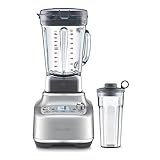
2. Breville Super Q Blender
A powerful blender with preset programs and a quieter design than many high-power models. A strong match for people who blend often.
Suits: serious home bars. Strengths: presets and lower noise. Weaknesses: premium cost. Skip it if you want a simple blender.

Best for a stylish kitchen
3. KitchenAid K400 Blender
A mid-range blender with a sturdy base and preset programs, including options for ice crushing. It comes in various colors.
Suits: a stylish kitchen. Strengths: a good look and presets. Weaknesses: not a commercial model. Skip it if you need the cheapest option.

Best for multi-use kitchens
4. Ninja Mega Kitchen System BL770
A multi-use system with a large pitcher, a food processor bowl and single-serve cups. Handy for batches of drinks and kitchen tasks.
Suits: multi-use kitchens. Strengths: many attachments. Weaknesses: bulky to store. Skip it if you want only a blender.
View Ninja Mega Kitchen System BL770 on Amazon
Best for party hosts on a budget
5. Oster Versa Pro Performance Blender
A performance-class blender with a strong motor and preset functions, positioned between budget and premium models.
Suits: party hosts on a budget. Strengths: a robust motor. Weaknesses: less refined than premium picks. Skip it if you want a quiet blender.
View Oster Versa Pro Blender on Amazon

Best for occasional use
6. Hamilton Beach Power Elite Wave Action Blender
A long-running, budget-friendly blender with a wave-action design to draw ingredients toward the blades. Good for casual cocktail nights.
Suits: occasional use. Strengths: an easy cost of entry. Weaknesses: less power than premium picks. Skip it if you blend ice daily.

Care and Setup
- Add liquid first, then fruit, then ice.
- Rinse the jar right after pouring.
- Blend a drop of soap and warm water for a quick clean.
- Keep the base dry.
- Pre-chill your jar for a colder first batch.
- Keep fruit for garnish apart from the blended mix.
Mistakes to Avoid
- Putting too much ice in at once.
- Running the blender without the lid.
- Letting sugary drinks dry on the blades.
- Ignoring the jar fill line.
- Blending hot ingredients with a sealed lid.
- Skipping the tamper or spatula when a mix sticks.
What Makes a Blender Good at Frozen Drinks
Crushing ice is a harder job than most smoothie recipes. A blender for frozen cocktails has to break hard cubes quickly, circulate the mix so nothing stalls on the blades and finish before the drink melts into slush. Several design choices decide how well a machine manages this, and they are worth understanding before you compare models.
The motor supplies the power, but power alone is not enough. The shape of the jar creates a vortex that pulls ingredients down toward the blades, and a narrow base with tapered sides tends to do this better than a wide, flat one. Blade design matters too: thick, sturdy blades with a good angle crush ice, while thin blades may dull or struggle. Some blenders include a tamper, a stick you push through the lid to move stuck ingredients down, which is helpful for thick frozen mixes.
Speed control also affects results. Variable speeds let you start slowly to pull ice into the blades, then ramp up for a smooth finish. Presets for ice crushing or frozen drinks automate this but may be less flexible. A pulse function lets you break large chunks before blending continuously.
- A strong motor handles ice without stalling.
- A well-shaped jar draws ingredients toward the blades.
- Sturdy blades keep working after repeated ice crushing.
- Speed control or presets help you control texture.
Read the manual’s guidance on ice, since some makers advise adding liquid first and limit how much ice can be added at once. Following it keeps the motor from overheating and protects the blades.
Building a Frozen Drink: Ratios and Order
A reliable frozen cocktail comes from balance. Too much ice makes a thick, watery slush, while too little leaves a thin drink with chunks. A common starting approach is to add the liquids first, then soft ingredients such as fruit, and finally the ice on top. This order helps the blades spin freely and pulls the solids down into the mix. Follow the order your blender’s manual recommends, since some designs prefer ice at the bottom.
Start with a modest amount of ice and add more if the drink is too thin. Using frozen fruit in place of some ice gives flavor without dilution, and a drink made with frozen fruit holds its texture longer. You can also freeze juice or the cocktail mix itself in trays, so melting only strengthens the flavor rather than watering it down.
Sugar and alcohol both lower the freezing point of a drink, so a mix with a lot of either will not freeze as firmly as one with little. If a drink turns out too soft, add more ice or frozen fruit. If it is too thick and stalls the blender, add a splash of liquid and use the tamper or a spatula to help.
Blend in stages rather than all at once, particularly for large batches. Work in short bursts at first, then run a continuous blend until the mixture looks smooth and moves freely. Taste before serving, and adjust sweetness and sourness, because freezing dulls flavors and a drink that tastes right in the jar may taste muted when very cold.
Jar Material, Size and Batch Planning
The jar determines how much you can make at once and how long the blender lasts. Plastic jars are lighter, resist breakage and are common on many blenders, though they can scratch, cloud or pick up odors over time. Glass jars resist scratches and stains and do not hold flavors, but they are heavier and can break if dropped or exposed to sudden temperature changes. Check the listing for the material and any maker guidance about hot or cold ingredients.
Size matters for parties. A jar that holds several servings saves time, but you should never fill it past the maximum line. Blenders work best when filled to a moderate level, since too little cannot circulate and too much overloads the motor. If you host often, estimate how many drinks you need and how many batches that means, and consider whether you want to make a large batch in one go or work in rounds. Large batches blend more slowly and may warm up, so keep ingredients cold.
Think about storage and handling. A tall jar may not fit under a cabinet, and a heavy jar with ingredients inside is hard to pour. A good handle and a spout that pours cleanly reduce spills. A tight-fitting lid with a removable center cap lets you add ingredients while blending and stops leaks.
- Check jar height against your cabinets.
- Look for a secure lid and a comfortable handle.
- Confirm that replacement jars and parts are sold.
Noise, Power Draw and Counter Realities
Blenders that crush ice are loud, and that matters at a party where you want to talk. Some designs include sound-dampening features or enclosures, and others are simply louder. Listings rarely quantify noise reliably, so read user feedback with care and keep in mind that perception is subjective. Plan your blending in short bursts away from guests, or make drinks before the party starts.
Power draw is a practical issue. Strong blenders use significant electricity, and household circuits have limits. Avoid running one on a crowded circuit that also powers other heavy appliances, since a tripped breaker will stop the party. If you use an extension cord, make sure it is rated for the blender’s load. Check the cord length on the listing, since a short cord limits where you can place the blender.
Counter space and weight are also factors. A heavy base stays stable while blending, but it is harder to move and store. A lighter blender is easier to put away but may vibrate or walk across the counter. Place the base on a stable, dry surface and hold the lid during blending if the maker advises it.
Finally, think about what else you will use the blender for. A model that also handles smoothies, soups and sauces earns its counter space, while one only for ice drinks may sit unused. Features like a heat-safe jar, extra cups or attachments may matter if the blender needs to do several jobs.
Cleaning and Maintaining the Blades and Seal
Sugary, sticky cocktails are hard on a blender if you let them dry. Rinse the jar right after pouring, then add warm water and a drop of dish soap and blend briefly to clean it. Rinse and let it air dry. This quick routine handles most messes and spares you from scrubbing around the blades.
Occasionally, take the jar apart if the maker allows it and clean the blade assembly, the gasket and the base of the jar. Residue under the blade can cause odors or leaks, and a worn gasket can drip into the motor base. Check the seal for cracks or stretching, and replace it if it looks worn. Never put the motor base in water, and wipe it with a damp cloth.
Check the dishwasher guidance before you load parts. Some jars and lids are dishwasher safe, but heat can warp plastic or dull blades over time, and some makers recommend hand washing. Avoid abrasive pads that scratch the jar.
Keep an eye on blade condition. Dull or bent blades make a blender labor and leave chunks. If you notice a burning smell, unusual noise or a drop in performance, stop and check for obstruction, overfilling or damage. A blender that overheats may shut itself off to protect the motor, and you should let it cool before continuing.
Last, store the blender with the lid off or ajar so air circulates and odors do not build up. Keep the manual and register the warranty if the maker offers one, because blenders that crush ice work hard and replacement parts can extend their life.
Cocktail Blender FAQ
Do I need a high-power blender?
For frequent frozen drinks, a stronger motor helps. For casual use, a mid-range blender can do.
Can I blend hard ice?
Most of these can handle ice with enough liquid. Check the maker’s guidance.
Is glass or plastic better?
Glass resists scratches. Plastic is lighter and tougher against drops.
How do I prevent watery frozen drinks?
Use frozen fruit or ice made from the same mix, and blend in short bursts. Adding too much liquid at once thins the drink. A stronger motor reduces blending time, which cuts melting.
What goes into the blender first?
Many makers advise liquids first, then soft ingredients, then ice on top. That order helps the blades spin freely, but follow your manual since designs differ.
Why does my frozen drink stay chunky?
Common causes are too much ice, too little liquid or a weak motor for the load. Add liquid, use the tamper or a spatula to move stuck pieces and blend in stages.
Can I blend carbonated drinks?
It is generally unwise because pressure can build up inside the jar. Add fizzy ingredients to the finished drink instead.
How do I keep a blended cocktail from melting too fast?
Use frozen fruit or ice made from the drink itself, blend only as long as needed and serve in a chilled glass. A stronger motor shortens blending time.
Is it safe to blend hot ingredients?
Only if the maker says the jar and lid allow it, and with the vent open. Hot liquid in a sealed jar can build pressure and spray.
How often should I replace the gasket?
Replace it when it cracks, stretches or leaks. The manual may give a schedule, and checking it every few months is a good habit.
Can I use a blender for crushed ice alone?
Many can, with a little liquid, but check the manual. Running a blender with only ice may strain the motor or dull the blades.
Pitcher Jars, Personal Cups and Tall Containers
Blenders in this price range come with different container styles, and the style affects frozen drinks more than most spec sheets admit.
A tall, narrow jar like the one on a premium blender concentrates ice and liquid near the blades, so a strong motor can pull everything into a vortex. These jars suit smooth, uniform drinks but are awkward to scrape and sometimes hard to reach into when cleaning. A wide pitcher, such as the large one in the Ninja Mega Kitchen System, holds more volume but spreads ingredients out, so the blades and the shape of the jar have to do more work to keep ice moving.
Personal cups, which several multi-use systems include, are handy for a single drink and let you drink straight from the cup. They also cap the batch size, so they are not the right tool for a table of guests. Think about whether you mostly make one drink at a time or a pitcher for several people, and let that decide whether a big jar or a cup matters more to you.
- Tall narrow jars: strong vortex, tidy batches, harder to clean by hand.
- Wide pitchers: bigger volume, may need pauses and stirring.
- Single-serve cups: quick, portable, limited quantity.
Prepping Ice and Ingredients for Smoother Results
Much of what separates a silky frozen drink from a chunky one happens before the blender is switched on. A few preparation habits help even a modest machine.
Ice type matters. Small, dry cubes from a freezer tray that has sat for a while blend more evenly than fresh, wet cubes that are already starting to melt and stick together. Bagged crushed ice is the easiest on the blades, and many casual users find it the simplest way to get a smooth texture without stressing a budget motor.
Frozen fruit can replace some of the ice. It chills the drink, adds body and does not water it down as it melts. Cut large fruit such as mango or pineapple into smaller pieces first, so the blades are not trying to grab a big, hard lump on the first pass.
Chill the liquids if you can. A bottle of rum or tequila stored in the freezer, cold juice and a pre-chilled glass all reduce how much ice melts during blending. Cold ingredients keep the drink thicker and let you use less ice, which also means a more intense flavor.
Finally, build the batch in sensible sizes. Instead of filling the jar to the top, blend two smaller rounds. A jar that is only partly loaded circulates more freely, and the second batch can sit in the freezer for a few minutes while you serve the first.
Mocktails, Slushies and Non-Alcoholic Options
A blender that handles frozen cocktails will also make drinks for people who are not drinking alcohol, and this is worth planning for at any gathering. Alcohol lowers the freezing point of a mix, so a drink without it freezes harder and can be stiffer than the same recipe with a spirit added.
When you make a virgin version, you usually need a little more liquid, or slightly less ice, to reach the same texture. Start with a smaller scoop of ice, add it gradually, and stop when the blades pull the mixture smoothly. Syrups, fruit purees and coconut cream all help body and sweetness, while a squeeze of citrus keeps the flavor from tasting flat.
Slushies for children are an easy use for a budget blender, since they do not demand the same silky finish. Because a slush can be quite cold, serve it in a small cup with a spoon rather than a tall straw, particularly for younger kids. Blended frozen drinks that contain alcohol should be clearly marked and kept apart from the non-alcoholic ones, which is simpler if you use separate jars or rinse thoroughly between batches.
The same machine can also work for frozen fruit sorbets, protein smoothies and soup bases, so the value goes beyond party season.
Warranty, Replacement Parts and Long-Term Ownership
A blender that crushes ice puts real stress on its drive socket, blades and seals, so it is worth thinking about what happens when something wears out. The warranty period, and the availability of spare parts, can matter as much as the first-year performance.
Premium brands typically offer longer warranty terms, and replacement jars, lids and blade assemblies are widely sold. Mid-range and budget lines often have shorter coverage, but their parts are inexpensive and easy to find. Before buying, check the warranty length on the listing, what it covers and whether the jar and blade assembly are included.
- Look for a stated warranty and read what is excluded, such as commercial use or misuse.
- Check whether replacement jars and gaskets are sold separately, and whether the listing names the compatible model.
- Be aware that some product lines have several versions with similar names, which is why the Oster and Hamilton Beach entries above ask you to check the exact model.
Longevity also depends on use. Running the blender in short bursts, never overfilling the jar and letting the motor rest between heavy batches all reduce wear. If a machine begins to smell hot, slow down or labor, stop and let it cool before continuing. These habits matter most on lower-cost models.
Related guides
- 6 Best Commercial Blenders for Bars and Frozen Drinks (2026)
- 6 Best Drink Rimming Kits for Margaritas and Cocktails
Frequently Asked Questions
Can I make non-alcoholic frozen drinks in a cocktail blender?
Yes. Any blender suited to frozen cocktails works for mocktails and slushies. Because alcohol lowers the freezing point, a drink without it may freeze harder, so use slightly less ice or a little more liquid and add ice gradually until the blades pull the mix smoothly.
Is crushed ice or cubes better for blending cocktails?
Crushed ice is easier on the motor and gives a smoother result, particularly in budget blenders. Dry cubes that have been in the freezer for a while also work well. Fresh, wet cubes can stick together and stall the blades, so let them sit briefly or add them in small amounts.
Should I buy a blender with a warranty for frozen drinks?
It is a good idea, since crushing ice is hard on the motor and blades. Check the warranty length and what it covers, including whether the jar and blade assembly are included. Also confirm that replacement jars and gaskets are sold for your exact model.
Can I make a pitcher of frozen margaritas at once?
You can if the jar is large enough, but filling it to the brim often leads to chunky results. Blending two smaller batches usually gives a smoother drink. Keep the second batch ready in the freezer while you serve the first so nothing melts into slush.
Choosing Blenders for Cocktails: A Closer Look at What Actually Matters
A cocktail blender has one defining job — turning ice and ingredients into smooth, properly diluted frozen drinks — and a dozen supporting ones, from pureeing fruit to crushing ice for juleps. The picks above range from dedicated powerhouses to versatile home machines. The choice turns on your menu: a household blending margaritas and daiquiris weekly needs different strengths from one making occasional smoothies and the odd frozen coffee. Be specific about your drinks, and the right blender identifies itself.
Most buyers compare cocktail blenders on the obvious points first and only discover the details that matter after a few weeks of use. The sections below slow the decision down and look at the qualities that decide whether a blender for cocktails still feels right once the novelty has worn off. None of them requires expert knowledge; they simply ask you to match the product to the way you actually live, serve and clean up.
Ice handling above all
Frozen cocktails are ice with flavouring, so ice handling is the whole game. The blender must pull cubes down into the blades, keep them circulating and reduce them evenly without leaving teeth-rattling chunks or melting everything into soup. Jar shape and blade design matter as much as motor strength here. If a blender’s description emphasises ice crushing and frozen drinks, that is the manufacturer aiming at exactly your use; general smoothie language is a weaker promise.
Texture control
Different frozen drinks want different textures: a daiquiri wants fine slush, a margarita tolerates a little body, a pina colada wants creaminess. Variable speed and a pulse function let you stop at the right texture; a single-speed machine gives you its texture, take it or leave it. If your menu is varied, control matters. If your menu is one beloved drink repeated, a simpler machine tuned to it may serve you better and last longer.
Jar size versus your rounds
Cocktails are usually blended in rounds of two to six serves. A jar that handles your typical round in one load keeps service moving; a jar that needs two loads per round doubles your blending and your dilution management. But oversized jars blend small loads badly, riding ingredients above the blades. Match the jar to the round you actually serve — most households overestimate, and live with a jar that is wrong for their Tuesday drink in service of a hypothetical Saturday.
Alcohol, acid and sticky ingredients
Cocktail ingredients are harder on equipment than smoothie ingredients: citrus acid, sugar syrups, liqueurs that dry like glue. Jar and seal materials must tolerate them and, more importantly, clean easily afterwards. A blender that rinses clean in a minute gets cleaned in a minute; one with crevices and a fiddly blade assembly gets cleaned tomorrow, and tomorrow’s drink tastes faintly of today’s. Judge the cleaning design as a flavour feature, because it is one.
Noise and the social setting
Cocktails are social, and a blender that silences a room changes the mood every round. All strong blenders are loud; they differ in pitch and duration. Fast machines are loud briefly; weaker machines are loud for longer, which can be worse. If your bar is in the same room as your guests, favour the machine that finishes quickly. If the kitchen is separate, noise drops down the priority list and durability climbs it.
How the Six Picks Differ in Everyday Use
Specifications only tell half the story with cocktail blenders. The other half is how each pick behaves on an ordinary evening: how it feels in the hand, how much attention it asks for, and how forgiving it is when you are busy, tired or serving guests. Read the six picks below as six answers to the same question, each tuned to a slightly different buyer.
Vitamix E310 Explorian Blender
Start with the job this pick does best, because that is where it separates itself from the rest of the list. In the summary table above it is described as: variable speed dial. Compare cocktail blenders by a single test in your imagination: a round of your signature frozen drink, made for guests, with the machine warm and the counter busy — the blender that stays calm in that scene is your blender. Think about how it will be used in your home specifically: who will handle it, how often it will come out, where it will live between uses, and what will annoy you first if you choose badly. If that description matches your routine, it deserves to be on your shortlist even if it is not the headline recommendation.
Breville Super Q Blender
This is the pick to study if the first option does not quite fit your space, your habits or the way you like to work. In the summary table above it is described as: preset programs. Compare cocktail blenders by a single test in your imagination: a round of your signature frozen drink, made for guests, with the machine warm and the counter busy — the blender that stays calm in that scene is your blender. Think about how it will be used in your home specifically: who will handle it, how often it will come out, where it will live between uses, and what will annoy you first if you choose badly. Buyers whose priorities line up differently will be happier with one of the neighbouring picks, and there is no shame in that.
KitchenAid K400 Blender
Treat this one as a deliberate alternative rather than a runner-up: it makes a different trade-off, and for some buyers that trade-off is the right one. In the summary table above it is described as: preset programs. Compare cocktail blenders by a single test in your imagination: a round of your signature frozen drink, made for guests, with the machine warm and the counter busy — the blender that stays calm in that scene is your blender. Think about how it will be used in your home specifically: who will handle it, how often it will come out, where it will live between uses, and what will annoy you first if you choose badly. The honest test is how often you will use it in the way it was designed to be used, not how impressive it looks on a shelf.
Ninja Mega Kitchen System BL770
This pick suits buyers who read the first options and found them either more or less than they need. In the summary table above it is described as: extra cups included. Compare cocktail blenders by a single test in your imagination: a round of your signature frozen drink, made for guests, with the machine warm and the counter busy — the blender that stays calm in that scene is your blender. Think about how it will be used in your home specifically: who will handle it, how often it will come out, where it will live between uses, and what will annoy you first if you choose badly. Choose it for that strength, accept the compromise that comes with it, and it will feel like the right purchase for years.
Oster Versa Pro Performance Blender
Look closely at this one if you value a particular strength over all-round balance, because that is the ground it competes on. In the summary table above it is described as: check the version. Compare cocktail blenders by a single test in your imagination: a round of your signature frozen drink, made for guests, with the machine warm and the counter busy — the blender that stays calm in that scene is your blender. Think about how it will be used in your home specifically: who will handle it, how often it will come out, where it will live between uses, and what will annoy you first if you choose badly. If its weakness touches something you do every single time, look at the pick before or after it instead.
Hamilton Beach Power Elite Wave Action Blender
The last pick on the list is not an afterthought; it covers a type of buyer the earlier options serve less well. In the summary table above it is described as: check the jar type. Compare cocktail blenders by a single test in your imagination: a round of your signature frozen drink, made for guests, with the machine warm and the counter busy — the blender that stays calm in that scene is your blender. Think about how it will be used in your home specifically: who will handle it, how often it will come out, where it will live between uses, and what will annoy you first if you choose badly. Shortlist it, compare it directly with the pick ranked nearest to it, and let your own routine break the tie.
Cocktail Blender Workflows: Frozen Rounds, Prep and Garnish Support
A blender for cocktails earns its keep in moments, not in product photos. The situations below are the ones that separate a satisfying purchase from a cupboard ornament, and each one points back to a quality already covered in the reviews above.
The classic frozen round
Chill your ingredients, load liquid first and ice last, blend in a rising speed pattern, and taste before pouring — frozen drinks hide imbalance until they melt on the palate. Adjust with a squeeze of citrus or a touch of syrup, give a final short blend, and pour immediately. A round that sits in the jar melts and separates; a round poured at its peak makes the blender’s reputation and yours in one glass.
Prep work before guests arrive
The blender is also a prep tool: puree fruit for mixes, blend syrups with herbs or chillies, make frozen bases that hold in the freezer until service. Doing this work early transforms party service from blending marathons into assembly. Label and date frozen bases, because a mystery puree in the freezer helps nobody, and taste them before the night — sweetness and acid shift as mixtures sit.
Non-frozen support jobs
Crushed ice for juleps and swizzles, powdered sugar in a pinch, pureed garnishes, blended chilled soups at a dinner party: a cocktail blender with honest power covers all of it. These jobs argue for versatility in the pick — a machine bought only for frozen drinks that also purees beautifully will be used three times as often, and used machines are the ones that justify their counter space.
Small drinks on weeknights
One frozen drink for one person is the hardest load for a big blender: too little volume to circulate. Use a smaller jar or cup attachment if your pick offers one, or blend two serves and freeze the second in a sealed container for a short re-blend later. Alternatively, accept a shaken or stirred drink on weeknights and keep the blender for its party strength; matching the tool to the occasion is a skill, not a surrender.
Cocktail Blender Care: Keeping Flavours Clean
Rinse immediately, always. Sugar and citrus dry into a glaze that traps odours, and the next drink inherits them. The self-cleaning habit — warm water, a drop of washing-up liquid, a short blend, rinse — takes under a minute and should be as automatic as putting the lid on. Blenders that smell neutral are blenders that were rinsed while the drink was still being poured, not after the guests went home.
Respect the seals and the blade assembly. Check the gasket for nicks and perishing, especially if you blend acidic drinks often, and never leave the jar sitting full of citrus mixture, which works on seals and stains plastic. If your design has a removable blade base, dry its threads before reassembly; moisture trapped there is where stale smells are born. A spare gasket is a cheap, wise purchase for a blender in weekly cocktail service.
Sharpen nothing, replace honestly. Blender blades are designed to crush at speed rather than slice with an edge, so they do not need sharpening — but a bent or corroded assembly needs replacing, and a drive socket that has rounded will slip under ice loads. Learn the sound of your machine healthy, and investigate new sounds early. Ice work is violent work; small wear caught early stays small.
Store the jar dry and the base dust-free. A jar stored sealed and damp smells musty within days and perfumes the next round. Leave the lid ajar in storage, keep the base vents clear, and wipe sticky splashes off the controls the night they happen. Cocktail kit lives in a sticky environment by definition; the machines that thrive are the ones whose owners treat wiping as part of pouring.
More Questions About Blenders for Cocktails
How much ice does a frozen cocktail need?
Enough to chill, dilute and give body — roughly, a generous measure of ice per serve, adjusted for how much of the recipe is already liquid and how strong the spirits are. Too little ice makes a thin, strong, quickly warm drink; too much makes a weak snow cone. Blend, taste and learn your machine’s behaviour with your recipe; consistency comes from measuring ice the same way each time, by scoop or by weight.
Can I blend a whole pitcher and keep it in the freezer?
For a short hold, yes: blend slightly under-diluted, freeze in a sealed container, and re-blend briefly before serving. Texture will be good rather than perfect, and for parties that trade is often worth it. Long storage dulls citrus and separates mixtures. Fresh citrus is the soul of these drinks, so freeze bases without the final citrus where the recipe allows, and add it at service.
Why do my frozen drinks separate in the glass?
Separation is melting plus physics: ice crystals melt, liquid sinks, and without enough body the mixture splits into layers. Causes include too little ice, over-blending that melted the structure, or a recipe light on sugar and solids, which help hold the emulsion. Blend to the texture and stop, serve in chilled glasses, and drink promptly — frozen drinks are built for the moment, not for lingering.
Is a tamper worth having?
For thick frozen mixtures, genuinely yes: it pushes ingredients into the vortex without stopping the machine, keeping texture even and blend times short. If your pick lacks one, the stop-and-stir method works but adds melting time. Never improvise a tamper from a utensil while the machine runs; the blades will win that argument instantly and the utensil, the drink and possibly the jar will all be ruined.
What is the best first frozen drink to learn on?
A daiquiri: rum, lime, sugar, ice. It has nowhere to hide, so it teaches balance, dilution and texture in one glass, and it is quick and cheap to remake when a batch misses. Master it and margaritas, pina coladas and fruit variations become adjustments rather than mysteries. Keep notes on ice quantity and blend time for your machine; that notebook page is worth more than any preset button.
A Simple Way to Decide
Decide by your signature drink and your typical round. Name the frozen drink you will make most, count the serves in a normal round, and choose the blender whose jar, ice handling and controls serve exactly that. Then sanity-check cleaning and noise against your kitchen’s reality. A cocktail blender chosen for a real menu becomes the engine of your home bar; one chosen for an imaginary menu becomes an appliance with a backstory.
Finally, buy for the routine you have, not the routine you imagine. A blender for cocktails that suits your real habits will be used weekly and enjoyed for years, while a more impressive one that fights your space, your cleaning habits or your taste will quietly stop coming out of the cupboard. The right pick above is the one whose strengths match your most common situation and whose weaknesses land on things you rarely do.
Final Checks Before You Buy
One last habit separates happy buyers from disappointed ones with cocktail blenders: they check the unglamorous details before ordering. Measure the space where the blender for cocktails will live, read what is actually included in the box, and confirm the care instructions suit the way you really clean up after a gathering. Those five quiet minutes prevent most returns, most breakages and most of the frustration described in the problem sections above. If a detail cannot be confirmed from the listing, choose the pick whose design depends least on that detail.
The Short Version
For a premium pick, the Vitamix E310. For presets and quiet, the Breville Super Q. For a stylish option, the KitchenAid K400. For a multi-use system, the Ninja BL770. For value power, the Oster Versa Pro. For budget-friendly, the Hamilton Beach. C

