A step up from budget models, these blenders bring stronger motors, presets and extra containers. They sit short of premium machines but still handle frozen fruit, ice and thick blends.
The six machines below are from well-known brands. We have not used these products ourselves. Confirm details on the listing before buying.
As an Amazon Associate we earn from qualifying purchases. Links below are affiliate links, and they do not change the product information we give.
Where to buy
All six picks in this guide to best blenders under 200 dollars are listed on Amazon, where you can check the latest price on Amazon, confirm the exact variant and colour, and read the current listing details before ordering. Listings, bundles and stock change, so match the full model name on the listing to the pick reviewed below.
- Best Overall: Hamilton Beach Power Elite Blender 58148AG (Black) — Check on Amazon
- Ninja Fit Compact Personal Blender QB3001SS — Check on Amazon
- Ganiza Smoothie Blender 14-Piece Set (900W Peak) — Check on Amazon
- Ninja Blast Portable Blender BC151NV (Denim Blue) — Check on Amazon
- Turelar Smoothie Blender with 2 To-Go Cups — Check on Amazon
- cberhrik Personal Travel Portable Blender (380 ml) — Check on Amazon
Read the full guide ↓
Searching for the best blenders under 200 dollars puts you in the most contested territory in small appliances: a budget ceiling high enough to include genuinely capable machines, and low enough that every brand fights for your attention with spec-sheet theatre. This guide takes a different approach. Every pick below was verified against a real listing, every claim traces to that listing, and the six machines are matched to the households they actually suit — a glass-jar countertop blender for families, a 700-watt personal blender for frozen-drink devotees, a cordless portable for people who blend where they stand, and the smallest travel blender in the class for good measure.
One honest observation up front: this verified pool leans toward the value end of the band. None of these six machines is a premium high-performance blender of the kind that anchors the top of this price tier in a typical year, and this guide will not pretend otherwise. What the pool does contain is a set of honest, well-matched options that sit comfortably inside the ceiling — most of them far inside it — which means the real question is not how to spend up to the limit, but which format deserves your money at all. Readers weighing a step up in capacity as well as budget often compare this tier with guides like Best Blenders Under $300 before deciding.
Read the detailed reviews with your actual routine in mind: how many servings, how much frozen fruit, at home or away, and who washes up. A blender bought for the routine you have will still be earning its counter space in three years; a blender bought for an imaginary routine becomes cupboard clutter by spring, whatever it cost.
Key Takeaways
- The Hamilton Beach Power Elite (700W, 40 oz glass jar) is the best all-round home blender in this set — the only pick with a real glass pitcher and a dedicated crush-ice function.
- The Ninja Fit brings a full 700 watts to the personal format, making it the frozen-drink specialist for solo smoothie drinkers.
- Cordless picks (Ninja Blast, Sleetop-style portables) trade raw power for anywhere blending — small frozen pieces and enough liquid are the technique that makes them work.
- This pool sits at the value end of the under-200 band: honest machines, no premium high-performance model, and prices should be checked live on Amazon rather than assumed.
- Format matters more than wattage at this tier: pitcher, personal and portable blenders solve different mornings.
In this guide
Quick Picks
Six verified picks, six different answers to the same budget. Badges summarise the household each one serves; the detailed reviews below explain the trade-offs behind each badge.
- Best Overall — Hamilton Beach Power Elite Blender 58148AG (Black): The glass-jar countertop anchor: 700 watts, Wave Action circulation and a crush-ice function for households that blend at home. Check on Amazon
- Best for Frozen Drinks — Ninja Fit Compact Personal Blender QB3001SS: A 700-watt personal blender with two 16 oz cups — the frozen smoothie specialist for one. Check on Amazon
- Most Complete Kit — Ganiza Smoothie Blender 14-Piece Set (900W Peak): A 14-piece, 900W-peak set with a 24 oz cup for buyers starting from an empty counter. Check on Amazon
- Best Cordless — Ninja Blast Portable Blender BC151NV (Denim Blue): Ninja’s cordless 18 oz portable with a leakproof sip lid — the bag-safe travel pick. Check on Amazon
- Best Cup Rotation — Turelar Smoothie Blender with 2 To-Go Cups: Two 16.9 oz to-go cups and a food-prep-friendly brief for a no-wash-weekday routine. Check on Amazon
- Smallest Footprint — cberhrik Personal Travel Portable Blender (380 ml): A 380 ml BPA-free mini blender for the smallest possible gym, desk or dorm footprint. Check on Amazon
How These Picks Were Chosen
These picks were chosen by matching verified listings to the jobs this budget tier is actually bought for. Each product’s ASIN, title and specifications were cross-checked against the marketplace data available to us on 2026-11-20, and only products whose verified listing genuinely describes a blender suitable for home smoothie and kitchen use were admitted. Colour variants of one platform are listed separately and labelled as such, because stock and pricing differ by colourway and buyers deserve to see that plainly.
This is a research-led guide, not a lab test: we do not claim hands-on testing we did not do. What we did do is read each listing the way a careful buyer should — capacity, power source, jar material, included cups — and weigh the format against the use case. Where a listing is silent on a specification, this guide says so rather than filling the gap with a guess. Shoppers comparing adjacent budget tiers will also find our coverage of Best Blenders Under $50 Dollars useful for seeing what the next tier down gives up.
Comparison Table
The six picks side by side. Format and capacity separate them more than anything else — choose the row that looks like your mornings.
| Pick | Format | Capacity | Standout trait | Link |
|---|---|---|---|---|
| Hamilton Beach Power Elite Blender 58148AG (Black) | Countertop | 40 oz glass jar | Glass jar + crush-ice function | Check on Amazon |
| Ninja Fit Compact Personal Blender QB3001SS | Personal | 2 × 16 oz to-go cups with spout lids | 700W in a personal format | Check on Amazon |
| Ganiza Smoothie Blender 14-Piece Set (900W Peak) | Countertop | 3 portable cups — 1 × 24 oz, 2 × 17 oz | 900W peak, 24 oz cup, 14-piece set | Check on Amazon |
| Ninja Blast Portable Blender BC151NV (Denim Blue) | Cordless Portable | 18 oz, BPA-free | Cordless with leakproof sip lid | Check on Amazon |
| Turelar Smoothie Blender with 2 To-Go Cups | Personal | 2 × 16.9 oz to-go cups | Two to-go cups included | Check on Amazon |
| cberhrik Personal Travel Portable Blender (380 ml) | Personal | 380 ml single-serve cup | 380 ml ultra-compact cup | Check on Amazon |
What to Look For
| Feature | Why it matters |
|---|---|
| Motor | Stronger motors cope with frozen items |
| Presets | Programs add convenience |
| Containers | Systems add cups and bowls |
| Build | Sturdier bases last longer |
| Warranty | Check the length and terms on the current listing |
Specs at a Glance
| Blender | Type | Jar | Notes |
|---|---|---|---|
| Ninja Foodi Power Blender Ultimate System | Pitcher plus cups | Pitcher and single-serve cups | Smart torque; presets |
| Ninja Professional Plus Kitchen System | Blender plus processor | Pitcher and processor bowl | Auto-iQ presets; single-serve cups |
| Cuisinart Velocity Ultra | Full-size performance | Large jar | Higher-power Cuisinart |
| KitchenAid K400 | Full-size | Plastic jar | Variable speed; presets |
| Oster Pro 1200 | Full-size | Plastic or glass jar, by version | Smoothie cup in many sets |
| Ninja TWISTi | Compact high-speed | Twist-on cup | Built-in twist tamper |
The 6 Best Blenders Short of Premium
Top pickBest for thick, frozen blends
1. Ninja Foodi Power Blender Ultimate System SS401
A Ninja system with a full pitcher and single-serve cups, plus preset programs and a motor that adjusts to thick loads. It is meant to cope with frozen and dense ingredients. Smart torque and a pitcher with cups. The system is built so the same base runs both the pitcher and the cups. Check the current listing for the exact parts included and the capacity of each container.
Suits: thick, frozen blends. Strengths: handles thick, frozen blends well. Weaknesses: large base and several parts to store. Skip it if you want a small base.
View Ninja Foodi Power Blender Ultimate System on Amazon

Best for blending and chopping
2. Ninja Professional Plus Kitchen System BN801
A system that pairs a pitcher blender with a food processor bowl and single-serve cups, with Auto-iQ presets. It covers more tasks than a plain blender. A system with presets. Because the set contains several containers, it works best if you will actually use the processor bowl. Confirm the exact parts included on the current listing, as bundles change.
Suits: blending and chopping. Strengths: versatility from several attachments. Weaknesses: many parts to store and wash. Skip it if you want just a pitcher.


Best for big batches
3. Cuisinart Velocity Ultra Blender
A higher-power Cuisinart blender with a large jar and simple controls. A higher-power Cuisinart. It is aimed at people who want more power than a basic pitcher. Check the current listing for the jar size, speed settings and warranty.
Suits: big batches. Strengths: strong for the category. Weaknesses: heavy and bulky. Skip it if you dislike heft.


Best for daily blending
4. KitchenAid K400 Variable Speed Blender
A KitchenAid with a variable speed dial, preset programs and a sturdy base. Variable speed and presets. The base is sturdy and comes in several colors. Confirm the jar size, color and included accessories on the current listing, since sets differ.
Suits: daily blending. Strengths: solid build and useful presets. Weaknesses: larger outlay than basic models. Skip it if you want an entry-level blender.

Best for flexible blending
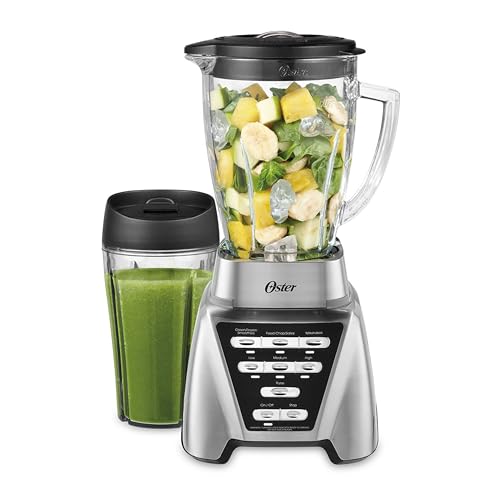
5. Oster Pro 1200 Blender
A full-size Oster with several speed settings and, in many sets, a smoothie cup. Jar material varies by version, so check the listing. Many speeds for texture control. Oster has sold several versions of this model, with different jars and cups, so read the listing carefully. Confirm the jar material and any included smoothie cup before ordering.
Suits: flexible blending. Strengths: good all-round features for the outlay. Weaknesses: jar and cup details vary by listing. Skip it if you require a specific jar material.

Best for small, thick batches
6. Ninja TWISTi High-Speed Blender Duo
A compact Ninja with a twist-on cup and a built-in twisting tamper that helps push thick mixtures toward the blades without stopping to scrape. It is designed for thick blends in smaller batches. A twist tamper for thick blends. The built-in tamper means you do not stop to scrape, which suits thick mixtures. Check the current listing for the cup sizes and accessories included, as those can change.
Suits: small, thick batches. Strengths: twist tamper for thick mixtures. Weaknesses: cup size limits batch volume. Skip it if you cook for many.

Care and Setup
- Rinse promptly.
- Use the tamper if provided.
- Check seals.
- Do not exceed fill lines.
- Unplug the base before cleaning around the blades.
- Wipe the base with a damp cloth and never submerge it.
Mistakes to Avoid
- Overfilling.
- Ignoring part counts on systems.
- Assuming presets suit all recipes.
- Skipping the listing check.
- Submerging the motor base in water.
Reading Motor and Blade Claims Sensibly
At this tier, listings lean heavily on big numbers, usually watts or horsepower. Those figures describe the motor, but they say little about how well the whole machine crushes ice or turns fibrous greens into a smooth drink. Jar shape, blade design, blade height and how the base transfers power all shape the result, so treat one number as a hint rather than a verdict.
Look at the blade assembly instead. Stacked or multi-level blades reach more of the contents, while a single low blade relies on the vortex of the jar to pull food down. A narrower jar often circulates thick mixtures better than a wide one, and a tamper or twist mechanism helps when the mixture sticks. The listing and the manual will describe these features, and the maker’s own wording is the safest source for what each part does.
Frozen fruit and ice are the usual stress tests. Machines in this class are marketed to handle them, but results depend on technique too. Add liquid first, then soft items, then frozen items and ice on top. Stop and stir or use the tamper if the blades spin in an air pocket.
Finally, note how the motor protects itself. Many blenders have thermal protection that shuts the base off when it overheats. If a listing mentions a maximum run time, follow it, and let the machine rest between big batches.
Systems Versus a Single Pitcher
Several machines in this price class are sold as systems, with a pitcher plus single-serve cups, and sometimes a food processor bowl. The extras are appealing, but they are only valuable if you will use them. A single-serve cup makes sense if you blend one drink in the morning and want to take it with you. A processor bowl is useful if you chop vegetables, make dips or shred cheese and would otherwise buy a separate appliance.
Count the cost of extras in space and effort. Each container, lid, blade assembly and tamper has to be washed and stored. If your cabinet is small, a system can become clutter, and parts you never use still take up room. A plain full-size blender with one jar is quicker to set up and quicker to clean.
Consider who else will use the machine. A household with several people who each want their own drink benefits from multiple cups. A single cook who makes soups and sauces may prefer a large pitcher.
- Check which blade assemblies fit which container, since they are not always interchangeable.
- Confirm that lids and spare cups are sold separately in case of loss.
- Ask whether a cup can be used on the base while still sealed with a to-go lid.
Noise, Footprint and Kitchen Fit
A powerful blender is loud, and the sound surprises people who have only used smaller machines. Noise depends on motor speed, jar material and how well the base is cushioned. A sound enclosure or a cover over the jar helps if you have a baby asleep or an early start. If noise matters to you, read buyer feedback about it and check the manual for any advice on placement.
Size is the other practical issue. Measure your counter and check the height with the lid on. A tall pitcher may not fit under wall cabinets, which means you will have to carry it to the sink or table to use it. If you will store the blender in a cabinet, weigh the base too, because a heavy base is tiring to lift every day.
Cord length and location of the outlet matter more than expected. A short cord limits where you can place the machine, and running a cord across a counter edge is a trip hazard. Look for cord storage on the base if the kitchen is tight.
Anti-slip feet are helpful because a heavy blend can make a light base walk. Place the blender on a dry, flat surface and keep it away from the edge of the counter while it runs.
Presets, Dials and Controls Explained
Preset programs run a timed cycle of speeds and pauses for tasks like smoothies, ice crush or frozen drinks. They are handy when you want repeatable results without watching the blender. They are less useful if your recipes differ from the program, since the cycle may run longer or shorter than you need. Many people use the presets for a few weeks and then settle on a manual speed they like.
Variable speed dials give finer control. Start low to pull ingredients down, then raise the speed. A pulse button helps with chunky salsa or chopping nuts, where you want to stop before everything turns to paste. Touchpads are easy to wipe clean but can be harder to use with wet fingers, while dials and buttons give a more tactile feel.
Think about what you blend most. Thick smoothies and nut butters want a strong, steady motor and a tamper. Soups and sauces want a jar that tolerates heat if the maker allows it, so read the instructions before blending anything hot. Never fill a sealed jar with hot liquid unless the manual says it is safe, as steam can build pressure.
Check whether the controls are easy to read and whether the program names match what you actually make.
Warranty, Spare Parts and Long-Term Cost
A blender in this class is not a throwaway item, so its long-term cost deserves a thought. Warranty terms differ by brand and model, and some cover the motor longer than the jar or accessories. Read the current terms on the listing or the maker’s page, and note whether you need to register the product or keep a receipt.
Spare parts are the quiet factor that extends a blender’s life. Gaskets, lids, jars and blade assemblies wear out or crack, and a model with widely available replacements is easier to keep running. Before buying, check whether the maker or retailer sells the parts you are most likely to need.
Signs that it is time to replace or repair include a burning smell, a base that overheats quickly, a blade that wobbles or grinds, leaks from the bottom of the jar, or a motor that struggles with loads it once handled. If a leak appears, check the gasket first, since it is often a cheap fix. If the motor labors, make sure you are not overfilling.
When comparing models, think about total ownership rather than the first outlay: replacement parts, how much you will use the extras, and how well the machine suits your recipes.
A Smoothie and Soup Prep Checklist
Great results from a blender come from loading it in the right order and handling it with care. This routine suits most jars, though your manual has the final say.
- Check that the jar sits fully on the base and the lid and any inner cap are locked into place.
- Add liquids first, then soft items, then frozen pieces and ice on top.
- Cut firm produce into smaller chunks so the blades do not strain.
- Stay under the fill line the maker marks on the jar.
- Begin on a low setting, then raise the speed gradually.
- Let a hot mixture cool before blending, and vent the lid as the instructions describe.
- Rinse the jar right after use so residue does not dry on the blades.
If anything smells hot or the motor labors, stop, let it rest and read the section on thermal protection in the manual.
Comparing a Personal Cup Setup With a Full-Size Jar
Several of the listed machines come with more than one container, so it helps to know when each fits.
| Need | Single-serve cup | Full-size pitcher |
|---|---|---|
| One quick drink to go | Blend and carry in the same cup | More than you need |
| Family batch or soup | Too small | Suits larger quantities |
| Cleanup | Small parts, quick rinse | Larger jar, more washing |
| Storage | Compact and stackable | Needs more shelf room |
If you often blend alone in the morning but host on weekends, a set with both options can save you from owning two machines.
How to Read the Listing Before Ordering
Blender pages are crowded with big numbers, so know which ones carry meaning. Watts describe motor power but not performance on their own, because blade design and jar shape count heavily. Capacity should be read as total volume of the container, not the usable fill amount. Look at the number of speed settings or presets, the materials of the jar and blade assembly, and whether parts are listed as dishwasher safe.
Check the cord length and the footprint on the counter. Notice whether replacement jars and blades are available from the maker, since that makes repairs easier. Be thoughtful about slogans such as professional or ultimate, which are branding words and not technical specifications.
When to Follow the Manual Closely
Blender blades are sharp and the motor base is electrical, so the manufacturer’s instructions matter. Follow them on assembly, on maximum run times, on what temperature of liquid is allowed, and on cleaning. Never put hands or utensils into a jar while the base is plugged in. If the jar cracks, the gasket fails or the base shows damage, stop using it and contact the maker instead of improvising a repair.
Troubleshooting Common Blending Problems
Most blending problems have simple causes. If the contents spin without moving toward the blades, stop, unplug the base and rearrange the load, adding a little liquid and moving ingredients with a spatula as the maker advises. If the motor shuts off, it may be a built-in thermal protection feature, so let it rest for the time the manual states. If the jar leaks at the base, check that the gasket is present, clean and seated, and that the blade assembly is tightened properly.
| Symptom | Likely area to check |
|---|---|
| Chunky results | Order of loading and ingredient size |
| Motor stops | Overload protection and fill level |
| Leaking | Gasket and blade assembly seating |
| Strange smell | Run time and ventilation around the base |
Storage and Counter Space Planning
Measure the underside clearance of your cabinets, because tall jars often do not fit beneath them. Decide whether the machine will live on the counter or in a cupboard, and whether you can tuck the cord neatly. A stable, non-slip spot is important, since vibration during use can shift lighter bases.
Noise, Speed Settings and Everyday Comfort
Blenders are loud by nature, so think about when you will use yours. If you blend early in a shared home, a model with gentler low speeds and a ramp-up feature may suit you. Presets can simplify routine drinks, while a manual dial gives more control for sauces and soups. A tamper or a pulse option can help with thick mixtures. Check how the lid locks and whether the controls are easy to wipe clean, since sticky buttons make a machine less pleasant over time.
Value Blender FAQ
What improves at this level?
Power, presets and build.
Is it good for frozen fruit?
Often yes.
Do I need a system?
Only if you want extras.
How should I clean it?
Rinse right after use, then run it briefly with warm water and a drop of dish soap. Check the maker’s guidance on dishwasher safety.
Do I need a tamper?
A tamper helps with thick mixtures like frozen smoothie bowls or nut butter, where the blades can spin without pulling food down. For thin drinks and soups you can usually do without.
Can I blend hot soup in these blenders?
Only if the manual says the jar is suitable for hot contents. Even then, fill below the stated line, vent the lid as directed and start on a low speed.
Are plastic jars a problem?
Plastic jars are lighter and less likely to break, but they can scratch and absorb odors over time. Check the listing to see which material your version has.
How full should I fill the jar?
Stay at or below the fill line printed on the jar. Overfilling strains the motor and can push liquid out around the lid.
Why does my blender leave chunks at the bottom?
Air pockets or too little liquid are common causes. Add liquid first, stop to stir or use the tamper, and avoid packing the jar too tightly.
How do I know a cup or jar fits my base?
Compare the model name and the base type in the listing. Different lines of the same brand may use different connectors.
Is a bigger motor always better?
Not always. Jar shape, blade design and how you load the blender affect results, and a very large motor may be louder and heavier than you need.
The Short Version
For thick blends, the Ninja Foodi Power Blender Ultimate. For a system, the Ninja Professional Plus Kitchen System. For power, the Cuisinart Velocity Ultra. For control, the KitchenAid K400. For speed range, the Oster Pro 1200. For a tamper, the Ninja TWISTi.
What Changes as You Approach the Premium Tier
Blenders just short of premium occupy an interesting position: they borrow the premium playbook — strong motors, preset programs, systems with several containers — while staying below the flagship names. Understanding what genuinely changes at this level, and what merely sounds different, is the key to spending well here.
Three changes are real. First, thick and frozen loads move from “possible with technique” to “routine”: the machines in this guide are built for smoothie bowls, frozen drinks and dense mixtures as everyday work rather than occasional stunts. Second, systems mature — the sets here pair pitchers with processor bowls and cups that share one capable base, so a single purchase can organize a whole style of cooking. Third, controls become a real choice rather than a given: timed Auto-iQ-style programs, variable speed dials and multi-speed layouts all appear in this one guide, and they suit different cooks.
Two things do not change as much as marketing suggests. Noise remains noise; a strong motor moving frozen fruit is loud in this tier too, and no feature in this guide makes it a dawn-friendly appliance. And technique still matters: loading order, liquid balance and batch size separate good results from great ones at every price. Buyers who understand both points shop this tier clear-eyed and are rarely disappointed.
Troubleshooting Near the Top of the Market
When a capable machine produces a poor result, the cause is usually a mismatch between the load and the method rather than any lack of power.
| Problem | Likely cause | Fix to try first |
|---|---|---|
| Thick blend stalls despite a strong motor | Almost no liquid, so the mixture cannot circulate to the blades | Add liquid a little at a time, use the tamper or twist tamper if fitted, and work in bursts |
| Program ends but texture is uneven | Load larger or denser than the program’s assumed batch | Run the program again or finish manually; programs are calibrated to typical loads |
| Smoothie is smooth but warm | Long blending of room-temperature ingredients | Include a frozen element and shorten the blend; friction warms mixtures quickly at this power level |
| Cup blends leak under pressure | Gasket mis-seated, or cup filled past its line with ingredients that expand as they blend | Re-seat the gasket, respect the fill line, and blend thick cup loads in shorter bursts |
| Processor bowl chops unevenly | Pieces too large or bowl overfilled | Cut pieces evenly, fill less, and pulse rather than running continuously |
| Mixture climbs the jar walls and stays there | Speed raised too quickly for a thick load | Start low, let a vortex form, then increase speed gradually |
The warm smoothie row surprises many buyers stepping up from a weaker machine. Power converts to friction, and friction converts to heat, so a long blend at this level can take the chill off a drink that a budget blender would have left cold. The fix is built into good recipes at this tier: colder ingredients, shorter blends, and a program that stops on time rather than a manual run that drifts long.
The Six Picks Compared by Cooking Style
These six machines overlap more than most lineups, so the cleanest way to choose is by the style of cooking you actually do.
The two Ninja systems frame the choice. The Ninja Foodi Power Blender Ultimate System is the blender-first system: a full pitcher and single-serve cups, presets, and a motor that adjusts to thick loads, aimed at drinks and dense blends above all. The Ninja Professional Plus Kitchen System BN801 is the cooking-first system: pitcher, food processor bowl and cups with Auto-iQ presets, covering chopping and prep as well as blending. If your processor bowl would be used weekly, the BN801 organizes more of your cooking; if it would gather dust, the Foodi concentrates its strength where you will feel it. Both demand storage honesty — several containers each — so run the parts audit before choosing either.
The Cuisinart Velocity Ultra is the straightforward power pitcher: a higher-power Cuisinart with a large jar and simple controls, for cooks who want strength without a system’s parts or a program’s opinions. It is heavy and bulky, and unapologetic about it. The KitchenAid K400 is the control lover’s machine, with a variable speed dial, presets and a sturdy base in several colors — the pick for a cook who adjusts texture by hand and wants the machine to feel settled on the counter while doing it. Its outlay is larger than basic models, which is the standing KitchenAid trade.
The Oster Pro 1200 is the flexible all-rounder, with several speed settings and, in many sets, a smoothie cup; its caveat is that jar material and included pieces vary by version, so the listing must be read carefully before ordering. The Ninja TWISTi High-Speed Blender Duo is the specialist: a compact machine whose built-in twisting tamper keeps thick mixtures moving, made for small, dense batches — smoothie bowls, dips, nut creams — that defeat lesser cup blenders. Its cup size limits volume absolutely, so it complements a household’s cooking rather than carrying all of it.
A household that blends for many and cooks broadly lands on one of the systems or the Cuisinart. A household that blends daily and values touch lands on the KitchenAid. A household whose signature dish is a thick bowl lands on the TWISTi and never looks back.
Making Systems Earn Their Cupboard Space
At this level, systems are the default temptation, so they deserve a stricter test than “might be useful.” Give every container a named weekly job before you buy, and revisit the list a month after purchase. The pitcher that makes the family smoothie, the cup that carries the workday drink, the bowl that chops the Friday recipe — those pieces are earning. Anything without a job after a month of honest trying should be stored deep or passed on, because a system reduced to its useful parts is more satisfying than a complete set that clutters every session.
Cleaning systems reward a routine as well. Rinse each container as it is used rather than collecting a sink of parts at the end of the day; the rinse-and-run cycle works for pitchers and cups alike. Dry gaskets before reassembly, especially on cups that travel, because a damp sealed cup is where blender smells are born. Store cups and jars open when you can. None of this is difficult, but systems multiply small tasks, and the households that thrive with them are the ones that made the tasks automatic.
There is a genuine payoff on the other side of that discipline. One base, one set of controls learned deeply, containers for every scale of job — cooking becomes faster because decisions disappear. That is the real product this tier sells, and it is why the systems here, used fully, satisfy their owners out of proportion to their specifications.
Reading Power Claims at This Level
Listings in this tier compete on power language, and a calm reader needs a translation. Wattage figures describe the motor’s electrical rating, not a guaranteed blending result; jar shape, blade design and how the motor behaves under a thick load matter as much in practice. Features described as adjusting to the load or sensing thickness are attempts to manage exactly that behavior — the machine responds when the mixture resists, instead of simply spinning faster.
Programs deserve the same calm reading. A named program is a timed pattern, not an ingredient sensor, and its quality is judged by whether its pattern matches your recipes. Speed counts are similar: several well-chosen speeds with a good low end beat a long list of near-identical settings, because low-speed control is what lets a vortex form in a thick blend without splashing.
The most reliable evidence in a listing is the unglamorous kind: container sizes stated plainly, the parts list, the warranty terms, and whether replacement jars, cups and gaskets are sold for the model. A machine supported with parts is a machine its maker expects to be used for years. Read for those, treat the adjectives as decoration, and this tier becomes easy to shop.
More Questions From This Tier, Answered
Can these blenders handle hot soup?
Some can and some should not, and the manual for the specific model is the only safe authority. As a rule, blending hot liquids demands a vented lid, a partial fill and a design intended for it. Several machines in this guide are aimed at cold and frozen work first. When in doubt, cool the soup, blend, and reheat — the texture survives the detour perfectly well.
Is a variable speed dial better than presets?
Neither is better in the abstract. A dial suits cooks who adjust by eye and make varied recipes; presets suit cooks who repeat a few drinks and value walking away. The KitchenAid K400 offers both, which is why it suits households whose members disagree on the question.
Why do two Ninja systems appear in one guide?
Because they solve different problems. The Foodi system concentrates on blending, with a motor that adjusts to thick loads across a pitcher and cups. The BN801 spreads its ability across blending and food processing. Choosing between them is choosing what your kitchen does more of, not which is newer or stronger.
How do I keep a multi-container system from smelling stale?
Wash and fully dry every container after use, store them with lids off, and give gaskets a proper wash weekly if the system is used daily. Smells live in damp seals and closed cups, not in the containers themselves. A rotation helps too: the cup used Monday should not be the only cup ever used.
Should I worry that versions of the same model differ?
Yes, in the specific sense used throughout this guide: sets change. The Oster Pro 1200 is the standing example, sold with different jars and cups in different listings. Before ordering any model here, confirm the jar material, the containers included and the warranty on the exact listing you are buying from.
What is the sensible upgrade path from here?
Live with the machine for a season and note what actually frustrates you. If nothing does, there is no path to climb — you are done. If thick blends still stall, or volume still falls short, you will know precisely which premium feature your money should buy, and that knowledge is worth more than any tier label.
A Final Note on Choosing Between These Six
Just short of premium is where blending stops being a compromise for most households. Choose by cooking style — system or single pitcher, programs or dial, volume or the thick small batch — and one of these six will feel less like an appliance purchase and more like the moment the kitchen started working the way you cook. That feeling, not the specification sheet, is what this tier is for.
The Thick-Blend Playbook: Bowls, Butters and Dense Mixtures
Thick blends are the signature work of this tier, and they follow rules of their own. A smoothie bowl, a nut butter or a stiff dip is a mixture with barely enough liquid to move, so the cook’s job is managing circulation rather than simply switching the machine on.
Build the load in layers that help the blades: liquid and soft ingredients at the base, frozen and dense items above, and the driest additions last or in stages. Start at the lowest speed and let the mixture begin to fold before increasing power; a vortex that forms gradually will sustain itself, while a mixture blasted from rest often climbs the walls and stalls. Use the tamper or twisting tamper in short presses rather than constant pressure, giving the mixture moments to settle back toward the blades.
Work in bursts with pauses. Thick mixtures heat as they blend, and a pause lets you judge texture honestly, scrape corners the vortex misses, and decide whether the next addition should be liquid, fat or simply time. Nut-based mixtures pass through a famous awkward stage — dry crumbs, then a ball, then suddenly a smooth butter — and the cook who knows the stages waits through them calmly instead of adding oil the recipe never needed.
Know when to stop. A thick blend is done when it moves as one glossy mass and holds soft peaks, and every extra burst beyond that point only adds heat. Serve or store it promptly, and clean the jar immediately, because dense mixtures set like cement as they dry. The machines in this guide were chosen with exactly this work in mind; the playbook is what turns their capability into results.
Hosting With a Near-Premium Blender
A capable blender changes what a host can offer, mostly by moving work earlier in the day. Frozen drinks can be blended in batches and held briefly, soups can be made entirely in advance and reheated, dips and sauces improve with rest, and a smoothie-bar style breakfast for overnight guests runs on cups and a pitcher with almost no cooking at all. The pattern is the same in each case: the machine absorbs the labor at a calm hour so the host does not have to perform it at a busy one.
Batching is the core skill. Blend in the jar’s comfortable range, combine batches in a serving jug, and stir before pouring so texture and seasoning are uniform. For frozen drinks, keep the holding time short and the mixture cold, and consider blending the final batch to order as a small piece of theater while earlier batches cover the first round. Guests remember the drink and the welcome; the logistics that made both easy stay invisible, which is the point.
Variety is the other gift of a system. With a pitcher and cups on one base, a host can offer a large shared blend and a small alternative — the spicy version, the green version, the one without an ingredient a guest avoids — without washing between productions beyond a rinse. That flexibility, offered casually, is what makes people feel cooked for rather than catered at, and it is the most human argument for the systems in this guide.
Care Calendar: Protecting a Bigger Investment
A blender at this level is a considered purchase, and a light care calendar protects it better than occasional heroic cleaning. The daily job is the one repeated throughout this guide: rinse containers immediately, run the brief soapy-water cycle after oily or strong-flavored blends, and let every part dry openly before reassembly. Systems multiply this job by their container count, which is precisely why the habit must be automatic — a system whose parts are left soaking is a system its owner will start avoiding.
The weekly job, for a machine in daily use, is seals and couplings. Wash the gaskets of pitcher and cups properly, check them for nicks or flattening, and let them dry fully. Wipe the base coupling and the undersides of containers, where drips collect invisibly. Confirm each container still seats with its usual firm feel and, on machines whose bases recognize containers, that recognition still happens without fuss. A change in fit or behavior is information, and at this level it is usually a part, not the machine.
The seasonal job is an honest inspection of the whole system. Hold each jar and cup to the light and look for cracks, crazing or deep scratching. Check the cord along its length. Run the base briefly with an empty pitcher and listen for any new rattle or grinding note. Read the warranty terms once a year, while they can still help you, and note which replacement parts your model offers and where they are sold — at this tier, parts support is part of what you paid for, and using it promptly is how a strong machine stays strong.
Finally, keep the system’s paperwork and part numbers together, physically or as photographs. The owner who can order the correct gasket in two minutes keeps a machine in service; the owner who must research model variants for an evening often starts shopping for a replacement instead. Care at this level is mostly administration, and it is cheap at the price.
The Two-Cook Test: A Practical Way to Decide
If the comparisons have left you torn between two of these six, apply the two-cook test. First, imagine the machine in the hands of the least patient cook in your household on a rushed morning: controls they can work out without a manual, a container they can lift and pour safely, a cleaning routine short enough to survive a hurry. A near-premium system with many parts fails this imagination in some households, however strong its motor, and that failure is real information about fit.
Then imagine the most ambitious cook in the household on a free afternoon, with time to make the thick bowl, the layered sauce, the big batch for friends. Does the same machine give them room to enjoy its strength, or does its format cap the fun at single servings? The best purchases in this tier pass both imaginations: simple enough for the rushed cook, capable enough for the ambitious one. Where a machine passes only the second test, a household of one keen cook may still choose it happily — the TWISTi’s whole appeal lives there. Where it passes only the first, a simpler pitcher from this guide will serve better than a system admired and avoided.
Run the test honestly and the decision usually makes itself. What remains is the pleasant part: learning the machine’s programs or dial against your own recipes, and discovering, somewhere in the first month, that the kitchen’s hardest blends have quietly become routine.
Blending Across the Seasons: A Year With One Capable Machine
A strong blender’s workload changes with the calendar, and noticing the pattern helps you judge whether this tier fits your kitchen. Winter asks for soups, sauces and warm, dense blends — the work that tests circulation and patience. Spring lightens toward dressings, dips and the first green smoothies, where a dial and a gentle low speed matter more than force. Summer is the frozen season: drinks, bowls and desserts that lean on exactly the thick-load strength this guide is about. Autumn returns to batch cooking, purees and preserving gluts of fruit and vegetables before they spoil.
A machine that serves all four seasons without complaint is doing something no single-recipe test can measure, and it is the practical meaning of versatility in this tier. When you picture your own year — the soups you actually simmer, the frozen drinks your household actually requests, the sauces that rescue your weeknight cooking — the right format usually announces itself. Buy the machine your year needs, in the season you are in, and it will still be the right machine when the calendar turns.
One last encouragement for buyers hesitating just short of the premium tier: the difference between the right machine and the wrong one is rarely visible on the first day, when everything is new and every blend feels like an experiment. It appears on the fiftieth ordinary morning, when the right machine has become invisible — part of the kitchen’s working furniture, its programs calibrated to your drinks, its containers matched to your batches — and the wrong one still asks for a workaround every time. Choose for that fiftieth morning. The strength in this tier is real, but strength was never the point; the point is a machine strong enough, and shaped well enough, that you stop thinking about blending at all and simply cook.
Trust the routine you have, not the routine you admire in someone else’s kitchen, and the choice will hold.