Not every mixer is for baking. A cook who makes soups, sauces and purees often reaches for a hand-held immersion mixer, which blends directly in the pot. It saves transferring hot liquids into a blender, and it is easy to wash and store. A mixer for cooking is a different tool from a baking mixer, so this list favors hand-held and immersion designs instead of big stand mixers.
The six tools below are immersion-style mixers and power mixers suited to savory kitchens. We have not used these ourselves, so confirm included attachments, cord length and blade guard details on the current listing before you buy. The notes are general, and features change between versions.
As an Amazon Associate we earn from qualifying purchases. Links below are affiliate links, and they do not change the product information we give.
What to Look For
| Feature | Why it matters |
|---|---|
| Power | A stronger motor handles thick soups and fibrous vegetables |
| Shaft | A removable stainless shaft is easier to clean |
| Blade guard | A guard protects non-stick cookware from scratches |
| Speeds | Variable speed gives more control |
| Attachments | Some include a whisk, chopper or beaker |
| Grip | A comfortable handle reduces fatigue on longer jobs |
| Cord | A long cord reaches across the stove; cordless models trade reach for freedom |
| Cleaning | Detachable shafts that rinse clean in seconds make weeknight cooking easier |
In this guide
Specs at a Glance
| Mixer | Type | Shaft | Notes |
|---|---|---|---|
| Braun MultiQuick 5 | Immersion | Stainless | Known brand; variable speed |
| Cuisinart Smart Stick | Immersion | Stainless | Straightforward design |
| KitchenAid Variable Speed Corded Hand Blender | Immersion | Stainless | Variable speed dial |
| Ninja Foodi Power Mixer System | Hand mixer / blender | Varies | Bundle of attachments |
| Breville Control Grip Immersion Blender | Immersion | Stainless | Ergonomic grip |
| Bamix Mono | Immersion | Stainless | Swiss-made, per the maker |
The 6 Best Mixers for Cooking
Top pickBest for soups and purees
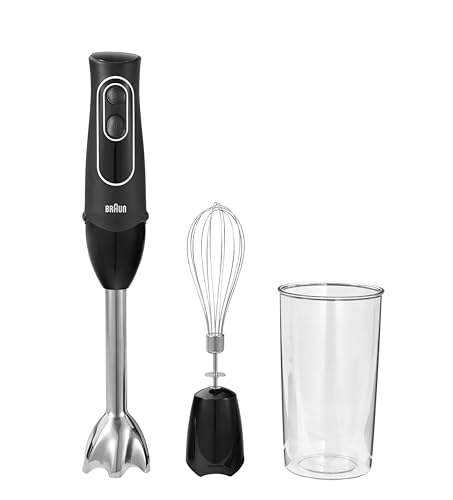
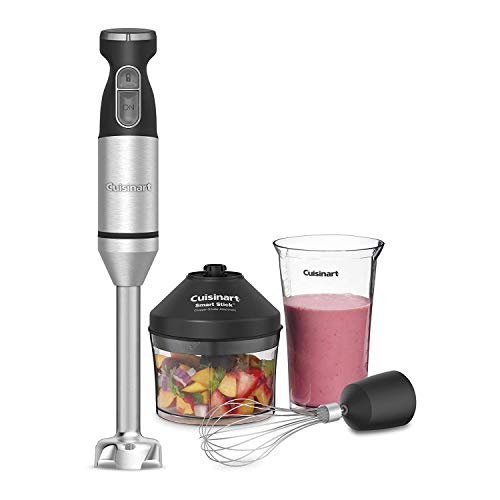
1. Braun MultiQuick 5 Hand Blender
A long-running immersion mixer from a respected brand. Many cooks rely on it for soups and sauces, and the variable speed helps keep splashes down. Confirm the included pieces and shaft length on the current listing.
Suits: soups and purees. Strengths: a well-known design. Weaknesses: accessories vary. Skip it if you want a compact hand mixer.
Best for everyday sauces
2. Cuisinart Smart Stick Hand Blender
A straightforward immersion blender with a stainless shaft. It handles soups, sauces and smoothies in a bowl or pot, and the slim body stores easily in a drawer. Check the listing for the cord length and any included cup.
Suits: everyday sauces. Strengths: simplicity. Weaknesses: fewer extras. Skip it if you need a large attachment set.

Best for controlled blending
3. KitchenAid Variable Speed Corded Hand Blender
A corded immersion blender with a dial to adjust speed. A removable shaft makes cleanup simpler, and the brand offers matching attachments in some versions. Check the listing to see what comes in the box.
Suits: controlled blending. Strengths: speed control. Weaknesses: cord length limits reach. Skip it if you want a cordless tool.

View KitchenAid Variable Speed Corded Hand Blender on Amazon
Best for multi-purpose cooks
4. Ninja Foodi Power Mixer System
A system that combines a hand mixer and blender with a set of attachments. It suits cooks who want one motor for several jobs, from whisking sauces to mixing batters. Check the listing for exactly which attachments are included.
Suits: multi-purpose cooks. Strengths: versatility. Weaknesses: more pieces to store. Skip it if you want the simplest tool.
View Ninja Foodi Power Mixer System on Amazon

Best for long blending jobs
5. Breville Control Grip Immersion Blender
An immersion blender with a comfortable grip and a guard designed to protect cookware from scratches. It is a sensible choice for non-stick pots, and the listing should show the included pieces.
Suits: long blending jobs. Strengths: a comfortable grip. Weaknesses: bigger than some. Skip it if you want a tiny blender.
Best for small kitchens and pots
6. Bamix Mono Hand Blender
A Swiss-made hand mixer known for its slim shape and versatility. It is a compact tool that handles sauces, dressings and soups, and some listings include extra whisk attachments. Confirm the details before you buy.
Suits: small kitchens and pots. Strengths: a slim, capable design. Weaknesses: a premium-style tool. Skip it if you only blend occasionally.
View Bamix Mono Hand Blender on Amazon
Care and Setup
- Detach the shaft before washing.
- Keep the motor housing dry.
- Blend in a deep container to avoid splatter.
- Let hot liquids cool slightly before blending.
- Keep the blade guard seated while in use.
- Rinse the shaft right after use before sauces dry on it.
Mistakes to Avoid
- Lifting the blade out of the liquid while it runs.
- Using the tool on scratch-prone pans without a guard.
- Overfilling a tall pot.
- Blending very hot liquids at high speed.
- Submerging the motor body.
- Forgetting to cover the pot to limit splashes.
Immersion Blenders Versus Countertop Appliances
An immersion mixer lives in a different spot from a stand blender or a food processor, and knowing the difference helps you decide whether you need one. A hand-held immersion blender goes into the pot, bowl or jug, so you blend where the food already is. That avoids ladling hot soup into a jug, reduces spills and leaves you with one fewer large item to wash. It is storage-friendly and quick to set up.
A countertop blender is often better at making very smooth results, large batches of smoothies or crushing ice, because the container and blade assembly are built for strong circulation. A food processor is the tool for shredding, slicing, kneading and chopping in quantity. Immersion mixers are not designed to replace either entirely, and a hand-held blender works best on soft or cooked ingredients.
Think about what you cook most:
- Soups and sauces: immersion style is convenient and efficient.
- Small amounts of puree, baby food, dressings: an immersion blender with a beaker works neatly.
- Frozen drinks and large batches: a countertop blender is usually better.
- Heavy chopping and shredding: reach for a processor.
Many kitchens end up with an immersion mixer alongside other appliances, because it handles the quick jobs that would otherwise require dragging out a bigger machine. If space is tight or you cook mostly on the stovetop, a hand-held mixer may be the only one you need.
Power, Motor and Speed Control
Power ratings are a starting point, not a complete picture. A higher wattage generally suggests a motor that can handle thicker mixtures, fibrous vegetables and bigger batches, but design, blade shape and shaft length also affect results. Check what the listing says about power and read the manual for any limits on continuous running, since many hand blenders are intended for short bursts.
Speed control adds finesse. A variable speed dial or a pressure-sensitive trigger allows you to start slowly, which avoids splatter when you first put the blade into a hot pot, then build up as the mixture breaks down. Fixed speed models are simpler and may be fine for basic soups, though they can spray liquid if you start with the blade near the surface. A turbo or boost setting, if included, gives short bursts for tougher jobs.
Consider noise and heat. Strong motors can be loud, and long jobs can heat the motor housing. Run in short cycles for thick mixtures and let the motor rest if the listing or manual advises. Corded models offer steady power without a battery, while cordless ones trade runtime and sometimes power for freedom to move around the kitchen. If you want to blend in several pots at the stove, a longer cord or a cordless design makes life easier. Look at how the speed control is positioned and whether you can use it with one hand while holding a pot with the other.
Shaft, Blade and Cookware Compatibility
What touches the food and the pot matters, particularly if you cook with coated pans. Blade assemblies are usually stainless steel, but the shaft and guard material can vary, with some in metal and others in plastic. A metal shaft tends to tolerate heat better and does not stain from tomato or curry as readily. Plastic can be lighter, but may discolor or absorb odors over time.
The blade guard is the bell-shaped cover around the blade. It protects the surface of your cookware from scratches and helps contain splashing. Check the listing to see whether the guard is designed for use with nonstick pots, and whether it can be removed for cleaning. A well-designed guard also reduces suction that can pull the blade tightly against the bottom of the pan.
- Use a pot that is deep enough to avoid splashing, with the blade fully submerged before you start.
- Keep the blade away from the bottom of coated pans, and lift the pot off the heat before blending hot food.
- A detachable shaft is easier to rinse and wash.
- Shaft length should reach the bottom of your deepest pot.
Compare the shaft length with your cookware. A short shaft in a tall stockpot makes you tilt the handle awkwardly or blend near the surface, while a very long shaft may feel unwieldy in a small bowl. Choose a length that suits the pots you own.
Attachments and What Is Worth Having
Many hand blenders come with extras, and it is worth asking which ones you will use. A tall beaker is almost essential, since it contains splatter and gives you a narrow vessel for blending small batches. A whisk attachment is helpful for whipping cream, eggs or light sauces. A small chopper bowl can handle herbs, nuts or onions, though it will not replace a full-size processor. Some kits add a masher, a frother or a food-processor bowl.
Think about storage and cleanup. More attachments mean more parts to wash and more drawer space. If you only blend soups, the basic stick and a beaker may be all you need. If you do frequent baby food, dressings or smoothies, a chopper and a beaker earn their place.
- Check how attachments connect and whether they snap on securely.
- See which parts are dishwasher safe and which need hand washing.
- Look for stable storage options, such as a case or drawer-friendly shapes.
- Confirm that the attachments are included, rather than sold separately.
Buy for the jobs you already do. An attachment you never use is wasted money and space. Start with the basics, and consider adding accessories later if the maker sells them and you find a gap.
Safe Use, Cleaning and Care
Hand blenders are simple but they have exposed blades and run on mains power or batteries, so a few rules keep them safe. Keep the motor body out of water, and never immerse the whole unit. Unplug it before attaching or removing parts. Make sure the blade is submerged before you switch it on, and turn it off before lifting it out, to avoid splatter. Keep your fingers away from the blade even when the unit is off.
Cleaning is easy if done promptly. Detach the shaft if it is removable, and rinse it under warm water. Run it in a jug of warm soapy water for a few seconds, rinse and dry. Do not let food dry on the blade. Check the manual for dishwasher guidance, because some shafts and guards are safe to wash in a machine, while the motor housing never is. Wipe the body with a damp cloth.
When blending hot liquids, fill the pot no more than the maker recommends, tilt gently if advised and keep the blade submerged. Hot food can splash, so protect your hands and forearms. For long-term care, store the unit dry and coil the cord loosely instead of tightly wrapping it. Replace the blender when the blade is dull or bent, the housing cracks, the cord frays or the unit emits a burning smell, since these are signs of failure that can become hazardous.
Handheld Mixer Terms in Plain Language
Immersion and power mixers use vocabulary that is not always explained on a listing. These definitions help you compare units on equal terms.
- Shaft: the long tube that holds the blade and is lowered into the food.
- Blade guard: the bell-shaped cover around the blade that reduces splashing and helps protect cookware.
- Variable speed: a control that lets you change blending speed gradually instead of choosing only high or low.
- Turbo or boost: a button that gives a short burst of maximum speed.
- Detachable shaft: a shaft that comes off the motor body for easier washing.
- Corded and cordless: whether the motor runs from a wall outlet or a battery pack.
- Whisk and chopper attachments: extra tools that fit onto the motor body for other tasks.
The maker’s manual will explain exactly which attachments fit which model and how each one should be used.
Picking a Mixer by the Way You Cook
| Cooking habit | Features that help | Check before buying |
|---|---|---|
| Blending soups in the pot | Long shaft and sturdy guard | Shaft length versus your pot depth |
| Smoothies and shakes | Powerful motor and a tall beaker | Included container size |
| Sauces and dressings | Speed control and whisk attachment | Whether the whisk is included |
| Baby food and purees | Easy-clean parts and low splash | Detachable shaft |
| Small kitchen storage | Slim body and wall-hook design | Cord length and storage case |
Think first about what you cook weekly. A mixer that suits your soup pot but struggles with a small bowl will end up unused.
Reading a Mixer Listing With Care
Wattage is the number most listings emphasize, but it does not tell the full story. Blade design, shaft shape and speed control all influence how well a mixer handles real food. Look at photos of the blade end and the guard, and check whether the guard is vented to reduce suction against the pot.
Look at the materials. A metal shaft is often described as more durable, while a plastic shaft may be lighter. Read what the maker says about using the mixer in hot liquids, as some models are suited to this and others are not. If the listing is unclear, check the instructions.
Consider ergonomics. A mixer should feel balanced in your hand, with a switch you can operate comfortably, a grip that stays secure when wet and a weight you can hold for longer jobs.
A Safe-Use Checklist
- Read the manual and confirm that the mixer is suitable for hot foods before you use it in a pot on the stove.
- Take the pot off the heat when you blend, unless the maker says otherwise.
- Submerge the blade end fully before switching on to limit splashing.
- Keep fingers, utensils and cords away from the blade, and unplug before you attach or remove parts.
- Do not immerse the motor body in water. Wash only the parts the maker says are suitable for washing.
- Do not run the motor longer than the maker advises, and let it rest if it feels hot.
- Store the unit with the blade covered.
Hot liquids can splash and cause burns, so work in smaller batches and use a deep container.
Maintenance and When to Seek Service
Rinse the shaft right after blending, because food dries and hardens quickly. Dry all parts before storing, and keep the cord loosely coiled instead of tightly wrapped. If the motor smells hot, makes unusual sounds or the cord is damaged, stop using the mixer and contact the maker. Do not attempt electrical repairs yourself.
Everyday Recipes Where a Mixer Earns Its Keep
Think of tasks you already do that a mixer simplifies. Creamy vegetable soups can be blended right in the pot, which saves washing a second container. Pan sauces, such as a tomato sauce you want smoother, can be adjusted in seconds. Mayonnaise, dressings and whipped toppings are faster with a whisk attachment, and pancake or crepe batter loses its lumps with a few short pulses.
Keep a deep jug or pot on hand for batches, because a tall, narrow container reduces splatter. For tasks outside the maker’s recommendations, such as crushing ice or grinding hard spices, check the manual first, since not every model is built for them.
Finally, wipe up spills promptly and keep the cord clear of hot burners while you work.
Cooking Mixer FAQ
Is an immersion mixer a blender?
It is a hand-held blender that works in the pot, which suits soups and sauces.
Can it replace a food processor?
It can handle purees, but not every task a processor does.
What attachments are useful?
A whisk, chopper and beaker are useful extras.
Is cordless better?
Cordless tools offer freedom but may have less sustained power, so think about how thick your soups usually are.
Can I use an immersion mixer in a nonstick pot?
Many can, particularly if the blade guard is designed for it. Check the manual for guidance, keep the blade away from the pan surface and take the pot off the heat before blending.
How do I avoid splashing hot soup?
Use a deep pot, keep the blade fully submerged and start on a low speed. Fill the pot to a sensible level and keep your hands clear of the surface.
Do I need a variable speed model?
It helps with control, especially when starting thick mixtures. A fixed speed model can still be fine for basic soups if you are careful.
Can an immersion blender make smoothies?
It can blend soft fruits and liquids, but a countertop blender is usually better for frozen ingredients and large batches. Check the maker's guidance on ice and frozen fruit.
How long can I run it continuously?
Check the manual for recommended run times. Many hand blenders are meant for short bursts, and running too long can overheat the motor.
Is a longer cord important?
It matters if your outlet is far from the stove. Check the cord length on the listing, and consider a cordless model if reach is a problem.
What should I do if the blade jams?
Switch off and unplug the unit, then remove the shaft and clear the blade carefully. Do not force it, and check the manual.
In Daily Use: A Closer Look
Why cooking mixers earn their keep at the stove
The defining moment for an immersion-style cooking mixer is the one where a pot of soup becomes smooth without ever leaving the stove. No pouring hot liquid into a jug, no batches, no extra washing-up: the tool goes to the food instead of the food going to the tool. That single convenience changes what home cooks attempt on weeknights, because blending stops being a project and becomes a step. The same logic applies to pan sauces finished in the pan, to baby food made in the saucepan it cooked in, and to a quick puree of beans or vegetables directly in the serving dish. When judging the picks above, weigh that in-the-pot ability heavily; it is the core of the category, and everything else, from whisks to choppers, is supporting cast.
Buying Criteria, Taken One at a Time
Fit the tool to the routine you already have
The most reliable way to judge any mixer for cooking is to picture the routine you already follow, rather than the one you imagine on a good weekend. Think about how often blending a pan of soup smooth actually happens in your kitchen, who is usually doing it, and what else is competing for space and attention at that moment. A choice that suits a quiet Sunday morning may feel very different on a busy weekday evening when two other jobs are under way. Write down the three jobs you do most often, in the order you do them, and check every candidate against that short list first. Features that do not serve those three jobs are rarely missed, while a small annoyance attached to a daily job is felt every single day. This simple exercise explains why two households can look at the same mixers for cooking and honestly reach opposite conclusions: they are not really buying the same thing, because they are not really doing the same cooking.
Size and capacity, judged by your real portions
Capacity claims are easy to compare and surprisingly hard to interpret, because the number on a listing rarely describes the amount you will comfortably handle in practice. A safer approach is to think in terms of your real portions: the usual batch of a pot of vegetable soup for four, a batch of hummus for lunches, or a pan sauce finished while the main course rests, the largest batch you make a few times a year, and the smallest quick job you do when you are cooking for one. A good mixer for cooking should feel relaxed at the usual batch, cope honestly with the large one, and not feel clumsy or wasteful at the small one. If a candidate only shines at a size you almost never make, it is solving a problem you do not have. Equally, buying purely for the largest imaginable batch usually means living with something oversized the rest of the year. Judge capacity by the middle of your cooking, and treat the extremes as occasional guests rather than permanent residents.
Depth, angle and the vortex that does the work
Good blending in a pot is about circulation. The mixture needs to be deep enough to cover the blade guard, and the blender should be angled and moved slowly so a gentle vortex draws the top layer down through the blades. Work in a pattern: down the middle, around the edges, and across the base where the thickest pieces settle. Lift the head slightly, never clear of the surface, to change the flow, and let the motor rest in short pauses rather than running one long, hot burst. If pieces are hiding, they are usually at the corners of a square pan or under a layer of oil; a spoon can guide them into the flow between bursts. Once you feel how circulation does the work, you will blend faster with less effort and far less splashing.
Comfort and control during longer sessions
Comfort is not a luxury detail; it is what decides whether a mixer for cooking gets used willingly or quietly avoided. Pay attention to how the weight is distributed, how the grip or handle feels when your hands are wet or floury, and whether the controls or edges make sense without looking down. During making a sauce or puree for a weeknight dinner, small discomforts compound: a grip that feels fine for thirty seconds can ache after several minutes, and a design that needs constant correction slows everything around it. If you can, mime the actual motion at home with something similar from your own kitchen and notice where your wrist, shoulder and back end up. Households where more than one person cooks should think about the smallest and largest hands in the house, too. The best choice is usually the one nobody in the household has to think about while they are using it.
A Calm, Step-by-Step Working Routine
A sensible first week with a new purchase
Treat the first week with a new mixer for cooking as a gentle trial rather than a test it has to pass perfectly. Start with a familiar job, ideally blending a pan of soup smooth with a recipe or routine you already know well, so that any difference you notice belongs to the tool and not to unfamiliar ingredients or timing. Keep notes, even just a few words on your phone: what felt easier, what felt awkward, and what you would do differently next time. Try the second job on your list a day or two later, and only then attempt anything ambitious. Small adjustments in technique usually close most of the gap between a disappointing first use and a satisfying third one. By the end of the week you should know whether the item suits your hands, your drawer and your habits, and you will have built the small routines of use, cleaning and storage that make any kitchen tool feel effortless later on.
Small technique adjustments that pay off quickly
Most disappointing results with mixers for cooking trace back to one of three quiet causes: rushing the preparation, working with too much or too little in front of you, or fighting the tool instead of letting its design do the work. Slow the first minute down. Set out everything you need before you start, give yourself a clear surface, and let the first few movements be deliberate. When whisking eggs or emulsifying a dressing, work in smaller amounts than you think you need to; control improves, mess shrinks, and the total time is often shorter because nothing has to be rescued or redone. Pay attention to sound and resistance as feedback, not just to appearance. A change in sound usually arrives a moment before a change in results, and learning to hear it is one of the small skills that separates a frustrating session from a calm one. These habits cost nothing, transfer to every other tool in the kitchen, and improve results more reliably than any upgrade.
Working clean as you go
A tidy working rhythm matters more with mixers for cooking than most people expect. Keep a small bowl or tray beside you for trimmings, packaging and anything else that would otherwise wander across the counter, and wipe spills while they are fresh rather than after they have set. When blending a pan of soup smooth, pause halfway through for ten seconds to reset the surface, move finished work out of the way, and check that you still have room for the next step. This is not fussiness; a clear surface is a safety feature, a speed feature and a quality feature at once. It also makes cleaning at the end dramatically shorter, because most of it has already happened in small pieces. Cooks who work clean tend to enjoy their tools more, notice problems earlier, and cook more often, which is ultimately the whole point of choosing the equipment carefully in the first place.
Hot liquids, steam and staying safe
Hot soup is the job these tools are famous for, and the one that deserves the most respect. Keep the blade fully submerged before switching on and switch off before lifting it out, every time, so nothing hot is flung from the blades. Work with the pot off the fiercest heat, be aware of steam when you lean over the pot, and keep the cord routed away from burners and out of the mixture’s splash zone. A deeper pot than you think you need is cheap insurance, since blending raises the surface into waves. If you are blending for children or older relatives to handle, let the most experienced cook do the hot work and serve the results; the tool is simple, but hot liquid rewards confidence and punishes hurry in equal measure.
Care, Storage and Longevity in Depth
How easy cleaning really decides long-term satisfaction
Ask experienced owners what changed their mind about a purchase and cleaning comes up again and again. A mixer for cooking that is pleasant to use but tedious to clean will slowly migrate to the back of the drawer, while a slightly plainer one that rinses, wipes or stacks away in moments gets used daily. Look honestly at the seams, joints, corners and textures where food or moisture can lodge, and picture rinsing the blending shaft straight after use before food dries on at the end of a long day rather than on a fresh morning. Removable parts help only if they genuinely come off and go back on without a struggle. Smooth surfaces help only if they stay smooth. It is also worth deciding in advance where the item will dry and where it will live between uses, because a tool without a home becomes clutter, and clutter quietly discourages cooking. Ease of cleaning is, in practice, a feature you use every single time.
Storage that protects the purchase
Where a mixer for cooking lives between uses shapes how long it lasts and how often it gets used. Store it where the person who uses it most can reach it without moving two other things first, and protect any edges, surfaces or moving parts from knocking against harder neighbours in the drawer. Avoid damp corners, spots directly above regular steam, and any place where the item sits under a heavy stack. If storage is tight, be honest about it before buying rather than after: measure the shelf, drawer or cupboard with the door closed and the neighbouring items in place, and remember to allow room for your hand, not just for the object. A simple liner, cover or divider often costs very little and prevents the slow cosmetic damage that makes a good tool feel old before its time. Good storage is invisible, but its effects show up in every year of extra service.
Knowing the signs that it is time to replace
Even a well-chosen mixer for cooking eventually reaches the point where replacement is the sensible, economical choice. Watch for changes that cleaning and adjustment cannot fix: persistent odours or flavours that survive thorough washing, surfaces that stay rough or sticky, parts that no longer fit or move as they should, and any damage that could affect food or safety. A gradual decline is easy to miss because you adapt to it a little at a time, so compare against memory deliberately: is making a sauce or puree for a weeknight dinner slower, messier or less predictable than it used to be? If the honest answer is yes, and a careful clean and a technique check do not restore the old performance, plan the replacement calmly rather than in a hurry after a failure mid-recipe. Keep the old item, if it is safe, as a backup for rough jobs, and let the new one handle the work you care about most.
The supporting attachments, honestly assessed
Attachments decide how much of your kitchen one motor can serve. A whisk turns the same handle into a tool for eggs, batters and cream. A small chopper bowl handles onions, herbs, nuts and breadcrumbs in quantities too small for a food processor. A masher, where offered, gives a rustic texture that blades cannot. The honest way to judge them is by your own week: count how often each job actually occurs, and value the attachments that match the frequent jobs. An attachment used weekly is a bargain at almost any quality; one used twice a year is clutter however clever it is. Storage matters too, since attachments that live in a jumble at the back of a cupboard effectively do not exist, however good they were in the box.
Matching the Picks Above to Different Households
Reading the shortlist above with fresh eyes
With those criteria in mind, the picks reviewed earlier in this guide become easier to place. Instead of asking which one is best in the abstract, ask which one matches the first job on your own list, which one fits the drawer you actually have, and which one you would still choose if you had to clean it tonight. Notice where the reviews above mention a trade-off rather than a flaw: a trade-off only matters if it touches your routine. A strength you will never use is not a strength for you, and a limitation you will never meet is not a reason to pay more to avoid it. It can help to rank the picks twice, once for your weekday cooking and once for your weekend cooking, and see whether the same name rises both times. When it does, you have probably found your answer. When it does not, the honest answer may be the more versatile middle option.
Buying for a household, not for one cook
Many kitchens serve several cooks with different heights, hand sizes, confidence levels and favourite jobs, and a mixer for cooking that delights one person can quietly frustrate another. Before deciding, ask who will use it for blending a pan of soup smooth, who will clean it afterwards, and who is most likely to be put off by any complexity. Simpler controls, forgiving handling and easy cleaning matter more in a shared kitchen than in a solo one, because the tool has to welcome the least confident user, not just satisfy the most enthusiastic. If children or older relatives are part of the routine, stability and predictable behaviour move up the list. None of this means choosing the dullest option; it means choosing the option the whole household will actually use on an ordinary Tuesday. A purchase that everyone uses without comment is usually a better purchase than a clever one that only one person understands.
Questions to settle before you order
A short pause before ordering prevents most returns. Confirm the dimensions against your drawer rather than against a photograph. Check what is included and what is sold separately, so the first use is not delayed by a missing part. Read the care instructions in full, not just the headline claim, and make sure they match how your household really washes and stores things. Look at the warranty and returns terms while you are calm, not after something goes wrong. Finally, decide in advance what would make you send it back: naming that line now stops both buyer’s remorse and stubbornly keeping something unsuitable. None of these checks takes long, and together they turn a hopeful purchase into a considered one. The picks in this guide were chosen to make that short process easier, by concentrating on options that hold up under exactly this kind of everyday scrutiny.
More Questions, Answered in Depth
How do I blend soup without it tasting aerated?
Excess air comes from blending too long at too high a speed with the head too near the surface, which whips bubbles into the soup and lightens its colour and flavour. Keep the head deep, use a moderate speed, and stop as soon as the texture is smooth. If the soup has foamed, let it stand for a few minutes and stir gently; most of the air rises out on its own. Soups with cream or butter benefit from blending before those are added, then stirring them through at the end for a richer, calmer finish.
Can an immersion mixer crush ice or frozen fruit?
Treat ice as a job for a countertop blender unless the manufacturer of your specific model clearly designs and rates it for that work. Frozen chunks are the hardest load a small motor and blade will ever meet, and forcing them risks the blade, the shaft and the motor at once. For smoothies, let frozen fruit soften for a few minutes in the liquid, cut it small before freezing, and blend in a tall cup in short bursts. The result is nearly as quick, and the tool will live to blend many more soups.
What is the best container for blending small amounts?
A tall, narrow beaker, ideally the one supplied with the blender, is best for small quantities, because the mixture is forced to circulate through the blades instead of escaping sideways. A measuring jug is a decent substitute. Wide, shallow bowls are the worst choice: the head breaks the surface, splashing starts, and the mixture spreads thinner than the blade guard. Whatever you use, place it on a damp cloth to stop it wandering, and keep the quantity between the minimum the head needs and about two-thirds of the container’s height.
How do I deal with a mixture that is too thick to circulate?
Add liquid a spoonful at a time rather than a glassful, since a thick puree can turn runny in a single over-generous pour. Move the head in slow, small pumps to start pockets of movement, and use a spoon between bursts to fold the edges into the middle. Warm mixtures circulate more willingly than cold ones, so a gentle reheat can rescue a stubborn pot. If a mixture is thick by design, like a dense bean puree, patience and short bursts will get there; forcing a stalled motor will not.
Final Checks Before You Decide
Comparing two finalists, head to head
When the shortlist narrows to two, stop reading descriptions and start staging comparisons. Put each candidate through the same mental rehearsal: blending a pot of soup smooth, with your ingredients, your space and your usual timing, followed by rinsing the shaft straight after use when you are already tired. Notice which one asks fewer favours of you. Which one fits the shelf, drawer or counter corner without negotiation? Which one would you hand to another member of the household without a briefing? Small frictions that look trivial in a listing become the story of ownership, because they repeat on every use. If the two still feel equal, choose the one whose strengths match the job you do most often rather than the job you do most impressively, and let the occasional big occasion adapt. That rule, applied calmly, is how experienced cooks end up with kitchens full of things they genuinely like using.
The first use, done deliberately
Whatever mixer for cooking you choose, give its first use a little ceremony. Unpack it somewhere clear, read the maker’s instructions fully rather than skimming for the exciting parts, and wash or prepare it exactly as directed before food goes anywhere near it. Check every part for damage from transit while returning it would still be painless. Then choose a forgiving first job, one you have made many times, so your attention is free to learn the tool rather than the recipe. Notice the sounds it makes, the way it sits or balances, and where you naturally want to put it down. Afterwards, clean it promptly and put it in the home you have chosen for it. A deliberate first use like this sets the habits that the next hundred uses will follow, and it turns a purchase into a piece of your kitchen’s routine from day one.
How habits change across a year of ownership
Ownership of a good mixer for cooking has a rhythm that listings never mention. In the first month it is used consciously, almost experimentally, and small preferences form: a favourite setting, a preferred order of steps, a spot where it always lands. By the third month it has either become invisible, reached for without thought, or begun to be quietly avoided, and that verdict is almost always about fit with your routine rather than about quality. Across a year, seasons test it in different ways, guests and bigger occasions stretch it, and ordinary weeks confirm it. This is why the advice throughout this guide keeps returning to your real habits: they are the ground every purchase has to survive on. A tool that suits them will feel better in month twelve than it did in week one, which is the surest sign the choice was right.
The Short Version
For a classic, the Braun. For simple blending, the Cuisinart. For speed control, the KitchenAid. For multi-purpose use, the Ninja Foodi. For comfort, the Breville. For a slim design, the Bamix.