Blendtec is a blender brand known for its strong motors and its blunt, blade-based jars with no sharp edges. Its blenders are popular for smoothies, soups, frozen drinks and nut butters. The best Blendtec blenders differ mainly in controls, jar style and how many preset cycles they offer.
The six models below span the range, from simple dial-based units to touch-screen models. We have not used these products ourselves, so the descriptions come from general product knowledge. Please confirm jar size, power and what is included on the current listing before buying. Because the line is wide, it helps to decide what you want to blend most. Smoothies and soups work in all of them, but large families or frequent hosts may prefer a bigger jar, while apartment dwellers may want something that fits under a cabinet. Also consider whether you want touch controls or a simpler layout.
As an Amazon Associate we earn from qualifying purchases. Links below are affiliate links, and they do not change the product information we give.
What to Look For
| Feature | Why it matters |
|---|---|
| Controls | Touch panels offer presets; dials are simpler |
| Jar | Wide jars are easy to scrape; some models suit tall cabinets |
| Preset cycles | Save time for smoothies, ice cream and soup |
| Noise | Powerful motors are loud, so think about where it sits |
| Warranty | Check the length offered on the current listing |
In this guide
Specs at a Glance
| Model | Controls | Jar | Notes |
|---|---|---|---|
| Blendtec Total Classic Original | Touch panel with presets | FourSide jar | A long-running model |
| Blendtec Classic 575 | Touch panel with presets | Wide jar | Check the jar included |
| Blendtec Designer 725 | Slider control | Wide jar | A design-focused model |
| Blendtec Professional 800 | Touch controls | Large jar | A higher-end model |
| Blendtec Connoisseur 825 | Touch controls | Large jar | A higher-end model |
| Blendtec EZ 600 | Touch panel | Check the listing | Check the jar included |
The 6 Best Blendtec Blenders
Top pickBest for all-round home use
1. Blendtec Total Classic Original Blender
The long-running Blendtec with a FourSide jar and preset cycles for common recipes. A reliable pick for those who want a trusted design.
Suits: all-round home use. Strengths: a familiar design and presets. Weaknesses: loud. Skip it if you want a compact blender.
View Blendtec Total Classic Original on Amazon

Best for thick blends
2. Blendtec Classic 575 Blender
A model with a wide jar and preset cycles, easier to scrape out than a tall jar. A strong middle-of-the-range pick.
Suits: thick blends. Strengths: a wide jar and presets. Weaknesses: noise. Skip it if you want a quiet unit.


Best for a modern kitchen
3. Blendtec Designer 725 Blender
A design-forward model with a slider-style control and a wide jar. It suits those who like a clean countertop look.
Suits: a modern kitchen. Strengths: a sleek control. Weaknesses: a premium cost. Skip it if you want basic buttons.


Best for big batches
4. Blendtec Professional 800 Blender
A higher-end Blendtec with a strong motor, touch controls and a larger jar for batches.
Suits: big batches. Strengths: power and capacity. Weaknesses: bulky. Skip it if you cook for one.

Best for heavy daily use
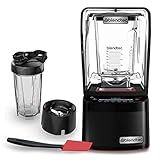
5. Blendtec Connoisseur 825 Blender
A premium model with advanced touch controls and a roomy jar, aimed at frequent users.
Suits: heavy daily use. Strengths: a premium feel. Weaknesses: high cost. Skip it if you blend a few times a week.
View Blendtec Connoisseur 825 on Amazon

Best for a simple setup
6. Blendtec EZ 600 Blender
A simpler Blendtec in the lineup, with touch controls and fewer extras. A fit for those who want the brand with less complexity.
Suits: a simple setup. Strengths: an easier entry into the brand. Weaknesses: fewer features. Skip it if you want every preset.
View Blendtec EZ 600 on Amazon
Care and Setup
- Add liquid first and secure the lid before starting.
- Clean the jar by blending warm water with a drop of dish soap.
- Wipe the base with a damp cloth.
- Check the maker’s care notes for the jar.
- Use the pulse button for chunky salsas and dips.
- Keep the lid seal clean.
Mistakes to Avoid
- Overfilling the jar.
- Running thick mixes with too little liquid.
- Ignoring the cycle length for presets.
- Submerging the base in water.
- Using the wrong cycle for the recipe.
- Letting the jar sit with food residue overnight.
Jar Shapes, Capacity and What Fits Your Kitchen
Blendtec models differ in the jars they use, and the jar can matter as much as the base. Wide, short jars are easier to scoop from and to scrape clean, and they suit batches of soup, dips and thick mixtures. Taller, narrower jars hold more liquid for a given footprint but can be harder to clean by hand. Capacity varies by line, so check the listing for the stated size and for whether additional jars are available.
Jar style also changes how the blend circulates. Blendtec has described its jars as designed to keep ingredients moving toward the blades, and shape differences affect how much liquid you need and how easily thick mixtures cycle. If you often make nut butters, frozen desserts or thick smoothie bowls, a wider jar may be easier to work with. If you mainly make drinks for several people, a larger jar is convenient.
Measure the space where the blender lives. A tall jar on a base may not fit under cabinets, and some people keep the blender on the counter because it is heavy. Check the height with the jar and lid on, the weight of the base and the length of the cord. Consider a second jar if you want to avoid washing between recipes, or a smaller one for single servings, and check that it is compatible with your base.
Touch Controls, Buttons and Preset Cycles
The controls vary across the line and shape how you use the machine daily. Some models have a sealed touch interface with preset cycles for smoothies, ice cream, soup and other tasks, and a manual speed slider. Others use simpler buttons and fewer programs. Touch surfaces are easy to wipe clean because there are no knobs to catch spills, but some people prefer a physical switch they can use with wet hands.
Preset cycles run a set sequence of speeds for a set time, and the machine stops itself at the end. That is a plus for people who like a predictable routine and want to avoid over-blending. Cycles differ by model and may not match the recipe you are making, so you may need to adjust the volume or ingredients. Check the listing to see which cycles are included, and keep in mind that the number of buttons is not the same as the usefulness of those cycles.
Manual control matters for recipes that need adjustment. Look for a pulse option, a variable speed control and a way to stop the cycle midway. Consider whether you want to see time remaining or other information on a display. If you prefer simplicity, choose a model with fewer cycles. If you cook many kinds of recipes, a wider range of programs could be handy. Read the manual to learn how to start, stop and interrupt cycles.
Noise, Vibration and Living With a Powerful Blender
High-powered blenders are loud. The noise comes from the motor, the blades and the contents hitting the jar, and it is part of the trade-off for strong blending. If you blend early in the morning, share walls with neighbors or have a sleeping baby, noise may be a factor in your choice. Check customer comments for descriptions of volume, and think about when and where you will use the machine.
There are practical ways to reduce the impact. Place the base on a stable, non-slip mat to cut vibration. Keep the lid secure and the jar properly seated. Blend in the shortest time needed, using preset cycles to avoid running longer than necessary. Some makers sell sound covers or enclosures for certain blenders, and these may reduce noise at the cost of extra counter space and an extra purchase, so check compatibility if you want one.
Think about the rest of the experience. Vibration can move a light machine across a counter, so make sure the feet grip. Make sure the cord reaches the outlet without stretching. Make sure the lid and the jar fit cleanly with no leaks. Place the blender where you can reach it comfortably, as lifting heavy jars from a high shelf is awkward. If noise is a deal-breaker, compare options before you commit.
What to Blend, What to Skip and Recipe Technique
Strong blenders handle many tasks. Smoothies, soups, sauces, nut butters, frozen drinks, batters and dips all suit them. Technique makes results better. Add liquids first, then soft ingredients, then frozen or hard ones on top. This helps the blades pull everything down. Fill the jar to a sensible level rather than to the top, and start at a low speed before moving up.
Some foods need caution. Hot liquids create steam pressure, so follow the manual about filling levels and venting the lid, and start at low speed. Very dry mixtures need a little added liquid or a tamper to keep the blades engaged. Thick doughs, large quantities of ice with no liquid and hard whole foods may be beyond what the jar is designed for, so check the maker’s guidance.
Think about how you want your results. Blending too long can warm ingredients and change texture, particularly in frozen drinks and ice creams. For chunky salsa or chopped vegetables, use short pulses to keep texture. For silky soups, run a longer cycle with care. Keep a spatula that is safe for blender jars to scrape sides, and never put a utensil into a running blender unless the manual says it is safe with a specific tool. Make notes on which recipes and quantities work well for your model.
Warranty, Jar Wear and Long-Term Ownership
A premium blender is a long-term purchase, so look at ownership beyond the first month. Read the warranty on the listing or the maker’s page, and note the length, what is covered and how to claim. Ask whether the jar, the blade assembly and the base are covered the same way, since wear parts are often treated differently. Register the product if the maker offers it, and keep the receipt.
Jars wear over time. Scratches, cloudiness and cracks appear with use and washing, and blade assemblies can dull or loosen. Check the jar after each wash. Replace a jar that is cracked, leaking or heavily scratched, since a damaged jar may fail during use. Check that replacement jars, lids and blade parts are sold for your model, and confirm that new parts are compatible with your base.
Care extends life. Clean the jar soon after use, avoid dropping it, follow dishwasher guidance for the jar and lid, and wipe the base with a damp cloth, never immersing it in water. Avoid running the machine empty or overloading it. Signs it is time for service or replacement include a burning smell, unusual grinding, a motor that stalls on normal loads, a base that overheats or an electrical issue. Stop using the machine and contact the maker or your seller if you see them.
Blendtec FAQ
What sets Blendtec apart?
A strong motor and a blunt blade design, plus preset cycles on many models.
Are they loud?
Powerful blenders tend to be loud. Check noise notes on the listing.
Which model should I pick?
Choose by jar style and controls. Core performance is similar across the range.
How are Blendtec blades different?
Blendtec uses blunt blades that rely on motor speed and the jar shape to pull ingredients down. The blades are not sharp to the touch, which makes cleaning safer. The FourSide jar shape is designed to keep ingredients moving.
Do I need a tamper with a Blendtec blender?
Many users blend without one, since the jar shape helps move ingredients. For very thick blends, check what the listing includes and the manual's guidance on adding liquid.
Can I blend hot soup?
Many blenders can, but follow the manual for fill level, venting and speed, since hot liquids create steam pressure. Start slowly and keep the lid secure.
Why does the blender stop mid-cycle?
It may have finished the preset cycle, or it may have a protection feature that stops it when overloaded or hot. Let it rest, reduce the load and check the manual.
Can I buy extra jars?
Many lines offer additional jars, but check that a specific jar is compatible with your base before buying.
How do I clean the jar?
A common method is to add warm water and a drop of dish soap, run a short cycle and rinse. Follow the manual for details on dishwashers.
Is a larger jar always better?
No. Larger jars suit batches but are harder to store and clean, and small portions may not blend well in a very large jar.
Is it safe to put my hand in the jar to clean it?
Unplug the base first and handle the blade assembly with care, even if the blades are blunt. Use a brush or the soapy-water cycle for most cleaning, and never reach into a jar on a connected base.
Everyday Recipes That Suit a High-Power Blender
A strong motor is only useful if you use it for the right jobs. Some recipes make the case for a high-power blender clearly, while others work fine in cheaper machines.
Smoothies and Green Drinks
Leafy greens, frozen fruit and seeds need power and a good vortex to break down fibers completely. If you drink green smoothies daily, a stronger blender can reduce the gritty texture that cheaper machines sometimes leave behind. Add liquid first, then soft ingredients, then frozen items on top so the blades have a path.
Nut Butters and Nut Milks
Nut butters need sustained power and often a tamper to keep the mixture moving. Nut milks are easier, since you blend nuts with water and strain the result. Both highlight whether a machine can keep running without overheating.
Hot Soups, Sauces and Dips
Friction from fast-spinning blades can warm soups, and hummus, salsa and sauces blend into a smooth consistency. Remember that hot liquids expand, so never fill past the maximum line and always vent the lid according to the instructions.
Frozen Desserts and Ice Crushing
Frozen fruit, ice and a splash of liquid make soft-serve style desserts and slushies. A tamper or careful stopping to scrape the sides can help when the mixture thickens.
Loading Order and Technique for Best Results
How you fill the jar affects the result as much as the motor. A few habits make a noticeable difference.
- Liquids first. Pouring liquid at the bottom lets the blades pull other ingredients down into the vortex.
- Soft before hard. Place leafy greens, yogurt and soft fruit above the liquid, then frozen items and ice on top.
- Do not overfill. Leave room for the mixture to circulate. An overfull jar can create an air pocket around the blades.
- Start slow, then ramp up. Beginning at a low speed helps the ingredients start moving, while a quick jump to full power can leave an air pocket.
- Use a tamper when needed. Thick mixtures such as nut butter or frozen desserts may stall, and a tamper pushes ingredients toward the blades.
If the motor sounds strained or the mixture stops circulating, stop and scrape the sides rather than forcing it. Adding a small amount of liquid usually restarts the flow.
Counter Footprint, Cord and Storage Planning
High-power blenders are often tall and heavy. Check the height with the jar in place, because many models do not fit under standard wall cabinets. If you store the blender in a cabinet, measure the shelf height and depth, and consider how heavy the base is to lift.
Cord length also matters. A short cord limits where the blender can sit, and an extension cord is not recommended for high-wattage appliances. Place the machine near an outlet that can handle the load, and keep the area around it dry.
If counter space is limited, a shorter jar profile may be worth considering even if capacity is slightly lower. A blender you can leave out is a blender you will use more often.
Is a Premium Blender Worth It for Your Habits?
The honest answer depends on frequency. If you blend a few times a week, a mid-range machine can be enough. If you make smoothies, soups and nut butters regularly, the extra power and durability of a premium blender may pay off in smoother results and fewer frustrations.
- Daily smoothie drinkers benefit from consistent texture and fast cleanup.
- Occasional users may be happy with a simpler model and a smaller budget.
- Families often value a large jar and sturdy construction.
- Small households may prefer a compact option that is easy to store.
Consider the cost per use over several years rather than the sticker price alone. A machine you use daily for years can end up cheaper in practice than one you replace.
Cleaning, Safety and Everyday Handling
High-power blenders are easiest to clean right after use. Fill the jar partway with warm water and a drop of dish soap, run a short cycle, then rinse. This handles most mixtures without scrubbing. Sticky nut butters and dried residue may need a soak.
Keep hands away from the blades even when the jar is empty, and use a brush or spatula instead of reaching in. Make sure the lid is seated firmly before every blend, and never remove it while the motor is running. Let the jar and base dry fully before storing, since trapped moisture can cause odors. Check seals and the blade assembly occasionally for wear, and stop using the jar if you see cracks or deep clouding.
Meal Prep and Batch Blending
A strong blender can double as a meal-prep tool. Blend a large batch of soup or sauce, portion it into containers and freeze what you will not eat soon. Pre-portion smoothie ingredients into bags so you can tip them into the jar on busy mornings. Leave space in containers for liquids to expand when frozen. Label everything with a date, and use frozen smoothie packs within a few weeks for the best flavor. When batch blending, work in stages if a recipe exceeds the jar capacity, rather than overfilling.
Related guides
Frequently Asked Questions
Can I make ice cream in a Blendtec blender?
You can make soft-serve style desserts by blending frozen fruit with a little liquid or cream. True churned ice cream needs a freezer and different equipment. Use a tamper if the mixture thickens, and stop to scrape the sides to keep the blades engaged.
Can a high-power blender grind coffee beans or grains?
Some people use them for grinding grains or small amounts of coffee, but results vary and it can dull the blades or scratch a jar. Check the manufacturer’s guidance first, and consider a dedicated grinder or a separate jar if you plan to do this regularly.
How much liquid do I need to start a blend?
Enough to cover the blades and let ingredients circulate, which is often about a cup for a standard smoothie. Thick recipes such as nut butter use little or no liquid but need a tamper. Add more liquid gradually if the mixture stalls.
Will a powerful blender make a smoothie warm?
Long blending times can warm the mixture slightly because of friction and motor heat. Using frozen ingredients or ice offsets this, and shorter cycles help. Soups can be heated the same way, but blending a cold smoothie for too long can reduce its chill.
Choosing Blendtec Blenders: A Closer Look at What Actually Matters
Choosing among Blendtec models is a different exercise from choosing a blender brand: the motor philosophy is shared, so the decision lives in jars, controls, programs and intended workload — home countertop classics, sleeker designer styling, and professional models built for volume. The picks above span that range. The right question is not whether a Blendtec can handle your blending, but which model’s interface, jar pairing and duty level match the way your kitchen actually works, from morning smoothies to soup to party batches.
Most buyers compare Blendtec blenders on the obvious points first and only discover the details that matter after a few weeks of use. The sections below slow the decision down and look at the qualities that decide whether a Blendtec blender still feels right once the novelty has worn off. None of them requires expert knowledge; they simply ask you to match the product to the way you actually live, serve and clean up.
Jar pairing: the real decision
Blendtec jars define what the machine does best: the everyday jar for general blending, larger jars for volume, smaller twister-style jars for thick nut butters and small loads. A model bundled with the jar your life needs is worth more than a stronger motor with the wrong jar. Think in loads: your daily smoothie volume, your biggest soup batch, your thickest regular mixture. Buy the jar for the load you repeat, and let exotic loads adapt or wait.
Controls and programs you will use
Blendtec models range from simple manual speed control to programmed cycles and touch interfaces. Programs earn their keep when you multitask — set a smoothie cycle, make coffee, come back to a finished blend. Manual control earns its keep when you tinker with texture. Households split by temperament here, not by competence. Choose the interface that suits the cook you are at seven in the morning, not the one that photographs best.
Classic, designer or professional duty
The lines differ in styling, sound treatment, control refinement and how much daily volume they are built to shrug off. A professional model in a light-use home is not wasted if silence and longevity matter to you, but a classic model in a heavy-use home will feel its limits in heat and patience. Estimate your blends per day honestly — smoothies for a family, plus sauces, plus frozen drinks add up to commercial-looking numbers faster than people expect.
Sound and enclosure options
Blendtec power has a voice, and the lines differ in how they manage it; some models and enclosures are designed to hush the roar. In open-plan homes and early-morning households, sound management can be the deciding feature, worth more than any program. Consider where the machine sits and who sleeps nearby. A blender that cannot be used before eight in the morning without diplomacy is a blender with a curfew, and that curfew should be a conscious purchase, not a discovery.
Footprint and storage of the system
The base, the jars, the lids: a Blendtec is a small system, and jars need homes. Low-profile models slip under cabinets that taller machines cannot; that single measurement decides many purchases. Measure your counter-to-cabinet height and your cupboard depth for spare jars before choosing. A system that lives out, assembled and ready, gets used daily; a system that must be excavated becomes a special-occasion appliance at a decidedly non-special price.
How the Six Picks Differ in Everyday Use
Specifications only tell half the story with Blendtec blenders. The other half is how each pick behaves on an ordinary evening: how it feels in the hand, how much attention it asks for, and how forgiving it is when you are busy, tired or serving guests. Read the six picks below as six answers to the same question, each tuned to a slightly different buyer.
Blendtec Total Classic Original Blender
Start with the job this pick does best, because that is where it separates itself from the rest of the list. In the summary table above it is described as: a long-running model. Compare Blendtec models from the jar backwards: jar for your loads, interface for your temperament, duty line for your volume — in that order, because the motor was never really the question. Think about how it will be used in your home specifically: who will handle it, how often it will come out, where it will live between uses, and what will annoy you first if you choose badly. If that description matches your routine, it deserves to be on your shortlist even if it is not the headline recommendation.
Blendtec Classic 575 Blender
This is the pick to study if the first option does not quite fit your space, your habits or the way you like to work. In the summary table above it is described as: check the jar included. Compare Blendtec models from the jar backwards: jar for your loads, interface for your temperament, duty line for your volume — in that order, because the motor was never really the question. Think about how it will be used in your home specifically: who will handle it, how often it will come out, where it will live between uses, and what will annoy you first if you choose badly. Buyers whose priorities line up differently will be happier with one of the neighbouring picks, and there is no shame in that.
Blendtec Designer 725 Blender
Treat this one as a deliberate alternative rather than a runner-up: it makes a different trade-off, and for some buyers that trade-off is the right one. In the summary table above it is described as: a design-focused model. Compare Blendtec models from the jar backwards: jar for your loads, interface for your temperament, duty line for your volume — in that order, because the motor was never really the question. Think about how it will be used in your home specifically: who will handle it, how often it will come out, where it will live between uses, and what will annoy you first if you choose badly. The honest test is how often you will use it in the way it was designed to be used, not how impressive it looks on a shelf.
Blendtec Professional 800 Blender
This pick suits buyers who read the first options and found them either more or less than they need. In the summary table above it is described as: a higher-end model. Compare Blendtec models from the jar backwards: jar for your loads, interface for your temperament, duty line for your volume — in that order, because the motor was never really the question. Think about how it will be used in your home specifically: who will handle it, how often it will come out, where it will live between uses, and what will annoy you first if you choose badly. Choose it for that strength, accept the compromise that comes with it, and it will feel like the right purchase for years.
Blendtec Connoisseur 825 Blender
Look closely at this one if you value a particular strength over all-round balance, because that is the ground it competes on. In the summary table above it is described as: a higher-end model. Compare Blendtec models from the jar backwards: jar for your loads, interface for your temperament, duty line for your volume — in that order, because the motor was never really the question. Think about how it will be used in your home specifically: who will handle it, how often it will come out, where it will live between uses, and what will annoy you first if you choose badly. If its weakness touches something you do every single time, look at the pick before or after it instead.
Blendtec EZ 600 Blender
The last pick on the list is not an afterthought; it covers a type of buyer the earlier options serve less well. In the summary table above it is described as: check the jar included. Compare Blendtec models from the jar backwards: jar for your loads, interface for your temperament, duty line for your volume — in that order, because the motor was never really the question. Think about how it will be used in your home specifically: who will handle it, how often it will come out, where it will live between uses, and what will annoy you first if you choose badly. Shortlist it, compare it directly with the pick ranked nearest to it, and let your own routine break the tie.
Blendtec Workflows: Daily Smoothies, Thick Mixtures and Batch Work
A Blendtec blender earns its keep in moments, not in product photos. The situations below are the ones that separate a satisfying purchase from a cupboard ornament, and each one points back to a quality already covered in the reviews above.
The daily family smoothie run
This is where programmed cycles and the everyday jar justify themselves: load, start, walk away, pour. Consistency is the luxury — the same texture every morning without attention. Prep bags of frozen fruit in the freezer to make the run thoughtless. A model whose interface makes this a one-touch habit will be used five hundred times a year; that frequency, not any single spectacular blend, is what you are buying.
Nut butters, hummus and thick mixtures
Thick work is jar work: the twister-style jar exists because thick mixtures defeat wide jars by riding above the blades. Use the right jar, work in the quantities it was designed for, and give the motor the pauses the mixture’s resistance demands. Trying to force thick loads through the big everyday jar is the classic Blendtec owner error, producing heat, frustration and a mediocre butter. The system rewards using the piece designed for the job.
Soups and hot blending
Blendtec jars handle hot liquids within their guidelines, and the friction of a long high-speed cycle can heat a soup further — a party trick that is also practical. Vent correctly, start slow, and respect maximum fill lines for hot loads, because expansion is real. For households that make soup weekly, jar capacity and the smoothness of the puree — silk, genuinely — become the model’s report card, and the bigger jars earn their cupboard space.
Party and batch blending
Frozen drinks and big batches test cooling and patience rather than peak power: blend in sequence, rest the motor briefly between heavy loads, and keep textures consistent by measuring rather than improvising as the evening loosens. The professional end of the range treats this workload as home territory. If parties are monthly and large, duty level is not an indulgence; it is the difference between a machine that finishes the night and one that smells hot by the third round.
Blendtec Care: Jars, Blades and Long Service
The self-cleaning cycle is the habit that keeps a Blendtec young: warm water, a drop of washing-up liquid, a short blend, a rinse, and the jar is ready for tomorrow. Do it immediately after use, because smoothie and soup residues dry into films that later need soaking and scrubbing. Never put jars through harsh dishwasher cycles if the guidance advises against it; the seals and the jar’s clarity are worth more than the saved minute.
Respect the blunt-blade design. Blendtec blades are intentionally not razor sharp — they crush and pulverise at speed — so do not attempt to sharpen them, and do not judge them by knife logic. What wears is the jar’s drive socket and the seals; learn the healthy sound of your machine and investigate new rattles or a jar that sits loosely. Catching a worn socket early protects the motor, which is the expensive heart of the system.
Manage heat like a professional. Thick and frozen loads heat motors; duty cycles exist whether or not the manual is open. Blend heavy loads in stages, let the machine breathe between party rounds, and keep the base vents unobstructed by the clutter that accumulates around any beloved countertop machine. Heat management is invisible when done right, which is precisely why owners who practise it report absurd machine lifespans.
Store jars dry, lids ajar, system together. A jar sealed damp grows stale smells that survive into the next smoothie; a jar stored open and dry smells of nothing, which is the correct smell for blending equipment. Keep spare jars and lids in one place with the base. Systems stored as systems get used as systems; a twister jar in a distant cupboard might as well be a rumour.
More Questions About Blendtec Blenders
Which jar should I start with if I can only choose one?
The everyday all-purpose jar bundled with most models covers smoothies, soups, batters and frozen drinks for most households. Add the small twister-style jar later if thick mixtures become a habit, and a larger jar only if batch volume genuinely demands it. Starting with the generalist jar teaches you your own blending life; your second jar should be bought from experience, not anticipation.
Do programmed cycles actually matter?
They matter to multitaskers and to households where several people use the machine: a cycle delivers the same result whoever presses it, which ends the era of everyone’s smoothie being different. Tinkerers who adjust by ear will use manual control and never miss programs. Neither answer is a verdict on the cook; it is a description of the kitchen. Buy for your kitchen’s real management style.
Can a Blendtec replace a food processor?
For purees, sauces, nut butters, crumbs and many doughs, largely yes; for slicing, grating and chunky chopping, no — a blender’s action is circulation, not cutting to size. Households that mostly puree can happily let the Blendtec absorb the food processor’s work and free a cupboard. Households that slice and grate weekly still need the processor. Let your recipe history, not the sales pitch, arbitrate.
Why does my Blendtec walk across the counter?
Vibration under heavy, unbalanced loads can make powerful bases travel. Set the machine on a clean, dry, level surface, do not overload one side of the jar, and hold the jar handle during the first seconds of a heavy blend. Persistent walking with normal loads is worth investigating — check the jar seating and the feet of the base. A machine that dances is telling you something about load or seating.
How long should a Blendtec last?
These machines are built for long service, and lifespan is mostly a function of heat management, honest loads and seal-and-socket care rather than calendar time. Households that blend daily and care for the system routinely measure ownership in many years. The practical answer: long enough that the model you choose should be the one you will enjoy using, because you will be using it for a very long time.
A Simple Way to Decide
Decide by loads, interface and duty, in that order. List your three most common blends and their volumes; choose the jar pairing that serves them. Then choose controls for your temperament and a duty line for your daily count, checking sound and cabinet height as final constraints. A Blendtec is a long relationship; choose the model whose daily company you will enjoy, not merely the one whose peak performance impresses you once.
Finally, buy for the routine you have, not the routine you imagine. A Blendtec blender that suits your real habits will be used weekly and enjoyed for years, while a more impressive one that fights your space, your cleaning habits or your taste will quietly stop coming out of the cupboard. The right pick above is the one whose strengths match your most common situation and whose weaknesses land on things you rarely do.
Final Checks Before You Buy
One last habit separates happy buyers from disappointed ones with Blendtec blenders: they check the unglamorous details before ordering. Measure the space where the Blendtec blender will live, read what is actually included in the box, and confirm the care instructions suit the way you really clean up after a gathering. Those five quiet minutes prevent most returns, most breakages and most of the frustration described in the problem sections above. If a detail cannot be confirmed from the listing, choose the pick whose design depends least on that detail.
Check the listing photographs as carefully as the description. With Blendtec blenders, the photographs reveal what marketing language smooths over: proportions against a human hand or a familiar object, the finish in ordinary light, the parts that will be handled daily. Zoom in on joins, rims, hinges, seams and controls — whatever your chosen pick asks your fingers to trust. A listing with many honest angles is usually a product with nothing to hide, and a listing with only glamour shots deserves a slower decision.
Think about the second year, not just the first week. In the first week every Blendtec blender is exciting; in the second year it is either a habit or a storage problem. Ask whether replacement parts, matching additions or simple repairs will still be available, whether the style will still please you when it is familiar rather than new, and whether the care routine still sounds acceptable on an ordinary tired evening. Purchases that survive this thought experiment rarely disappoint.
The Short Version
For a trusted classic, the Total Classic Original. For a wide jar, the Classic 575. For design, the Designer 725. For batches, the Professional 800. For premium features, the Connoisseur 825. For simplicity, the EZ 600. C