A Bordeaux wine glass is tall, with a broad bowl and a slightly narrowed rim. The shape is made for full-bodied reds such as Cabernet Sauvignon, Merlot and Bordeaux blends, giving the wine room to breathe while guiding it toward the center of the tongue. Many glassmakers offer one in their range.
The six glasses below span crystal and crystal-style glass, from classic to thin and modern. We have not used these products ourselves, so the descriptions come from general product knowledge. Please confirm pack count, capacity and care notes on the current listing before buying. If you are new to stemware, start with a set of four to six and add more over time. Choose a style that suits how you wash glasses, because very thin stems are happiest by hand. A single good Bordeaux glass will also serve for many other full-bodied reds, so it earns its place in the cabinet.
As an Amazon Associate we earn from qualifying purchases. Links below are affiliate links, and they do not change the product information we give.
What to Look For
| Feature | Why it matters |
|---|---|
| Bowl size | A large bowl gives full reds room to open up |
| Rim | A thin rim feels refined |
| Material | Crystal-style glass is strong at thin walls |
| Stem | Long stems are elegant but need careful washing |
| Dishwasher | Some are dishwasher safe; check the notes |
In this guide
Specs at a Glance
| Glass | Material | Style | Notes |
|---|---|---|---|
| Riedel Vinum Bordeaux | Crystal-style glass | Classic | Check the pack size |
| Zalto Denk’Art Bordeaux | Mouth-blown crystal-style glass | Thin and light | Premium |
| Zwiesel Glas Pure Bordeaux | Tritan crystal-style glass | Modern | Check the pack size |
| Spiegelau Authentis Bordeaux | Crystal-style glass | Classic | Check the pack size |
| Luigi Bormioli Atelier Bordeaux | Crystal-style glass | Italian design | Check the pack size |
| Eisch Breathable Bordeaux | Crystal-style glass | Thin | Made for aeration |
The 6 Best Bordeaux Wine Glasses

Top pickBest for everyday wine lovers
1. Riedel Vinum Bordeaux Glasses
A popular line with a large bowl and a classic shape. Riedel is one of the best-known names in wine glassware.
Suits: everyday wine lovers. Strengths: a trusted brand. Weaknesses: thin stems need care. Skip it if you want stemless glasses.
View Riedel Vinum Bordeaux on Amazon
Best for special bottles
2. Zalto Denk’Art Bordeaux Glass
A very light, thin, mouth-blown glass with an angular bowl. A premium pick for wine fans.
Suits: special bottles. Strengths: an extremely refined feel. Weaknesses: delicate and costly. Skip it if you are hard on glassware.
View Zalto Denk’Art Bordeaux Glass on Amazon
Best for busy homes
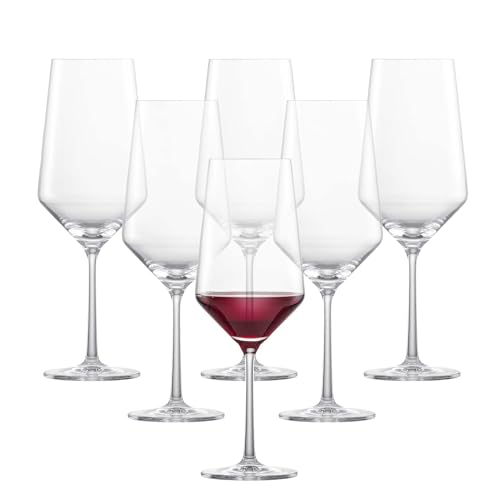
3. Zwiesel Glas Pure Bordeaux Glasses
A line made with a break-resistant crystal-style glass called Tritan. It is a tougher choice for frequent use.
Suits: busy homes. Strengths: durable. Weaknesses: a slightly different feel than lead crystal. Skip it if you want old-school crystal.
View Zwiesel Glas Pure Bordeaux on Amazon
Best for a good everyday upgrade
4. Spiegelau Authentis Bordeaux Glasses
A classic line from a respected maker, with a sturdy build for a stemmed glass. Often chosen as a step up from basic glasses.
Suits: a good everyday upgrade. Strengths: a balanced shape. Weaknesses: not as fine as top-end glasses. Skip it if you want the thinnest rim.
View Spiegelau Authentis Bordeaux on Amazon
Best for dinner parties
5. Luigi Bormioli Atelier Bordeaux Glasses
An Italian-designed line known for lightness and clarity. A graceful option for the table.
Suits: dinner parties. Strengths: a stylish look. Weaknesses: thin glass. Skip it if you want heavy glassware.
View Luigi Bormioli Atelier Bordeaux on Amazon
Best for quick aeration
6. Eisch Breathable Bordeaux Glasses
A German line made with a glass treatment intended to help wine aerate. It suits those who like to open a bottle without decanting.
Suits: quick aeration. Strengths: a purpose-made idea. Weaknesses: a specialty design. Skip it if you want a classic line.
View Eisch Breathable Bordeaux on Amazon
Care and Setup
- Hold the glass by the stem or base while washing.
- Rinse in warm water and air dry upside down.
- Polish with a lint-free cloth.
- Store upright to protect the rim.
- Store glasses upright in a cabinet with space between them.
- Polish with a microfiber cloth just before use.
Mistakes to Avoid
- Twisting the bowl and stem when washing.
- Pouring too much, which wastes the bowl’s room.
- Buying fragile glasses for rough use.
- Ignoring the dishwasher notes.
- Using a cloth with lint.
- Holding the bowl, which warms the wine.
The Anatomy of a Bordeaux Glass
A Bordeaux glass has four parts that matter: the bowl, the rim, the stem and the base. The bowl is tall and broad, with a large surface area that exposes the wine to air. The rim tapers slightly inward so aromas gather near the top. The stem lifts the bowl away from your hand, and the base keeps it steady. Each part contributes to how the glass performs, so it helps to know what to look for.
The bowl height is typically greater than in a Burgundy-style glass, which is rounder. Bordeaux bowls suit full-bodied reds such as Cabernet Sauvignon, Merlot and blends, which often have firm tannins. The shape directs the wine toward the middle of the mouth and gives space for aromas to develop. Check capacity on the listing, remembering that you will not fill the glass to the top.
Stem length and base width affect balance. A longer stem looks elegant, but a shorter one is more stable and less likely to snap. A wide, flat base resists tipping. Check the total height if your cabinets have limited space. Some designs have a stem that is slightly thicker near the bowl for strength. Look at the listing photos and dimensions together to judge the proportions, since small differences add up.
Crystal Tiers and What the Extra Money Buys
Bordeaux glasses are sold across a wide range of qualities. At the everyday level, machine-made glasses are sturdy, consistent and affordable, and they suit regular use and large households. Mid-range lines often use crystal glass, which can be thinner and clearer while still being fairly durable. At the top, hand-finished or mouth-blown glasses can be extremely light and delicate, with fine rims and long stems, and they usually need careful handling.
What you pay for is mostly weight, finesse and design. A finer rim, a lighter bowl and a more precise shape can make drinking a pleasure, but they also raise the risk of breakage and the cost of replacing glasses. For some households, a mid-range set that tolerates the dishwasher is the right balance. For collectors or frequent hosts who value the experience, a premium set may be worth it.
Ask what each tier costs you in care. Fragile glasses may demand hand washing, careful storage and attention at the table. Durable glasses ask for less. Consider replacement availability too. A line that is widely sold makes it easy to replace a single glass, and a limited edition may not. Be skeptical of marketing claims about flavor improvement, and judge by how the glass feels and how it suits your habits.
Which Wines Suit a Bordeaux Glass
As the name suggests, a Bordeaux glass is built for the wines of the Bordeaux region, which are typically blends based on Cabernet Sauvignon and Merlot. The shape also suits other full-bodied reds, such as Malbec, Syrah and many blends, where tannin and structure benefit from extra air. If your cellar leans toward bold reds, this glass is a natural fit.
Lighter reds, such as Pinot Noir, are often served in a wider, rounder bowl that concentrates delicate aromas, but a Bordeaux glass still works for casual drinking. Many whites can also be served in a Bordeaux glass, particularly fuller whites, if you do not own a dedicated white wine glass. Sparkling wines suit narrower flutes or tulip shapes, which keep bubbles lively.
Keep your collection practical. If you drink mainly red wine, a set of Bordeaux glasses might be all you need. If you drink several types, add one more shape, such as a smaller white wine glass, before buying many specialty glasses. Think about how often you will use each type and where you will store them. A single versatile glass that you enjoy will see more use than a cabinet full of unused specialty shapes.
Dishwasher Rules and Hand-Washing Technique
How you wash glasses affects how long they last. Check the care instructions: some Bordeaux glasses are labeled dishwasher-safe, and others should only be washed by hand. Even dishwasher-safe glasses benefit from a gentle cycle, a rack with secure stem holders and enough space so glasses do not touch. High heat and harsh detergents can cause cloudiness over time.
To wash by hand, use warm water and a small amount of mild soap. Hold the glass by the base and the bowl rather than twisting the bowl against the stem, which is a common cause of breakage. Use a soft sponge or brush that is safe for glass, and avoid abrasive pads. Rinse well to avoid soap taste, and drain upside down or dry right away.
Polishing removes water spots and gives clarity. Use a clean, lint-free cloth, holding the bowl gently with one hand and the base with the other. Steam from a kettle can help remove stubborn spots, but handle with care. Avoid drying with towels that smell of detergent. Store the glasses upright in a cabinet with space between them. If you stack them, put soft liners between them. Check the rim often for chips.
Buying a First Set and Budgeting for Breakage
Breakage is part of owning wine glasses, so plan for it. For a first set, four to six glasses cover most small gatherings. If you host larger groups, consider more, or mix in some everyday glasses. A tempting idea is to buy the most delicate glass available, but if you will break a few a year, a sturdier line may be more economical.
Before buying, check what the set includes, the dimensions, the capacity and the care instructions. Compare similar sets by how many glasses you get and what they are made from, rather than by price alone. Read customer comments for mentions of breakage on arrival, since delicate glass is vulnerable in shipping. Check the return and replacement policy.
Signs it is time to replace a glass include chips, cracks, deep scratches, cloudiness that will not wash out and a wobbly stem. Do not keep using a chipped glass, since the rim can cut. If you are building a collection over time, record the name of the line so you can match replacements. A good plan is to buy slightly more than you need, so one or two breakages do not break up the set. Store the extras carefully, in the original packaging if you can, and rotate them into use.
Bordeaux Glass FAQ
Why a Bordeaux glass?
The tall bowl and tapered rim suit full-bodied reds.
Can I use it for other wine?
Yes. It works for most reds and many whites if you prefer a bigger bowl.
How much should I pour?
About a third of the bowl leaves space for aroma.
How full should I pour?
About a third of the bowl is a good rule. That leaves room to swirl and lets the aromas gather above the wine. Pour less if the bowl is very large.
Is a Bordeaux glass good for white wine?
It can work, especially for fuller whites, though a smaller white wine glass keeps cooler drinks cooler. If you have only one set, a Bordeaux glass is fine for casual drinking.
How many glasses should I buy first?
Four to six suit many small households, with more if you host often. Consider extras for breakage.
What is the difference between crystal and regular glass?
Crystal can be thinner, lighter and clearer, while regular glass is usually thicker and more durable. Many modern crystal glasses are lead-free, so check the listing.
Why do wine glasses get cloudy?
Common causes are hard water deposits, harsh detergents and high heat in the dishwasher. Gentle washing and a rinse aid can help, and permanent etching cannot be reversed.
Should I hold the glass by the stem or the bowl?
By the stem or the base, which keeps the wine from warming and the bowl clean. Stemless glasses are held by the bowl.
How should I store wine glasses?
Store them upright in a cabinet with space between them or in a stemware rack. Avoid stacking them rim to rim, and keep them away from strong odors.
Are thin glasses worth the extra care?
They can be a pleasure to drink from, but they break more easily. Choose them if you enjoy the feel and are happy to hand wash.
Stem Length, Rim Thickness and How They Feel in Hand
Two glasses with a similar bowl can feel completely different because of the parts you touch and sip from. Rim thickness is the most noticeable. A thin, cut rim lets wine flow smoothly onto your tongue, while a thick, rolled rim feels more like drinking from a tumbler. Thin rims are usually found on lighter, higher-tier glassware, and they are also more prone to chipping, so the feel you gain comes with a handling cost.
Stem length is the other variable. A long stem keeps your hand away from the bowl, which helps keep red wine from warming and prevents fingerprints, but it raises the center of gravity and makes tipping easier. Short stems and stemless designs are more stable and fit in a dishwasher more easily, yet they invite hand warmth. If you drink mostly with company at a table, a long stem looks and works well. If you pour casually during a movie or on a crowded counter, a shorter one may be the more forgiving choice.
Machine-Made, Mouth-Blown and Hand-Blown Glass
The way a glass is made affects weight, thickness consistency and price. Machine-made glassware is formed in molds and produced in large volumes, which keeps costs down and makes it easy to buy matching replacements. Mouth-blown glass is shaped by a worker blowing into a mold, which generally allows thinner walls and finer shapes. Fully hand-blown glass, with no mold, is the most labor-intensive and tends to have slight variations from one piece to the next.
None of these labels guarantees quality on its own. A well-engineered machine-made glass can outperform a poorly made blown one. What the label does tell you is how likely the glass is to be very thin and delicate, and how easy it will be to find a matching piece later. If you are building a set over years, availability of the same pattern is worth checking.
Gift Sets, Boxed Sets and Mixing Pieces
Bordeaux glasses are frequently sold in sets of two, four, six or twelve, and the packaging matters more than it sounds. Larger sets are usually cheaper per glass, but a case of twelve only makes sense if you entertain regularly and have shelf space. A set of two makes a practical gift and suits couples. When shopping for a gift, think about the recipient’s cabinet and washing habits: a delicate crystal set is lovely for someone who hand-washes, and less thoughtful for someone who relies on a dishwasher.
Mixing glass families is fine in a casual setting, but for a formal table it helps to keep the same silhouette so that everything lines up visually. Many buyers pick one Bordeaux glass for reds and a smaller universal glass for everything else.
Reading the Listing: Volume, Height and Capacity
Product pages quote capacity in ounces or milliliters, and the figure can mislead. A stated capacity of 20 ounces or more does not mean you should fill it that far. It describes how much the bowl can hold to the brim, and the wine should occupy only a modest portion so the aromas have room to collect. Height tells you whether the glass fits your cabinet, since tall stemware often does not clear a standard shelf. Measure the shelf clearance before ordering, and check the diameter of the base if you use a dishwasher rack with narrow slots.
Weight is also worth reading. A lighter glass usually feels more elegant, but it will probably need more careful handling. Customer photos that show the glass beside a hand or a bottle give a better sense of scale than the numbers alone.
Decanters, Aeration and When the Glass Does the Work
Many Bordeaux drinkers pair their glasses with a decanter, especially for young, tannic wines. A decanter exposes the wine to air and can separate sediment from older bottles. A wide bowl does some of that work in the glass itself, which is one reason Bordeaux shapes are so large. If you do not own a decanter, you can still give a young red some air by pouring it into the glass ahead of time and giving it a few minutes before the first sip.
That said, aeration is not a cure-all. Some wines open up beautifully and others fade, so taste early and judge by how the wine changes. A well-shaped glass gives you a better view of that evolution, which is arguably the best use of it.
Serving Temperature and Pour Habits in the Glass
Glass choice interacts with temperature more than most people expect. Full-bodied reds are often best slightly below warm room temperature, and in a heated home a bottle can sit well above that. A large bowl exposes more wine to the surrounding air, so it warms faster in your hand and in a warm room. Chilling a bottle briefly before serving can help, and holding the glass by the stem keeps your hand out of the equation.
Pour habits matter too. A modest pour leaves space for swirling, which releases aroma without spilling, and it lets you top up rather than finish a glass that has gone warm. If you tend to pour generously, a heavier base and shorter stem will feel more secure. Over time you will learn which pour size suits your glass, and this small adjustment often does more for the experience than the brand on the base. Pairing a good glass with a sensible serving temperature is an inexpensive improvement that costs nothing extra.
Finally, consider rinsing a new glass with water before first use. Manufacturing residue or box dust can slightly affect aroma, and a quick rinse followed by a lint-free cloth leaves the bowl neutral and clear.
Related guides
- 6 Best Bourbon Decanters: Crystal, Glass and Globe Styles
- 6 Best Burgundy Wine Glasses: Crystal and Durable Picks
- 6 Best Crystal Whiskey Decanters: Cut and Plain Styles
- 6 Best Crystal Wine Decanters: Riedel, Zalto and More
Frequently Asked Questions
Are stemless Bordeaux glasses a good idea?
They are stable, easy to store and often dishwasher friendly, which suits casual drinking. The trade-off is that your hand warms the bowl and leaves fingerprints. If you mostly drink red wine at room temperature in a relaxed setting, stemless can work, but stemmed glasses are better for tasting.
Do expensive wine glasses really make wine taste better?
A better shape and thinner rim can change how aromas reach your nose and how the wine feels in the mouth, so differences are real but often subtle. Price alone does not guarantee a better experience. Choose based on how you drink and how carefully you handle glassware.
How do I tell if a wine glass is crystal?
Crystal is generally clearer and a little heavier than ordinary soda-lime glass, and it can produce a ringing tone when tapped gently. Many modern brands use lead-free crystal alternatives, so check the product description for the material rather than relying on sound or weight alone.
What size shelf do I need for tall Bordeaux glasses?
Measure the clearance between shelves and compare it with the glass height listed on the product page, adding a little extra so you can lift the glass out without bumping the shelf above. If clearance is tight, consider a hanging stemware rack or a lower-profile glass.
Choosing Bordeaux Wine Glasses: A Closer Look at What Actually Matters
This second Bordeaux selection leans into the everyday-versus-crystal question: glasses for people who drink Cabernet and its cousins regularly and want the right shape without turning every pour into a ceremony or every wash-up into a risk assessment. The picks span fine crystal and practical glass, and the differences show in rim feel, bowl weight, washing tolerance and how the glasses behave across a long dinner. Choosing here is about calibrating elegance to your household’s true gentleness — and to how often the good bottles actually come out.
Most buyers compare Bordeaux wine glasses on the obvious points first and only discover the details that matter after a few weeks of use. The sections below slow the decision down and look at the qualities that decide whether a Bordeaux wine glass still feels right once the novelty has worn off. None of them requires expert knowledge; they simply ask you to match the product to the way you actually live, serve and clean up.
Everyday drinkability versus occasion glass
A household that opens red wine several nights a week needs glasses that live within reach and wash without negotiation; a household whose Bordeaux appears at Sunday dinners can indulge finer, more fragile glass. Count your real red-wine nights before choosing. The category’s most common regret is crystal bought for a weekly habit, chipped down to a duo within a year, while the second most common is everyday glass that makes a treasured bottle feel underdressed.
Bowl proportions for modern wines
Much of today’s Cabernet is riper and softer than the austere Bordeaux the classic shape evolved for, and generous bowls flatter that style by giving alcohol and fruit room to integrate. Very narrow bowls can concentrate alcohol harshly on ripe wines. If your bottles come mostly from warm regions and modern producers, favour the more open end of the picks; if you cellar classic, structured wines, the traditional proportions remain the reference for a reason.
Weight and balance in the hand
A Bordeaux glass is held, swirled and set down dozens of times in an evening, and its balance — bowl, stem, foot — decides whether that feels graceful or precarious. Top-heavy glasses swirl beautifully and topple enthusiastically; foot-heavy ones feel planted but dull in the hand. Listings rarely describe balance, so weight figures and bowl dimensions are your proxies. When in doubt, choose the glass whose proportions look calm rather than dramatic.
Dishwasher reality
Some modern glasses are honestly dishwasher-safe and emerge bright for years; fine crystal is not among them. If your household’s rule is that everything goes in the machine, buy glasses designed for that life and enjoy them without guilt. If you hand-wash happily, crystal’s rim and ring are yours. The failure mode is the middle: hand-wash-only glasses owned by a dishwasher household, which die slowly by being washed badly or not used at all.
Sets, pairs and replacement logic
Bordeaux glasses are sold in sets that assume dinner parties, but many households drink red wine in twos. Buying a larger set of a replaceable range is usually smarter than a precious pair, because breakage then costs a re-order rather than a farewell. Check that the range is a continuing line rather than a seasonal design. Continuity is an unglamorous feature that quietly determines whether your set exists in five years.
How the Six Picks Differ in Everyday Use
Specifications only tell half the story with Bordeaux wine glasses. The other half is how each pick behaves on an ordinary evening: how it feels in the hand, how much attention it asks for, and how forgiving it is when you are busy, tired or serving guests. Read the six picks below as six answers to the same question, each tuned to a slightly different buyer.
Riedel Vinum Bordeaux Glasses
Start with the job this pick does best, because that is where it separates itself from the rest of the list. In the summary table above it is described as: check the pack size. Compare these glasses across a whole imagined dinner — first pour to last wash-up — because Bordeaux glasses are judged by evenings, and the evening includes your sink at midnight as surely as it includes the wine. Think about how it will be used in your home specifically: who will handle it, how often it will come out, where it will live between uses, and what will annoy you first if you choose badly. If that description matches your routine, it deserves to be on your shortlist even if it is not the headline recommendation.
Zalto Denk’Art Bordeaux Glass
This is the pick to study if the first option does not quite fit your space, your habits or the way you like to work. In the summary table above it is described as: premium. Compare these glasses across a whole imagined dinner — first pour to last wash-up — because Bordeaux glasses are judged by evenings, and the evening includes your sink at midnight as surely as it includes the wine. Think about how it will be used in your home specifically: who will handle it, how often it will come out, where it will live between uses, and what will annoy you first if you choose badly. Buyers whose priorities line up differently will be happier with one of the neighbouring picks, and there is no shame in that.
Zwiesel Glas Pure Bordeaux Glasses
Treat this one as a deliberate alternative rather than a runner-up: it makes a different trade-off, and for some buyers that trade-off is the right one. In the summary table above it is described as: check the pack size. Compare these glasses across a whole imagined dinner — first pour to last wash-up — because Bordeaux glasses are judged by evenings, and the evening includes your sink at midnight as surely as it includes the wine. Think about how it will be used in your home specifically: who will handle it, how often it will come out, where it will live between uses, and what will annoy you first if you choose badly. The honest test is how often you will use it in the way it was designed to be used, not how impressive it looks on a shelf.
Spiegelau Authentis Bordeaux Glasses
This pick suits buyers who read the first options and found them either more or less than they need. In the summary table above it is described as: check the pack size. Compare these glasses across a whole imagined dinner — first pour to last wash-up — because Bordeaux glasses are judged by evenings, and the evening includes your sink at midnight as surely as it includes the wine. Think about how it will be used in your home specifically: who will handle it, how often it will come out, where it will live between uses, and what will annoy you first if you choose badly. Choose it for that strength, accept the compromise that comes with it, and it will feel like the right purchase for years.
Luigi Bormioli Atelier Bordeaux Glasses
Look closely at this one if you value a particular strength over all-round balance, because that is the ground it competes on. In the summary table above it is described as: check the pack size. Compare these glasses across a whole imagined dinner — first pour to last wash-up — because Bordeaux glasses are judged by evenings, and the evening includes your sink at midnight as surely as it includes the wine. Think about how it will be used in your home specifically: who will handle it, how often it will come out, where it will live between uses, and what will annoy you first if you choose badly. If its weakness touches something you do every single time, look at the pick before or after it instead.
Eisch Breathable Bordeaux Glasses
The last pick on the list is not an afterthought; it covers a type of buyer the earlier options serve less well. In the summary table above it is described as: made for aeration. Compare these glasses across a whole imagined dinner — first pour to last wash-up — because Bordeaux glasses are judged by evenings, and the evening includes your sink at midnight as surely as it includes the wine. Think about how it will be used in your home specifically: who will handle it, how often it will come out, where it will live between uses, and what will annoy you first if you choose badly. Shortlist it, compare it directly with the pick ranked nearest to it, and let your own routine break the tie.
Bordeaux Glass Workflows: Weeknight Bottles to Cellar Treasures
A Bordeaux wine glass earns its keep in moments, not in product photos. The situations below are the ones that separate a satisfying purchase from a cupboard ornament, and each one points back to a quality already covered in the reviews above.
The good bottle on a Friday
A better-than-usual Cabernet deserves the better glasses, a modest decant or at least an early pour, and pours kept to the bowl’s widest point. Let the wine lead the evening’s pace. This scenario is why households keep one tier of glass above the everyday set: not for guests’ admiration, but because a wine you waited for should meet a glass that was chosen for it. Rinse the glasses with water first if they have sat in a cupboard.
Midweek red with dinner
The everyday glasses’ moment: pulled from an accessible shelf, filled without ceremony, washed without dread. Shape still matters — the right bowl makes a modest wine taste intentional — but durability and ease dominate. Households that get this scenario right drink better wine more often, because the friction of ‘getting out the good glasses’ never gets a vote. Friction, in wine as in exercise, is the silent decision-maker.
Serving a table of mixed wines
When whites, reds and perhaps a sparkling wine share a table, glass logistics matter: enough Bordeaux glasses for the red drinkers, a plan for rinsing between wines, and pours small enough that nobody is stranded with a full glass of the wine they liked least. Identical red glasses keep the table coherent and the comparisons fair. Assign one person to pouring; free-for-all pouring with large glasses is how bottles vanish unevenly.
Ageing wines and sediment
Older Bordeaux throws sediment, and the glass is the last line of defence: pour slowly, watch the shoulder of the bottle against a light, and stop at the first cloud. A clean, polished bowl shows the wine’s brick-edged colour honestly, which is part of the pleasure of mature wine. These bottles also forgive shape least and reward it most — their aromas are delicate, and a generous, clean bowl gathers what age has made subtle.
Bordeaux Glass Care: Keeping Bowls Bright and Rims Fine
Red wine is a staining, tannin-rich liquid, and glasses left overnight wear it into the bowl. A rinse before bed — even without a full wash — prevents most staining and all of the next-morning regret. For glasses that have dulled over time, a soak in warm water with a little bicarbonate, followed by a careful wash and polish, restores most bowls. Treat stems as handles, never as levers, and wash one glass at a time in a sink with a towel laid in the bottom.
Polishing is a skill worth thirty seconds of learning: support the base with one hand through the cloth, polish the bowl with the other, and never twist bowl and foot in opposite directions. Work over a soft surface. The stem you save pays for the lesson many times over, and a polished glass genuinely improves the wine’s appearance, which is part of its flavour whether we admit it or not.
Store glasses in the calmest cupboard you have: upright, separated, away from cooking grease and spice smells, with height for the tallest stems. Glasses stored above a cooker collect a film that only reveals itself when wine is already poured. A pre-use rinse and polish is the professional habit that makes storage conditions less critical; adopt it and every glass, however stored, meets the wine clean.
Retire the wounded. A chipped rim cuts lips and ruins delivery; a cracked bowl is a spill with a schedule. Because Bordeaux glasses are handled by guests at your best dinners, inspection before setting the table is a host’s duty, not fussiness. Keep the set’s numbers healthy by re-ordering while the range exists, and let damaged pieces leave with thanks for their service.
More Questions About Bordeaux Wine Glasses
Can Bordeaux glasses serve other red wines?
Yes — they are the generalists of the red wine world. Rioja, Chianti, Rhône blends, Malbec and most structured reds sit happily in a Bordeaux bowl, because the shape’s virtues — air, aroma gathering, smooth delivery — are red wine virtues generally. Very aromatic, delicate wines like fine Pinot Noir have their own wider shape that flatters them more, but a Bordeaux glass serves them respectably, not wrongly.
Is crystal noticeably better than glass?
In the hand and at the rim, yes: finer, lighter, with a clarity that shows a wine’s colour beautifully. In the bowl’s effect on aroma and flavour, the difference is smaller than the difference made by shape and cleanliness. Buy crystal for the pleasure of the object and the fineness of the rim if your household will care for it; buy excellent glass without a moment’s inferiority if your life is livelier.
How do I stop red wine glasses smelling of the cupboard?
Store them away from spices and cleaning products, rinse before use, and polish with a clean cloth kept only for glassware — a cloth washed with fragranced detergent can perfume a bowl by itself. A glass that still smells after rinsing needs a proper wash and air-dry. The rule is absolute: a wine glass must smell of nothing, because whatever it smells of becomes part of the wine’s aroma.
Should I decant into the glass or a decanter?
Both aerate; a decanter does it for the whole bottle at once and handles sediment elegantly, while the glass aerates pour by pour and lets you follow the wine’s evolution. Young, tannic wines benefit most from a decanter’s head start. Mature, fragile wines often prefer the glass alone, where air contact is gentler and you control the pace. Many hosts do both: a brief decant, then the glass takes over.
What size set suits a couple who entertain?
Six is the workable number: two for the couple’s evenings, six when friends come, with breakage absorbed by re-ordering rather than panic. If the budget forces a choice between six good glasses and four finer ones, the couple who entertain should take the six. Wine is social; a set that cannot seat your friends around a bottle is a set that fails at its main event.
A Simple Way to Decide
Decide by your red-wine calendar and your washing personality. Frequent drinkers should weight durability and dishwasher honesty; occasion drinkers may indulge crystal’s fineness. Then confirm bowl proportions against your wines’ style — classic and structured, or ripe and modern — and choose a range you can replace. The glasses that result will be used for every bottle without a second thought, which is exactly what good glassware is for.
Finally, buy for the routine you have, not the routine you imagine. A Bordeaux wine glass that suits your real habits will be used weekly and enjoyed for years, while a more impressive one that fights your space, your cleaning habits or your taste will quietly stop coming out of the cupboard. The right pick above is the one whose strengths match your most common situation and whose weaknesses land on things you rarely do.
Final Checks Before You Buy
One last habit separates happy buyers from disappointed ones with Bordeaux wine glasses: they check the unglamorous details before ordering. Measure the space where the Bordeaux wine glass will live, read what is actually included in the box, and confirm the care instructions suit the way you really clean up after a gathering. Those five quiet minutes prevent most returns, most breakages and most of the frustration described in the problem sections above. If a detail cannot be confirmed from the listing, choose the pick whose design depends least on that detail.
Check the listing photographs as carefully as the description. With Bordeaux wine glasses, the photographs reveal what marketing language smooths over: proportions against a human hand or a familiar object, the finish in ordinary light, the parts that will be handled daily. Zoom in on joins, rims, hinges, seams and controls — whatever your chosen pick asks your fingers to trust. A listing with many honest angles is usually a product with nothing to hide, and a listing with only glamour shots deserves a slower decision.
Think about the second year, not just the first week. In the first week every Bordeaux wine glass is exciting; in the second year it is either a habit or a storage problem. Ask whether replacement parts, matching additions or simple repairs will still be available, whether the style will still please you when it is familiar rather than new, and whether the care routine still sounds acceptable on an ordinary tired evening. Purchases that survive this thought experiment rarely disappoint.
The Short Version
For a trusted classic, the Riedel Vinum. For premium, the Zalto. For durable, the Zwiesel Glas Pure. For a step up, the Spiegelau Authentis. For Italian design, the Luigi Bormioli. For aeration, the Eisch. C
Related Guides
- 6 Best Bordeaux Wine Glasses for Cabernet: Stemmed and Stemless
- 6 Best Red Wine Glasses: Bordeaux, Burgundy and Universal (2026)
- 6 Best Wine Glasses for Red Wine: Bordeaux, Cabernet and Burgundy (2026)
- 6 Best Burgundy Wine Glasses: Crystal and Durable Picks
- 6 Best Crystal Wine Glasses: Thin-Rimmed Stems to Compare

