Disclosure: topratedkitchenware.com is reader-supported. When you buy through links on our site, we may earn an affiliate commission from Amazon and other retailers, at no extra cost to you.
Where to buy
If you searched for the best camerchal 12 volt battery, you almost certainly mean a commercial 12 volt battery, one bought for work, cycled daily, and expected to answer for its cost, and this guide reads the keyword that way from the first line. Four picks below state 12V or 12.8V in their titles and are linked, ranked by the evidence commercial buyers actually run on: stated cycle figures, stated expansion support, and stated protection. Two more state 24V and are covered in prose only, with no link and no image, because commercial discipline starts with buying the voltage on the purchase order, not the voltage that happened to be in stock.
- yeagulch 12.8V 100Ah LiFePO4 Battery, Group 31 — A 12.8V 100Ah LiFePO4 battery whose title states 15000+ deep cycles. Check on Amazon — check the latest price on Amazon
- SUPER EMPOWER 12.8V 100Ah LiFePO4 Battery, Group 31 — A 12.8V 100Ah LiFePO4 battery with 4P4S expansion support stated in its title.
- ABKPOWER 12V 20Ah LiFePO4 Battery — A compact 12V 20Ah LiFePO4 battery stating 6000+ cycles.
- Nermak 2 Pack 12V 10Ah LiFePO4 Battery — A two-pack of small 12V 10Ah LiFePO4 batteries for light-duty circuits.
- dumfume 24V 100Ah LiFePO4 Battery — A 24V 100Ah LiFePO4 battery with certifications stated in its title. Covered in prose only below, with no purchase link, because it does not match this guide’s core requirement.
- Qwenoer 22.2V-24V 10Ah Lithium Battery Pack — A small 24V lithium-ion pack with charger, for DIY and camera circuits. Covered in prose only below, with no purchase link, because it does not match this guide’s core requirement.
Read the full guide ↓ for the research method, the detailed reviews, the sizing math, and the mistakes that waste the most money in this category.
Commercial buyers ask a battery a ruder question than hobbyists do. Not will it work this weekend, but will it work every working day, in the hands of whoever is on shift, through the hot season and the cold one, and will the numbers still make sense when the second and third units are ordered to match the first. The search phrase that brought you here, best camerchal 12 volt battery, is best understood as that question with a typo in it: camerchal is how commercial sounds when it is typed fast, and commercial duty, daily cycling, standardized equipment, documented specifications, is exactly the standard this guide applies.
That standard rearranges the usual rankings. A commercial shortlist is built on stated cycle figures, because cycles are service life; on stated expansion support, because commercial systems grow by adding matched units; and on stated protection, because commercial batteries charge unattended in buildings full of other people’s property. Looks, novelty features, and single-unit heroics count for little. The four linked picks below all state 12V-class voltage, and they are separated almost entirely by how much of that commercial evidence their titles publish. The farm-duty version of the same thinking appears in the Best Commercial Farm Use 12 Volt Battery guide, where the seasons are the shift schedule.
Two picks state 24V and are prose-only, included because commercial purchasers meet them in catalogs constantly and because a documented no is a procurement tool: it is the sentence you can paste into the file when someone asks why the cheaper-looking listing was not ordered.
Key Takeaways
- Read camerchal as commercial: this guide ranks for daily-duty service, and its evidence is stated cycle figures, stated expansion support, and stated protection.
- Only picks whose titles state 12V or 12.8V are linked; the two 24V picks are prose-only, because a purchase order’s voltage is not a suggestion.
- The yeagulch pick states 15000+ cycles and the SUPER EMPOWER states 4P4S expansion to 20.48kWh; between them they define the commercial shortlist’s two poles, longevity and scalability.
- Standardize on one model per role and record its exact title and ASIN in the asset register; sibling models with different titles are different assets.
- Small batteries have commercial jobs too, lighting, finders, sensors, backup circuits, and the small picks here state their cycles honestly for those roles.
- Total cost in commercial service is downtime plus replacement frequency, not the number on the first invoice; stated cycle evidence is how you estimate the second term.
In this guide
Quick Picks
Badges reflect commercial duty: cycle evidence and scalability at the top, small-circuit value in the middle, and the 24 volt entries marked clearly as the wrong voltage for this purchase order.
| Pick | Badge | Why it is here |
|---|---|---|
| yeagulch 12.8V 100Ah LiFePO4 Battery, Group 31 | Best Overall for Commercial Duty | The commercial leader: the strongest stated cycle figure in the set, with 1280Wh and a 100A BMS stated, aimed by its own title at home energy storage among other duties. |
| SUPER EMPOWER 12.8V 100Ah LiFePO4 Battery, Group 31 | Best for Scalable Systems | The scalability leader: identical stated energy and BMS class to the top pick, plus the set’s clearest stated expansion architecture, for systems that will grow unit by unit. |
| ABKPOWER 12V 20Ah LiFePO4 Battery | Best Small-Circuit Commercial Pick | The small-circuit standard: 256Wh and 6000+ cycles stated, sized for the lighting, sensor, and backup circuits that commercial buildings run by the dozen. |
| Nermak 2 Pack 12V 10Ah LiFePO4 Battery | Best Light-Duty Pair | A light-duty pair stating 2000+ cycles: right for scooters, lighting, and finder-class loads in working fleets, with its scale stated rather than disguised. |
| dumfume 24V 100Ah LiFePO4 Battery (prose-only) | Prose-Only: Wrong Voltage for This Order | Arguably the most commercially documented battery in the pool, certifications and all, at exactly the wrong voltage for a 12 volt purchase order. |
| Qwenoer 22.2V-24V 10Ah Lithium Battery Pack (prose-only) | Prose-Only: Wrong Voltage, Wrong Scale | Wrong voltage and consumer scale for a commercial 12 volt order; documented here because its CCTV and LED applications make it a frequent false positive in commercial searches. |
How These Picks Were Chosen
The voltage filter ran first, as it does throughout this series: a pick earned a link only if its verified title states 12V or 12.8V, the commercial class this keyword orders. Four picks passed. Two passed every quality question and failed the voltage, and they are reviewed in prose so the file shows its working.
Ranking then followed commercial evidence in a fixed order: stated cycle figure first, because it forecasts replacement timing; stated expansion architecture second, because commercial systems scale by replication; stated energy and BMS third, because they size the unit to the load; and stated temperature protection throughout, because unattended charging in commercial premises is a liability question as much as a technical one. That order put a 15000+ cycle unit and an expansion-documented unit at the top, ahead of small batteries that are, within their circuits, perfectly specified. It is the same evidence hierarchy the Best Deep Cycle 12 Volt Battery Technology guide uses when it compares chemistries for working systems rather than weekend ones.
Method honesty for the procurement file: this is title-evidence research verified on 2026-11-20, not a fleet trial. No six batteries were run for a year in a working building to produce these rankings, and a guide claiming that should be asked for its logs. What research establishes reliably is which specifications a maker will publish, which is precisely the evidence a commercial buyer can hold a supplier to, and that is the ground these rankings stand on.
Best Camerchal 12 Volt Battery Options for Commercial Duty: The 6 Picks
Four linked picks state 12V-class voltage and carry links and images. Two prose-only picks state 24V and are reviewed without links. Commercial readers should note the pattern in the rankings: stated cycle life and stated expansion support, the two numbers a fleet can plan around, decide the order.
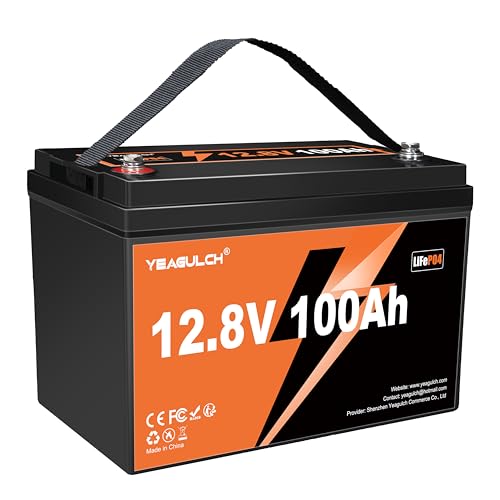
yeagulch 12.8V 100Ah LiFePO4 Battery, Group 31
Badge: Best Overall for Commercial Duty
Strengths
- 15000+ deep cycles stated, the service-life evidence commercial planning runs on
- 1280Wh and a 100A BMS stated, a complete unit specification for load planning
- Home energy storage named in the title, aligning the product with stationary commercial backup roles
Trade-offs
- No expansion architecture is stated in the title; multi-unit growth needs the maker’s written guidance first
- Title says low-temperature protection without the word cutoff; confirm the exact behavior for unheated premises
- Group 31 (BIC) format should be confirmed against existing racks and trays before standardizing
| Voltage (title) | 12.8V |
| Capacity (title) | 100Ah |
| Stored energy (title) | 1280Wh |
| Chemistry (title) | LiFePO4 |
| BMS (title) | 100A |
| Cycle figure (title) | 15000+ deep cycles |
| Protection (title) | Low temp protection |
| Form factor (title) | Group 31 (BIC) |
Commercial battery selection is, at bottom, replacement scheduling, and this yeagulch title publishes the number the schedule is built from: 15000+ deep cycles. On daily cycling, that stated class describes a unit whose replacement belongs in a long-range plan rather than next year’s budget, and for a business, that is the difference between a battery as infrastructure and a battery as a recurring surprise. The supporting figures are equally businesslike: 1280Wh stated for load planning, a 100A BMS stated for current planning, and low-temperature protection stated for the unheated corners of commercial premises where batteries actually live.
Its title’s application list, RV, marine, camping, off-grid, and home energy storage, reads consumer at first glance, but the storage entry is the tell: this unit is offered for stationary energy work, which is where commercial 12 volt demand concentrates, backup for small systems, buffered power for equipment, and the house side of working vehicles and vessels. A fleet or facilities buyer standardizing on one 100Ah model for those roles could do far worse than a unit whose maker publishes its cycle class in the headline.
The procurement cautions are specific. The title states no expansion architecture, so a plan that grows by paralleling units must extract the maker’s guidance in writing before the second order, not after the fourth. The low-temperature language says protection rather than cutoff, a one-word difference worth one email. And the BIC Group 31 format should be physically confirmed against your racks. Close those three questions and this is the most commercially legible battery in the pool, which is why it leads a guide whose keyword, typo and all, asked for exactly that.
Best for: facilities, fleets, and working systems that cycle daily and plan replacements in years. / Not suited for: buyers who need a stated multi-unit expansion architecture before the first order.
Check on Amazon — check the latest price on Amazon before you decide, because listings, included accessories, and availability change over time.
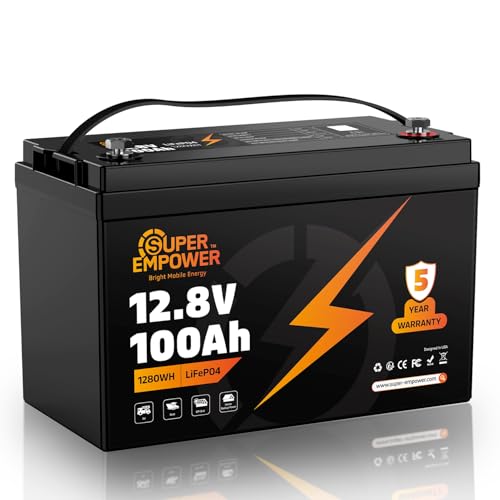
SUPER EMPOWER 12.8V 100Ah LiFePO4 Battery, Group 31
Badge: Best for Scalable Systems
Strengths
- Supports 4P4S expansion up to 20.48kWh stated, the growth story a commercial system can actually plan around
- 1280Wh and a 100A BMS stated, matching the leader’s unit specification
- Low-temperature cutoff stated outright, the precise wording unattended commercial charging wants
Trade-offs
- No cycle figure is stated in the title, so service-life planning must close that question with the maker
- Its title leads with RV and trolling applications; stationary buyers should confirm mounting and duty expectations
- Group 31 footprint, like the leader, wants a tape measure against existing enclosures
| Voltage (title) | 12.8V |
| Capacity (title) | 100Ah |
| Stored energy (title) | 1280Wh |
| Chemistry (title) | LiFePO4 |
| BMS (title) | 100A |
| Cycle figure (title) | Not stated in title |
| Protection (title) | Low-temp cutoff |
| Expansion (title) | 4P4S, up to 20.48kWh |
| Form factor (title) | Group 31 |
Where the leader sells longevity, this SUPER EMPOWER unit sells growth, and commercial buyers will recognize both currencies. Its title states the same working specification, 1280Wh, a 100A BMS, in the same Group 31 class, and then adds the sentence systems are built from: supports 4P4S expansion, up to 20.48kWh. A facilities plan that starts with two units this year and six in three years needs exactly that sentence in writing from the maker, because paralleling and series arrangements are where undocumented batteries become uninsurable improvisations. Here the architecture is part of the product’s published identity.
The protection wording is also the most precise in the set: low-temperature cutoff, stated as a cutoff, which is the behavior an unattended charger in a cold warehouse needs from the battery itself. Combined with the stated energy, a planner can size a system, stage its growth, and document its cold behavior from the title alone, which is a rare and commercially valuable completeness, the same completeness the Best Dc 12 Volt Marine Battery guide prizes when vessels standardize their house banks.
Its gap is the mirror of the leader’s: no cycle figure is stated in the title. For a buyer whose model of cost is replacement timing, that absence must be closed with the maker before standardization, in writing, and filed. Buyers whose model is growth, start documented, expand documented, may reasonably rank this pick first and treat the cycle question as a negotiation item rather than a disqualifier. The guide keeps it second by a nose, on the principle that in commercial service, a published service-life figure is the rarer and more bankable evidence.
Best for: growing systems that will add matched units over time. / Not suited for: buyers who require a published cycle figure before standardizing.
Check on Amazon — check the latest price on Amazon before you decide, because listings, included accessories, and availability change over time.

ABKPOWER 12V 20Ah LiFePO4 Battery
Badge: Best Small-Circuit Commercial Pick
Strengths
- 6000+ cycles stated, a serious service-life figure at small scale
- 256Wh and a 20A BMS stated, a complete specification for circuit-level planning
- Application list matches commercial small loads honestly: lighting, solar, home backup circuits
Trade-offs
- 20Ah is circuit scale only; it cannot back a system, only a load
- No temperature protection is stated in the title; cold or hot plant rooms need verification
- Standardizing small circuits on one model still requires the same ASIN discipline as the big units
| Voltage (title) | 12V |
| Capacity (title) | 20Ah |
| Stored energy (title) | 256Wh |
| Chemistry (title) | LiFePO4 |
| BMS (title) | 20A |
| Cycle figure (title) | 6000+ |
Commercial estates run on small circuits: emergency lighting, signage, sensors, camera power, gate and access equipment, and the backup feeds that keep small systems graceful when the mains blinks. This ABKPOWER battery is specified like it knows that world. Its title states 256Wh, a 20A BMS, and 6000+ cycles, which at circuit scale is a complete procurement document: the energy sizes the load, the BMS bounds the current, and the cycle figure schedules the replacement, years out, across a fleet of identical installations.
The discipline it rewards is standardization. A building with thirty small battery-backed circuits on six random battery models has a maintenance problem wearing a cost saving as a disguise. Thirty circuits on one documented model, with its exact title and ASIN in the asset register and a shelf spare beside the register, is a system. This battery’s stated figures make it a credible candidate for that role in a way vaguer small batteries are not, and its LiFePO4 chemistry suits the daily shallow cycling those circuits impose.
Its boundaries are capacity and evidence, stated plainly. Twenty amp-hours serves a circuit, not a system, and any plan that quietly grows the load will outgrow it. The title states no temperature protection, so plant rooms that bake or freeze need that question closed before deployment. Within those bounds, this is the small end of the commercial shortlist done properly, and it earns its link on the same evidence standard as the leaders, which is more than most small batteries in any catalog can say.
Best for: standardized small circuits across a building, fleet, or site. / Not suited for: system-level backup or any load whose growth is already foreseeable.
Check on Amazon — check the latest price on Amazon before you decide, because listings, included accessories, and availability change over time.
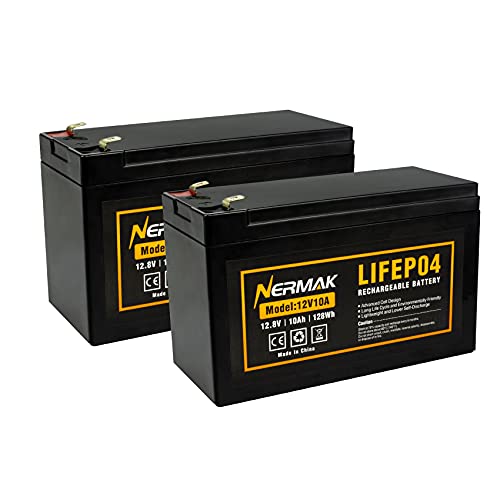
Nermak 2 Pack 12V 10Ah LiFePO4 Battery
Badge: Best Light-Duty Pair
Strengths
- 2000+ cycles stated, an honest service figure for light-duty commercial circuits
- Built-in 10A BMS stated, matched to the small loads in its application list
- Two-pack format suits deployed unit plus shelf spare, the smallest possible spares policy
Trade-offs
- 10Ah per unit is the smallest capacity in the guide; runtime planning must be exact
- No stored-energy figure is stated in the title
- Its application world, scooters, Power Wheels, fish finders, is light duty by design, not by insult
| Voltage (title) | 12V |
| Capacity (title) | 10Ah per unit (2 pack) |
| Stored energy (title) | Not stated in title |
| Chemistry (title) | LiFePO4 |
| BMS (title) | Built-in 10A |
| Cycle figure (title) | 2000+ cycles |
Not every commercial battery works hard; some work often, lightly, and in numbers. Mobility scooters in a rental fleet, lighting in rental equipment, fish finders on charter boats, small solar novelties that became permanent: the light-duty stratum is real commercial work, and this Nermak pair serves it with its figures showing. The title states 2000+ cycles and a built-in 10A BMS, which lets a fleet operator schedule and bound the units’ service without pretending they are something larger.
The two-pack format deserves a commercial reading: one unit deployed, one on the shelf is the smallest spares policy that exists, and for light-duty circuits a swap-in spare beats a service call by days. Operators who standardize a fleet of small devices on this pack gain a single charger routine, a single register entry, and predictable behavior across the fleet, the same standardization logic as the big picks at a fraction of the scale, and the logic the Best Deep Cycle 12 Volt Battery For Dry Camping guide applies when camps standardize their lighting power.
The limits are arithmetic, not character: 10Ah is 10Ah, the BMS ceiling is 10A, and no title figure here supports propulsion, backup of systems, or any load with ambition. Commercial buyers who respect those numbers get a tidy, documented light-duty asset. Buyers who ask small batteries to do big batteries’ work get the usual tuition bill, itemized in the mistakes section below.
Best for: light-duty fleets and circuits with a spare-on-the-shelf policy. / Not suited for: propulsion, system backup, or loads above its stated BMS ceiling.
Check on Amazon — check the latest price on Amazon before you decide, because listings, included accessories, and availability change over time.
dumfume 24V 100Ah LiFePO4 Battery
Badge: Prose-Only: Wrong Voltage for This Order
Strengths
- UN38.3 and UL1973 certifications stated, the paperwork commercial and institutional buyers ask for first
- 2560Wh, a 100A BMS, 15000 cycles, and low-temperature cutoff all stated in one title
- IP65 waterproofing stated, suiting harsh commercial environments
Trade-offs
- 24V output: it cannot serve a 12 volt system, full stop
- Its excellence is a catalog hazard; it will keep appearing in searches for this keyword and must keep being refused
- Series or conversion workarounds are system redesigns, not purchasing decisions
| Voltage (title) | 24V |
| Capacity (title) | 100Ah |
| Stored energy (title) | 2560Wh |
| Chemistry (title) | LiFePO4 |
| BMS (title) | Built-in 100A |
| Cycle figure (title) | 15000 deep cycles |
| Protection (title) | Low-temp cutoff, IP65 waterproof |
| Certifications (title) | UN38.3, UL1973 |
This entry exists to be quoted in a procurement file. The dumfume battery states 2560Wh, a 100A BMS, 15000 cycles, low-temperature cutoff, IP65 waterproofing, and UN38.3 and UL1973 certifications, a documentation set that would lead many commercial shortlists outright. If your organization runs 24 volt systems, stop reading this guide and start with the 24 volt one, where this battery is linked and recommended. If your purchase order says 12 volts, as this keyword’s does, none of that excellence is purchasable, because the battery is 24 volts and the system is not.
The commercial lesson is about catalog gravity. Strong products at the wrong specification exert a pull on busy buyers: the figures are better, the certifications are shinier, the discount this week is deeper. Yielding to that pull does not produce a bargain; it produces a redesign, converters, re-engineering, new chargers, new documentation, or a return freight bill. The cheapest battery is the one that matches the order the first time, and matching begins with the first number in the title.
So this battery is documented here, praised accurately, and linked never, under a 12 volt keyword. Commercial readers building genuine 24 volt estates will find it waiting in its correct guide with its correct audience. Everyone else should take the discipline and leave the battery, which is what discipline means.
Best for: 24 volt commercial systems, where it is a leading pick in its own guide. / Not suited for: any 12 volt purchase order, however attractive its documentation.
Prose-only pick: no Amazon link and no product image are shown for this unit, for the reason explained above.
Qwenoer 22.2V-24V 10Ah Lithium Battery Pack
Badge: Prose-Only: Wrong Voltage, Wrong Scale
Strengths
- Ships with a matched charger, simplifying small standalone circuit deployments
- Bare leads integrate into project enclosures and camera circuits cleanly
- Its title application list is honest about its DIY and light-duty scale
Trade-offs
- 22.2V-24V output cannot serve a 12 volt system
- Lithium-ion chemistry with no BMS or cycle figure stated, the opposite of commercial documentation practice
- 10Ah at the wrong voltage is two disqualifications, not one
| Voltage (title) | 22.2V-24V |
| Capacity (title) | 10Ah |
| Stored energy (title) | Not stated in title |
| Chemistry (title) | Li-ion |
| BMS (title) | Not stated in title |
| Cycle figure (title) | Not stated in title |
| Included (title) | 25.2V 2A charger, bare leads wire, cable connector |
Commercial searches surface this pack constantly, because its title speaks the language of installed circuits: CCTV cameras, LED strips, solar panels, DIY projects. It is a 24 volt lithium-ion pack of 10Ah with its own charger and bare leads, and for a single small 24 volt circuit it is a tidy component. For a commercial 12 volt order it fails twice, on voltage and on documentation, and the second failure is the more instructive one.
Commercial documentation practice wants figures a buyer can file: capacity, yes, but also a BMS rating and a cycle figure, the numbers that bound a product’s service. This title states neither. That does not make it a bad pack; it makes it a consumer pack, sold on convenience rather than on evidence, and a commercial standard, the standard this guide was asked to apply, cannot rank it. The contrast with the linked small picks, which state their cycles and BMS ratings in their titles, is the whole lesson in one comparison.
Keep this pack in mind for the job its title describes, a small 24 volt camera or lighting circuit with its matched charger, the kind of one-off installation that never enters an asset register. For the commercial 12 volt estate this keyword describes, the four linked picks carry the documentation the job requires, and this one closes the set in prose as a documented, deliberate no.
Best for: one-off 24 volt camera, LED, and DIY circuits. / Not suited for: commercial 12 volt systems or any documented fleet role.
Prose-only pick: no Amazon link and no product image are shown for this unit, for the reason explained above.
Comparison Table
All figures are from the verified titles, checked 2026-11-20. For commercial planning, the cycle column is the budget column: it is the closest thing a title offers to a service-life forecast, and this guide treats unstated cycle figures as a procurement question to close before ordering, not a detail to discover in service.
| Pick | Voltage (title) | Capacity (title) | Stored energy (title) | BMS (title) | Cycle figure (title) | Status | Link |
|---|---|---|---|---|---|---|---|
| yeagulch 12.8V 100Ah LiFePO4 Battery, Group 31 | 12.8V | 100Ah | 1280Wh | 100A | 15000+ | Linked | Check on Amazon |
| SUPER EMPOWER 12.8V 100Ah LiFePO4 Battery, Group 31 | 12.8V | 100Ah | 1280Wh | 100A | Not stated in title | Linked | Check on Amazon |
| ABKPOWER 12V 20Ah LiFePO4 Battery | 12V | 20Ah | 256Wh | 20A | 6000+ | Linked | Check on Amazon |
| Nermak 2 Pack 12V 10Ah LiFePO4 Battery | 12V | 10Ah x2 | Not stated in title | 10A built-in | 2000+ | Linked | Check on Amazon |
| dumfume 24V 100Ah LiFePO4 Battery | 24V | 100Ah | 2560Wh | 100A built-in | 15000 | Prose-only | No link — see review |
| Qwenoer 22.2V-24V 10Ah Lithium Battery Pack | 22.2V-24V | 10Ah | Not stated in title | Not stated in title | Not stated in title | Prose-only | No link — see review |
How to Choose a Commercial 12 Volt Battery
Write the duty specification before the shortlist: the load in watts and watt-hours per day, the cycles per year the role implies, the temperature range of the room the battery will live in, and the growth the system expects over its life. Against that sheet, the titles in this guide either answer or they do not. A stated cycle figure answers the service-life line; stated expansion support answers the growth line; stated temperature protection answers the premises line. A title that leaves a line blank has not failed an exam; it has told you which question to put to the maker in writing before money moves.
Then standardize, ruthlessly. One model per role, its exact title and ASIN recorded in the asset register, its charger profile documented beside it, and a spares policy proportional to the role’s criticality. The register is what turns six batteries into a system and one battery failure into a swap instead of an incident. It is also what protects the next buyer, who may be you in three years, from the sibling-model trap: this pool alone contains multiple same-brand, same-capacity batteries with different titles and different evidence, and only the register knows which one your estate runs.
Finally, price the whole service, not the unit. A battery’s commercial cost is its purchase plus its replacements over the planning horizon plus the downtime each failure buys you, and stated cycle evidence is the only title figure that speaks to two of those three terms. That is why this guide ranks a published cycle figure above almost everything, why the cold-duty thinking in the Best Cold Weather 12 Volt Trailer Battery guide matters to northern estates, and why the cheapest unit in a catalog is so often the most expensive battery a business ever owns.
How to Deploy and Maintain 12 Volt Batteries in Commercial Service
Step 1: register before deployment. Record each unit’s model title, ASIN-class identifier, serial information where available, purchase date, role, and location in the asset register; label the unit to match the register. Step 2: install to the documented architecture. Mount securely, fuse at the battery, size cable for the load with margin, and where units are paralleled or series-connected, follow only the maker’s stated architecture, like the expansion support stated for the scalable pick, with matched units throughout. Step 3: set the charging regime. One documented LiFePO4 profile per role, chargers labeled to their batteries, and low-temperature behavior verified for the premises rather than assumed.
Step 4: commission with a baseline. Charge fully, run a measured discharge against the role’s real load, and record the delivered capacity in the register; that baseline is what future maintenance compares against, and it converts arguments about decline into readings. Step 5: maintain on a calendar. Terminal and cable inspections, register reviews, and capacity spot-checks on a schedule proportional to criticality, with the shelf spare rotated into service periodically so the spare is a known quantity, not a hope.
Troubleshooting. Problem: one unit in a matched group ages visibly faster → compare its baseline and current capacity readings from the register; unequal cable lengths and a hotter mounting position are the usual causes, and both are installation facts, not battery mysteries. Problem: a charger faults on cold mornings → temperature protection is behaving as documented; condition the battery space or reschedule charging, and record the behavior in the register so the next technician does not rediscover it. Problem: a replacement unit behaves differently from the fleet → check the register against the delivered unit’s exact title; sibling-model substitution is the most common cause, and it is a purchasing error, not a product fault.
The Asset Register: The Difference Between Batteries and a Battery System
Everything commercial in this guide converges on one humble document: the register that records what was bought, exactly, and where it went. Exact title, because sibling models differ in stated evidence. Purchase date and baseline capacity, because service-life arguments need a starting line. Role and location, because a battery’s duty writes its biography. Charger profile, because the wrong profile is the quietest killer in the building. None of this is bureaucracy for its own sake; it is the mechanism by which a business stops re-buying the same lesson.
The register also disciplines growth. When the system expands, the register says which model the expansion must match, which architecture the maker stated for it, and which questions were already answered in writing. Estates with registers scale calmly. Estates without them scale into a museum of almost-identical batteries, each with its own charger, its own mysteries, and its own unscheduled failure, which is the precise condition the word commercial exists to prevent.
Cold Rooms, Hot Plant Rooms: Temperature as a Commercial Variable
Domestic battery advice treats temperature as weather; commercial practice treats it as a premises variable, because the battery room, the warehouse corner, and the rooftop enclosure each have a climate of their own that runs all year. Two of the linked picks state low-temperature protection or an outright cutoff in their titles, and that wording belongs in the procurement file for any site whose battery spaces approach freezing, because unattended charging into cold lithium cells is a damage mechanism that operates silently and bills later. Sites in hot climates should ask the symmetrical question in writing, since a title that is silent on high-temperature behavior has told you the limit of what you know.
The operational answer is boring and effective: record the battery space’s actual temperature range across a year, file it beside the register, and let it arbitrate between candidates whose other evidence ties. A pick whose stated protection matches the measured room wins over a pick with a shinier figure elsewhere, because the room is not negotiable and the battery’s chemistry is not either. Commercial buyers who measure their premises before they measure their batteries make this decision once; the rest make it annually, at replacement time, with feeling.
Reading Cycle Figures Like a Buyer, Not a Fan
A stated cycle figure is a claim about a test, not a prophecy about your building. Makers test at specified depths of discharge and temperatures; your duty will differ, usually less kindly. The buyer’s reading is therefore comparative and conservative: a title stating 15000+ cycles and a title stating 2000+ are telling you something real about their makers’ confidence and design targets, even if neither number survives contact with your exact duty unchanged. Rank by the stated figures, then discount all of them by your conditions, and the ranking mostly survives because the discount applies across the board.
The figures you should distrust entirely are the absent ones. A title that states no cycle figure has made a choice about what it will be held to, and a commercial buyer should honor that choice by treating service life as unknown and pricing the risk accordingly, or by closing the question with the maker in writing before standardizing. In this guide, that is exactly the gap that separates the top two picks from each other, and it is a fair summary of commercial battery buying itself: the evidence is the product.
Common Buying Mistakes
Mistake 1: buying the catalog’s best battery instead of the order’s voltage. The 24 volt standout in this pool will tempt every commercial buyer who reads its certifications; the system is 12 volts, and the answer stays no. Mistake 2: standardizing on a photograph. Sibling models share cases and differ in titles and evidence; the register must record the exact title and ASIN, or the second order will quietly be a different battery. Mistake 3: no baseline at commissioning. Without a recorded first capacity, every later decline is an opinion. Mistake 4: mixing ages in parallel groups. New units married to tired ones age at the tired ones’ pace; grow with matched sets on the maker’s stated architecture. Mistake 5: ignoring the small circuits. The lighting and sensor stratum fails oftener than the big bank and embarrasses just as publicly; standardize it too. Mistake 6: pricing the unit instead of the service. Replacements and downtime are in the contract whether you write them there or not.
Final Recommendation
For most commercial buyers, the first choice is yeagulch 12.8V 100Ah LiFePO4 Battery, Group 31: it publishes the figure commercial planning runs on, 15000+ stated cycles, with its energy and BMS stated beside it, in a unit whose own title includes stationary storage work. Standardize on it, register it, baseline it, and its replacement becomes a calendar entry instead of an emergency.
Choose SUPER EMPOWER 12.8V 100Ah LiFePO4 Battery, Group 31 instead when growth is the dominant fact of your system, because its stated 4P4S expansion architecture is the document a scaling plan is built on, and close its unstated cycle figure with the maker in writing as the first act of ownership. Give the small circuits to the small picks with the same register discipline, and let the 24 volt entries stay in their own correct guide. Do that, and the typo in the keyword becomes the only sloppy thing about the purchase.
Frequently Asked Questions
What does camerchal mean in this keyword?
It is read, here and by most shoppers who type it, as a fast-typed form of commercial. This guide therefore ranks batteries by commercial standards: stated cycle life, stated expansion support, stated protection, and documentation a business can file. If your need is actually a single battery for a hobby project, the same picks still serve, but the small-duty entries and the consumer-facing guides in this series may fit your questions better.
Why do stated cycle figures matter so much commercially?
Because they are the only title evidence that forecasts replacement timing, and replacement timing is where battery budgets live. A unit cycled daily consumes its cycle class on a schedule a planner can estimate; a unit with no stated figure offers no schedule at all. Treat stated figures comparatively, discount them for your real depth of discharge and temperatures, and close any gap that matters with the maker in writing before standardizing.
Can I parallel these batteries to grow a system?
Only on the maker’s stated architecture, with matched units. One linked pick states 4P4S expansion support up to 20.48kWh in its title, which is the kind of sentence a growth plan can cite. Where a title states no expansion support, the correct commercial act is to obtain the maker’s guidance in writing before building on the assumption, and to record whatever is agreed in the asset register.
Should a business buy the 24 volt battery and convert down?
Not for a 12 volt estate. Conversion adds cost, losses, a failure point, and a documentation burden to every circuit, in exchange for a battery whose virtues belong to a different system. If the estate is genuinely migrating to 24 volts, that is a redesign project with its own guide and its own leading picks, one of which is reviewed in prose above. As a purchasing shortcut for a 12 volt order, it fails on arithmetic and on discipline alike.
How many spare batteries should a commercial site hold?
Proportional to criticality and replacement lead time: at minimum, one shelf spare for any role whose failure stops work, rotated into service periodically so its condition is known, with its baseline recorded like every deployed unit. Small circuits deserve the same policy at their scale, which is why the light-duty pick in this guide is sold as a pair. A spare that has never been tested is inventory, not insurance.
What records should accompany a commercial battery purchase?
The exact product title and ASIN-class identifier, purchase date, serial information where the unit provides it, the charger and profile assigned to it, its installed location and role, and a commissioning baseline: a measured delivered capacity against its real load. Those six items, kept current, are the difference between a battery system and a pile of batteries, and they cost less than one emergency callout.
Is LiFePO4 the right chemistry for commercial 12 volt duty?
For daily cycling, the evidence in these titles says yes: the linked picks are LiFePO4 units publishing cycle figures in the thousands and beyond, with BMS protection suited to unattended charging. Other chemistries keep niches, notably where published discharge current for surge loads is the requirement, a case made in this series’ winch guide. Chemistry follows the duty specification; write the duty first and the chemistry usually names itself.
