Disclosure: topratedkitchenware.com is reader-supported. When you buy through links on our site, we may earn an affiliate commission from Amazon and other retailers, at no extra cost to you.
Where to buy
Every linked pick for best clod weather 12 volt trailer battery below was checked against its verified listing title on 2026-11-20. Picks that failed this keyword’s core gate are still reviewed in full, but as prose-only entries with no purchase link, so the difference is impossible to miss. Start with the shortlist here, then read the detailed reviews before deciding.
- yeagulch 12.8V 100Ah LiFePO4 (Group 31) — Badge: Best Overall
- ABKPOWER 12V 20Ah LiFePO4 — Badge: Best Compact Auxiliary
- dumfume 24V 100Ah LiFePO4 — Badge: Best 24 Volt Option — Prose-Only (prose-only in this guide, no purchase link)
- Qwenoer 22.2V-24V 10Ah Lithium Pack — Badge: Prose-Only: Wrong Voltage Class (prose-only in this guide, no purchase link)
- Xeanerol 24V 5Ah Lithium Pack — Badge: Prose-Only: Wrong Voltage Class (prose-only in this guide, no purchase link)
- yeagulch 24V 100Ah LiFePO4 — Badge: Best 24 Volt Capacity — Prose-Only (prose-only in this guide, no purchase link)
Read the full guide ↓
A note on the words first: this guide answers the search as typed, best clod weather 12 volt trailer battery, reading “clod” as the cold-weather question it plainly intends to ask, because a trailer battery that faces frost has to answer for the coldest morning of the trip, not the mildest. A trailer parked through a freezing night asks two different things of its battery. It asks for discharge, lights, furnace fan and water pump in the cold, which most chemistries tolerate reasonably well. And it asks for charging, from solar, a tow vehicle or a generator, in the same cold, which is exactly where lithium iron phosphate needs protection and where careless choices quietly damage expensive batteries.
That is why this guide applies two filters at once. Voltage comes first: a trailer house system is a 12 volt system, so only the 12 volt and 12.8 volt picks in the pool are linked, and the four 24 volt picks are reviewed prose-only, in the open, so you can see what was excluded. Cold evidence comes second: a pick is credited with cold capability only where its title states it, as low-temperature protection, a cutoff or heating. One linked pick states low-temperature protection; the other linked pick states no cold feature at all, and this guide links it for what it is, a small auxiliary battery, without inventing a winter talent it never claimed.
Readers comparing neighbouring questions often start from Best Cold Weather 12 Volt Trailer Battery and Best Commercial Farm Use 12 Volt Battery; those guides apply the same title-evidence rules to their own pools, so the judgements can be compared like with like.
Key Takeaways
- Voltage is the hard gate: only the two 12 volt-class picks are linked; all four 24 volt picks are prose-only.
- Cold credit follows title evidence only: one linked pick states Low Temp Protection, the other states no cold feature.
- A low-temperature cutoff protects cells by refusing a freezing charge; it is not the same as self-heating.
- Size the trailer bank from the cold night’s load list: furnace fan, lights, pump and devices, in watt-hours.
- AGM remains the cold-charging fallback chemistry, but no AGM pick appears in this keyword’s assigned pool.
In this guide
Quick Picks
Six picks, ranked for cold-weather trailer camping. Linked picks carry a purchase link; prose-only picks are labelled and carry none.
| Pick | Badge | Voltage | Capacity stated in title | Link |
|---|---|---|---|---|
| yeagulch 12.8V 100Ah LiFePO4 (Group 31) | Best Overall | 12.8V (12 volt class) | 100Ah / 1280Wh, as stated in the title | Check on Amazon |
| ABKPOWER 12V 20Ah LiFePO4 | Best Compact Auxiliary | 12V | 20Ah / 256Wh, as stated in the title | Check on Amazon |
| dumfume 24V 100Ah LiFePO4 | Best 24 Volt Option — Prose-Only | 24V | 100Ah / 2560Wh, as stated in the title | See review (prose-only) |
| Qwenoer 22.2V-24V 10Ah Lithium Pack | Prose-Only: Wrong Voltage Class | 22.2V-24V range, as stated in the title | 10Ah, as stated in the title | See review (prose-only) |
| Xeanerol 24V 5Ah Lithium Pack | Prose-Only: Wrong Voltage Class | 24V | 5Ah, as stated in the title | See review (prose-only) |
| yeagulch 24V 100Ah LiFePO4 | Best 24 Volt Capacity — Prose-Only | 24V | 100Ah / 2560Wh, as stated in the title | See review (prose-only) |
How These Picks Were Chosen
This guide was built by research, not by bench testing, and it says so plainly: no battery here was installed in our own trailer or boat for a season. What was done instead is the work a careful buyer would do at greater length. Every candidate comes from a verified pool for this product group, with its Amazon listing title checked through the Creators API on 2026-11-20. The title is treated as the specification document: voltage, capacity, chemistry, BMS rating, cycle claims and cold-weather features are credited only where the title states them, and gaps are reported as gaps.
The hard gate for this keyword is a 12 volt (or 12.8 volt) nominal rating, because the keyword specifies a 12 volt trailer system, with cold-weather claims credited only where a title states low-temperature protection, a cutoff, heating or a temperature range. Picks that fail the gate are not quietly dropped; they are reviewed in full as prose-only entries, with no Amazon link and no product image, so you can see exactly what was excluded and why. That transparency matters, because a battery of the wrong voltage or duty class is not a bargain at any quality level, and a guide that links everything it lists is asking you to do its filtering for it.
Within the gate, picks were ranked on documented application fit first, then on the completeness of the title specification: stated watt-hours, stated expansion schemes, stated certifications and stated cold features all count, because a maker who documents a feature in the headline is making a checkable promise. Badges were assigned on that evidence and are used identically in the quick picks and the detailed reviews, so the summary you skim is the same judgement you can audit below.
Two neighbouring guides worth reading alongside this one are Best Dc 12 Volt Marine Battery and Best Deep Cycle 12 Volt Battery For Dry Camping, which cover adjacent system questions with the same evidence standard.
The 6 Picks for best clod weather 12 volt trailer battery in Detail
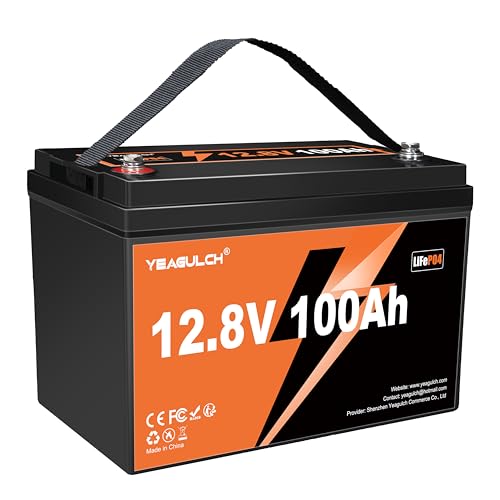
yeagulch 12.8V 100Ah LiFePO4 (Group 31)
Badge: Best Overall
Strengths
- Full 100Ah / 1280Wh capacity in a familiar Group 31 footprint, so it drops into many existing battery boxes
- The title states Low Temp Protection, which matters for charging safety on freezing mornings
- A 100A BMS supports typical trailer, RV and marine house loads without an external protector
Trade-offs
- The title does not state a self-heating function, so protection should be read as a cutoff safeguard, not as permission to charge hard in deep cold
- Group 31 is a large case; measure the tray before assuming it fits a smaller compartment
- Cycle life is a title claim under maker conditions, not a promise for every depth of discharge
| Nominal voltage | 12.8V (12 volt class) |
|---|---|
| Capacity | 100Ah / 1280Wh, as stated in the title |
| Chemistry | LiFePO4 (lithium iron phosphate) |
| BMS | 100A built-in BMS |
| Cycle life stated in title | 15000+ deep cycles |
| Case size | Group 31 (listed as BIC Group 31) |
| Cold feature stated in title | Low Temp Protection |
This yeagulch battery is built around the format most 12 volt house systems already expect: a Group 31 case holding 100Ah of LiFePO4 capacity, with 1280Wh of stored energy stated in the title and a built-in 100A battery management system watching over charge, discharge and fault conditions. Because the chemistry is lithium iron phosphate, the usable share of that capacity is far larger than the share you would plan around with a lead-acid battery of the same nominal size, and the flat discharge curve keeps lights, pumps and electronics behaving consistently deep into the evening instead of dimming as the voltage sags.
The title also states Low Temp Protection, and that phrase deserves a careful reading. On a LiFePO4 battery it normally means the BMS blocks or limits charging when the cells are too cold, which protects the cells from the plating damage that charging below freezing can cause. It does not mean the battery heats itself, and the title does not claim a heater. Treated honestly, this is a safety net for cold starts and shoulder-season trips: discharge for lights and furnace fans is a different question from charging, and the protection is there for the charging side.
For cold-weather trailer camping, the practical reading of that specification is straightforward: this is a battery whose documented strengths line up with the work, provided the system around it, charger, cabling and mounting, is specified with the same care.
Best for: buyers whose system matches this battery’s documented voltage, class and capacity. / Not suited for: anyone whose core requirement falls outside what its title states.

ABKPOWER 12V 20Ah LiFePO4
Badge: Best Compact Auxiliary
Honesty note: No cold-weather feature is stated in its title, so it is linked on voltage and class but is NOT credited with any cold capability anywhere in this guide.
Strengths
- Small, light 256Wh pack that one person can carry and stow almost anywhere
- Title lists fish finder, solar, lighting and backup uses, matching small-load duty honestly
- 6000+ cycles stated in the title is strong for a battery of this size class
Trade-offs
- 20Ah is an auxiliary capacity, not a house battery: it will not run a trailer or boat house system for a weekend
- The 20A BMS caps continuous draw, so inverters and high-draw appliances are out of scope
- The title states no low-temperature protection, so cold charging behaviour is not documented in the title
| Nominal voltage | 12V |
|---|---|
| Capacity | 20Ah / 256Wh, as stated in the title |
| Chemistry | LiFePO4 (lithium iron phosphate) |
| BMS | 20A built-in BMS |
| Cycle life stated in title | 6000+ cycles |
| Cold feature stated in title | Not stated in the title |
The ABKPOWER 12V 20Ah is the small end of the LiFePO4 family: 256Wh in a pack built for fish finders, lighting, small solar setups and backup for modest electronics. Its 20A BMS tells you exactly what it is for. It will happily feed LED lights, a sonar unit, a router or a CPAP-class load for a limited stretch, and it recharges quickly because there is simply less capacity to refill. The title states 6000+ cycles, which for a lightly used auxiliary battery translates into many seasons of service.
What it is not is a house battery. Twenty amp-hours disappears fast under a furnace fan, a water pump and an evening of lights, and no honest guide should present it as a one-for-one replacement for a 100Ah unit. Its real role in a 12 volt system is as a satellite: a portable reserve, a dedicated electronics battery that keeps sonar or communications separate from the main bank, or a starter step into lithium for someone whose loads are genuinely small. Judged in that role, the specification is coherent and the limitations are simply the physics of its size.
In the context of cold-weather trailer camping, weigh the stated figures against your hardest day rather than your average one, because a battery that only just covers the average has already failed the day that matters.
Best for: buyers whose system matches this battery’s documented voltage, class and capacity. / Not suited for: anyone whose core requirement falls outside what its title states.
dumfume 24V 100Ah LiFePO4
Badge: Best 24 Volt Option — Prose-Only
Why prose-only: Prose-only: 24V battery; the keyword specifies a 12 volt trailer system and voltage is a core attribute.
Strengths
- Native 24V output delivers 2560Wh from a single case, with no series wiring needed
- Title states Low-Temp Cutoff Protection, so the BMS is documented to intervene against cold charging
- IP65 enclosure and UN38.3 / UL1973 certifications are stated in the title, which suits exposed marine and outdoor mounting
Trade-offs
- It is a 24 volt battery: it cannot serve a 12 volt system without a complete system redesign
- The title does not state a self-heating function, so cutoff protection is a safeguard, not cold-weather charging freedom
- Single-battery capacity is fixed at 2560Wh; larger banks need parallel planning the title does not detail
| Nominal voltage | 24V |
|---|---|
| Capacity | 100Ah / 2560Wh, as stated in the title |
| Chemistry | LiFePO4 (lithium iron phosphate) |
| BMS | 100A built-in BMS |
| Cycle life stated in title | 15000 deep cycles |
| Certifications stated in title | UN38.3, UL1973 |
| Enclosure stated in title | IP65 waterproof |
| Cold feature stated in title | Low-Temp Cutoff Protection |
The dumfume 24V 100Ah is a native 24 volt LiFePO4 battery, and that single fact shapes everything about it. One case delivers 2560Wh, the energy of two 12 volt 100Ah batteries wired in series, but without the balance drift that series pairs can develop over time. The built-in 100A BMS, the UN38.3 and UL1973 certifications named in the title, and an IP65 enclosure rating make it a tidy fit for boats, RVs and off-grid cabinets where the system voltage is genuinely 24 volts and space or wiring simplicity matters.
Its title also states Low-Temp Cutoff Protection. Read that the way an engineer would: the management system is documented to cut charging off when cell temperature falls too low, which is exactly the protection LiFePO4 chemistry needs, because charging below freezing is what damages these cells. It is not a heater and the title does not claim one, so in hard cold you still plan around warming the battery or waiting for the day to warm. As a documented safeguard on a correctly specified 24 volt system, though, it is a meaningful box ticked.
For cold-weather trailer camping, the honest limitation to plan around is the one named in the trade-offs above; none of them disqualify the battery, but each of them belongs in the installation and charging plan from the start.
Best for: the different job its title actually describes. / Not suited for: this keyword’s job, for the reason stated above.
Qwenoer 22.2V-24V 10Ah Lithium Pack
Badge: Prose-Only: Wrong Voltage Class
Why prose-only: Prose-only: 22.2V-24V Li-ion project pack; wrong voltage class for a 12 volt trailer and not a deep-cycle house battery.
Strengths
- Comes with its own matched charger, which simplifies small DIY and hobby builds
- Bare leads and a cable connector make it easy to wire into custom projects
- Compact 10Ah size suits ride-on toys, LED strips and camera power, the uses its title actually lists
Trade-offs
- The title does not describe a deep-cycle battery at all; it is a small Li-ion project pack
- 10Ah is far too little capacity for house, trolling or storage duty
- Li-ion chemistry and hobby connectors are a different class from a BMS-managed deep-cycle bank battery
| Nominal voltage | 22.2V-24V range, as stated in the title |
|---|---|
| Capacity | 10Ah, as stated in the title |
| Chemistry | Li-ion (not LiFePO4, per the title) |
| Included in title | 25.2V 2A charger, bare leads wire, cable connector |
| Deep-cycle rating in title | Not stated in the title |
The Qwenoer pack is a small rechargeable Li-ion battery in the 22.2 to 24 volt range, sold with a matched 25.2V 2A charger, bare leads and a cable connector. Its title is refreshingly specific about what it is for: kids ride-on cars, DIY projects, solar panels in the small-project sense, LED light strips and CCTV cameras. For those jobs it is a sensible, self-contained little power source, and the included charger removes the guesswork that project packs often leave behind.
What it is not, by its own title, is a deep-cycle battery. There is no deep-cycle claim, no house-bank capacity and no propulsion duty in the listing: 10Ah of hobby-pack energy is roughly a twenty-fifth of what a 24 volt 100Ah deep-cycle battery stores. In any guide about deep-cycle or high-draw 24 volt work, this pack belongs in the conversation only as a contrast, an example of why the words on the title matter more than a voltage number that looks close at a glance.
Judged for cold-weather trailer camping, the question this battery answers is whether its documented class, capacity and protection match the duty; where the title is silent, this guide has said so rather than filling the silence with optimism.
Best for: the different job its title actually describes. / Not suited for: this keyword’s job, for the reason stated above.
Xeanerol 24V 5Ah Lithium Pack
Badge: Prose-Only: Wrong Voltage Class
Why prose-only: Prose-only: 24V Li-ion project pack; wrong voltage for a 12 volt trailer system.
Strengths
- Includes a 2A charger and cable connector, ready for small projects out of the box
- Very compact and light for RC, LED and camera applications
- 24 volt output matches the small devices its title names
Trade-offs
- 5Ah is a hobby capacity, roughly one twentieth of a 100Ah deep-cycle battery
- The title states no deep-cycle design, no BMS rating for bank duty and no propulsion use
- Li-ion project packs are not a substitute for LiFePO4 deep-cycle storage
| Nominal voltage | 24V |
|---|---|
| Capacity | 5Ah, as stated in the title |
| Chemistry | Li-ion (per the title) |
| Included in title | 2A fast charger, cable connector |
| Deep-cycle rating in title | Not stated in the title |
The Xeanerol is a 24 volt, 5Ah rechargeable Li-ion pack with a 2A charger and cable connector in the box, aimed squarely at DIY projects, RC cars, LED light strips and CCTV cameras. For powering a camera through the night or a lighting strip in a small installation, that is a complete and convenient kit, and its small size is the entire point.
Set beside deep-cycle batteries, the gap is not a matter of brand preference but of category. Five amp-hours at 24 volts stores about 120Wh, while a single 24 volt 100Ah deep-cycle battery stores 2560Wh, more than twenty times as much, and is built with a management system and cycle design for daily deep discharge. Nobody should buy this pack to do a deep-cycle job, and no honest roundup should link it as though it could. It appears in these guides as a clearly labelled contrast so the size classes are impossible to confuse.
For cold-weather trailer camping, installation discipline will decide as much as specification: a well-mounted, correctly charged example of this battery will out-serve a neglected example of a nominally better one.
Best for: the different job its title actually describes. / Not suited for: this keyword’s job, for the reason stated above.
yeagulch 24V 100Ah LiFePO4
Badge: Best 24 Volt Capacity — Prose-Only
Why prose-only: Prose-only: 24V battery; wrong voltage for a 12 volt trailer system.
Strengths
- Title explicitly names trolling motors, off-grid, solar, RV and marine use, so the application fit is documented
- Native 24V with 2560Wh in one case simplifies wiring compared with a series pair
- Low-temperature cutoff and UN38.3 / UL1973 certifications are stated in the title
Trade-offs
- 24 volt only: useless for a 12 volt system without redesigning the whole system
- Cutoff protection is not self-heating; charging still needs a battery above freezing
- The title does not state an ingress-protection rating for exposed mounting
| Nominal voltage | 24V |
|---|---|
| Capacity | 100Ah / 2560Wh, as stated in the title |
| Chemistry | LiFePO4 (lithium iron phosphate) |
| BMS | 100A built-in BMS |
| Cycle life stated in title | 15000+ deep cycles |
| Certifications stated in title | UN38.3, UL1973 |
| Cold feature stated in title | Low-Tem Cut Off (low-temperature cutoff) |
This yeagulch 24 volt battery is one of the clearest application matches in the pool: its title names trolling motors, off-grid storage, solar, RV and marine use outright, and backs the claim with 100Ah of LiFePO4 capacity, 2560Wh of energy, a built-in 100A BMS and a stated cycle life of 15000+ deep cycles. For a 24 volt trolling motor, that combination means long, steady thrust without the voltage sag that makes lead-acid banks feel tired by midday, and for a 24 volt house or solar system it means one case instead of a series pair to balance.
The title also states a low-temperature cutoff and lists UN38.3 and UL1973 certifications. The cutoff is a protective intervention against charging cold cells, not a heating system, so winter users should still treat it as a guardrail rather than a licence. Within its documented envelope, though, this is a purpose-stated 24 volt deep-cycle battery rather than a generic pack pressed into service, and that distinction is exactly what careful buyers should pay attention to.
In cold-weather trailer camping service, treat the title figures as the contract: use what is stated, verify what is not, and let the first season’s commissioning notes confirm whether the match is as good in practice as it is on paper.
Best for: the different job its title actually describes. / Not suited for: this keyword’s job, for the reason stated above.
Comparison Table
Only figures stated in the listing titles are compared. Where a title states nothing, the table says so rather than guessing.
| Pick | Voltage | BMS | Cold feature stated in title | Link |
|---|---|---|---|---|
| yeagulch 12.8V 100Ah LiFePO4 (Group 31) | 12.8V (12 volt class) | 100A built-in BMS | Low Temp Protection | Check on Amazon |
| ABKPOWER 12V 20Ah LiFePO4 | 12V | 20A built-in BMS | Not stated in the title | Check on Amazon |
| dumfume 24V 100Ah LiFePO4 | 24V | 100A built-in BMS | Low-Temp Cutoff Protection | — |
| Qwenoer 22.2V-24V 10Ah Lithium Pack | 22.2V-24V range, as stated in the title | Not stated in the title | Not stated in the title | — |
| Xeanerol 24V 5Ah Lithium Pack | 24V | Not stated in the title | Not stated in the title | — |
| yeagulch 24V 100Ah LiFePO4 | 24V | 100A built-in BMS | Low-Tem Cut Off (low-temperature cutoff) | — |
For a wider view of the same product family, see Best Deep Cycle 12 Volt Battery Technology and Best Deep Cycle 12 Volt Trolling Motor Battery Auto Zone.
How to Choose: best clod weather 12 volt trailer battery
Cold Weather and LiFePO4: The Charging Rule That Matters
Lithium iron phosphate has one cold-weather weakness that every buyer in a cold climate must understand: charging the cells below freezing can permanently damage them through lithium plating, even when discharging in the same cold is comparatively well tolerated. This asymmetry explains the features you will see in the titles in this guide. A low-temperature cutoff means the battery management system refuses or stops a charge when the cells are too cold. It is a guardrail that protects the battery by saying no.
Self-heating is the stronger feature, and only one battery in this pool states it in its title. A self-heating battery warms its own cells, using energy from the charger or the battery itself, until the cells reach a temperature where charging is safe, and only then accepts a full charge. For a solar-equipped system parked through a freezing night, that difference decides whether the morning sun actually refills the bank or is turned away by a protective cutoff until the day warms up.
Practical cold management helps any chemistry. Keep the battery in the warmest available compartment rather than an exposed outside box where the vehicle or vessel design allows it, insulate the battery box, and avoid scheduling heavy charging for the coldest pre-dawn hours. AGM lead-acid, represented in this pool by the Renogy battery, plays by different rules: it has no BMS to refuse a charge and can accept charging in deep cold within its charger’s limits, at the cost of reduced capacity while cold. Neither chemistry is magic in winter; they simply fail differently, and the title evidence tells you which protections you actually have.
Sizing the Bank With Honest Math
Battery sizing starts with a load list, not with a product page. Write down everything the bank must run, its draw in watts or amps, and the hours it runs in a typical day. Multiply watts by hours to get watt-hours, add the items up, and then add a margin for the unplanned: the colder night, the extra hour of lights, the guest who charges everything at once. That total is the daily energy the bank has to supply, and it is the only honest starting point for choosing capacity.
Worked in round numbers, a modest house load of lights, a water pump, phone charging and a furnace or fan cycling through the evening commonly lands between 600Wh and 1200Wh per day. A single 100Ah battery in the 12 volt class stores 1280Wh where the title states it, and LiFePO4 chemistry allows most of that energy to be used without the life penalty that deep discharge imposes on lead-acid. The same daily load on an AGM bank needs roughly double the nominal capacity on paper, because planning around half the nameplate figure is how AGM owners protect cycle life.
Charging has to close the loop. Whatever the day consumes, the charger, alternator or solar array must replace it, plus conversion losses, inside the hours available. A bank that is perfectly sized for loads but paired with an undersized charger still fails, just more slowly. When you compare the picks in this guide, compare them against your daily watt-hour figure and your realistic charging window, not against the biggest number on the page.
How to Set Up and Look After the System
The steps below apply to any battery shortlisted for cold-weather trailer camping. They are written in the order that prevents the common failures: audit before purchase, charger before blame, and a written baseline before the first season ends.
- Measure and audit first. Confirm the system voltage with the equipment the battery must serve, list every load with its draw and daily hours, and measure the battery space including cable bend room. This audit decides capacity, BMS size and case size before any product is chosen, and it takes less than an hour with a notebook and a tape measure.
- Choose the battery and charger together. Select the battery against the audit, then verify the charger: a lithium profile for LiFePO4, a suitable converter or solar controller setting, and enough charging current to refill the bank inside your real window. Ordering the battery before checking the charger is the classic way to build a disappointing system.
- Prepare the mounting. Secure the battery against movement, protect terminals from accidental contact, and plan cable routes away from chafe, heat and water. For heavy single batteries, prepare the lifting route and help in advance. Fit the correctly rated fuse close to the battery before the system is energised, not after the first fault.
- Connect in the right order. Connect the charger and loads with the system off, positive and negative leads landed cleanly and torqued, and bank interconnects, where used, equal in length. Bring the battery to a full charge before its first real duty, so the first cycle starts from a known state and any monitoring baseline is honest.
- Commission with a known load. Run a familiar load, a lighting circuit, a pump, a motor at a working setting, and watch behaviour: runtime against your estimate, charging behaviour, and any protection events. Write the results down in the battery compartment. This baseline is the reference that makes every future troubleshooting conversation factual instead of nostalgic.
- Maintain on a calendar, not on memory. Inspect terminals, mounts and cabling each season, keep the compartment dry, and follow the storage routine for the chemistry through the off-season. Tie the check to an event you never skip, such as winterising or the first trip of spring, because batteries are most often killed by being forgotten, not by being used.
Maintenance, Storage and Troubleshooting
Lithium deep-cycle batteries ask for less maintenance than lead-acid, but less is not none. Terminals should stay clean and tight, the battery and its compartment should be inspected for damage, swelling or water intrusion each season, and firmware-dependent features, where the maker provides them, should be kept current. AGM batteries skip watering by design but still need terminal care and, above all, prompt recharging after use, because lead-acid stored in a discharged state sulfates and loses capacity permanently.
Storage rules differ by chemistry and are worth writing on the compartment wall. Lithium batteries store best partially charged rather than brim-full, in a cool dry place, with a periodic check across a long off-season. AGM batteries store best fully charged, with a maintenance charge across the winter, because self-discharge, stated at 3% in the Renogy title, quietly empties an unattended battery into the damage zone. The most common storage failure in both chemistries is simple forgetting, so tie the battery check to an event you never skip.
When something misbehaves, work the pattern before replacing parts. Problem: the battery stops accepting charge on a cold morning and recovers later in the day. That is a low-temperature cutoff behaving as designed; warm the battery or wait for the compartment to warm, and do not bypass the protection. Problem: runtime has collapsed on a bank that used to last the weekend. Check for a new or faulty load first, then verify the charger is completing its profile, then suspect capacity loss. Problem: a BMS disconnects under motor start or inverter surge. The load is asking for more than the BMS rating; reduce the load or step up to a battery whose title states a higher BMS current.
Voltage Architecture: Why 12 and 24 Are Not Interchangeable
Nominal voltage is the architecture of the whole system, not a detail of one battery. Chargers, inverters, solar controllers, trolling motors and DC appliances are all built for a system voltage, and a battery of the wrong nominal voltage does not merely underperform in that system, it does not belong in it at all. A 24 volt battery cannot run 12 volt house loads directly, and a 12 volt battery cannot feed a 24 volt trolling motor. This is why this guide treats voltage as a hard gate and moves wrong-voltage picks to prose-only discussion instead of linking them as alternatives.
There are exactly two legitimate bridges between the classes. The first is building a bank: two matched 12 volt batteries in series make a 24 volt bank, and two in parallel make a larger 12 volt bank, but only where the maker documents series or parallel support, and only with matched units of the same age and specification. The second is conversion hardware: a DC-DC converter can step 24 volts down for a small 12 volt load, which is a deliberate engineering choice with its own cost and losses, not a shortcut around buying the right battery.
If you are designing fresh, the choice between 12 and 24 volts turns on load size and cable runs. Higher voltage halves the current for the same power, which means thinner cables, less voltage drop and happier high-draw equipment. Lower voltage wins on appliance availability and simplicity for small systems. Either choice is defensible; mixing them by accident is not.
Charging Profiles and Converter Compatibility
A battery is only half a system; the charger is the other half, and lithium conversions most often disappoint at the charger rather than the battery. LiFePO4 wants a charging profile that fills the battery and then stops pushing: a lithium setting on a modern converter, a properly configured solar controller, or a dedicated lithium charger. Older converters designed only for lead-acid may never quite fill a lithium battery, or may hold a float voltage that keeps the BMS working harder than it should. The battery will usually still function, but capacity and life quietly suffer.
Before blaming a battery for short runtime, verify the charging chain end to end. Confirm the charger’s profile, confirm cable sizes and connections are clean and tight, and confirm the battery is actually reaching a full charge, which on a monitored battery you can see, and on an unmonitored one you infer from resting behaviour and runtime. Solar users should check that the controller’s lithium setting matches the bank voltage, a mistake that becomes obvious only when a 24 volt bank meets a controller still configured for 12.
Charging current matters for the big batteries in this pool. A 300Ah or 314Ah battery refilled by a small charger takes a very long time, which may be fine for a cabin visited monthly and useless for a boat that must turn around overnight. Size the charger to the turnaround the system actually needs, and remember that self-heating and cold cutoffs interact with charging first of all: in winter, the charger and the BMS negotiate before any energy flows.
Common Buying Mistakes
Buying on voltage alone. A battery that matches your system voltage can still be wrong in capacity, BMS current and duty class. The small packs in this pool prove the point: several carry a plausible voltage in their titles and are built for cameras and toys. Read the whole title, match every core attribute, and only then compare the nice-to-haves.
Treating a cutoff as a heater. Low-temperature protection that stops a cold charge is a safeguard, not a promise that charging will proceed in a freeze. Buyers who plan winter solar charging around a cutoff discover the difference on the first hard frost. If the system must charge in deep cold, look for stated self-heating or choose a chemistry and charging routine that tolerate the cold.
Sizing for the brochure day. Systems are sized by their hardest honest day: the cold night, the dull solar day, the long trolling session against the wind. A bank chosen for average conditions fails exactly when it is needed most. Build the load list from your worst realistic day, add margin, and let average days be easy.
Skipping the tape measure. Group sizes, tray dimensions and terminal positions are unglamorous and decisive. A battery that does not fit the box does not fit the system, whatever its specifications promise. Measure first, including the space the cables need to bend, and check the lift route for the heavy units before the delivery arrives.
Believing every number is comparable. Cycle claims, capacity figures and protection labels are stated under maker conditions that differ between brands. A figure missing from a title is not a zero, and a bigger figure is not automatically a better battery. Compare what is actually stated, note what is not, and let documented application fit carry real weight in the decision.
Final Recommendation
Start with the first linked pick that matches your system exactly: the yeagulch 12.8V 100Ah LiFePO4 (Group 31). It leads the linked field for cold-weather trailer camping on documented application fit and the completeness of what its title states. If its case size, capacity or protection set does not match your audit, move down the linked list rather than sideways into a prose-only pick, because every prose-only entry in this guide failed a core requirement of the keyword, however good it is at its own job.
Shortlist check: yeagulch 12.8V 100Ah LiFePO4 (Group 31) — Best Overall.
Shortlist check: ABKPOWER 12V 20Ah LiFePO4 — Best Compact Auxiliary.
Whichever linked pick you choose, spend the remaining effort on the unglamorous half of the system: the charger profile, the cabling, the mounting and the written commissioning baseline. Batteries in this class rarely fail because their titles lied; they fail because the system around them was never finished. Finish the system, and the battery you bought on evidence will behave like it.
Frequently Asked Questions
Can you charge a LiFePO4 battery below freezing?
Not safely, and the better batteries in this guide are designed to stop you trying. Charging lithium iron phosphate cells below freezing can plate metallic lithium onto the cells and permanently reduce capacity. That is why titles here state low-temperature cutoff protection: the BMS refuses the charge until the cells warm. A self-heating battery goes one step further and warms its own cells first. If your battery has neither feature stated, treat freezing charging as off limits and warm the battery before charging.
Can a 12 volt battery still run loads in cold weather if charging is restricted?
Yes, within limits. Discharging in cold weather is far less damaging than charging in cold weather, which is why the protections in these titles focus on the charging side. Expect reduced available capacity while the battery is cold, because chemistry slows down, and expect it to recover as the battery warms. Furnace fans, lights and pumps will generally still run on a cold morning; the discipline is about when you push energy back in, not whether you may take it out.
What is the difference between a low-temperature cutoff and self-heating?
A cutoff is a refusal: the BMS stops charging when the cells are too cold, protecting them until conditions improve. Self-heating is a remedy: the battery uses energy to warm its cells into the safe charging range and then accepts a charge. In this pool only the VATRER POWER 300Ah battery states self-heating in its title. For occasional cold nights a cutoff is a perfectly good safeguard; for a solar system that must recharge every short winter day, heating is the feature that keeps the system working.
How do I know if a battery’s BMS is big enough for my loads?
Add up the continuous current of everything that can run at once, then check it against the BMS figure in the title with headroom to spare. A 100A BMS on a 12 volt battery supports roughly 1200W of continuous load; motors and inverters also draw start-up surges, so a system that cruises near the limit will trip protection at the worst moments. Small packs with 10A or 20A BMS units are built for electronics, not house loads. If your honest total is anywhere near the rating, step up a class.
How should a deep-cycle battery be stored over winter?
By chemistry. Lithium batteries store best partially charged, in a cool dry place, checked occasionally across the off-season. AGM batteries store best fully charged with a maintenance charge, because self-discharge, stated at 3% in the Renogy title, will otherwise walk an unattended battery down into permanent damage. Both chemistries suffer most from simple neglect. Write the storage state and date on a label on the battery itself; future you, standing in a cold compartment in spring, will be grateful.
A spec I care about is not in a battery’s title. What should I do?
Treat the spec as unconfirmed, not as absent and not as present. This guide works only from what titles state, and it says so wherever a figure is missing: no watt-hours, no cycle claim, no cold feature. If the missing figure decides your purchase, check the full listing or the maker’s documentation before ordering, and be wary of any guide, unlike this one, that fills title gaps with confident invented numbers. A missing specification is information too: it tells you what the maker chose not to promise in the headline.
