A cocktail glasses set gives a home bar matched stemware, so every drink looks deliberate and feels right in the hand. The common shapes are the martini glass, the coupe, the Nick and Nora and the short rocks glass, and the best choice depends on what you pour most often.
The six sets below cover all four shapes from established glassware makers. We have not used these products ourselves, so confirm the piece count, capacity and care instructions on the current listing before buying. Any heat or durability claim is the maker’s own.
As an Amazon Associate we earn from qualifying purchases. Links below are affiliate links, and they do not change the product information we give.
What to Look For
| Feature | Why it matters |
|---|---|
| Shape | Coupes and Nick and Nora glasses spill less than wide martini cones |
| Material | Crystal is thinner and clearer; standard glass is usually tougher |
| Stem | A stem keeps warm hands off a chilled drink but can snap in a busy dishwasher |
| Set size | Count how many guests you host before choosing a pack |
| Care | Check whether the listing says dishwasher safe or hand wash only |
In this guide
Specs at a Glance
| Set | Style | Material | Notes |
|---|---|---|---|
| Riedel Drink Specific Glassware Nick and Nora | Nick and Nora | Glass or crystal, per the maker | Small, upright bowl |
| Viski Raye Coupe | Coupe | Crystal | Giftable pack |
| JoyJolt Layla Martini | Martini | Crystal | Classic cone bowl |
| Luigi Bormioli Atelier Martini | Martini | Glass | Italian maker |
| Spiegelau Perfect Serve Coupette | Coupe | Glass | Bar-oriented line |
| Libbey Heavy Base Rocks | Rocks | Glass | Stemless, thick base |
The 6 Best Cocktail Glasses Sets
Top pickBest for stirred drinks such as a Manhattan
1. Riedel Drink Specific Glassware Nick and Nora
Riedel is a long-established glassware maker, and this line is built for cocktails. The Nick and Nora shape is a small, upright bowl that suits spirit-forward drinks served up.
Suits: stirred drinks such as a Manhattan. Strengths: a respected maker and an easy-to-sip shape. Weaknesses: thin stems need careful washing. Skip it if you want a big pour.
View Riedel Nick and Nora Glasses on Amazon

Best for shaken drinks served up
2. Viski Raye Crystal Coupe Glasses
Viski focuses on bar accessories, and the Raye coupe has the wide, shallow bowl associated with classic daiquiris and champagne cocktails. It is sold in a gift-ready pack.
Suits: shaken drinks served up. Strengths: a giftable presentation. Weaknesses: a wide bowl can slosh if you walk with it. Skip it if you want a stemless glass.
View Viski Raye Coupe Glasses on Amazon
Best for martinis and cosmopolitans
3. JoyJolt Layla Martini Glasses
A stemmed martini set with the traditional cone bowl. JoyJolt sells mainly through online retail, so check the listing for the pack count and care notes.
Suits: martinis and cosmopolitans. Strengths: the classic look at a friendly set size. Weaknesses: a cone bowl is easy to over-fill. Skip it if you want a modern shape.
View JoyJolt Layla Martini Glasses on Amazon
Best for regular home use
4. Luigi Bormioli Atelier Martini Glasses
Luigi Bormioli is an Italian maker of stemware, and the Atelier range is its everyday-quality line. These martini glasses are meant to be used often rather than saved for guests.
Suits: regular home use. Strengths: a trusted maker. Weaknesses: fewer gift-style touches. Skip it if you prefer a rounded coupe.
View Luigi Bormioli Atelier Martini Glasses on Amazon
Best for sours and other shaken drinks
5. Spiegelau Perfect Serve Coupette
Spiegelau is a German glassware brand known for its wine and bar lines. The Perfect Serve Coupette is a smaller coupe sized for classic cocktail portions.
Suits: sours and other shaken drinks. Strengths: a bar-oriented design. Weaknesses: small for large pours. Skip it if you want a roomy bowl.
View Spiegelau Perfect Serve Coupette on Amazon
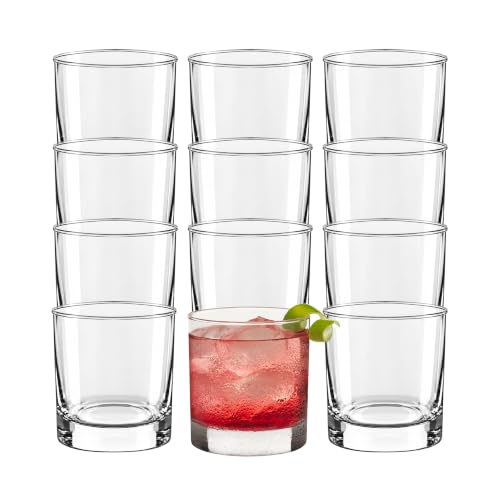
Best for drinks over ice
6. Libbey Heavy Base Rocks Glasses
Libbey makes everyday glassware used in many restaurants. A heavy-base rocks glass is the workhorse for old fashioneds, negronis and anything served over ice.
Suits: drinks over ice. Strengths: stable, stemless and sturdy. Weaknesses: plain looks. Skip it if you only serve drinks up.
Care and Setup
- Chill the glasses in the freezer for a few minutes before pouring a drink served up.
- Hold stemware by the stem or base to avoid fingerprints and warming the drink.
- Wash delicate stems by hand unless the listing clearly allows the dishwasher.
- Store glasses upright so the rims are not stressed.
Mistakes to Avoid
- Buying a set without checking how many glasses are in the pack.
- Choosing a wide coupe if you carry drinks across the room.
- Putting thin crystal in a crowded dishwasher.
- Ignoring capacity, which varies a lot between shapes.
Capacity and Pour Size Explained
Capacity is the number most buyers overlook, and it decides whether a drink fits the glass at all. A glass labeled with a large capacity is not meant to be filled to the brim. A stirred or shaken drink served up usually fills the glass only part of the way, leaving room to carry it without spilling and space for a garnish.
Compare the capacity on the listing with the recipes you make most. Classic spirit-forward drinks are often built with a modest total volume once dilution from stirring or shaking is counted, so a very large martini glass can look half empty. A smaller coupe or Nick and Nora glass fills out nicely with a standard recipe, while a big cone bowl can swallow the same pour.
A few practical checks before you buy:
- Read the capacity in the listing and note whether it is the brim capacity or a suggested pour. Makers do not always say which.
- Measure your shaker or mixing glass output by pouring one drink into a measuring cup, then compare it with the glass.
- Think about how you drink. If you like a second round, a smaller glass that stays cold is often better than a large one that warms before you finish.
- Remember that rocks glasses must hold ice as well as liquid, so their capacity needs to be larger than the drink itself.
If a listing gives no capacity at all, treat that as a reason to look at the product details or ask the seller before ordering.
Matching Glass Shape to the Drinks You Make
Shape affects temperature, aroma and how much the drink moves when you carry it. Rather than buying every style, work out which drinks you actually serve and choose from there.
- Stirred, spirit-forward drinks served up: a small upright bowl such as a Nick and Nora keeps the drink cold and contained, and the narrow opening concentrates aroma.
- Shaken sours and citrus drinks served up: a coupe is a friendly all-rounder. The rounded bowl is less likely to spill than a cone, and it suits foamy or egg-white drinks.
- Classic martinis and cosmopolitans: the cone shape has a dramatic look, but it needs a steady hand and a careful pour.
- Drinks over ice: a rocks glass with a solid base gives room for ice and is easy to hold, which suits old fashioneds, negronis and simple spirits.
If you can only buy one set, a coupe or Nick and Nora style covers the widest range of drinks served up, and a rocks set covers the rest. People who mostly drink highballs or spritzes may find that neither is the right first purchase, so be honest about your habits.
It also helps to think about the rim. A thinner, more refined rim feels elegant to sip from but is more fragile. A thicker rim feels sturdier and tolerates busy hosting. Neither is better; they suit different households.
Crystal, Glass and Thickness Trade-Offs
The material and wall thickness shape how a set looks, feels and survives. Crystal and crystal-like glass is generally thinner, brighter and lighter in the hand. Standard glass is usually heavier and more forgiving of knocks, which is why it is common in busy bars and everyday sets.
Several points are worth checking on the listing rather than assuming:
- What the material actually is: some makers use the word crystal for lead-free formulas, and others use it more loosely. Read the product description and any care notes instead of relying on the word alone.
- Whether the stem is separate or formed in one piece: one-piece stemware is often described as more durable, but the listing is the place to confirm.
- Temperature tolerance: thin glassware can crack if it goes straight from a freezer to hot water, so let it come to room temperature before washing.
- Weight and balance: a very thin glass with a long stem can feel top heavy when full.
If you host often, kids or guests may handle the glasses, or you expect to wash them in volume, lean toward sturdier standard glass. If the glasses will come out for occasional drinks and you want delicate clarity, crystal is a reasonable choice, provided you accept more careful handling. Any durability claim on a listing is the maker’s own, so read it as a description and not as a guarantee.
How Many Glasses to Buy and How to Store Them
Set size depends on how you drink, not on what looks generous. A household of two that has friends over a few times a year may only need a set of four to six. If you throw larger gatherings, count your regular guest list and add a few spares, since breakage happens over time.
Mixing shapes can be practical. For example, you might choose a set of coupes for drinks served up and a set of rocks glasses for drinks over ice, instead of buying two large sets of the same type. Matching the maker across both can keep the look consistent, but it is not essential.
Storage deserves a moment of planning:
- Measure the shelf height before buying tall stemware, because some shapes will not fit under a standard cabinet shelf.
- Store glasses upright rather than rim down on a shelf, since the rim is the weakest point.
- Do not stack stemware inside one another, as this can chip or wedge the bowls together.
- Use a stemware rack that hangs under a shelf only if the stems are sturdy enough and the rack fits the stem diameter.
- Keep the glasses away from the edge of the shelf and from heavy items that could fall.
Check the packaging details on the listing too. A set sold as a gift box can be a convenient way to store spares in the original protection.
Serving Technique and Chilling Tips
Good glassware helps, but serving technique makes a visible difference. For drinks served up, chilling the glass before pouring keeps the drink cold longer. Place the glass in the freezer for a few minutes, or fill it with ice and water while you stir or shake, then discard the ice water just before you strain. Do not leave thin crystal in the freezer for long periods, and avoid sudden extremes of hot and cold.
Fill to a sensible level. Leave a little room below the rim so the drink can be carried across a room. If you serve many people, pour the drinks in a row so the strength and volume stay consistent between glasses.
Garnishes should suit the shape. A citrus peel or a cherry on a pick sits nicely in a coupe or Nick and Nora glass. A cone bowl can take a pick resting across the rim. For rocks glasses, large ice cubes melt slowly, which keeps the drink from tasting watered down too quickly.
For cleaning, rinse soon after use, especially after sweet or sticky drinks, and wash by hand with warm water and mild soap unless the listing clearly says the dishwasher is fine. Dry with a clean lint-free cloth and hold the bowl rather than twisting the stem. Small chips on the rim are a reason to retire a glass, because they can catch lips and grow into cracks.
Cocktail Glasses Sets FAQ
What is the difference between a coupe and a martini glass?
A coupe has a rounded, shallow bowl that holds a drink well. A martini glass has a V-shaped cone that is more dramatic but spills more easily.
What is a Nick and Nora glass?
It is a small, upright, stemmed glass that keeps a stirred drink cold and contained.
Do I need different glasses for different cocktails?
Not strictly. One versatile shape, such as a coupe, covers most drinks served up, and rocks glasses cover drinks over ice.
Are crystal glasses worth it?
They are lighter and clearer, but they can be more fragile. Standard glass suits heavy use.
How full should I pour a cocktail into a coupe?
Leave a little space below the rim so the drink does not slosh when you carry it. A standard shaken or stirred recipe usually fills a coupe or Nick and Nora glass comfortably without reaching the edge.
Can I use a martini glass for other drinks?
Yes. Cone glasses work for any drink served up, such as cosmopolitans or gimlets. They spill more easily than rounded bowls, so pour with care and avoid carrying them across a crowded room.
Are stemless cocktail glasses a good idea?
Stemless glasses are sturdier and fit better in cupboards, but your hand warms the bowl and the drink sooner. They suit drinks over ice better than drinks served up.
How do I get rid of cloudiness on my glasses?
Cloudiness usually comes from mineral deposits or detergent residue. Try a soak in a mild white vinegar and water solution, then rinse well and dry with a soft cloth. If the haze is etching in the glass, it generally will not come off.
Is it worth buying matching sets?
Matching glasses look tidy and are easier to store, but they are not required. Many home bars mix one set for drinks served up and another for drinks over ice.
Should I put cocktail glasses in the freezer?
A short chill before serving works well for drinks served up. Avoid leaving thin glassware frozen for long periods or moving it quickly between very hot and very cold, as sudden changes can stress the glass.
What should I check before buying a set as a gift?
Check the number of glasses, the capacity, the care instructions and whether the packaging protects the pieces. Choose a shape the recipient actually uses, and include a note about hand washing if the listing recommends it.
Rims, Balance and How a Glass Feels in the Hand
Two glasses with the same capacity can feel very different. Rim thickness changes how a drink meets your lips. Thin, cut rims feel refined and let the liquid flow smoothly, while rolled or thick rims feel sturdier but a bit heavier on the mouth. Neither is wrong, and the choice comes down to whether you value delicacy or durability.
Balance affects both comfort and spills. A glass with a heavy base and light bowl sits steady on a table, while a top-heavy stemmed design can tip if bumped. Weight distribution matters when you walk with a full glass, and the shape of the stem decides how it holds. A longer stem keeps your warm hand away from a cold drink, which is the main reason cocktails are served in stemmed glassware. A short stem feels more stable but can warm the drink faster.
Wide coupes are famous for being easy to spill, since the bowl is shallow and open. If you serve guests who are likely to move around, a narrower bowl or a Nick and Nora style holds a drink better. A heavy-base rocks glass, such as the Libbey option here, rarely tips and suits casual use. Check the base diameter in the listing and imagine how it will behave on your bar cart.
Dishwashers, Hand-Washing and Everyday Durability
Whether a set survives a dishwasher is a daily question. Many modern glass and some crystal sets are marked dishwasher safe, but stemware is still easy to chip when it knocks against racks or other dishes. Hand-washing in warm water with mild soap and drying with a lint-free cloth is the gentlest method for delicate pieces.
If you use the dishwasher, place stems securely in the top rack so they cannot rattle, and keep a gap between glasses. Avoid overloading, and skip high heat drying cycles for thin glass. Etching, which appears as permanent cloudiness, results from hard water and aggressive detergent over time, so a rinse aid or softer water helps.
Think about your tolerance for breakage. A set that costs little to replace suits parties and households with children, while pricier crystal suits careful use. Buying a spare pair is cheap insurance, since matching a discontinued glass later is hard.
Choosing for Hosting, Gifting and Occasions
Hosting changes what you need. A dinner party calls for a matching set that looks good on the table, with enough glasses for every guest and a couple of spares. A casual get-together may be fine with sturdier glasses that tolerate being washed in bulk. If you serve mostly one drink, such as martinis or Manhattans, a single dedicated style looks intentional.
Gifts reward clean presentation and a safe choice. A boxed set of two or four coupes or Nick and Nora glasses is a popular, easy gift because it suits many tastes. Check that the packaging protects the glass in transit, and consider including a recipe card or a small bottle of bitters to make it feel personal. Avoid very ornate cuts if you do not know the recipient’s style, since simple shapes fit most homes.
Seasonal use matters too. Stemless or rocks glasses suit summer porches, while a chilled coupe suits a winter holiday. Think about where you will serve before choosing a design, because the right glass at the wrong event is an annoyance.
Building a Collection Over Time
You do not need to buy everything at once. Start with one versatile style, such as a coupe or Nick and Nora that works for most shaken or stirred drinks that are served up. Add rocks glasses next for spirit-forward cocktails over ice, then a tall glass for highballs. This way each purchase fills a clear gap.
Keep notes on what you actually serve. If you find you rarely use one type, hold off on expanding it. Consider buying the same line for each new shape, since matching families look cohesive and are easier to restock. Check whether the maker is likely to keep a design in production.
Finally, balance quality with usage. Spending more on glasses used weekly makes sense, while a rarely used style can be a budget option. A modest, well-chosen set that you enjoy is better than a large cabinet of mismatched glasses.
Before buying, check each product listing for the exact number of glasses, the capacity of each and any notes on care. When glasses arrive, hold one up to the light and look for bubbles, chips or uneven rims, and rinse them in warm water before first use to remove packing dust. Run a finger along the rim to check for rough spots. Photograph any damage right away, since breakage in shipping is easiest to resolve if you report it quickly and keep the packaging.
Building Your Set Around the Drinks You Make Most
A cocktail glass set earns its place by matching your real repertoire, not an imaginary bar menu. Before choosing between the sets in this guide, list the five drinks you actually served in the last few months. Most home hosts discover a pattern quickly: two or three drinks account for almost everything, a couple of others appear for guests, and the rest is aspiration. Buy depth for the drinks at the top of that list and breadth only afterwards. Four glasses that suit your regular serve will be washed, used and enjoyed weekly, while a sprawling mixed set bought for drinks you never make mostly occupies a cupboard and complicates storage.
How the Six Sets in This Guide Divide the Work
The Riedel Drink Specific Nick and Nora glasses cover the elegant end of the repertoire: spirit-forward drinks served up, where a smaller bowl keeps portions sensible and presents a garnish neatly. The Viski Raye crystal coupes are the celebration and sour glasses, ideal for drinks with foam or a citrus twist that benefits from a wide surface. The JoyJolt Layla martini glasses and the Luigi Bormioli Atelier martini glasses both serve the classic V-shaped role, with the Atelier bringing a more refined, restaurant-like profile and the Layla set favouring bold, modern lines for parties. The Spiegelau Perfect Serve Coupette bridges coupe and Nick and Nora territory, which makes it versatile for hosts who want one stemmed shape to do several jobs. The Libbey Heavy Base Rocks Glasses anchor the other end entirely: short drinks over ice, where weight in the hand and a thick base matter more than delicacy. A thoughtful home collection often pairs one stemmed set from this guide with the rocks glasses, rather than buying two similar stemmed sets that compete for the same drinks.
Service Habits That Make Any Set Perform Better
Chilling is the cheapest upgrade in cocktail service. A glass stored at room temperature warms a shaken drink within minutes, while a glass given even a short rest in the freezer keeps the drink colder and slows dilution after pouring. Fill the glass with ice and water while you shake if freezer space is tight; the effect is nearly as good. Pour promptly once a drink is shaken or stirred, because a finished cocktail sitting in a mixing tin keeps diluting. Finally, handle stemmed glasses by the stem when carrying them to guests, not only to keep fingerprints off the bowl but because a tray of filled coupes is top-heavy and a firm stem grip prevents the small wobble that spills a coupe’s wide surface. Small disciplines like these are why the same drink tastes better in a bar, and they cost nothing to copy at home.
What to Do When a Glass Chips or Clouds
Inspect cocktail glasses the way bartenders do, by running a clean fingertip lightly around the rim before a party rather than during it. A chipped rim should retire a glass from guest service at once; keep it, if you like, as a measuring or prep vessel, but do not serve from it. Cloudiness that survives washing is usually mineral film rather than etching, and a soak in warm water with a little vinegar, followed by a thorough rinse and a polish, restores most glasses. True etching, a permanent roughness from repeated harsh dishwasher cycles, cannot be reversed, which is why delicate crystal sets in this guide reward hand-washing even when a listing calls them dishwasher tolerant. Replacing one glass early, while the set is still current and available, is far easier than hunting a match years later.
One last habit separates hosts who love their glassware from hosts who merely own it: decide in advance which set is the everyday set and which is kept for occasions, and then honour that decision on tired evenings as faithfully as on festive ones, because consistency is what keeps the good glasses good.
Related guides
- 6 Best Cocktail Mixing Glasses for Stirred Drinks (2026)
- 6 Best Hurricane Cocktail Glasses for Tropical Drinks (2026)
- 6 Best Nick and Nora Cocktail Glasses for Your Bar
- 6 Best Cocktail Shaker Sets for Beginners (2026)
Frequently Asked Questions
Why do coupe glasses spill so easily?
A coupe has a wide, shallow bowl, so a full pour sits near the rim and sloshes when you move. Pouring a little below the edge, choosing a model with a slightly deeper bowl, and carrying the glass by the stem with steady hands all help. A Nick and Nora is a more spill-resistant alternative.
Do I need rocks glasses for an old fashioned?
Not strictly, but a short, wide glass is traditional because it holds ice, leaves room to stir and lets you enjoy the aroma. A heavy-base rocks glass is easy to handle. If you only own stemware, you can serve it up in a coupe or Nick and Nora instead.
What size cocktail glass works best for a Manhattan?
A drink served up, with no ice, usually suits a glass in the mid-size range, so the pour does not look lost. Many home bartenders choose a coupe or Nick and Nora that holds a few ounces more than the drink. Check the listed capacity and leave headroom to avoid spills.
How many cocktail glasses should I own for a party?
A common guide is one per guest plus a few extra, since people set down and forget glasses. For a small gathering, a set of four or six may be enough if you wash between rounds. Buying a second matching set is helpful for larger groups.
The Four Shapes and the Drinks That Belong to Each
A cocktail set earns its place by covering the shapes your drinking actually uses, and the four shapes in this guide divide the repertoire cleanly. The Nick and Nora, represented here by the Riedel Drink Specific set, is the small, upright bowl for spirit-forward drinks served up, Manhattans and their relatives, where a modest pour, a cool temperature and an aroma that arrives in order matter most. Its size is its discipline: it suits a drink meant to be finished while it is still cold and composed.
The coupe, in the Viski Raye and Spiegelau Perfect Serve Coupette sets here, is the shaken drink’s glass, wide enough for the Daiquiri family and for champagne cocktails, forgiving in the hand and generous with aroma. The martini glass, in the JoyJolt Layla and Luigi Bormioli Atelier sets, is the icon: a cone that presents a drink dramatically and spills readily, loved for its silhouette and best filled with restraint well below the rim. The rocks glass, the Libbey Heavy Base here, is the stemless workhorse for drinks served on ice, where a thick base, a comfortable grip and indifference to knocks matter more than aroma choreography.
A household that understands these four roles can read any recipe and know its glass instantly, and can also break the rules knowingly, which is where personal style begins. What a set should not do is multiply shapes beyond use. Two shapes owned and used weekly serve a home bar better than five shapes in a cabinet, and the sets in this guide are best read as starting points for a small, deliberate system rather than as a call to own everything at once.
Comparing the Six Sets in This Guide
The Riedel Nick and Nora set is the specialist’s choice, from a maker whose name rests on matching glass to drink, with a small upright bowl that flatters stirred, spirit-led cocktails and thin stems that ask for careful washing. The Viski Raye coupe set is the giftable, cocktail-first option, its wide shallow bowl made for shaken drinks served up, presented in a pack that suits giving and hosting alike. Between them, the choice is the drink you pour most: stirred and strong, or shaken and bright.
The two martini sets divide by character. The JoyJolt Layla offers the classic cone in crystal with a friendly set size for the martinis and cosmopolitans that want the traditional silhouette. The Luigi Bormioli Atelier martini glasses bring an Italian maker’s everyday quality to the same shape, intended for regular use rather than ceremony. The Spiegelau Perfect Serve Coupette is the bar-minded coupe, from a line designed for serving, suited to households that entertain in a more professional rhythm. The Libbey Heavy Base rocks set is the foundation piece, thick-based, stemless and durable, the glass that will be used on ordinary evenings when the stemware stays in the cabinet.
A sensible building order emerges from the group: the rocks set for daily reality, one stemmed shape for your signature up drink, and a second stemmed shape only when your repertoire genuinely divides. Bought in that order, every set in this guide has a job waiting for it, and none becomes expensive storage.
Setting Up a Home Bar’s Glassware System
Glassware works as a system or it works as clutter. Keep the shapes you own together, in one cabinet or on one shelf run, with the everyday rocks glasses at the front and the stemware behind or above them, so a casual reach never has to pass the finest glass to find a usable one. Count honestly: a set should cover your usual gathering with a spare for breakage, and no more, because every extra glass is washing, storage and a rim waiting to chip against its neighbor.
Support the system with three small habits. The first is a dedicated polishing cloth, large and lint-free, kept with the glasses and used for nothing else, since a clear, spotless bowl is half the presentation of any cocktail. The second is a rule about the dishwasher that follows each maker’s guidance for each set, rather than a household-wide assumption, because the crystal, glass and Tritan-adjacent options in this guide do not all ask for the same treatment. The third is a replacement plan: buy sets in lines that are sold consistently, so a single breakage can be made good without orphaning the rest, and note the line’s name somewhere you will find it in two years.
Finally, give the system a home near where drinks are made, not where they are served, so that making a round does not involve carrying stemware across the house twice. Proximity is the unglamorous secret of every well-run home bar, and glassware, fragile and constantly in motion, benefits from it more than any other part of the setup.
Washing and Storing Mixed Sets Without Losses
Mixed sets die in predictable places: the sink, where stems snap against taps and bowls knock together; the dishwasher, where heat and rattling do slow damage; and the crowded shelf, where rims chip in the dark. Wash stemmed sets by hand where the maker advises it, one glass at a time, supporting the bowl and drying without twisting against the stem. Rinse glasses promptly after a party even if the full wash waits, because citrus, sugar and wine residues harden overnight into films that need soaking and persuasion.
Store upright, with space between bowls, and never stack stemware or nest rocks glasses so tightly that they jam, since a jammed pair of heavy-base glasses separates with exactly the force that chips rims. If your cabinet is shallow, let that fact choose for you: rocks glasses and fewer, larger sets fit shallow shelves kindly, while tall martini stems demand the height this guide tells you to measure before buying. Check rims with a fingertip as you put glasses away, and retire any glass with a sharp chip from service, however fond of it you are, because a chipped rim is unpleasant and unhygienic in a way no sentiment can argue with.
Breakage, when it comes, should trigger the replacement plan rather than a shrug: reorder while the line is current, and if the line has changed, promote the odd glass to kitchen duty and keep the matched set for the table. Sets stay sets by attention, not by luck.
More Cocktail Glass Set Questions Answered
Which single set should a new home bar buy first?
The one that matches the drink you already make most. Rocks drinkers should start with the heavy-base set; lovers of shaken drinks, with a coupe set; Manhattan households, with the Nick and Nora. A first set bought for your real repertoire will be used weekly, while a set bought for an imagined repertoire will be admired monthly.
How many glasses per set do I need?
Enough for your usual number of drinkers plus a spare. Four suits most couples and small dinners; six suits regular entertaining. Beyond that, additional sets of a second shape usually serve a home better than ever-larger counts of one shape, since variety of role matters more than depth of stock.
Can I mix sets at one table?
Yes, if the mixing looks deliberate: the same drink in the same glass for every guest, with different drinks in their own shapes, reads as knowledge rather than shortage. What looks accidental is the same drink arriving in three unrelated glasses. Consistency per drink is the rule that makes mixing work.
Is crystal worth it for cocktail glasses?
For the drinks and occasions you care most about, crystal’s thin rim and clarity genuinely change the experience, as the Riedel and Viski sets here show. For everyday and party use, good standard glass, honestly chosen, loses little and forgives much. Many households run both tiers, as this guide suggests, and regret neither.
Why do my glasses come out of the dishwasher cloudy?
Usually a combination of hard water, detergent and heat over many cycles, building a film that a careful hand wash and polish can often lift. Follow each set’s guidance, keep glasses from knocking in the rack, and hand wash the finest sets from the start rather than after the film has formed.
What is the best way to carry several glasses at once?
Do not. Carry stemware one or two at a time, by the stem or base, or use a tray for a full round, which is what trays are for. Most home breakage happens in transit between cabinet, bar and table, and a tray turns four risky journeys into one safe one.
Giving a Cocktail Set, and Receiving One Well
A cocktail set is among the most reliable gifts in the home category because it does not require knowing the recipient’s taste in spirits, only that they enjoy making drinks. Match the shape to what you know of their habits: coupes for the shaken-drink enthusiast, the Nick and Nora for the stirred-drink traditionalist, rocks glasses for the household that entertains casually and often. The Viski’s giftable presentation in this guide exists for exactly this purpose. Include, with the gift, the one piece of knowledge that keeps glassware alive, the maker’s washing guidance, since more sets die from kind, ignorant dishwashing than from any accident at a party.
If you receive a set, use it promptly and use it for its proper drinks, rather than saving it untouched for occasions that recede. Glassware kept for best tends to stay in its box while lesser glasses do all the work, which inverts the entire point. Wash it as directed, store it with room, and let it become the household’s glasses, with the small risks that belonging always carries. A set in use is a gift still being given, every time it is lifted.
The first round with a new set
Mark a new set’s arrival with the drink it was bought for, made carefully: glass chilled where the drink wants it, measures honest, garnish cut before the ice melts. Notice how the shape handles, how the rim feels, how the drink sits and moves. That first round is a rehearsal for every round after, and the attention you give it sets the standard the set will be kept to, in washing, in storage and in the company it is poured for.
Keep that standard without making it a burden, and the set will still be pouring, clear and matched, when the drinks you are learning today have become the drinks your household is known for.
Known for, in a home, is a reputation built one round at a time, and glassware is its quiet stage machinery. Choose the sets that stage your drinks honestly, care for them with the small disciplines this guide describes, and the reputation will take care of itself, gathering in the background of birthdays, dinners and ordinary Fridays until one day a guest says the sentence every host wants to hear, that drinks simply taste better at your house, without ever guessing that the glasses had anything to do with it.
They had a great deal to do with it, of course, which you will know every time you set them out. Keep that knowledge lightly, pour generously within the bowl’s honest limits, and let the glasses do their silent work.
Before you place an order for any set in this guide, do the two measurements and the one rehearsal that prevent nearly every disappointment in glassware buying. Measure the height of the shelf where the glasses will live, from the shelf surface to the underside of the one above, and measure its depth from the cabinet’s back to the inside of its door, because stemmed sets fail at exactly these two numbers more often than at any question of taste. Then rehearse with glasses you already own: set the table for your usual gathering, carry a full round from the place you make drinks to the place you serve them, and notice where the journey pinches, at a doorway, a step, a crowded counter. That rehearsal tells you how many glasses you can serve gracefully, which is your true set size, and whether a tray needs to join the household before the glasses do. Armed with a shelf that fits, a count that matches your real gatherings, and a route that works, the choice among the six sets here becomes the pleasant question it should be, of shape and material and the drinks you love, rather than a gamble on dimensions you never checked.
Answer that pleasant question from your repertoire rather than from the photographs, and the set you bring home will be pouring at your table within the week and still pouring, matched and gleaming, when the photographs have been forgotten entirely.
That is the test of any glassware purchase, and it is a test the right set passes without ever announcing itself.
Let it pass quietly at your next gathering, and simply enjoy the drinks.
Enjoying the drinks, in the end, is the entire curriculum, and the glasses are only the school.
Attend it gladly, one round at a time, for as long as the glasses and the company hold out.
Both, with any luck and a little care in the washing, will hold out for years.
Care, in glassware, is never wasted effort, because every careful wash and every uncrowded shelf is repaid in evenings where the set arrives at the table complete, matched and ready, asking nothing of the host but the drinks themselves.
The Short Version
For a Nick and Nora, the Riedel. For a gift-ready coupe, the Viski Raye. For a classic martini look, the JoyJolt Layla. For everyday martini glasses, the Luigi Bormioli. For a smaller coupe, the Spiegelau. For drinks over ice, the Libbey rocks glasses.

