Disclosure: topratedkitchenware.com is reader-supported. When you buy through links on our site, we may earn an affiliate commission from Amazon and other retailers, at no extra cost to you.
Where to buy
The six machines below are the verified picks in this guide to the best combination ice coffee makers, for readers who want iced coffee built into a combination machine. Each name links to its Amazon listing, where you can check the latest price on Amazon, confirm the current configuration, and read the newest owner feedback before you decide.
- Ninja Single Serve Coffee Maker PB051
- Keurig K-Elite
- Keurig K-Express (Black)
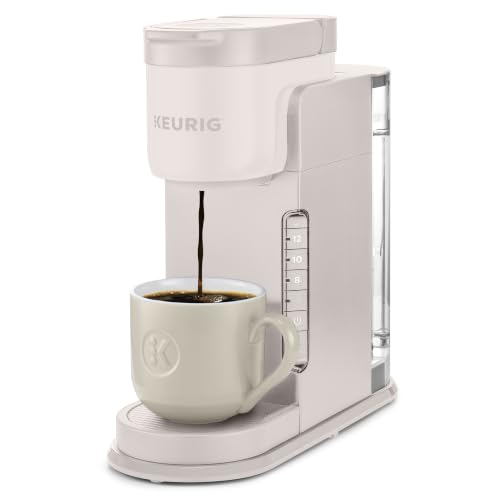
- Keurig K-Express (Warm Stone)
- Elite Gourmet EHC111A
- Keurig K-Mini Mate
Read the full guide ↓ for the reasoning behind the order, the honest limitations of every pick, and the checks that matter more than any headline claim.
The best combination ice coffee makers solve a specific summer problem: the household that wants iced coffee as a daily drink, not a project, from the same machine that handles everything else. Combination is the operative word. A dedicated iced gadget earns its counter space for about one season; a machine that combines iced coffee with pods, grounds, large cups or a family reservoir earns it all year. This guide ranks six verified machines on how completely each one owns the iced brief alongside its other talents.
One honesty note before the ranking. In this verified pool, the Ninja PB051 is the machine whose brew styles include brewing designed for ice, and it takes the top position for that reason. The other five are capable hot brewers whose strong settings and formats feed the brew-over-ice method well — a legitimate route to excellent iced coffee, described in full in the how-to section — but they are not iced-mode machines, and their reviews say so. Readers who want a confirmed iced mode in a compact body should note the Tastyle in the neighbouring Best Cold Hot Coffee Makers guide, which was built for exactly that.
Judge the picks by your ice consumption. A daily iced drinker should start at the Ninja and work down only for budget or space. A household that ices a few drinks a week can choose freely on reservoir, format and finish, because the workaround method scales fine at that volume. Either way, ice itself is half the recipe, and the sections below treat it with the seriousness it deserves.
Key Takeaways
- The Ninja PB051 leads because its four brew styles include brewing over ice, alongside pods, grounds and a 56 oz reservoir.
- The other five picks are hot brewers that make strong iced coffee by the brew-small-and-strong-over-ice method.
- Keurig K-Express models use their Strong Brew button as the iced tool: small, concentrated, straight onto fresh ice.
- The Elite Gourmet gives grounds drinkers full dose control, which is the manual route to a concentrated iced brew.
- Ice quality decides the result as much as the machine: fresh, plentiful, large cubes melt slower and dilute less.
In this guide
Quick Picks
These six verified picks are ordered for a household that wants iced coffee from a combination machine. Badges name each machine’s route to a cold glass, and they are used consistently in the Quick Picks, the detailed reviews and the comparison table.
| Pick | Badge | Best for | Link |
|---|---|---|---|
| Ninja Single Serve Coffee Maker PB051 | Best Overall | Daily iced-coffee households that also want pods, grounds and capacity | Check on Amazon |
| Keurig K-Elite | Best Premium Pod Pick | Pod drinkers who ice a few drinks a week and value a premium finish | Check on Amazon |
| Keurig K-Express (Black) | Best Pod All-Rounder | Pod households that want a strong-brew route to iced coffee plus reservoir rhythm | Check on Amazon |
| Keurig K-Express (Warm Stone) | Best for Style-Led Kitchens | K-Express buyers who want the iced workaround in a forgiving finish | Check on Amazon |
| Elite Gourmet EHC111A | Best for Grounds Drinkers | Grounds drinkers who want full dose control over their iced brews | Check on Amazon |
| Keurig K-Mini Mate | Best for Small Spaces | Solo drinkers making a daily iced coffee for the road | Check on Amazon |
How These Picks Were Chosen
For an iced-coffee brief, the selection method scored the cold route first and the hot virtues second. Machines were separated by whether the verified listing supports brewing intended for ice, whether a strong or concentrated option exists for the manual method, what brew sizes are available for building a concentrated cup, and which formats the machine accepts. Reservoir size and footprint were then weighed for the household context, because iced coffee at home is usually a multi-glass, multi-person habit in warm months.
The guide is research-led and specification-honest throughout. Where a machine’s iced ability rests on method rather than a confirmed mode, the review explains the method instead of implying a feature. The K-Elite illustrates the discipline: it is a premium pod machine whose cups can be brewed strong and iced, and the guide claims exactly that and no more, because its verified listing confirms format and finish rather than an iced programme. Readers deserve to know which kind of iced machine they are buying before the first hot day.
The 6 Best Combination Ice Coffee Makers

Ninja Single Serve Coffee Maker PB051
Badge: Best Overall
The Ninja PB051 is the heavyweight of this pool: a single-serve combo machine that takes both K-Cup pods and ground coffee, offers four styles of brewing, brews cup sizes up to 24 oz and carries a 56 oz removable reservoir — the largest water capacity and the largest single cup in this guide. Those numbers translate into a specific kind of freedom. The reservoir covers a full morning of household cups, the 24 oz ceiling means the biggest travel mug is filled in one brew rather than two, and the pod-plus-grounds format means a new bag of beans and a box of pods can coexist without a second machine. Four brew styles let the same coffee land differently in the cup, from an everyday mug to a more concentrated style for milk drinks or iced coffee. The costs are counter space and a modest learning curve. For households that brew often and in quantity, the PB051 is built exactly for that life.
The Ninja is the only pick that approaches iced coffee as a designed function rather than a technique, with brewing over ice among its four styles, and that design intent shows in the glass: the brew arrives calibrated for the melt instead of hoping dilution lands kindly. Around that core it stacks the combination virtues — pods and grounds, cups up to 24 oz for the big iced travel tumblers that summer commuting runs on, and a 56 oz reservoir that survives a household’s worth of glasses on a hot afternoon. If iced coffee is a daily identity in your house rather than a treat, this is the machine the guide was written to find.
Strengths
- Biggest reservoir in the pool at 56 oz, removable
- Pods and grounds in one machine, with four brew styles
- Brews up to 24 oz, covering large travel mugs in one pass
Trade-offs
- The largest brief here, so small counters should measure first
- Four styles add a learning curve for guests and family
- Still single-serve: big cups, but no carafe
Key specifications
- Format: Single-serve combo machine for K-Cup pods and grounds
- Brew styles: 4 styles of brewing
- Cup sizes: Up to 24 oz
- Reservoir: 56 oz, removable
- Model: PB051
- Finish: Black
Best for: Daily iced-coffee households that also want pods, grounds and capacity / Not suited for: Very small counters

Keurig K-Elite
Badge: Best Premium Pod Pick
The Keurig K-Elite in brushed silver is the premium-leaning pod machine in this pool: a single-serve K-Cup brewer whose metal-toned finish is designed to be seen rather than hidden. Where the K-Express models compete on reservoir size and brew-size lists, the K-Elite competes on presence — it is the machine for a counter that is part of the room, in an open-plan kitchen or a smart office kitchenette where a plastic-looking appliance would jar. The coffee routine is the familiar Keurig one: a pod, a button, a cup, with the entire K-Cup range available to choose from. Buyers should note honestly that the verified listing for this model confirms fewer headline specifications than its K-Express siblings, so the decision here rests on finish, format and brand tier rather than on a longer feature list. If those are your criteria, the K-Elite is the pool member aimed at you.
The K-Elite’s iced route is the manual one, executed with pod convenience: choose a bolder pod, brew it at a smaller size, and pour it over a glass packed with ice. In a design-led kitchen that routine has a certain pleasure — the silver machine, the tall glass, the crackle of ice — and for a few iced drinks a week it is entirely sufficient. This guide is plain that no iced programme is confirmed in its listing, so a household counting on daily iced volume should buy the Ninja’s designed solution instead. The K-Elite is for the drinker whose iced coffee is an occasional indulgence and whose hot coffee deserves a beautiful machine.
Strengths
- Brushed silver finish suits visible, design-led counters
- Single-serve K-Cup format gives access to the full pod range
- A step-up Keurig nameplate for buyers who want the premium tier of pod machines
Trade-offs
- Listing confirms fewer headline specs than the K-Express models
- Pods only, so grounds drinkers are not served
- Premium positioning without a carafe or second format
Key specifications
- Format: Single-serve K-Cup pod coffee maker
- Finish: Brushed Silver
Best for: Pod drinkers who ice a few drinks a week and value a premium finish / Not suited for: Daily iced drinkers who want a confirmed iced programme

Keurig K-Express (Black)
Badge: Best Pod All-Rounder
The Keurig K-Express in black is the straightforward centre of the K-Cup world: a single-serve pod machine with a 42 oz removable reservoir, three brew sizes and a Strong Brew button for a bolder extraction from the same pod. The reservoir is the detail that shapes daily life with it, because it turns brewing into a rhythm of several cups between refills instead of a fill for every single mug. It is travel mug friendly, so a commuter cup slides under the spout without decanting from a smaller mug first. Because it works with all K-Cup pods, the coffee choice is as wide as the pod aisle itself, from dark roasts to flavoured blends to tea and cocoa pods. Operation is deliberately plain: insert a pod, choose a size, press brew. There is no carafe, no grinder and no milk system, and that simplicity is the point. For a household that wants predictable pod coffee with the fewest possible steps, this is the reference design the rest of this guide is measured against.
The black K-Express is the everyman iced solution: the Strong Brew button exists almost as if designed for this guide, producing the concentrated cup that a glass of ice requires, while the 42 oz reservoir keeps a household’s hot mornings and iced afternoons flowing from the same water. Its method is the one taught in the how-to section — small size, strong setting, full glass of fresh ice — and it works because the machine gives you the two variables that matter, strength and size, in one button each. For pod households whose iced habit is real but not extreme, this is the balanced buy, and the black finish hides the splash zone that iced drinks inevitably create.
Strengths
- 42 oz removable reservoir means several cups between refills
- Strong Brew button gives a bolder cup from the same pod
- Three brew sizes cover a small cup through a travel mug
Trade-offs
- Pods only in normal use, so grounds need a separate routine
- No dedicated iced or cold-brew programme
- Black finish shows dust and scale marks readily
Key specifications
- Format: Single-serve K-Cup pod coffee maker
- Brew sizes: 3 brew sizes
- Reservoir: 42 oz, removable
- Feature: Strong Brew button
- Mug fit: Travel mug friendly
- Finish: Black
Best for: Pod households that want a strong-brew route to iced coffee plus reservoir rhythm / Not suited for: Purists who want a dedicated iced mode
Keurig K-Express (Warm Stone)
Badge: Best for Style-Led Kitchens
The Warm Stone K-Express is the same machine as the black K-Express — 42 oz removable reservoir, three brew sizes, Strong Brew button, travel mug friendly, compatible with all K-Cup pods — wearing a softer, stone-toned finish. That makes the choice between them a kitchen-design decision rather than a coffee decision, and there is no shame in that: a machine that lives on the counter every day should look like it belongs there. The warm neutral tone sits comfortably beside pale wood, stone worktops and stainless appliances, and it is more forgiving of the light dusting of coffee grounds and water spots that accumulate around any brewer. Everything said about the K-Express routine applies here unchanged: pod in, size chosen, cup brewed, with several cups available before the reservoir needs attention. If your household has already decided the K-Express feature set is right, Warm Stone is simply the version for kitchens where black reads too stark.
Warm Stone performs the identical iced routine to the black K-Express, and its advantage is written in the physics of iced coffee service: iced drinks sweat, drip and splash, and they do it all over the machine’s splash zone and the counter beneath the glass. A warm stone-toned finish shows that evidence least, which over a long summer is a genuine quality-of-life feature rather than a cosmetic footnote. The coffee, hot or iced, is the K-Express standard. Buy the colour your kitchen and your cleaning habits agree on, and let the Strong Brew button handle the ice.
Strengths
- Same 42 oz reservoir and three brew sizes as the black version
- Warm Stone finish hides everyday marks better than gloss black
- Strong Brew button for a more intense cup when wanted
Trade-offs
- Functionally identical to the other K-Express colours
- Pods only in normal use, with no grounds basket in the box story
- No dedicated iced or cold-brew programme
Key specifications
- Format: Single-serve K-Cup pod coffee maker
- Brew sizes: 3 brew sizes
- Reservoir: 42 oz, removable
- Feature: Strong Brew button
- Mug fit: Travel mug friendly
- Finish: Warm Stone
Best for: K-Express buyers who want the iced workaround in a forgiving finish / Not suited for: Anyone expecting different internals from the other K-Express colours

Elite Gourmet EHC111A
Badge: Best for Grounds Drinkers
The Elite Gourmet EHC111A takes the opposite route to the pod machines around it: instead of a capsule, it brews through a reusable filter filled with your own ground coffee, and it will handle loose-leaf tea as well. That single design choice changes the running relationship completely, because your coffee choice becomes whatever bag is open in the cupboard rather than whatever pods you remembered to order. At 600W with one-touch operation it is intentionally simple, aimed at a 14 oz travel mug brewed directly and taken away. Auto shut-off removes the worry of leaving a small appliance on in a dorm, office or spare room, and the dishwasher-safe parts make the reusable filter routine realistic rather than a chore that quietly gets abandoned after the first week. Its compact shape fits the corners of a kitchen that larger machines cannot use: beside a student desk, on an office credenza, in a spare room when guests stay over.
The Elite Gourmet is the manual-transmission option in an automatic world, and iced coffee rewards exactly its kind of control. Because you dose the grounds yourself, you can build the concentrated brew that ice demands — more coffee, same water — with a precision no pod allows, then chill it fast over ice or slow in the fridge for a smoother glass. Its reusable filter keeps the routine pod-free and its compact body suits the small kitchens where summer drinks are often made. The effort is real: fill, brew, rinse, repeat per glass. For the drinker who enjoys the making as part of the drinking, that effort is the feature.
Strengths
- Reusable filter brews your own grounds, with no pods to stock
- Also handles loose-leaf tea, which pod machines cannot do natively
- Auto shut-off and dishwasher-safe parts suit dorms and offices
Trade-offs
- No reservoir, so every cup starts with a fresh fill
- 600W output means a gentler pace than larger machines
- One mug at a time, with no batch option
Key specifications
- Format: Single-serve coffee maker for grounds
- Capacity: 14 oz brew
- Power: 600W
- Filter: Reusable filter for grounds and loose-leaf tea
- Feature: Auto shut-off
- Care: Dishwasher-safe parts
Best for: Grounds drinkers who want full dose control over their iced brews / Not suited for: Anyone wanting one-touch iced coffee
Keurig K-Mini Mate
Badge: Best for Small Spaces
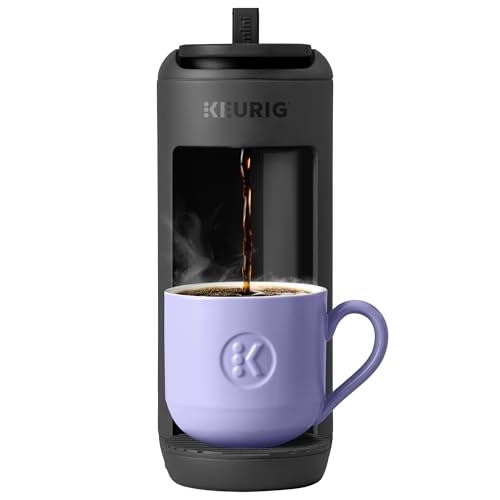
The Keurig K-Mini Mate is the K-Cup idea reduced to its smallest sensible form: a compact, portable single-serve machine that brews up to a 12 oz cup and is aimed squarely at small spaces, dorms and offices. There is no reservoir to manage; you add water for the cup you are about to brew, which keeps the machine tiny and makes it easy to move between a desk, a dorm shelf and a kitchen counter. That fill-per-cup routine is the trade at the heart of the design. For one person making one or two cups a day it is barely a thought, and the machine disappears into spaces where a full-size brewer simply cannot live. For a household queueing for coffee it would be a bottleneck. Judged on its own brief — personal coffee in a small footprint, with the whole K-Cup pod range available — the K-Mini Mate is coherent, honest and easy to recommend to the right owner.
The K-Mini Mate’s iced routine is the commuter’s: brew a cup, give it a minute, pour it over ice in a sealed travel bottle, and the iced coffee leaves the house with you. Its fill-per-cup design means the water is always fresh — a small but real flavour point in summer, when a reservoir in a warm kitchen is nobody’s friend — and its footprint suits the dorm and studio kitchens where iced coffee culture is strongest. The limits are the familiar ones: 12 oz at a time, one drinker at a time, no designed iced function. For the single iced-coffee commuter, those limits rarely bind, and the machine’s simplicity becomes the whole appeal.
Strengths
- Compact footprint fits dorms, desks and tiny counters
- Brews up to a 12 oz cup, enough for most mugs
- Simple one-cup-at-a-time routine with familiar K-Cup pods
Trade-offs
- Fill-per-cup design means no reservoir rhythm for groups
- Maximum 12 oz rules out the largest travel mugs in one pass
- Pods only, so grounds drinkers need a different machine
Key specifications
- Format: Single-serve K-Cup pod coffee maker
- Brew size: Up to 12 oz per cup
- Design: Compact and portable
- Intended spaces: Small spaces, dorms and offices
- Finish: Black
Best for: Solo drinkers making a daily iced coffee for the road / Not suited for: Households icing drinks for several people
The ranking above separates the six by the honesty of their iced route: one designed style, several strong methods, and one manual craft. That separation matters more than the order within it, because a household that knows which kind of iced machine it is buying will be satisfied with any of them, while a household that buys a hot machine believing it bought an iced machine will be disappointed by a product that never claimed otherwise. The table that follows keeps the routes visible side by side.
Comparison Table
Read this table by iced route first: designed over-ice brewing, strong-brew method, or manual grounds control. Then check the water system against your household’s summer volume, because iced season is when reservoirs earn their size.
| Pick | Format | Water capacity | Standout trait | Link |
|---|---|---|---|---|
| Ninja Single Serve Coffee Maker PB051 | K-Cup pods and grounds | 56 oz reservoir | Four brew styles including over-ice brewing | Check on Amazon |
| Keurig K-Elite | K-Cup pods | Reservoir format, size not confirmed in listing | Brushed silver premium finish | Check on Amazon |
| Keurig K-Express (Black) | K-Cup pods | 42 oz reservoir | Strong Brew button for concentrated cups | Check on Amazon |
| Keurig K-Express (Warm Stone) | K-Cup pods | 42 oz reservoir | Warm Stone finish, full K-Express feature set | Check on Amazon |
| Elite Gourmet EHC111A | Grounds with reusable filter | Fill per cup, 14 oz brew | Also brews loose-leaf tea | Check on Amazon |
| Keurig K-Mini Mate | K-Cup pods | Fill per cup, up to 12 oz | Compact and portable design | Check on Amazon |
How to Choose a Combination Machine for Iced Coffee
Start with frequency, because it decides whether you need a designed iced function or a good method. Daily iced drinkers should buy the designed solution — in this pool, the Ninja — because a manual method repeated four hundred times a year becomes a chore that quietly kills the habit or the machine’s welcome. Weekly iced drinkers can choose any strong pick here and apply the how-to method with complete success. Be honest about which drinker you are in February, not which one you are during the first heatwave.
Next, size the machine for summer volume. Iced coffee season multiplies drinks: the morning hot cup survives, and the iced glass is added, often for more members of the household than drink hot coffee. Reservoir machines absorb that multiplication; fill-per-cup minis turn a hot afternoon into a queue at the counter. The Ninja’s 56 oz and the K-Express line’s 42 oz are summer specifications as much as winter ones.
Finally, choose your concentration strategy. Pods concentrate by size and strong settings; grounds concentrate by dose. If you already love a particular pod, the K-Express route keeps it and strengthens it. If you love a particular bean, only the grounds-capable machines — the Ninja and the Elite Gourmet here — let it become your iced coffee. Households that also want hot-and-cold duality in a compact body should compare the Tastyle in the Best Cold Hot Coffee Makers guide, and high-volume households should glance at the Best Combination Multi Cup And Single Serve Coffee Makers shortlist before committing.
How to Make Excellent Iced Coffee at Home
The method has four rules. Brew concentrated: a smaller size, a stronger setting, or a heavier grounds dose, because the finished drink will be diluted by melting ice and often by milk. Chill fast: pour or brew directly onto fresh ice in the serving glass, so the coffee spends no time sitting hot and dulling. Use enough ice: a glass filled to the top, not a few cubes rattling at the bottom. And sweeten smart: sugar dissolves reluctantly in cold liquid, so sweeten the hot brew before it meets the ice, or keep a simple syrup for cold drinks.
On the Ninja, use the over-ice style and let the machine’s calibration work; on the K-Express models, pair the smallest practical size with Strong Brew; on the Elite Gourmet, raise the grounds dose by roughly a third over your hot recipe. In every case, drink the result promptly. Iced coffee is a drink with a peak, and the peak is early, while the ice is still mostly ice.
Problem: the drink is watery by the halfway point → the brew was not concentrated enough or the ice was scarce and small; brew stronger, fill the glass fully, and prefer large cubes. Problem: the iced coffee tastes bitter → the hot brew was over-extracted before it ever met ice; choose a milder pod or a slightly coarser, fresher grounds dose. Problem: a metallic or stale note appears in summer drinks → the reservoir water has sat warm too long; refresh it daily in hot weather and descale on schedule, because cold drinks expose stale flavours mercilessly.
Ice itself deserves a routine. Keep a dedicated tray or maker supply for coffee ice, freeze a batch of coffee ice cubes for the strongest drinks — they chill without diluting at all — and never use ice that has lived open in a freezer absorbing other foods’ flavours. The machine makes the coffee; the ice makes the drink.
Over-Ice Brewing Versus the Brew-and-Chill Method
Brewing over ice — flash chilling — locks in the bright, volatile flavours of fresh coffee by taking it from hot to cold in seconds, and it is the method behind both the Ninja’s designed style and the manual workaround used with the other picks. Brew-and-chill, by contrast, lets coffee cool slowly in the fridge; the result is smoother and duller, closer in spirit to cold brew, and perfectly pleasant for milk-heavy drinks where brightness is not the point. Neither is superior in the abstract; they are different drinks wearing the same name.
A household can exploit both: flash-chilled glasses for drinking black over ice, and a fridge jug of slow-chilled coffee for the week’s milky iced lattes. The combination machines in this guide support the split naturally, since the same brew can be divided between a glass of ice now and a sealed bottle for tomorrow. Readers who find themselves drifting toward the slow-chilled end of the spectrum are often cold brew drinkers in waiting, and the method sections of the cold brew guide in this cluster will speak to them.
Iced Coffee as a Household System, Not a Drink
Serious iced-coffee households eventually stop thinking in drinks and start thinking in systems: ice production, glassware that tolerates thermal shock, a syrup bottle, straws or lids for the road, and a machine whose reservoir and pace can serve the afternoon round. The machine is one component, and this guide ranks it as such — which is why reservoir size and cup-size ceiling appear in an iced guide at all. A 24 oz iced tumbler is a standard object in summer life; a machine that cannot fill it in one brew is friction, daily.
The system view also explains why combination machines beat dedicated iced gadgets. The gadget serves one component of the system for one season; the combination machine serves the hot system in winter and the cold system in summer from the same counter space. Offices face the same arithmetic at larger scale, which is why the Best Commercial Coffee Makers Bunn conversation and this one keep borrowing each other’s machines.
Glassware, Syrups and the Supporting Cast of Iced Coffee
Iced coffee is the rare home drink whose equipment list extends well past the machine, and the supporting cast decides more glasses than buyers expect. Glassware comes first: thin glass and boiling-hot fresh brew are a cracking risk, so sturdy glasses, ideally ones that have tolerated temperature swings before, are the safe vessels for brew-over-ice. Double-walled glasses earn their keep by slowing the melt and sparing the table the condensation puddle, and a sealed travel bottle turns the morning iced coffee into a commuter drink rather than a kitchen-only event.
Sweetening is the second discipline. Granulated sugar in a cold glass mostly survives to the bottom as grit, which is why cafés keep syrup. A simple syrup — sugar dissolved in an equal measure of hot water, kept in a bottle in the fridge — sweetens cold coffee evenly in seconds and keeps for weeks. Flavoured syrups follow the same logic, and a household that makes one bottle at the start of summer will use it all season. Milk and cream should be added after chilling, and the drink stirred once, decisively, rather than fiddled with.
None of this requires the machines above to change; it requires the household to meet them halfway. The Ninja’s calibration, the K-Express’s strong button and the Elite Gourmet’s dose control all deliver concentrated coffee to the glass. What happens in the glass — the ice, the vessel, the syrup, the prompt drinking — is the household’s half of the recipe, and it is the half that separates a good home iced coffee from a great one.
Iced Coffee Through the Seasons: Keeping the Habit Alive
The predictable arc of home iced coffee is a June of enthusiasm and a September of neglect, and it is a waste of a good machine. The households that keep the habit build small bridges between the seasons: iced coffee becomes the afternoon drink rather than the morning one as the days cool, the over-ice style gives way to fridge-chilled coffee for milky drinks, and the same machine returns to hot duty in the mornings without ever leaving the counter. Continuity, again, is the combination machine’s deepest advantage — the habit never has to be restarted because the appliance never went away.
There is also a craft arc worth expecting. The first summer is about concentration and ice; the second is about recipes — the house iced latte, the sweetened glass for guests, the coffee cubes for black drinks. Machines with format flexibility, the Ninja above all, grow with that arc, because each new recipe is a new combination of the same few variables: format, strength, size, temperature of service. A household buying for its second summer, not its first, will choose exactly the flexibility this guide ranked highest.
Troubleshooting the Summer Round: When Guests Want Iced Coffee
The stress test of a home iced-coffee setup is not the solitary glass but the summer round: four people, one hot afternoon, four different ideas of the right drink. Run it like a small café. Take the orders, line up the glasses, fill every glass with ice before any coffee is brewed, and brew in descending order of strength so the strongest drinker’s cup is never the diluted afterthought. On the Ninja, the over-ice style keeps each glass honest; on the strong-method machines, keep the size small and the setting strong, and let the ice do the rest. A jug of water and a bottle of syrup on the table let guests adjust their own glasses, which removes the host from the dilution debate entirely.
Expect the second round to be the better one. First glasses teach the household its variables: whose pod needs the strong setting, whose glass needs coffee cubes, who takes syrup. Write nothing down and you will relearn it next weekend; notice it once and the summer runs on rails. This is the unglamorous truth behind every good home drink, hot or cold — the machine supplies capability, and the household supplies the accumulated knowledge of its own people.
If the round exposes a genuine machine limit — the reservoir emptying, the cup ceiling pinching, the queue stretching — that is buying information no review can give you, because it is measured in your kitchen against your people. The picks above were ranked to postpone that moment as long as possible, with capacity and designed iced brewing at the top for exactly this reason. When the moment still arrives, it will at least arrive honestly, at the height of a good summer, with a glass in your hand.
A word, too, about the economics of the home iced habit, stated carefully because this guide prints no prices. Café iced coffee is one of the highest-margin drinks a household buys out, precisely because it is simple: coffee, ice, milk, syrup. Every component is already in a coffee-drinking kitchen except the routine. A combination machine converts that recurring café spend into a grocery spend — pods or grounds, milk, ice from the freezer — at a fraction of the outlay per glass, and it does so without asking the household to give up the hot drinks the same machine was bought for. The saving is not the reason to buy, because taste and convenience carry the case on their own, but households that run the numbers on a summer of bought iced coffees usually find the machine’s side of the ledger shorter than they expected.
Common Buying Mistakes
The most common mistake is brewing a normal cup and icing it, then concluding that home iced coffee is inferior. The cup was fine; the concentration was wrong for a drink designed to be diluted. Every iced recipe in this guide starts stronger than the hot version for a reason.
The second mistake is buying by hot specifications alone in spring and discovering the summer gap in July: no strong option, a small cup ceiling, a reservoir that empties by noon. If iced coffee is in your future, it belongs in the purchase criteria now.
Third, do not neglect the ice supply. A superb machine and an empty ice tray produce no iced coffee at all, and a household that discovers this twice will start buying iced coffee out again. Treat ice as a stocked ingredient, like the coffee itself.
Finally, avoid chilling large hot batches in the fridge as your main method unless you genuinely prefer the smoother, duller profile. Most drinkers who try flash chilling after a summer of fridge jugs do not go back, because the brightness they were missing was the point of the drink.
Final Recommendation
The clear first choice for this brief is the Ninja Single Serve Coffee Maker PB051: designed over-ice brewing, both coffee formats, the largest cups and the largest reservoir make it the complete summer-and-winter machine. Pod households with a lighter iced habit should take the Keurig K-Express (Black) and master the strong-brew method, which costs nothing and works every time.
Grounds drinkers who relish control will get the most from the Elite Gourmet EHC111A, dosing their way to exactly the iced strength they like. Whichever route you choose, stock the ice, brew concentrated and drink it at its peak — the machine is half the recipe, and now you have the other half too.
Frequently Asked Questions
Which of these machines has a real iced coffee function?
The Ninja PB051, whose four brew styles include brewing over ice. The other picks are hot brewers that produce strong iced coffee by the manual method — small, strong brews poured over a full glass of fresh ice — and their reviews are explicit about that distinction.
What are coffee ice cubes and are they worth making?
They are cubes of frozen coffee used in place of water ice. They chill the drink without diluting it, so the last sip tastes like the first. They are worth it for black iced coffee especially; for milky drinks, ordinary ice is usually fine.
Why does my iced coffee taste sour or dull?
Sourness usually means under-extraction in the hot brew; dullness usually means the coffee sat hot or cooled slowly and oxidised. Brew fresh, chill fast over plenty of ice, and drink promptly for the brightest result.
Can I make iced tea in these machines?
The Elite Gourmet brews loose-leaf tea through its reusable filter, which chills into iced tea readily. Pod machines can use tea pods where available. Purpose-built iced tea is a different appliance category, but for household glasses these routes work well.
How much ice should go in the glass?
Fill the glass to the top before the coffee arrives. Scarcity of ice is the most common home mistake: too little ice melts completely, diluting the drink and leaving it lukewarm, while a full glass chills fast and melts slowly.
Is the Ninja worth it for a one-person household?
If that one person drinks iced coffee daily and fills large tumblers, yes — the over-ice style, 24 oz cups and big reservoir are all aimed at exactly that life. A lighter drinker in a small kitchen may be happier with a K-Express and the manual method.
Can I use a single-serve machine to make iced coffee for a party?
Yes, with the jug method run in reverse: brew concentrated cups sequentially into a jug, chill the jug, and serve over fresh ice in each glass. A reservoir machine like the Ninja or a K-Express handles the volume gracefully; brew close to serving time so the coffee is at its brightest.


